
If you own a 2023 Toyota Highlander, you already know it's a solid vehicle. But when it comes to something as simple as an oil change, things get tricky fast. That's because the 2023 Toyota Highlander oil capacity isn't one number, it's three different numbers depending on which engine is under your hood.
Put in the wrong amount or the wrong oil grade, and you're looking at reduced performance, worse fuel economy, or even engine damage down the road.
Toyota uses three distinct powertrains in the 2023 Highlander lineup: a 2.4L turbocharged four-cylinder, a 3.5L V6 (still found in select trims), and a 2.5L hybrid system. Each one takes a different oil volume and viscosity. Per Toyota's official specifications, the difference between the smallest and largest capacity is nearly two full quarts.
That's a big enough gap to cause real problems if you guess wrong. Let's break it down so you never have to second-guess your next oil change.
Quick Answer
The 2023 Toyota Highlander oil capacity depends on your engine. The 2.4L turbo takes 6.4 quarts. The 3.5L V6 takes 6.6 quarts.
The 2.5L hybrid takes 4.8 quarts. All require full synthetic oil. Use 0W-16 for the turbo and hybrid.
Use 0W-20 for the V6. Check your owner's manual to confirm your specific trim.
Why Getting the Oil Capacity Right Actually Matters (for Your Wallet and Your Engine)
You might think a half-quart off isn't a big deal. In reality, it's one of the most common mistakes owners make, and it can cost you. Overfilling creates excess pressure inside the crankcase.
That pressure forces oil past seals and gaskets, leading to leaks you won't notice until they've already done damage. Underfilling is worse. Starve the bearings of lubrication, and you're looking at metal-on-metal contact.
That's how engines seize.
The stakes are even higher with the 2.4L turbo engine found in most 2023 Highlanders. Turbocharged engines run hotter and put more stress on oil. They also require tighter tolerances.
Using the wrong viscosity, say, 5W-30 instead of 0W-16, can cause the oil to flow too slowly during cold starts. That leaves critical components unprotected for precious seconds every time you turn the key.
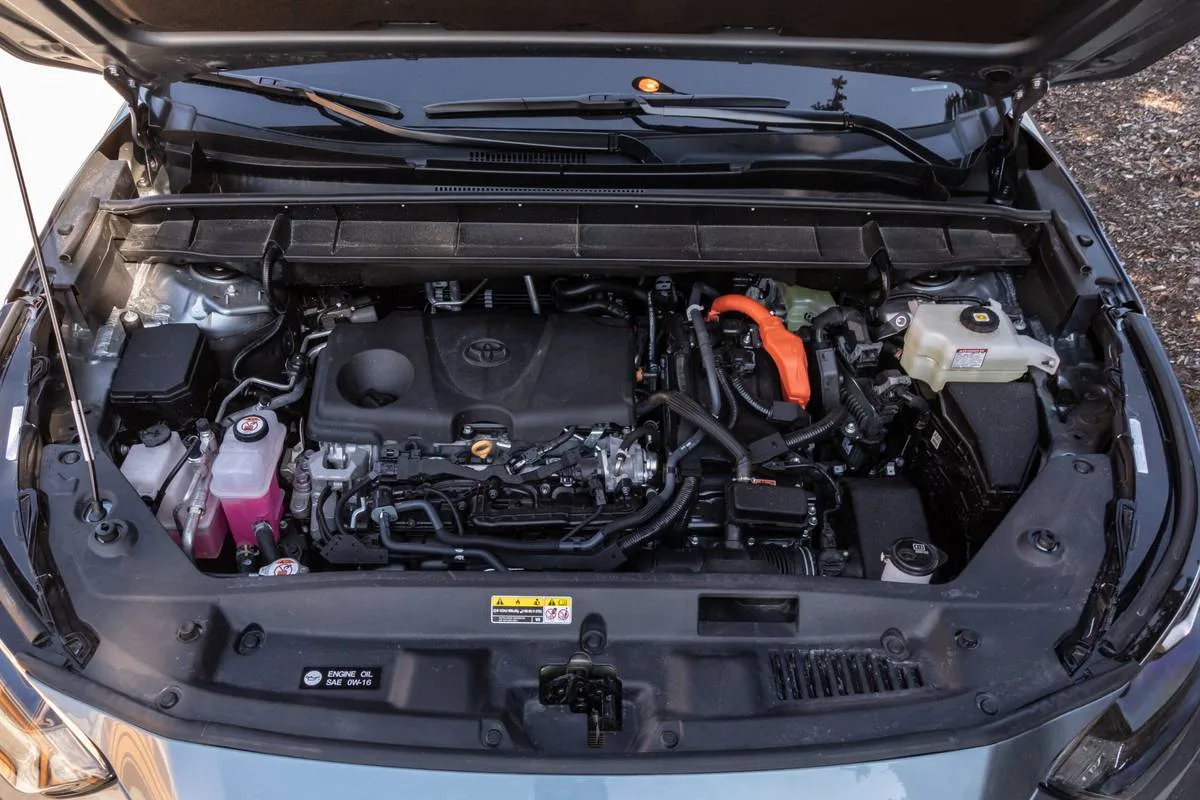
Image source: Web (Bing) / cars.com (Web image (fair-use with source credit))
The good news is that getting it right is straightforward. Toyota publishes the specs clearly in every owner's manual. The trick is knowing which engine you have and understanding that the hybrid and gas versions are completely different animals.
As of 2026, all three powertrains remain in service, so this knowledge stays relevant whether you bought new or are looking at a used model.
2023 Toyota Highlander: Three Engines, Three Very Different Oil Capacities
Toyota split the 2023 Highlander lineup into three engine options. The most common is the 2.4L turbocharged four-cylinder, which replaced the old V6 in most trims. The 3.5L V6 lingered in a handful of configurations early in the model year.
The hybrid uses a 2.5L four-cylinder paired with an electric motor system.
If you're not sure which one you have, check your window sticker, the VIN decoder on Toyota's website, or simply pop the hood. The engine cover usually has a badge. The hybrid models have obvious orange high-voltage cables and a different engine cover shape.
The capacity differences aren't small. The turbo gas engine takes about a third more oil than the hybrid. Fill the hybrid with gas-engine volumes and you'll overfill by nearly two quarts.
That's enough to cause foaming, aeration, and potential hydraulic lock in extreme cases. On the flip side, putting hybrid capacity into a turbo gas engine leaves it dangerously low.
The Quick Specs: Oil Capacity, Type, and Filter by Engine Variant
Let's get the exact numbers down so you can reference them at a glance. These come directly from Toyota's published specifications for the 2023 model year.
2.4L Turbo (T24A-FTS) – Gas-Only Models
| Specification | Detail |
|---|---|
| Oil capacity (with filter) | 6.4 quarts (6.1 liters) |
| Oil capacity (without filter) | 6.1 quarts (5.8 liters) |
| Recommended viscosity | 0W-16 |
| API / ILSAC rating | SN or SP / GF-6 |
| Oil type | Full synthetic only |
| Oil filter part number | 04152-YZZA6 (or equivalent) |
This is the engine found in most Highlander trims including XLE, Limited, and Platinum gas models. It's a smaller-displacement turbocharged engine, so it needs the thinner 0W-16 oil to reach every passage quickly during cold starts. Using thicker oil can reduce flow and increase wear.
3.5L V6 (2GR-FKS) – Select Gas Models
| Specification | Detail |
|---|---|
| Oil capacity (with filter) | 6.6 quarts (6.2 liters) |
| Oil capacity (without filter) | 6.3 quarts (6.0 liters) |
| Recommended viscosity | 0W-20 |
| API / ILSAC rating | SN or SP / GF-6 |
| Oil type | Full synthetic only |
| Oil filter part number | 04152-YZZA1 (or equivalent) |
The V6 was phased out during the 2023 model year but still exists on some early-production trims and the Highlander XSE. If you have this engine, you need a slightly higher oil volume and the 0W-20 grade. It's a proven, durable engine with a long track record.
2.5L Hybrid (A25A-FXS) – Highlander Hybrid
| Specification | Detail |
|---|---|
| Oil capacity (with filter) | 4.8 quarts (4.5 liters) |
| Oil capacity (without filter) | 4.5 quarts (4.3 liters) |
| Recommended viscosity | 0W-16 |
| API / ILSAC rating | SN or SP / GF-6 |
| Oil type | Full synthetic only |
| Oil filter part number | 04152-YZZA6 (same as turbo) |
The hybrid uses significantly less oil because its engine runs less often and at lower loads. The electric motor handles much of the initial acceleration and low-speed driving. This means the oil lasts longer in terms of engine runtime, but you still need to change it by the calendar or mileage interval.
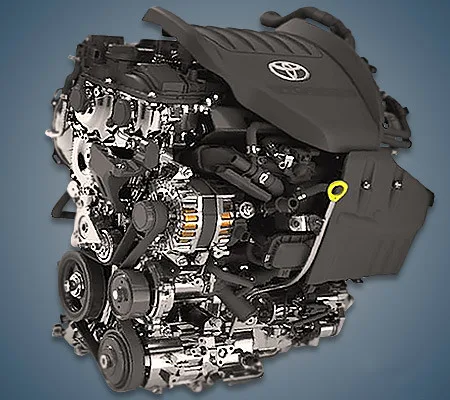
Image source: Web (Bing) / mymotorlist.com (Web image (fair-use with source credit))
Step-by-Step: How to Check and Fill Oil the Right Way
Checking oil on a 2023 Highlander isn't complicated, but there's a right way and a wrong way. Follow these steps to get an accurate reading every time.
Park on level ground. Pull the Highlander onto a flat surface. A sloped driveway or curb will give you a false reading. The oil sloshes to one side of the pan, and the dipstick won't reflect the true level.
Warm up the engine. Run the engine for a couple minutes, then turn it off. Cold oil is thick and won't drain back into the pan properly. Warm oil flows freely and gives you an accurate reading.
Wait about two to three minutes after shutting off to let the oil settle.
Pull and wipe the dipstick. Locate the dipstick, it usually has a bright yellow or orange handle. Pull it out completely. Wipe it clean with a lint-free rag.
Insert it all the way back in, then pull it out again to read the level.
Read the oil level. The dipstick has two marks: a low mark and a full mark. The oil should land between them, closer to the full mark. If it's at or below the low mark, add oil.
If it's above the full mark, you've overfilled and need to drain some out.
Add oil slowly. If you're topping off between changes, pour in a quarter quart at a time. Wait a minute, check the dipstick again, and repeat until you hit the full line. It's much easier to add a little more than to drain excess.
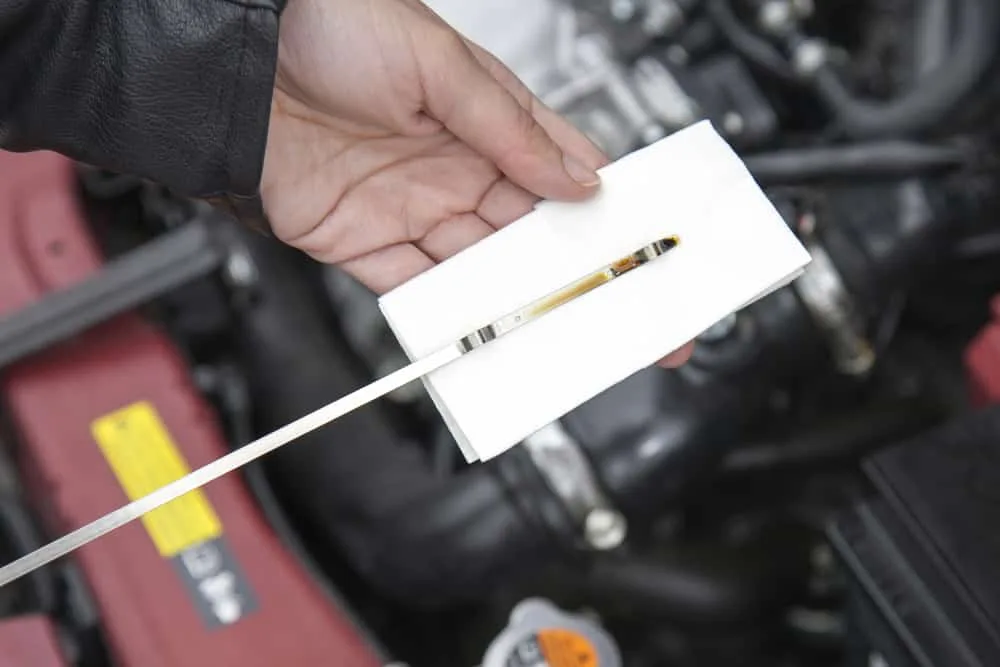
Image source: Web (Bing) / mechanicbase.com (Web image (fair-use with source credit))
The entire process takes about five minutes. Doing it regularly, say, once a month, catches small issues before they become big ones. It's the single best habit you can develop for engine longevity, and it costs nothing but a few minutes of your time.
For comparison, the procedure for the Toyota Highlander gas engine is very similar to what you'd do for a Toyota RAV4 or a Camry, though the exact dipstick location varies slightly by model. The same warm-up and level-ground rules apply across the board.
Common Mistakes That Cost Highlander Owners Real Money
Even experienced DIYers make errors on the 2023 Highlander. The hybrid vs. gas confusion tops the list, but there are other pitfalls worth knowing about.
Using the wrong oil filter. The turbo gas engine and the hybrid share the same filter (04152-YZZA6). The V6 uses a different one (04152-YZZA1). They look similar, but the threads and seal dimensions are different.
Forcing the wrong filter on can strip the threads or cause a leak. Always double-check the part number before installation.
Skipping the crush washer replacement. The drain plug uses a single-use aluminum crush washer. Reusing it is tempting, but the crushed aluminum won't seal as well. A slow drip over weeks or months means you're losing oil gradually.
That leads to low oil warnings and potential engine damage. The washer costs pennies. Replace it every time.
Over-tightening the drain plug. The spec is 30 lb-ft. That's not very tight. Going beyond that can strip the threads in the oil pan.
The 2023 Highlander uses an aluminum oil pan, which is softer than steel and easier to damage. A stripped pan means a costly replacement. Use a torque wrench to be precise.
Adding oil without checking the dipstick. This seems obvious, but it's surprisingly common. People pour in a full quart based on memory and end up overfilled. Always check before adding and add in small increments.
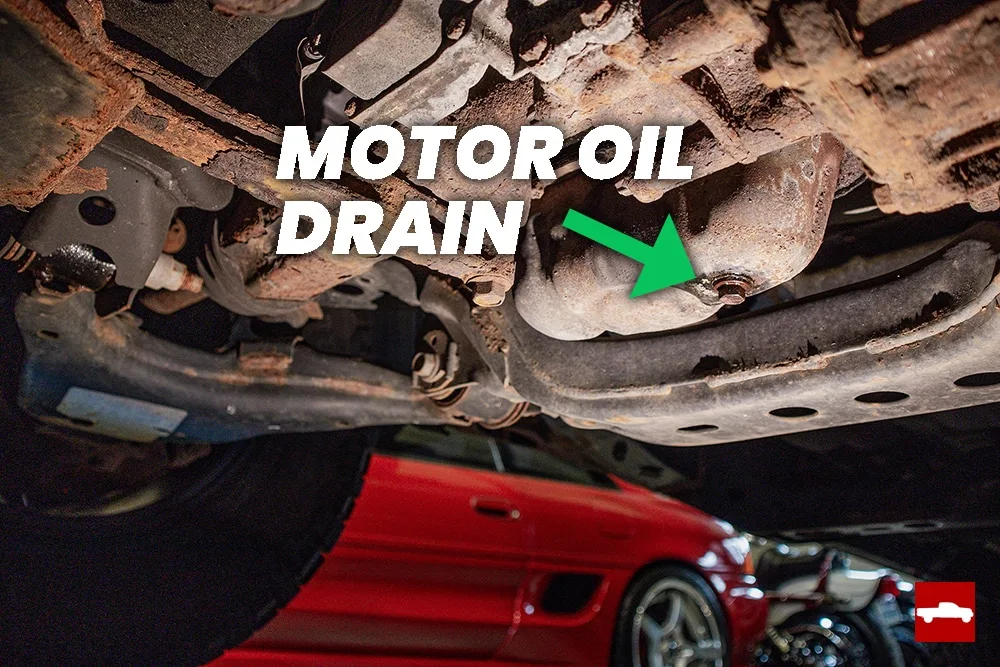
Image source: Web (Bing) / storage.googleapis.com (Web image (fair-use with source credit))
Ignoring the oil life monitor. The 2023 Highlander has a built-in oil life monitor that tracks driving conditions and mileage. It's more accurate than a fixed interval. If you drive mostly highway miles, the monitor might let you go 8,000 to 10,000 miles between changes.
Stop-and-go city driving or frequent short trips may trigger a warning at 5,000 miles. Trust the monitor over a calendar reminder.
Using the correct oil type is just as important. If you're unsure what grade to buy, the Toyota Highlander oil type guide covers every model year and engine option in detail. Getting the right viscosity matters more than brand loyalty.
When to Change Oil – And How Driving Conditions Change the Clock
Toyota recommends changing the oil in your 2023 Highlander every 5,000 to 10,000 miles. That's a wide range for a reason. The actual interval depends almost entirely on how you drive.
The vehicle's oil life monitor system tracks real driving conditions. It looks at engine temperature, RPM, trip length, and ambient temperature. Short trips in cold weather count as severe service.
So does stop-and-go city traffic, frequent idling, or towing a trailer. Under those conditions, the monitor will flag an oil change closer to 5,000 miles.
If your driving is mostly highway cruising at steady speeds, you can safely approach the 10,000-mile mark. The monitor will reflect that too. The key is to trust the computer, not a calendar reminder.
Toyota designed this system specifically for modern synthetic oils and engine tolerances.
A note on hybrid owners: Your engine runs less often, but the oil still degrades over time. The oil life monitor accounts for this by tracking elapsed time alongside engine runtime. Even if you drive mostly on electric power, you'll still need an oil change at least once a year.
Toyota's official position is 10,000 miles or 12 months, whichever comes first.
For reference, the same oil change wisdom applies across Toyota's lineup. If you're familiar with the intervals for the 2025 Toyota Camry Hybrid, the principles are nearly identical. Each model has its own specifics, but the monitoring system works the same way.
What Happens If You Overfill or Underfill
Oil level errors aren't subtle on modern engines. They produce symptoms you can feel and hear.
Overfilling pushes oil up past the crankshaft. The rotating assembly whips the oil into foam. Foam doesn't lubricate well.
It also doesn't transfer heat effectively. You might notice the engine running slightly hotter or a ticking sound from the valvetrain. In extreme cases, excess oil pressure blows past seals and causes external leaks.
The PCV system may also pull oil into the intake, leading to blue smoke from the exhaust.
Underfilling is more dangerous because it often goes unnoticed at first. The oil pump can still pick up enough oil at normal driving speeds. But during hard cornering, steep inclines, or aggressive acceleration, the pickup tube may suck air.
That causes intermittent oil starvation. The rod and main bearings take the worst damage. By the time the low oil pressure light comes on, the damage is already done.
The fix for overfilling is straightforward. Drain some oil out. You can loosen the drain plug slightly and let a small amount drain into a catch pan, or use a fluid extractor through the dipstick tube.
Check the level after each quarter quart removed until you hit the full mark.
The fix for underfilling is even simpler. Top it off to the full line and move on. No harm done if you catch it early.
That's why monthly dipstick checks are worth the five minutes they take.
Your Checklist for a Safe, Worry-Free Oil Change
If you're doing the oil change yourself, here's what you need before you start. Gather everything first. Running to the store mid-job is frustrating and wastes time.
Tools and supplies:
- 5 quarts of 0W-16 full synthetic (turbo and hybrid) or 0W-20 full synthetic (V6)
- Oil filter (correct part number for your engine)
- Crush washer for drain plug
- 14mm socket or wrench for drain plug
- Oil filter wrench (cup style or strap type)
- Torque wrench (30 lb-ft for drain plug, 18-22 lb-ft for filter)
- Drain pan (minimum 8-quart capacity)
- Funnel
- Rags or shop towels
- Nitrile gloves
Step-by-step:
- Run the engine for two minutes to warm the oil. Warm oil drains faster and carries more contaminants.
- Park on level ground and engage the parking brake.
- Place the drain pan under the drain plug. Remove the plug with a 14mm socket. Let the oil drain completely, about 5 minutes.
- Replace the crush washer on the drain plug. Torque the plug to 30 lb-ft.
- Move the drain pan under the oil filter. Remove the filter using the filter wrench. Allow residual oil to drain.
- Apply a thin coat of fresh oil to the new filter's gasket. Hand-tighten the filter, then give it another three-quarter turn. Do not overtighten.
- Remove the oil fill cap. Insert a funnel. Add the full oil capacity for your engine (6.4, 6.6, or 4.8 quarts).
- Replace the fill cap. Start the engine and let it run for 30 seconds. Check for leaks around the filter and drain plug.
- Shut off the engine. Wait two minutes. Check the dipstick. Top off if needed.
- Reset the oil life monitor using the steering wheel controls.
If you're servicing a different Toyota, the process is similar but the capacities vary. The Toyota RAV4 oil type guide has full specs for that model, and the principles for checking and filling apply across the board.
Frequently Asked Questions
How often should I check my 2023 Highlander oil level?
Check it once a month and before any long trip. The dipstick reading takes two minutes and catches small leaks or consumption issues early. Hybrid owners should check less frequently but still on a monthly schedule.
Can I use conventional oil instead of synthetic?
No. Toyota requires full synthetic oil for all 2023 Highlander engines. Conventional oil lacks the thermal stability and flow characteristics these engines need, especially the turbocharged 2.4L.
Using conventional oil could void your warranty.
What happens if I put 5W-30 in my Highlander?
The oil will be too thick at cold starts. It won't flow quickly enough through the tight passages in the valvetrain and turbocharger. This increases wear during the critical first minute of operation.
Stick with the recommended 0W-16 or 0W-20.
Does the hybrid really only need 4.8 quarts?
Yes. The 2.5L hybrid engine is smaller and runs less frequently than the gas models. The electric motor handles low-speed driving, so the engine sees less total runtime between changes.
The 4.8-quart capacity is correct. Check your dipstick to confirm.
Should I change the oil myself or go to a shop?
DIY saves $50 to $80 per change. It also guarantees you use the right oil and filter. If you're comfortable with basic tools, it's one of the easiest jobs on a Highlander.
If you prefer a shop, verify they use 0W-16 full synthetic and the correct filter.
The shop should also replace the crush washer and torque the drain plug to spec. Some chains skip these steps and that's where leaks start.
Can I drive my Highlander if the oil change light is on?
Yes, but don't ignore it for long. The oil change light is a maintenance reminder, not a warning light. You can safely drive a few hundred more miles.
Schedule the change as soon as possible. If the oil pressure light comes on instead, stop driving immediately.
Does the turbo engine burn oil between changes?
Some owners report minor oil consumption on the 2.4L turbo. A half quart over 5,000 miles is considered normal. Toyota's official tolerance is about one quart per 1,200 miles before they flag it as excessive.
Check your dipstick monthly and top off as needed.
Final Take: Trust the Owner's Manual, But Stay Sharp
The 2023 Toyota Highlander oil capacity varies by engine. The turbo gas model takes 6.4 quarts. The V6 takes 6.6 quarts.
The hybrid takes 4.8 quarts. All three use full synthetic oil, and the viscosity depends on which engine you have.
Getting it right matters for engine life, fuel economy, and warranty coverage. The good news is that the process is simple once you know your variant. Check the dipstick regularly.
Use the correct oil grade. Replace the crush washer and filter with every change. Trust the oil life monitor over fixed intervals.
Your Highlander is built to last 200,000 miles or more with proper care. Oil changes are the single most important part of that care. Get it right and you'll be rewarded with years of reliable service.
Get it wrong and you're looking at costly repairs that could have been avoided with a little attention to detail.
Keep that owner's manual handy. It's the definitive source for your specific trim. And remember, a five-minute dipstick check once a month is all it takes to stay ahead of problems.
Your engine will thank you.