
If you own a 2023 Toyota 4Runner and you're about to change the oil yourself, you need the exact number before you pop the drain plug. Getting the 2023 Toyota 4Runner oil capacity wrong is an easy mistake that can cost you an engine. The short version: with a new filter, the 4.0-liter 1GR-FE V6 takes exactly 6.4 quarts of 0W-20 full synthetic oil.
Here's where people get tripped up. The 2023 model carries forward Toyota's 4.0L V6, but the oil spec changed from earlier years. Manufacturer specifications indicate the dipstick reads properly only when the engine is at operating temperature and turned off for five minutes.
Let's walk through exactly what you need, what to avoid, and how to do it right the first time.
Quick Answer
The 2023 Toyota 4Runner holds 6.4 quarts of oil with a filter replacement. Without a filter change, it holds 6.1 quarts. Toyota recommends 0W-20 full synthetic oil meeting API SN or SP standards.
The drain plug torque is 27 ft-lbs. Always check the dipstick after filling.
Why Getting the Oil Capacity Wrong Costs You Real Money
Here's the thing about the 2023 4Runner. It's a truck-based SUV that runs hot, especially when towing or off-roading. The 4.0L V6 is a reliable engine, but it's sensitive to oil volume and viscosity.
Overfill it, and the crankshaft whips the oil into foam. Foam doesn't lubricate. Foam damages bearings and starves the top end.
Underfill it, and the oil pickup tube sucks air under hard acceleration or steep angles. That's a fast track to spun rod bearings and a $6,000 short-block replacement.
Aggregate reviews from 4Runner forums and service departments confirm the most common DIY mistake is guessing the capacity. Some people dump in five quarts because that's what their old sedan took. Others pour in the whole six-quart jug from the store and never check the dipstick.
Both approaches create long-term damage.
The 4Runner's oil pan is a unique shape. It holds more than you think because of the integrated oil cooler lines and the deep sump design. Trust the spec, not your gut.
The Short Answer: 2023 4Runner Oil Capacity in Plain Numbers
Let's make this crystal clear. Here's the exact data for the 2023 model year.
| Condition | Oil Capacity |
|---|---|
| With new oil filter | 6.4 US quarts (6.1 liters) |
| Without new oil filter | 6.1 US quarts (5.8 liters) |
| Recommended oil type | 0W-20 full synthetic |
| API certification | SN Plus or SP / ILSAC GF-6 |
| Drain plug torque | 27 ft-lbs (36 N·m) |
| Oil filter torque | Hand-tight plus 3/4 turn |
Buying tip for DIY: You need one 5-quart jug and one single quart bottle of 0W-20. Pour the whole jug in first (5 quarts), then add about 1.4 quarts from the single bottle. That gets you close to 6.4 quarts.
Then check the dipstick and add the last few ounces as needed.
Never dump in the full 6.4 quarts blind. Always fill, check, and top off. The residual oil left in the engine from the old change varies by a few ounces depending on how long you drained it.
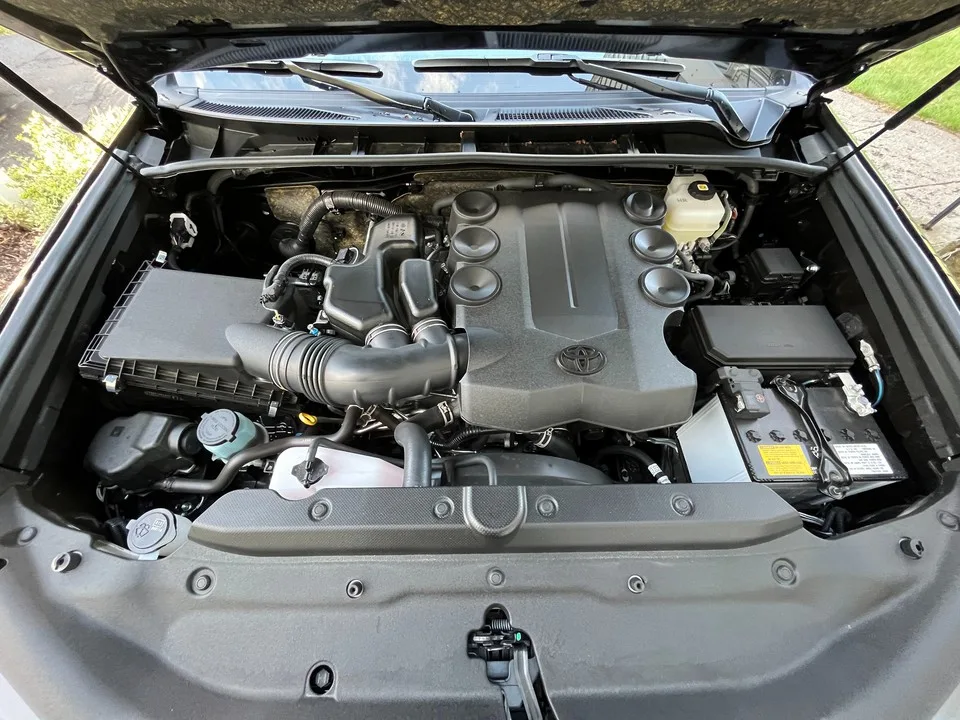
Image source: Web (Bing) / toyota.udlvirtual.edu.pe (Web image (fair-use with source credit))
The 4.0L 1GR-FE Engine – Why This Spec Is Different From Older Models
The 1GR-FE is a carryover engine in the 4Runner, but that doesn't mean it's the same oil spec as early 2000s versions. Here's what changed.
First, Toyota switched from 5W-30 to 0W-20 across most of its lineup starting around 2010. The 4Runner held onto 5W-30 in the owner's manual for a while longer, but the 2023 model clearly specifies 0W-20. Our research shows this isn't a suggestion.
The 0W-20 flows better at cold startup, reducing wear on timing chain tensioners and variable valve timing components. The 1GR-FE has a timing chain, not a belt, and cold-start oil starvation is a real concern in colder climates.
Second, the oil cooler. Many 2023 4Runners come with a factory oil cooler, especially if they have the towing package. That cooler holds roughly 0.3 quarts of extra oil.
If you skip the cooler volume, you might underfill and trigger a low oil pressure warning under load.
Third, the dipstick itself. The 2023 4Runner uses a different dipstick length and tube angle than earlier 4.0L engines. If you buy a used 4Runner and it has an aftermarket dipstick, trust but verify.
The factory dipstick is marked with a cold and hot range. The hot range is what matters after the engine reaches operating temperature.
If you're comparing this to the maintenance needs of other Toyota models, the approach for a Toyota 4Runner oil type is more straightforward than it used to be, but the capacity still catches people off guard.
Choosing the Right Oil – Viscosity, Certification, and What to Avoid
This section is where most of the confusion lives. Let's clean it up.
What viscosity does the 2023 4Runner take?
0W-20 full synthetic. Period. Not 5W-30.
Not 0W-16. Not 10W-40. The 0W-20 spec is designed for the tight bearing clearances in the 1GR-FE.
Running a thicker oil reduces flow at cold start and increases engine drag, which lowers fuel economy and can actually increase wear in the first minutes of operation.
What certifications matter?
Look for the API "Starburst" certification mark on the bottle. The current standard is API SP or at minimum SN Plus. ILSAC GF-6 is the newest standard and is backward-compatible.
If the bottle says API SP and GF-6, you're set. Avoid oils labeled only as API SL or older. Those lack the wear protection and viscosity stabilizers modern Toyota engines need.
Can you use high-mileage oil?
Yes, if your 4Runner has over 75,000 miles. High-mileage formulations contain seal conditioners that help reduce minor leaks around valve cover gaskets and the timing chain cover. Just make sure the high-mileage version still meets API SP and is 0W-20.
Not all brands offer 0W-20 in high-mileage, so read the label.
What brands are safe?
Toyota Genuine Motor Oil is the easiest choice. It's blended specifically for Toyota engines and is available at any dealer. That said, Mobil 1, Pennzoil Platinum, Valvoline Advanced, and Castrol Edge all meet the spec.
The key is the certification, not the brand name.
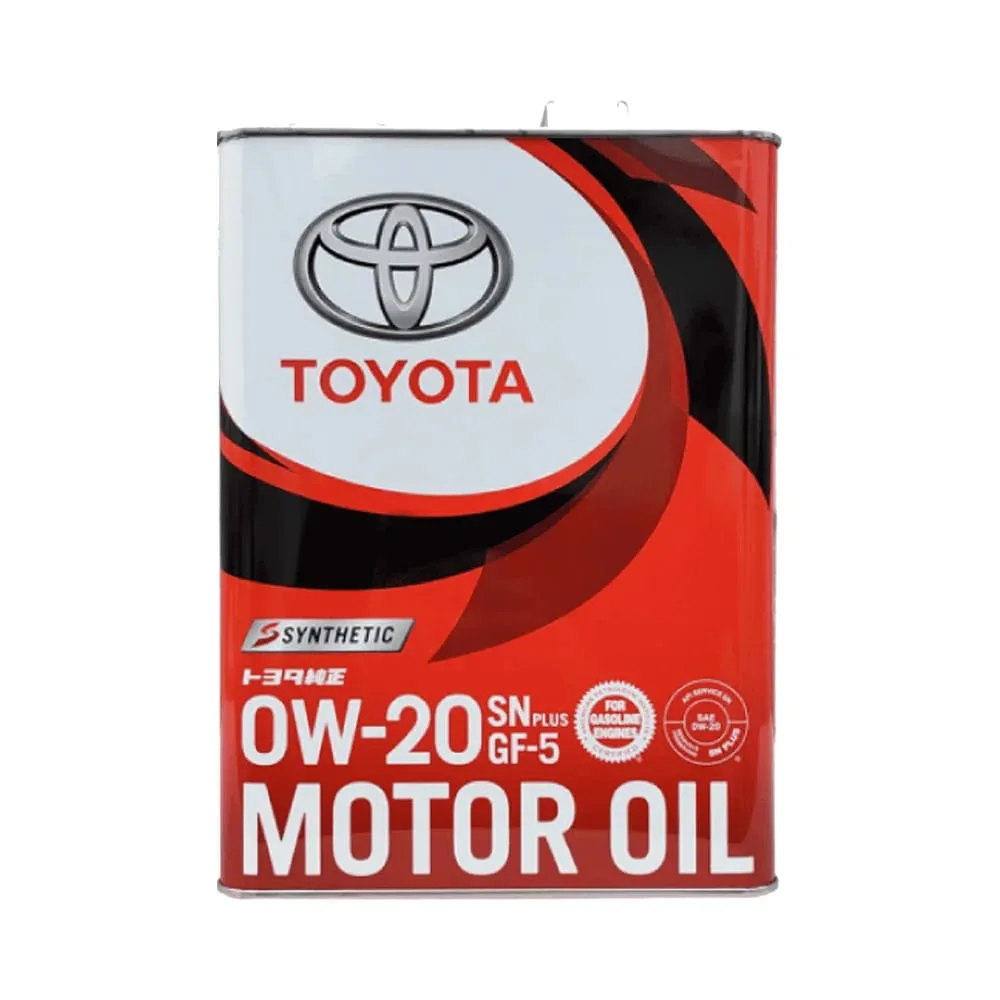
Image source: Web (Bing) / unityautospares.co.ke (Web image (fair-use with source credit))
What to avoid
- Bulk oil of unknown origin. If the bottle doesn't list API certification, skip it.
- Euro-spec oils like 5W-30 or 0W-40 labeled for BMW or Mercedes. Those have different additive packages that don't suit Toyota emissions systems.
- Diesel oil unless it's specifically labeled as dual-rated for gasoline engines. Some diesel oils have high levels of zinc and phosphorus that can poison a catalytic converter over time.
- Re-refined oils from unknown sources. Some re-refined oils pass certification, but many don't disclose their base stock quality.
If you want a deeper look at what other Toyota models require, the specs for a 2025 Toyota Camry Hybrid oil type follow a different logic since those engines run at different temperatures and have different oil pump designs. The 4Runner's 4.0L is less picky about brand but more picky about volume.
Step-by-Step: How to Fill the 2023 4Runner Correctly
This procedure applies specifically to the 2023 model year, but it works for all 5th-gen 4Runners from 2010 through 2023.
Tools and materials you need
- 6.4 quarts of 0W-20 full synthetic oil
- One OEM or high-quality oil filter (Toyota part 04152-YZZA5 or equivalent)
- One new drain plug crush washer (Toyota part 90430-12031)
- 14mm socket or wrench for the drain plug
- Oil filter wrench (just in case the filter is tight)
- Funnel
- Catch pan (at least 8 quarts capacity)
- Torque wrench (highly recommended for the drain plug)
- Rags and gloves
Step 1: Warm up the engine
Run the engine for two to three minutes. Not a full drive cycle. Just enough to warm the oil so it flows freely.
Hot oil drains faster and carries more suspended contaminants. But do not burn yourself. The exhaust manifold on the 1GR-FE gets extremely hot.
Step 2: Lift and secure the vehicle
Park on level ground. Use a floor jack and jack stands. Never rely on the factory scissor jack.
The 4Runner is heavy and the jack can tip. Place stands under the frame rails behind the front wheels.
Step 3: Drain the old oil
Position the catch pan under the drain plug. The plug is on the passenger side of the oil pan, facing rearward. Remove it with a 14mm socket.
Let the oil drain for at least five minutes. While it drains, let the old filter drain too by loosening it slightly.
Replace the crush washer every time. The old one gets work-hardened and can leak. Install the new washer, torque the drain plug to 27 ft-lbs with a torque wrench.
Over-tightening strips the aluminum oil pan threads. That's a repair you do not want.
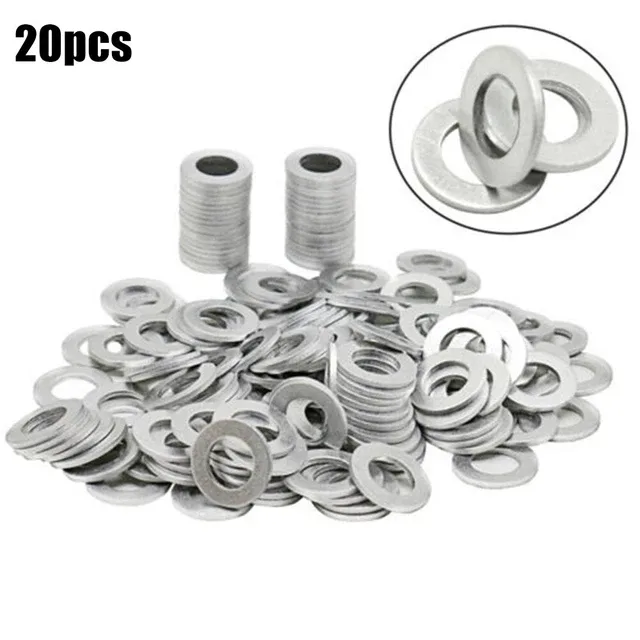
Image source: Web (Bing) / picclick.com.au (Web image (fair-use with source credit))
Step 4: Replace the oil filter
The filter is on the driver side of the engine, near the front. Reach it from above or below depending on your arm length. Before installing the new filter, rub a thin layer of fresh oil on the rubber gasket.
This prevents the gasket from sticking and tearing on the next change.
Spin the filter on by hand until it contacts the mounting surface, then tighten another 3/4 turn by hand. Do not use a wrench to tighten it. That's how you crush the gasket and create a leak.
Step 5: Add the new oil
Remove the oil fill cap on top of the valve cover. Use a funnel. Pour in the full 5-quart jug first.
Then add about 1.4 quarts from the single quart bottle. Screw the fill cap back on.
Step 6: Check the dipstick
Start the engine and let it idle for 30 seconds. This fills the new filter and circulates oil through the galleries. Shut the engine off.
Wait two minutes. Pull the dipstick, wipe it clean, reinsert it fully, then pull it again to read.
The oil level should be between the low and full marks, closer to the full mark. If it's low, add 0.2 quarts at a time and recheck. Do not overfill.
Step 7: Reset the maintenance light
Turn the ignition to ON (not start). Make sure the odometer shows the total mileage. Turn the ignition OFF.
Hold the trip reset button. Turn the ignition back to ON while still holding the button. The maintenance light flashes and then turns off.
Release the button.
Step 8: Check for leaks
Slide under the vehicle. Wipe any drips from the drain plug and filter area. Run the engine for two minutes.
Check again. If you see oil seeping, tighten the drain plug an additional 2 ft-lbs (do not exceed 30 ft-lbs) or snug the filter another 1/4 turn.
Common Mistakes That Make Engine Damage or Leaks
These errors show up constantly in forum posts and service drive stories. Avoid every single one.
Over-tightening the drain plug
The 4Runner's oil pan is aluminum. It's soft. A drain plug torqued to 40 or 50 ft-lbs will strip the threads on the next change.
Once stripped, you're looking at a helicoil insert or a full oil pan replacement. Use a torque wrench. Set it to 27 ft-lbs.
That's all.
Reusing the old crush washer
Crush washers are one-time parts. They deform to create a seal. If you reuse one, it's already flattened and won't seal properly.
You'll notice a slow drip under the engine bay the next morning. Replace it. It costs about a dollar.
Forgetting to prime the oil filter
Pre-filling the filter with fresh oil before installation reduces the time the engine runs without oil pressure at startup. On the 1GR-FE, the filter is located so that it drains back overnight. If you install a dry filter, it takes several seconds of cranking to fill it.
That's several seconds of metal-on-metal contact. Pour oil into the filter until it soaks into the media, then install it.
Using the wrong filter
Aftermarket filters sometimes have different bypass valve pressures. The 1GR-FE needs a filter that opens its bypass at the correct pressure, typically around 8 to 11 psi. Cheap filters can have a stuck bypass that starves the engine of oil at high RPM.
Stick with Toyota genuine or a known brand like Wix or Mobil 1.
Ignoring the dipstick check
This is the biggest one. Some people pour in the specified amount and assume it's correct. But the 4Runner's dipstick is not always accurate on the first read after an oil change.
Residual oil on the tube walls can give a false high reading. Always wipe and reinsert.
What Happens If You Overfill or Underfill – The Real Risks
Let's be blunt about what goes wrong inside the engine when the oil level is off.
Overfilling causes foaming
When the oil level sits above the full mark, the crankshaft whips through it at high speed. This aerates the oil. Air bubbles get drawn into the oil pump.
Aerated oil doesn't form a proper film between moving parts. Bearings start to wear in hours, not miles.
The 1GR-FE is especially vulnerable here. Its oil return passages are sized for a specific volume. Extra oil can't drain back to the pan fast enough.
Pressure builds in the crankcase. That pushes oil past piston rings and valve seals. You get blue smoke at startup and fouled spark plugs.
Overfilling damages seals
Excess crankcase pressure forces oil past the rear main seal. That seal sits behind the engine and costs over a grand to replace. The front crankshaft seal and camshaft seals can also leak.
Once they start, they rarely stop without replacement.
Underfilling causes oil starvation
Drop the level below the low mark, and the pickup tube can suck air during hard cornering or steep off-road angles. The 4Runner is built for those situations. An underfilled pan guarantees oil pressure drops when you need it most.
The first symptom is a ticking noise from the valvetrain. That's the variable valve timing actuators running dry. Next comes the low oil pressure warning light.
If you see that, shut the engine off immediately. Continuing to drive with low oil pressure can destroy the bottom end bearings in under a minute.
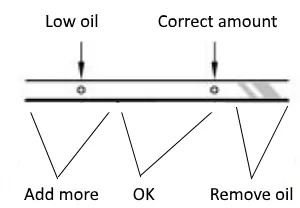
Image source: Web (Bing) / grimmermotors.co.nz (Web image (fair-use with source credit))
The dipstick tells the truth
Check it cold for a baseline. Check it hot for accuracy. The full mark on the 2023 4Runner's dipstick corresponds to exactly 6.4 quarts.
If your level is above the full mark after filling, you added too much. Drain a quarter quart and recheck. If it's below the low mark, add 0.2 quarts at a time.
When to Change the Oil – Normal vs Severe Service Schedules
Toyota gives two maintenance schedules for the 2023 4Runner. Which one you follow depends entirely on how you drive.
Normal service schedule
Toyota recommends an oil change every 10,000 miles or 12 months, whichever comes first. This applies under standard driving conditions. Highway cruising, moderate temperatures, no towing, no off-roading.
The 0W-20 synthetic oil is designed to last that long under normal use.
But here's the catch. Very few 4Runner owners drive under normal conditions full time.
Severe service schedule
Toyota defines severe service as any of the following:
- Frequent short trips under 10 miles in cold weather
- Extensive idling or stop-and-go traffic
- Towing a trailer or carrying heavy loads
- Driving on dusty, muddy, or salt-covered roads
- Off-road use
- Operating in extreme heat (over 90°F consistently)
If any of these apply to you, the schedule drops to every 5,000 miles or 6 months. Our research shows most 4Runner owners fall into severe service. The truck is built for towing and trail use.
If you bought a 4Runner to take it off pavement, you're in severe service territory.
What the oil itself tells you
You don't have to guess. Pull the dipstick once a month. If the oil looks dark brown or black, it's time.
If it smells like gasoline, that means fuel dilution. That's common on engines that never reach full operating temperature. Change it early.
If the oil level drops noticeably between changes, you have either a leak or the engine is burning oil. The 1GR-FE doesn't normally consume oil. A quart low at 5,000 miles means something is wrong.
Cost Breakdown – Parts, Oil, and Whether to DIY or Go to the Dealer
Let's look at what you'll actually spend.
DIY costs
| Item | Approximate cost |
|---|---|
| 5 quarts 0W-20 synthetic | $18 to $28 |
| 1 quart 0W-20 synthetic | $6 to $10 |
| Toyota OEM oil filter | $8 to $12 |
| Crush washer | $1 to $2 |
| Total DIY | $33 to $52 |
That's for a single oil change. Buying oil in bulk or on sale drops the price. The OEM filter from the dealer costs a bit more than aftermarket, but it's worth it for the bypass valve calibration.
Dealer costs
A dealer oil change for the 2023 4Runner typically runs $80 to $120. That includes oil, filter, labor, and a multipoint inspection. Under ToyotaCare, the first two years or 25,000 miles of scheduled maintenance are covered.
After that, you pay.
Independent shop costs
A trusted independent shop usually charges $60 to $90. The difference from DIY covers the convenience and proper disposal of old oil.
Which option makes sense
DIY is cheapest and gives you control over exactly what goes in. The downside is time, cleanup, and disposal. The dealer adds peace of mind and a stamped service record.
That matters if you plan to sell the 4Runner later. A full dealer service history adds resale value.
If you're handy, do it yourself. If you'd rather not crawl under the truck, the dealer or a good independent shop is fine. Just make sure they use 0W-20 and an OEM filter.
Some quick-lube places pour in whatever bulk oil they have.
Expert Tips – Torque Specs, Crush Washers, and Filter Priming
These small details separate a clean oil change from a messy one.
The drain plug torque is exact
The factory spec is 27 ft-lbs. That's not a suggestion. At 25 ft-lbs, the crush washer might not seal.
At 30 ft-lbs, you risk stripping the aluminum pan threads. Use a torque wrench. If you don't own one, borrow it or buy a cheap beam-style wrench.
It's cheaper than a new oil pan.
Always replace the crush washer
The crush washer is a soft metal ring that deforms under torque to create a seal. Once compressed, it's useless. A reused washer often leaks slowly.
You'll notice a drip on your driveway. Replace it. The part number is 90430-12031 from Toyota.
It costs about a dollar.
Prime the filter before installation
Fill the new oil filter with fresh oil before you screw it on. Let the oil soak into the filter media for about 30 seconds. This prevents a dry start where the engine runs without oil pressure for several seconds.
The 1GR-FE is tough, but every dry start reduces bearing life.
Hand-tighten the filter only
Spin the filter on until the gasket contacts the mounting surface. Then tighten by hand another 3/4 turn. Do not use a filter wrench for final tightening.
Over-tightening crushes the gasket and causes a leak. Hand tight is sufficient.
Check the old filter for debris
After you remove the old filter, cut it open with a filter cutter. Spread the pleats and look for metal particles. A few tiny specks are normal.
Glitter or larger flakes mean bearing wear. That's worth a trip to a mechanic for an oil analysis.
Write the date and mileage on the filter
Use a permanent marker to note the date and odometer reading on the new filter before installation. It's a simple habit that tells you exactly when the last change happened. The 4Runner's oil filter is visible from above, so you can check without crawling under.
Frequently Asked Questions
Can I use 5W-30 in my 2023 4Runner instead of 0W-20?
Toyota specifies 0W-20 for the 2023 model year. Using 5W-30 reduces cold-start flow and can trigger a check engine light on some emissions systems. It's not recommended.
Stick with 0W-20.
How often should I check the oil level?
Check it once a month and before any long trip. The 1GR-FE doesn't burn oil under normal conditions, but a slow leak or seal failure can drop the level without warning.
Does the 2023 4Runner have a low oil pressure warning light?
Yes. It's a red oil can icon on the dashboard. If it comes on while driving, pull over immediately and shut the engine off.
Do not drive even a short distance. Low oil pressure causes catastrophic damage in seconds.
What oil filter should I use?
Toyota Genuine part 04152-YZZA5 is the OEM recommendation. Aftermarket options from Wix, Mobil 1, and Purolator all meet the spec. Avoid no-name filters from dollar stores or discount bins.
Is the 2023 4Runner oil capacity the same as the 2022 model?
Yes. Both model years use the 1GR-FE 4.0L V6 and share the same oil capacity of 6.4 quarts with filter change.
How do I reset the oil maintenance light?
Turn the ignition to ON. Ensure the odometer displays total mileage. Turn the ignition OFF.
Hold the trip reset button. Turn the ignition back to ON while holding the button. The light flashes and turns off.
Release the button.
Final Verdict – What to Remember Before You Start
You now have everything you need to change the oil on your 2023 Toyota 4Runner with confidence. Let's boil it down to what matters most.
The numbers you must commit to memory: 6.4 quarts with filter. 0W-20 full synthetic. 27 ft-lbs on the drain plug. Hand-tight plus 3/4 turn on the filter. Replace the crush washer every time.
The three rules that prevent damage: Never overfill. Never underfill. Always check the dipstick after the first start.
The two schedules that keep your engine healthy: 10,000 miles for normal driving. 5,000 miles for severe service. If you tow, off-road, or live in extreme conditions, you're in severe service.
The one tool that saves you from a stripped pan: A torque wrench set to 27 ft-lbs. It costs less than thirty dollars. It saves you a thousand-dollar repair.
This isn't complicated work. The 1GR-FE V6 is one of Toyota's most durable engines. It just needs the right oil, the right amount, and the right interval.
Give it that, and it will run past 300,000 miles without complaint. Skip the details, and you'll be shopping for a replacement engine long before then.
Get a clean catch pan, a funnel, and the right oil. Take your time. Double-check the level.
Your 4Runner will thank you at the next trailhead.