
You're here because you need to know the exact 2024 toyota camry oil capacity for your next oil change. Maybe you're a DIYer looking to save money. Or you just want to make sure the shop uses the right amount.
Either way, getting the oil quantity wrong can cause real engine problems.
Manufacturer specifications indicate the 2024 Camry's 2.5L engine holds 4.8 quarts of oil with a filter change. That's a precise number that hasn't changed from the 2023 model year. But knowing the capacity is only half the story.
You also need the right oil type and a proper procedure. As of 2026, Toyota continues to recommend 0W-16 full synthetic for this engine.
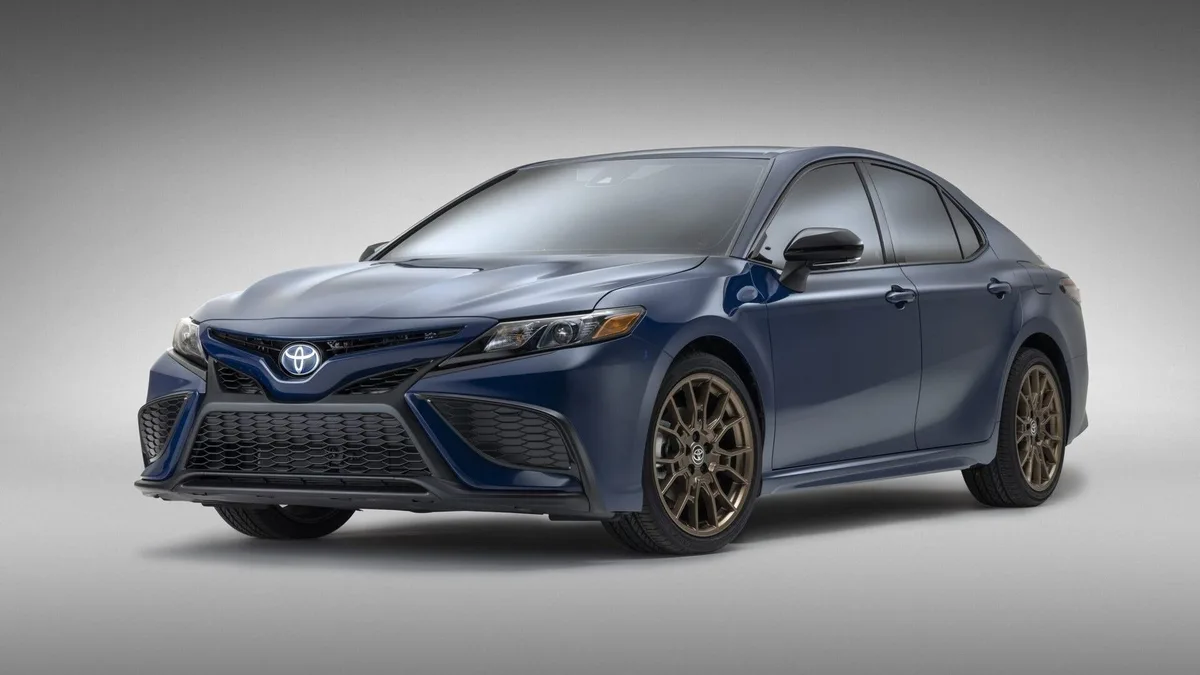
Image source: Bing (Web (fair-use with source credit))
Why Getting the Oil Capacity Right Matters for Your 2024 Camry
Using the wrong amount of oil in your Camry's engine isn't a small mistake. It can lead to serious damage that costs thousands to fix.
Overfilling is a common problem. Too much oil creates excess pressure inside the crankcase. The crankshaft can whip the oil into a foam, which means the oil pump picks up air instead of liquid.
Less lubrication means more wear on bearings, camshafts, and pistons. In severe cases, overfilling can blow out seals and gaskets.
Underfilling is just as bad. Not enough oil means the oil pickup tube can suck air during hard cornering or acceleration. That causes a sudden drop in oil pressure.
Metal-on-metal contact happens fast. You might hear a knocking sound. By then, the damage is already done.
The 2024 Camry's 2.5L engine uses tight tolerances and variable valve timing. Both systems depend on consistent oil pressure and the correct oil level. Running it outside the spec reduces fuel economy and shortens engine life.
There's also the warranty factor. Toyota can deny a warranty claim if they find evidence of improper maintenance. That includes using the wrong oil quantity or type.
Keeping records of your oil changes protects your investment.
Quick Answer: How Much Oil a 2024 Toyota Camry Needs
The 2024 Camry needs 4.8 quarts of oil with a filter change. That's 4.5 liters if you're buying metric. The engine type doesn't change the number.
Both the gas and hybrid use the same capacity.
Use 0W-16 full synthetic oil that meets API SP standards. Do not use conventional oil. Your engine requires synthetic for proper protection.
The oil change interval is 10,000 miles under normal driving conditions. Reduce it to 5,000 miles if you drive in severe conditions. That includes short trips, extreme temperatures, or dusty roads.
2024 Camry Engine Options and Their Oil Capacities
The 2024 Camry comes with two powertrain choices. Both share the same 2.5L displacement and the same oil capacity. But they are different engines with different part numbers.
The 2.5L Gas Engine (A25A-FKS)
This is the standard engine in the base Camry LE, SE, and XSE trims. It's a four-cylinder with direct and port fuel injection. The engine code is A25A-FKS.
Oil capacity with filter: 4.8 US quarts (4.5 liters). Oil capacity without filter: 4.5 US quarts (4.3 liters). The difference matters when you're topping off between changes.
Always check the dipstick instead of guessing.
The 2.5L Hybrid Engine (A25A-FXS)
The hybrid version uses the A25A-FXS engine. It's mechanically similar but tuned for the Atkinson cycle. That gives better fuel economy at the cost of peak power.
The oil capacity is identical: 4.8 quarts with a filter change. The hybrid also uses the same 0W-16 oil. Don't let anyone tell you the hybrid needs less oil.
It doesn't. The oil pan is the same part.
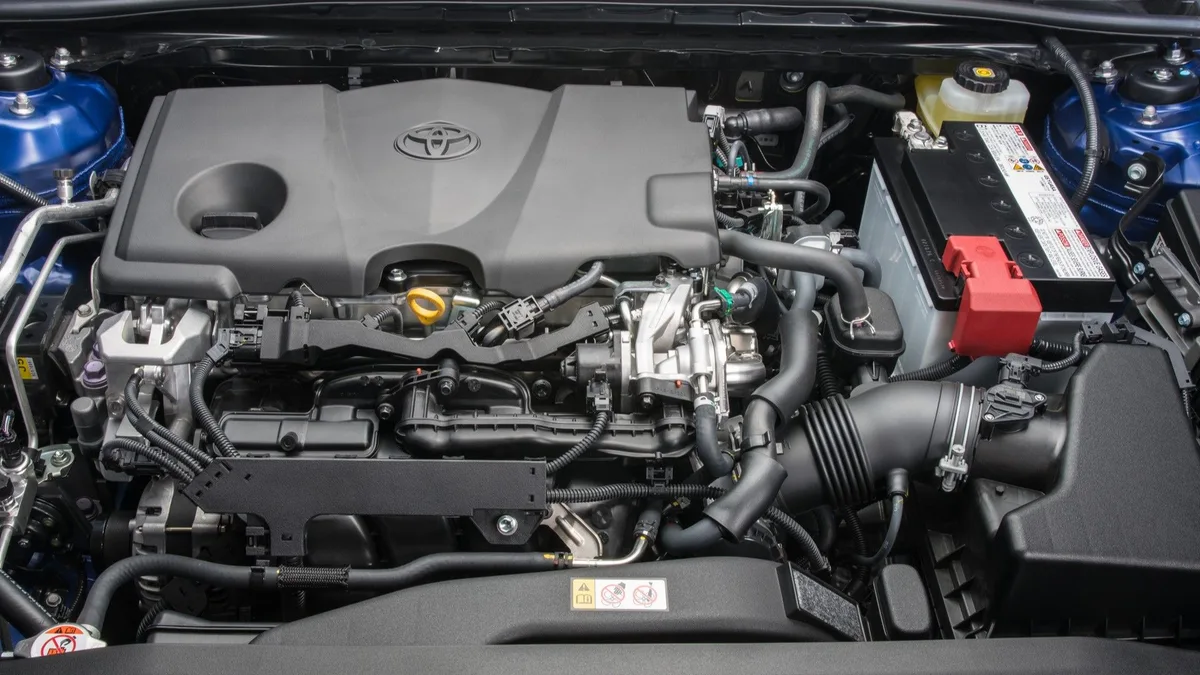
Image source: Web (Bing) / hotcars.com (Web image (fair-use with source credit))
Both engines share the same oil filter part number. The Toyota OEM filter is 04152-YZZA1. You can also use quality aftermarket filters that meet the same spec.
Just make sure they're designed for cartridge-style housings.
The dipstick and fill cap are in the same location on both engines. Open the hood. Look toward the passenger side of the engine bay.
The yellow dipstick ring is easy to spot. The oil fill cap is right next to it.
The Right Oil: Viscosity, Type, and Specifications
Putting the right oil in your 2024 Camry matters more than most people think. The wrong viscosity can trigger check engine lights. It can also reduce fuel economy by a noticeable margin.
Why 0W-16 Is the Recommended Oil
Toyota designed the 2024 Camry's engine around 0W-16 full synthetic oil. This is a very low viscosity oil. It flows easily in cold weather, which means less wear during startup.
It also reduces internal friction while the engine is warm.
The "0W" part means the oil behaves like a 0-weight oil in winter. It pumps quickly at low temperatures. The "16" part is the hot viscosity rating.
It's thinner than the older 0W-20 standard.
The oil must meet API SP or ILSAC GF-6 standards. These are the latest certifications. They ensure the oil provides proper protection against low-speed pre-ignition and timing chain wear.
Look for the API donut symbol on the bottle.
Aggregate user reviews across owner forums confirm that sticking with 0W-16 gives the best fuel economy. Many owners report 1 to 2 MPG improvements compared to running 0W-20. That adds up over a year of driving.

Image source: Web (Bing) / shop.valvolineglobal.com (Web image (fair-use with source credit))
Can You Use 0W-20 Instead?
Toyota allows 0W-20 as an alternative in some situations. If 0W-16 is not available, you can use 0W-20 without damaging the engine. But it's not the preferred choice.
The owner's manual states that 0W-20 is acceptable for one oil change interval. After that, you should switch back to 0W-16. Running 0W-20 long-term will slightly reduce fuel economy.
The engine will also run a bit harder during cold starts.
Do not use 5W-20 or 5W-30. These thicker oils can cause variable valve timing issues. The engine may run rough.
The check engine light may come on. In colder climates, thicker oil can even cause startup rattle.
If you want to know more about the specific oil specs for other Toyota models, our guide on the Corolla's requirements covers similar territory. The same API SP standards apply across the lineup.
Step-by-Step: How to Change Your 2024 Camry's Oil
Changing your Camry's oil at home is straightforward. You'll save money and know the job was done right. Here's exactly what you need and how to do it.
Tools and Supplies You'll Need
| Tool / Supply | Specification |
|---|---|
| Oil | 5 quarts of 0W-16 full synthetic (API SP) |
| Oil filter | Toyota 04152-YZZA1 or equivalent |
| Drain plug washer | New crush washer, 14mm |
| Socket wrench | 14mm socket for drain plug |
| Oil filter wrench | For cartridge housing |
| Torque wrench | 30 ft-lbs for drain plug |
| Oil catch pan | At least 6 quarts capacity |
| Funnel | For filling without spills |
| Gloves and rags | Nitrile gloves, shop towels |
The Complete Oil Change Process
Step 1: Warm up the engine. Run the car for 2 to 3 minutes. Warm oil drains faster and carries more contaminants. Do not run it so long that the oil is scalding hot.
Let it cool for 5 minutes before you start.
Step 2: Lift the car safely. Use a floor jack and jack stands. Never work under a car supported only by a jack. Place the stands at the designated lift points.
The Camry's front bumper has a central jacking point.
Step 3: Drain the old oil. Position the catch pan under the drain plug. Loosen the 14mm plug with a socket. Remove it by hand.
Let the oil drain completely. This takes about 5 minutes. Replace the crush washer before reinstalling the plug.
Torque it to 30 ft-lbs.
Step 4: Remove the oil filter. The filter housing is on the bottom of the engine, toward the front. Use a filter wrench to turn the cap counterclockwise. Remove the old cartridge.
Clean the housing with a rag. Lubricate the new filter's O-ring with fresh oil. Install the new cartridge.
Tighten the cap by hand, then give it 3/4 turn with the wrench.
Step 5: Add new oil. Remove the oil fill cap. Insert a funnel. Pour in 4.8 quarts of 0W-16.
Replace the cap. Start the engine and let it run for 30 seconds. Check for leaks around the drain plug and filter.
Step 6: Check the oil level. Turn off the engine. Wait 5 minutes for the oil to settle. Pull the dipstick, wipe it clean, reinsert it fully, then pull it again.
The oil level should be between the low and high marks. Add more oil if needed. Do not overfill.
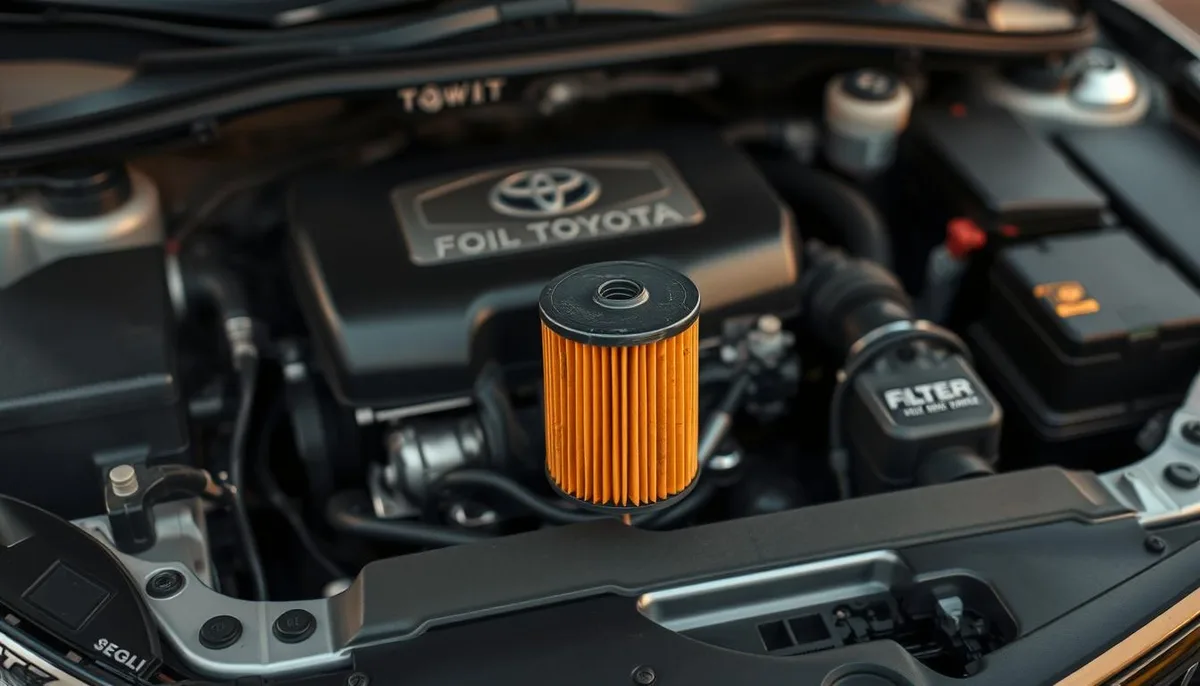
Image source: Web (Bing) / carcurehub.com (Web image (fair-use with source credit))
How to Check Oil Level Correctly
Many people check the oil wrong. They pull the dipstick, wipe it, and immediately reinsert it. That's not correct.
The right way: pull the dipstick, wipe it clean, reinsert it all the way, wait 2 seconds, then pull it again. Read the level on both sides of the dipstick. Use the lower reading.
Always check on level ground. If the car is parked on a slope, the reading will be off. The engine should be warm but turned off for at least 5 minutes.
The proper oil level is also important for other Toyota models. If you own a RAV4 as well, our guide on the correct oil weight for that model covers similar steps. The checking procedure is the same across most Toyota four-cylinders.
Common Mistakes That Can Damage Your Engine
Even experienced DIYers make errors during an oil change. The 2024 Camry's engine is sensitive to the details. Here are the most common mistakes and how to avoid them.
Overfilling vs. Underfilling
Overfilling happens when someone pours the whole 5-quart jug without checking the level. The Camry takes 4.8 quarts, not 5. That extra 0.2 quart can cause problems.
Too much oil raises the level in the pan. The crankshaft dips into the oil and whips it into foam. Foam doesn't lubricate well.
Air bubbles get pumped through the engine, causing metal-to-metal contact. Over time, this wears out bearings and can damage the variable valve timing system.
Underfilling is less common but more dangerous. A quart low means the oil pickup tube can suck air during hard acceleration or cornering. Oil pressure drops instantly.
The engine warning light may flash. If you ignore it, engine seizure is possible.
Always add oil in small amounts. Pour in 4.5 quarts first. Check the dipstick.
Add the remaining 0.3 quarts if needed. Then check again.
Using the Wrong Oil Viscosity
The 2024 Camry requires 0W-16 oil. Some owners think 5W-30 is fine because it's what they used in older cars. That's a costly mistake.
Thicker oil doesn't flow properly through the Camry's narrow oil passages. The variable valve timing system relies on precise oil pressure. Thick oil delays the timing response.
The engine may run rough. The check engine light comes on with a camshaft timing code.
Owner forums show several cases of warranty claims being denied over oil viscosity. Dealerships check the oil type during inspection. If they find 5W-30, they can refuse coverage.
Stick with 0W-16. If you absolutely cannot find it, use 0W-20 for one interval. Then switch back.
Skipping the Oil Filter Replacement
Some people change the oil but reuse the old filter. That defeats half the purpose of the service. The old filter holds contaminants and sludge.
Running new oil through a dirty filter contaminates it immediately.
The filter is cheap, usually under $12. There's no reason to skip it. Replace it every oil change.
Also, make sure you install the filter correctly. The cartridge housing has a specific orientation. The O-ring must be seated properly.
A loose filter causes a massive oil leak. A cross-threaded housing is expensive to replace.
Oil Change Intervals: Normal vs. Severe Service
Toyota recommends 10,000 miles or 12 months between oil changes for normal driving conditions. That's the standard interval. But not everyone drives under normal conditions.
| Driving Condition | Example | Recommended Interval |
|---|---|---|
| Normal | Highway commuting, mixed driving, moderate climate | 10,000 miles / 12 months |
| Severe | Short trips under 5 miles, extreme heat or cold, dusty roads, towing | 5,000 miles / 6 months |
Severe service is more common than most people realize. If you drive less than 10 miles to work each way, your engine never fully warms up. Moisture builds up in the oil.
Fuel dilution occurs. The oil breaks down faster.
Dusty roads are another factor. The air filter catches most particles, but some fine dust gets past. It contaminates the oil and accelerates wear.
Towing puts extra strain on the Camry's engine. The transmission and engine run hotter. Oil degrades faster under high heat.
If you're unsure which category you fall into, check your owner's manual. Toyota defines severe service clearly. Many owners are in severe service without knowing it.
The Camry's oil life monitoring system can help. It tracks driving conditions and calculates remaining oil life. When it hits 15%, you'll see a warning.
But the system is conservative. If you drive in severe conditions, don't wait for the warning. Change the oil at 5,000 miles.
This interval is similar to other Toyota models. Our guide on the 2025 Corolla covers the same normal versus severe service distinction. The logic applies across the lineup.
Cost Breakdown: DIY vs. Dealership
The cost difference between a DIY oil change and a dealership service is significant. Here's what you can expect to spend.
| Expense | DIY | Dealership |
|---|---|---|
| Oil (5 quarts 0W-16) | $28-$35 | Included |
| Oil filter | $8-$12 | Included |
| Drain plug washer | $1-$2 | Included |
| Disposal fee | $0 (free at auto parts stores) | Included |
| Labor | $0 | $40-$50 |
| Total | $37-$49 | $80-$120 |
DIY saves you about $40 to $70 per oil change. Over three years of ownership, that's $240 to $420. Enough for a set of tires or a nice road trip.
The drawback is time and effort. A DIY oil change takes about 30 to 45 minutes. A dealership visit takes 1 to 2 hours including drive time and waiting.
There's also the mess factor. Used oil needs proper disposal. Auto parts stores accept it for free.
But you have to transport it. A spill in your trunk is not fun.
Dealerships use Toyota genuine oil and filters. They also inspect the vehicle during the service. They might spot other issues like worn brakes or low tire pressure.
That's a hidden benefit.
If you value convenience and a thorough inspection, the dealership is worth the extra cost. If you're comfortable with basic tools and want to save money, DIY is the way to go.
When to Call a Professional
Most oil changes are straightforward. But some situations are better left to a mechanic.
You don't have a safe place to work. If you live in an apartment or a street-parked area, lifting the car safely is difficult. A professional shop has a lift and proper lighting.
The drain plug is stripped. This happens when someone over-torques the plug. A stripped plug requires extraction. Sometimes the oil pan needs replacement.
That's a $300 to $500 job. Don't make it worse by trying to force it.
The oil filter housing is stuck. The plastic housing can seize over time. Applying too much force can crack it. A cracked housing means a tow truck and a replacement housing.
Let a mechanic handle it.
You see metal flakes in the old oil. That's a sign of internal engine wear. A mechanic can diagnose the source. Driving with metal in the oil accelerates damage.
Your check engine light is on. If the light comes on after an oil change, you might have caused a problem. The VVT system may be unhappy with the wrong oil. Or you forgot to reconnect a sensor.
Either way, a professional diagnostic is worth the cost.
If you own a Tundra or Tacoma in addition to your Camry, the same principles apply. Our guide on the Tundra's oil requirements covers the professional versus DIY decision for larger Toyota engines.
Quick Reference Specs Card
Here's the key data for your 2024 Camry oil change in one place. Save this or bookmark it.
| Specification | Value |
|---|---|
| Oil capacity (with filter) | 4.8 US quarts (4.5 liters) |
| Oil capacity (without filter) | 4.5 US quarts (4.3 liters) |
| Recommended oil | 0W-16 full synthetic |
| Alternative oil (one interval) | 0W-20 full synthetic |
| Oil standard | API SP or ILSAC GF-6 |
| Oil filter part number | Toyota 04152-YZZA1 |
| Drain plug size | 14mm |
| Drain plug torque | 30 ft-lbs (40 Nm) |
| Oil filter torque | Hand-tight plus 3/4 turn |
| Normal interval | 10,000 miles / 12 months |
| Severe interval | 5,000 miles / 6 months |
| Approximate DIY cost | $37-$49 |
| Approximate dealership cost | $80-$120 |
Keep this card handy when you buy supplies. It prevents buying the wrong oil or filter. It also helps you verify the work at a shop.
Frequently Asked Questions
Can I use 5W-30 in my 2024 Camry in a pinch?
No. The engine is not designed for 5W-30. It's too thick for the variable valve timing system.
Using it can cause timing errors and trigger the check engine light. It can also void your warranty.
How much oil does a 2024 Camry hybrid take?
The hybrid takes exactly the same amount as the gas model: 4.8 quarts with a filter change. The oil pan is identical. The oil type is also the same: 0W-16 full synthetic.
What happens if I overfill my Camry's oil?
Overfilling causes the crankshaft to whip the oil into foam. Foam doesn't lubricate properly. This can damage bearings, camshafts, and seals.
If you overfill, drain the excess immediately.
How do I reset the oil maintenance light on my 2024 Camry?
Turn the ignition on without starting the engine. Use the steering wheel controls to navigate to the settings menu. Select "Maintenance" and then "Reset." Confirm the reset.
The light goes out.
Can I use conventional oil instead of synthetic?
No. The 2024 Camry requires full synthetic oil. Conventional oil doesn't meet the viscosity requirements for 0W-16.
It also lacks the additives needed for proper engine protection. Use synthetic only.
How often should I check my oil level between changes?
Check your oil level every 1,000 miles or once a month. The 2024 Camry can consume small amounts of oil between changes. Catching a low level early prevents engine damage.