
If you own a Toyota Corolla, the question of oil capacity usually pops up right before an oil change, or when you're standing in the auto parts aisle wondering how many quarts to buy. It sounds simple, but the answer changes depending on what engine is under your hood, and that varies by model year. The truth is that the toyota corolla oil capacity isn't one single number.
It's a range that depends on whether you've got the older 1.8-liter engine or the newer 2.0-liter power plant.
Manufacturer specifications indicate that most Corollas take between 3.9 and 4.4 quarts of oil with a filter change. That's a half-quart swing, and getting it wrong can lead to an overfill that damages seals or an underfill that starves the engine of lubrication. In our research, the most common mistake DIY owners make is grabbing one number from a generic chart and assuming it fits every year.
The 2026 models share the same basic architecture, but the 2009 model you bought used might need something different entirely. Let's walk through how to pin down your exact car's needs.
Quick Answer
Most Toyota Corolla engines hold 4.2 to 4.4 quarts of oil with a filter change. The 1.8L engine takes 4.2 quarts. The 2.0L engine takes 4.4 quarts.
Use 0W-20 full synthetic oil. Check your dipstick after adding. Add small amounts until the level is correct.
Never overfill.
What Year Is Your Corolla? (Why the Answer Depends on the Engine)
The first thing to understand is that Toyota has used a few different engine families in the Corolla over the last couple of decades. The capacity isn't random, but it's tied directly to which engine you have.
Here's the breakdown by generation and engine:
| Model Years | Engine | Oil Capacity (with filter) |
|---|---|---|
| 2000–2006 | 1.8L 1ZZ-FE | 3.9 quarts |
| 2007–2013 | 1.8L 2ZR-FE | 4.2 quarts |
| 2014–2018 | 1.8L 2ZR-FE | 4.2 quarts |
| 2019–2022 | 1.8L 2ZR-FAE | 4.2 quarts |
| 2023–present | 2.0L M20A-FKS | 4.4 quarts |
The older 1ZZ-FE engines from the early 2000s are the oddball here. They take just under 4 quarts, which means a standard 5-quart jug will leave you with a little extra. That's fine, just don't dump it all in.
The 2ZR-FE engines that started appearing in 2007 are more consistent at 4.2 quarts. And the newer 2.0-liter M20A-FKS, found in 2023 and later models, bumps up to 4.4 quarts.
Why does this matter? Because if you grab the capacity from a 2020 Corolla and pour it into a 2005 model, you're overfilling by half a quart. That half-quart can cause foaming, which means the oil pump picks up air instead of fluid.
Foam doesn't lubricate well, and over time that leads to bearing wear. We'll talk more about what happens when you get it wrong in a later section.
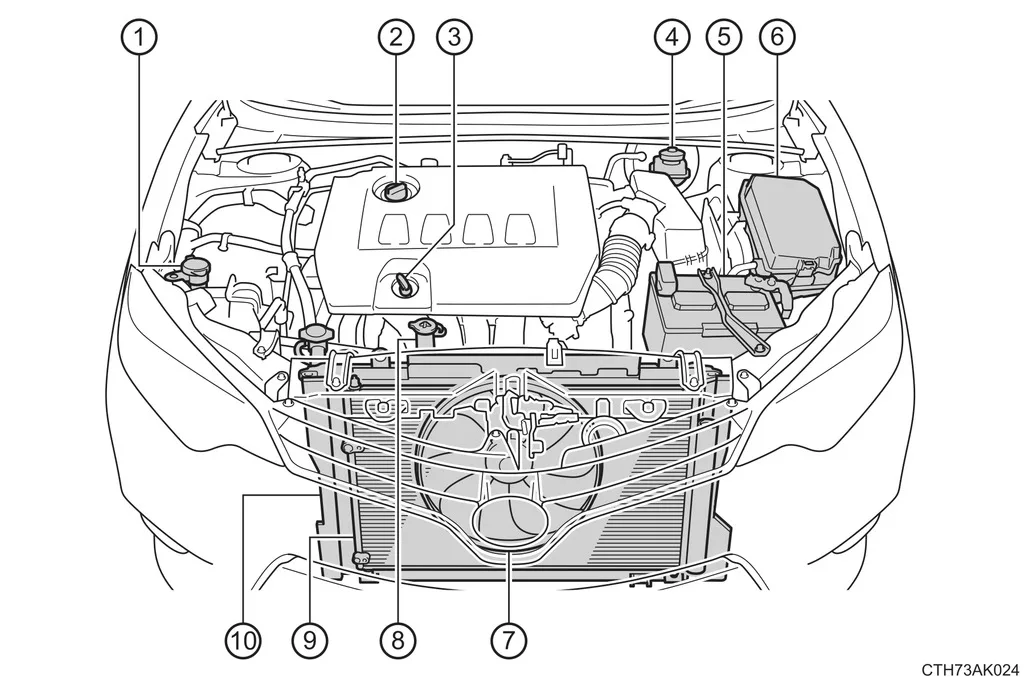
How to Find Your Corolla's Exact Engine
If you don't know which engine is in your car, there are three quick ways to find out. The easiest is to check the owner's manual. The oil capacity and recommended viscosity are printed right there, usually in the specifications section near the back.
If you've lost the manual, Toyota provides digital copies on their official website for most models going back to the early 2000s.
The second method is to pop the hood and look at the engine cover. Toyota stamps the engine code on a metal tag or directly on the block in most cases. On the 1.8L models, you'll see "2ZR-FE" or "2ZR-FAE" cast into the plastic engine cover.
On the newer 2.0L models, look for "M20A-FKS." If you see neither, check the emissions label under the hood. That sticker usually lists the engine family.
The third approach is to use your vehicle identification number. The VIN is visible through the windshield on the driver's side, and the eighth character often identifies the engine. For example, a "5" in that position on a 2023 Corolla indicates the 2.0L engine.
You can decode this yourself using the Toyota VIN decoder on the Toyota owners site, or just call a dealership parts department. Give them the VIN, and they can tell you exactly what engine and capacity you're working with.
If you're still unsure, you can also check our comprehensive guides for related models. For instance, the oil capacity for a 2025 Corolla is consistent with the 2.0L spec, and you can verify that against our detailed breakdown of the 2025 Toyota Corolla oil type and capacity guide. That page has the exact specs for the newest models.
The Right Oil Viscosity Matters Just as Much as the Amount
Getting the capacity right is half the battle. The other half is using the correct oil viscosity. Toyota has standardized on 0W-20 full synthetic oil for most Corollas built after 2007.
This isn't a suggestion. It's what the engine was designed to use, and deviating from it can affect fuel economy, cold-start protection, and long-term reliability.
Here's what Toyota recommends by engine:
- 1.8L 2ZR-FE / 2ZR-FAE (2007, 2022): 0W-20 full synthetic, API SN or SP, ILSAC GF-5 or GF-6.
- 2.0L M20A-FKS (2023, present): 0W-16 full synthetic, API SP, ILSAC GF-6B. Yes, that's a thinner oil. Toyota switched to 0W-16 for improved fuel economy in the newer engines.
- 1.8L 1ZZ-FE (2000, 2006): 5W-30 conventional or synthetic blend. These older engines have looser tolerances and benefit from a slightly thicker oil.
If you own a 2020 Corolla and pour in 5W-30, it will probably run, but you'll notice the engine has a harder time cranking in cold weather. The oil is thicker when cold, so the starter works harder, and the oil pump takes longer to get oil circulating. In extreme cold, that delay can cause momentary metal-to-metal contact on startup.
That's the kind of wear that adds up over 100,000 miles.
The viscosity rating system is standardized by the Society of Automotive Engineers. The "0W" part refers to the oil's flow at low temperature. Lower is better for cold starts.
The "20" or "16" refers to the viscosity at operating temperature. Lower numbers mean thinner oil at full temperature, which reduces drag on the engine and improves fuel efficiency. Toyota's engineers spent a lot of time testing these numbers.
Stick with what they recommend.
For the 0W-20 engines, use only full synthetic oil. Conventional oil breaks down faster under the higher operating temperatures of modern engines, and it doesn't flow as well at cold temperatures. Synthetic oil handles both extremes better.
It's worth the extra couple of dollars per quart.
If you're curious how this compares to other Toyotas, our guide on the Toyota RAV4 oil type covers a similar engine family. The RAV4 uses the same 2.5L engine in many trims, and the oil viscosity recommendations follow the same logic. It's a good reference point if you own multiple Toyotas.
Step-by-Step: Checking and Filling Oil the Right Way
Checking your oil level is one of those maintenance tasks that seems too simple to mess up. But the number of people who check it on an incline, or check it cold, or misread the dipstick is surprisingly high. Here's the correct process for a Corolla.
Start with the car parked on level ground. If you're on a slope, the oil in the pan tilts and gives a false reading. The engine should be at operating temperature and turned off for about five minutes.
This lets the oil drain back into the pan from the upper engine parts. If you check it immediately after shutting off, the dipstick will read low because half the oil is still up top.
Pull the dipstick out. It's the yellow loop handle near the front of the engine on most Corollas. Wipe it clean with a paper towel.
Insert it fully, then pull it out again. Look at where the oil film ends. There are two marks on the dipstick: a lower one and an upper one.
The oil should be between them, ideally closer to the upper mark.
If the oil is at or below the lower mark, you need to add oil. Don't wait. Running low on oil causes increased friction and heat, which accelerates wear on the piston rings and bearings.
Add oil through the filler cap on top of the valve cover. It's usually marked with an oil can icon. Add about half a quart, wait a minute, then recheck the dipstick.
Repeat until the level sits near the top mark.
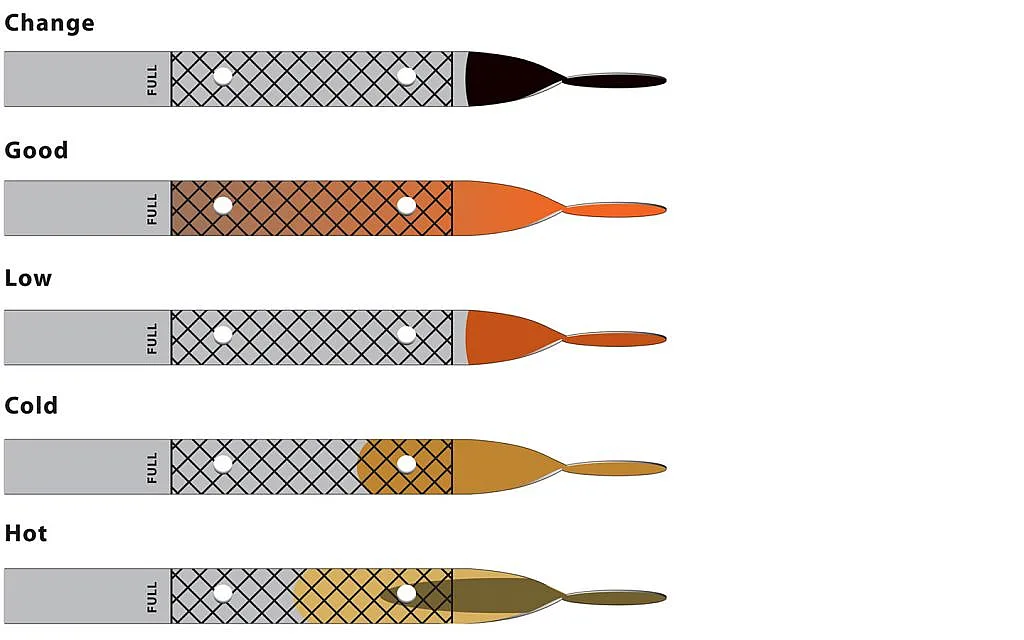
Do not overfill. If the oil is above the top mark, drain some out. Overfilling causes the crankshaft to whip the oil into foam, which the oil pump then circulates as aerated fluid.
Foam doesn't lubricate well, and it can cause hydraulic lifter noise, reduced oil pressure, and in severe cases, blown seals. If you accidentally add too much, loosen the drain plug slightly and let a little flow out, then retighten and recheck. It's easier to fix an overfill right away than to deal with foaming issues later.
For a full oil change, the process is the same but you're starting from empty. Drain the old oil by removing the drain plug under the oil pan. Replace the oil filter, which is accessible from underneath on most Corollas.
Tighten the drain plug to 30 foot-pounds and the oil filter to 18 foot-pounds. Then add the full capacity minus about half a quart. So for a 4.2-quart engine, add 3.7 quarts.
Check the dipstick. Add more gradually until the level is correct.
If this is your first time doing a change on a newer Toyota, you might find our walkthrough on the 2025 Toyota Corolla oil and capacity helpful. It covers the specific filter part numbers and any changes Toyota made to the oil pan design in recent years.
Common Mistakes DIYers Make with Corolla Oil
After looking at hundreds of forum posts and owner reports, a few mistakes come up repeatedly. The most common is using the oil capacity from the wrong model year. Someone with a 2019 Corolla reads online that it takes 4.4 quarts, dumps in the whole jug, and ends up overfilled.
The 2019 has the 1.8L engine and takes 4.2 quarts. That extra 0.2 quart pushes the level above the full mark.
The second mistake is ignoring the viscosity recommendation. A lot of people think "any 5W-30 will work" because that's what they used in their 1990s Honda. Modern Corollas need 0W-20 or 0W-16.
Using 5W-30 in a 2020 Corolla increases engine drag, reduces fuel economy by about 2 to 3 percent, and makes the engine work harder in cold weather. It won't blow up immediately, but it's not optimal.
The third mistake is not tightening the oil filter enough. A loose filter will leak. Over time, that leak can drop the oil level enough to cause low oil pressure.
The correct method is to hand-tighten the filter until the gasket contacts the mounting surface, then give it another three-quarters turn. Most filters include installation instructions on the box. Follow them.
The fourth mistake is reusing the old drain plug washer. The aluminum washer crushes slightly when you tighten the plug, creating a seal. If you reuse it, it's already crushed and may not seal properly.
A slow drip from the drain plug is a classic sign of a crushed washer that needs replacing. They cost about a dollar. Buy a few and keep them in the glove box.
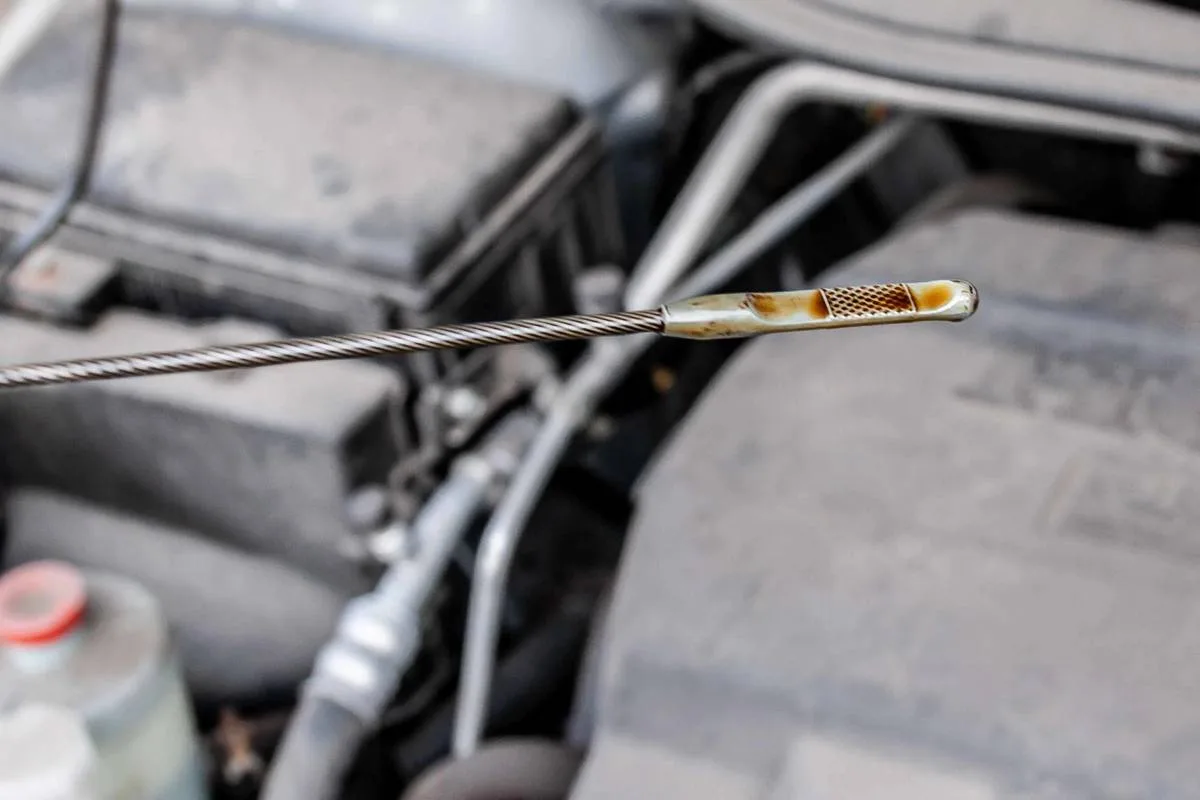
The fifth mistake is checking the dipstick on a cold engine and thinking the level is correct. Oil expands when hot, so a cold reading will be lower than a hot reading. If you fill to the top mark when the engine is cold, you'll be overfilled when the engine warms up.
Always check at operating temperature after a five-minute cooldown. That's what the factory service manual specifies, and it's the only way to get an accurate reading.
If you've made any of these mistakes on another Toyota in your driveway, the guidance is similar. Our article on Toyota Camry oil type goes into the same troubleshooting steps for that platform. The principles are the same across most modern Toyotas.
What Happens If You Use the Wrong Amount or Viscosity
Using the wrong oil amount or viscosity doesn't usually cause instant failure. But it does cause cumulative damage that shows up years later. Let's break down what actually happens in each scenario.
Overfilling by half a quart or more. The crankshaft rotates through the oil in the pan. When the oil level is too high, the crankshaft whips the oil into a frothy foam. The oil pump picks up this aerated mixture instead of pure fluid.
Foam doesn't compress well in the hydraulic lifters, so you'll hear ticking noises. More importantly, foam doesn't form a strong oil film between moving parts. Bearing surfaces experience increased metal-to-metal contact.
Over time, this wears down the rod bearings and main bearings. That's an expensive repair.
Underfilling by half a quart or more. The oil pickup tube sits near the bottom of the pan. When you corner hard or accelerate quickly, the oil sloshes away from the pickup. The pump sucks air for a moment.
That momentary loss of oil pressure is enough to cause a spike in bearing temperature. Repeated low-oil events accelerate wear on the piston rings and cylinder walls. You might notice increased oil consumption as the rings lose their seal.
Using the wrong viscosity. Putting 5W-30 in an engine designed for 0W-20 increases internal friction. The oil pump has to work harder to push thicker oil through narrow passages. Fuel economy drops by about 2 to 4 percent.
Cold starts are harder on the battery and starter. In the opposite direction, using 0W-16 in an older 1.8L engine can lead to reduced oil pressure at idle because the clearances are too large for such thin oil.
The bottom line is this. Stick with the recommended capacity and viscosity. It costs nothing extra to get it right.
Repairing bearing damage costs thousands.
Tools, Parts, and Supplies You'll Need for a Change
If you're planning to do your own oil change, having the right stuff on hand makes the job go smoothly. Here's what you'll need for a Corolla oil change.
| Item | Specification |
|---|---|
| Engine oil | 5 quarts of 0W-20 full synthetic (you'll use about 4.2) |
| Oil filter | OEM 04152-YZZA1 or equivalent quality brand |
| Drain plug washer | Aluminum crush washer, M12 size |
| Socket wrench | 3/8-inch drive with 14mm socket for drain plug |
| Oil filter wrench | Cap-style or strap wrench for filter removal |
| Drain pan | Minimum 6-quart capacity |
| Funnel | Long neck, fits filler opening |
| Rags or shop towels | For cleanup |
| Gloves | Nitrile or latex |
The OEM oil filter is worth buying. It costs about the same as aftermarket filters and includes the correct bypass valve pressure for your engine. Aftermarket filters sometimes use a different bypass pressure, which can affect oil flow during cold starts.
You'll also need a torque wrench if you want to be precise. The drain plug should be tightened to 30 foot-pounds. The oil filter housing on some newer models requires 18 foot-pounds.
Overtightening either one can strip threads or crack the filter housing.
If you're working on a newer Corolla with the 2.0L engine, double check the filter location. Some models have the filter mounted on the front of the engine, accessible from above. Others have it on the bottom.
The Toyota Corolla oil type guide has specific images and part numbers for each generation.
When to Drain vs When to Top Off
Not every low oil situation requires a full drain and refill. Knowing when to top off and when to do a complete change saves time and money.
Top off when: The oil level is slightly below the low mark and it hasn't been more than a month since your last oil change. Maybe you checked the level and it's half a quart low. Just add enough to bring it back to the full mark.
Topping off is fine as long as the oil isn't significantly degraded.
Drain and refill when: The oil level is low and you're near the end of your oil change interval. Or the oil looks dark, smells like fuel, or has a milky appearance. If the oil has been in the engine for more than 5,000 miles, just change it completely.
Adding fresh oil to degraded oil only dilutes the contaminants temporarily.
Emergency top off rule of thumb. If you're on a road trip and the low oil light comes on, add whatever approved viscosity you can find. Any 0W-20 or 5W-30 is better than running dry. Drive gently until you can do a proper change.
A common scenario with older Corollas is burning oil between changes. The 1.8L engines from the early 2000s are known for consuming oil as they age. If your Corolla burns a quart every 1,000 miles, topping off between changes is normal.
Just keep a quart in the trunk and check the dipstick every time you fill up with gas.
How Often to Change Oil Based on Your Driving Habits
Toyota's official recommendation for most Corolla engines is every 10,000 miles or 12 months, whichever comes first. That applies when using full synthetic 0W-20 oil under normal driving conditions. But normal driving is rare for most people.
Here's how to adjust the interval based on your actual driving:
- Highway commuting (normal). 10,000 miles is fine. Consistent highway driving is easy on oil because the engine reaches operating temperature and stays there.
- Short trips under 5 miles. Change at 5,000 to 7,000 miles. Short trips don't allow the oil to reach full operating temperature. Moisture and fuel accumulate in the oil, causing it to break down faster.
- Stop and go city traffic. Change at 5,000 to 7,000 miles. Idling and frequent acceleration put more stress on the oil.
- Hot climates or towing. Change at 5,000 miles. High heat accelerates oil oxidation.
- Extreme cold climates. Change at 5,000 to 7,000 miles. Cold starts are hard on oil because fuel dilution is more common.
If you use conventional oil in an older Corolla, shorten the interval to 3,000 to 5,000 miles. Conventional oil doesn't handle heat or oxidation as well as synthetic.
Toyota includes an oil maintenance reminder system in most models. It tracks driving conditions and alerts you when a change is due. Pay attention to it.
It's more accurate than a fixed calendar schedule.
For comparison, the Toyota RAV4 oil type and capacity guide recommends similar intervals for the RAV4's 2.5L engine. Toyota's approach to oil maintenance is consistent across their lineup.
Older Corollas: Why Capacity Can Change Over Time (Burning Oil)
If you own a Corolla with the 1ZZ-FE engine from the early 2000s, you might notice the oil level dropping between changes. This isn't a defect in most cases. It's a known characteristic of that engine family as it ages.
The 1ZZ-FE engines are prone to piston ring wear after about 100,000 miles. The rings lose their seal against the cylinder walls, allowing a small amount of oil to enter the combustion chamber. You'll see it as blue smoke on startup or while accelerating.
The oil capacity is still 3.9 quarts, but you might need to add a quart between changes.
A few things to check if your older Corolla is burning oil:
- PCV valve. A stuck PCV valve creates crankcase pressure that forces oil past the rings. Replace it every 60,000 miles.
- Valve stem seals. Worn seals allow oil to drip into the cylinders when the engine is off. You'll see smoke on startup that clears after a few seconds.
- Oil viscosity. Some owners switch to 5W-30 or even 10W-30 in high mileage 1ZZ-FE engines. The thicker oil helps slow oil consumption. This is a band-aid, not a fix, but it works.
If you're adding a quart every 1,000 miles, consider using a high mileage oil. These oils contain seal conditioners that help soften and expand aged rubber seals. They also include higher levels of detergents to clean sludge deposits from the rings.
If consumption exceeds a quart every 500 miles, it's time for a compression test. Low compression in one or more cylinders indicates worn piston rings or valve seats. At that point, an engine rebuild or replacement is the only permanent solution.
For specific guidance on older Corolla engines, the detailed breakdown of Corolla oil types covers the full engine history and the recommended oils for each generation. It's a good resource if you're working on a pre-2007 model.
FAQs: Quick Answers to the Most Common Questions
How many quarts of oil does a Toyota Corolla take?
Most Corollas take between 4.2 and 4.4 quarts with a filter change. The 1.8L engines hold 4.2 quarts. The newer 2.0L engines hold 4.4 quarts.
Older 2000-2006 models with the 1ZZ-FE engine take 3.9 quarts. Always check your owner's manual for the exact spec.
Can I use 5W-30 instead of 0W-20 in my Corolla?
Only if you have an older 1ZZ-FE engine from the early 2000s. That engine was designed for 5W-30. For any Corolla built after 2007, use 0W-20 full synthetic.
Using 5W-30 in a modern engine reduces fuel economy and increases cold-start wear. It's not worth the trade-off.
What happens if I put too much oil in my Corolla?
Overfilling by half a quart or more causes the crankshaft to whip oil into foam. The oil pump then circulates aerated fluid instead of pure oil. Foam doesn't lubricate well.
You'll hear ticking from the lifters, and over time the rod bearings wear out. Drain the excess right away.
How do I check the oil level correctly?
Park on level ground with the engine warm. Turn it off and wait five minutes. Pull the dipstick, wipe it clean, insert it fully, and pull it out again.
The oil should sit between the two marks, ideally near the upper mark. Check it at operating temperature, not cold.
Why is my Corolla burning oil?
On older 1ZZ-FE engines, piston ring wear after 100,000 miles is common. The rings lose their seal and allow oil into the combustion chamber. Check the PCV valve and consider switching to a high mileage oil.
If consumption exceeds a quart every 500 miles, have a compression test done.
How often should I change the oil in my Corolla?
Toyota recommends every 10,000 miles for normal highway driving with full synthetic oil. If you take short trips, drive in heavy traffic, or live in extreme temperatures, shorten the interval to 5,000 to 7,000 miles. Pay attention to the oil maintenance reminder in your dashboard.