
If you own a 2016 Toyota Camry and you're getting ready to change the oil yourself, there's one number you absolutely need to get right. The 2016 Toyota Camry oil capacity isn't the same for every model, and pouring in the wrong amount can lead to real engine trouble. It's a straightforward spec, but only if you know which engine is under your hood.
Manufacturer specifications indicate that the 2.5L four-cylinder engine takes 4.4 quarts of oil with a filter change, while the 3.5L V6 requires 6.4 quarts. Both engines call for 0W-20 full synthetic oil meeting API SN or ILSAC GF-5 standards. Getting those numbers right is the difference between a smooth-running engine and costly repairs down the road.
Quick Answer
The 2016 Toyota Camry oil capacity is 4.4 quarts for the 2.5L four-cylinder engine. The 3.5L V6 engine takes 6.4 quarts. Both capacities include a new oil filter.
Use 0W-20 full synthetic oil with API SN certification. Always check the dipstick after filling. Never rely on the full capacity number alone.
Why Getting the Oil Capacity Wrong Can Cost You an Engine
Oil is the lifeblood of your engine. It lubricates moving parts, reduces friction, carries away heat, and keeps everything running smoothly. When you put in too little oil, metal components rub against each other.
Heat builds up fast. Within minutes, you can damage bearings, camshafts, and cylinder walls.
Overfilling is just as dangerous. Extra oil gets churned into foam by the spinning crankshaft. Foam doesn't lubricate well.
Air bubbles in the oil cause pressure drops and starve critical parts. In extreme cases, too much oil can blow out seals or even hydro-lock the engine. Neither scenario is cheap to fix.
The 2016 Camry uses a wet-sump oil system. That means the oil sits in a pan at the bottom of the engine. The oil pump pulls it up and circulates it through the engine.
The pan has a specific volume designed to hold just the right amount. Adding more throws off the whole system.
This is why the difference between 4.4 quarts and 6.4 quarts matters so much. If you assume your V6 Camry takes the same as a friend's four-cylinder, you'll be nearly two quarts short. That's enough to cause serious damage on a long drive.
The 2016 Camry Has Two Engines — And They Take Different Amounts
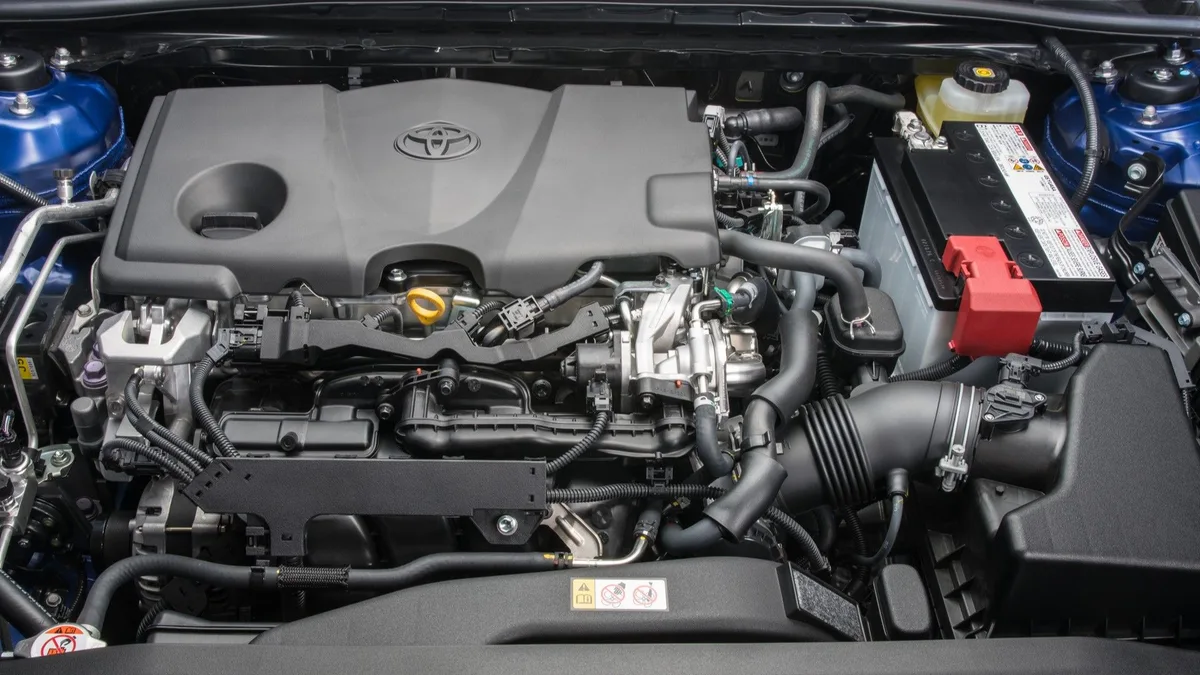
Image source: Bing (Web (fair-use with source credit))
Toyota offered two engine options for the 2016 Camry. The base model came with a 2.5L four-cylinder engine, known internally as the 2AR-FE. The higher trims, including the XSE and some SE models, featured a 3.5L V6 called the 2GR-FE.
These engines share a chassis but very little else when it comes to oil.
The 2.5L four-cylinder holds 4.4 US quarts of oil when you include the filter. That's about 4.2 liters. If you're filling a completely dry engine from scratch, you'll need closer to 5.1 quarts, but that only happens during a rebuild or after major repairs.
The 3.5L V6 holds 6.4 US quarts with a filter change, or roughly 6.1 liters. A dry fill for the V6 requires about 7.0 quarts. That extra capacity exists because the V6 is physically larger and generates more heat.
It needs more oil to stay properly cooled and lubricated.
Here's the simple way to tell which engine you have. Check the badge on the trunk lid. If it says "Camry" with no engine designation, it's almost certainly the four-cylinder.
If it says "Camry XSE" or you see "3.5L V6" anywhere near the fender badge, you've got the bigger engine. You can also pop the hood and look at the engine cover. The V6 cover is wider and has a distinct shape compared to the four-cylinder.
Quick Reference: Oil Capacity by Engine (4-Cylinder vs V6)
This table gives you the exact numbers at a glance. Save it, bookmark it, or print it out before you start your oil change.
| Specification | 2.5L 4-Cylinder (2AR-FE) | 3.5L V6 (2GR-FE) |
|---|---|---|
| Oil capacity with filter | 4.4 US quarts (4.2 L) | 6.4 US quarts (6.1 L) |
| Dry fill capacity | 5.1 US quarts (4.8 L) | 7.0 US quarts (6.6 L) |
| Oil type | 0W-20 full synthetic | 0W-20 full synthetic |
| API certification | SN or SN Plus | SN or SN Plus |
| ILSAC certification | GF-5 | GF-5 |
| Oil filter part number (OEM) | 04152-YZZA1 | 04152-31090 |
| Drain plug size | 14mm | 10mm hex |
| Drain plug torque | 29 lb-ft (39 Nm) | 29 lb-ft (39 Nm) |
The dry fill numbers matter if you're rebuilding the engine or replacing it entirely. For a standard oil change where you drain the old oil and replace the filter, always use the "with filter" number. That's what most DIY guides reference, and it's what your owner's manual specifies.
What Oil Type and Viscosity to Use (and Why 0W-20 Matters)
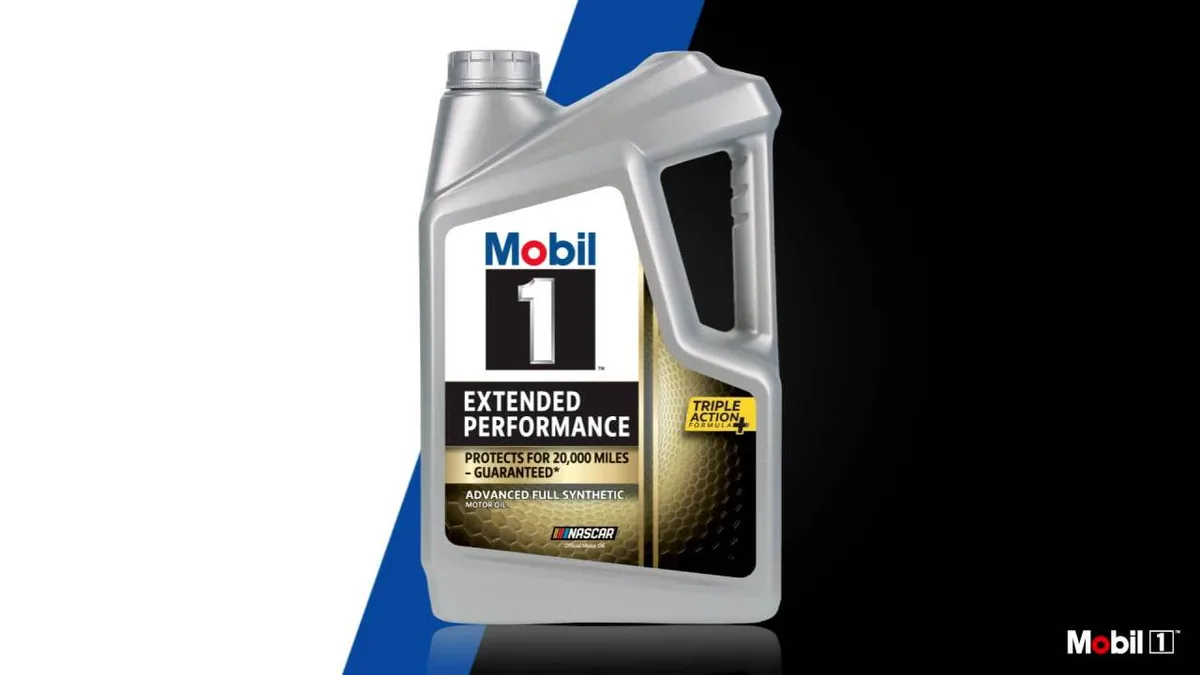
Image source: Web (Bing) / hitchesguide.com (Web image (fair-use with source credit))
Toyota specifies 0W-20 full synthetic oil for both engines in the 2016 Camry. That's not a suggestion. It's the only viscosity recommended in the owner's manual, and for good reason.
The "0W" part stands for winter viscosity. It means the oil stays thin enough at low temperatures to flow quickly during cold starts. When you crank the engine on a freezing morning, the oil needs to reach critical parts within seconds.
A thicker oil like 5W-30 takes longer to circulate, which means more wear on startup.
The "20" refers to the oil's thickness at normal operating temperature. A 20-grade oil is relatively thin, which reduces internal engine friction. Less friction means better fuel economy.
Toyota engineered the Camry's variable valve timing and hydraulic chain tensioners around this specific viscosity. Running anything thicker can throw off those systems.
You don't need a special brand. Any major brand that meets API SN or ILSAC GF-5 standards will work. Mobil 1, Pennzoil, Valvoline, Castrol, they all make 0W-20 synthetic that meets the spec.
The key is the certification mark on the bottle, not the brand name.
One common question is whether you can use conventional oil instead of synthetic. Technically, yes, but don't do it. The 0W-20 viscosity is almost impossible to find in conventional form.
Even if you find it, conventional oil breaks down faster under heat. The longer oil change intervals that synthetic allows (up to 10,000 miles) save you time and money over the long run. If you're unsure about what's best for your specific driving habits, checking the owner's manual or looking at the specifications for newer models like the 2026 Camry can give you helpful context.
stick with 0W-20 synthetic and change it on schedule. Your engine will thank you at 150,000 miles.
How to Do the Oil Change Yourself (Step by Step)
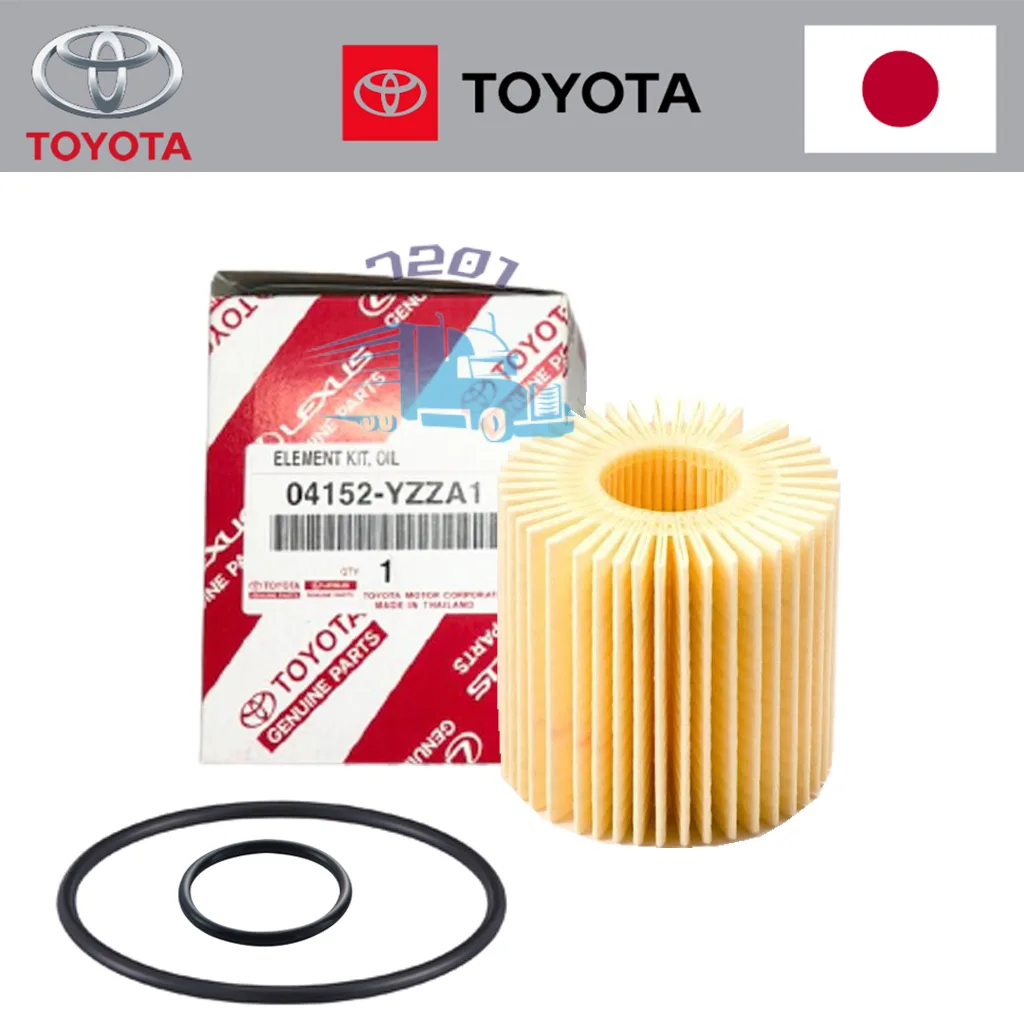
Image source: Web (Bing) / shopee.com.my (Web image (fair-use with source credit))
Doing your own oil change on a 2016 Camry is straightforward. You'll save $30 to $50 per service compared to a shop. More importantly, you'll know exactly what went in and that everything is torqued correctly.
Here's what you need before you start.
Tools and parts checklist:
- 4.4 quarts of 0W-20 (four-cylinder) or 6.4 quarts (V6)
- OEM or equivalent oil filter (Toyota 04152-YZZA1 for four-cylinder, 04152-31090 for V6)
- New drain plug crush washer (Toyota part 90430-12031 or equivalent 14mm)
- 14mm socket or wrench (four-cylinder) or 10mm hex bit (V6)
- Torque wrench (highly recommended)
- Oil filter wrench (for spin-on filters or filter housing cap)
- Drain pan (at least 8-quart capacity)
- Funnel
- Shop rags or paper towels
- Jack and jack stands or ramps (if you need ground clearance)
Step-by-step process:
Warm up the engine. Run it for about five minutes. Warm oil drains faster and carries more suspended contaminants. Don't let it get hot enough to burn you. Lukewarm is perfect.
Secure the car. Park on level ground. If your Camry sits low, drive it onto ramps or jack it up and place jack stands. Never work under a car supported only by a jack.
Remove the oil fill cap. This lets air in and helps the oil drain completely. Set the cap somewhere clean where it won't collect dirt.
Get under the car and locate the drain plug. On the four-cylinder, it's a 14mm bolt on the lower rear of the oil pan. On the V6, it uses a 10mm hex socket. The plug faces toward the back of the car.
Position your drain pan and remove the plug. Turn counterclockwise. The oil will come out fast at first, then slow to a drip. Let it drain for at least five minutes. Give it a full ten if you want every last drop out.
Remove the old oil filter. On the four-cylinder, the filter is a cartridge housed in a plastic cap on the front of the engine. Use a filter wrench to unscrew the cap. On the V6, it's a traditional spin-on metal can located near the front. Turn it counterclockwise by hand or with a wrench if it's stuck.
Replace the crush washer. This small aluminum ring seals the drain plug. Never reuse an old one. A crushed washer won't seal properly and will leak over time.
Install the new filter. For the cartridge type, lubricate the new O-ring with fresh oil and screw the cap back on. Torque it to 18 lb-ft. For the spin-on type, lubricate the rubber gasket and hand-tighten until it contacts the mounting surface, then give it another three-quarter turn.
Reinstall the drain plug. Thread it in by hand first to avoid cross-threading. Torque it to 29 lb-ft. Don't guess this one. An overtightened plug can strip the oil pan threads, and that's an expensive fix.
Add the new oil. Use a funnel to pour in most of the capacity. For the four-cylinder, add about 4 quarts. For the V6, add about 6 quarts. Don't dump the entire bottle in at once.
Check the dipstick. Wait a minute for the oil to settle. Pull the dipstick, wipe it clean, reinsert it, and pull it again. The level should be between the low and full marks. Add small amounts if needed.
Run the engine for 30 seconds. This circulates the new oil and fills the filter. Check for any leaks around the drain plug and filter. Turn the engine off and wait two minutes.
Recheck the dipstick. Top off if necessary. The final level should be at the full mark, not above it.
Reset the oil maintenance light. The procedure varies by trim, but the standard method is turning the ignition to ON (don't start), pressing the trip reset button until the odometer shows "ODO," then turning the ignition OFF. Hold the trip reset button while turning the ignition back to ON. Keep holding until the maintenance light resets.
Common Mistakes DIYers Make (and How to Avoid Them)
Even experienced DIYers slip up now and then. Here are the most common errors with the 2016 Camry and how to sidestep them.
Using the wrong oil capacity. This is the big one. If you own the four-cylinder and pour in 6.4 quarts because you assumed all Camrys are the same, you'll overfill by two full quarts. That foam problem we talked about becomes a real risk.
Check your engine size before you start.
Skipping the crush washer replacement. That tiny aluminum ring costs about a dollar. Reusing it is tempting, but crushed aluminum doesn't seal twice. You'll end up with a slow drip that leaves a stain on your driveway and drops your oil level over time.
Overtightening the drain plug. The oil pan is made of aluminum. The threads strip easily if you lean on the wrench. Use a torque wrench set to 29 lb-ft.
If you don't own one, snug the plug with a standard wrench and stop the moment you feel resistance increase. A quarter turn past hand-tight is usually enough.
Forgetting the O-ring on the filter cap. The cartridge-style filter on the four-cylinder uses a large O-ring that seals the plastic cap to the housing. If you forget to install the new one or double up the old one, you'll have a massive oil leak the moment you start the engine.
Not pre-lubing the filter gasket. On spin-on filters, the rubber gasket needs a thin coat of fresh oil before installation. Dry rubber can bind and tear, or it might not seat properly. A dry gasket also makes the filter impossible to remove next time.
Checking the dipstick immediately after adding oil. Fresh oil takes time to drain into the pan. If you check right away, you'll get a false low reading and overfill. Wait at least a minute, preferably two, between adding and checking.
What Happens If You Overfill or Underfill
Both scenarios are bad, but they damage the engine in different ways.
Underfilling. When the oil level drops below the pickup tube, the oil pump sucks air. Air doesn't lubricate. Metal-on-metal contact happens fast.
Rod knock, bearing failure, and scored cylinder walls are the typical results. A few ounces low won't hurt, but being a quart or more low on a long highway drive is asking for trouble.
Overfilling. The crankshaft spins through the oil pan. When the oil level is too high, the crank whips the oil into a froth. Aerated oil doesn't flow well and loses its ability to carry heat.
You might notice rough idle, ticking noises, or blue smoke from the exhaust. In severe cases, excess pressure blows out the rear main seal or camshaft seals.
The sweet spot. The full mark on the dipstick accounts for normal oil consumption between changes. Toyota designed the 2016 Camry's 2.5L engine to consume about one quart every 1,000 to 1,200 miles under normal driving. That's considered acceptable by Toyota's standards.
If you notice consumption above that, it's worth having the engine checked. Some 2AR-FE engines had known oil consumption issues, and there were technical service bulletins addressing them.
When to Change the Oil (Real Intervals, Not Just the Sticker)
Toyota recommends changing the oil every 10,000 miles under normal driving conditions. That's the number in the owner's manual, and it's valid if you use 0W-20 full synthetic oil and a quality filter.
But here's the catch. Most driving isn't "normal" by Toyota's definition. Short trips under five miles, stop-and-go traffic, extreme temperatures, dusty roads, or frequent towing all count as severe driving.
Under severe conditions, Toyota recommends dropping the interval to 5,000 miles.
The oil life monitoring system in the 2016 Camry actually tracks your driving patterns. It doesn't just count miles. It measures engine revolutions, temperature cycles, and time.
When the "Maintenance Required" light comes on, the system has calculated that your oil has degraded to about 15 percent of its useful life. That's a reliable signal to change it.
Our research suggests that 5,000 to 7,500 miles is a safer sweet spot for most owners. Oil is cheap. Engines are not.
Changing it a little early costs less than a replacement engine.
Tools and Parts You'll Need for the Job
If you're doing the job yourself, having the right parts upfront saves a trip to the auto parts store mid-change.
Oil and filter. Buy exactly what your engine needs. The four-cylinder takes 4.4 quarts, so a single 5-quart jug leaves you a little extra for top-offs. The V6 takes 6.4 quarts, so you'll need two 5-quart jugs or one 5-quart and two 1-quart bottles.
For the filter, stick with the genuine Toyota part or a high-quality aftermarket brand like Wix or Mobil 1.
Crush washer. Toyota part 90430-12031 fits both engines. It costs about a dollar. Buy three or four at once so you always have one on hand.
Socket and wrench. The four-cylinder drain plug needs a 14mm socket. The V6 plug needs a 10mm hex bit. A standard combination wrench works if you don't have sockets.
Torque wrench. This is worth the investment. A 3/8-inch drive torque wrench with a 10 to 50 lb-ft range covers both the drain plug (29 lb-ft) and the filter housing (18 lb-ft). Overtorquing costs more than the wrench.
Drain pan. Get one that holds at least 8 quarts. The V6 drains 6.4 quarts, and you need room to move the pan without spilling. A closed drain pan with a spout makes disposal easier.
Funnel and rags. A small funnel with a flexible neck helps avoid spills into the engine bay. Keep plenty of rags or paper towels nearby.
How to Reset the Oil Maintenance Light
After you finish the oil change, you'll need to reset the maintenance light. It's simple once you know the sequence.
Turn the ignition to the "ON" position. Don't start the engine. Press the trip meter reset button until the odometer displays "ODO" instead of a trip number.
Turn the ignition off.
Now press and hold the trip reset button. While holding it, turn the ignition back to "ON." Keep holding the button. The maintenance light will flash, then turn off.
Release the button. That's it.
If the light doesn't reset on the first try, repeat the process exactly. Some trims require holding the button for an extra five seconds after the light goes out. If yours is stubborn, check the owner's manual for your specific trim level.
A note on timing. Reset the light only after you've confirmed the oil level is correct. If you reset it first and then discover a leak, you'll lose track of when the next change is due.
When It's Smarter to Let a Shop Handle It
DIY oil changes save money, but they're not for everyone. Here's when paying a shop makes more sense.
You don't have level ground or safe jack stands. Working on a sloped driveway is dangerous. If you can't get the car safely off the ground, let a professional do it.
You live in a freezing climate. Lying on cold pavement under a car in January isn't worth the $40 savings. A shop has a warm bay and a lift.
You don't want to deal with oil disposal. Used motor oil is hazardous waste. You can't throw it in the trash.
Auto parts stores accept it for free, but you have to transport it in a sealed container. If that's a hassle, factor the disposal into your cost calculation.
You have the 3.5L V6. The oil filter on the V6 sits in a tight spot near the front of the engine. It's accessible but awkward.
Some owners find it easier to pay a shop for the extra reach.
The One Thing Most Owners Forget (The Crush Washer)
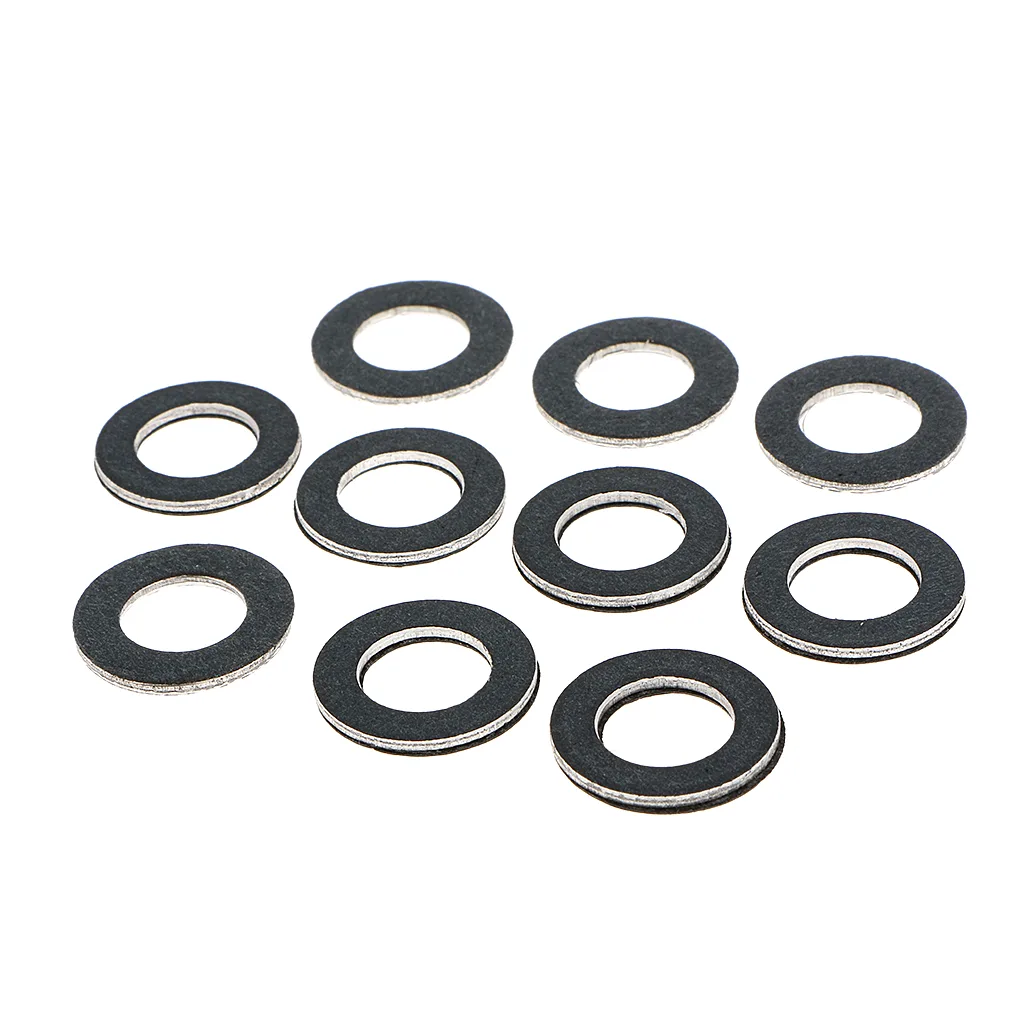
Image source: Web (Bing) / gbr.grandado.com (Web image (fair-use with source credit))
The crush washer is a small aluminum ring that sits between the drain plug and the oil pan. It costs about a dollar. Most new oil filters don't come with one, so you have to buy it separately.
Here's why it matters. When you tighten the drain plug, the washer compresses and forms a tight seal. That compression is one-time only.
Once the washer has been crushed, it can't seal again. Reusing it means you're relying on the metal-to-metal contact between the plug and the pan. That almost always leaks.
The leak is slow. You might not notice it until your next oil change. Over 5,000 miles, a slow drip can drop your oil level by half a quart or more.
That's enough to make a difference, especially if your engine already burns a little oil between changes.
Buy a pack of five or ten crush washers. Keep them in your glove box or with your oil change tools. Replace it every single time you pull the drain plug.
It's the cheapest insurance you can buy for your engine.
FAQs About the 2016 Camry Oil Capacity
Can I use 5W-30 instead of 0W-20?
Not if you want to keep the engine running as designed. Toyota engineered the variable valve timing around 0W-20 viscosity. Thicker oil delays flow to the timing chain tensioners at startup.
It also reduces fuel economy by about 2 percent. In an emergency, 5W-30 won't destroy the engine immediately. But switch back to 0W-20 at your next change.
How do I know if my Camry has the four-cylinder or V6?
Check the badge on the trunk. If it says "Camry" with no engine designation, it's the 2.5L four-cylinder. Look for "XSE" or "3.5L V6" badging for the larger engine.
You can also pop the hood. The V6 engine cover is noticeably wider and fills more of the engine bay.
Is the oil capacity the same for hybrid models?
The 2016 Camry Hybrid uses a different powertrain. It has a 2.5L four-cylinder engine paired with an electric motor. The hybrid takes 4.4 quarts of 0W-20, same as the standard four-cylinder.
But the hybrid has a different oil pan and filter location. Check the hybrid owner's manual for the exact procedure.
What happens if I put in too much oil?
Excess oil gets whipped into foam by the crankshaft. Foam doesn't lubricate. You may notice rough idle, ticking noises, or blue smoke.
In severe cases, excess pressure can blow out the rear main seal. If you overfill, drain the excess immediately. A fluid extractor through the dipstick tube works well for small corrections.
How often should I check the oil level?
Check it every other fuel fill-up. The 2.5L engine in particular is known to consume oil as it ages. A quick dipstick check takes 30 seconds.
It's the easiest way to catch a slow leak or rising consumption before it becomes a problem.
Final Verdict: Keep It Simple, Keep It Exact
The 2016 Toyota Camry oil capacity is not complicated. It's 4.4 quarts for the four-cylinder and 6.4 quarts for the V6. Use 0W-20 full synthetic oil.
Change it every 5,000 to 7,500 miles. Replace the crush washer every time. Check the dipstick before you button everything up.
Getting those details right keeps your Camry running reliably for years. The engine was built to last 200,000 miles or more with proper care. Oil changes are the single most important thing you can do to get there.
Do them right, and the car will take care of the rest.