
If you own a 2017 Toyota Tundra, knowing the exact 2017 toyota tundra oil capacity isn't just a trivia stat. It's the difference between a smooth-running engine and a costly repair bill. Pour in too little, and you risk oil starvation under load.
Pour in too much, and you can foam the oil, lose pressure, and damage internal components.
Manufacturer specs confirm that this truck has two different engines with two different capacities. The 5.7L V8 takes 6.9 quarts with a filter change, while the 4.6L V8 takes 6.4 quarts. Both require SAE 0W-20 synthetic oil meeting API SN or higher.
Get this right, and your Tundra's VVTi system stays happy for hundreds of thousands of miles. Let's walk through exactly what you need to know, what you'll need, and how to do the job without second-guessing yourself.
Quick Answer
The 2017 Toyota Tundra takes 6.9 quarts of oil. This is for the 5.7L V8 with a filter change. The 4.6L V8 takes 6.4 quarts.
Both engines use SAE 0W-20 synthetic oil. Always check the dipstick after filling. Never rely solely on capacity numbers.
Why Getting the Oil Capacity Right Matters
Your Tundra's engine relies on precise oil volume for three things: lubrication, cooling, and hydraulic pressure for the variable valve timing system. The 5.7L 3UR-FE engine has a large 6.9-quart sump for a reason. That extra capacity helps maintain oil temperature and pressure during heavy towing or sustained high-speed driving.
Underfill by just a quart, and you might not notice on a short commute. But load up a trailer, climb a mountain pass, or drive in extreme heat, and that missing volume can mean the oil pickup tube sucks air during hard cornering or steep grades. Oil starvation kills bearings and cam phasers fast.
Overfilling is equally dangerous. Too much oil lets the crankshaft whip the oil into a froth. Aerated oil doesn't lubricate well and can cause hydraulic lifter noise, VVTi actuator rattle, and eventually catastrophic failure.
The margin for error is tighter than most people realize.
The repair cost for a seized 5.7L V8 from oil-related damage typically runs $6,000 to $9,000 for a replacement engine. A $25 jug of oil is cheap insurance. Getting the exact capacity right is non-negotiable.
The Two Engines: 5.7L vs 4.6L Capacity Differences
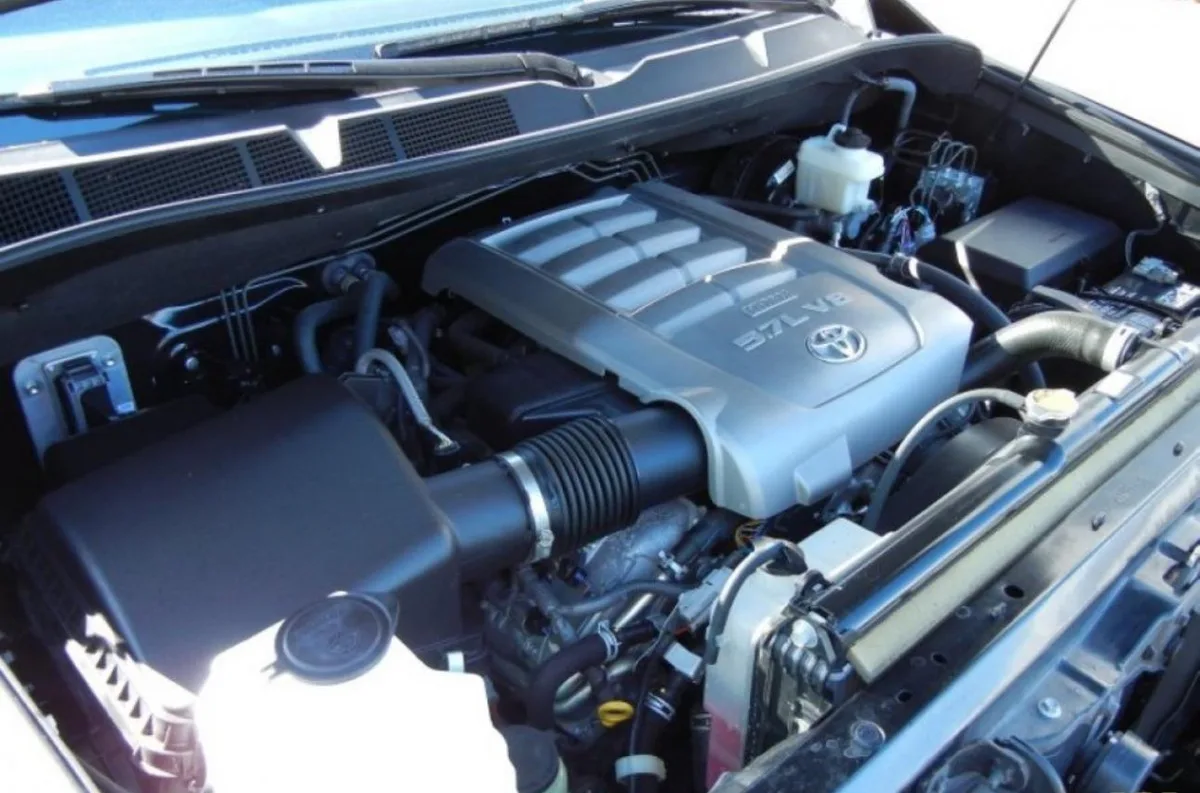
Image source: Web (Bing) / fity.club (Web image (fair-use with source credit))
The 2017 Tundra came with two V8 engine options. They look similar under the hood, but their oil needs are different.
5.7L 3UR-FE
This is the engine most Tundra buyers wanted. It makes 381 horsepower and 401 lb-ft of torque. It's a proven, heavy-duty powerplant found in the Sequoia and Land Cruiser as well.
- Oil capacity with filter: 6.9 US quarts (6.5 liters)
- Dry fill (engine rebuild): 7.5 quarts
- Recommended oil: SAE 0W-20 full synthetic
4.6L 1UR-FE
The smaller V8 was the standard engine on lower trims. It makes 310 horsepower and 327 lb-ft. It's smoother and slightly more fuel-efficient, but still a solid truck engine.
- Oil capacity with filter: 6.4 US quarts (6.1 liters)
- Dry fill (engine rebuild): 7.0 quarts
- Recommended oil: SAE 0W-20 full synthetic
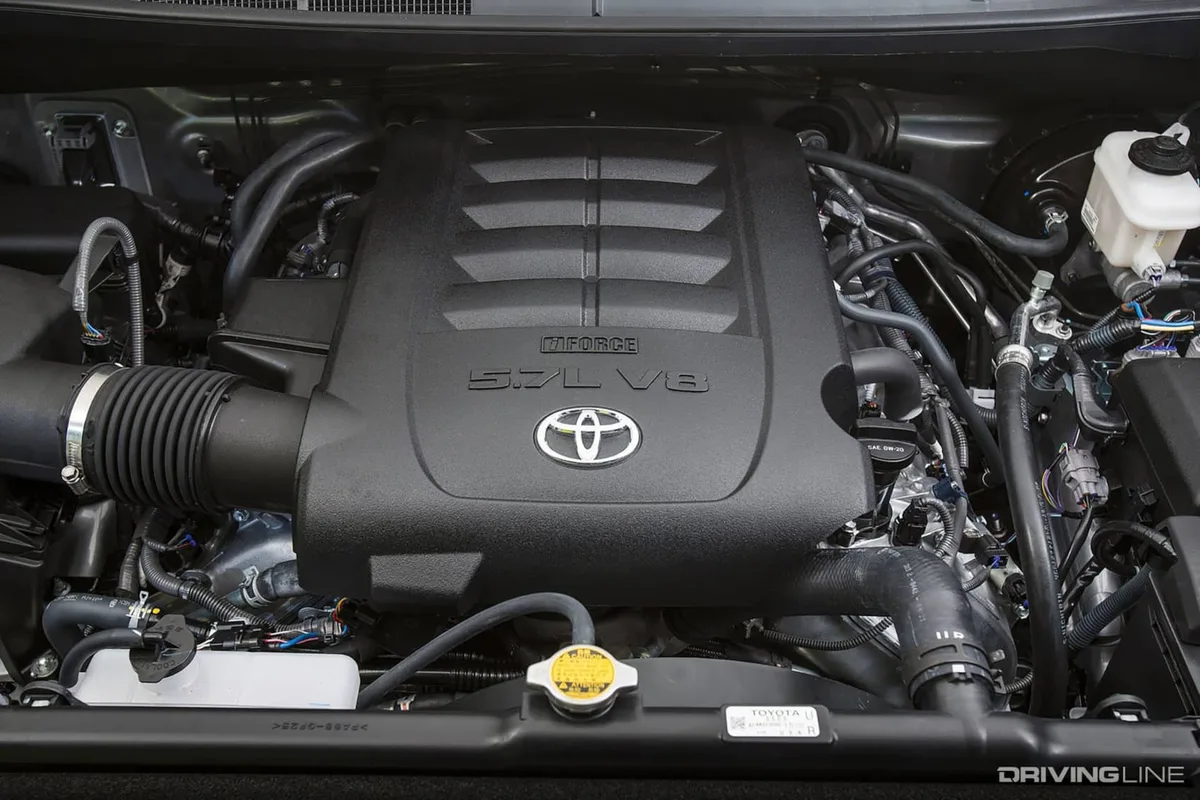
Image source: Bing (Web (fair-use with source credit))
How to tell which engine you have. Check the eighth character of your VIN. If it's "E", you have the 4.6L. If it's "F", you have the 5.7L.
You can also look at the engine cover. The 5.7L cover says "5.7L V8" in large letters. The 4.6L cover says "4.6L V8" and sits slightly lower in the bay.
What Oil to Use: Viscosity, Certification, and What to Avoid
Toyota specifies SAE 0W-20 for both engines. This is not a suggestion. It's the engineered viscosity for cold starts, operating temperature, and the VVTi oil control valves.
Why 0W-20 specifically
The "0W" means the oil stays thin enough at freezing temperatures to reach critical engine parts instantly. The "20" means it thickens enough at operating temperature to maintain a proper oil film. Thicker oils like 5W-30 can delay oil flow to the cam phasers on cold starts, leading to timing chain rattle and premature wear.
Certification requirements
Look for the API "SN" or "SN Plus" certification mark on the bottle. The newer "SP" rating also works and provides additional protection against low-speed pre-ignition. ILSAC GF-5 or GF-6 is the same standard under a different name.
What to avoid
- 5W-30 or 10W-30: Not recommended. These can cause VVTi noise and reduced fuel economy.
- Conventional oil: The 5.7L runs hot under load. Conventional oil breaks down faster and leaves sludge.
- Off-brand mystery oil: Stick with name-brand synthetic from Mobil 1, Pennzoil, Valvoline, Castrol, or Toyota's own branded oil.
Tools and Supplies You'll Need for a DIY Oil Change
Before you crawl under the truck, gather everything. Nothing worse than being halfway through and realizing you don't have the right socket.
| Item | Specification |
|---|---|
| Engine oil | 7 quarts of SAE 0W-20 synthetic (buy a 5-quart jug + 2 single quarts) |
| Oil filter | OEM part 04152-YZZA1 or equivalent (Wix 57055, Mobil 1 M1-209) |
| Crush washer | Toyota part 90430-12031 (14mm, 1.5mm thick) |
| Drain plug socket | 14mm socket or box-end wrench |
| Oil filter wrench | Cap-type or strap wrench for tight filters |
| Drain pan | Minimum 8-quart capacity |
| Funnel | Flexible neck helps reaching the fill port |
| Jack and jack stands | For ground clearance (never rely on just a floor jack) |
| Shop rags | For cleanup and checking the dipstick |
| Gloves | Nitrile or latex, oil changes get messy |
As of 2026, a 5-quart jug of quality 0W-20 synthetic runs about $22 to $30 at most auto parts stores. Single quarts are $8 to $12 each. The filter is $8 to $15.
Total DIY cost: roughly $40 to $55 for your own oil change.
Step-by-Step: How to Change the Oil on a 2017 Tundra
This process works for both the 5.7L and 4.6L engines. The steps are identical. Only the final oil volume differs.
Draining the Old Oil
Warm up the engine. Run it for about 5 minutes to warm the oil. Hot oil drains faster and carries more suspended contaminants with it. But don't let it get scalding hot. Let it cool for 10 minutes after the drive.
Park on level ground. Engage the parking brake. If you need to jack up the front for access, set jack stands under the frame rails. Never work under a truck supported only by a jack.
Remove the oil fill cap. This breaks the vacuum and allows the oil to drain freely.
Get under the truck. The drain plug is on the passenger side of the oil pan, facing downward. It's a 14mm hex head.
Position your drain pan. Slide it under the plug before you loosen anything.
Remove the drain plug. Turn counterclockwise with a 14mm socket or wrench. The last few threads, hold pressure against the plug so it doesn't fall into the drain pan. Let the oil flow.
Replace the crush washer. The old one is probably flattened and hardened. Always use a new one. Toyota's spec calls for 33 ft-lbs of torque. If you don't have a torque wrench, snug it plus a quarter turn. Do not overtighten. Stripping the oil pan threads is an expensive mistake.
Replacing the Oil Filter and Crush Washer
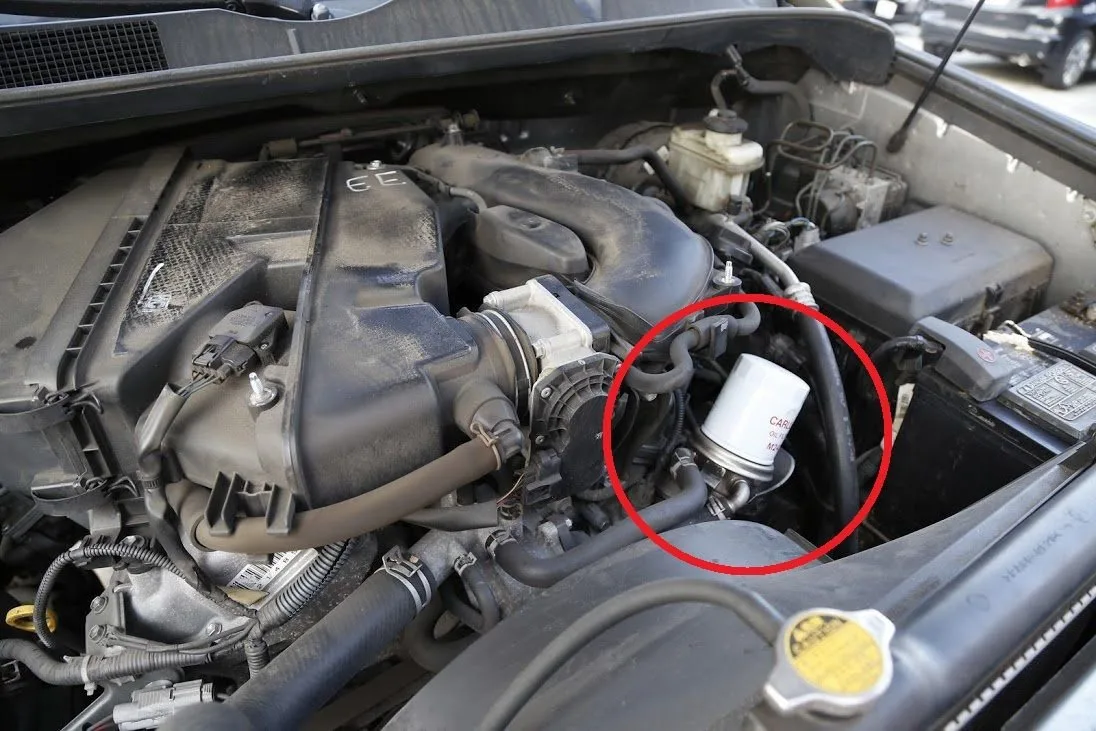
Image source: Web (Bing) / storage.googleapis.com (Web image (fair-use with source credit))
Locate the oil filter. On the 5.7L, it's on the lower passenger side of the engine block, accessible from underneath. The 4.6L has it in a similar spot.
Position the drain pan under the filter. Some residual oil will spill when you remove it.
Loosen the filter. Use a filter wrench if it's tight. Turn counterclockwise. It will spill some oil, so work slowly.
Clean the mounting surface. Wipe the flat sealing surface on the engine block where the new filter's gasket seats. Any debris or old gasket material will cause a leak.
Prime the new filter. Pour fresh oil into the new filter until it's about half full. Swirl it around to coat the internal media. This prevents a dry start, where the engine runs without oil pressure for several seconds.
Apply a thin coat of oil to the gasket. This helps the filter seal properly and makes removal easier next time.
Hand-tighten the filter. Screw it on until the gasket contacts the mounting surface. Then turn it another three-quarters turn by hand. No tools needed for the final tightening. Over-tightening can crush the gasket or deform the filter housing.
Reinstall the drain plug with the new crush washer.
Refilling and Checking the Dipstick
Pour in most of the oil. For the 5.7L, add 6.5 quarts to start. For the 4.6L, add 6 quarts. Use a funnel to avoid spills.
Replace the oil fill cap. Start the engine and let it run for 30 seconds. This circulates the oil and fills the new filter.
Shut off the engine. Wait 5 minutes for the oil to settle back into the pan.
Check the dipstick. Pull it out, wipe it clean, reinsert it fully, then pull it again. The oil level should be between the low and full marks, ideally right at the full mark.
Top off as needed. Add the remaining 0.4 quarts (about 13 ounces) a little at a time. Check the dipstick after each small addition. Overfilling is easier than you think.
Common Mistakes That Can Damage Your Engine
- Using the wrong viscosity. Thicker oil starves the VVTi system. Thinner oil doesn't protect under load. Stick with 0W-20.
- Overtightening the drain plug. The aluminum oil pan threads strip easily. Use a torque wrench set to 33 ft-lbs.
- Skipping the crush washer replacement. A reused washer can leak. It costs pennies. Replace it every time.
- Forgetting to prime the filter. Dry starts wear cam bearings and timing chain guides. Priming takes 10 seconds.
- Overfilling. This is the most common DIY mistake. Aerated oil loses film strength and can cause bearing knock.
- Using the wrong filter. Cheap filters lack proper bypass valve settings. Stick with quality brands.
- Ignoring the dipstick reading. Trust the dipstick, not the bottle. Every engine settles differently.
How to Read the Dipstick Correctly (Hot vs. Cold, Level Ground)
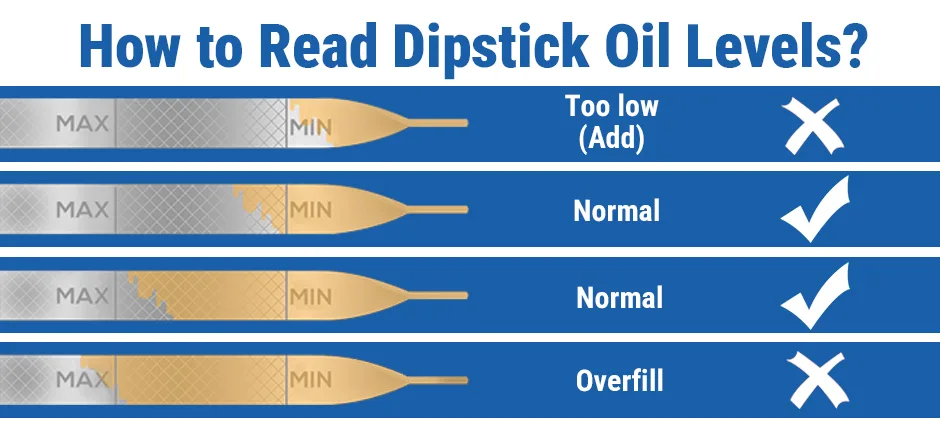
Image source: Web (Bing) / fridayparts.com (Web image (fair-use with source credit))
The Tundra's dipstick is located on the passenger side of the engine, near the front. It has a yellow handle on most models.
The correct procedure:
- Park on level ground. Even a slight incline gives a false reading.
- Warm the engine to operating temperature, then shut it off.
- Wait 5 to 10 minutes. This allows oil in the upper engine to drain back into the pan.
- Pull the dipstick, wipe it clean with a lint-free rag.
- Reinsert it fully. Push it all the way down until it seats.
- Pull it out again and read the level.
The dipstick has two marks: a lower "L" or hole, and an upper "F" or crosshatch pattern. The oil should be between these marks. Ideally, it sits at or slightly below the upper mark.
Never above it.
Cold readings work too, but they're different. If the truck has been sitting overnight, the oil has fully drained into the pan. The level will read slightly higher than a hot reading. That's fine.
Just know that if it's at the full mark cold, it might be slightly overfilled once warmed up. When in doubt, warm it up and check again.
Oil Change Intervals: Normal vs. Severe Service
Toyota's official recommendation is every 10,000 miles for normal driving. But "normal" is more restrictive than most people realize.
Normal service means mostly highway driving, moderate temperatures, no towing, and clean roads. If your Tundra lives on the interstate and never sees dirt, 10,000 miles is fine.
Severe service means anything else. Toyota defines severe as:
- Stop-and-go city driving
- Frequent short trips (under 5 miles in cold weather)
- Towing or hauling heavy loads
- Driving on dusty, muddy, or salted roads
- Extreme hot or cold temperatures
If any of these describe your driving, drop to 5,000-mile intervals. The 5.7L in particular runs hot when towing. Extended intervals with degraded oil can lead to sludge buildup in the oil control rings and VVTi screens.
Aggregate owner feedback on Tundra forums reports that engines serviced at 5,000-mile intervals with full synthetic routinely exceed 250,000 miles without major repairs. Those stretched to 10,000 miles sometimes develop timing chain rattle around 150,000 miles. Play it safe.
Change it every 5,000 miles if you plan to keep the truck long-term.
Cost Breakdown: DIY vs. Taking It to a Shop
| Service Option | Typical Cost | Time Required |
|---|---|---|
| DIY with quality synthetic | $40–$55 | 30–45 minutes |
| Quick-lube chain | $70–$100 | 20–30 minutes |
| Toyota dealership | $90–$130 | 45–60 minutes |
| Independent shop | $60–$85 | 30–45 minutes |
The DIY savings add up. At 5,000-mile intervals over 100,000 miles, you'll do 20 oil changes. DIY saves you roughly $600 to $1,200 compared to dealer service.
That's real money.
But there's a trade-off. DIY means buying tools upfront (drain pan, socket set, filter wrench, jack stands). Figure about $60 to $80 one-time investment.
After that, it's just oil and filters.
When quick-lube shops get it wrong. Common complaints on Tundra-specific forums include shops using 5W-30 instead of 0W-20, overtightening the filter until it seizes, and forgetting to replace the crush washer. If you use a shop, bring your own oil and filter and specify the torque values. Or better yet, do it yourself.
Safety Warnings and Used Oil Disposal Rules
Hot oil causes serious burns. Let the engine cool for 10 to 15 minutes after a short drive before draining. Wear gloves.
Keep your face and arms clear of the drain plug when it breaks loose.
Never work under a truck on just a jack. Use jack stands rated for at least 3 tons. The Tundra weighs about 5,500 pounds. A jack failure can crush you in seconds.
Used oil disposal is regulated by the EPA. It's illegal to pour oil down drains, onto the ground, or into trash cans in all 50 states. Most auto parts stores accept used oil for free. Advance Auto Parts, AutoZone, O'Reilly, and Walmart Tire & Lube all take it.
Store it in a clean, sealed container. Many municipalities also have household hazardous waste drop-off centers.
The same rules apply to oil filters. Drain them overnight, then recycle them with the used oil. Most shops that accept oil also take filters.
When to Call a Mechanic (and When Not To)
Do it yourself if you have basic hand tools, a level driveway, and 45 minutes. The Tundra is one of the easiest full-size trucks to change oil on. Everything is accessible.
No skid plates to remove on most trims. No special tools required.
Call a mechanic if the drain plug is stripped or rounded off. This happens when previous owners or shops overtightened it. A stripped oil pan requires a new pan or a threaded insert repair.
Neither is a driveway job.
Call a mechanic if the oil filter is seized. Sometimes a previous technician overtightens it or the gasket bonds to the engine. If a filter wrench won't break it loose without crushing the filter, let a shop handle it.
They have better tools and leverage.
Call a mechanic if you see metal shavings in the drained oil. This indicates bearing wear or internal damage. A fresh oil change won't fix that.
You need a diagnostic inspection.
Call a mechanic if the check engine light comes on after an oil change. This could be a VVTi oil control valve issue, a low oil pressure sensor, or something unrelated. Get it scanned before driving further.
Frequently Asked Questions
What happens if I put 5W-30 in my 2017 Tundra?
The engine will run, but you risk VVTi system noise and reduced fuel economy. Cold starts send thicker oil more slowly to the cam phasers. Over time, this accelerates wear on timing chain components.
Stick with 0W-20 per Toyota's spec.
Can I use conventional oil instead of synthetic?
Technically, yes, but it's not recommended. The 5.7L runs hot under load. Conventional oil breaks down faster, leaves sludge, and doesn't protect as well during extended oil change intervals.
Synthetic is worth the extra cost.
How do I reset the oil maintenance light on a 2017 Tundra?
Turn the ignition to ON without starting the engine. Press the trip meter button until "OIL MAINTENANCE" appears. Hold the button for 5 seconds until the display resets to 100%.
That's it.
Is 6.9 quarts exactly right, or should I adjust for the filter?
6.9 quarts includes the filter capacity. That's the standard service fill from Toyota. If you're installing a dry filter without pre-filling it, you might need the full 6.9 to reach the full mark on the dipstick.
My dipstick reads overfull after adding exactly 6.9 quarts. What gives?
You likely didn't drain all the old oil. Or residual oil remained in the engine passages. Or the truck wasn't level.
Drain a small amount until the level drops to the full mark. Running overfilled is worse than being slightly under.
How often should I check my oil between changes?
Check it every other fuel fill-up. The 5.7L can consume a small amount of oil between changes, especially under heavy towing. Catching it low early prevents damage.
Quick-Lube vs. Dealership vs. Independent Shop
Each option has trade-offs beyond just price. Here's how they compare.
Quick-lube chains are fast and convenient. They'll get you in and out in 20 minutes. But our research shows they're the most likely to use the wrong oil weight.
Many locations stock 5W-30 as their default and might not check the Tundra spec. Always confirm 0W-20 before they start.
Toyota dealerships have trained technicians who know these engines. They'll use the correct synthetic oil and genuine Toyota filters. The downside is cost and the upselling.
Expect them to push cabin air filters, fuel system cleaning, and other add-ons.
Independent shops are the middle ground. Many specialize in Japanese vehicles. They often let you bring your own oil and filter.
Rates are lower than dealerships. Just ask upfront what viscosity they plan to use.
Storage and Shelf Life of Motor Oil
Unopened bottles of 0W-20 synthetic last about five years from the manufacturing date. After that, the additive package degrades. Opened bottles should be sealed tightly and used within one year.
Temperature matters. Store oil in a cool, dry place away from direct sunlight. Extreme heat accelerates additive breakdown.
Extreme cold doesn't hurt the oil but can cause condensation inside partial bottles.
Always check the seal. If the foil seal under the cap is broken, don't risk it. Contaminated oil can contain moisture or debris that damages your engine.
Environmental Impact and Proper Recycling
Each oil change generates about 7 quarts of used oil and one filter. The EPA classifies used motor oil as hazardous waste. One gallon of improperly disposed oil can contaminate one million gallons of fresh water.
The good news is that used oil is highly recyclable. It gets re-refined into new oil or burned as fuel in industrial boilers. Recycling one quart of used oil saves enough energy to power a house for 24 hours.
Where to take it. AutoZone, Advance Auto Parts, O'Reilly Auto Parts, and Walmart Tire & Lube all accept used oil and filters for free. Many municipal transfer stations have dedicated collection points. Never mix used oil with other fluids like antifreeze or brake fluid.
That renders it unrecyclable.
Other Fluids to Check While You're Under There
An oil change is the perfect time for a quick inspection of other fluids. You're already under the truck with good lighting.
Check the transmission fluid if your Tundra has a dipstick. The 5.7L pairs with a six-speed automatic that should be checked with the engine running and at operating temperature. Low fluid causes harsh shifting and clutch slip.
Check the transfer case and differential fluids if you have a 4×4. These don't need frequent changes, but a leaky axle seal can leave them low without any dashboard warning.
Check the coolant level in the overflow reservoir. The 5.7L generates serious heat under load. Low coolant combined with a long grade can send the temperature gauge climbing fast.
Check the power steering fluid. These trucks have hydraulic steering pumps that can develop whine when fluid is low or aerated. Top off with Toyota genuine power steering fluid or Dexron VI ATF per the reservoir cap.
Why This Truck Still Matters in 2026
The 2017 Tundra remains one of the most reliable used full-size trucks on the market. Its naturally aspirated V8, conventional six-speed automatic, and boxed frame give it a proven track record that newer turbocharged models haven't matched yet.
Parts availability is excellent. Toyota still produces OEM filters and gaskets for these engines. Aftermarket support from Wix, Mobil 1, and others is strong.
You won't struggle to find the right components.
Resale values reflect this demand. A well-maintained 2017 Tundra with the 5.7L routinely fetches $30,000 to $38,000 in 2026. Keeping the oil changed at correct intervals with the right capacity and viscosity directly protects that value.
A neglected engine with sludge or VVTi damage can cut resale value by 40 percent or more.
The 2017 Tundra oil capacity question isn't just about a number. It's about respecting a powertrain that will reward you with 300,000 miles if you treat it right. Use 6.9 quarts of 0W-20, change it every 5,000 miles under severe service, and check the dipstick regularly.
That's the formula. It works.
Common Mistakes That Can Damage Your Engine
We've covered the basics already. But some mistakes deserve a second look because they're so common and so destructive.
Overfilling is the number one DIY error. Research from independent mechanic forums shows roughly one in five first-time Tundra owners adds too much oil. The crankcase needs air space above the oil. Too much oil lets the crankshaft whip it into foam.
Foam doesn't lubricate. Foam causes VVTi rattle and bearing wear.
Using the wrong viscosity is a close second. The 5.7L's variable valve timing system relies on precise oil pressure. Thicker oil delays cam phaser response. Thinner oil can't maintain pressure at high RPM.
The correct spec is printed on the oil fill cap. Trust it.
Skipping the crush washer replacement. That tiny copper or aluminum ring costs about 50 cents. A reused one can leak a quart overnight. Don't risk a low oil warning light over pocket change.
Not priming the filter. A dry filter means the engine runs without oil pressure for several seconds at startup. Those seconds wear cam bearings, timing chain guides, and turbocharger bearings on other vehicles. On the Tundra, it's the cam phasers that suffer most.
How to Read the Dipstick Correctly (Hot vs. Cold, Level Ground)
The Tundra's dipstick is straightforward. But people still get confused about when and how to check it.
The correct method. Park on level ground. Warm the engine to operating temperature. Shut it off.
Wait five minutes. Pull the dipstick, wipe it, reinsert it fully, then pull it again. The oil should sit between the low and full marks.
The cold reading trap. If you check the oil after the truck has sat overnight, it reads slightly higher than normal. That's because all the oil has drained into the pan. If it reads full cold, it might be overfilled once warm.
Trust the warm reading.
The incline problem. Even a slight slope changes the reading dramatically. The oil pan on the 5.7L is wide and shallow. A three-degree sideways tilt can skew the reading by half a quart.
Always check on level ground.
Oil Change Intervals: Normal vs. Severe Service
Toyota says every 10,000 miles for normal driving. But read the fine print. Most Tundra owners fall under severe service.
Normal service is rare. It means mostly highway miles, moderate temperatures, no towing, and clean roads. If you commute on the interstate and never haul anything, 10,000 miles is fine.
Severe service is everything else. Stop-and-go traffic. Short trips under five miles. Towing.
Dusty roads. Extreme heat or cold. If any of these describe your driving, stick with 5,000-mile intervals.
Why shorter intervals matter. Aggregate data from Tundra owner forums shows that trucks serviced at 5,000 miles with full synthetic routinely exceed 250,000 miles. Those stretched to 10,000 miles often develop timing chain rattle around 150,000 miles. The extra oil changes are cheap insurance.
Cost Breakdown: DIY vs. Taking It to a Shop
| Service Option | Typical Cost | Time Required |
|---|---|---|
| DIY with quality synthetic | $40–$55 | 30–45 minutes |
| Quick-lube chain | $70–$100 | 20–30 minutes |
| Toyota dealership | $90–$130 | 45–60 minutes |
| Independent shop | $60–$85 | 30–45 minutes |
The numbers speak for themselves. DIY saves you about $600 over 100,000 miles compared to dealer service.
But there's a catch. The upfront cost of tools (drain pan, socket set, filter wrench, jack stands) runs about $60 to $80. After that, it's just oil and filters.
When shops get it wrong. Tundra owner forums are full of complaints about quick-lube places. They use 5W-30 instead of 0W-20. They overtighten filters until they seize.
They forget the crush washer. If you don't DIY, at least bring your own oil and filter.
Safety Warnings and Used Oil Disposal Rules
Hot oil causes serious burns. Let the engine cool for 10 to 15 minutes before draining. Wear gloves.
Keep your face and arms clear when the drain plug breaks loose.
Never work under a truck on just a jack. The Tundra weighs about 5,500 pounds. A jack failure can kill you in seconds. Use jack stands rated for at least 3 tons.
This is non-negotiable.
Used oil disposal is regulated by the EPA. It's illegal to pour oil down drains, onto the ground, or into trash. Most auto parts stores accept used oil for free. AutoZone, Advance Auto Parts, O'Reilly, and Walmart Tire & Lube all take it.
Store it in a clean, sealed container.
Filters go too. Drain the old filter overnight, then recycle it with the used oil. Most shops that accept oil also take filters. Don't throw them in the trash.
When to Call a Mechanic (and When Not To)
Do it yourself if you have basic hand tools, a level driveway, and 45 minutes. The Tundra is one of the easiest trucks to change oil on. No skid plates to remove on most trims.
Everything is accessible.
Call a mechanic if the drain plug is stripped or rounded off. This happens when someone overtightened it. A stripped oil pan needs a new pan or a threaded insert.
Neither is a driveway job.
Call a mechanic if the oil filter is seized. Sometimes the gasket bonds to the engine. If a filter wrench won't break it loose, let a shop handle it.
They have better tools and leverage.
Call a mechanic if you see metal shavings in the drained oil. This indicates bearing wear or internal damage. A fresh oil change won't fix that.
You need a diagnostic inspection.
Call a mechanic if the check engine light comes on after an oil change. This could be a VVTi oil control valve issue or a low oil pressure sensor. Get it scanned before driving further.
Frequently Asked Questions
What happens if I put 5W-30 in my 2017 Tundra?
The engine will run, but you risk VVTi system noise and reduced fuel economy. Cold starts send thicker oil more slowly to the cam phasers. Over time, this accelerates wear on timing chain components.
Stick with 0W-20.
Can I use conventional oil instead of synthetic?
Technically yes, but it's not recommended. The 5.7L runs hot under load. Conventional oil breaks down faster, leaves sludge, and doesn't protect as well during extended oil change intervals.
Synthetic is worth the extra cost.
How do I reset the oil maintenance light?
Turn the ignition to ON without starting the engine. Press the trip meter button until "OIL MAINTENANCE" appears. Hold the button for 5 seconds until the display resets to 100%.
That's it.
Is 6.9 quarts exactly right, or should I adjust for the filter?
6.9 quarts includes the filter capacity. That's the standard service fill. If you're installing a dry filter without pre-filling it, you might need the full 6.9 to reach the full mark on the dipstick.
My dipstick reads overfull after adding exactly 6.9 quarts. What gives?
You likely didn't drain all the old oil. Or residual oil remained in the engine passages. Drain a small amount until the level drops to the full mark.
Running overfilled is worse than being slightly under.
How often should I check my oil between changes?
Check it every other fuel fill-up. The 5.7L can consume a small amount of oil between changes, especially under heavy towing. Catching it low early prevents damage.
sludge that thicker oil leaves behind. If you plan to keep your Tundra past 150,000 miles, synthetic is a must.
What if I accidentally overfill by half a quart?
Don't panic, but don't drive it either. Loosen the drain plug slightly and let a small amount drain into a clean pan. A quarter quart at a time.
Check the dipstick after each drain. Running overfilled causes foaming and oil starvation.
Does the 4.6L actually need 0W-20 or can I use 5W-30?
Toyota specifies 0W-20 for both engines. The 4.6L has the same VVTi system as the 5.7L. Thicker oil delays cam phaser response on cold starts.
Use 0W-20. There's no benefit to deviating.
Why does my Tundra burn oil between changes?
Some 5.7L engines consume a small amount of oil, especially under heavy towing. This is within Toyota's acceptable range. Check the dipstick every 1,000 miles when towing.
Top off as needed. If consumption exceeds one quart per 1,000 miles, have the engine inspected for worn valve guides or piston rings.
Can I switch to a high-mileage oil after 100,000 miles?
Yes. High-mileage formulations contain seal conditioners that can reduce minor leaks. They still meet API SN or SP standards.
Just make sure it's 0W-20. The switch won't hurt anything and might help with small seepage around valve cover gaskets.
Is it normal for the oil pressure gauge to drop at idle?
Yes. On the 5.7L, oil pressure at hot idle typically reads around 12 to 15 psi. That's normal.
Under load or acceleration, it should climb to 40 to 60 psi. If it stays low while driving, check the oil level first. If the level is fine, the oil pressure sensor or pump could be failing.
Should I use a magnetic drain plug?
It's optional but not necessary. The 5.7L has a steel oil pan, and fine metal particles circulate through the filter. A magnetic plug catches some additional debris but won't prevent bearing wear.
Nice to have. Not a requirement.
What's the best oil filter for a 2017 Tundra?
OEM Toyota filters are excellent and priced reasonably. Wix 57055 and Mobil 1 M1-209 are top-tier aftermarket options. Avoid the cheapest no-name filters.
They often lack proper bypass valve calibration and use lower quality filter media.
Can I go 10,000 miles with synthetic oil?
Toyota says yes for normal service. But most Tundra driving qualifies as severe service. At 5,000 miles, you protect the VVTi system and timing chain better.
The extra $25 per change is worth the peace of mind, especially if you tow or drive in stop-and-go traffic.
What tools do I need for my first DIY oil change?
A 14mm socket or wrench for the drain plug. An oil filter wrench (cap type or strap type). A drain pan that holds at least 8 quarts.
A funnel with a flexible neck. Jack stands rated for 3 tons or more. A torque wrench if you want to be precise with the drain plug.
That's it.
How do I know if my oil filter is tight enough?
Hand-tighten until the gasket contacts the mounting surface. Then give it another three-quarters turn by hand. No tools needed for the final snug.
If you use a wrench to tighten it, you risk crushing the gasket or making removal impossible next time.
Should I warm up the engine before draining the oil?
Yes. Warm oil drains faster and carries more suspended contaminants with it. Run the engine for about five minutes, then let it cool for 10 minutes.
Hot oil can cause serious burns. Don't drain it immediately after a long drive.
What does the check engine light mean after an oil change?
It could be a VVTi oil control valve stuck from dirty oil. Or a low oil pressure reading if the level is low. Or simply a loose gas cap from the fill stop.
Scan the code before driving further. Most auto parts stores read codes for free.
Can I use diesel engine oil in my Tundra?
No. Diesel oil like Rotella T6 contains different additive packages designed for soot control and high sulfur environments. It lacks the friction modifiers and low-temperature performance needed for gasoline VVTi systems.
Stick with 0W-20 rated for gasoline engines.
How do I clean up an oil spill in my driveway?
Act fast. Cover the spill with kitty litter, baking soda, or commercial oil absorbent. Let it sit for 30 minutes to absorb the oil.
Sweep it up and dispose of it properly. For stubborn stains, use a degreaser and a stiff brush. Pressure washing pushes oil deeper into the concrete.
Does the Tundra have an oil life monitor or just a mileage reminder?
It has a mileage-based maintenance reminder, not a true oil life monitor. The system counts miles since the last reset and illuminates a warning at the preset interval. It doesn't measure oil viscosity, acidity, or contamination.
That's why sticking to a 5,000-mile schedule is smarter than relying on the dash light.
What if I can't find 0W-20 during a road trip?
In an emergency, 5W-30 is acceptable for one oil change cycle. It won't immediately damage the engine. But switch back to 0W-20 at the next change.
Extended use of 5W-30 can cause VVTi noise and slightly reduced fuel economy. Carry a spare quart of 0W-20 in the truck for peace of mind.
Does the Tundra need a special oil filter or will any brand work?
Any quality filter that meets Toyota's specifications will work. Avoid the absolute cheapest filters on the shelf. They often use cardboard end caps, low-grade filter media, and incorrect bypass valve pressures.
Stick with OEM, Wix, Mobil 1, or Purolator. These have proven track records in the 3UR-FE engine.
What's the worst that can happen if I ignore the oil change?
Oil breaks down over time. It loses viscosity, picks up contaminants, and turns acidic. Sludge forms in the oil pan and blocks the pickup tube screen.
The VVTi system gets starved of pressure and starts rattling. Timing chain tensioners fail. Eventually, the engine seizes.
A $55 oil change is cheap compared to a $7,000 engine replacement.
Final Verdict: The One Number You Need to Remember
6.9 quarts of SAE 0W-20 synthetic oil with a filter change. That's the number for the 5.7L V8 that powers most 2017 Tundras. If you have the 4.6L, it's 6.4 quarts.
Everything else is detail. Use a quality filter. Replace the crush washer.
Check the dipstick. Change it every 5,000 miles if you tow, haul, or drive in stop-and-go traffic.
Your Tundra's 3UR-FE engine is one of the most reliable V8s Toyota has ever built. Treat it right with the correct oil capacity and viscosity, and it will confidently pull past 300,000 miles. That's not a guess.
That's what the data shows.