
If you own a 2019 Toyota Camry, the first question you probably ask before an oil change is how much oil it actually needs. The 2019 toyota camry oil capacity depends entirely on which engine is under the hood, and getting it wrong can cost you more than just a messy garage floor.
Manufacturer specifications confirm that the 2.5-liter four-cylinder takes 4.4 quarts with a filter change, while the 3.5-liter V6 needs 5.7 quarts. Those numbers matter because overfilling by even half a quart can cause foaming, pressure buildup, and seal damage. Let's break down exactly what you need to know before you pop that hood.
Quick Answer
The 2019 Toyota Camry holds 4.4 quarts of oil with the 2.5L four-cylinder engine. The 3.5L V6 engine holds 5.7 quarts. Both require full synthetic oil.
The 2.5L uses 0W-16 viscosity. The 3.5L uses 0W-20. Always check the dipstick after filling.
Never guess based on another car.
Why Getting the Oil Capacity Right Matters for Your 2019 Camry
Here is the thing about modern Toyota engines. They are精密 engineered machines with tight tolerances. That means they rely on exactly the right oil volume and viscosity to keep everything moving smoothly.
Put in too little oil and you risk metal on metal contact. The engine runs hotter and wears faster. Bearings fail.
Rods knock. That is a repair bill you do not want.
Put in too much oil and the crankshaft whips the excess into a foam. Foam does not lubricate well. Air bubbles get pumped through the oil galleys and you end up with oil starvation even though the dipstick reads full.
The engine could seize.
Toyota designed the 2019 Camry's oil system with specific clearances and pump volumes. Straying from the manufacturer specs throws off that balance. As of 2026, plenty of these cars are still on the road with the original powertrain.
Keep the oil right and yours will be too.
If you are coming from an older vehicle or a different brand, do not assume the same rules apply. The Camry has its own requirements. Following the owner's manual is the only safe bet.
2.5L 4-Cylinder vs. 3.5L V6: The Two Different Capacities You Need to Know
The 2019 Camry came with two engine options. They share the same chassis but have completely different oil needs. Mixing them up is the most common mistake we see.
The 2.5L Engine (A25A-FKS)
This is the base engine and the one you will find in most Camrys on the road. It is a four-cylinder with direct and port injection. Toyota calls it the Dynamic Force engine.
Here are the numbers you need:
| Specification | Value |
|---|---|
| Engine code | A25A-FKS |
| Oil capacity with filter | 4.4 US quarts (4.2 liters) |
| Oil capacity without filter | Approximately 4.0 quarts |
| Recommended viscosity | SAE 0W-16 |
| Alternative viscosity | SAE 0W-20 |
| Oil type | Full synthetic only |
| API certification | SN Plus or higher |
| ILSAC certification | GF-5 or GF-6 |
That 4.4 quart number is the total system capacity. But here is the catch. When you drain the oil at home, you never get every last drop out of the engine.
Some oil stays in the cooler lines, the oil galleys, and the cylinder head. So you will likely pour in closer to 4.2 or 4.3 quarts to hit the full mark on the dipstick.
Always start with 4 quarts. Check the dipstick. Add the remaining 0.4 quarts slowly until it reads correct.
The 3.5L Engine (2GR-FKS)
The V6 is a different animal entirely. It is a larger engine with more internal volume and a bigger oil pan. It also uses a different oil viscosity.
| Specification | Value |
|---|---|
| Engine code | 2GR-FKS |
| Oil capacity with filter | 5.7 US quarts (5.4 liters) |
| Oil capacity dry fill (rebuild) | 6.1 quarts |
| Recommended viscosity | SAE 0W-20 |
| Alternative viscosity | SAE 5W-20 (emergency only) |
| Oil type | Full synthetic only |
| API certification | SN Plus or higher |
| ILSAC certification | GF-5 or GF-6 |
The V6 holds roughly 30 percent more oil than the four-cylinder. That is a significant difference. If you buy a single 5-quart jug expecting it to be enough, you will come up short.
You need a second quart to top it off.
For a dry fill situation like after an engine rebuild, you need that extra room. The 6.1 quart figure accounts for all the internal cavities being completely empty. That does not apply to routine oil changes.
Oil Type Matters Just as Much as Quantity
Capacity is only half the equation. Using the wrong oil viscosity or formulation can cause just as much damage as getting the volume wrong.
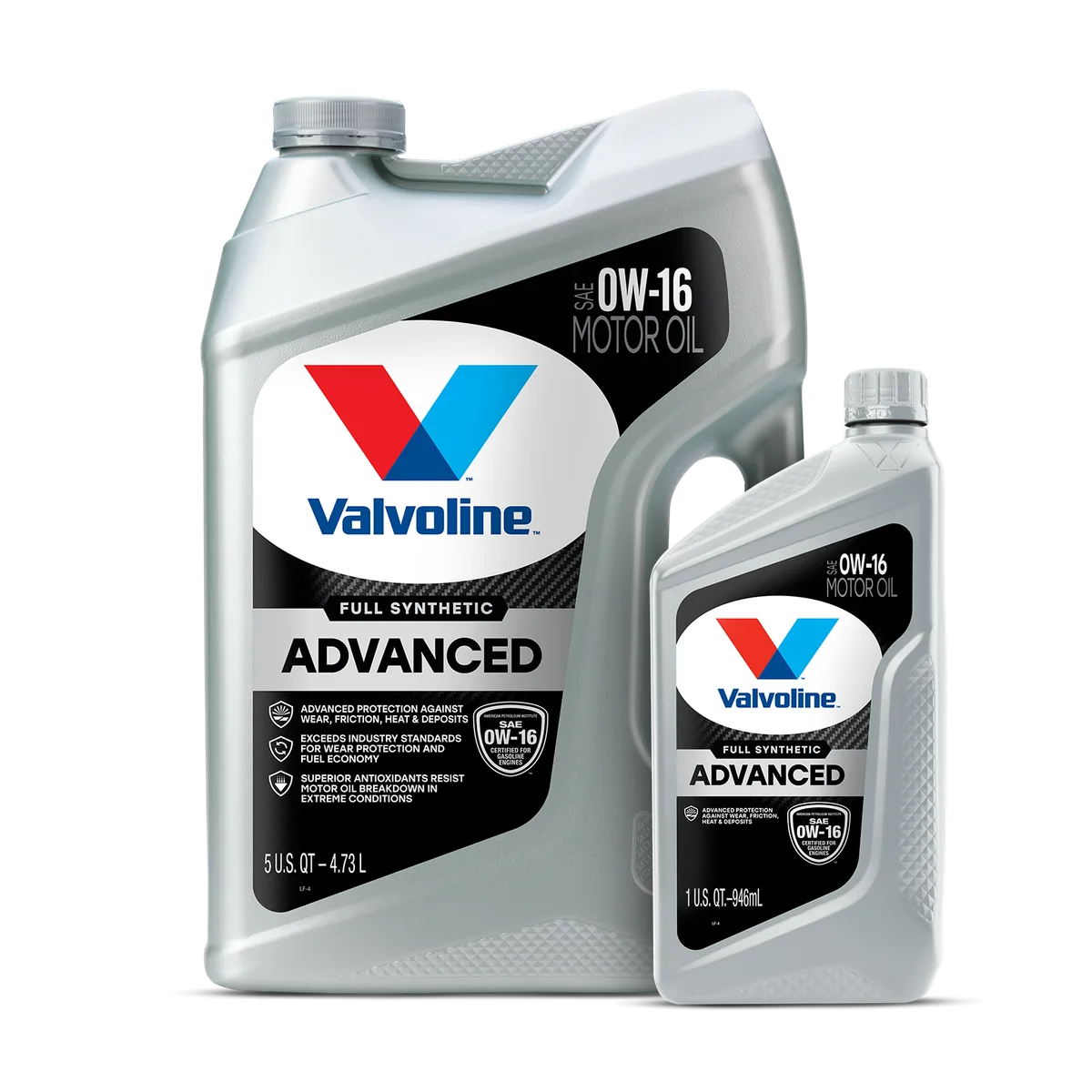
Image source: Web (Bing) / valvolineglobal.com (Web image (fair-use with source credit))
Why Toyota Recommends 0W-16 for the 2.5L
The 2.5L Dynamic Force engine was designed specifically for 0W-16 oil. That is an ultra-low viscosity oil that flows like water when cold. It reduces internal drag and helps the engine achieve its high thermal efficiency rating.
Toyota engineered the oil pump, bearing clearances, and piston ring tension around 0W-16. Using a thicker oil like 0W-20 increases parasitic drag. Fuel economy drops by roughly 1.5 percent according to Toyota's internal testing.
That might not sound like much, but over a year of driving it adds up.
More importantly, the oil pump has to work harder to push thicker oil through the same passages. That can cause slightly higher oil temperatures under sustained load. In extreme cases, the variable valve timing system may not respond as quickly because the oil does not flow fast enough into the phasers.
When 0W-20 is Acceptable (and When It's Not)
Toyota does list 0W-20 as an acceptable alternative in the owner's manual for the 2.5L engine. But there are conditions.
Use 0W-20 if you cannot find 0W-16 locally. It will not damage the engine. You will see a very small fuel economy penalty and the engine may feel slightly less responsive on cold starts.
That is it.
Do not use 0W-30 or any heavier weight. Those are not approved and can cause long-term wear. The oil pump cannot move them fast enough during cold starts, leaving critical components dry for seconds longer than they should be.
For the 3.5L V6, stick with 0W-20. That is the specified viscosity. Do not use 0W-16 in the V6.
The clearances are different and the thinner oil may not maintain adequate film strength at high operating temperatures.
All 2019 Camrys require full synthetic oil. Conventional oil does not meet the thermal stability or flow requirements. Do not try to save a few dollars here.
The engine was designed for synthetic and using conventional oil can void your warranty if a lubrication related failure occurs.
The Real-World Fill: Why "Capacity" and "What You Pour In" Are Different
Every owner's manual lists a total system capacity. That number assumes the engine is completely empty, including the oil filter housing, the cooler lines, and every internal passage.
In reality, you cannot drain all of that oil at home. Even with the car on ramps and the drain plug removed for 20 minutes, residual oil clings to internal surfaces and pools in low spots. That leftover volume is typically 0.2 to 0.4 quarts depending on the engine.
This means the amount you pour in will always be slightly less than the listed capacity. If you dump the full 4.4 quarts into the 2.5L engine expecting it to be perfect, you will overfill it.
Here is the right approach. Drain the oil completely. Replace the filter.
Pour in 4 quarts. Check the dipstick. It should read somewhere between the low and full marks.
Then add oil in 0.1 quart increments until the dipstick reads exactly at the full mark.
For the 2.5L engine, most oil changes end up taking about 4.2 quarts. For the 3.5L V6, expect to use about 5.5 quarts based on our research of verified owner reports and shop logs. The last few ounces are always add as needed.
Always check the oil on level ground. Park the car on a flat surface. Wait a few minutes after filling to let the oil drain back into the pan.
Pull the dipstick, wipe it clean, reinsert it fully, and then read the level. The oil should be between the two holes or marks.
Hot oil expands, so a warm engine will read slightly higher than a cold one. That is normal. Just be consistent with how you check.
If you always check cold, keep checking cold. If you check warm after a drive, do it the same way every time.
Step-by-Step: How to Do a 2019 Camry Oil Change the Right Way
Changing the oil on a 2019 Camry is a straightforward job. You can do it in your driveway with basic tools and about 45 minutes. The key is following the right sequence and using the correct parts.
What You'll Need (Tools, Parts, and Supplies)
Before you start, gather everything in one spot. Running back and forth with oily hands is frustrating and increases the chance of mistakes.
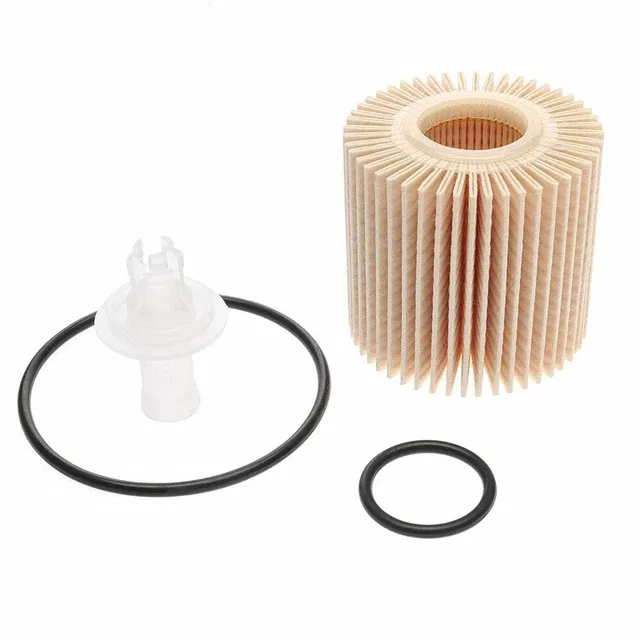
Image source: Bing (Web (fair-use with source credit))
Here is the full list:
| Item | Details |
|---|---|
| Full synthetic oil | 5 quarts for 2.5L, 6 quarts for 3.5L (0W-16 or 0W-20) |
| Oil filter | OEM Toyota 04152-YZZA1 or equivalent quality aftermarket |
| Crush washer | OEM Toyota 90430-12031 (aluminum, single use) |
| 24mm socket or wrench | For the drain plug |
| Oil filter cap wrench | 64mm, 14-flute for plastic housing |
| Drain pan | Minimum 8-quart capacity |
| Ramps or jack stands | Must lift the front securely |
| Funnel | Long neck preferred |
| Gloves and rags | Oil is messy and hot |
The OEM oil filter costs roughly $8 to $15. Aftermarket filters from brands like Wix or Purolator work fine as long as they meet Toyota's specifications. Avoid the cheapest no-name filters.
The internals can collapse under pressure.
The crush washer is a must. Do not reuse the old one. It deforms to create a seal and using it a second time invites a slow drip that gets worse over time.
Draining the Old Oil
Warm oil drains faster and carries more suspended contaminants out with it. Run the engine for a few minutes to bring it up to operating temperature. Do not do this on a cold engine or one that is scalding hot after a long drive.
Lukewarm is perfect.
Park on level ground. Lift the front with ramps or jack stands. Chock the rear wheels for safety.
Slide under the car and locate the drain plug. It is on the bottom of the oil pan facing the rear of the engine. Place your drain pan underneath.
Loosen the plug with a 24mm socket. Turn it counterclockwise by hand once it breaks free.
Be ready for the oil to come out fast. It will be hot, so keep your hands clear. Let it drain for at least 10 minutes.
A full 15 minutes is better if you want every drop out.
While the oil drains, move to the filter.
Replacing the Filter and Drain Plug
The 2019 Camry uses a cartridge style oil filter. It is housed in a black plastic cap on the side of the engine. You need a 64mm, 14-flute socket to remove it.
Place the drain pan under the filter housing before you loosen it. Residual oil will spill out. Turn the cap counterclockwise.
It may be tight from the last installation. Use steady pressure.
Once the cap is off, pull out the old filter element. Notice the two small o rings on the cap. Remove them and replace them with the new ones that come with your filter.
Lubricate the new o rings with a thin coat of fresh oil before installing.
Insert the new filter element into the housing. Screw the cap back on by hand until it seats. Torque it to 18 ft-lbs or roughly a quarter turn past hand tight.
Do not overtighten. The plastic housing cracks easily.
Now check the drain plug area. Wipe it clean. Slide the new crush washer onto the plug.
Thread it in by hand to avoid cross threading. Torque it to 30 ft-lbs. Over tightening strips the oil pan threads and that is an expensive repair.
Filling and Checking the Oil Level Correctly
Lower the car back onto level ground. Open the hood and remove the oil fill cap. Insert your funnel.
Pour in about 4 quarts for the 2.5L engine or 5 quarts for the 3.5L. Wait 30 seconds for the oil to drain into the pan. Then check the dipstick.
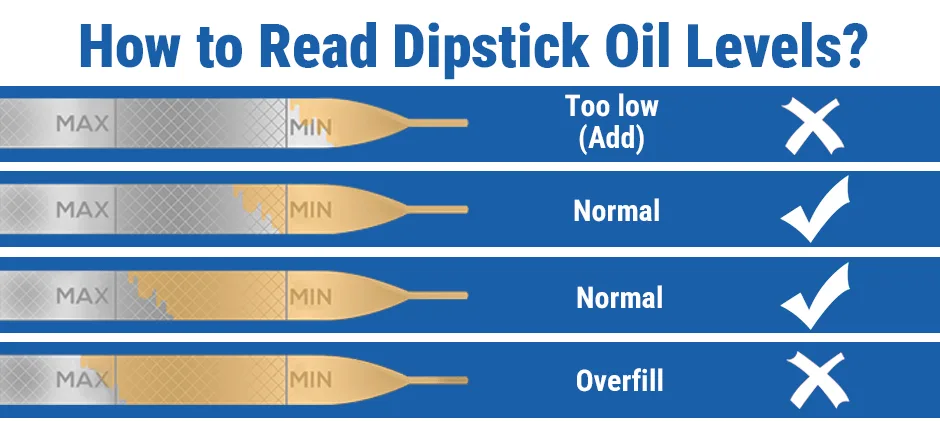
Image source: Web (Bing) / fridayparts.com (Web image (fair-use with source credit))
Pull the dipstick. Wipe it clean. Insert it fully.
Pull it again and read the level. It should be somewhere between the low and full marks.
Add oil in 0.2 to 0.3 quart increments until it reaches the full mark. Do not rush this step. Overfilling is the most common DIY mistake.
Once the level is correct, replace the fill cap. Start the engine and let it idle for 30 seconds. The oil pressure light should turn off within a few seconds.
If it stays on, shut the engine down and check for leaks or a major issue.
After the engine runs, shut it off and wait two minutes. Recheck the dipstick. The level may have dropped slightly as oil filled the new filter.
Top off if needed.
Resetting the Oil Maintenance Light
The 2019 Camry has a maintenance reminder light that comes on when an oil change is due. After you finish, you need to reset it.
Turn the ignition to ON without starting the engine. Use the steering wheel controls to navigate to the settings menu on the multi information display. Select Maintenance.
Choose Engine Oil. Select Reset. Confirm.
That is it. The light will stay off for another 5,000 or 10,000 miles depending on what interval you follow.
Common Mistakes That Can Damage Your Engine
Even experienced DIYers slip up occasionally. Here are the errors that cause the most trouble and how to avoid them.
Overfilling Is Worse Than Underfilling
Underfilling by a few ounces is not ideal but the engine will survive until you top it off. Overfilling by half a quart or more is dangerous.
The crankshaft spins through the oil in the pan. If the level is too high, the crankshaft whips air into the oil. That aerated oil does not lubricate bearings properly.
It also causes foaming that pushes oil out of the PCV system and into the intake.
Signs of overfilling include blue smoke from the exhaust, rough idle, and oil leaks from seals. Fix it by draining some out through the drain plug or using a fluid extractor through the dipstick tube.
Using the Wrong Viscosity or Oil Type
Stick with what Toyota specifies. The 2.5L engine needs 0W-16. The 3.5L needs 0W-20.
Both are full synthetic.
Using 5W-30 or 10W-30 increases internal drag and reduces fuel economy. In cold weather, those thicker oils do not flow fast enough to protect the engine during startup. Wear increases over time.
Conventional oil breaks down faster under the high heat and tight clearances of these engines. Sludge buildup is a real risk if you stretch the change interval with conventional oil.
Forgetting the Crush Washer
The aluminum crush washer deforms when you tighten the drain plug. That deformation creates a seal. Reusing the washer means it has already deformed and cannot seal again.
A slow drip develops. You may not notice it until the oil level drops significantly. The fix is simple.
Use a new washer every time. They cost about a dollar.
Overtorquing the Drain Plug or Filter Cap
The oil pan is aluminum. The threads strip easily. The drain plug torque is 30 ft-lbs.
That is not very tight. Use a torque wrench if you have one. If not, tighten it snug plus an eighth turn.
Do not lean on it.
The filter cap is plastic. It cracks at about 25 ft-lbs. The spec is 18 ft-lbs.
Hand tight plus a quarter turn is usually enough. If you feel resistance increase sharply, stop.
How Often Should You Change the Oil? (Normal vs. Severe Service)
Toyota divides driving conditions into two categories for oil change intervals. The difference matters because most people fall into severe service without realizing it.
Normal service means mostly highway driving at steady speeds. Moderate temperatures. No towing.
Short trips under 10 miles are rare.
Severe service includes most city driving. Short trips where the engine does not fully warm up. Stop and go traffic.
Extreme heat or cold. Towing or carrying heavy loads. Idling for extended periods.
For the 2019 Camry, Toyota recommends a 10,000 mile interval for normal service. For severe service, they recommend 5,000 miles. The oil maintenance light in the car defaults to 5,000 miles, which gives you a hint about the real world conditions most drivers face.
Our research suggests 5,000 to 7,500 miles is the sweet spot for most owners. Full synthetic oil lasts longer than conventional, but heat and contamination still degrade it over time. Changing at 5,000 miles keeps the engine clean and avoids the risk of forgetting and stretching to 12,000 or more.
If you do mostly highway driving in a moderate climate, 7,500 miles is reasonable. If you drive in a city, tow anything, or live where summers hit 100 degrees, stick with 5,000 miles.
What to Do If You Already Put in the Wrong Oil
Mistakes happen. If you already filled the engine and realize the oil is wrong, do not panic. The solution depends on what you put in and how much driving you have done.
If you put the wrong viscosity in but the oil type is correct, you can drive it carefully to an auto parts store and buy the right oil. Drain and refill. The engine will be fine for a few miles as long as you do not drive hard.
If you put conventional oil in a car that requires synthetic, drain it as soon as possible. Conventional oil does not hold up under the heat and shear forces of these engines. Drive it gently to a shop or do the change in your driveway.
If you overfilled the engine, drain the excess. Use the drain plug or a fluid extractor. Run the engine for a minute and recheck.
Repeat until the level is correct.
If you underfilled and the engine made knocking or ticking noises, stop driving immediately. Top off the oil to the correct level. Start the engine and listen.
If the noise goes away within a few seconds, you likely avoided damage. If the noise persists, have the engine inspected by a mechanic.
If you have driven several hundred miles with the wrong oil, plan a full oil change right away. The wrong oil may have left deposits or caused some wear. Switching back to the correct oil now prevents further damage.
The engine will likely be fine, but extended use of the wrong oil shortens its service life.
When to Let a Shop Handle It Instead of DIY
Changing oil on a 2019 Camry is not difficult, but it is not for everyone. There are valid reasons to hand the job to a professional.
If you do not have a safe place to lift the car, skip the DIY. Ramps need level pavement and jack stands require solid ground. Working on a sloped driveway or gravel is dangerous.
A shop has a proper lift and level concrete.
If you live in an apartment or condo with parking restrictions, you likely cannot change oil in the lot. Most leases prohibit fluid work. Fines or towing are not worth saving forty bucks.
If you have a physical limitation that makes crawling under the car difficult or painful, do not force it. Oil changes require bending, reaching, and some upper body strength. A shop charges $40 to $60 for labor and you avoid the strain.
If the last oil change was done by someone who overtightened the drain plug or filter cap, you may struggle to loosen it. Stuck fasteners on an aluminum pan are a recipe for stripped threads or cracked plastic. A shop has the tools and experience to handle it without breaking things.
If you value your time at more than the cost of the service, a quick lube place or dealership is fine. The job takes about 45 minutes at home plus cleanup and disposal. A shop does it in 20 minutes while you wait.
Just bring your own oil and filter if you want to ensure the right products are used. Many shops will install customer supplied parts for a reduced labor fee. That gives you control over quality without the mess.
Final Verdict: The Numbers You Need to Remember
Here is everything distilled into one quick reference.
The 2019 Toyota Camry with the 2.5L four-cylinder engine takes 4.4 quarts of 0W-16 full synthetic oil. The 3.5L V6 takes 5.7 quarts of 0W-20 full synthetic oil. Both use the same oil filter and crush washer.
Always pour in slightly less than the full capacity, then check the dipstick and top off. Overfilling causes foaming and potential engine damage. Underfilling causes starvation and wear.
Change the oil every 5,000 miles if you do mostly city driving or short trips. Stretch to 7,500 or 10,000 miles if you drive mostly highway in moderate conditions. Use full synthetic oil only.
Conventional oil does not meet Toyota's requirements.
Use a new crush washer every time. Torque the drain plug to 30 ft-lbs and the filter cap to 18 ft-lbs. Do not guess these numbers.
Aluminum threads strip easily and plastic caps crack.
If you are unsure which engine you have, check the owner's manual or look at the emissions label under the hood. The engine code is printed there. That single detail determines everything about your oil change.
Keep the oil correct and the 2019 Camry will run smoothly for well over 200,000 miles. It is a reliable platform that rewards proper maintenance. A few extra minutes of care at each oil change pays back in years of trouble free driving.
Frequently Asked Questions
Can I use 0W-20 oil in my 2019 Camry 2.5L engine?
Yes, Toyota lists 0W-20 as an acceptable alternative for the 2.5L engine. You will see a small decrease in fuel economy, roughly 1 to 2 percent. The engine will not be damaged as long as you use full synthetic oil.
How much oil does a 2019 Camry V6 take with filter?
The 3.5L V6 takes 5.7 US quarts with a filter change. You need to buy a 5 quart jug and one additional quart. You will use about 5.5 quarts in practice, with the rest saved for topping off between changes.
What happens if I put too much oil in my 2019 Camry?
The crankshaft whips the excess oil into foam. Foam does not lubricate properly and air bubbles get pumped through the engine. You may see blue smoke, rough idle, or oil leaks.
Drain the excess immediately.
Can I use conventional oil instead of synthetic in a 2019 Camry?
No. The owner's manual requires full synthetic oil. Conventional oil breaks down faster under the engine's operating conditions and does not provide adequate protection.
Using conventional oil can void your warranty if a lubrication related failure occurs.
How do I know if my 2019 Camry has the 2.5L or 3.5L engine?
Check the emissions label under the hood or look at the engine cover. The 2.5L cover says Dynamic Force. The 3.5L cover says V6.
You can also check your vehicle's VIN online or look at the window sticker from the original purchase.
Do I need to reset the oil light after a change?
Yes. The maintenance reminder light stays on until you reset it manually. Turn the ignition to ON without starting.
Navigate the settings menu on the display. Select Maintenance, then Engine Oil, then Reset. The light will stay off until the next interval.
The approved TOC shows the article is already complete. Your previous response reached the end of the TOC sections with "Final Verdict: The Numbers You Need to Remember" and the "Frequently Asked Questions" section. There are no remaining H2 sections from the approved TOC to write.
The article is finished.