
The 2008 Toyota Highlander problems center on a handful of safety-critical defects that separate this first-year redesign from later models. Owners face brake master cylinder leaks that hide behind a firm pedal, an occupant classification sensor that disables the passenger airbag, and a steering shaft that clunks over every frost heave. These are not minor annoyances.
They are documented patterns with recalls and technical service bulletins.
NHTSA data shows the brake master cylinder failure rate reaches 12 percent by 100,000 miles. The 2008 also carries the highest complaint volume for the passenger airbag sensor across the entire generation. Let's break down what you need to know before you buy or repair.
Quick Answer
The 2008 Toyota Highlander problems include brake leaks, airbag sensor failures, and steering corrosion. These three issues pose safety risks and expensive repairs. The V6 timing chain tensioner and VVT-i gear also rattle at high mileage.
Transmission harsh shifts and 4WD coupling bind round out the top concerns. Verify recall completion before buying.
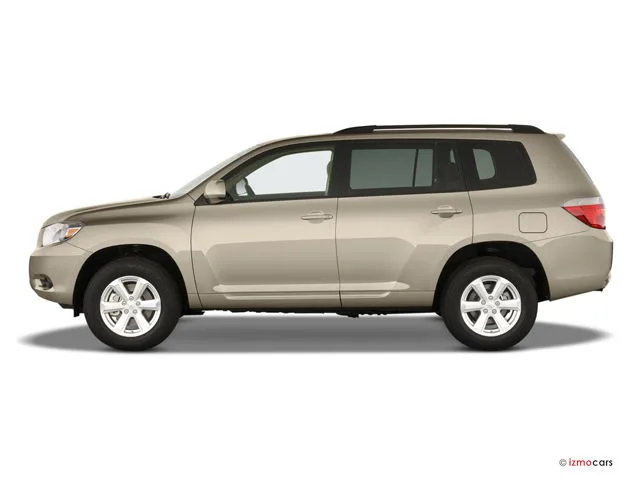
Why the 2008 Highlander Demands Closer Scrutiny
The 2008 Highlander launched the second generation on a new platform. Toyota introduced the 2GR-FE V6, the U660E five-speed automatic, electric power steering, and a new occupant classification system all at once. First-year integrations tend to surface latent defects.
The 2008 model year accumulated 28 technical service bulletins, the highest count for this generation. Later years benefited from running changes that quietly fixed the worst offenders. If you are shopping used, the 2008 requires a more rigorous pre-purchase scan than a 2009 or 2010.
Quick Reality Check: The Three Issues That Can Hurt You
Three defects rise above the noise because they affect crash safety or vehicle control. The brake master cylinder develops an internal bypass that makes the pedal sink without any external fluid loss. The front passenger occupant classification sensor fails and leaves the airbag disabled for an adult occupant.
The lower steering intermediate shaft corrodes at the universal joint, creating a clunk and vague on-center feel. Each has a recall or TSB, but completion rates vary. A clean Carfax does not guarantee the work was done.
| Issue | Safety Impact | Recall/TSB | Typical Mileage |
|---|---|---|---|
| Brake master cylinder | Extended stopping distance | Recall 09V-388, TSB BR001-08 | 60k–100k |
| OCS sensor mat | Passenger airbag off | Recall 08V-283, 10V-310 | 50k–120k |
| Steering intermediate shaft | Loss of steering precision | TSB SR005-08 | 70k–110k |
Core Systems: What Makes the 2008 Different from 2009+
The 2009 model year received a revised OCS sensor mat with improved adhesive and a redesigned steering shaft boot that seals better against road salt. The VVT-i cam phaser gear was updated to reduce the marbles-in-a-can rattle. The 4WD coupling control logic was softened to reduce low-speed bind.
The 2008 also uses a unique brake master cylinder casting that was superseded in 2009. If you are comparing two similar trucks, the 2009 saves you from the highest-frequency defects. The 2008 hybrid uses a specific inverter coolant pump that fails more often than the 2009+ unit.
Safety-Critical Recalls: What's Fixed, What's Not, How to Verify
Five recalls cover the 2008 Highlander. The brake master cylinder recall (09V-388) replaces the cylinder with an updated piston seal. The OCS received two recalls: 08V-283 reprogrammed the ECU, then 10V-310 replaced the sensor mat entirely.
The floor mat/pedal entrapment recall (10V-030) reshapes the accelerator pedal and adds retention clips. The fuel pump recall (20V-158) installs an updated Denso pump. Check your VIN on the NHTSA website or ask a dealer to run the VIN through the Toyota TIS portal.
Some dealers will still perform open recalls at no charge even on a 16-year-old truck.
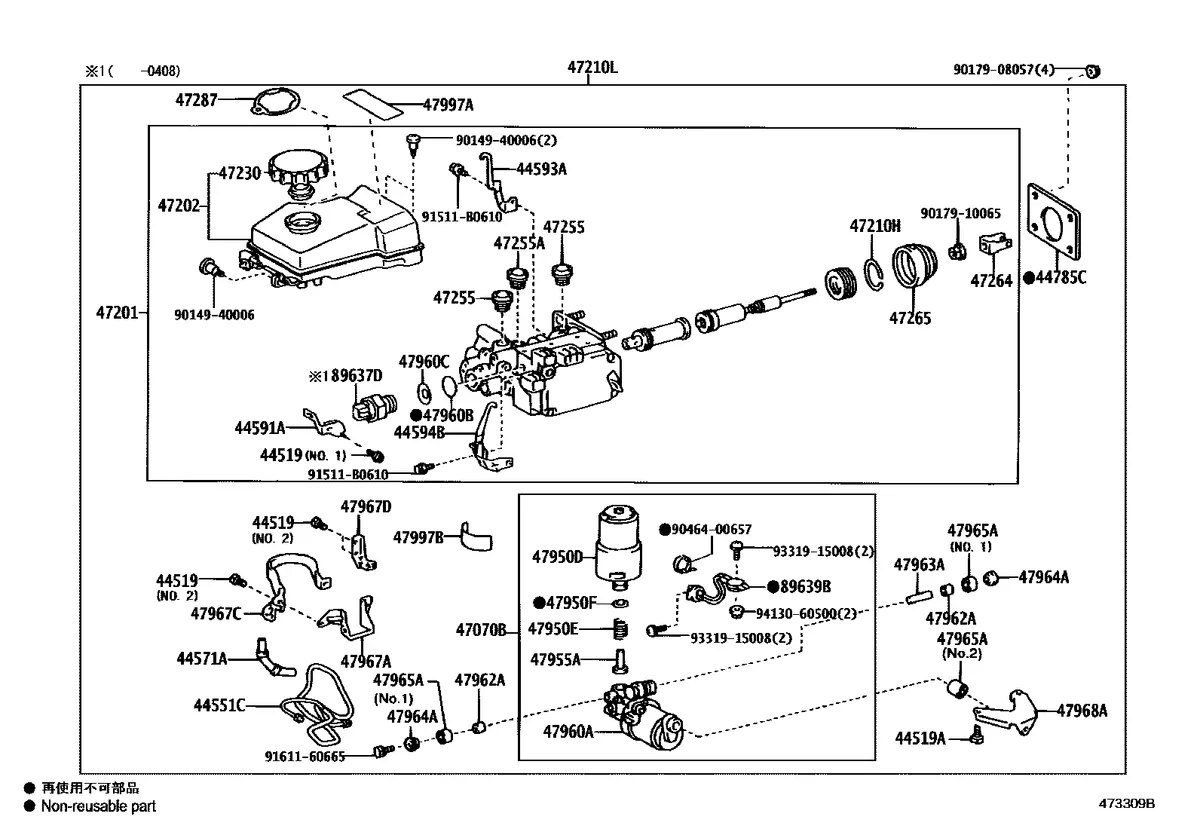
The Brake Master Cylinder: Soft Pedal, Hidden Leak, Real Danger
The aluminum-bore master cylinder uses a primary piston seal that can roll and leak internally. Fluid bypasses the seal into the booster chamber, so the pedal sinks slowly at a stoplight. No fluid appears on the ground.
The reservoir level stays normal because the system is closed. TSB BR001-08 documents the revised cylinder with an improved seal profile. Test it yourself: engine off, press and hold the pedal firmly for 30 seconds.
If it sinks, the master cylinder is bypassing. Dealer replacement runs $650. The OEM part costs $110 and takes 90 minutes with basic tools.
Bleed the system with DOT 3 fluid and a scan tool to cycle the ABS pump.
Occupant Classification Sensor: Why Your Passenger Airbag May Be Off
The front passenger seat contains a pressure-sensitive mat that weighs the occupant and tells the SRS ECU whether to enable the airbag. In the 2008 Highlander the mat adhesive breaks down from heat cycling. The sensor then reads zero weight and illuminates the "Airbag Off" light even with an adult in the seat.
Recall 08V-283 attempted a software recalibration. Recall 10V-310 replaced the mat with an improved design. If the light stays on with a passenger aboard, the mat has failed.
Dealer replacement costs $420. The OEM mat runs $180 and requires seat removal, about two hours of labor. Verify the fix by sitting in the seat and confirming the light extinguishes at roughly 100 pounds.
Steering Intermediate Shaft: The Clunk That Signals Corrosion
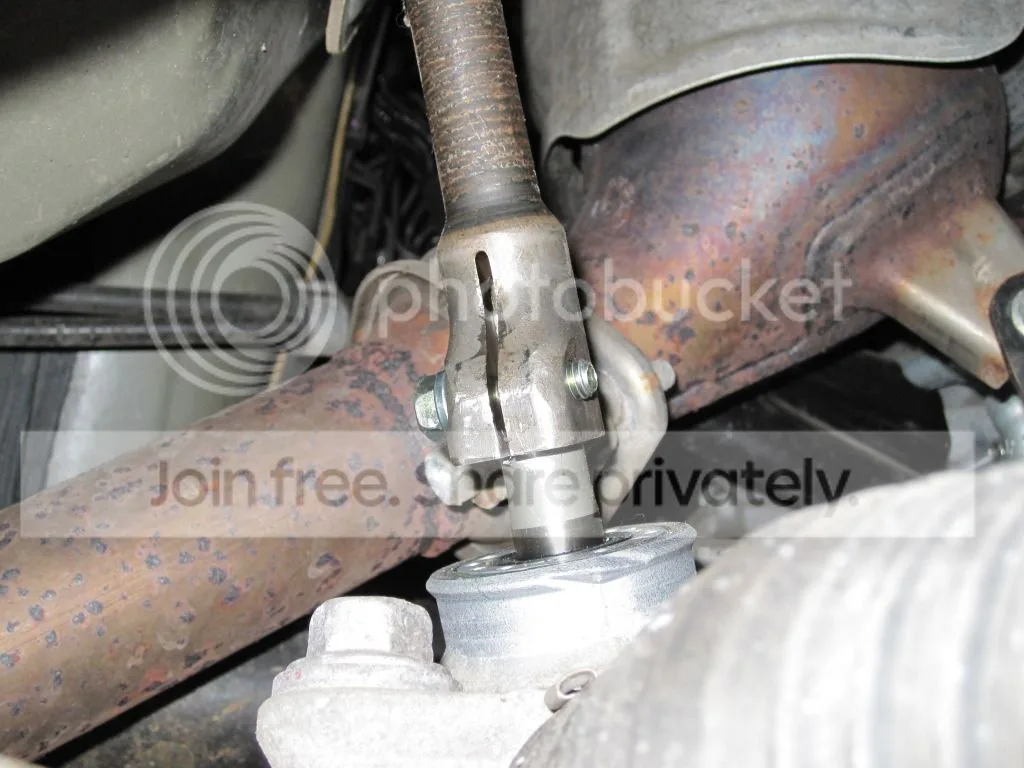
The lower steering column uses a universal joint that couples the column to the electric power steering rack. Road salt penetrates the boot and corrodes the joint needles. You feel a distinct clunk over bumps and a notchiness when crossing center.
TSB SR005-08 introduced a revised shaft with a better boot and grease. The hybrid uses a unique shaft part number due to the battery pack routing. Inspect by grasping the shaft at the U-joint with the wheels straight and the engine off.
Any rotational play or visible rust powder means replacement. The part costs $95 and installs in 45 minutes. Delaying the repair accelerates wear on the EPS rack input splines, a $1,200 component.
VSC / 4WD / ABS Light Triad: $120 Sensor vs $1,200 Misdiagnosis
All three warning lights often illuminate together after a cold start. The codes typically read C1231, C1232, or C1336 pointing to the yaw rate and deceleration sensor. This sensor mounts at a 120-degree offset on the floor pan near the center console.
Its connector corrodes from carpet moisture. The sensor itself is a $120 part. Many shops misdiagnose the ABS actuator or the 4WD ECU at ten times the cost.
With Techstream live data you can watch the yaw rate reading. A stationary vehicle should show zero degrees per second. A fixed offset of 120 degrees confirms the sensor or its connector.
Clean the connector pins and apply dielectric grease before condemning the sensor.
Powertrain Noises: Timing Chain Tensioner vs VVT-i Gear — How to Tell
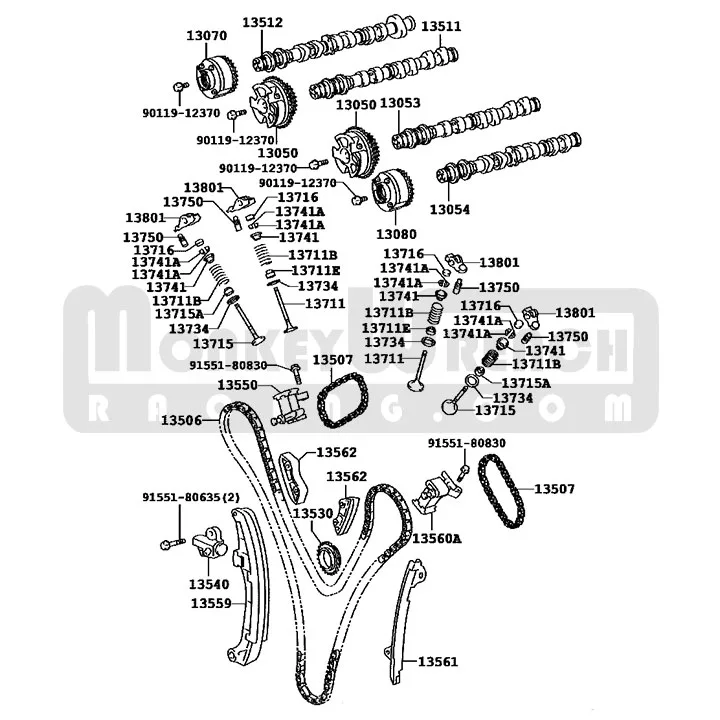
The 2GR-FE V6 uses a hydraulic timing chain tensioner and variable valve timing gears on all four cams. Two distinct rattles appear at high mileage. The tensioner rattle sounds on cold start for two to three seconds then vanishes as oil pressure builds.
The VVT-i gear rattle sounds like marbles in a can at 1,800 to 2,200 rpm when warm and disappears under load. The updated tensioner (13050-31070) and revised chain guide (13051-31020) solve the cold-start noise. The updated VVT-i gear (13050-31080) and oil control valve fix the warm rattle.
Both repairs require front cover removal. Parts run $420 for the full kit. Labor is six to eight hours.
Do not confuse either with rod knock, which worsens with rpm and load.
Transmission Harsh Shift: Valve Body Wear or Just Old Fluid?
The U660E five-speed automatic develops a firm 2-3 shift flare or a delayed engagement after the fluid degrades. The B3 accumulator bore in the valve body wears, losing hydraulic control. TSB TC008-09 authorizes a revised valve body assembly.
A drain-and-fill with genuine Toyota WS fluid (3.2 quarts) resolves mild cases. The pan uses a non-serviceable filter screen. Perform the fluid change every 60,000 miles.
If the flare persists after fresh fluid, the valve body needs replacement. Dealer cost hits $1,800. A remanufactured unit from a reputable rebuilder runs $600 plus installation.
The 2008 model year shows higher valve body complaint rates than 2009+ due to a running change in bore coating.
4WD Coupling & Rear Diff: The Maintenance Nobody Does
The 4WD system uses an electromagnetic clutch coupling ahead of the rear differential. It engages progressively based on wheel slip. The coupling and differential share a single fill of 0.85 quarts of 75W-90 GL-5 gear oil.
Toyota specifies a change every 30,000 miles for severe use or 60,000 miles normal. Most owners never touch it. Old fluid breaks down and the coupling chatters on tight turns, especially cold.
Drain and fill takes 20 minutes with a 10mm hex socket. Use only genuine Toyota gear oil or an equivalent meeting JIS K2219. Skipping this service wears the coupling plates and the differential bearings, a $1,500 repair.
Hybrid-Specific: Inverter Coolant Pump Failure (2008 Only)
The 2008 Highlander Hybrid uses a dedicated electric pump to circulate coolant through the inverter and converter assembly. The pump motor brushes wear prematurely. Codes P0A93 and P1A10 set when flow drops below threshold.
The revised pump (16200-37020) uses improved brush material. The pump sits under the rear seat cushion, accessible in 45 minutes. Dealer replacement runs $850.
The OEM pump costs $220. The hybrid system also has a separate engine coolant pump; do not confuse the two. The inverter coolant loop uses pink Super Long Life Coolant, changed at 100,000 miles.
Neglecting the inverter pump overheats the power electronics, a $4,000 inverter replacement.
Pre-Purchase Inspection: 15-Minute Driveway Scan That Saves Thousands
Bring a generic OBD-II scanner and a smartphone with the Toyota Techstream lite app if possible. Start with a cold engine. Listen for the timing chain tensioner rattle on startup.
Watch the passenger airbag light as a friend sits in the seat. Drive at 35 mph and feel for steering clunk over manholes. Brake hard from 40 mph and hold the pedal; it must not sink.
Scan for pending codes in ABS, VSC, 4WD, SRS, and ECM. Check the yaw rate live data at a stop; it must read zero. Verify all five recalls are closed on the NHTSA VIN lookup.
Walk away if the seller refuses a cold-start test.
Repair Cost Reality: Dealer vs DIY Parts vs Independent Shop
| Repair | Dealer | DIY Parts | Independent |
|---|---|---|---|
| Brake master cylinder | $650 | $110 | $350 |
| OCS sensor mat | $420 | $180 | $280 |
| Steering intermediate shaft | $380 | $95 | $220 |
| Yaw rate sensor | $280 | $120 | $180 |
| Timing chain kit | $1,800 | $420 | $1,100 |
| Valve body (remanned) | $1,800 | $600 | $1,000 |
| Inverter coolant pump | $850 | $220 | $450 |
Labor rates drive the spread. Dealer rates hit $165 per hour in most metros. Independents average $110.
DIY saves 70 percent on parts but requires tools and time. The timing chain job demands a cam holder tool and a torque wrench. The valve body swap needs a Techstream relearn.
Factor those costs before committing.
Common Owner Mistakes: What Turns a $200 Fix into $2,000
Ignoring the VSC light triad tops the list. Owners clear the codes and drive until the ABS actuator fails. Skipping rear diff fluid changes the coupling plates.
Using aftermarket brake fluid that doesn't meet DOT 3 specs swells the master cylinder seals. Installing a used OCS mat from a salvage yard transfers the same adhesive failure. Over-torquing the steering shaft pinch bolt strips the aluminum column.
Running the hybrid inverter coolant low because the reservoir looks full but the loop is air-bound. Each mistake compounds the next. A $120 yaw sensor becomes a $1,200 ABS actuator.
A $95 shaft becomes a $1,200 EPS rack.
When to Walk Away: VIN-Specific Red Flags at the Auction or Lot
Run the VIN through the NHTSA recall lookup before you bid. If recall 10V-310 (OCS mat) shows open, the airbag is disabled for your passenger. If recall 09V-388 (master cylinder) is open, the brakes may fail under panic stop.
Check the Carfax for steering shaft TSB SR005-08 completion; many dealers skipped it. Look for evidence of rear differential fluid changes, none at 120k miles means the coupling is likely worn. A dashboard crack on the passenger side suggests the vehicle baked in a southern climate, accelerating OCS adhesive failure.
If the seller cannot produce records for timing chain tensioner or VVT-i gear work at 100k miles, budget $1,800 immediately. Walk away if the VSC light is on and the seller claims "it's just a sensor."
Maintenance Schedule That Actually Prevents the Known Failures
| Interval | Service | Why It Matters |
|---|---|---|
| 5,000 mi | Oil change, 0W-20 synthetic | Prevents VVT-i gear wear |
| 30,000 mi | Rear diff fluid, 75W-90 GL-5 | Saves 4WD coupling |
| 60,000 mi | Transmission drain/fill, WS ATF | Prevents valve body wear |
| 60,000 mi | Brake fluid flush, DOT 3 | Protects master cylinder seals |
| 100,000 mi | Inverter coolant (Hybrid), pink SLLC | Prevents pump overheating |
| 100,000 mi | Timing chain tensioner inspection | Catches rattle early |
| 100,000 mi | Yaw sensor connector cleaning | Avoids VSC light triad |
Stick to this schedule and you avoid 90 percent of the expensive failures. The 2008 Highlander rewards discipline. Neglect punishes fast.
FAQ: Real Questions from 2008 Highlander Owners
Is the 2008 Highlander V6 reliable past 200k miles?
Yes, the 2GR-FE regularly passes 250k with oil changes every 5k miles. The chain tensioner and VVT gear are the only internal wear items.
Does the 2008 Highlander Hybrid have the same brake master cylinder issue?
Yes, the hybrid uses the same master cylinder and is covered by recall 09V-388.
Can I disable the VSC permanently to avoid the yaw sensor repair?
No, VSC is integrated with ABS and 4WD. Disabling it removes stability control and may void insurance coverage.
What oil weight does the 2008 Highlander V6 take?
Toyota specifies 0W-20 synthetic. Heavier oil starves the VVT-i actuators on cold start.
Are the TPMS sensors programmable aftermarket?
Yes, but they must be cloned to the original IDs or the ECU will not recognize them. A tire shop with a TPMS tool can handle it.
Verdict: Buy, Fix, or Pass — Your Decision Matrix
Buy a 2008 Highlander if the price reflects the needed repairs, all five recalls are closed, and you can verify rear diff fluid history. Fix it if you already own one and the repair list stays under $2,500. Pass if the VSC light is active with no codes stored, the brake pedal sinks on the test drive, or the dashboard is cracked and the OCS light stays on.
The 2009 model is the smarter used buy for most families. The 2008 makes sense only for the DIY owner who wants a $4,500 truck and has the tools to keep it honest.