
The 2009 toyota matrix problems list reads longer than most compact wagons from that era. You are likely here because a cheap used example caught your eye or your current Matrix just threw a new warning light. Either way the stakes are real.
Some issues are minor annoyances while others can leave you stranded or unsafe.
The 2.4 liter 2AZ-FE engine burns a quart of oil every 1,200 miles on affected units per Toyota service bulletin 0094-11. Four separate safety recalls cover airbags steering and brake lines. Let's break down what matters and what you can skip.
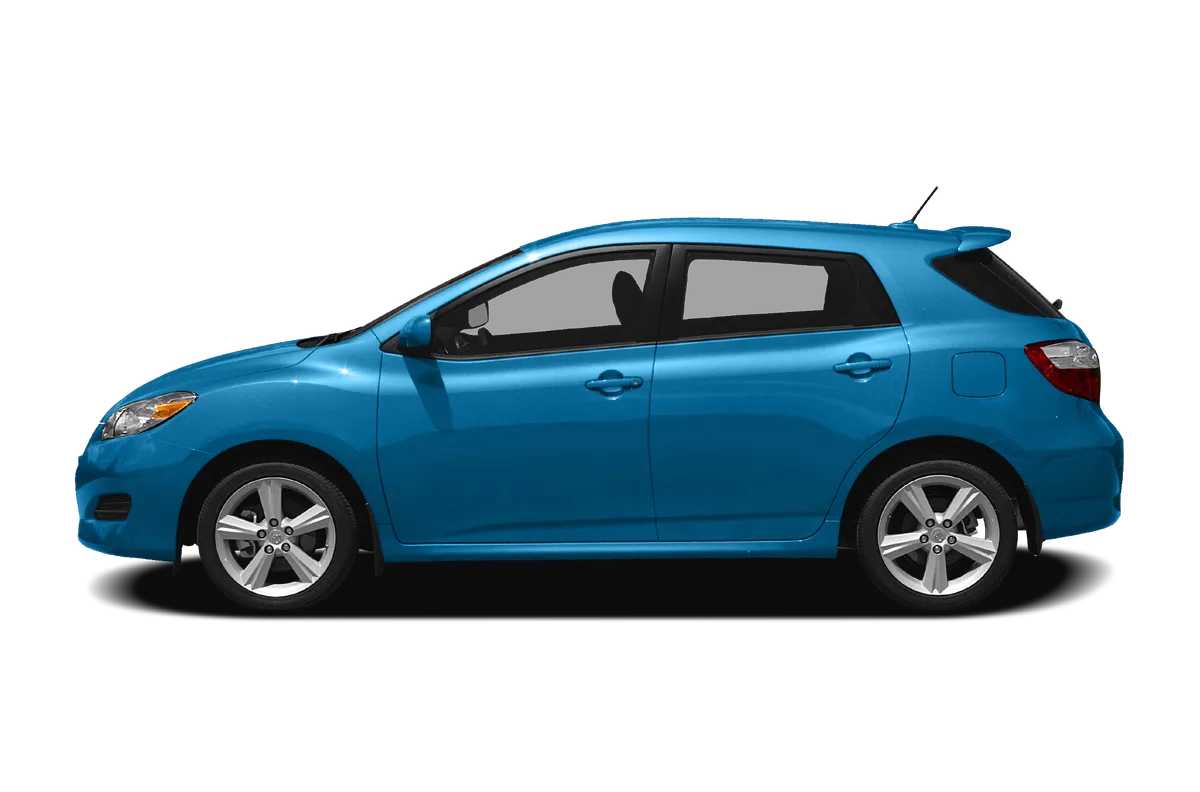
Image source: Bing (Web (fair-use with source credit))
Quick Answer
The 2009 Toyota Matrix has significant engine oil consumption on 2.4L models. Four safety recalls affect airbags steering and brakes. The 1.8L engine avoids the oil issue.
Dashboard cracking and door handle breaks are common. Verify all recalls before buying.
Why Getting the 2009 Matrix Right Matters More Than Most Used Cars
This is not a typical used car where you budget for tires and brakes. The 2009 Matrix sits at a unique intersection of a known engine defect multiple active safety recalls and a platform shared with the Pontiac Vibe. A missed recall can mean an airbag that sends shrapnel into the cabin.
An ignored oil consumption issue can kill a catalytic converter and strand you in traffic. The financial exposure runs from a few hundred dollars for a door handle to four thousand for an engine rebuild. We treat this as a safety and wallet decision first not just a reliability checklist.
The good news is Toyota still honors every recall on this vintage. The bad news is many 2009 Matrices have changed hands multiple times and recall work gets skipped. As of 2026 the Takata inflator completion rate sits around 88 percent nationally per NHTSA data.
That means roughly one in eight cars on the road still carries the most dangerous defect. Your first job is not kicking tires. Your first job is running the VIN.
The Two Engines: Why the 2.4L 2AZ-FE Owns the Headlines (and the 1.8L Mostly Doesn't)
The 2009 Matrix came with two engines. The base 1.8 liter 2ZR-FE uses a conventional piston ring pack with standard tension and adequate oil return holes. It runs clean for 200,000 miles with basic maintenance.
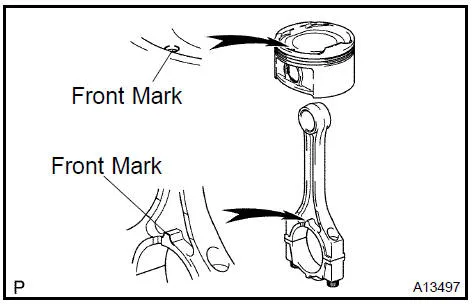
The optional 2.4 liter 2AZ-FE in the S and XRS trims uses low tension rings and shallow oil return holes. That design choice saves friction but lets oil sneak past the rings into the combustion chamber. The result is consumption that starts around 60,000 miles and accelerates.
Toyota issued TSB 0094-11 acknowledging the problem. The bulletin sets the warranty threshold at one quart per 1,200 miles. Many owners report one quart every 800 miles before they act.
The fix is not a seal or a PCV valve. The fix is updated pistons and rings which means pulling the engine. That repair runs $2,800 to $4,200 at a dealer.
Independent shops charge $1,800 to $2,800. The 1.8L models avoid this entirely. If you are shopping used the engine code on the VIN sticker tells you everything.
Eighth digit 8 is the 1.8L. Eighth digit 6 is the 2.4L.
| Feature | 1.8L 2ZR-FE | 2.4L 2AZ-FE |
|---|---|---|
| Oil consumption risk | Very low | High |
| Timing chain | Chain (lifetime) | Chain (lifetime) |
| Power output | 132 hp | 158 hp |
| Transmission options | 5MT 4AT | 5MT 4AT CVT |
| Recall exposure | Takata ECM EPS | Takata ECM EPS CVT judder |
The 2ZR-FE is the pick for peace of mind. The 2AZ-FE is the pick only if you have records of the piston ring repair or a price that reflects the risk.
The Safety Recalls You Cannot Ignore — Takata, ECM, EPS, Brake Lines
Four recalls on this car are safety critical. Each has a NHTSA campaign number you can verify today.
The Takata airbag recalls come in three campaigns. 19V02 covers the driver frontal inflator. 19V03 covers the passenger frontal inflator. 20V03 covers the side curtain inflators. All three use ammonium nitrate propellant that degrades in heat and humidity. In a crash the inflator can rupture and spray metal fragments.
NHTSA issued a "Do Not Drive" warning for unrepaired 19V02 and 19V03 vehicles in high humidity zones. Check your zone at NHTSA.gov.
The ECM corrosion recall 14V35 covers 2009 to 2010 models. Water wicks down the engine wiring harness into the ECM connector. The circuit board lacks conformal coating on early builds.
Corrosion causes random stalling no start and codes P0606 or P0607. Stalling at highway speed is the safety hazard. The remedy is a replacement ECM with proper coating.
Dealer cost runs $850 to $1,200. A reman unit with coating is $400 to $600 plus an hour of labor.
The EPS recall 15V50 covers the electric power steering motor. Brush wear and torque sensor drift cause sudden loss of assist. Steering gets heavy at low speed.
Codes C1511 or C1512 set. The recall covers 10 years unlimited miles from original sale date. That means coverage extends to 2029 for a car sold in late 2009.
Dealer replaces the motor assembly and updates calibration. Two hour job loaner provided.
The brake line recall 16V65 is region specific. It covers 20 cold climate states plus DC. Rear brake lines rust through and the pedal goes to the floor.
If you live in or bought from a salt belt state this recall applies. Dealer replaces all four lines. Cost is $600 to $900 if not covered.
DIY is $150 in parts but requires a flaring tool.
| Recall | NHTSA Campaign | Component | Coverage | Key Symptom |
|---|---|---|---|---|
| Driver airbag | 19V02 | Takata inflator | Unlimited | Airbag light |
| Passenger airbag | 19V03 | Takata inflator | Unlimited | Airbag light |
| Side curtain | 20V03 | Takata inflator | Unlimited | Airbag light |
| ECM corrosion | 14V35 | Engine computer | 10yr/unlimited | Stalling P0606 |
| EPS motor | 15V50 | Steering motor | 10yr/unlimited | Heavy steering |
| Brake lines | 16V65 | Rear lines | 10yr/unlimited (region) | Soft pedal |
How to Verify Every Recall Is Actually Done on a Specific VIN
Do not trust the seller's word. Do not trust a Carfax recall flag. Run the VIN yourself on two sites.
First go to Toyota.com/recall and enter the 17 digit VIN. The site shows every campaign for that specific serial number and whether the remedy is complete. Second go to NHTSA.gov/recalls and run the same VIN.
The government database sometimes catches campaigns the manufacturer site misses.
Look for three Takata campaigns. All three must show "Remedy Complete" with a date. If any shows "Incomplete" or "Open" walk away unless the seller schedules the fix before you pay.
Check 14V35 for the ECM. Check 15V50 for the EPS. Check 16V65 if the car has ever lived in a salt belt state.
The VIN decode also tells you the build month. Early build 2009 cars (March 2008 to August 2008) have the highest ECM corrosion risk. Late build cars (September 2008 onward) got the coated ECM at the factory.
Call the servicing dealer with the VIN before you visit. Ask them to pull the repair history. Confirm the Takata inflators were replaced not just inspected.
Some early campaigns only inspected. The final remedy is replacement. Ask for the EPS motor replacement date.
Ask for the brake line replacement if applicable. Get it in writing on dealer letterhead. That paper matters if you ever need lemon law support.
Oil Consumption: The Real Test, The Real Fix, The Real Cost
If you own a 2.4L Matrix or are buying one you need the official oil consumption test. Toyota will not authorize a piston ring repair without it. The procedure is strict.
The dealer drains the oil measures the exact volume refills with fresh oil and seals the dipstick tube with a tamper evident tag. You drive 1,200 miles. No top offs.
No additives. You return for a remeasure. If consumption exceeds one quart the repair is approved under the extended warranty.
The warranty extension for this issue runs 10 years or 150,000 miles from original sale date. For a 2009 that window closed around 2019. However many dealers still goodwill the repair if the test fails and the car has been maintained at a Toyota dealer.
Independent maintenance records help but do not guarantee coverage. The test costs $150 to $250 at a dealer. Some waive the fee if the repair proceeds.
If the test passes but you still see consumption the piston rings are likely not the only issue. Valve stem seals and the PCV system can contribute. A compression test and leak down test add data.
If the rings are the culprit the repair is updated pistons rings rod bearings and head gasket. Book time is 12 to 15 hours. Parts run $800 to $1,200.
Labor dominates the bill.
Some owners try heavier oil (10W-30 or 10W-40) or additives. That masks the symptom and risks catalytic converter damage from oil ash. The converter is $1,200 to $1,800.
Do not kick the can. Run the test. Get the repair or price the car accordingly.
| Test Step | Dealer Action | Owner Action | Pass/Fail |
|---|---|---|---|
| 1 Drain & measure | Record exact volume | None | Baseline |
| 2 Refill & seal | Fresh oil tamper tag | Drive normally | 1,200 miles |
| 3 Return & remeasure | Drain measure compare | No top offs | >1 qt = fail |
| 4 Authorization | Submit to Toyota | Wait for approval | Repair approved |
Electric Power Steering Failure: What It Feels Like and Why the Recall Still Covers You
The EPS motor on the 2009 Matrix uses a brush type design that wears faster than the rack and pinion it assists. When the brushes wear down the motor loses torque. The torque sensor then sends erratic signals to the ECU.
You feel normal steering at speed then sudden heavy effort in a parking lot or at a stop sign. The dash may flash the EPS warning light or stay dark while codes C1511 or C1512 sit in history.
Recall 15V50 covers the motor assembly and torque sensor calibration for 10 years unlimited miles from the original sale date. That means a car sold in December 2009 stays covered until December 2029. The dealer replaces the entire motor unit not just the brushes.
They also flash the latest calibration which reduces sensor sensitivity to temperature drift. The job takes about two hours and a loaner is standard.
If your Matrix is outside the recall window or you bought it used with the repair already done the motor can still fail again. Aftermarket reman units run $300 to $450. Installation is straightforward for a shop with a scan tool that can recalibrate the torque sensor.
DIY is possible but you need a J2534 pass through device to load the calibration. Without it the new motor will hunt and the light will return.
Watch for intermittent stiff steering that clears after a restart. That is the classic brush contact failure. Do not ignore it.
Loss of assist in a panic maneuver is a real crash risk.
Dashboard Cracking, Door Handles, EVAP Quirks — The Annoyances That Add Up
The dashboard substrate on the 2009 Matrix shrinks over time especially in high heat climates. The result is spiderweb cracks radiating from the passenger airbag door and the instrument cluster hood. Toyota extended the warranty on this to 12 years unlimited miles under TSB 0094-13.
For a 2009 that coverage runs through 2021 but many dealers still honor it as a goodwill repair. The fix is a full dashboard skin replacement. Book time is eight hours.
Vent clips often break during removal so budget for those.
Interior door handles snap at the plastic pivot where the cable attaches. The handle pulls free but the latch does not release. You are trapped inside or cannot open the door from inside.
NHTSA investigation PE14023 covers this. There is no recall but dealers often replace both front handles under goodwill. Aftermarket reinforced handles with metal pivots cost $30 each and install in 30 minutes per side.
The EVAP system has a known quirk. The charcoal canister saturates during a full fill if you top off past the click. The purge valve then sticks open.
The engine runs rough or cranks long on the next start. Codes P0441 or P0455 set. The fix is stop topping off.
If the valve is already stuck Toyota issued special service campaign 20TB01 for canister and valve replacement. Coverage is 10 years 150,000 miles. Many cars already had this done.
Rust Reality: Brake Lines, Rockers, and What the 16-State Recall Misses
Brake line recall 16V65 covers 20 cold climate states plus DC. If your Matrix spent its life in Florida or Arizona the recall does not apply. That does not mean the lines are immune.
Copper nickel brake lines still corrode from the inside out if brake fluid was never changed. The green crust you see at the fittings is copper oxide. Flaking metal at the rear axle line is the failure point.
Inspect every line from master cylinder to each caliper. Replace in pairs. Use nickel copper alloy line it resists corrosion far better than OEM steel.
Rocker panels and rear quarter panel seams rot from the inside. The factory seam sealer was thin. Water traps in the double layer and eats outward.
By the time you see bubbles on the paint the inner structure is gone. Tap the rockers with a screwdriver handle. A dull thud means solid metal.
A hollow ring or give means rot. Repair requires cutting out the inner rocker and welding in a patch panel. Cost runs $800 to $1,500 per side at a body shop.
Rear wheel arches are the next hotspot. Mud packs behind the plastic liner and holds moisture against the lip. Pull the liners annually and pressure wash the metal.
Spray cavity wax into the drain holes. It buys years.
Buying Checklist: What to Inspect, What to Ask, What to Walk Away From
Bring a flashlight a magnet and a VIN printout. Start with the VIN. Run it on Toyota.com/recall and NHTSA.gov.
Confirm all three Takata campaigns show remedy complete. Confirm 14V35 15V50 and 16V65 if applicable. Ask the seller for dealer printouts of each repair.
No printout no proof.
Check the oil. Pull the dipstone cold. Look for low level or dark sludgy oil.
Ask for oil change receipts. A 2.4L with no records is a risk. Ask if the oil consumption test was ever done.
If yes ask for the result. If no factor $200 for the test into your offer.
Start the engine cold. Listen for timing chain rattle on the 2.4L. It should be quiet within three seconds.
Rev to 3,000 RPM. Watch for blue smoke. That is oil burning.
Check the EPS light. It should illuminate at key on then extinguish. Turn the wheel lock to lock.
Feel for notchy spots or sudden heavy spots.
Under the car inspect brake lines for green crust or wet spots. Check rear wheel bearings for play. Grab the tire at 12 and 6 wiggle.
Any clunk is a bearing. Check rockers with the magnet. Bondo does not stick.
Tap for hollow sounds.
Test every door handle inside and out. Open and close each door three times. Check the dash for cracks in bright sun.
Cycle the HVAC through all modes. Verify the rear defroster grid works.
Walk away if any Takata recall is open. Walk away if the 2.4L has no consumption test and the seller refuses one. Walk away if rockers are rotted.
Walk away if the title is branded or the VIN plates look tampered.
Ownership Math: Repair Costs vs. Value vs. Peace of Mind
A clean 2009 Matrix with the 1.8L engine and all recalls done trades around $5,500 to $7,000 private party as of 2026. A 2.4L with consumption issues and open recalls sits at $2,500 to $3,500. The delta is real money.
If you buy a 2.4L at the low price budget $3,000 for the piston ring repair $500 for the EPS motor if not done $200 for the oil test $150 for brake lines if not in a recall state. That brings a $3,000 car to $6,850 all in. You are now at the price of a clean 1.8L with no surprises.
The 1.8L with 150,000 miles and full records is the better buy. It avoids the oil consumption lottery. It avoids the CVT if equipped.
It still gets the same recall coverage. Fuel economy is 26 city 32 highway versus 21 city 28 highway for the 2.4L. Insurance is often lower.
If you already own a 2.4L and the test fails the repair makes sense if the body is solid and the transmission is good. A rebuilt 2AZ-FE with updated pistons runs another 150,000 miles. The math works if you keep the car five more years.
If you plan to sell in two years the repair never pays back.
Extended warranties on 15 year old cars are rarely worth the premium. Put the money in a repair fund instead.
When to Involve a Dealer, a Specialist, or a Lemon Law Attorney
Take the car to a Toyota dealer for any recall work. They have the scan tools for ECM and EPS calibration. They honor the extended warranties.
Use an independent Toyota specialist for the piston ring repair. They charge less and often have the updated piston kits in stock. Find one with a J2534 pass through device for ECM flashes.
Call a lemon law attorney if the dealer fails the oil consumption test three times or the car spends 30 cumulative days in the shop for the same defect. Most states cover used cars under the original warranty period. Bring all test records repair orders and the VIN printout.
Initial consults are usually free.
Quick-Reference: VIN Ranges, TSB Numbers, and Recall Campaign IDs
| Item | Identifier | Applies To |
|---|---|---|
| 2.4L oil consumption TSB | 0094-11 | 2AZ-FE engines |
| Dashboard crack TSB | 0094-13 | All 2009 Matrix |
| EVAP canister campaign | 20TB01 | PZEV models |
| Driver airbag recall | 19V02 | All 2009 Matrix |
| Passenger airbag recall | 19V03 | All 2009 Matrix |
| Side curtain recall | 20V03 | All 2009 Matrix |
| ECM corrosion recall | 14V35 | VIN JTKxxxxxx9xxxxxx through JTKxxxxxxAxxxxxx |
| EPS motor recall | 15V50 | All 2009 Matrix |
| Brake line recall | 16V65 | 20 cold climate states |
Keep this table in your glove box. It saves hours at the service counter.
Frequently Asked Questions
Does the 2009 Matrix 1.8L burn oil?
No. The 1.8L 2ZR-FE engine does not have the piston ring defect. Normal consumption is less than a quart per 5,000 miles.
How do I know if my Takata airbags were fixed?
Run the VIN at Toyota.com/recall and NHTSA.gov. All three campaigns (19V02 19V03 20V03) must show "Remedy Complete" with dates.
Is the EPS recall still active in 2026?
Yes. Recall 15V50 covers 10 years unlimited miles from original sale. A car sold in late 2009 stays covered through late 2029.
What does the oil consumption test cost?
Dealers charge $150 to $250. Many waive the fee if the repair is approved. The test takes two visits 1,200 miles apart.
Can I drive with a cracked dashboard?
Yes but the passenger airbag door may not deploy correctly. Toyota extended warranty to 12 years unlimited miles. Many dealers still repair as goodwill.
Should I buy a 2009 Matrix with 150k miles?
Only if it has the 1.8L engine all recalls done and maintenance records. The 2.4L at that mileage is a high risk without a documented piston ring repair.