
The 2008 toyota tundra problems that actually total trucks come down to two systemic failures. Frame perforation at the rear crossmember can separate the bed from the cab. Secondary air injection pump seizure strands owners with a check engine light and a four-figure repair bill.
Both issues are documented in NHTSA data and Toyota service bulletins. Most other complaints are noise or cosmetic.
The 5.7L 3UR-FE V8 uses a timing chain and port injection. That design avoids the carbon buildup and belt service of direct-injection rivals. Manufacturer specifications indicate the AB60E six-speed transmission holds up well past 200k miles with routine fluid changes.
Aggregate reviews report the drivetrain is not the weak link. The structure and emissions hardware are.
Quick Answer
The 2008 Toyota Tundra has two major problems. Frame rust can perforate the rear crossmember and spring hangers. The secondary air injection pump fails between 80k and 120k miles.
A safety recall covers frame replacement in 20 cold-climate states. The emissions pump has no recall. Owners in other states pay for frame repairs out of pocket.
The Two Problems That Can Total a 2008 Tundra
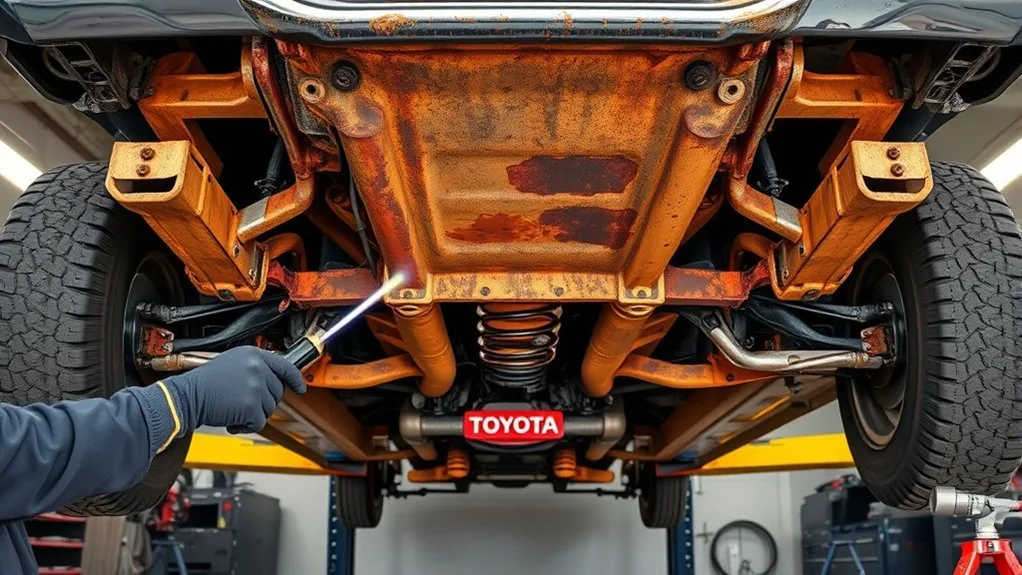
Frame perforation is the safety issue. Road salt attacks the C-channel frame at the rear crossmember and spring hanger brackets. Metal loss reduces structural integrity.
A separated bed can shift under braking or towing. NHTSA recall 19V-001 addresses this for trucks registered in 20 states plus DC. The remedy replaces the entire frame with a thicker-rail version at no cost.
Secondary air injection failure is the financial issue. The SAI system injects fresh air into the exhaust during cold starts. It reduces hydrocarbon emissions for the first 60 seconds.
The pump sits low behind the front bumper on the passenger side. Water and road debris enter the inlet. Bearings seize.
The check valves on the cylinder heads carbon up. Both set codes P0418 P2440 P2442. Dealer repair runs $1,200 to $1,800.
Independent shops charge $600 to $900. The pump fails again because the root cause is not fixed.
Other problems exist but rarely total the truck. Exhaust manifolds crack on the 5.7L V8. Water pumps weep at 90k miles.
Dash boards crack above the glovebox. Tailgate handle bezels snap. Bed bounce annoys empty-truck drivers at highway speed.
None of these are safety defects. All are manageable with maintenance or one-time fixes.
Frame Recall 19V-001: What It Covers, Who Qualifies, and How to Claim It
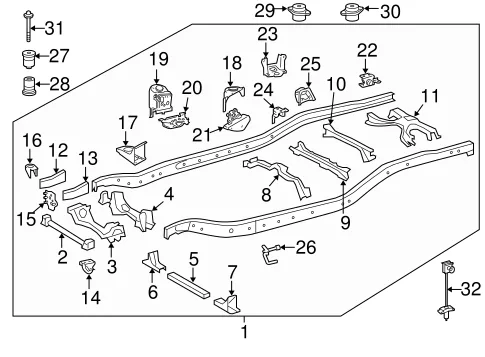
Recall 19V-001 launched in 2019. It covers 2000 through 2008 Tundra and Sequoia models. The population is roughly 110,000 vehicles.
Eligibility requires current registration in one of 20 states. Those states are CT DE IL IN KY MA MD ME MI MN NH NJ NY OH PA RI VT WI WV and DC. The recall does not follow the VIN.
It follows the address on the registration.
Toyota sends owner notification letters by mail. The letter includes a case number and a deadline to respond. There is no expiration date for the repair.
The remedy is a full frame replacement. The new frame uses 4.5mm rail thickness versus the original 3.2mm. Fuel lines brake lines and all mounting hardware are included.
Labor time is 20 to 30 hours. Dealers typically keep the truck for three to five days.
If you live outside the 20 states you are not eligible. Frame rust still happens in Texas California Florida and Arizona. Coastal salt air accelerates corrosion.
Toyota will not pay for the repair. A private frame swap costs $4,500 to $7,500. Some owners pursue buyback through state lemon laws.
Success varies by statute. Documentation of multiple repair attempts helps.
Check your VIN at nhtsa.gov/recalls or the Toyota owner portal. Enter the 17-digit VIN. The result shows open recalls.
Print the page. Call a Toyota dealer. Schedule the inspection.
The dealer performs a tap test at eight points. If perforation is found the frame is replaced. If surface rust only the dealer applies a corrosion inhibitor.
That buys time but does not stop the rot.
| Tap Test Location | What to Check |
|---|---|
| Rear crossmember | Perforation holes flaking metal |
| Rear spring hanger brackets | Cracks thinning metal |
| Front frame horn | Rust jacking at body mounts |
| Cab mount brackets | Separation from frame rail |
| Fuel tank straps | Strap integrity |
| Brake line routing | Line contact with frame |
| Rear bumper brackets | Mount integrity |
| Spare tire carrier | Cable and mount condition |
Secondary Air Injection Failure: The $1,500 Repair That Keeps Coming Back
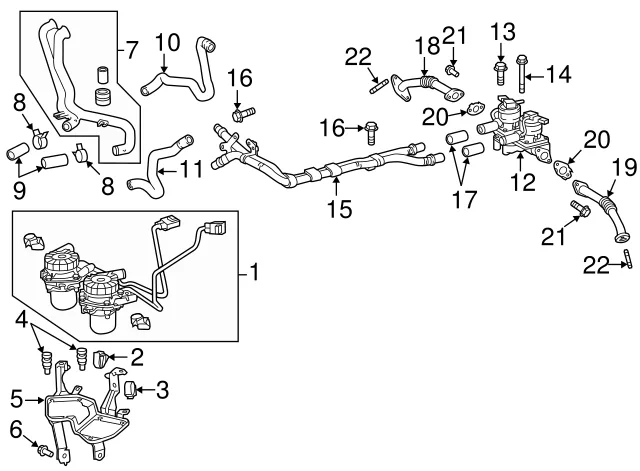
The SAI system runs only during cold start. The pump draws air through a filter behind the grille. It pushes air through check valves into the exhaust ports.
This burns off unburned hydrocarbons. The pump is a sealed electric motor. It is not serviceable.
Water enters the housing. Bearings corrode. The motor locks up.
The ECU detects no flow. It sets a code and illuminates the check engine light.
Check valves fail differently. Carbon builds up on the valve seats. The valves stick open or closed.
The ECU sees incorrect flow. Same codes. Same light.
The valves are threaded into the cylinder heads. Driver side rear is the hardest to reach. Labor dominates the cost.
OEM pump and two valves cost $450 to $650. Dealer labor adds $800 to $1,200.
The SAI delete kit is the permanent fix. Block-off plates replace the check valves. A resistor plugs into the pump harness.
The ECU sees normal resistance. A custom tune disables the SAI monitors. The pump stays in place but does not run.
Cost is $150 to $350 for parts and tune. No more pump failures. No more valve cleaning.
The truck passes OBD readiness in most states.
California CARB is the exception. The visual inspection looks for the pump and valves. The OBD check looks for SAI monitor completion.
A deleted truck fails smog. Some owners reinstall OEM parts every two years. Others register the truck in a non-CARB state.
Federal law prohibits tampering with emissions equipment. Clean Air Act section 203(a)(3) carries fines. Enforcement targets shops not individual owners.
Risk is low but not zero.
| Repair Option | Parts Cost | Labor Cost | Total | Longevity |
|---|---|---|---|---|
| OEM pump + valves | $450–$650 | $800–$1,200 | $1,250–$1,850 | 60k–80k miles |
| Independent OEM | $450–$650 | $400–$600 | $850–$1,250 | 60k–80k miles |
| SAI delete kit + tune | $150–$350 | $0–$200 DIY | $150–$550 | Permanent |
Exhaust Manifold Cracks, Water Pump Leaks, and Dash Rot: The Supporting Cast
The 5.7L 3UR-FE exhaust manifolds crack at the passenger side rear cylinder. Thermal cycling stresses the cast iron. The crack leaks exhaust noise and smell.
It can burn the wiring harness or starter solenoid. OEM manifolds cost $320 to $450 each. You need both sides for even flow.
Labor is four to six hours. Aftermarket headers delete the catalytic converters. That fails emissions in most states.
Stick with OEM or CARB-legal replacements.
Water pump weep hole leaks appear at 90k to 130k miles. The pump is driven by the timing chain. Replacement requires removing the fan clutch and radiator shroud.
OEM pump costs $180 to $250. Labor adds $400 to $600. Use Toyota red coolant.
Mix 50/50 with distilled water. The chain tensioner should be inspected while the front cover is off.
Dash cracking is a cosmetic defect. The thermoplastic polyolefin substrate shrinks under UV exposure. Cracks radiate from the instrument cluster and passenger airbag seam.
No recall exists. Replacement dash skin costs $1,200 plus labor. Dash covers hide the cracks for $80 to $150.
They fit over the original. Most owners live with it.
Tailgate handle bezel cracking is pure annoyance. The chrome plastic becomes brittle. It snaps when you pull the handle.
The latch mechanism stays functional. Dealer bezel costs $80 to $120. Aftermarket is $40.
Replacement takes ten minutes with a trim tool.
Bed bounce is not a defect. The frame frequency resonates at 1.5 to 2 Hz unloaded. It feels like the bed is flexing.
It stops when you add 300 pounds of payload. Shocks do not fix it. Helper springs do not fix it.
It is a characteristic of the GMTK platform. Drive loaded or ignore it.
How to Inspect a 2008 Tundra Frame in 10 Minutes (Tap Test Points)
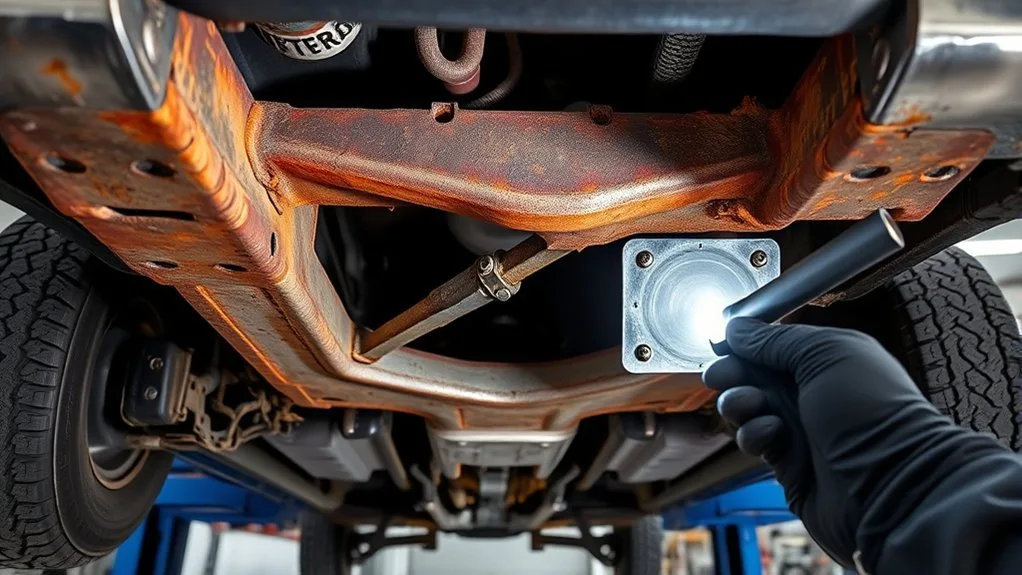
You need a ball-peen hammer a flashlight and a creeper. Wear safety glasses. Start at the rear.
Tap the crossmember below the spare tire carrier. Solid steel rings. Rotten steel thuds.
Look for holes flaking metal or separated welds. Move to the spring hanger brackets. Tap the front and rear faces.
Check the bracket-to-frame welds. Cracks here mean the leaf spring can detach.
Slide forward to the cab mounts. Tap each bracket. Rust jacking lifts the cab off the frame.
You will see gaps or distorted bolt holes. Check the front frame horns. These take the plow and winch loads.
Rust thins the mounting plates. Inspect the fuel tank straps. They wrap the tank.
Straps rot from the inside out. A loose tank is a fire hazard.
Follow the brake lines along the driver side rail. Lines contact the frame at clips. Vibration wears through the coating.
Rust forms fast. A leaking line loses pedal pressure. Check the rear bumper brackets.
They mount to the frame ends. Corrosion lets the bumper sag. The spare tire carrier cable runs under the bed.
If the frame is gone the cable pulls through.
Document everything with photos. Send them to the dealer with your VIN. If you are in a recall state they schedule the inspection.
If not you have a baseline. Recheck every six months. Frame rot accelerates once it starts.
A clean frame today can perforate in one winter.
| Tool | Purpose |
|---|---|
| Ball-peen hammer | Tap test for metal integrity |
| Flashlight | See inside frame cavities |
| Creeper | Comfort under the truck |
| Safety glasses | Protect eyes from rust flakes |
| Camera or phone | Document findings |
| Trim tool | Remove plastic covers if needed |
SAI Delete vs. OEM Repair: Real Costs, Legal Risk, and What Actually Lasts
The delete wins on math. Parts cost $150 to $350 versus $450 to $650 for OEM pump and valves. Labor drops to zero if you turn a wrench.
A local tuner flashes the ECU in an hour. Total outlay stays under $550. The pump never runs again.
The check valves never carbon up. The codes never return.
OEM repair buys 60k to 80k miles. Then the new pump seizes. The new valves clog.
You pay again. Dealers warranty the work for 12 months or 12k miles. Independent shops match that.
Neither covers the next failure. The design flaw is the pump location. No relocation kit exists from Toyota.
Legal risk is real but narrow. Federal law prohibits selling or installing defeat devices. Section 203(a)(3) of the Clean Air Act targets manufacturers and installers.
Individual owners are rarely pursued. State inspection programs vary. Safety-only states ignore the SAI monitor.
Emissions-testing states read readiness. A deleted truck shows incomplete monitors. It fails.
California CARB is strict. The referee station checks for the pump and valves visually. The OBD port must report SAI monitor complete.
No workaround passes. Arizona Nevada New Mexico follow CARB in some counties. Colorado uses rapid screen.
The truck must pass on-road sniff test. Delete trucks fail.
Texas Florida and most southern states run safety-only or OBD readiness with no visual. Delete passes. The monitor is disabled in the tune.
Readiness shows complete for all other monitors. The check engine light stays off. Registration renews online.
Resale impact depends on the buyer. Enthusiasts prefer a clean delete with paperwork. Dealers flag it on trade-in.
They wholesale the truck. Private party buyers ask questions. Have the tune file and receipts ready.
Explain the pump failure pattern. Most understand.
| Factor | OEM Repair | SAI Delete |
|---|---|---|
| Upfront cost | $1,250–$1,850 | $150–$550 |
| Repeat failure | Yes 60k–80k mi | No |
| Federal legal risk | None | Low (installer target) |
| CARB states | Passes | Fails |
| Safety-only states | Passes | Passes |
| Resale perception | Standard | Disclosed preferred |
Buying a Used 2008 Tundra: VIN Check, Pre-Purchase Checklist, and Walk-Away Prices
Run the VIN before you drive. Check nhtsa.gov/recalls for open campaigns. Check the Toyota owner portal for service history.
Look for frame recall completion. Look for SAI repairs. Look for water pump or manifold work.
A clean history report does not guarantee a clean frame. Carfax misses dealer goodwill repairs.
Bring a hammer and flashlight to the viewing. Do the tap test from section five. Check the frame first.
If it fails walk away. No price justifies a rotted frame outside recall states. In recall states confirm eligibility.
The dealer must honor it. Get the case number in writing before you sign.
Start the engine cold. Listen for the SAI pump. It whirs for 30 to 60 seconds behind the passenger front tire.
No sound means seized pump or deleted system. Scan for pending codes. P0418 P2440 P2442 mean active SAI fault.
P0420 P0430 mean catalyst efficiency. Those follow SAI neglect.
Rev to 2500 rpm. Hold. Smell for exhaust.
Cracked manifolds leak under load. Check the water pump weep hole. Coolant crust means imminent failure.
Shift through all gears. Feel for torque converter shudder at 45 mph light throttle. T-SB-0067-11 addresses this with a fluid flush.
It helps half the time.
Inspect the dash. Cracks spread. They do not shrink.
Check tailgate handle bezel. Operate the bed bounce test. Drive 55 mph unloaded.
Feel the resonance. It is normal but annoying. Verify 4WD engages and disengages.
Actuator failure is common on high-mile trucks.
Walk-away prices as of 2026. Clean frame 150k miles $14k to $18k private party. Frame perforation $8k to $11k.
SAI codes active deduct $1k to $1.5k. Dealer retail adds $3k to $5k. Rust-belt trucks with recall done command premium.
Non-recall states discount $2k to $4k for same condition.
| Condition | Private Party | Dealer Retail |
|---|---|---|
| Clean frame 150k mi | $14k–$18k | $17k–$22k |
| Frame perforation | $8k–$11k | $11k–$14k |
| SAI codes active | -$1k–$1.5k | -$1.5k–$2k |
| Recall completed | +$1k–$2k | +$2k–$3k |
When to Pursue a Buyback, Frame Replacement, or Just Sell It
Buyback works in strong lemon law states. California Massachusetts New York New Jersey lead. You need multiple repair attempts for the same defect.
Frame replacement counts as one attempt. If the new frame perforates you have a second. Document everything.
Repair orders dates mileage. Hire a lemon law attorney on contingency. They take 30% of recovery.
You keep the truck or take the buyback.
Frame replacement makes sense in recall states. The dealer does the work free. You get a loaner.
The new frame has better coating. It lasts another 15 years. The truck is worth keeping.
Resale jumps $3k to $5k after documented replacement. Keep the paperwork. Show future buyers the case number and completion certificate.
Outside recall states the math changes. $6k frame swap on a $12k truck is 50% of value. The repaired truck still carries a rust stigma. Buyers assume hidden rot.
Sell instead. Disclose the condition. Price at $8k to $10k.
A flipper or fabricator buys it. They cut and weld. You avoid the loss.
Sell immediately if the frame has holes at the cab mounts. That is structural failure. The cab can shift in a crash.
Insurance may total it. Tow it to the dealer if you are in a recall state. Do not drive it.
The spare tire carrier can detach. The fuel tank can drop. The brake lines can rupture.
Keep the truck if the frame is surface rust only. Wire brush and coat with POR-15 or Fluid Film. Recheck annually.
The 5.7L drivetrain runs 300k miles. The transmission shifts clean. The interior holds up.
A maintained 2008 Tundra is still a capable half-ton. Parts are plentiful. Knowledge is deep.
Emissions Law, State Inspections, and Why SAI Delete Isn't Free Money
Federal law is clear. Tampering with emissions equipment violates the Clean Air Act. The EPA enforces against manufacturers and installers.
Fines reach $4,527 per violation per day. Shops that sell delete kits with tunes are targets. Individual owners are not the priority.
But you are not immune.
State inspection rules decide your daily reality. OBD readiness testing reads monitor status. The SAI monitor must show complete.
A proper delete tune disables the monitor and reports ready. Most generic tunes fail this. They leave the monitor incomplete.
The truck fails. You need a tuner who knows the 3UR-FE ECU logic.
Visual inspection states look for hardware. California Colorado New York Massachusetts. The pump must be present.
The valves must be in the heads. The hoses must connect. A delete with block-off plates fails visually.
Some owners keep OEM parts and swap for test day. That works but costs time and money.
Sniffer states measure tailpipe emissions. The SAI system only affects cold start. The rapid screen or loaded mode test runs hot.
The truck passes without SAI. But the OBD check still runs. Readiness must be complete.
The tune must handle both.
Insurance does not care about SAI delete. They care about frame safety. A perforated frame can void coverage in an accident.
The recall repair restores coverage. Document the fix. Send the completion certificate to your agent.
Registration renewal is the choke point. In emissions counties the DMV links to the test station database. Fail the test and you cannot renew.
No tags means no legal driving. Plan the delete around the test cycle. Some states test biennially.
You have two years of clean driving.
| State Type | Test Method | Delete Result |
|---|---|---|
| OBD readiness only | Monitor status | Pass with proper tune |
| Visual + OBD | Hardware check + monitors | Fail |
| Sniffer + OBD | Tailpipe + monitors | Pass with proper tune |
| Safety only | Lights brakes tires | Pass |
| No inspection | None | Pass |
Final Verdict: Keep, Fix, or Walk Away — Decision Guide by Situation
Keep it if the frame is solid and you are in a recall state. Do the frame replacement free. Delete the SAI system.
Maintain the drivetrain. Drive it to 300k miles. The cost per mile drops every year.
The utility stays high. The platform is proven.
Fix it if the frame has surface rust only. Coat it annually. Replace the SAI pump once if you must stay legal.
Budget $1,500 every 70k miles. Or delete and tune. Accept the legal risk.
The truck remains reliable. The 5.7L V8 is bulletproof.
Walk away if the frame is perforated and you live outside recall states. The repair exceeds the truck value. The liability is real.
Sell to a buyer who knows the score. Take the loss. Buy a 2010 to 2013 Tundra with better frame coating.
The SAI still fails but the frame lasts longer.
Buy a 2008 Tundra only with a clean frame report and a passed tap test. Negotiate $1k off for pending SAI codes. Verify recall eligibility.
Get the dealer case number before close. The right truck is a bargain. The wrong truck is a money pit.
The 2008 Tundra is not a lemon. It has two known faults. Both are manageable.
The frame recall is unprecedented generosity from Toyota. The SAI delete is a $300 permanent fix. Everything else is normal wear.
Know what you are buying. Inspect what you own. Drive it hard.
Frequently Asked Questions
Does the 2008 Tundra frame recall expire?
No. The remedy is available unlimited time unlimited mileage. You must be registered in an eligible state at time of claim.
Can I do the SAI delete myself?
Yes. Block-off plates bolt on. The resistor plugs into the pump harness.
You need a tuner to flash the ECU. HP Tuners OV Tune and local shops offer the file.
What states are covered by the frame recall?
CT DE IL IN KY MA MD ME MI MN NH NJ NY OH PA RI VT WI WV and DC. Twenty states plus DC.
How much does a frame replacement cost without the recall?
$4,500 to $7,500 at a private shop. Dealers charge more. The frame kit alone is $2,500 to $3,500.
Will a deleted SAI system pass inspection in Texas?
Yes. Texas runs safety-only or OBD readiness with no visual. A proper tune reports all monitors ready.
Is bed bounce dangerous?
No. It is a frame resonance characteristic. It stops with payload.
It does not affect handling or safety.