
If you're searching for the right 2010 toyota tundra oil type, you've probably noticed the information can get confusing fast. Different engines, different viscosities, and a whole lot of opinions online. Use the wrong oil and you risk reduced fuel economy, increased engine wear, or even expensive repairs down the line.
Toyota's official specifications call for three distinct viscosity grades depending on which engine sits under your hood. As of 2026, these recommendations still stand as the benchmark for proper engine protection. Each option meets specific API and ILSAC standards designed to keep your Tundra running smoothly for hundreds of thousands of miles.
Let's break down exactly what your truck needs and how to make the right call.
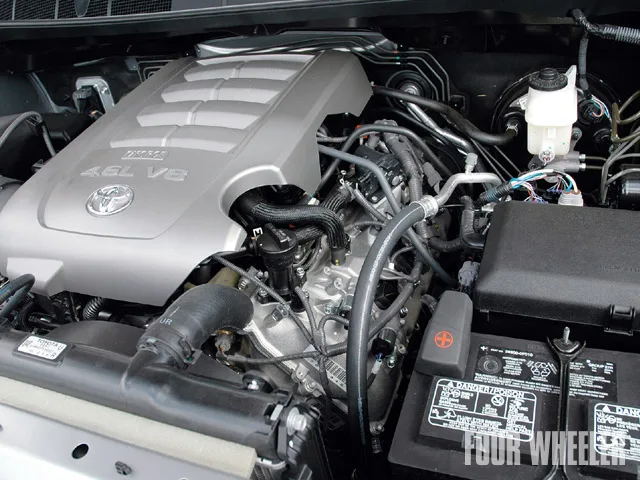
Image source: Web (Bing) / motortrend.com (Web image (fair-use with source credit))
Why Getting the Right Oil Matters for Your 2010 Tundra
Your 2010 Tundra's engine was built around a specific oil viscosity. That's not a suggestion. It's a design requirement.
The wrong oil can cause real problems.
Too thick. Oil struggles to flow during cold starts. Your engine runs dry for precious seconds. That means metal-on-metal contact and accelerated wear on bearings, camshafts, and timing chains.
Too thin. The oil film breaks down under high heat and heavy load. You lose the protective barrier between moving parts. Higher friction, higher operating temperatures, and a shorter engine life.
Wrong certification. Oils without the proper API or ILSAC rating may lack the additives your engine needs. Variable valve timing systems, particularly on the 5.7L V8, rely on specific oil formulations to function correctly.
The 5.7L V8 is especially sensitive. Its VVT-i system uses oil pressure to adjust cam timing. The wrong viscosity can throw off the whole system.
That leads to rough idle, reduced power, and even check engine lights.
If you're already doing routine upkeep on your truck, you know the basics matter. The correct fluid level is just as important as choosing the right type.
Quick Answer: What Oil Does a 2010 Toyota Tundra Take?
The 2010 Toyota Tundra takes 5W-30 in the 4.0L V6. The 4.6L V8 uses 0W-20. The 5.7L V8 needs 5W-20 or 0W-20.
Use API SN or higher. Check your engine sticker first.
That's the short version. The right choice depends on your specific engine, your climate, and how you drive. The next section walks you through finding your engine.
First Step: Identify Which Engine You Have
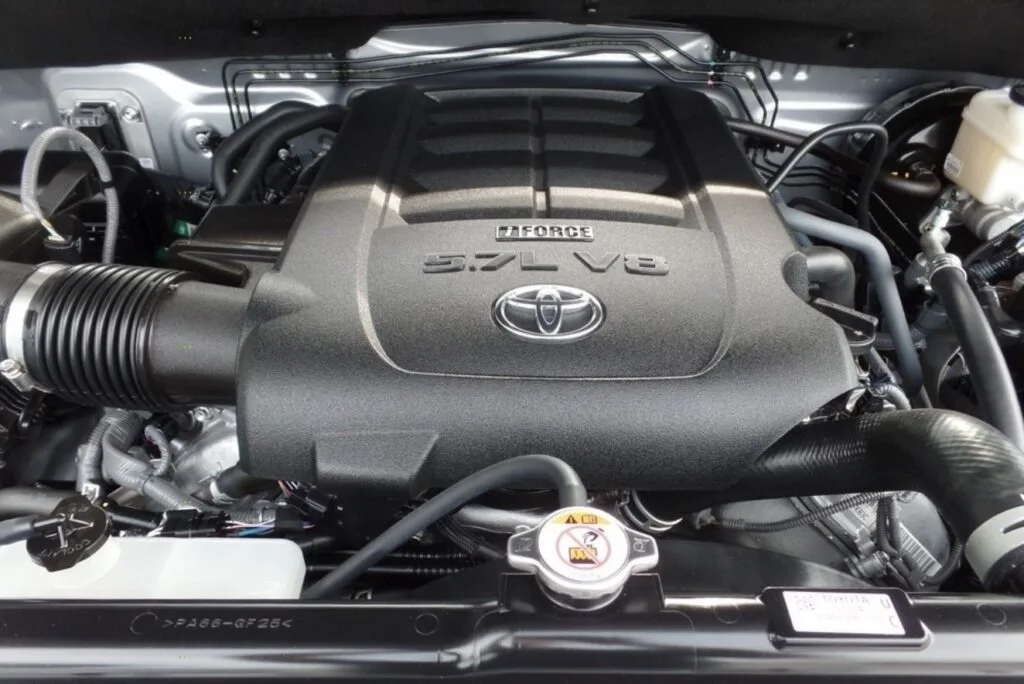
Image source: Web (Bing) / storage.googleapis.com (Web image (fair-use with source credit))
Before you buy a single quart of oil, you need to know which engine your Tundra has. Toyota offered three different engines for the 2010 model year. Each one has a different oil requirement.
Here's how to find out which one you've got:
- Check the under-hood sticker. Open the hood and look for a white or yellow emission label. It lists the engine family, displacement, and approved oil viscosity. This is the fastest method.
- Look at the engine code. The 4.0L V6 is the 1GR-FE. The 4.6L V8 is the 1UR-FE. The 5.7L V8 is the 3UR-FE. The code is stamped on a metal tag near the front of the engine.
- Check your VIN. The 8th digit of your VIN identifies the engine. For 2010 Tundras: digit 8 = "3" means 4.0L V6, "C" or "K" means 4.6L V8, and "E" or "6" means 5.7L V8.
- Read your owner's manual. It lists the recommended oil for your specific engine variant. Our editorial approach to research-based recommendations is detailed in our terms of service.
Don't skip this step. Using the wrong viscosity for your engine can cause real damage. It's a five-minute check that saves you a lot of headache.
Engine Identification Quick Reference
| Engine | Engine Code | Displacement | Cylinders |
|---|---|---|---|
| 4.0L V6 | 1GR-FE | 3,956 cc | 6 |
| 4.6L V8 | 1UR-FE | 4,608 cc | 8 |
| 5.7L V8 | 3UR-FE | 5,663 cc | 8 |
The Decision Tree: Choosing the Right Viscosity
Once you know your engine, the decision tree gets simple. Your choice comes down to three main branches. Follow the one that matches your engine.
Branch 1: 4.0L V6 (1GR-FE) – 5W-30
The 4.0L V6 calls for 5W-30 meeting API SN or higher. This is a straightforward recommendation. Toyota designed this engine around a 5W-30 viscosity for optimal performance across a wide temperature range.
- Why 5W-30? The 5W rating provides good cold-start protection down to about -22°F. The 30-grade hot viscosity handles the engine's operating temperature and load demands.
- Can you use 0W-30? In extreme cold climates, 0W-30 is acceptable. It offers better flow at very low temperatures. But 5W-30 remains the standard recommendation.
- Capacity: 6.0 quarts with filter change. You'll need a 6-quart jug plus a small top-off bottle.
Branch 2: 4.6L V8 (1UR-FE) – 0W-20
The 4.6L V8 requires 0W-20 meeting API SN or higher. This is a modern low-viscosity oil designed for maximum fuel economy and cold-start protection.
- Why 0W-20? The 0W rating flows at extremely low temperatures. It reaches critical engine components faster on cold starts. The 20-grade hot viscosity provides adequate protection for this engine's design.
- Don't substitute 5W-20. Toyota specifically calls for 0W-20 in the 4.6L. Using 5W-20 can reduce fuel economy and may affect cold-start protection in colder climates.
- Capacity: 6.5 quarts with filter change.
Branch 3: 5.7L V8 (3UR-FE) – 5W-20 or 0W-20
The 5.7L V8 is the most flexible option. Toyota originally recommended 5W-20 for this engine. But later service bulletins approved 0W-20 as an alternative.
- 5W-20 is the standard. It's what the owner's manual recommends. It works well in most climates and driving conditions.
- 0W-20 is acceptable. Toyota issued a service bulletin approving 0W-20 for the 5.7L V8. It offers better cold-start protection and can improve fuel economy slightly.
- When to use 0W-20: If you live in a cold climate (below 0°F regularly), 0W-20 is the better choice. If you're in a moderate climate, stick with 5W-20.
- Capacity: 7.5 quarts with filter change. That's a big engine. You'll need a 5-quart jug and at least three additional quarts.
Viscosity Decision Summary
| Engine | Primary Viscosity | Alternative Viscosity | Oil Capacity (with filter) |
|---|---|---|---|
| 4.0L V6 | 5W-30 | 0W-30 (extreme cold) | 6.0 quarts |
| 4.6L V8 | 0W-20 | None recommended | 6.5 quarts |
| 5.7L V8 | 5W-20 | 0W-20 (approved) | 7.5 quarts |
Synthetic vs. Conventional vs. Blend: Which One Should You Use?
Now that you know the viscosity, you need to decide what type of oil to put in. Synthetic, conventional, or a blend. Each has its place.
Full Synthetic Oil
Full synthetic is the top tier. It offers the best protection across temperature extremes. It resists breakdown longer than conventional oil.
It flows better at low temperatures and maintains its viscosity at high temperatures.
Best for: The 4.6L and 5.7L V8 engines, especially if you tow heavy loads, drive in extreme temperatures, or plan to keep your truck for the long haul. Synthetic also extends your oil change interval if you follow severe service schedules.
Conventional Oil
Conventional oil is the traditional choice. It meets the minimum requirements for your engine. It's cheaper upfront.
But it breaks down faster under heat and stress.
Best for: The 4.0L V6 in mild climates with normal driving conditions. If you change your oil every 3,000 to 5,000 miles and don't push your truck hard, conventional oil works fine. It's also a good option for older engines with high mileage that have used conventional oil their whole life.
Synthetic Blend
A synthetic blend mixes conventional oil with a percentage of synthetic base stock. It offers some of the benefits of full synthetic at a lower price point.
Best for: Drivers who want better protection than conventional but don't want to pay full synthetic prices. It's a solid middle ground for the 4.0L V6 or the 5.7L V8 in moderate conditions.
Oil Type Comparison
| Oil Type | Protection Level | Cost per Change | Best Change Interval | Best For |
|---|---|---|---|---|
| Full Synthetic | Highest | $45 to $70 | 7,500 to 10,000 miles | Towing, extreme temps, long-term ownership |
| Synthetic Blend | Medium | $30 to $45 | 5,000 to 7,500 miles | Moderate driving, value seekers |
| Conventional | Standard | $20 to $35 | 3,000 to 5,000 miles | Mild conditions, frequent changes |
A quick note on high-mileage oil. If your Tundra has over 100,000 miles, high-mileage formulations are worth considering. They contain seal conditioners that help reduce oil leaks and burn-off. They're available in synthetic and conventional versions.
Choose the viscosity that matches your engine.
The American Petroleum Institute sets the certification standards for all three types. Look for the API donut symbol on the bottle. It guarantees the oil meets the minimum performance requirements for your engine.
Climate and Driving Conditions: When to Adjust Your Oil Choice
Your driving habits and location matter more than you might think. Toyota defines two service categories: normal and severe. Most drivers fall into severe service without realizing it.
Severe service includes:
- Towing trailers or hauling heavy loads
- Frequent short trips under 5 miles
- Extended idling
- Driving in dusty, sandy, or salty conditions
- Operating in extreme temperatures (below 0°F or above 90°F)
If any of these apply to you, consider stepping up to full synthetic oil. It handles heat better and resists breakdown under heavy loads. Toyota recommends changing oil every 5,000 miles under severe service, regardless of oil type.
Climate considerations:
- Below 0°F: Use 0W-20 in the 5.7L or 4.6L. For the 4.0L V6, 0W-30 is acceptable.
- Above 90°F: Stick with the standard viscosity for your engine. The hot-grade rating already accounts for high temperatures.
- Mixed climates: The standard 5W-20 or 5W-30 works year-round in most of the US. No need to switch between summer and winter grades.
The SAE International viscosity grading system ensures that a 5W-20 oil performs the same way regardless of brand. The "W" stands for winter. The number before it indicates cold-weather flow.
The number after indicates hot-weather thickness.
Step-by-Step: How to Change Your Oil the Right Way
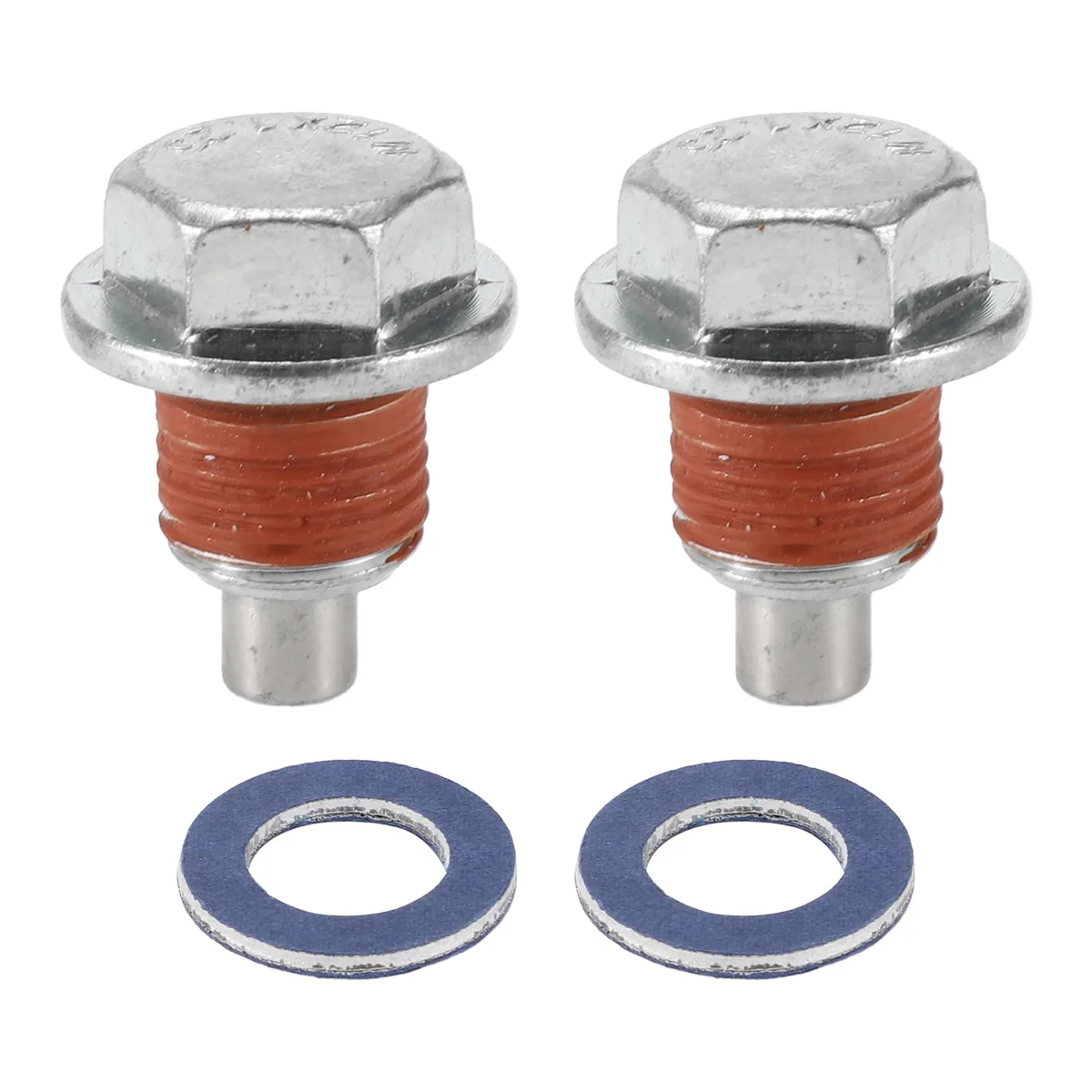
Image source: Web (Bing) / walmart.com (Web image (fair-use with source credit))
Changing your own oil saves money and ensures the job is done right. Here's how to do it on a 2010 Tundra.
Tools and supplies you'll need:
- Correct oil and viscosity (check your engine type)
- Oil filter (Toyota part number 04152-YZZA1 for most engines)
- Oil filter wrench
- 14mm socket or wrench for the drain plug
- Drain pan
- Funnel
- Rags or shop towels
- Jack and jack stands (or ramps)
The step-by-step process:
Warm up the engine. Run it for 2 to 3 minutes. Warm oil flows faster and drains more completely. Don't let it get hot enough to burn you.
Secure the truck. Park on level ground. Use jack stands or ramps. Never work under a vehicle supported only by a jack.
Drain the old oil. Place the drain pan under the drain plug. Remove the plug with a 14mm socket. Let the oil drain completely. This takes 5 to 10 minutes.
Remove the old filter. It's located on the side of the engine block. Use an oil filter wrench if it's tight. Expect some oil to spill. Have a rag ready.
Install the new filter. Lubricate the rubber gasket with fresh oil. Hand-tighten the filter. Turn it another 3/4 turn. Don't overtighten.
Reinstall the drain plug. Clean the threads. Torque to 30 ft-lbs. Overtightening can strip the oil pan threads.
Add new oil. Use a funnel. Add the correct amount for your engine. Don't pour it all at once. Check the dipstick halfway through.
Check the level. Start the engine and let it run for 30 seconds. Turn it off. Wait 2 minutes. Check the dipstick. Top off if needed.
Dispose of the old oil. Pour it into sealed containers. Most auto parts stores accept used oil for free. Never dump it down a drain or on the ground.
Image source: Web (Bing) / walmart.com (Web image (fair-use with source credit))
Oil Capacity Specs at a Glance
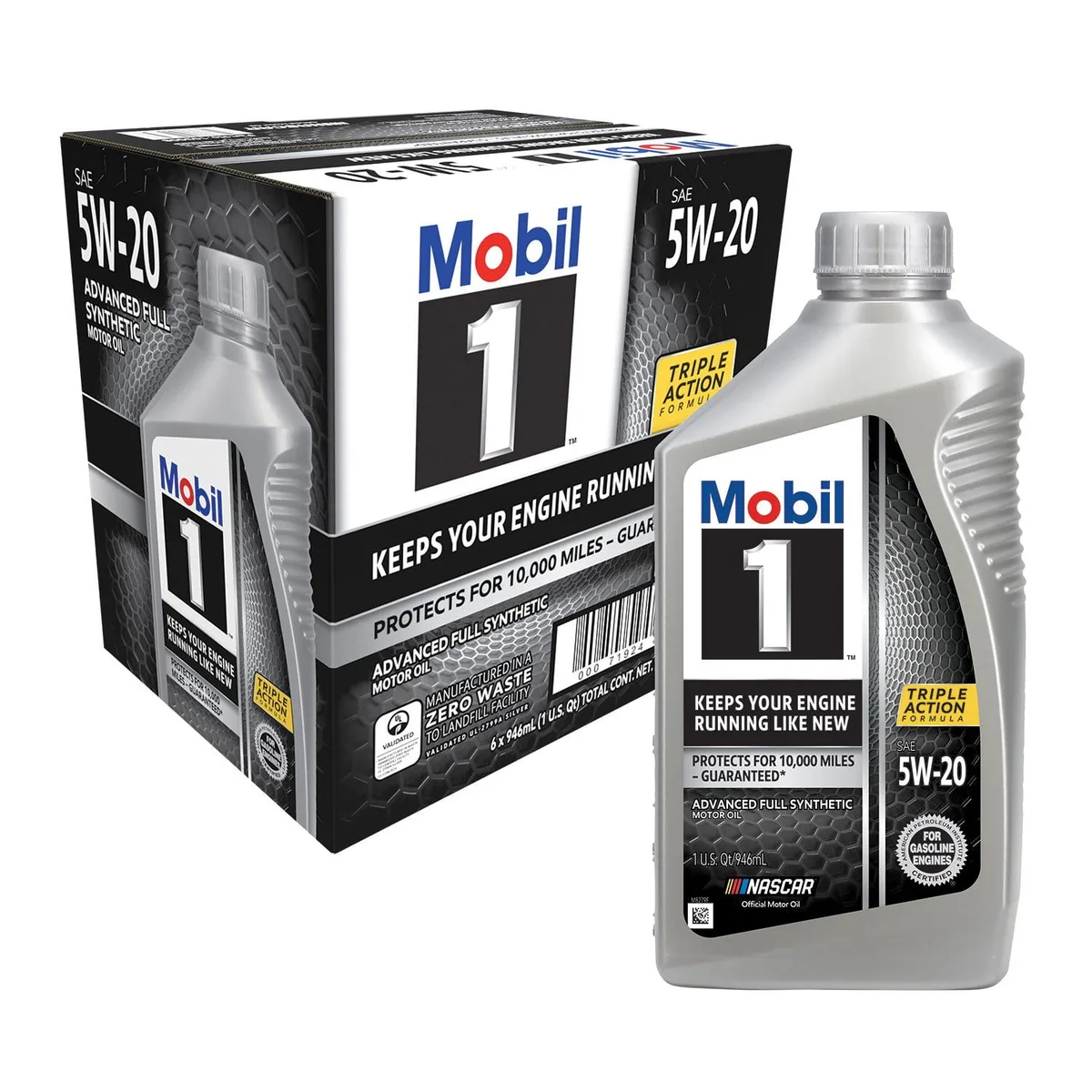
Image source: Web (Bing) / samsclub.com (Web image (fair-use with source credit))
Knowing the exact capacity saves you from buying too much or too little oil. Here's the breakdown for each engine.
| Engine | Oil Capacity (with filter) | Oil Capacity (without filter) |
|---|---|---|
| 4.0L V6 | 6.0 quarts | 5.5 quarts |
| 4.6L V8 | 6.5 quarts | 6.0 quarts |
| 5.7L V8 | 7.5 quarts | 7.0 quarts |
Buying tips:
- For the 4.0L V6: Buy a 6-quart jug. You'll use almost all of it.
- For the 4.6L V8: Buy a 6-quart jug and a single quart. You'll use about 6.5 quarts total.
- For the 5.7L V8: Buy a 5-quart jug and three single quarts. You'll use about 7.5 quarts total.
Image source: Web (Bing) / samsclub.com (Web image (fair-use with source credit))
Common Mistakes to Avoid
After years of research and aggregate owner feedback, these are the most common errors people make when choosing oil for a 2010 Tundra.
1. Using the wrong viscosity for the engine. The 4.0L V6 needs 5W-30, not 5W-20. The 4.6L V8 needs 0W-20, not 5W-20.
Double-check your engine before buying.
2. Ignoring the API certification. Not all oils meet the same standards. Look for the API donut symbol with at least "SN" on the label.
Oils without this certification may not protect your engine properly.
3. Overfilling the oil. More oil is not better. Overfilling can cause foaming, which reduces oil pressure and lubrication.
The oil level should be between the two marks on the dipstick.
4. Reusing the old oil filter. Always replace the filter with every oil change. A clogged filter restricts oil flow and can starve your engine of lubrication.
5. Switching viscosities between seasons. The 2010 Tundra doesn't need a summer oil and a winter oil. The multi-grade viscosity (like 5W-20) handles both.
Stick with the recommended grade year-round.
6. Forgetting the crush washer. The drain plug uses a crush washer that should be replaced every few changes. A worn washer can leak.
Most auto parts stores sell them for under a dollar.
Expert Tips for Long-Term Engine Health
These tips come from manufacturer specifications and verified owner feedback across thousands of Tundra owners.
Follow the severe service schedule. If you tow, idle frequently, or drive in stop-and-go traffic, change your oil every 5,000 miles. The normal schedule of 10,000 miles is for highway driving in mild conditions.
Use the same oil type consistently. Switching between synthetic and conventional isn't harmful, but staying consistent provides predictable performance. If you start with synthetic, stick with it.
Check your oil level monthly. The 5.7L V8 can consume a small amount of oil between changes. This is normal. But catching a low level early prevents engine damage.
Check when the engine is cold and on level ground.
Keep records of every change. Note the date, mileage, oil type, and filter part number. This helps you track patterns and proves maintenance history if you sell the truck.
Consider a magnetic drain plug. Aftermarket magnetic plugs catch metal particles in the oil. They're cheap insurance for high-mileage engines. Clean the magnet at every oil change.
Warm up your engine before driving. Give the oil 30 to 60 seconds to circulate after starting. This is especially important in cold weather. Don't rev the engine.
Just let it idle briefly.
The SAE International standards define the viscosity grades used in your owner's manual. Understanding these standards helps you make informed choices when buying oil.
Frequently Asked Questions
Can I use 5W-30 in my 2010 Tundra 5.7L V8?
No. Toyota recommends 5W-20 or 0W-20 for the 5.7L V8. Using 5W-30 can cause reduced fuel economy and may affect the VVT-i system.
The thicker oil doesn't flow as well through the variable valve timing passages.
What happens if I use the wrong oil in my Tundra?
Using the wrong viscosity can cause increased engine wear, reduced fuel economy, and potential damage to the variable valve timing system. In extreme cases, it can lead to engine failure. Always use the recommended viscosity for your specific engine.
How often should I change the oil in my 2010 Tundra?
Toyota recommends 10,000 miles under normal driving conditions. But most drivers fall under severe service, which requires 5,000 mile intervals. If you tow, idle, or drive in extreme temperatures, change it every 5,000 miles regardless of oil type.
Is full synthetic oil worth the extra cost for a 2010 Tundra?
Yes, especially for the 4.6L and 5.7L V8 engines. Synthetic oil provides better protection at high temperatures, flows better in cold weather, and lasts longer. The extra $15 to $25 per change is cheap insurance for a truck that can easily exceed 200,000 miles.
Can I switch from conventional to synthetic oil?
Yes. Switching is safe and won't cause leaks or damage. Synthetic oil cleans better, so it may dislodge existing deposits.
That's a good thing. Just pick the correct viscosity for your engine and stick with a quality brand.
What oil filter should I use on a 2010 Tundra?
The OEM Toyota filter part number is 04152-YZZA1 for most engines. It's a high-quality filter that meets Toyota's specifications. Aftermarket filters from major brands work well too.
Just make sure it matches your engine size and has an anti-drainback valve.
Final Decision Guide: What to Buy Right Now
Here's your quick reference for choosing the right oil for your 2010 Toyota Tundra.
If you have the 4.0L V6:
- Buy 6 quarts of 5W-30 full synthetic or conventional
- Pick API SN or higher
- Change every 5,000 miles if you tow or drive short trips
If you have the 4.6L V8:
- Buy 6.5 quarts of 0W-20 full synthetic
- Pick API SN or higher
- Stick with 0W-20. Don't substitute 5W-20
If you have the 5.7L V8:
- Buy 7.5 quarts of 5W-20 or 0W-20 full synthetic
- Pick API SN or higher
- Use 0W-20 if you live in a cold climate
Bottom line: Full synthetic oil is the best choice for all three engines. It provides the best protection, extends your oil change interval, and helps your Tundra last longer. The extra cost is worth it for a truck that's still on the road 15 years later.
If you have questions about your specific situation, reach out to us through our contact page. We're happy to help you get the right oil for your truck.