
You pull into the parts store, pop open the owner's glovebox, and stare at the oil aisle. Five rows of bottles in every color of the rainbow. 5W-30. 0W-20. High mileage.
Full synthetic. Conventional. Your 2015 Toyota Camry SE deserves the right stuff.
Put the wrong oil in, and you might not notice for a week or a month. By then the damage is done. Sludge, VVTi rattle, worse fuel economy, and an engine that just doesn't feel right.
Manufacturer specifications indicate the 2015 Camry SE with the 2.5L 2AR-FE engine requires SAE 0W-20 full synthetic oil meeting API SN or higher and ILSAC GF-5 certification. The optional V6 3.5L 2GR-FE engine also takes 0W-20. As of 2026, this spec hasn't changed.
Toyota's engineers designed these engines around the thinner oil for a reason. Let's walk through exactly what that reason is and why picking the wrong bottle costs you real money.
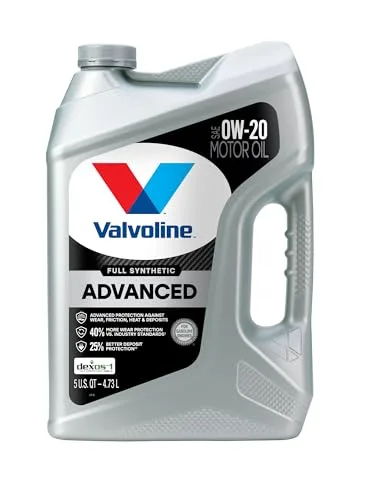
Image source: Bing (Web (fair-use with source credit))
Quick Answer
Your 2015 Toyota Camry SE needs SAE 0W-20 full synthetic motor oil. It must meet API SN or higher. It must carry ILSAC GF-5 certification.
Full stop. Use 4.4 quarts with a filter change for the 2.5L four-cylinder. Use 6.4 quarts for the 3.5L V6.
No thicker oil. No conventional substitutes. No exceptions.
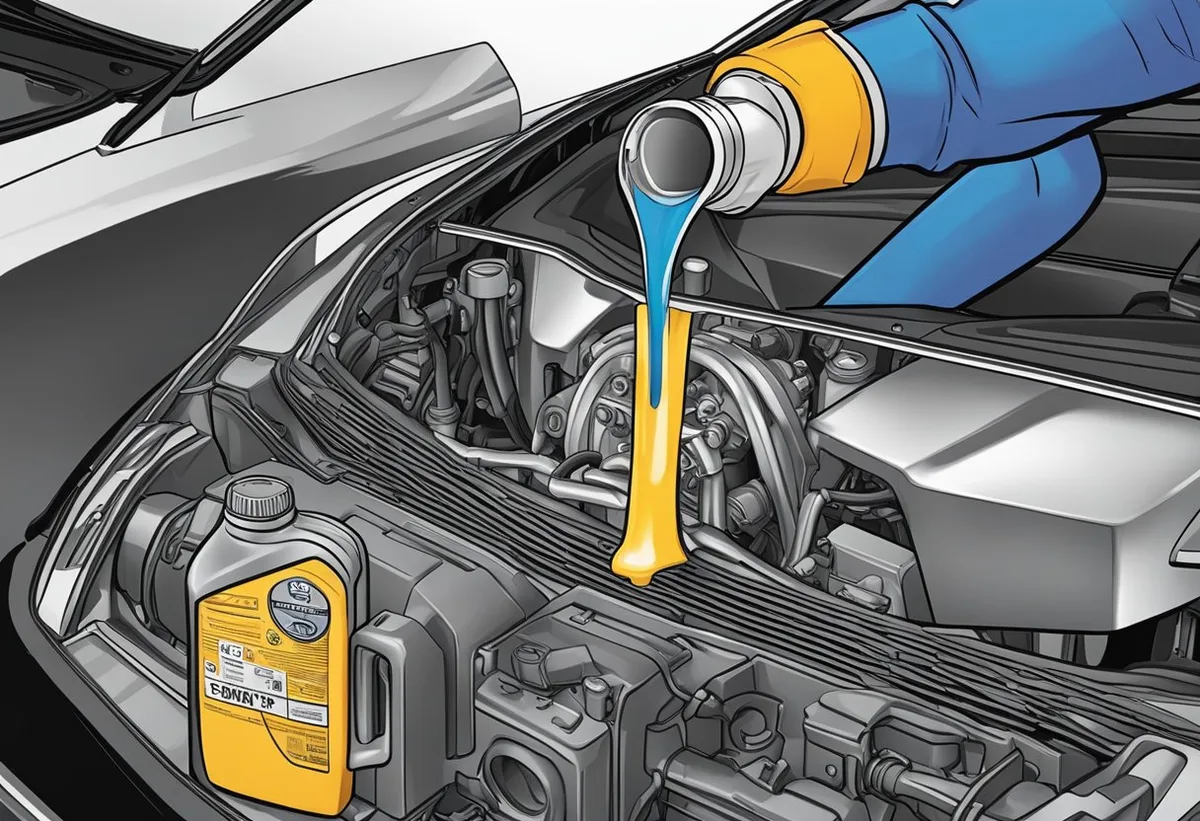
That's the short version. Now here's why Toyota picked that exact spec and what happens if you ignore it.
Why Getting the Oil Wrong Costs You Real Money
Modern Toyota engines have tighter tolerances than engines from twenty years ago. The gaps between moving parts like pistons and cylinder walls are smaller. Thicker oil can't flow into those tight spaces fast enough on a cold start.
That means metal on metal contact for the first few seconds. Do that every morning for a year and you're wearing out bearings and rings that should have lasted 200,000 miles.
The 2AR-FE engine in your Camry SE also uses variable valve timing with intelligence. That system runs on oil pressure. The wrong viscosity means the VVTi actuators don't get the pressure they need.
You'll hear it. A rattling noise on cold starts that lasts a few seconds. That's the cam phaser struggling to get oil.
Over time it wears out and you're looking at a repair bill north of a thousand dollars.
Fuel economy takes a hit too. The EPA rating on the 2015 Camry SE assumes the correct 0W-20 oil. Thicker oil creates more drag inside the engine.
Every step up in viscosity drops fuel economy by about one to two percent.
If your engine develops a problem and the dealer finds evidence of the wrong oil, they can deny your warranty claim. That's not Toyota being difficult. That's the manufacturer protecting itself against damage caused by improper maintenance.
The 2.5L vs V6 Engine Difference (Yes, They're Different)
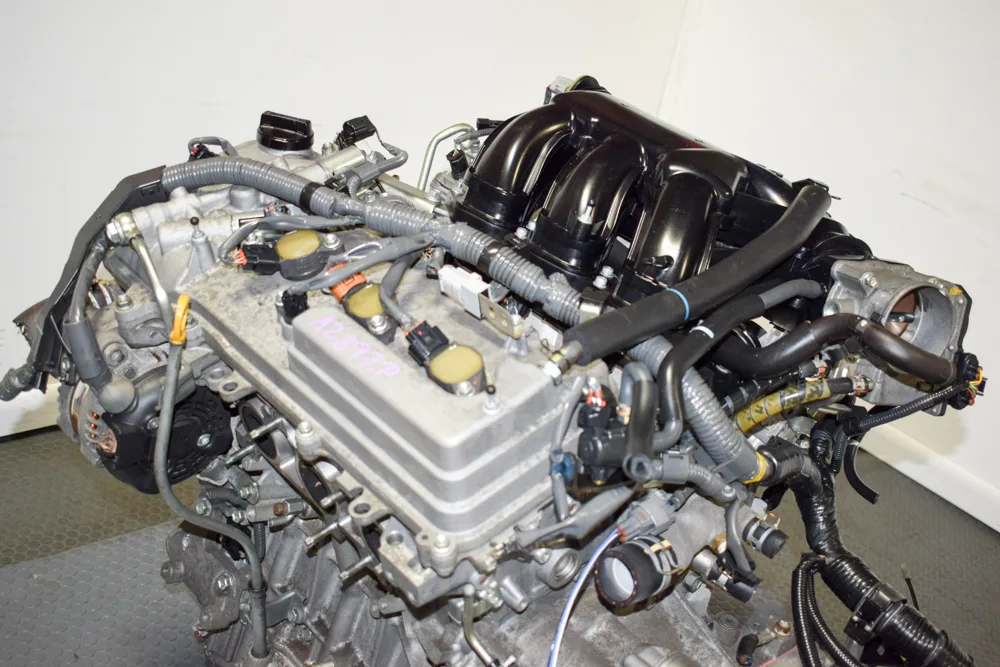
The 2015 Camry SE came with two engine options. Most buyers got the 2.5L four-cylinder. The 2AR-FE is a workhorse.
Reliable, efficient, and fairly simple to maintain. A smaller number of SE trims came with the 3.5L V6 called the 2GR-FE. That engine is silky smooth and significantly faster.
Both take the same oil viscosity. But they are not the same engine and the oil capacity is different.
| Engine | Displacement | Oil Capacity (with filter) | Recommended Viscosity |
|---|---|---|---|
| 2AR-FE | 2.5L I4 | 4.4 quarts (4.2 liters) | 0W-20 |
| 2GR-FE | 3.5L V6 | 6.4 quarts (6.1 liters) | 0W-20 |
If you own the V6, you need nearly two extra quarts every oil change. That adds about ten to fifteen dollars to the cost. The 2.5L takes a standard five-quart jug with a little left over.
The V6 needs two quarts on top of that jug.
The V6 engine runs hotter under load. Full synthetic oil handles that heat better than conventional oil. If you're driving the V6 hard, the synthetic base stock resists breakdown longer.
Both engines share the same oil filter part. The filter is a canister type, not a cartridge. It screws on from underneath the car.
Access is decent on both engines.
What 0W-20 Actually Means and Why Toyota Demands It
The first number with the W stands for winter viscosity. 0W means the oil stays thin enough to pump at temperatures as low as minus forty degrees Fahrenheit. The second number is the viscosity at normal operating temperature. 20 means it's relatively thin even when hot compared to a 30 or 40 weight oil.
Toyota designed the 2AR-FE engine with very tight oil passages. The oil needs to reach the top of the engine quickly on startup. The VVTi system is up there.
So are the camshafts and valve train. In cold weather a 5W or 10W oil is too thick to flow instantly. The engine runs dry for precious seconds.
At operating temperature the 20 weight rating provides just enough film strength to protect the bearings without creating excess drag. Thicker oil like 5W-30 creates more resistance. The oil pump works harder.
Fuel economy drops. The engine runs slightly hotter because the oil can't carry heat away as effectively.
Toyota issued technical service bulletins about this. Some owners thought they were helping their older engines by switching to thicker oil. The engineers said no.
Stick with 0W-20. The API SN and ILSAC GF-5 certifications ensure the oil has the right additives for deposit control, wear protection, and fuel economy.
6 Common Oil Mistakes That Hurt Your Camry SE
- Using 5W-30 thinking it protects better. This is the most common mistake. Older engines needed thicker oil. Newer Toyotas do not. 5W-30 causes cold start wear and drops fuel economy.
- Mixing synthetic and conventional. It won't blow up your engine, but it dilutes the synthetic additives. You lose the extended drain interval benefit. Change the oil sooner if you mix them.
- Overfilling. Extra oil causes foaming. Foamy oil doesn't lubricate. The engine can starve for oil at high RPM. Always check the dipstick after filling.
- Underfilling. The 2.5L takes 4.4 quarts with a filter change. Measure carefully. Don't guess.
- Reusing the old crush washer. That little copper or aluminum washer crushes to create a seal. Use it twice and it leaks. A new one costs pennies. Replace it every time.
- Overtightening the oil filter. Too loose and it leaks. Too tight and you can't get it off next time. Hand tight plus three quarters of a turn. That's the spec.
Full Synthetic vs Synthetic Blend vs Conventional: What Actually Matters
Full synthetic is what Toyota recommends. It's refined and chemically engineered for consistent molecular size. That means better flow at cold temperatures and stronger film strength when hot.
Full synthetic resists thermal breakdown longer. You can go the full 10,000 miles between changes under normal driving conditions. It costs $25 to $35 for a five-quart jug.
Synthetic blend mixes conventional oil with synthetic base stock. It's better than straight conventional but not as good as full synthetic. Blends offer some cold flow improvement.
They cost about $15 to $20 per jug. Stick with 5,000 miles max for a blend.
Conventional oil is the cheapest option at $10 to $15 per jug. It meets API SN standards on paper. But conventional oil breaks down faster under heat.
The 2AR-FE engine runs hot enough to degrade conventional oil before the next change. You'll need to change it every 3,000 to 5,000 miles.
| Oil Type | Cost per 5-Quart Jug | Recommended Change Interval |
|---|---|---|
| Full Synthetic | $25 – $35 | 7,500 – 10,000 miles |
| Synthetic Blend | $15 – $20 | 5,000 – 6,000 miles |
| Conventional | $10 – $15 | 3,000 – 5,000 miles |
Full synthetic is what the engineers tested with. It gives you the best cold start protection. And it keeps the VVTi system happy for the long haul.
Oil Filter: The Part Most People Screw Up
The 2015 Camry SE uses a spin-on canister filter. The OEM Toyota filter part number is 04152-YZZA6 or 04152-38010 depending on production date. Aftermarket options from Wix, Purolator, and Mobil 1 are good choices.
Avoid the absolute cheapest filters. They use paper media that collapses under pressure.
The filter has an anti-drainback valve. That thin rubber flap keeps oil from draining out of the filter when the engine is off. Cheap filters often have poor quality anti-drainback valves.
They leak oil back into the pan overnight. That means a dry start every morning with several seconds of metal on metal contact.
Lubricate the new filter's rubber gasket with fresh oil before threading it on. Hand tighten until the gasket makes contact. Then give it another three quarters of a turn.
Do not use a wrench to tighten it further.
Always check that the old gasket came off with the old filter. If it sticks to the engine block and you install the new filter on top of it, you'll have a massive oil leak.
Step-by-Step: How to Change Your Oil the Right Way
What you'll need:
- 4.4 quarts of 0W-20 full synthetic oil (2.5L engine)
- New oil filter
- 19mm socket or wrench for the drain plug
- Oil filter wrench
- New crush washer
- Oil drain pan
- Funnel
- Gloves and rags
The process:
Warm up the engine for a few minutes. Warm oil drains faster and carries more contaminants out. Don't run it hot enough to burn you.
Park on level ground. Jack stands are safer than the scissor jack. Never work under a car supported only by a jack.
Locate the drain plug under the engine. It's a 19mm bolt on the passenger side of the oil pan. Place your drain pan underneath.
Loosen the plug with the wrench, then unscrew it by hand. Let it drain completely, about five to ten minutes.
Remove the old oil filter. It's on the front passenger side of the engine. Spin it off by hand if you can.
Use the filter wrench if it's stuck.
Install the new filter. Lubricate the gasket with fresh oil. Thread it on by hand until the gasket contacts the mounting surface.
Tighten three quarters of a turn.
Replace the crush washer on the drain plug. Install the plug and tighten to 29 foot-pounds. If you don't have a torque wrench, tight but not gorilla tight is the rule.
Pour in 4.4 quarts of fresh oil. Start the engine and let it run for thirty seconds. Check for leaks around the filter and drain plug.
Turn the engine off. Wait two minutes. Check the dipstick.
Top off if needed.
Reset the oil maintenance light. With the odometer showing, turn the key to the ON position without starting the engine. Press the trip reset button until the maintenance light stops flashing.
How Often Should You Really Change It? (Normal vs Severe Service)
Toyota says 10,000 miles between oil changes under normal driving conditions. The owner's manual defines severe service as any of the following: short trips under five miles in normal temperatures or under ten miles in freezing weather, extensive idling, driving in dusty conditions, towing, or frequent stop-and-go traffic. That describes most commuters.
Severe service means change the oil every 5,000 miles. If you live in a city, sit in traffic, or take short trips to work, you're on severe service.
Full synthetic handles extended intervals better than blends or conventional. If you're running full synthetic and mostly highway miles, 10,000 miles is reasonable. If you're using a blend or conventional, cut that number in half.
Check your dipstick periodically. Clean oil is amber and translucent. If it looks dark, smells burnt, or feels gritty between your fingers, change it early.
The oil life monitor in your Camry SE is conservative enough to trust for most conditions.
What Happens If You Use the Wrong Viscosity
The most immediate effect is reduced fuel economy. Thicker oil creates more internal drag. The engine has to work harder to spin the crankshaft and pistons.
You'll lose one to three miles per gallon.
Cold starts get worse. The thicker oil doesn't pump well at low temperatures. It takes longer to reach the cam phasers and bearings.
The VVTi system may rattle for a few seconds. That's the sound of metal parts waiting for oil pressure.
Long term, the risks are serious. The oil passages in the 2AR-FE engine are designed for 0W-20 flow characteristics. Thicker oil doesn't circulate as effectively through tight clearances.
Hot spots can develop. Localized overheating leads to oil breakdown and sludge formation. Once sludge starts, it blocks passages and causes oil starvation.
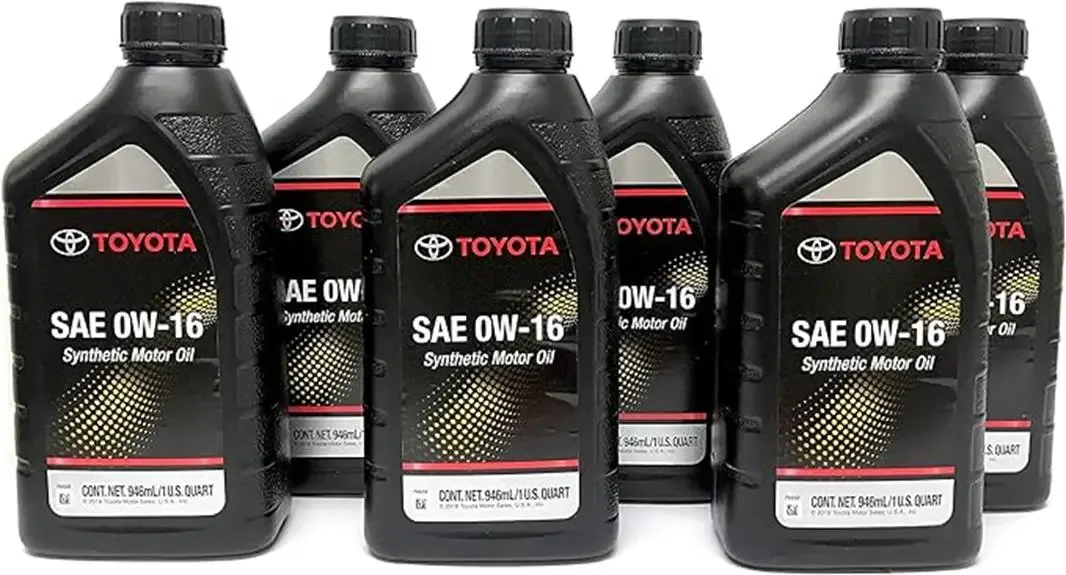
The reverse is also risky. Using a thinner oil like 0W-16 could cause insufficient film strength at high temperatures. The oil film between bearings and journals might break down under load.
That leads to metal on metal contact and rapid bearing wear.
High-Mileage Camry SEs: Does the Oil Change at 100k+ Miles?
Once your Camry SE passes 100,000 miles, stick with 0W-20 full synthetic. Switching to a thicker oil like 5W-30 is a myth. The 2AR-FE engine was built with tight tolerances from the factory.
Those tolerances don't loosen with age.
High-mileage formulations with seal conditioners are worth considering. They help keep aging gaskets soft and prevent small leaks. Brands like Mobil 1 High Mileage and Valvoline MaxLife meet the same API SN and ILSAC GF-5 standards.
Just confirm the bottle carries those certifications before buying.
Quick Specs Reference
| Spec | 2.5L 2AR-FE | 3.5L 2GR-FE |
|---|---|---|
| Viscosity | 0W-20 | 0W-20 |
| Capacity (with filter) | 4.4 quarts | 6.4 quarts |
| API certification | SN or higher | SN or higher |
| ILSAC certification | GF-5 | GF-5 |
| Drain plug torque | 29 ft-lbs | 29 ft-lbs |
| Filter torque | Hand tight + 3/4 turn | Hand tight + 3/4 turn |
When to Let a Shop Handle It vs DIY
If you have basic hand tools, a drain pan, and thirty minutes, do it yourself. You'll save $30 to $50 per change and know the job was done right.
If you lack level parking, a safe way to lift the car, or the physical ability to get underneath, pay a reputable shop. Bring your own oil and filter to avoid their markup. Ask them to show you the old filter after removal.
That confirms they actually changed it.
Final Verdict
Use 0W-20 full synthetic from any major brand carrying API SN and ILSAC GF-5 marks. Change it every 5,000 miles if you drive short trips or traffic. Push to 7,500 or 10,000 miles if most driving is highway cruising.
Replace the filter and crush washer every time. That combination gives you the best protection, fuel economy, and longevity for the 2AR-FE engine. Trust the spec.
Not the myths.
Frequently Asked Questions
Can I use 5W-30 in my 2015 Camry SE?
No. Toyota specifies 0W-20 exclusively for this engine. Thicker oil reduces fuel economy, increases cold start wear, and can affect the VVTi system.
How many quarts does a 2015 Camry SE take?
The 2.5L four-cylinder takes 4.4 quarts with a filter change. The 3.5L V6 takes 6.4 quarts. Always check the dipstick after filling.
Do I need to use Toyota brand oil?
No. Any brand of 0W-20 full synthetic that meets API SN and ILSAC GF-5 standards works fine. The Magnuson-Moss Warranty Act protects your right to use quality aftermarket oil.
How often should I change the oil on severe service?
Every 5,000 miles. Severe service includes short trips, stop-and-go traffic, extensive idling, or driving in dusty conditions. Most city commuters fall into this category.
Can I switch from conventional to synthetic oil?
Yes. Switching is safe at any mileage. Full synthetic provides better protection and longer intervals.
No special preparation or flushing is needed.
What happens if I overfill the oil?
Overfilling causes the crankshaft to churn the oil into foam. Foamy oil doesn't lubricate properly. Drain the excess to the correct level immediately if you overfill.