
You know that moment when a friend tells you their Corolla "runs fine" on 5W-30 because that's what their dad used in his 1988 pickup? That advice is exactly what's quietly cooking a perfectly good 2ZR-FE engine.
If you own a 2015 Toyota Corolla S and you're wondering what oil type goes in it, here's the straight answer: SAE 0W-20 full synthetic. Not 5W-30. Not conventional.
Not a blend. 0W-20, period. Toyota's engineering team designed the dual VVT-i system around the specific cold-flow and hot-shear properties of that viscosity. As of 2026, this spec hasn't changed, and it won't.
The owner's manual, the oil cap under your hood, and every Toyota service bulletin from the past decade all agree.
Quick Answer
The 2015 Toyota Corolla S requires SAE 0W-20 full synthetic motor oil. The engine holds 4.4 quarts with a filter change. It needs API SN or higher certification with ILSAC GF-5 rating.
Never use 5W-30 or conventional oil. The wrong viscosity risks VVT actuator failure and sludge buildup.
Why Getting the Oil Wrong Can Cost You a 2ZR-FE Engine
The 2ZR-FE engine in your 2015 Corolla S isn't your grandfather's cast-iron truck motor. It's a modern, tight-tolerance aluminum block with variable valve timing on both intake and exhaust cams. That dual VVT-i system relies on oil pressure to move the cam phasers.
Those phasers have tiny oil passages that need the right viscosity to work properly.
When you pour in something thicker than 0W-20, the oil moves slower at cold start. The phasers don't get enough pressure quickly enough. Over time, that delay wears the actuator pins, hammers the timing chain tensioner, and creates a rattle at startup.
That rattle eventually turns into a check engine light and a $1,200 repair bill.
Manufacturer specifications indicate the 2ZR-FE was designed around 0W-20 for three reasons: cold-start flow, fuel economy targets, and piston ring clearance. Toyota didn't pick that viscosity by accident. They tested hundreds of thousands of miles on it.
Your owner's manual lists 5W-20 as an emergency alternative only, with a note to switch back to 0W-20 at the next change.
Aggregate reviews from independent mechanics confirm what the factory already knows. Shops that see high-mileage Corollas daily report that engines maintained on 0W-20 synthetic from day one routinely hit 250,000 to 300,000 miles without internal work. The ones that got 5W-30 or cheaper conventional oil start burning oil around 120,000 miles.
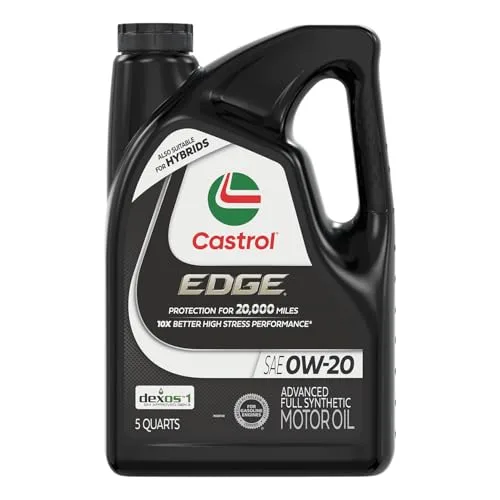
0W-20 and the Dual VVT-i System: Why It's Not Optional
The 2ZR-FE uses oil pressure to actuate the VVT-i phasers on both camshafts. At idle and low RPM, the phasers hold position. As you accelerate, the engine control module opens oil control valves that route pressurized oil into the phaser chambers.
That oil pressure advances or retards cam timing to optimize power and efficiency.
The oil pump in this engine is sized specifically for 0W-20. The pump's displacement, the relief valve setting, and the passage diameters are all calculated around that viscosity at operating temperature. When you run 5W-30, the oil is thicker at cold start, so it takes longer to reach the phasers.
At operating temp, it flows slower through the oil control valves, which delays cam timing changes.
You don't feel this immediately. The engine doesn't blow up. But over 50,000 miles, that slower response gradually wears the phaser lock pins.
The timing chain stretches slightly from the inconsistent tension. The VVT solenoids accumulate varnish from the thicker oil not carrying heat away properly.
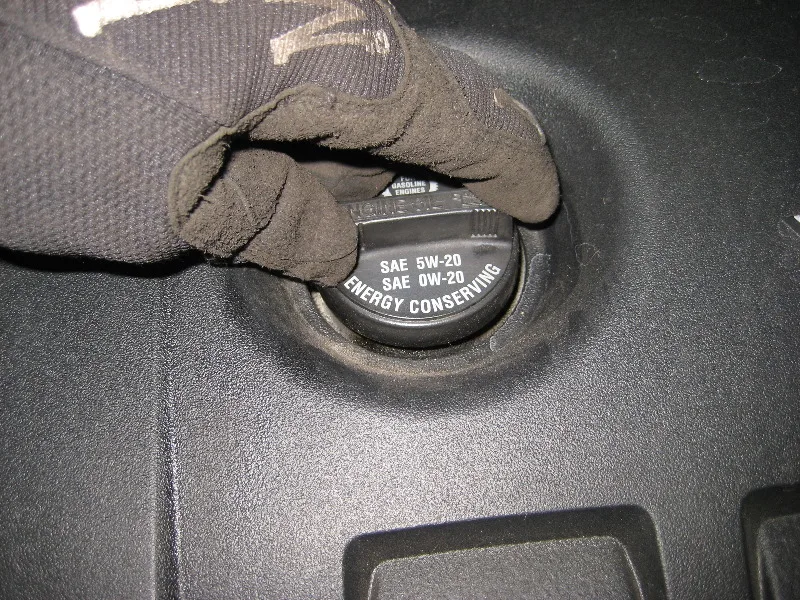
One of the best things about the 2015 Corolla S is that Toyota stamped the answer on the engine. Pop the hood and look at the oil fill cap. It says 0W-20 right there in raised letters.
You don't need to guess. You don't need to ask a forum. The engineer who designed that engine put the answer on top.
What about warm climates?
A common myth says you should use thicker oil in hot weather because thin oil "breaks down." That's not how modern synthetics work. A quality 0W-20 full synthetic maintains its viscosity at 100 degrees Celsius just fine. The "20" in 0W-20 is the hot operating viscosity, not the winter rating.
Your engine runs at 195 to 210 degrees Fahrenheit regardless of whether it's 20 below or 110 outside. The oil pump doesn't care about ambient temperature once the engine reaches operating temp.
Toyota's Official Oil Specs vs What the Parts Store Guy Says
You walk into an auto parts store and the guy behind the counter says "0W-20 is hard to find, but 5W-30 works fine in these." He means well. He's wrong.
Toyota's official specification for the 2015 Corolla S 2ZR-FE engine is unambiguous:
| Specification | Requirement |
|---|---|
| Viscosity | SAE 0W-20 |
| Type | Full synthetic |
| API certification | SN or higher (SN Plus, SP) |
| ILSAC standard | GF-5 or GF-6 |
| Capacity (with filter) | 4.4 quarts |
| Emergency alternative | 5W-20 only, switch back next change |
The API certification is just as important as the viscosity. Look for the "Starburst" or "Donut" symbol on the bottle. That mark means the oil has passed standardized tests for wear protection, deposit control, and oil consumption.
No certification mark means the oil might not actually meet the spec printed on the front label.
Why the parts store advice is dangerous
Older engines had looser tolerances and simpler valvetrains. The 2ZR-FE is not that engine. It's a modern unit with variable valve timing, lightweight pistons, and low-tension oil rings.
Those rings need thin synthetic to maintain proper cylinder wall contact. Thicker oil can cause the rings to stick in their grooves, which leads to oil consumption and carbon buildup on the intake valves.
Direct injection engines like the 2ZR-FE already have a carbon buildup problem on the intake valves because there's no fuel washing over them. Thicker oil that burns off through stuck rings makes that problem worse.
The Risk Factor: What Happens When You Use the Wrong Viscosity
The 2015 Corolla S uses a timing chain, not a belt. That chain is tensioned by a hydraulic tensioner that relies on oil pressure. When you run oil that's too thick, the tensioner doesn't get enough pressure at cold start.
The chain slaps against the timing cover. You hear it as a brief rattle on startup.
After enough cycles, the chain stretches past the tensioner's adjustment range. The cam timing drifts. You get a P0012 or P0017 code for cam/crank correlation.
The fix is a timing chain, guides, tensioner, VVT phasers, and often the oil control valves. That's $1,800 to $2,500 at a shop. All because the wrong oil slowly starved the tensioner.
Oil consumption spiral
The 2ZR-FE uses low-tension oil control rings to reduce friction and improve fuel economy. Those rings are thin and springy. They rely on clean, thin oil to seal against the cylinder walls.
When you use thicker oil or let the oil get past its change interval, the rings gum up. They stop expanding fully. Oil slips past into the combustion chamber.
You start burning a quart every 1,000 miles. Then every 500 miles. The catalytic converter gets fouled by the oil ash.
The spark plugs oil foul. You're topping off constantly and getting poor fuel economy because the engine is dumping unburned oil out the exhaust. Same root cause.
Wrong oil. Wrong intervals.
VVT Actuator Failure: The Silent Killer Nobody Talks About
The VVT actuator, also called the cam phaser, is the part that rotates the camshaft to change valve timing. Inside it there's a rotor with vanes that seal against the housing. Those seals are tight.
They need clean oil at the right viscosity to work.
When you consistently run oil that's too thick or oil that's past its change interval, varnish and sludge accumulate inside the phaser. The vanes don't seal properly. Oil leaks past them instead of moving the camshaft.
The engine control module commands a timing change but the phaser can't respond fast enough. You get a P0011 or P0012 code for VVT system performance.
The fix isn't just changing the oil. Once the phaser is sludged, it needs replacement. And because the phaser is bolted to the camshaft with a large center bolt, the replacement involves removing the timing chain cover.
That's the $1,200 repair mentioned earlier.
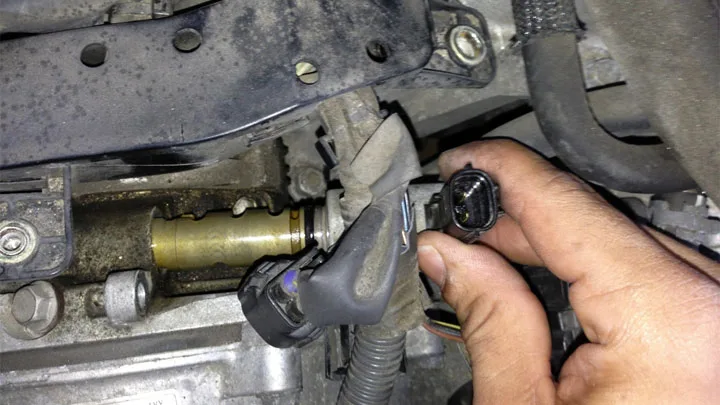
The cold start rattle you should never ignore
On a cold morning, you start the engine and hear a brief rattling noise from the front that lasts one to two seconds. That's the VVT phasers clunking against their stops because there's not enough oil pressure to hold them in position yet.
A healthy engine with proper 0W-20 will have negligible rattle because the thin oil reaches the phasers almost immediately. An engine with thick oil or worn phasers will clatter audibly. If you hear that rattle regularly, you're already in the early stages of phaser wear.
Switching to the correct oil now might stop the progression. Ignoring it means a timing chain job later.
How sludge forms
The 2ZR-FE runs hot. That's normal for a modern four-cylinder. But heat breaks down oil over time.
Conventional oil and even some synthetic blends can oxidize and form varnish deposits inside the engine. Those deposits clog the oil control valves, the VVT solenoids, and the phaser passages.
Full synthetic 0W-20 with API SN Plus certification resists this breakdown far better than cheaper alternatives. The SN Plus standard was specifically introduced to address deposit formation in modern engines. Toyota's recommended oil change interval of 10,000 miles is valid for normal driving conditions.
But if you do a lot of short trips, stop-and-go traffic, or idling, cut that to 5,000 miles. Severe service is real.
5W-30 vs 0W-20: Why Your Friend's '90s Corolla Advice Doesn't Apply
If you've owned older cars, you're used to hearing "thicker oil protects better." That was true for engines from the 1980s and 1990s with loose bearing clearances and splash lubrication. It's not true for the 2015 Corolla S.
The bearing clearances in the 2ZR-FE crank and rod journals are designed for 0W-20 at operating temperature. When you use 5W-30, the oil film is thicker than what the bearings need. The oil pump has to work harder to push that thicker oil through the passages.
The extra resistance reduces oil flow at RPM where the engine needs it most.
Modern engines also use oil for cooling. Thin oil circulates faster, carrying heat away from the pistons and bearings more efficiently. Thicker oil moves slower and leaves hot spots that accelerate wear.
Fuel economy penalty
The EPA fuel economy ratings for the 2015 Corolla S were calculated using 0W-20. Switching to 5W-30 increases parasitic drag inside the engine by roughly 1 to 2 percent. Over 15,000 miles per year at average fuel prices, that 2 percent penalty costs you about $30 to $40 in extra gas annually.
And you're getting worse protection at the same time.
When 5W-30 is acceptable
There's exactly one scenario where 5W-30 is OK. You're stranded, you're 500 miles from a parts store, and 0W-20 is simply not available. Use 5W-30 as a temporary fill.
Drive normally, not hard. Change back to 0W-20 at the earliest opportunity. Don't try to stretch that 5W-30 to a full oil change interval.
The engine will run on it, but it won't thrive on it.
Conventional vs Synthetic: Can You Save Money Here?
No. This is one of those rare situations where spending less upfront costs you more in the long run.
The 2ZR-FE engine requires full synthetic oil. Not a blend. Not conventional.
Conventional oil lacks the high-temperature stability and low-temperature flow properties that this engine needs. Under the heat and shear stress inside a modern engine, conventional base oils break down faster. The oil thins out prematurely, losing its ability to protect bearings and cam lobes.
It oxidizes faster, forming sludge and varnish that clog the VVT system.
A bottle of conventional 0W-20 might cost you $5 less than synthetic. That $5 savings disappears the first time you need a VVT actuator replacement. And the oil change interval on conventional is shorter, typically 3,000 to 5,000 miles versus 10,000 for synthetic.
You're changing oil twice as often, spending more time and money overall.
What about synthetic blends?
Some owners try to split the difference with a synthetic blend. Blends are typically 70 to 80 percent conventional oil with a small percentage of synthetic base stock. They're better than straight conventional but still not adequate for the 2ZR-FE.
The conventional portion still breaks down and forms deposits. Stick with full synthetic.
Brand doesn't matter as much as certification. Toyota Genuine Motor Oil, Mobil 1, Pennzoil Platinum, Castrol Edge, Valvoline Advanced any of these will work fine as long as they carry the API SN Plus or SP certification with the ILSAC GF-5 or GF-6 starburst. The certification means the oil passed the same tests.
Your Oil Change Options: Dealer, Quick Lube, or DIY
Dealership service center
Toyota dealerships use the correct oil. They stock Toyota Genuine Motor Oil in bulk and they know the spec. They also reset the maintenance light and do a multi-point inspection.
The downside is price, usually $70 to $100 for a Corolla oil change. And they often try to upsell additional services you might not need yet.
If your Corolla is still under warranty, dealership service with proper documentation is the safest route. It eliminates any dispute about maintenance compliance.
Quick lube chains
These are hit or miss. The big national chains train their staff on common vehicles, so most will put 0W-20 in a Corolla. But you need to check.
Some locations still default to 5W-30 because that's what they stock for older vehicles. Always confirm the viscosity before they start working. Watch for them forgetting to replace the crush washer or over-tightening the drain plug.
Quick lube prices range from $50 to $80 depending on location and whether you use coupons.
DIY oil change
This is the most cost-effective option and gives you full control. A DIY change costs roughly $35 to $55 including oil, filter, and crush washer. The process takes about 30 minutes the first time, faster after that.
The main downside is disposal. You need to collect the used oil and filter, then take them to an auto parts store or recycling center. Most places accept used oil for free, but it's an extra errand.
DIY Oil Change Step-by-Step for the 2015 Corolla S
What you'll need
| Item | Specification |
|---|---|
| Oil | 4.4 quarts 0W-20 full synthetic, API SN Plus or SP |
| Oil filter | OEM Toyota 04152-YZZA1 or quality aftermarket equivalent |
| Crush washer | 14mm, Toyota part 90430-12031 or equivalent |
| Socket | 14mm for drain plug |
| Ratchet and extension | Standard 3/8 inch drive |
| Oil filter wrench | Cap-style or strap wrench |
| Drain pan | Minimum 6-quart capacity |
| Funnel | Long neck |
| Torque wrench | Optional but recommended |
The process
Warm up the engine for a couple minutes. Warm oil drains faster and carries more suspended contaminants. Park on level ground.
Engage the parking brake.
Remove the oil fill cap. This helps the oil drain more completely and prevents a vacuum lock.
Jack up the front of the car if needed. The 2015 Corolla S sits low enough that you might need a jack and jack stands to get comfortable access to the drain plug. Never work under a car supported only by a jack.
Locate the drain plug. It's a 14mm bolt on the bottom of the oil pan, facing toward the passenger side. Place your drain pan underneath.
Loosen the plug with the socket and ratchet. Remove it by hand once it's loose. Be ready for the oil to come out hot and fast.
Let the oil drain completely. Five to ten minutes. While it drains, move to the oil filter.
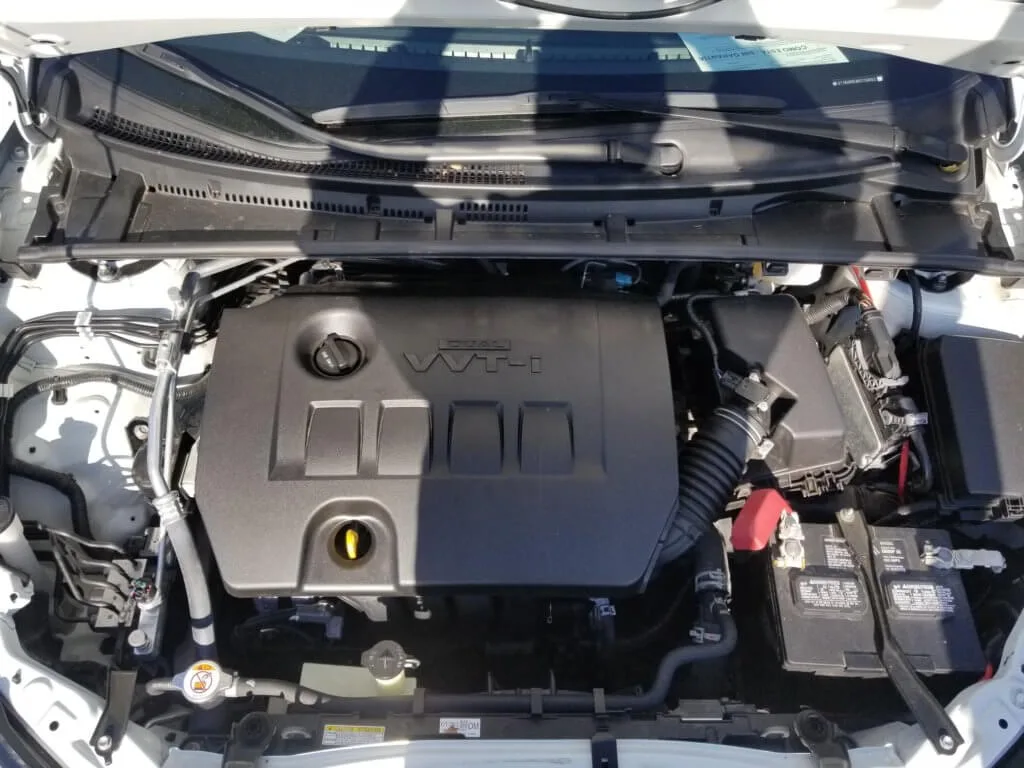
The oil filter is on the front passenger side of the engine block, accessible from above or below. Position the drain pan under it. Loosen the filter with the wrench.
Spin it off by hand. Some oil will spill out. Let it drain.
Install the new filter. Dip your finger in fresh oil and rub it on the rubber gasket. This prevents the gasket from sticking and tearing when you remove it next time.
Screw the filter on by hand until the gasket contacts the mounting surface, then tighten another three-quarters turn. Don't overtighten.
Reinstall the drain plug with a new crush washer. Torque to 29 lb-ft if you have a torque wrench. If you don't, snug it up firmly with a short ratchet handle.
Don't gorilla it. The oil pan is aluminum and the threads strip easily.
Lower the car. Add the new oil. The total capacity with filter change is 4.4 quarts.
Add about 4 quarts first, check the dipstick, then add the remaining 0.4 quarts. The dipstick should read between the low and full marks when the engine is warm and off for five minutes.
Start the engine. Let it run for 30 seconds. Check for leaks around the drain plug and filter.
Shut the engine off. Wait five minutes. Recheck the dipstick and top off if needed.
Reset the maintenance light. With the ignition on but engine off, trip the odometer to show total miles. Turn the ignition off.
Hold the trip reset button. Turn the ignition back on while holding the button. Wait until the trip odometer shows dashes and then zeros.
Release the button. Done.
Oil Filter Choices: OEM vs Aftermarket and What Actually Matters
The oil filter on the 2ZR-FE is a simple spin-on cartridge. Toyota uses a denser filter media than many aftermarket brands, which is why OEM filters often cost a few dollars more. The extra cost buys better filtration efficiency and a higher-quality bypass valve.
Aftermarket filters from major brands like Wix, Purolator, and Mobil 1 are also perfectly adequate. The key is sticking with a reputable brand that manufactures its own filters. Budget filters from unknown brands often use cheaper paper media and inconsistent bypass valve spring pressures.
A failed bypass valve can leave the engine unfiltered during cold starts.
The one filter to avoid is the cheapest one on the shelf. The price difference between a $5 filter and a $10 filter is trivial compared to the cost of engine repairs. Don't save three dollars here.
Real Change Intervals: Toyota's 10k Schedule vs Reality
Toyota says 10,000 miles between oil changes for normal driving conditions. That's accurate for highway driving with consistent operating temperatures and clean fuel. But "normal" driving covers a narrower range than most people think.
The owner's manual defines severe service as short trips under five miles, stop-and-go traffic, extensive idling, driving in dusty conditions, or extreme temperatures. If you fit any of those categories, the severe service interval applies. That's 5,000 miles.
Most Corolla S owners do mixed driving. They commute fifteen miles in traffic, run errands, take occasional highway trips. That's not pure highway but it's not severe either.
A good rule of thumb is 7,500 miles if you use quality full synthetic and change the filter every time. That splits the difference between the two official schedules.
If you want maximum engine life, 5,000 miles is the safest interval. The extra oil changes cost about $35 to $50 each. Over 100,000 miles, that's an extra $500 to $700 in maintenance.
Compare that to the cost of a timing chain job or a replacement engine. The math favors frequent changes.
Common Mistakes That Cost Corolla Owners Real Money
Forgetting the crush washer. The aluminum washer on the drain plug crushes slightly to create a seal. Reusing it multiple times leads to a slow drip.
Over years, that drip loses enough oil to cause low oil level warnings and accelerated wear. Replace it every change. They're less than a dollar.
Ignoring the check engine light for VVT codes. P0011, P0012, P0016, P0017 these codes mean the VVT system is not responding correctly. Waiting too long turns a solenoid replacement into a timing chain job.
Fix it early.
Using the wrong oil filter. The 2ZR-FE uses a specific bypass valve pressure rating. A filter designed for a different engine might have the wrong bypass pressure, leaving the engine unfiltered at cold start or restricting flow at high RPM.
Stick with filters listed specifically for the 2015 Corolla S 1.8L.
Checking the dipstick immediately after driving. The oil level reads high because oil hasn't drained back to the pan. Wait five minutes after shutting off the engine for an accurate reading.
Overfilling based on a hot reading can cause aeration and foaming.
Single Best Piece of Advice for 200k+ Miles
Use the correct oil at the correct interval. That's it. The 2ZR-FE is a durable engine when properly maintained.
It will happily run past 200,000 miles with nothing more than 0W-20 full synthetic changes every 5,000 to 7,500 miles.
Check your oil level every other fuel fill. Top off if needed. Watch for the startup rattle.
Change the filter with every oil change. Document what you do. That routine costs less than $200 per year and adds tens of thousands of miles to your engine's life.
The Corolla S is a good car. Give it the oil it was designed for, and it will outlast your payment book by a wide margin.
Frequently Asked Questions
Can I use 5W-30 in my 2015 Corolla S?
No. The 2ZR-FE engine requires 0W-20 full synthetic. Using 5W-30 increases wear on the VVT system, reduces fuel economy, and can cause sludge buildup over time.
Only use 5W-30 as a temporary emergency fill if 0W-20 is unavailable.
How much oil does a 2015 Corolla S take?
The engine holds 4.4 quarts of oil with a filter change. That's 4.2 liters. If you're not changing the filter, it takes about 4.0 quarts.
Always check the dipstick after filling.
What happens if I use conventional oil instead of synthetic?
Conventional oil breaks down faster under the heat of the 2ZR-FE engine. It forms sludge and varnish that clog the VVT solenoids and cam phasers. You'll likely see increased oil consumption and a check engine light within 30,000 to 50,000 miles.
How often should I change the oil in my 2015 Corolla S?
Toyota recommends 10,000 miles for normal driving. Many mechanics recommend 5,000 miles for severe service conditions like short trips, stop-and-go traffic, or extreme temperatures. A safe middle ground is every 7,500 miles with full synthetic.
What oil filter does a 2015 Corolla S use?
The OEM filter is Toyota part number 04152-YZZA1. Quality aftermarket alternatives include Wix 57055, Purolator PL14610, and Mobil 1 M1-110. Avoid generic budget filters.
Does the oil type affect fuel economy?
Yes. The 2015 Corolla S was designed and EPA-tested using 0W-20 oil. Using a thicker oil like 5W-30 increases internal engine friction by roughly 1 to 2 percent, which reduces fuel economy by a similar amount.