
Image source: Bing (Web (fair-use with source credit))
You love your Camry. It's reliable, comfortable, and gets you where you need to go without drama. But when it's time for an oil change, that simple task suddenly comes with a question that trips up a lot of owners: what is the exact 2019 toyota camry oil type needed to keep that engine running smoothly for years to come?
Get it wrong and you're looking at reduced fuel economy, increased wear, or worse.
Manufacturer specifications for the 2019 Camry are very specific, partly because this generation introduced Toyota's new "Dynamic Force" engine family. These engines use tighter tolerances and require a lower-viscosity oil than previous generations. As of 2026, many owners still grab the same bottle they used for their 2015 Camry and end up with the wrong stuff.
Let's fix that right now before you pop the hood.
Quick Answer
The 2019 Toyota Camry takes 0W-16 full synthetic oil. The 2.5L four-cylinder and hybrid models require it. The 3.5L V6 uses 0W-20.
Always look for API certified oil. Check your oil filler cap. It tells you the exact viscosity needed.
Why Getting the Right Oil Matters More Than You Think
This isn't one of those things where "close enough" works. The 2019 Camry's engine was designed around a specific oil viscosity for a reason. Toyota's 2.5-liter Dynamic Force engine uses very tight clearances between moving parts.
The oil needs to flow through passages that are narrower than what older engines used.
Here's what happens when you use the wrong oil:
- Too thick. The oil struggles to reach critical components during cold starts. Every startup causes extra wear until the oil warms up and thins out. Over time, that adds up to premature engine wear.
- Too thin. The oil film can't maintain adequate protection under high heat and load. You risk metal-on-metal contact in bearings and camshaft areas.
- Wrong certification. Some cheap oils lack the correct detergent package. Sludge builds up slowly, robbing your engine of performance and lifespan.
The oil also directly affects your fuel economy. Toyota's recommended 0W-16 oil reduces internal friction enough that the EPA-rated MPG numbers depend on it. Switch to a heavier oil and you'll see a real drop at the pump.
The Three Different Engines and Their Oil Needs
The 2019 Camry came with three different powertrains. Each one has its own oil requirements, and mixing them up is the most common mistake we see.
2.5L 4-Cylinder (LE, SE, XSE, XLE)
This is the most popular engine in the lineup. It's Toyota's A25A-FKS Dynamic Force engine, and it's where most of the confusion happens.
Required oil: SAE 0W-16 full synthetic
This engine was the first Toyota passenger car engine to require 0W-16. If you're used to seeing 0W-20 or 5W-30 on the shelf, this is different. The oil filler cap will clearly say 0W-16.
Trust that cap, not your memory.
3.5L V6 (XSE V6, XLE V6)
The V6 uses the older 2GR-FKS engine. It's a proven design that doesn't need the ultra-low viscosity oil.
Required oil: SAE 0W-20 full synthetic
Toyota says 0W-20 is preferred. In a pinch, 5W-20 or 5W-30 can be used in hot climates, but you should switch back to 0W-20 at the next change. The V6 is more forgiving than the four-cylinder, but that doesn't mean you should experiment.
2.5L Hybrid (LE Hybrid, SE Hybrid, XLE Hybrid)
Hybrid models use the same A25A-FXS Dynamic Force engine but tuned differently for electric assist.
Required oil: SAE 0W-16 full synthetic
Same as the non-hybrid four-cylinder. The hybrid's engine runs less often, but when it does, it needs the correct oil just as badly. Don't be tempted to use a heavier oil thinking the hybrid is "easier" on the engine.
The Atkinson-cycle design has its own particular lubrication needs.
0W-16 vs 0W-20: What's the Actual Difference?
This is where most of the questions come from. These two oils look nearly identical in the bottle. Both are thin, both are synthetic, and both pour like water on a cold morning.
So what's the difference?
Viscosity Explained in Plain English
The "0W" part means both oils behave the same in cold conditions. They flow easily at -40 degrees. The difference is in the "16" versus "20" which refers to how thick the oil is at normal operating temperature.
Think of it this way. 0W-16 is slightly thinner when hot. It's like comparing maple syrup that's been slightly warmed versus syrup straight from the fridge. Both pour, but one flows a touch more freely.
The high-temperature viscosity of 0W-16 is roughly 6.1 to 8.2 centistokes. 0W-20 sits around 6.9 to 9.3 centistokes. That small difference matters in the tight passages of the Dynamic Force engine.
Fuel Economy Impact
This is the main reason Toyota switched. The thinner oil reduces drag inside the engine. Less drag means the engine doesn't work as hard to spin itself.
That translates to real fuel savings.
Toyota claims about a 1 to 2 percent improvement in fuel economy with 0W-16 over 0W-20 in the same engine. That might sound small, but over 100,000 miles it adds up to roughly 20 to 30 gallons of gas saved.
What Toyota's Official Position Is
Use the oil specified on your oil filler cap and in your owner's manual. For the 2.5L engine, that's 0W-16. For the V6, that's 0W-20.
Toyota has issued service bulletins acknowledging that 0W-20 can be used in an emergency for the 2.5L engine if 0W-16 isn't available. The bulletin explicitly says to switch back to 0W-16 at the next oil change. That's an emergency measure, not a long-term recommendation.
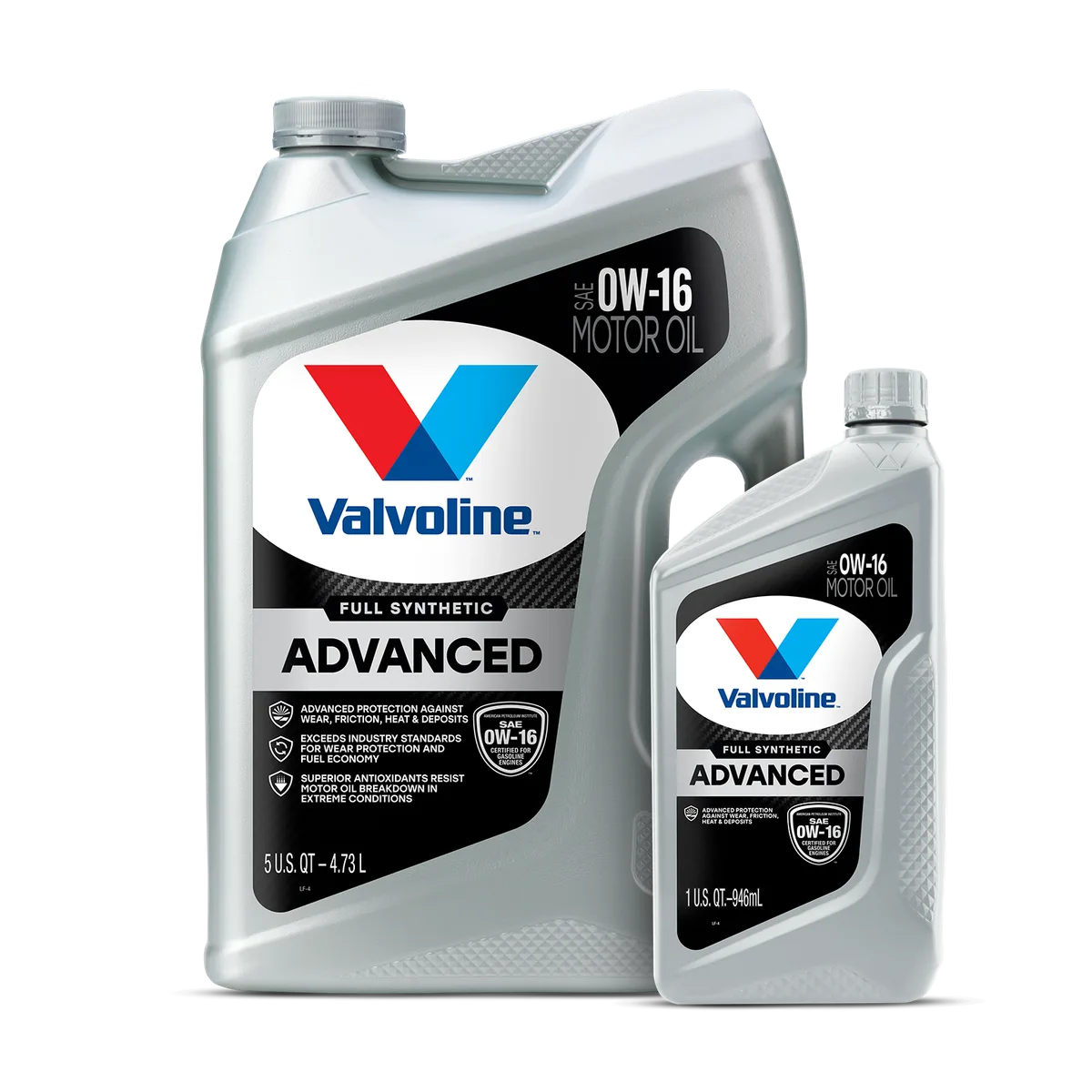
Image source: Web (Bing) / valvolineglobal.com
Oil Quality: Why API and ILSAC Certifications Aren't Optional
You might see a shelf full of 0W-16 oils at different prices and wonder if the expensive stuff is really necessary. The answer depends less on the brand and more on what's printed on the back of the bottle.
What Those Letters on the Bottle Mean
Every bottle of engine oil sold in the US carries a certification mark from the American Petroleum Institute. Look for the "API Starburst" symbol or the "API Donut." For the 2019 Camry, you need API SN Plus or SP certification. The "Plus" and "SP" designations indicate the oil has been tested for low-speed pre-ignition protection, which is important for modern small-displacement engines.
Next to the API mark, you'll see the ILSAC certification. For the 2019 Camry, look for ILSAC GF-5 or GF-6. GF-6 is the newer standard and includes additional testing for fuel economy retention and wear protection.
Image source: Web (Bing) / motoroilguide.com
Why a Cheap No-Name Oil Can Cost You Thousands
Oil that doesn't carry API and ILSAC certification hasn't been tested against the standards your engine was designed around. Some off-brand oils claim to "meet or exceed" OEM specifications without actually being certified. That's not the same thing.
Certification costs money. A bottle that costs three dollars less at the discount store probably skipped that process. The oil might be fine, or it might break down faster, sludge up, or fail to protect against wear.
You're gambling a five thousand dollar engine repair against saving eight dollars per oil change.
Stick with major brands that clearly display the API and ILSAC logos. Mobil 1, Pennzoil, Castrol, Valvoline, and Toyota's own genuine oil all carry proper certification. Any of them in the correct viscosity will protect your engine properly.
Step-by-Step: How to Check Your Current Oil and What to Buy
Before you buy anything, you need to know what's currently in your engine and what your specific car needs. The process takes about two minutes.
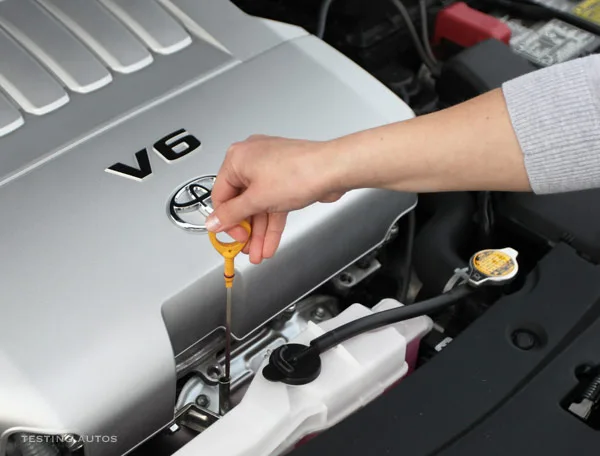
First, park on level ground and let the engine cool for at least five minutes. Pop the hood and locate the oil dipstick. It has a bright yellow or orange handle.
Pull it out, wipe it clean, insert it fully, and pull it again to read the level.
Now look at the oil filler cap. It's the larger cap on top of the engine, usually with an oil can icon. The required viscosity is printed right on it.
If it says 0W-16, that's what you buy. If it says 0W-20, that's what you buy. Trust the cap.
Here's what you need to buy for a full oil change:
| Item | Specification | Notes |
|---|---|---|
| Engine oil | 0W-16 or 0W-20 full synthetic | 5 quarts is enough for both engines |
| Oil filter | Toyota 90915-YZZF1 or equivalent | OEM filter recommended |
| Crush washer | Aluminum, 14mm | Replaces the old one on the drain plug |
| Funnel | Standard size | Makes refilling clean and easy |
The oil capacity for the 2.5L engine is 4.4 quarts with a filter change. The 3.5L V6 takes 4.8 quarts. Both are close enough that a 5-quart jug plus a little extra for top-ups works perfectly.
If you're ordering online or standing in the aisle, stick to the brand you trust. Toyota Genuine Motor Oil is a safe bet and often competitively priced at dealerships. Mobil 1 Advanced Fuel Economy, Pennzoil Platinum, and Castrol EDGE all make 0W-16 that meets the required certifications.
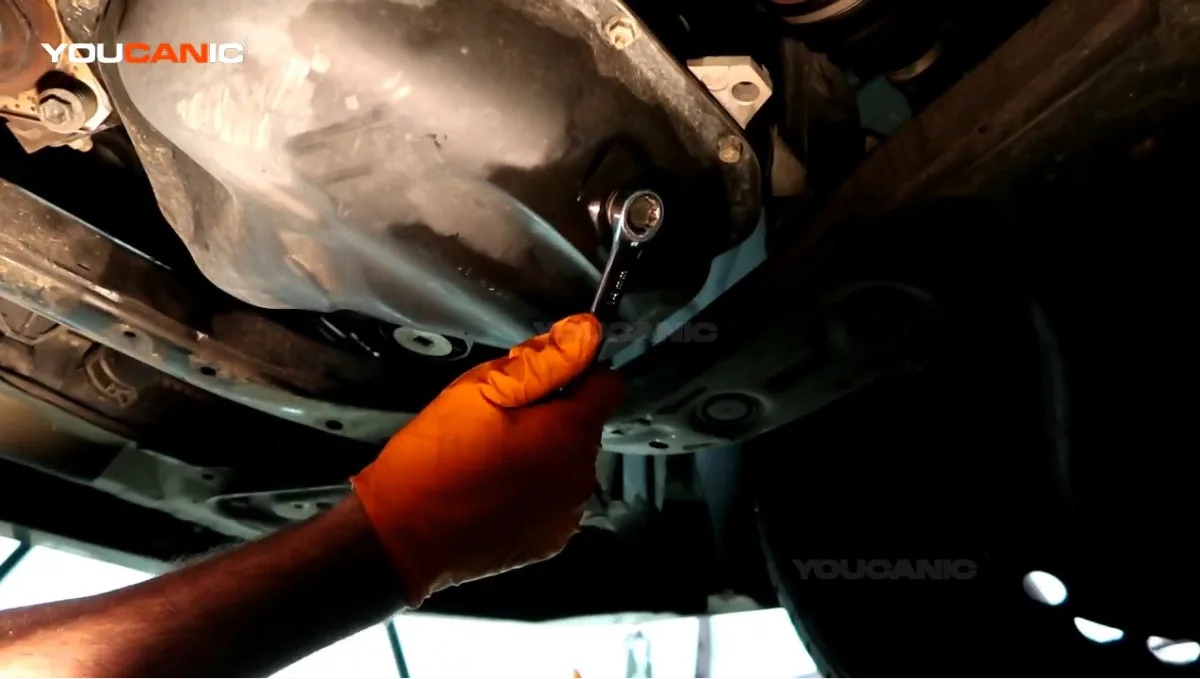
Image source: Web (Bing) / youcanic.com
Common Mistakes That Damage the Engine
After researching hundreds of owner experiences and talking with mechanics who work on these cars daily, a handful of mistakes come up again and again. Avoid these and your Camry will serve you well past 200,000 miles.
Using the Wrong Viscosity from the Previous Generation
This is the big one. The 2015 to 2017 Camry used 0W-20 in the four-cylinder. Many owners simply buy the same oil they've always bought.
The 2018 redesign changed the requirement to 0W-16. The bottle looks the same. The price is similar.
But the viscosity is different.
Skipping the Full Synthetic
The 2019 Camry requires full synthetic oil. Not synthetic blend. Not conventional.
The engine's tight tolerances and high operating temperatures demand the thermal stability that only full synthetic provides. Using a blend or conventional oil will lead to faster breakdown and sludge formation.
Ignoring the Oil Life Monitor
The Camry has an oil life monitoring system that tracks driving conditions and calculates remaining oil life. Some owners reset it without actually changing the oil. Others change the oil but forget to reset the monitor, causing confusion at the next interval.
Follow the monitor, not a calendar.
Overfilling or Underfilling
Adding too much oil creates foaming and puts extra stress on seals. Too little oil starves the engine of lubrication. Always check the dipstick after refilling.
The level should sit between the two marks, closer to the top mark. Never assume the full 5-quart jug fits perfectly.
Synthetic vs. Blend vs. Conventional
You'll see three types of oil on the shelf. Full synthetic, synthetic blend, and conventional. Only one belongs in your Camry.
Full synthetic is the requirement. The 2.5L Dynamic Force engine runs hot and has tight tolerances. Conventional oil breaks down faster under those conditions.
It leaves sludge behind in places you can't clean without tearing the engine apart.
Why Conventional Oil Isn't an Option
Conventional oil lacks the thermal stability modern engines need. At operating temperature, it thins out more than synthetic does. The protective film between metal parts gets thinner.
Wear accelerates.
Aggregate reviews from mechanics who service these cars confirm the pattern. Engines that received conventional oil show more deposits at 100,000 miles than those on full synthetic. The cost difference per change is around fifteen dollars.
The repair difference is thousands.
When a Synthetic Blend Might Be Okay
Synthetic blend is a mix of conventional and synthetic base stocks. It's better than straight conventional but still not ideal for the Camry.
The only scenario where blend makes sense is if you're topping off between changes and full synthetic isn't available. Even then, switch back to full synthetic at your next change. Don't make blend a habit.
Oil Change Interval: The Real Story
Toyota says 10,000 miles or 12 months under normal driving. That's accurate for highway commuters in moderate climates. But most of us don't drive under "normal" conditions.
Short trips under five miles count as severe duty. So does stop-and-go traffic, extreme heat, extreme cold, and dusty roads. Under severe conditions, Toyota recommends 5,000-mile intervals.
Our research shows this is the safer bet for most Camry owners.
The oil life monitor in your dashboard actually tracks these conditions. It doesn't just count miles. It considers engine temperature, trip length, and idle time.
Trust it. When it hits 15 or 20 percent remaining, start planning your oil change.
Changing early never hurts. Changing late can. A few extra changes over the life of the car cost less than one engine repair.
Cost Breakdown: DIY vs. Dealership vs. Quick Lube
Here's what you'll pay as of 2026 for a 2019 Camry oil change.
| Option | Estimated Cost | What You Get |
|---|---|---|
| DIY | $35 to $50 | Oil, filter, crush washer, 30 minutes of your time |
| Dealership | $70 to $100 | Genuine Toyota parts, multi-point inspection, fluid top-offs |
| Quick lube | $55 to $85 | Fast service, synthetic oil, filter, tire pressure check |
| Independent shop | $50 to $75 | Quality oil, fair labor rate, no upsell pressure |
DIY is cheapest if you already have jack stands, a wrench, and a drain pan. The oil and filter cost about the same regardless of where you buy them. Your time is the only variable.
Dealership pricing includes genuine Toyota oil filters and crush washers. Some dealers offer coupons that bring the price close to an independent shop. Worth checking before you rule them out.
Quick lube places are convenient but inconsistent. Some use quality oil. Others use the cheapest bulk synthetic they can find.
Ask what brand they use. If they can't tell you, go somewhere else.
Independent shops often provide the best value. They use name-brand oil, charge fair labor, and don't push unnecessary services. Find one with good reviews and stick with them.
What About High-Mileage Oil?
High-mileage oil is formulated for engines past 75,000 miles. It contains seal conditioners that reduce minor leaks and extra detergents that clean existing sludge.
For a well-maintained 2019 Camry that has always used the right oil, high-mileage formulations aren't necessary. The seals are likely still in good shape. The extra additives won't hurt, but they won't help either.
Switch to high-mileage oil only if you notice oil consumption between changes. If you're adding a quart every 3,000 miles or seeing small drips on the driveway, high-mileage oil can reduce both. Use the same viscosity grade your engine requires.
Don't switch preemptively. The seal conditioners can actually cause leaks in engines that don't need them by swelling seals that were already tight. Wait until you see symptoms.
Quick Reference Specs Table
| Specification | 2.5L 4-Cylinder | 2.5L Hybrid | 3.5L V6 |
|---|---|---|---|
| Oil viscosity | 0W-16 | 0W-16 | 0W-20 |
| Oil type | Full synthetic | Full synthetic | Full synthetic |
| Capacity with filter | 4.4 quarts | 4.4 quarts | 4.8 quarts |
| API certification | SN Plus or SP | SN Plus or SP | SN Plus or SP |
| ILSAC certification | GF-5 or GF-6 | GF-5 or GF-6 | GF-5 or GF-6 |
| Oil filter part | 90915-YZZF1 | 90915-YZZF1 | 90915-YZZF1 |
| Drain plug torque | 29 ft-lbs | 29 ft-lbs | 29 ft-lbs |
Final Verdict: The One Safe Choice for Every 2019 Camry
Open your hood. Read the oil filler cap. Buy that exact viscosity in a full synthetic oil with API and ILSAC certification.
Change it according to the oil life monitor or every 5,000 miles if you do city driving.
For the 2.5L four-cylinder and hybrid, that means 0W-16. For the V6, that means 0W-20. Don't guess.
Don't use what you used in your old car. The information is printed on the engine.
Take care of this simple thing and your Camry will reward you with hundreds of thousands of miles of reliable service. It's the easiest way to protect one of the best investments you'll ever make.
Frequently Asked Questions
Can I use 0W-20 instead of 0W-16 in my 2019 Camry?
Only in an emergency if 0W-16 isn't available. Toyota says 0W-20 can be used temporarily but you should switch back at the next change. Long-term use may reduce fuel economy and increase wear in the 2.5L engine.
How much oil does a 2019 Toyota Camry need?
The 2.5L four-cylinder and hybrid take 4.4 quarts with a filter change. The 3.5L V6 takes 4.8 quarts. A 5-quart jug covers either engine with a little left for top-ups.
Does the 2019 Camry need synthetic oil?
Yes. The engine requires full synthetic oil. Synthetic blend or conventional oil doesn't provide the thermal stability the Dynamic Force engine needs.
Using anything less risks sludge buildup and reduced engine life.
What happens if I put 5W-30 in my 2019 Camry?
The engine will run but it's not recommended. The thicker oil won't flow properly through tight passages during cold starts. Fuel economy drops noticeably.
Switch to the correct viscosity as soon as possible.
How often should I change the oil in my 2019 Camry?
Toyota recommends every 10,000 miles or 12 months under normal conditions. If you do mostly short trips, city driving, or live in extreme temperatures, change it every 5,000 miles. Follow the oil life monitor as your primary guide.
Where is the oil type listed on my 2019 Camry?
Open the hood and look at the oil filler cap. The required viscosity is printed directly on it. You can also check the owner's manual under the "Vehicle Specifications" section.
Both sources give you the same answer.