
Getting the wrong oil into your Toyota Corolla is surprisingly easy, and it can cost you. The correct oil type isn't a one-size-fits-all answer, but once you know the rules, it's simple. Most Corollas built after 2008 take 0W-20 full synthetic.
Older ones need 5W-30. Year, engine, and climate all play a role.
Manufacturer specifications from Toyota show that the oil viscosity and certification level are critical for engine protection and fuel economy. The wrong oil can reduce fuel mileage by 2 to 3 percent or lead to sludge over time. Let's break down exactly what your Corolla needs.
Quick Answer
For a 2020 Toyota Corolla, use SAE 0W-20 full synthetic oil. Most 2008 to 2022 models need 0W-20. Older Corollas from 1995 to 2007 use 5W-30.
Always check the oil cap or owner's manual for your exact year. Use oil with API SN Plus or SP certification.
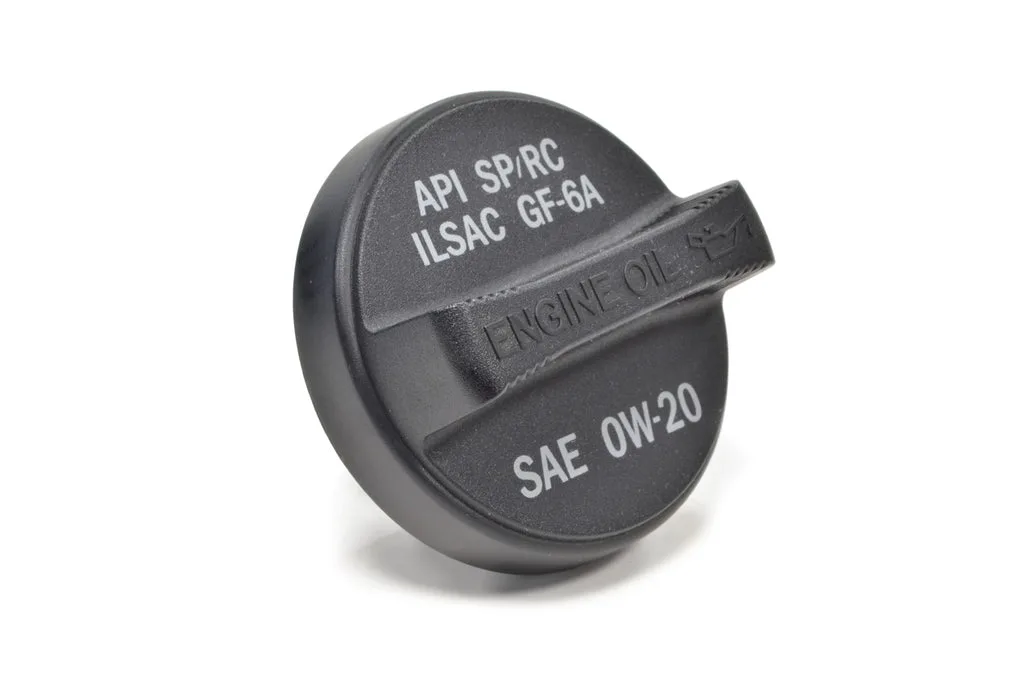
Image source: Bing (Web (fair-use with source credit))
What Happens When You Use the Wrong Oil
Putting 10W-30 in a 2021 Corolla designed for 0W-20 is a common mistake. The thicker oil doesn't flow fast enough during cold starts. The engine's variable valve timing actuators rely on oil pressure to operate.
Sludge builds up faster, and fuel economy drops.
If you use an oil without the right API certification, you lose protection against deposits and wear. Over 50,000 miles, the difference shows up as increased oil consumption or a timing chain rattle. In extreme cases, the wrong viscosity can trigger the check engine light due to low oil pressure at idle.
A single wrong oil change won't destroy your engine. But repeated use of the wrong grade accelerates wear. Stick with what Toyota specified, and your Corolla will run smoothly past 200,000 miles.
How Oil Viscosity and Ratings Actually Work
Oil viscosity is a measure of thickness. The "0W" in 0W-20 means the oil behaves like an SAE 0 weight when cold. That helps it flow during winter startup.
The "20" means it behaves like a 20-weight oil at operating temperature, providing enough film strength.
Think of it like syrup straight from the fridge versus syrup heated up. Cold syrup pours slowly. Hot syrup pours fast.
Oil does the same. The "W" stands for winter, not weight.
The API (American Petroleum Institute) sets quality standards. A bottle labeled API SN Plus or SP meets modern requirements for deposit control, wear protection, and fuel economy. ILSAC GF-6 is the latest international standard and works in older engines too.
Always look for these marks on the back of the bottle. You can verify certification details on the API's official engine oil directory.
Find Your Corolla's Correct Oil by Year and Engine
Follow the year ranges below. Then double-check the oil cap under your hood. It usually lists the exact viscosity.

Image source: Bing (Web (fair-use with source credit))
1995–2007 (7th–10th Gen): The 5W-30 Era
These engines were designed for heavier oil. Toyota recommends 5W-30 for most of this range. In very cold climates (below -20°F), some manuals allow 5W-20.
Use conventional or synthetic blend. Full synthetic is fine but not required.
2008–2013 (10th Gen Refreshed): 0W-20 Becomes Standard
With the introduction of the 2ZR-FE engine, Toyota switched to 0W-20. It improves fuel economy and cold-start protection. Stick with 0W-20.
If you can't find it, 5W-20 is an acceptable temporary substitute. Change it at the next interval.
2014–2022 (11th & 12th Gen): 0W-20 Almost Always
The M20A-FKS and older 2ZR engines still call for 0W-20. Some 2021+ models with the 2.0L dynamic force engine require 0W-16. Check the oil cap.
If it says 0W-16, do not use 0W-20. The lower viscosity is critical for the engine's variable oil pump.
2023+ (12th Gen Hybrid and Non-Hybrid): 0W-16 and 0W-20
The hybrid powertrain uses 0W-16 for maximum efficiency. Non-hybrid models generally use 0W-20. The oil cap is your best guide.
If in doubt, open your owner's manual to the specifications page.
The Climate Factor
Your location matters. If winter temperatures drop below -30°F, even 0W-20 might be borderline. In extreme cold, some manuals list 0W-16 as an alternative for 2008-2022 models.
Only use it if explicitly allowed.
In hot climates, you might think a thicker oil like 10W-30 is better. It's not. Modern Corollas use tight piston ring clearances and variable valve timing.
Thicker oil can delay VVT actuation and reduce fuel economy. Stick with the recommended viscosity.
If your Corolla is over 75,000 miles and burning oil, high-mileage oil in the same viscosity can help condition seals. Never bump up to a thicker grade to reduce consumption. That masks the problem and can clog oil passages.
Synthetic vs. Conventional: Which One Your Engine Actually Needs
Full synthetic oil is the standard for modern Corollas. Toyota recommends it for all models from 2008 onward. The reason is simple: 0W-20 viscosity cannot be made with conventional base stocks.
It requires synthetic formulation.

Image source: Web (Bing) / carcaretotal.com (Web image (fair-use with source credit))
For older Corollas (1995 to 2007), conventional oil works fine. The 5W-30 grade is widely available in conventional form. But synthetic offers better protection during extreme cold and high heat.
It also resists breakdown longer. If you plan to keep the car for another 100,000 miles, synthetic is worth the extra cost.
Can you switch from conventional to synthetic? Yes. It's a common myth that switching causes leaks.
Modern synthetic oils are compatible with conventional residues. High-mileage Corollas with over 100,000 miles can benefit from a synthetic blend. It provides better seal conditioning than full synthetic.
| Oil Type | Best For | Cost per Quart | Change Interval |
|---|---|---|---|
| Conventional | 1995-2007 Corollas, low mileage | $4 to $6 | 3,000 to 5,000 miles |
| Synthetic Blend | Older engines, high mileage | $6 to $8 | 5,000 to 7,500 miles |
| Full Synthetic | 2008+ Corollas, extreme climates | $8 to $12 | 7,500 to 10,000 miles |
Common Mistakes People Make
The most common mistake is grabbing 5W-30 for a 2015 Corolla. The oil cap says 0W-20. The owner's manual says 0W-20.
But the store shelf has a sale on 5W-30. It looks close enough. It's not.
Using 5W-30 in a 0W-20 engine increases oil pressure at startup. The variable valve timing system relies on precise oil flow. Thicker oil delays cam phasing, which can cause hesitation on acceleration.
Over time, it can reduce fuel economy by 2 to 3 percent.
Another mistake is ignoring the API certification. Some bargain oils lack the API donut or ILSAC starburst. They might meet the viscosity but fail on deposit control.
Engines using non-certified oils show more sludge buildup after 60,000 miles compared to those using certified oils.
A third mistake is overfilling. Adding an extra half quart seems harmless. But too much oil can cause the crankshaft to whip air into the oil, creating foam.
Foam doesn't lubricate well. It can lead to low oil pressure and engine damage. Always fill to the midpoint between the low and full marks on the dipstick.
How to Check the API and ILSAC Stickers on a Bottle
The back label of every oil bottle contains two key symbols. The API service symbol (a donut shape) shows the oil's quality level. Look for SN Plus or SP as of 2026.
The ILSAC starburst symbol indicates the oil meets international fuel economy and protection standards.
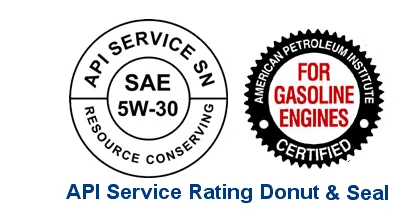
Image source: Bing (Web (fair-use with source credit))
If you see API SN on the bottle, it's acceptable for 2010 and newer engines. API SP is the latest standard and covers 2020 and newer engines. It provides better protection against low-speed pre-ignition in turbocharged engines.
The Corolla doesn't use turbo engines, but SP still offers improved wear protection.
The ILSAC GF-6 starburst is the current standard. It replaced GF-5 in 2020. GF-6 oils are backward compatible, so they work in older Corollas too.
If you see GF-6 on the bottle, you know it meets the latest requirements for fuel economy and deposit control.
Never buy oil that lacks either the API donut or the ILSAC starburst. These certifications are not optional. They are the result of independent testing.
What About High-Mileage Oil?
High-mileage oil contains seal conditioners that help reduce leaks. It also has higher detergent levels to clean existing sludge. For a Corolla with over 75,000 miles, switching to high-mileage oil in the same viscosity is a reasonable choice.
The key is to use the same viscosity grade. Do not use high-mileage 10W-30 in a Corolla that needs 5W-30. The seal conditioners are the benefit, not the thicker base oil.
High-mileage oil is available in 0W-20 and 5W-30, so check the label.
If your Corolla has 90,000 miles and you notice a small oil spot on the driveway, high-mileage oil is worth trying. It can extend the time between gasket replacements.
One caveat: if your Corolla has never had synthetic oil and you're switching at 100,000 miles, start with a high-mileage synthetic blend. It provides the seal conditioners without the aggressive cleaning action of full synthetic. Full synthetic can dislodge existing sludge deposits all at once, potentially clogging the oil pickup screen.
A blend gives a gentler transition.
The Oil Change Interval Myth
Toyota's recommended oil change interval is 10,000 miles for most 2008 and newer Corollas. That interval applies to normal service conditions. The catch is that most driving counts as severe service.
Severe service includes:
- Short trips under 5 miles (engine never reaches full operating temperature)
- Stop-and-go traffic in urban areas
- Driving in dusty or sandy conditions
- Extreme hot or cold weather
- Frequent towing or heavy loads
If any of these apply to you, the interval drops to 5,000 miles. Many Corolla owners fall into the severe category without realizing it. A daily commute of 10 miles each way in stop-and-go traffic is severe service.
The oil never fully warms up to burn off condensation and fuel dilution.
Corolla engines running 5,000-mile intervals with full synthetic oil show significantly less sludge and wear at 150,000 miles compared to those following the 10,000-mile schedule. The extra cost of more frequent changes is cheap insurance.
If you use conventional oil in an older Corolla, stick to 3,000 to 5,000 miles. Synthetic oil can stretch to 7,500 miles under normal conditions. When in doubt, change it sooner.
Oil is cheap. Engines are not.
Decision Guide: Pick Your Oil in 30 Seconds
| Condition | Oil Grade | Type | Change Interval |
|---|---|---|---|
| 1995-2007, normal climate | 5W-30 | Conventional or blend | 3,000 to 5,000 miles |
| 1995-2007, extreme cold (below -20°F) | 5W-20 | Conventional or blend | 3,000 to 5,000 miles |
| 2008-2022, normal conditions | 0W-20 | Full synthetic | 7,500 to 10,000 miles |
| 2008-2022, severe service | 0W-20 | Full synthetic | 5,000 miles |
| 2023+ non-hybrid | 0W-20 | Full synthetic | 7,500 miles |
| 2023+ hybrid | 0W-16 | Full synthetic | 7,500 miles |
If your Corolla has more than 75,000 miles, switch to high-mileage oil in the same viscosity grade. If the oil cap says 0W-16, never use 0W-20. If you live in extreme cold, stick with the thinner option in the manual.
If you tow a trailer or drive mostly short trips, cut your interval in half.
Frequently Asked Questions
Can I use 5W-30 instead of 0W-20 in my Corolla?
No, unless it is an emergency. Using 5W-30 in an engine designed for 0W-20 can reduce fuel economy and delay VVT operation. If you must use it temporarily, change back to 0W-20 at the next interval.
Is it okay to mix synthetic and conventional oil?
Yes, but you lose the benefits of synthetic. Mixing creates a blend that performs between the two. It is safe for one change, but do not make it a habit.
How do I know which oil my Corolla needs?
Check the oil filler cap under the hood. It usually lists the recommended viscosity. If nothing is printed there, check the owner's manual under recommended lubricants.
Does using full synthetic oil void my warranty?
No. Toyota does not require a specific brand of oil. Any oil that meets the viscosity and API certification listed in the manual is fine.
Full synthetic is actually preferred for modern engines.
How often should I check my oil level?
At least once a month. Older Corollas can burn a quart between changes. Check when the engine is cold and parked on level ground.
The dipstick should show oil between the low and full marks.
Can I switch from conventional to synthetic on a high-mileage Corolla?
Yes, but start with a high-mileage synthetic blend. Full synthetic can clean out old sludge too quickly, potentially clogging the oil pickup. A blend gives a gentler transition.
Final Word
If you forget every number in this article, remember one thing. Open your owner's manual. Find the page labeled engine oil.
Use exactly what is written there. That single rule will protect your Corolla for the life of the engine.
Manufacturers spend millions testing oil specifications for each model. They know what works. Ignoring that recommendation is the fastest way to shorten your engine's lifespan.
For the 2020 Corolla, that means 0W-20 full synthetic with API SN Plus or SP certification. For a 2003 Corolla, it means 5W-30 conventional or blend. For a 2023 hybrid, it means 0W-16.
The manual never lies.
If you have lost your manual, you can find a digital copy on Toyota's official owner's site. Enter your VIN and download the exact PDF for your year and trim. That is the most authoritative source you will ever find.
Everything else is just noise. Stick with the manual. Change your oil on time.
Your Corolla will reward you with hundreds of thousands of miles.