
If you own a 1998 Toyota Camry, you probably already know it is one of the most reliable cars ever built. But even bulletproof engines need the right oil. That is why knowing the correct 1998 toyota camry oil type matters more than you might think.
Manufacturer specifications indicate that the 5S-FE 2.2L 4-cylinder engine calls for SAE 5W-30 under most conditions. The 1MZ-FE 3.0L V6 uses the same viscosity. Per API standards, you need at least an SJ-rated oil.
Modern SM or SN formulations work fine and offer better protection. Let us walk through exactly what to put in that engine and how to decide when conditions change.
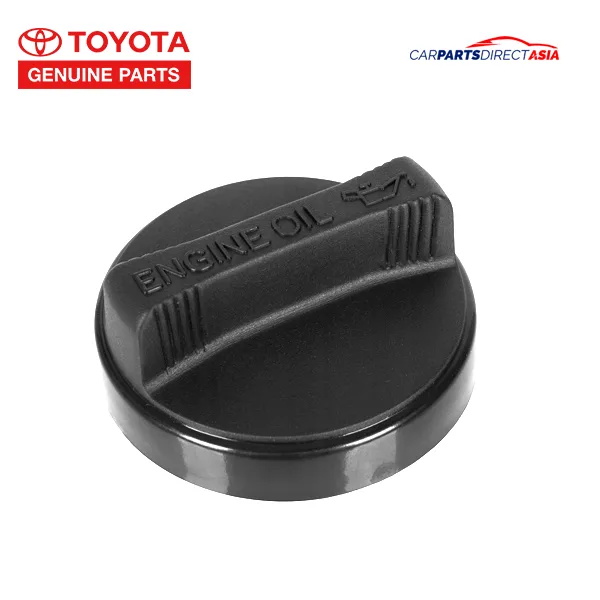
Image source: Web (Bing) / carpartsdirect.asia (Web image (fair-use with source credit))
Quick Answer
The 1998 Toyota Camry takes SAE 5W-30 motor oil. Use 4.5 quarts for the 2.2L 4-cylinder engine. Use 5.0 quarts for the 3.0L V6.
API rating must be SJ or newer. ILSAC GF-2 or higher is recommended. Conventional oil works fine for most drivers.
Synthetic is optional but beneficial.
Know Your Engine: 2.2L 4-Cylinder vs 3.0L V6
The first thing you need to figure out is which engine sits under your hood. The 1998 Camry came in two configurations. Both take the same oil viscosity.
But capacities differ and there are some subtle considerations for each.
2.2L 4-cylinder (5S-FE)
This engine is a workhorse. It is simple, reliable, and forgiving. Oil capacity with a filter change is 4.5 quarts.
The 5S-FE has a reputation for running well past 200,000 miles with basic maintenance. It does not need synthetic oil to last. But it does need consistent changes.
3.0L V6 (1MZ-FE)
The V6 is smoother and more powerful. Capacity is 5.0 quarts with filter. The 1MZ-FE runs hotter than the 4-cylinder.
That makes oil breakdown a bigger concern on long highway trips or in hot climates. Some owners report that this engine responds well to synthetic or synthetic-blend oils at higher mileage.
How to tell which engine you have
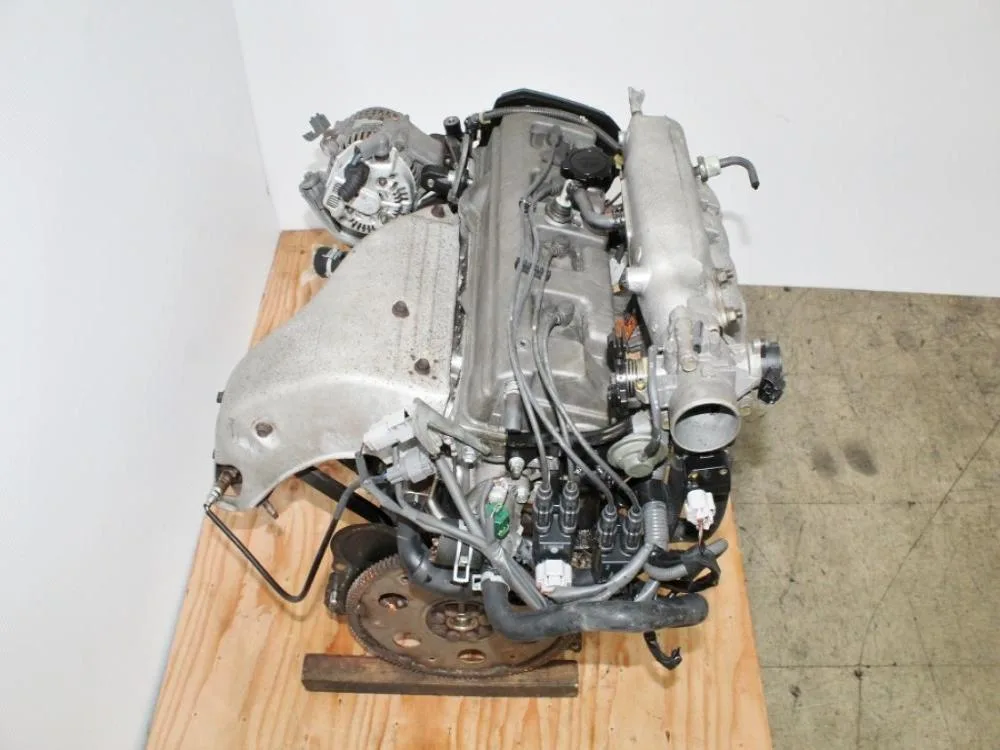
Open the hood and look at the engine cover. A plastic cover usually says "2.2L DOHC" or "3.0L V6" on top. If the cover is missing, count the spark plug wires.
Four wires mean a 4-cylinder. Six mean a V6. You can also check your VIN.
The eighth character tells the engine. A "T" means the 2.2L. A "V" means the 3.0L V6.
The Viscosity Question: 5W-30, 10W-30, or Something Else?
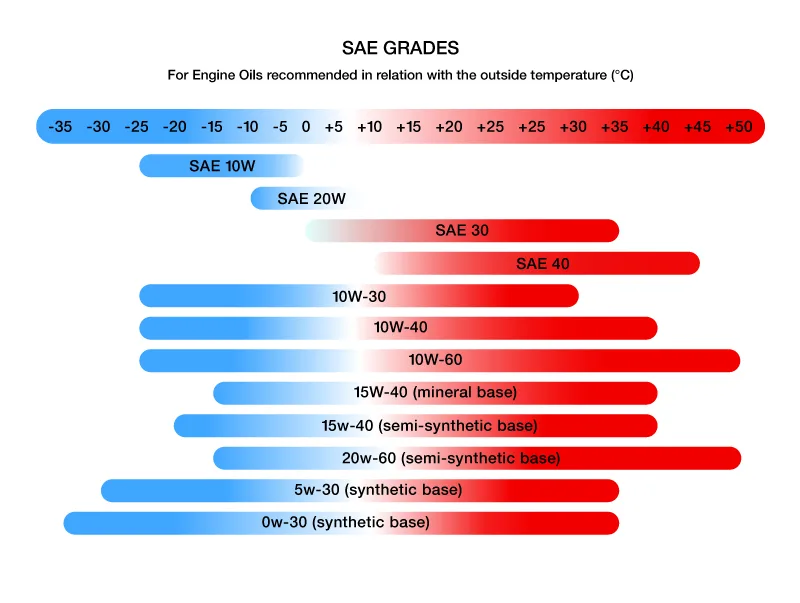
The owner's manual for the 1998 Camry calls for SAE 5W-30 as the primary recommendation. It covers almost every driving condition you will encounter. But let us break down what those numbers actually mean.
What the numbers tell you
The "5W" refers to the oil's viscosity in cold weather. The "W" stands for winter. A lower number means the oil flows more easily when the engine is cold.
The "30" is the viscosity at normal operating temperature. It tells you how thick the oil stays when the engine is hot.
Why 5W-30 is the standard choice
For the 1998 Camry, 5W-30 works in temperatures from below freezing up to 100°F or more. It is thin enough to circulate quickly on cold starts. It is thick enough to maintain oil pressure at highway speeds.
That is why Toyota specified it for both engines in nearly all markets.
When 10W-30 makes sense
The manual does allow 10W-30 if you live in a consistently warm climate. Think Florida, Texas, or Arizona where temperatures rarely drop below freezing. The 10W-30 is slightly thicker when cold.
It provides marginally better protection at sustained high temperatures. But even in those climates, 5W-30 is adequate and often preferred because it flows better at startup.
What about 5W-20?
Some later model years switched to 5W-20 for fuel economy. The 1998 Camry manual does not list 5W-20 as an approved viscosity. Using it will not destroy your engine overnight.
But it is thinner than recommended at operating temperature. Fuel economy might improve a tiny bit. Wear protection will be slightly reduced.
Stick with 5W-30.
Your First Decision Point: Check the Filler Cap and Owner's Manual
Here is the easiest way to confirm what your car needs without guessing. Pop the hood and look at the oil filler cap. Toyota stamped the recommended viscosity right on top of most 1998 Camry caps.
It typically reads "5W-30" in raised letters.
What the cap tells you
If your cap says 5W-30, that is your answer. Toyota engineers designed that engine around that viscosity. Aftermarket parts stores and quick-lube shops sometimes ignore this.
Do not let them talk you into a different weight unless you have a specific reason.
What if the cap is missing or worn
If the cap is aftermarket or the lettering is worn down, check the owner's manual. The manual lists approved viscosities by temperature range. It also specifies the API service category.
For the 1998 model year, API SJ was current. Newer categories like SM, SN, and SP are backward compatible and safe to use.
When to trust the manual over the cap
Both should agree. But if they do not, the manual is the authoritative source. The cap might have been replaced with a generic part.
The manual came with the car and reflects the original engineering. If your car has a different cap than the factory one, go with what the manual says.
Decision Branch 1: Climate and Driving Conditions
Not everyone drives the same way. Not every climate is the same. Here is how to adjust your choice based on where you live and how you drive.
Cold Winters and Northern Regions
If you live in Canada, the northern US, or anywhere winter temperatures regularly drop below 0°F, stick with 5W-30. That is the best cold-weather choice for your Camry. The 5W rating ensures the oil remains fluid enough to reach critical engine parts within seconds of startup.
Cold starts cause the majority of engine wear. Thinner cold-flow oil reduces that wear.
Some drivers in extreme cold use 0W-30. Toyota does not list 0W-30 for the 1998 Camry. But modern 0W-30 oils meet the same hot-viscosity standard as 5W-30.
They just flow even better in extreme cold. If you regularly see temperatures below -20°F, 0W-30 is a reasonable choice. Verify it meets API SN or SP and the correct ILSAC rating.
Hot Summers and Southern or Desert Areas
For sustained high temperatures above 100°F, 5W-30 still works fine. The "30" hot rating is sufficient even in desert conditions. Some drivers prefer 10W-30 for added hot-oil film strength.
That is acceptable per the manual. But it is not necessary.
The bigger concern in hot climates is oil breakdown from heat. Synthetic oil handles high temperatures better than conventional. If you drive in extreme heat regularly, consider switching to a synthetic 5W-30.
It resists thermal breakdown and keeps protecting longer.
Year-Round Moderate Climate
If you live somewhere with mild winters and warm summers, 5W-30 is your single year-round oil. No need to change viscosity with the seasons. Just change the oil on schedule and you are set.
Stop-and-Go Driving and Short Trips
Your driving pattern matters as much as your climate. Short trips where the engine never fully warms up cause moisture buildup in the oil. That leads to sludge over time.
If your commute is under 10 minutes, consider changing your oil more frequently. Every 3,000 miles with conventional oil is a good rule. Synthetic handles this better but still benefits from shorter intervals.
The takeaway
For 95 percent of 1998 Camry owners, 5W-30 is the right answer. Choose conventional for budget-minded maintenance. Choose synthetic for maximum protection.
Adjust only if you live in extreme cold or extreme heat. And always check that filler cap first.
Decision Branch 2: Mileage and Engine Condition
Your engine's mileage changes what oil makes sense. A 60,000-mile engine has different needs than a 200,000-mile one. Here is how to decide based on where your odometer sits.
Under 75,000 Miles
Your engine is still relatively young. Conventional 5W-30 is perfectly adequate. Change it every 3,000 to 5,000 miles and you will get plenty of life out of this engine.
There is no need for high-mileage oil yet. The additives in high-mileage formulas are designed for older seals. Yours are still in good shape.
75,000 to 150,000 Miles
This is the sweet spot where you have options. Conventional oil still works. But this is also where many owners start using a synthetic blend.
It costs a little more than conventional. It offers better protection against sludge and high-temperature breakdown. You do not need high-mileage oil yet, but it will not hurt either.
If the engine uses no oil between changes, stick with what you are using. If you notice it starting to burn a little, high-mileage oil can help. The seal conditioners soften dried-out seals and reduce minor leaks.
Over 150,000 Miles
At this point, high-mileage oil is worth considering. The 1998 Camry is known for lasting well past 200,000 miles with proper care. But seals age.
Valve cover gaskets get brittle. Oil consumption may increase.
High-mileage oils contain:
- Seal conditioners that help gaskets stay flexible
- Detergents that clean existing sludge deposits
- Higher levels of anti-wear additives (zinc and phosphorus)
- Reduced volatility so the oil does not burn off as easily
One important warning about switching to high-mileage
If your engine has been running conventional oil for 150,000 miles and has significant sludge buildup, switching to a high-detergent synthetic or high-mileage oil can sometimes cause problems. The detergents can loosen large chunks of sludge. Those chunks can block oil passages.
If your engine is known to be sludgy, stick with conventional or make the switch gradually. Use a high-mileage blend for the first few changes before going full synthetic.
When to Consider Switching to Synthetic at High Mileage
Full synthetic oil offers the best protection for high-mileage engines. It flows better at cold starts. It resists breakdown at high temperatures.
It keeps engine internals cleaner. The downside is cost. Full synthetic costs two to three times more than conventional.
For a 1998 Camry with over 150,000 miles, synthetic is a good choice if:
- You plan to keep the car for several more years
- You drive in extreme temperatures
- You want maximum protection against wear
- The engine does not currently leak oil
If the engine already leaks oil, synthetic may make it worse. Synthetic oil has smaller molecules than conventional. It can seep through gaps that conventional oil will not.
If your Camry has a rear main seal leak or valve cover gasket leak, fix those before switching to synthetic.
Decision Branch 3: Conventional vs Synthetic vs Blend
This is where a lot of owners get confused. You know the viscosity. You know your mileage.
But what type of oil should you actually buy? Let us break down each option and who it is best for.
Why Conventional Still Works Fine
Conventional oil is the cheapest option. A 5-quart jug of conventional 5W-30 costs around $12 to $18. It meets all the requirements Toyota set for this engine.
If you change your oil every 3,000 to 4,000 miles, conventional oil provides perfectly adequate protection.
Who should use conventional:
- Budget-conscious owners
- Anyone who changes oil every 3,000 miles
- Low-mileage engines under 75,000 miles
- Owners who do not plan to keep the car long-term
The one drawback is that conventional oil breaks down faster under high heat. It also has fewer detergents. Sludge can build up over time if you stretch change intervals.
As long as you change it on schedule, none of that matters.
When to Switch to Synthetic Blend
Synthetic blend is a mix of conventional and synthetic base stocks. It costs more than conventional but less than full synthetic. A 5-quart jug runs about $18 to $25.
It offers better high-temperature protection than conventional. It flows better in cold weather too.
Who should use a synthetic blend:
- Engines between 75,000 and 150,000 miles
- Drivers who want extra protection without paying for full synthetic
- Anyone who tends to go 5,000 miles between changes
- Stop-and-go commuters
Synthetic blend is a good middle ground. It is not as protective as full synthetic. But it is significantly better than conventional.
For most 1998 Camry owners, this is the sweet spot between cost and performance.
The Case for High-Mileage Oil
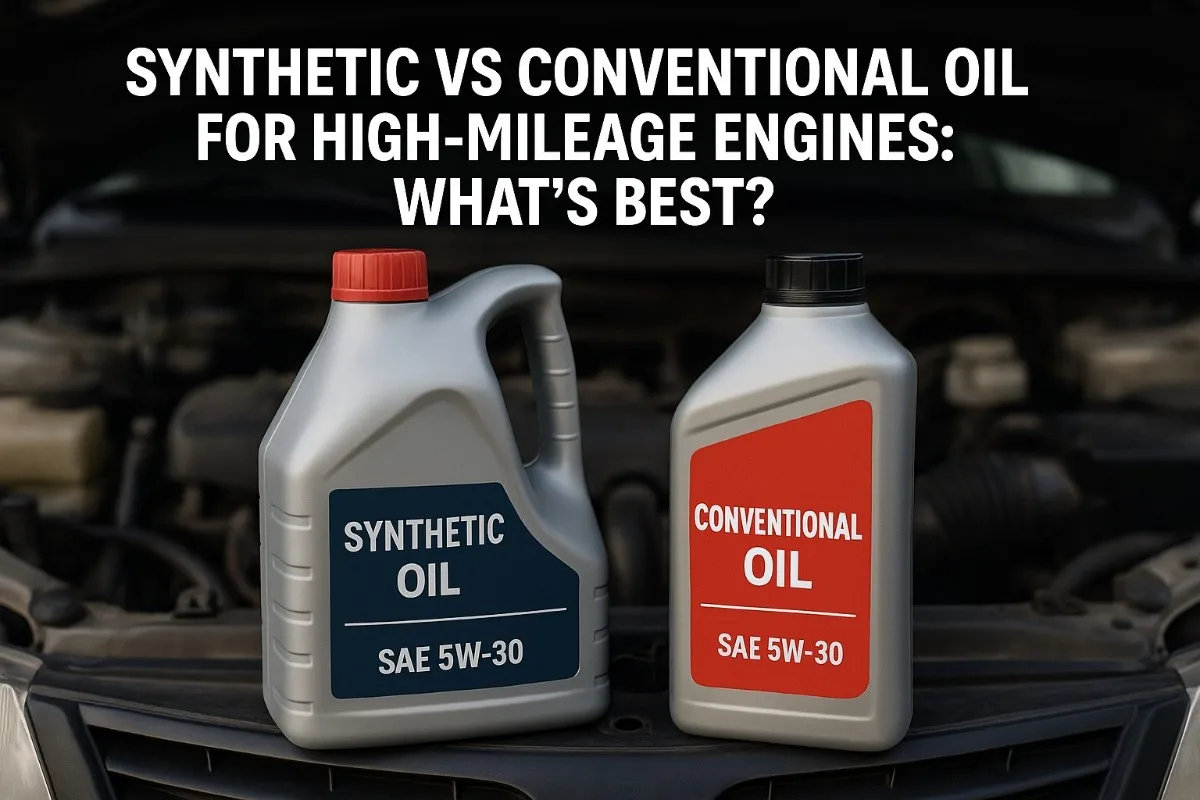
High-mileage oil deserves its own category. Most high-mileage oils are synthetic blends or full synthetics with extra additives. The key additives are seal conditioners and detergents.
Who benefits from high-mileage oil:
- Engines over 100,000 miles
- Engines that consume some oil between changes
- Engines with minor leaks or seepage
- Owners who want to maximize engine life
Who should avoid high-mileage oil:
- Low-mileage engines under 60,000 miles
- Engines with no oil consumption or leaks
- Budget-conscious owners who change oil frequently
High-mileage oil costs a bit more. A 5-quart jug runs $20 to $30. But the seal conditioners can actually reduce oil consumption over time.
Many owners report their high-mileage Camry stops burning oil after a few changes with high-mileage formula.
The 5W-20 Option
You might have heard that some Camry owners run 5W-20. Here is the truth about that choice.
The 1998 owner's manual does not list 5W-20 as an approved viscosity. Toyota switched to 5W-20 in later model years for fuel economy gains. But the 5S-FE and 1MZ-FE engines were designed around 5W-30.
Using a thinner oil means less film strength at operating temperature.
Will it hurt the engine? Probably not in the short term. Many owners have run 5W-20 for years without issues.
But wear protection is reduced. The oil film between moving parts is thinner. Over 100,000 miles, that adds up.
If you live in a very cold climate and struggle with thick oil on startup, 5W-20 flows slightly better. The fuel economy improvement is less than 1 percent. It is negligible.
Stick with 5W-30 unless you have a specific reason to switch. And if you do switch, never use 5W-20 in a high-mileage engine that already consumes oil.
Step-by-Step Oil Change Workflow
Changing the oil on a 1998 Camry is straightforward. You can do it yourself with basic tools. Here is the workflow to follow.
| Item | Details |
|---|---|
| Oil | 5 quarts of 5W-30 (4.5 for 4-cyl, 5.0 for V6) |
| Oil filter | OEM 04152-YZZA1 or equivalent |
| Crush washer | M12 copper or aluminum washer |
| Tools | 14mm socket, oil filter wrench, drain pan, funnel |
| Safety | Jack stands or ramps, gloves |
Warm the engine for 2 to 3 minutes. Hot oil drains faster and carries more contaminants out. Park on level ground.
Secure the car with jack stands or drive it onto ramps. Never crawl under a car supported only by a jack.
Place the drain pan under the oil pan. Loosen the drain plug with a 14mm socket. Remove it by hand.
Let the oil drain completely. This takes 3 to 5 minutes.
Remove the old oil filter. It is on the front of the engine. Use an oil filter wrench if it is tight.
Wipe the mounting surface clean.
Lubricate the new oil filter gasket with fresh oil. Hand-tighten the new filter. Turn it until the gasket contacts the mounting surface.
Then tighten another three-quarters turn. Do not use a wrench for final tightening.
Install the new crush washer on the drain plug. Torque it to 29 lb-ft. Refill with the correct amount of oil.
Replace the oil filler cap. Start the engine and let it run for 30 seconds. Check for leaks at the filter and drain plug.
Shut the engine off and wait 2 minutes. Check the dipstick and add oil if needed.
Common Mistakes That Shorten Engine Life
Using the wrong viscosity
The most common mistake is using 10W-40 or 20W-50 because "it is an older engine." That is wrong. Those viscosities are too thick for the 5S-FE and 1MZ-FE. They do not flow well enough at startup.
They can cause oil starvation on cold mornings.
Overfilling the engine
Adding too much oil causes foaming. Foamy oil does not lubricate properly. It also increases pressure on seals and can cause leaks.
Always add oil slowly and check the dipstick between additions.
Skipping the filter change
Changing the oil without changing the filter leaves old contaminants in the system. The filter catches debris and metal particles. A clogged filter bypasses and sends unfiltered oil through the engine.
Replace the filter every time.
Using a cheap filter
Not all filters are the same. Budget filters use lower quality filtration media. They may have bypass valves that open at the wrong pressure.
Stick with brands that meet OEM specifications. The extra few dollars are worth it.
Waiting too long between changes
Conventional oil breaks down over time. Extended intervals allow sludge to form. For a 1998 Camry, 3,000 to 4,000 miles is a safe interval for conventional.
Synthetic can go 5,000 to 7,500 miles. If you do mostly short trips, change it more often.
Pro Tips for Long-Term Engine Health
Check the oil level regularly
Make it a habit. Check the dipstick every time you fill up with gas. Low oil causes rapid wear.
Running a quart low reduces oil pressure and increases friction. The 1998 Camry does not burn much oil when healthy. Catching a leak early saves the engine.
Use the right oil filter
Toyota OEM filters are excellent but expensive. Aftermarket options from Wix, Purolator, and Mobil 1 meet OEM specifications. Avoid the cheapest filters at auto parts stores.
They use cardboard end caps and minimal filtration media.
Consider a magnetic drain plug
A magnetic drain plug catches ferrous metal particles that the oil filter might miss. It costs about $10. It can tell you if your engine is wearing abnormally.
If you see metal on the magnet at every change, that is a warning sign.
Stick with a single oil brand
Mixing brands is not harmful. But using the same brand every time ensures consistent additive packages. Some brands use different detergent chemistries.
Switching frequently can cause incompatibility over many changes. Pick a brand you trust and stick with it.
Keep records of every change
Write down the date, mileage, oil type, and filter used. This helps you track oil consumption and change intervals. It also adds value when you sell the car.
A documented maintenance history proves the engine was cared for.
Cost Comparison: DIY vs Shop
| Cost Factor | DIY | Quick-Lube Shop | Mechanic |
|---|---|---|---|
| Oil (5 qts conventional) | $12-18 | Included | Included |
| Oil filter | $4-10 | Included | Included |
| Crush washer | $1-2 | Included | Included |
| Labor | $0 | $15-25 | $25-40 |
| Total | $17-30 | $30-50 | $40-60 |
DIY saves $15 to $30 per change. Over 5 changes per year, that is $75 to $150. The difference adds up fast.
And you know exactly what is going into your engine.
What shops often get wrong
Quick-lube shops sometimes use bulk oil that does not meet the correct spec. They might install the wrong filter. They often over-tighten the drain plug.
Some do not replace the crush washer. These small mistakes can cause leaks and stripped threads.
When it is worth paying a shop
If you do not have the tools, space, or time, a shop is fine. Just tell them exactly what you want. Specify 5W-30 conventional or synthetic.
Ask them to show you the oil bottle. Request a new crush washer. A good shop will accommodate these requests.
Final Decision Guide
Here is your decision workflow in one place. Follow the conditions and land on the right oil for your 1998 Camry.
If your engine has under 75,000 miles and you live in a moderate climate: Use conventional 5W-30. Change it every 3,000 to 4,000 miles. No special additives needed.
If your engine has 75,000 to 150,000 miles: Use a synthetic blend 5W-30. Change every 5,000 miles. Consider high-mileage oil if you notice minor oil consumption.
If your engine has over 150,000 miles: Use high-mileage 5W-30. Synthetic or synthetic blend both work. Change every 3,000 to 5,000 miles depending on oil type.
If you live in extreme cold (below 0°F): Stick with 5W-30. Consider 0W-30 only if you see temperatures below -20°F regularly.
If you live in extreme heat (above 100°F sustained): Use 5W-30 synthetic. It resists thermal breakdown better than conventional.
If your engine leaks oil: Fix the leaks before switching to synthetic. Stick with conventional or high-mileage conventional until the gaskets are replaced.
Frequently Asked Questions
Can I use synthetic oil in my 1998 Camry after 200,000 miles?
Yes, but check for leaks first. Synthetic oil has smaller molecules and can seep through worn seals. If your engine is dry, switch to high-mileage synthetic.
If it already leaks, fix the seals first.
What happens if I use 10W-30 instead of 5W-30?
Nothing immediate. But cold starts will be harder on the engine. The thicker oil takes longer to circulate.
In warm climates it is acceptable. In cold weather it is not recommended.
How often should I change the oil on a 1998 Camry?
Every 3,000 miles for conventional oil. Every 5,000 miles for synthetic blend. Every 5,000 to 7,500 miles for full synthetic.
Shorten intervals if you do mostly stop-and-go driving.
Does the 1998 Camry V6 take the same oil as the 4-cylinder?
Yes. Both engines use SAE 5W-30. The V6 takes slightly more oil (5.0 quarts versus 4.5 quarts).
The viscosity and API rating are identical.
Can I switch from conventional to synthetic and back?
Yes. Modern oils are fully compatible. You can switch back and forth without any issues.
Just make sure the viscosity and API rating are correct each time.
What does high-mileage oil actually do?
It contains seal conditioners that soften dried-out gaskets. It has extra detergents to clean sludge. It includes higher levels of anti-wear additives.
It reduces oil consumption in aging engines.
Is it worth using synthetic in a 1998 Camry?
It depends on your plans. If you want to keep the car for several more years, synthetic offers better protection. If you plan to sell it soon, conventional is fine.
Synthetic also helps in extreme temperatures and extended change intervals.
Why does my Camry burn oil?
Common causes include worn valve stem seals, piston ring wear, or a clogged PCV valve. High-mileage oil can reduce consumption from seal issues. Ring wear requires mechanical repair.
Check the PCV valve first. It is cheap and easy to replace.