
If you're about to change the oil in your 2000 Camry, you need one number more than any other: the exact 2000 toyota camry oil capacity. Get it wrong and you risk damaging an engine that's been running strong for over two decades. The quick truth is that a 4-cylinder takes 4.0 quarts with a filter change, and the V6 needs 4.5 quarts.
Toyota's factory specifications call for 5W-30 viscosity oil meeting API SJ standards or newer. These numbers haven't changed since the car was new. As of 2026, they're still the right specs.
Let's walk through exactly what you need and how to get it right the first time.
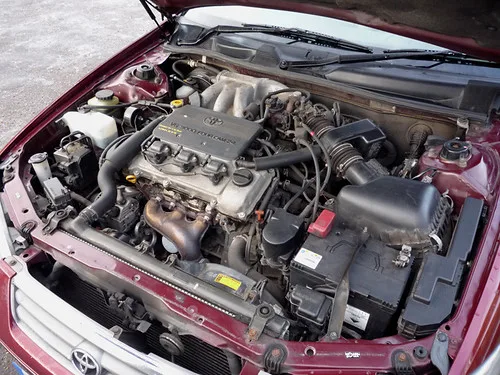
Image source: Bing (Web (fair-use with source credit))
Quick Answer
The 2000 Toyota Camry oil capacity is 4.0 quarts for the 2.2L four-cylinder engine. The 3.0L V6 holds 4.5 quarts. Both figures include a new oil filter.
Use 5W-30 conventional or synthetic oil. Check the dipstick after filling to confirm the level.
Why Getting the Wrong Oil Capacity Damages Your 2000 Camry's Engine
Your Camry's engine depends on a precise oil level. Too little oil means the moving parts don't get enough lubrication. Metal grinds against metal.
That causes heat buildup and accelerated wear. In a worst case, you can seize the engine.
Too much oil is just as bad. The crankshaft whips the excess oil into foam. Foam doesn't lubricate well.
Air bubbles get pumped into the oil passages, which means parts starve for oil. You can also blow out seals and gaskets from the added pressure.
The 2000 Camry is a durable car. Many owners report driving past 200,000 miles with regular maintenance. But that longevity depends on getting the basics right.
A single overfill or underfill can cause damage that shortens the engine's life by tens of thousands of miles.
The most common mistake owners make is guessing the capacity without checking their engine type. The 2.2L and 3.0L engines look similar from the driver's seat. But they hold different amounts of oil.
Guessing wrong by half a quart can cause real problems over time.
The Exact Oil Capacity for Your 2000 Camry (4-Cylinder vs V6)
Toyota sold the 2000 Camry with two engine options. Each has its own oil capacity. Here is the exact breakdown.
| Engine | Displacement | Oil Capacity (with filter) | Oil Capacity (without filter) |
|---|---|---|---|
| 4-cylinder (5S-FE) | 2.2 liters | 4.0 US quarts (3.8 liters) | 3.8 quarts |
| V6 (1MZ-FE) | 3.0 liters | 4.5 US quarts (4.3 liters) | 4.3 quarts |
Both engines use the same oil viscosity. Toyota recommends 5W-30 for year-round driving in most climates. If you live in a very hot region, 10W-30 is acceptable.
But stick with 5W-30 for the best cold-start protection and fuel economy.
The oil filter holds about 0.2 quarts of oil. That's why the capacity changes slightly when you don't replace the filter. Always change the filter with the oil.
It costs a few dollars and keeps the new oil clean from the start.
Manufacturer specs indicate the oil should meet API service classification SJ or newer. Most modern oils meet SN or SP ratings, which are backward compatible. You can safely use any oil that carries the current API starburst certification.
How to Tell Which Engine You Have
You can't get the right oil capacity without knowing your engine. Here's how to check.
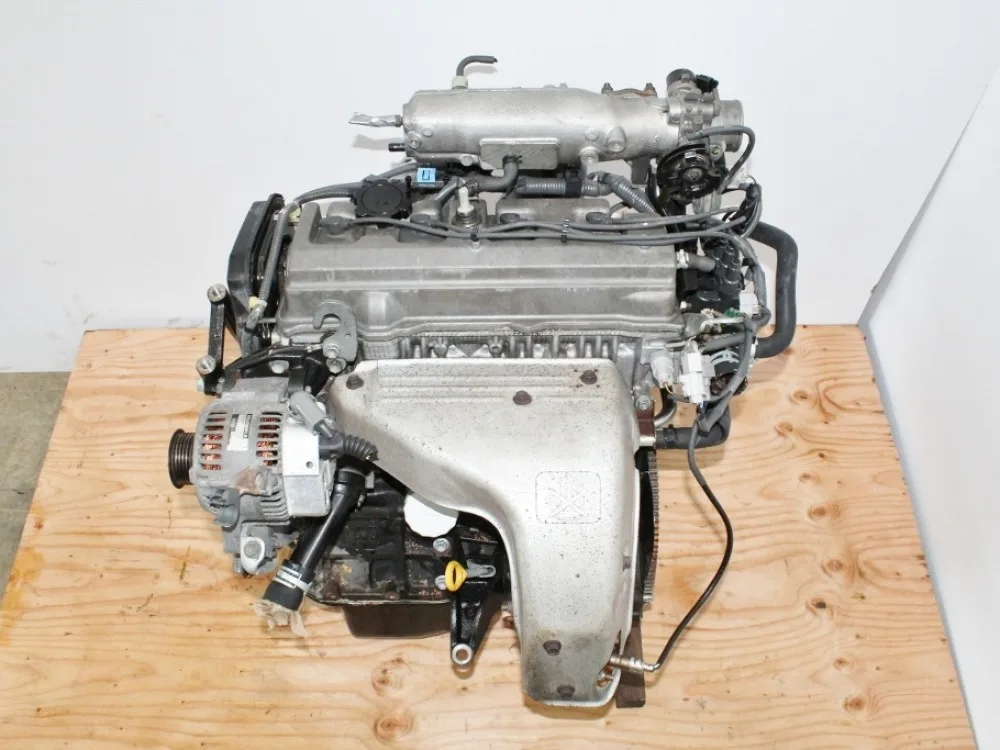
Image source: Web (Bing) / md-jdmmotors.com (Web image (fair-use with source credit))
Method 1: Look under the hood. Open the hood and look at the engine. The 2.2L four-cylinder has a plastic engine cover that says "16 Valve DOHC." The valve cover is rectangular and sits flat. The 3.0L V6 has a wider engine cover with "3.0L V6" or "24 Valve DOHC" printed on it.
The V6 takes up more space side to side.
Method 2: Check your VIN. The eighth character of your Vehicle Identification Number tells you the engine. If it's "S," you have the 2.2L four-cylinder. If it's "M," you have the 3.0L V6.
You can find the VIN on the driver's side dashboard near the windshield or on the door jamb sticker.
Method 3: Count the spark plug wires. The four-cylinder has four spark plug wires. The V6 has six. This is the easiest visual check if the engine cover is missing.
Method 4: Check the owner's manual. If you still have the original owner's manual, it lists the engine type and capacity on the specifications page. The manual also shows the recommended oil viscosity and API rating.
Once you know which engine you have, you can confidently buy the right amount of oil. Buy a 5-quart jug for either engine. The four-cylinder uses 4 quarts, so you'll have a quart left over for top-offs.
The V6 uses 4.5 quarts, so the 5-quart jug covers you completely.
Step-by-Step: How to Change the Oil on a 2000 Toyota Camry
Changing the oil on a 2000 Camry is straightforward. You can do it in about 30 minutes with basic tools. Here's the full process.
Tools and materials you'll need.
| Item | Specification |
|---|---|
| Engine oil | 5W-30, 5 quarts (buy one jug) |
| Oil filter | Toyota 90915-YZZD3 or equivalent |
| Drain pan | At least 6-quart capacity |
| Socket or wrench | 14mm for the drain plug |
| Oil filter wrench | Cap-style or strap wrench |
| Funnel | For clean pouring |
| Crush washer | 14mm, replace each time |
| Jack and stands | For safe access |
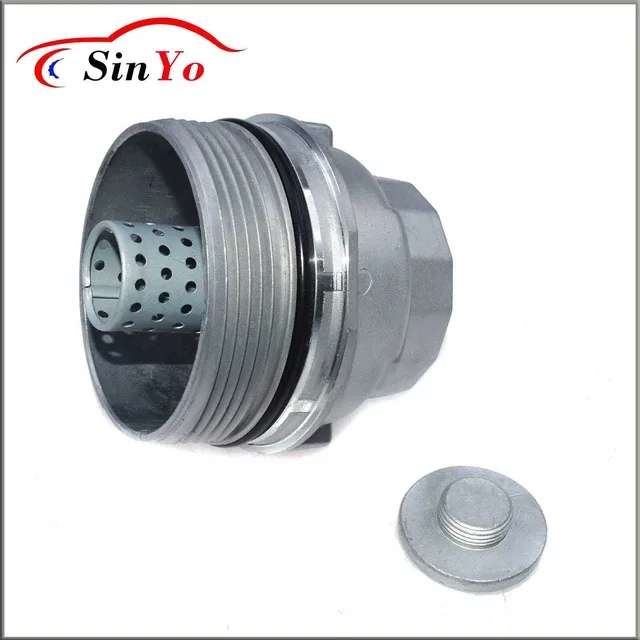
Image source: Web (Bing) / picclick.co.uk (Web image (fair-use with source credit))
Step 1: Warm up the engine. Run the engine for 2 to 3 minutes. Warm oil drains faster and carries more suspended contaminants. Don't let it get hot enough to burn you.
Warm to the touch is perfect.
Step 2: Park on level ground. Set the parking brake. If you need to jack up the front for clearance, use jack stands. Never work under a car supported only by a jack.
Step 3: Remove the oil fill cap. Twist off the cap on top of the valve cover. This lets air in and helps the oil drain faster.
Step 4: Drain the old oil. Place the drain pan under the oil pan. Use a 14mm socket or wrench to loosen the drain plug. Turn it counterclockwise.
Remove the plug by hand once it's loose. Let the oil drain for 5 to 10 minutes.
Step 5: Remove the old oil filter. The filter is on the side of the engine block. Use an oil filter wrench to loosen it. Turn it counterclockwise.
Let the oil from the filter drain into the pan.
Step 6: Install the new filter. Lubricate the rubber gasket on the new filter with a little fresh oil. Screw the filter on by hand until the gasket contacts the mounting surface. Tighten it another 3/4 to 1 full turn.
Don't overtighten.
Step 7: Reinstall the drain plug. Replace the old crush washer with a new one. Screw the drain plug in by hand, then torque it to 29 ft-lbs. If you don't have a torque wrench, snug it firmly and then give it about a quarter turn.
Step 8: Add new oil. Use a funnel to pour in the correct amount. For the 4-cylinder, add 4.0 quarts. For the V6, add 4.5 quarts.
Replace the oil fill cap.
Step 9: Check the level. Wait 2 to 3 minutes for the oil to settle in the pan. Pull out the dipstick, wipe it clean, insert it fully, and pull it out again. The oil level should be between the low and full marks.
Add more if needed.
Step 10: Start the engine. Run the engine for 30 seconds. Check underneath for leaks at the drain plug and filter. Turn off the engine and recheck the dipstick after a few minutes.
Top off if necessary.
Mistakes to Avoid: 5 Common Oil Change Errors
Even experienced DIYers make mistakes. Here are the most common ones.
1. Using the wrong oil capacity. This is the big one. The 4-cylinder takes 4.0 quarts.
The V6 takes 4.5 quarts. Don't guess. If you pour the V6 amount into a 4-cylinder, you're half a quart over.
That causes foaming and seal stress.
2. Overtightening the drain plug. The drain plug torque is only 29 ft-lbs. That's not very tight.
Many owners crank it down with a long ratchet and strip the threads in the oil pan. A stripped oil pan means a replacement or a repair. Use a torque wrench or just snug it firmly.
3. Forgetting the new crush washer. The crush washer seals the drain plug. Reusing the old one can cause a slow drip.
A new washer costs pennies. Replace it every time.
4. Using the wrong oil viscosity. The 2000 Camry needs 5W-30. Some owners use 10W-30 or even 20W-50 thinking thicker is better.
That's wrong for this engine. The wrong viscosity reduces fuel economy and can cause poor cold-start lubrication.
5. Not warming the engine before draining. Cold oil drains slowly. You'll leave a quart or more of old, dirty oil in the engine.
That contaminates your fresh oil and reduces the benefit of the change. A quick 2-minute warmup makes a real difference.
What a 2000 Camry Oil Change Costs (DIY vs Shop)
Changing your own oil saves real money. Here's the breakdown as of 2026.
| Option | Cost Range | What's Included |
|---|---|---|
| DIY (conventional) | $20 to $30 | 5 quarts of oil, filter, crush washer |
| DIY (synthetic) | $35 to $50 | 5 quarts of synthetic oil, filter, crush washer |
| Quick lube shop | $50 to $80 | Oil, filter, labor, disposal fee |
| Toyota dealership | $70 to $100 | OEM oil, genuine filter, shop supplies |
A DIY change saves you $30 to $50 per service. Over five years of regular changes, that adds up fast. The job takes about 30 minutes once you've done it a few times.
If you take it to a shop, make sure they use the correct oil capacity. Some shops default to a generic spec. Tell them it's a 2000 Camry and ask which engine they're servicing.
A good shop will confirm before they start.
Pro Advice: Choosing Synthetic vs Conventional Oil
The 2000 Camry was designed for conventional oil. Toyota recommended 5W-30 conventional oil from the factory. Synthetic oil is a modern upgrade that works perfectly fine in this engine.
Conventional oil is cheaper and meets the minimum requirements. It works well for engines with standard mileage and no leaks. Change it every 3,000 to 5,000 miles.
Synthetic oil offers better high-temperature stability and cold-flow properties. It resists breakdown longer. Many owners with high-mileage Camrys switch to synthetic for better protection.
You can extend the change interval to 5,000 to 7,500 miles.
High-mileage oil is a blend designed for engines over 75,000 miles. It contains additives that condition seals and reduce oil consumption. If your Camry has over 100,000 miles, high-mileage 5W-30 is a solid choice.
Synthetic oil is worth the extra cost if you drive in extreme temperatures. For a daily driver nearing 200,000 miles, quality conventional oil changed on schedule is perfectly adequate.
Oil Change Safety
Safety is not optional. Here are the rules.
Never work under a car supported only by a jack. Use jack stands rated for the vehicle's weight. The 2000 Camry weighs about 3,000 pounds.
A pair of 3-ton jack stands gives you a generous safety margin.
Let the engine cool slightly before draining. Hot oil can cause severe burns. Wait 2 to 3 minutes after warming up the engine.
The oil should be warm, not scalding.
Wear safety glasses. Oil can splash when you remove the drain plug or filter. A drop of hot oil in your eye is painful and dangerous.
Dispose of used oil properly. Used motor oil is hazardous waste. Never pour it down a drain, into the ground, or in the trash.
Most auto parts stores accept used oil for free. AutoZone, O'Reilly, and Advance Auto all have recycling programs.
Extending Engine Life: Recommended Oil Change Intervals
Toyota recommended a 3,000-mile oil change interval for the 2000 Camry with conventional oil. That's still a good baseline for a 25-year-old engine.
| Oil Type | Recommended Interval | Notes |
|---|---|---|
| Conventional | 3,000 to 5,000 miles | Change every 3 months for severe driving |
| Synthetic blend | 5,000 miles | Good middle ground |
| Full synthetic | 5,000 to 7,500 miles | Check oil level monthly |
| High-mileage | 3,000 to 5,000 miles | Follow conventional schedule |
Severe driving conditions include short trips under 5 miles, stop-and-go traffic, dusty roads, and extreme temperatures. Most daily driving counts as severe. If you drive mostly highway miles, you can stretch the interval.
Check the oil level at least once a month. A 2000 Camry with higher mileage may consume a small amount of oil between changes. Topping off between services keeps the level correct and protects the engine.
Quick Reference: Oil Capacity Card for Your 2000 Camry
Here's the information you need at a glance. Keep this handy for your next oil change.

Image source: Bing (Web (fair-use with source credit))
2000 Toyota Camry Oil Specifications
- 2.2L 4-cylinder (5S-FE): 4.0 quarts with filter
- 3.0L V6 (1MZ-FE): 4.5 quarts with filter
- Oil viscosity: 5W-30 (year-round)
- API rating: SJ or newer (SN, SP are fine)
- Oil filter: Toyota 90915-YZZD3 or equivalent
- Drain plug torque: 29 ft-lbs
- Drain plug size: 14mm
- Crush washer: 14mm, replace each change
Keep this card in your glove box or take a photo with your phone. You'll never have to guess again.
Frequently Asked Questions
How much oil does a 2000 Toyota Camry 4-cylinder take?
The 2.2L four-cylinder engine takes 4.0 US quarts of oil with a new oil filter. Without a filter change, it takes about 3.8 quarts. Always check the dipstick after filling to confirm the correct level.
How much oil does a 2000 Camry V6 take?
The 3.0L V6 engine takes 4.5 US quarts of oil with a new oil filter. Without a filter change, it takes about 4.3 quarts. Buy a 5-quart jug to have enough for a complete change with filter.
What type of oil does a 2000 Camry need?
Toyota recommends 5W-30 viscosity oil for the 2000 Camry. The oil should meet API service classification SJ or newer. You can use conventional, synthetic blend, or full synthetic oil.
High-mileage oil is a good choice for engines over 75,000 miles.
How often should I change the oil in my 2000 Camry?
Toyota recommended a 3,000-mile oil change interval for conventional oil. With synthetic oil, you can extend to 5,000 to 7,500 miles. Check the oil level monthly and top off as needed between changes.
Can I use synthetic oil in my 2000 Camry?
Yes, synthetic oil is safe and compatible with the 2000 Camry engine. It offers better protection at high temperatures and in cold starts. You can switch back and forth between conventional and synthetic without any issues.
What happens if I overfill my 2000 Camry with oil?
Overfilling causes the oil to foam, which reduces lubrication. You may notice rough idling, oil leaks, or a check engine light. Drain the excess oil immediately.
Running the engine with too much oil can damage seals and bearings over time.