
Image source: Web (Bing) / sanantoniojdmengines.com (Web image (fair-use with source credit))
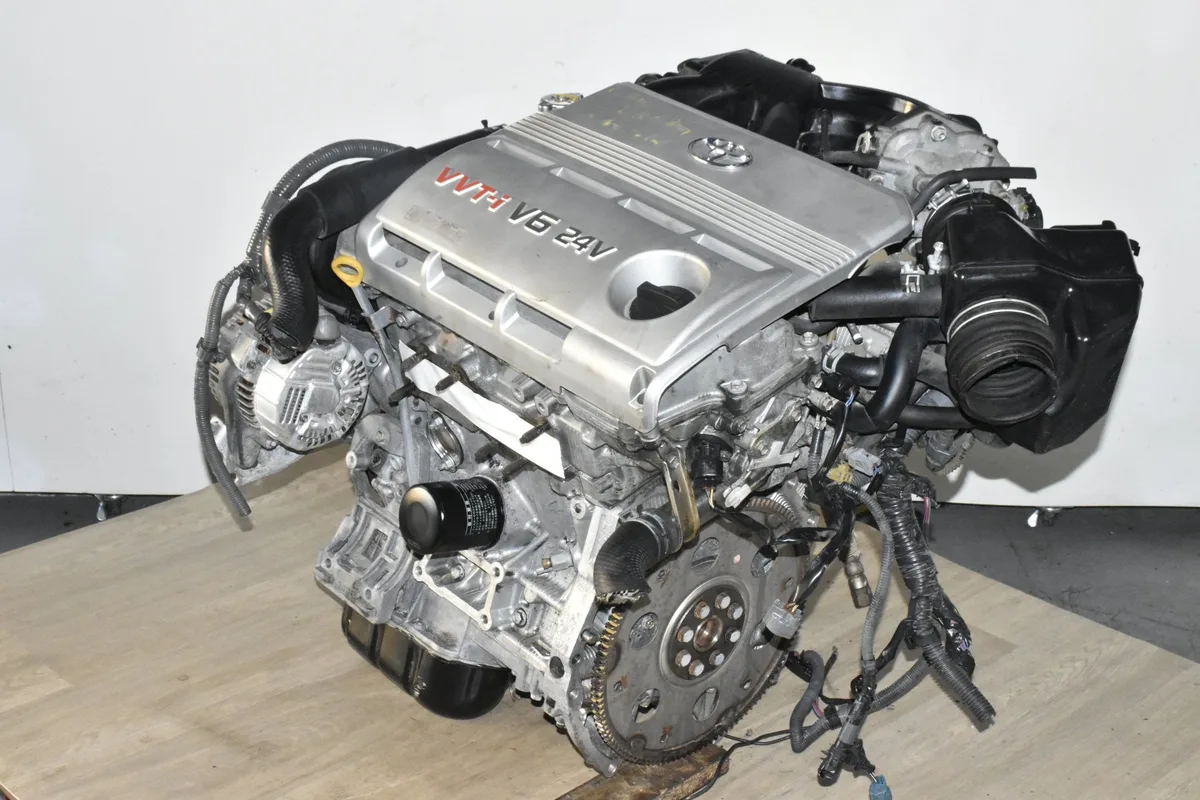
If you own a 2005 Toyota Sienna, you want the straight answer on oil. The 3.3L V6 engine needs 5W-30 motor oil with an API certification of SL or higher. You'll need about 5 quarts with a filter change.
Getting this wrong can lead to sludge buildup and expensive engine damage.
The 1MZ-FE engine in this van is a solid workhorse. But it's known for one weakness: oil sludge. Toyota even issued technical service bulletins about it.
Using the wrong oil or skipping changes clogs the narrow oil passages in the cylinder head. That leads to oil starvation, timing chain tensioner failure, or a seized engine. Let's cover exactly what you need and how to do it right.
Quick Answer
The 2005 Toyota Sienna takes 5W-30 motor oil. Use API certified SL, SM, or SN. Capacity is 4.9 quarts with a filter.
Full synthetic is better but conventional works. Change every 5,000 miles with synthetic. Never use 0W-20.
Check your dipstick regularly.
Why Getting the Right Oil Matters for the 1MZ-FE Engine
The 1MZ-FE is a 3.3-liter V6 Toyota built from the late 1990s through the mid-2000s. The 2005 model year is the last for this engine in the Sienna before Toyota switched to the 2GR-FE in 2006.
This engine needs the right viscosity to maintain oil pressure at startup and at operating temperature. Too thick and it won't flow in cold weather. Too thin and it won't protect bearing surfaces under load.
The 1MZ-FE doesn't have a turbo or direct injection. It's a simple port-injected V6. But most examples on the road have well over 150,000 miles.
That changes the oil discussion significantly.
Here's what happens with each mistake:
- Wrong viscosity, too thick: Hard starts in winter, reduced fuel economy, slower oil flow to the top end
- Wrong viscosity, too thin: Lower oil pressure at idle, increased bearing wear
- Non-certified oil: Lacks detergents and anti-wear additives. Sludge forms faster
The Core Specs: Viscosity, Capacity, and Certifications
These numbers come straight from the Toyota owner's manual. Do not deviate without understanding the trade-offs.
| Specification | Value |
|---|---|
| Recommended viscosity | SAE 5W-30 |
| Alternative viscosity | SAE 10W-30 (above 0°F only) |
| Capacity with filter | 4.9 US quarts (4.6 liters) |
| Capacity without filter | 4.5 US quarts (4.3 liters) |
| API certification | SL or higher (SM, SN, SP) |
| ILSAC standard | GF-4 or higher (GF-5, GF-6) |
| Oil filter torque | 18 ft-lbs (hand-tight plus 3/4 turn) |
| Drain plug torque | 29 ft-lbs (39 Nm) |
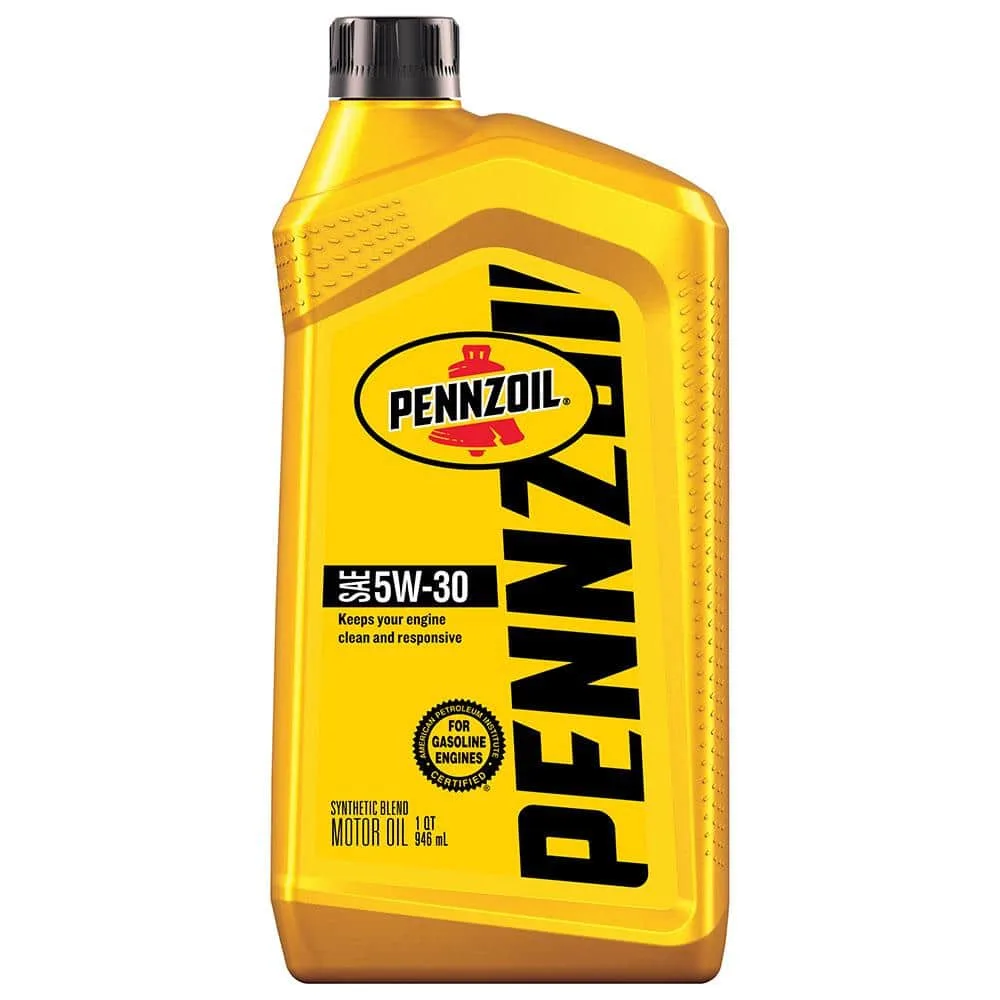
Image source: Web (Bing) / homedepot.com (Web image, fair-use with source credit)
The API certification is the donut-shaped symbol on the back of the bottle. If you see "API SL," "API SM," or "API SN," you're good. The ILSAC starburst indicates a quality oil that meets fuel economy standards.
One thing that trips people up: the oil filler cap on some 2005 Siennas says "5W-30" but later models switched to "0W-20." If your cap shows a different number, trust the owner's manual. Some caps were replaced with aftermarket parts over the years.
Conventional vs. Synthetic vs. High-Mileage
You can put any of the three in your Sienna and it will run. The question is which one protects best for your situation.
Conventional 5W-30 is the cheapest option. It meets the minimum spec. If you change oil every 3,000 miles and your Sienna is low-mileage, conventional is fine.
But conventional breaks down faster under heat and load. It also doesn't clean existing sludge as well as synthetic.
Full synthetic 5W-30 is the better choice for almost every 2005 Sienna on the road today. Synthetic resists thermal breakdown better. It flows better in cold weather.
It holds its viscosity longer. And it has higher detergent content to clean out sludge that may have accumulated over 20 years. The extra cost is about $10 to $15 per oil change.
High-mileage oil is a synthetic blend with seal conditioners added. These conditioners swell dried-out gaskets and reduce leaks. If your Sienna has over 100,000 miles and you're seeing small oil drips, high-mileage oil is a smart choice.
Here's a quick decision guide:
- Under 75,000 miles, no leaks: Full synthetic 5W-30. Change every 7,500 miles.
- 75,000 to 150,000 miles, minor leaks: High-mileage synthetic 5W-30. Change every 5,000 to 7,500 miles.
- Over 150,000 miles, noticeable oil consumption: High-mileage 5W-30. Change every 5,000 miles. Monitor oil level weekly.
- Over 150,000 miles, heavy leaks: High-mileage 5W-30 or 10W-30 in warm climates. Fix the leaks first.
Do not use 10W-30 if temperatures drop below freezing. The 1MZ-FE needs thin oil to reach the cam journals quickly at cold start.
Step-by-Step Oil Change Guide
Changing the oil in a 2005 Sienna takes about 30 minutes. You need basic hand tools, a jack and jack stands or ramps, and a drain pan.
What you need:
- 5 quarts of 5W-30 oil
- Oil filter (Toyota part 90915-YZZD3 or equivalent)
- 14mm socket for the drain plug
- Oil filter wrench (optional)
- Drain pan
- Torque wrench (recommended)
- Funnel
Image source: Web (Bing) / snapklik.com (Web image, fair-use with source credit)
Step 1: Warm up the engine for 2 to 3 minutes. Warm oil drains more completely.
Step 2: Park on level ground. Engage the parking brake. Chock the rear wheels.
Use jack stands under the frame rails. Never work under a car supported only by a jack.
Step 3: Remove the oil filler cap. This helps the oil drain faster.
Step 4: Place the drain pan under the oil pan. The drain plug is on the passenger side, facing the rear. Use a 14mm socket.
Turn counterclockwise. Let it drain for 5 to 10 minutes.
Step 5: Replace the drain plug washer. It's a crush washer, usually copper or aluminum. Replace it every time.
Torque to 29 ft-lbs. If you don't have a torque wrench, snug it up and give it a quarter turn. Do not overtighten.
Step 6: Remove the old oil filter. It's on the front of the engine near the radiator. Use an oil filter wrench if it's tight.
Wipe the mounting surface clean.
Step 7: Lubricate the rubber gasket on the new filter with fresh oil. Screw it on by hand until the gasket contacts the mounting surface. Tighten another three-quarters of a turn.
Hand-tight plus 3/4 turn is the spec.
Step 8: Add about 4.5 quarts of oil. Check the dipstick. Add more until the level is between the low and full marks.
It usually takes about 4.9 quarts total.
Step 9: Start the engine. Let it run for 30 seconds. Check for leaks at the drain plug and oil filter.
Shut off the engine. Wait a minute. Check the dipstick again and top off.
Step 10: Reset the oil maintenance light if equipped. Turn the key to the ON position without starting the engine. Press the trip reset button until the light flashes and turns off.
Proper disposal of used oil is required under EPA regulations. Most auto parts stores accept used oil for free. Never dump it down the drain or on the ground.
Common Mistakes That Can Damage Your Engine
Using the wrong viscosity. The biggest mistake is putting in 0W-20 because that's what newer Siennas use. Your 2005 is not a 2006. The 2GR-FE engine takes 0W-20.
Your 1MZ-FE takes 5W-30. Using 0W-20 results in lower oil pressure and accelerated bearing wear.
Overfilling the oil. More oil is not better. Excess oil gets whipped into foam by the crankshaft. Foam doesn't lubricate.
Fill to the full mark, not above it.
Using a cheap oil filter. The filter has a bypass valve that opens when the filter is clogged or oil is cold. If the bypass opens at the wrong pressure, unfiltered oil circulates through the engine. Stick with a quality filter.
Skipping the crush washer. The drain plug washer is a one-time-use item. If you reuse it, it can leak. Replace it every time.
Not checking the oil between changes. The 1MZ-FE can consume oil at higher mileages. Check the dipstick every time you fill up with gas. It takes 30 seconds.
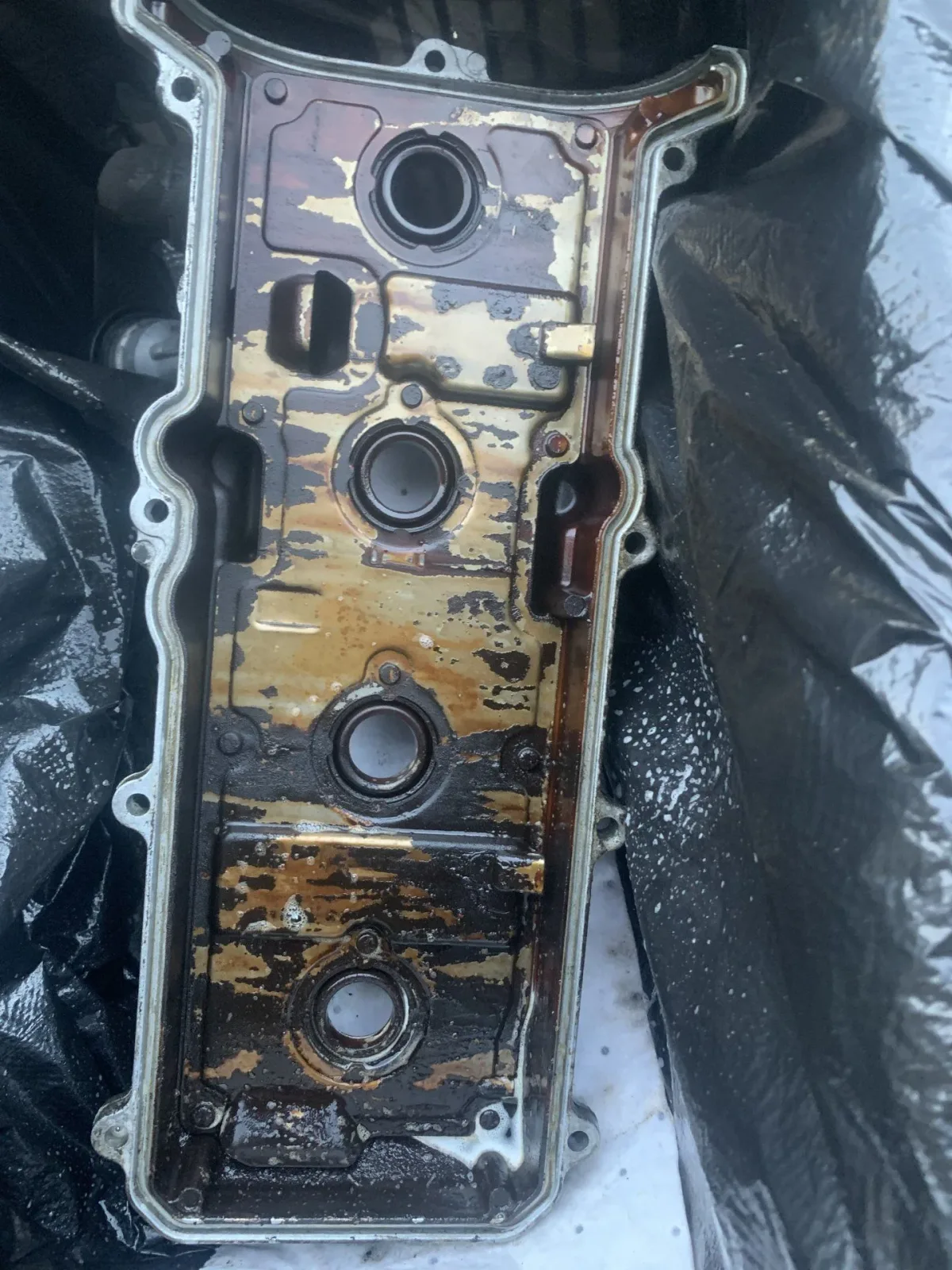
Image source: Web (Bing) / forum.ih8mud.com (Web image, fair-use with source credit)
Ignoring the sludge problem. The picture above shows a valve cover from a 1MZ-FE that went 10,000 miles between changes with conventional oil. The sludge is thick enough to block oil return passages. Prevention is the only reliable answer.
When to Stick With 5W-30 and When You Can Deviate
Stick with 5W-30 if: you live in a climate with cold winters, you drive the van daily, and you're not burning oil. This covers 90 percent of Sienna owners.
Consider 10W-30 if: you live in a hot climate above 40°F year-round and your engine has over 200,000 miles. The slightly thicker oil can help maintain oil pressure in a worn engine. But do not use 10W-30 if you ever see freezing temperatures.
Consider 0W-30 if: you live in an extremely cold climate below -20°F. 0W-30 flows better at very low temperatures. The 30 part means it still provides the same protection at operating temperature.
Do not use 10W-40 or 20W-50. These are too thick for the 1MZ-FE. They cause sluggish oil flow at startup and reduced fuel economy.
What About the Oil Filter?
The 2005 Sienna uses a spin-on filter. The Toyota OEM part number is 90915-YZZD3. It's widely available and inexpensive.
Quality aftermarket options include:
- Wix 51348
- Purolator PL9688
- Mobil 1 M1-208
- Fram PH3387A
The thread size is M20 x 1.5. The gasket diameter is about 65mm.
Tighten it hand-tight plus three-quarters of a turn. Overtightening deforms the gasket and causes leaks. Undertightening lets it vibrate loose on the highway.
How Often Should You Change the Oil?
Conventional oil: Change every 3,000 to 4,000 miles. Stick to 3,000 if you do mostly short trips under 10 miles.
Synthetic blend: Change every 5,000 miles.
Full synthetic: Change every 5,000 to 7,500 miles. Highway driving lets you stretch to 7,500. Stop-and-go or towing means stick to 5,000.
High-mileage synthetic: Change every 5,000 miles. The seal conditioners deplete over time.
The 2005 Sienna has no oil life monitor. Track it yourself. Write the mileage on the oil filter with a permanent marker.
Signs Your Sienna Needs an Oil Change
Low oil pressure warning light. Pull over immediately. Shut off the engine. Check the oil level.
If it's full but the light stays on, do not drive it.
Ticking noise from the engine. The 1MZ-FE has hydraulic valve lifters. They need oil pressure to operate quietly. A fresh oil change often fixes ticking.
Dark, gritty oil on the dipstick. New oil is amber. Used oil turns dark brown. That's normal.
But if it looks black and feels gritty, it's past time for a change.
Burning oil smell. Oil dripping onto the exhaust manifold creates that smell. Check the valve cover gaskets and oil pan gasket. These are common leak points.
Blue exhaust smoke. Oil burning in the combustion chamber means worn valve stem seals or piston rings. High-mileage oil can slow the consumption but won't fix it.
What to Do If You're Already Using the Wrong Oil
If you've been running 0W-20 or 10W-40, don't panic. The engine is tough. But correct it as soon as possible.
- Do an oil change immediately. Use the correct 5W-30 viscosity.
- Use a full synthetic or high-mileage synthetic. The extra detergents will clean deposits.
- Check the oil level every week for the next month. The fresh oil may find weak spots.
- Listen for new noises. A worn bearing masked by thicker oil may reveal itself.
- Consider a compression test if you're worried about ring wear.
Frequently Asked Questions
Can I use 0W-20 in my 2005 Toyota Sienna?
No. The 2005 Sienna requires 5W-30. 0W-20 is too thin and will cause lower oil pressure, increased bearing wear, and potential engine damage.
How much oil does a 2005 Toyota Sienna take?
With a filter change, it takes 4.9 US quarts. Without a filter change, it takes 4.5 quarts. Always check the dipstick after adding.
What happens if I use the wrong oil?
Using the wrong viscosity can lead to sludge buildup, reduced oil pressure, accelerated engine wear, and in severe cases, engine failure.
Do I need synthetic oil?
No, synthetic is not required. Conventional 5W-30 meeting API SL or higher meets the spec. However, synthetic provides better protection against sludge in a high-mileage engine.
How often should I change the oil?
With conventional oil, change every 3,000 to 4,000 miles. With synthetic, every 5,000 to 7,500 miles. Track your mileage manually since the 2005 Sienna has no oil life monitor.
Why is my Sienna burning oil?
Common causes include worn valve stem seals, worn piston rings, or sludge buildup. High-mileage oil with seal conditioners can slow consumption. If it's burning more than a quart every 1,000 miles, get a mechanical inspection.
Final Verdict
Use a full synthetic 5W-30 oil that meets API SN or SP certification. If your engine has over 100,000 miles, switch to a high-mileage synthetic 5W-30. The extra detergents and seal conditioners are worth the small premium.
Change the oil every 5,000 miles. Use a quality filter like the Toyota OEM 90915-YZZD3 or a Wix 51348. Check the dipstick at least once a month.
The 1MZ-FE engine is a reliable design, but it needs consistent care to avoid sludge and premature wear.
Your 2005 Sienna is a 20-year-old vehicle. It has earned the right to good maintenance. Give it the right oil, and it will keep running for another 100,000 miles.