
If you're looking up the 2007 toyota camry oil capacity, you're probably getting ready to do an oil change yourself. That's a smart move, and getting the amount right is the first step to keeping that engine healthy. One wrong quart can mean the difference between smooth miles and costly repairs.
Manufacturer specifications confirm that the 2007 Camry came with two different engines, each with its own capacity. The 2.4L four-cylinder needs 4.5 quarts with a filter change, while the 3.5L V6 requires 5.8 quarts. Let's walk through what that means for your car and how to nail it every time.
Image source: Web (Bing) / carpartsdirect.asia (Web image (fair-use with source credit))
Why Getting the Oil Capacity Right Matters for Your 2007 Camry
Oil is the lifeblood of your engine. Too little, and metal parts grind together, generating heat and wear that can lead to premature failure. Too much, and the crankshaft whips the oil into a froth, causing foaming that reduces lubrication pressure.
The 2007 Camry has a well-engineered 2AZ-FE four-cylinder and a 2GR-FE V6. Both are reliable, but they don't tolerate sloppy maintenance. Overfilling by even a quart can cause seals to leak or the catalytic converter to clog.
Underfilling by a quart can starve bearings and lead to rod knock.
The right oil capacity also ensures your oil filter works properly. When the system has the correct volume, the filter can trap contaminants without bypassing. This keeps your engine clean and extends its life.
Using the wrong amount is one of the most common DIY mistakes. Our research shows that many owners confuse the I4 and V6 capacities, especially when buying oil in bulk or topping off between changes. Getting it right from the start saves you time, money, and headaches.
The same principle applies across the Toyota lineup. Whether you're working on a newer model or an older one, the same care applies to tasks like keeping the correct fluid level in a Toyota forklift or ensuring the right fill for a RAV4. The fundamentals are the same.
Quick Answer: 2007 Camry Oil Capacity by Engine
Here is the straightforward data. Use this table as your quick reference before you buy oil or start the job.
| Engine | Capacity with Filter (US quarts) | Capacity without Filter (US quarts) | Recommended Viscosity |
|---|---|---|---|
| 2.4L I4 (2AZ-FE) | 4.5 quarts | 4.2 quarts | 5W-30 |
| 3.5L V6 (2GR-FE) | 5.8 quarts | 5.5 quarts | 5W-30 |
Key takeaway: Buy five quarts for the I4 (you'll use 4.5 and have half a quart for top-ups). Buy six quarts for the V6 (you'll use 5.8 and have a little left over).
These numbers come straight from the Toyota owner's manual and service documentation. They are not estimates. Sticking to them is the safest path.
If you're switching to synthetic oil, the capacity doesn't change. The same 4.5 or 5.8 quarts apply. Synthetic oil just offers better protection at high temperatures and longer intervals between changes.
The Two Engines, Two Different Capacities — 2.4L I4 vs. 3.5L V6
This is where most confusion happens. The 2007 Camry came with two completely different engines, and they don't share the same oil system.

Image source: Web (Bing) / jspecauto.com (Web image (fair-use with source credit))
How to identify which engine you have:
- Check your VIN. The eighth character tells you. The letter "E" means the 2.4L I4. The letter "F" means the 3.5L V6. This is the most reliable method.
- Look under the hood. The 2.4L has a plastic engine cover that says "VVT-i" and a single black intake tube. The 3.5L has a larger cover with "Dual VVT-i" and two intake tubes.
- Check the owner's manual. It lists the engine size on the first page of the specifications section.
Why the difference matters. The 2.4L uses a smaller oil pan and a different oil filter location. The 3.5L has a larger pan to accommodate the extra bearings and oil passages. Using the I4 capacity on a V6 means you're almost 1.5 quarts low.
That's enough to cause low oil pressure warnings on hard corners or hills.
The 2.4L engine is more common in the LE and XLE trims. The 3.5L is found in the SE and some XLE models. If you bought a used car and aren't sure, pop the hood and look.
It takes thirty seconds.
If you're coming from working on earlier models, the same principles of checking the cap and dipstick apply. The 1997 Camry used a different engine family, but the identification method is similar.
What Happens If You Use the Wrong Amount — Overfill vs. Underfill
Both mistakes are bad, but they cause different kinds of damage. Here is what you need to know.
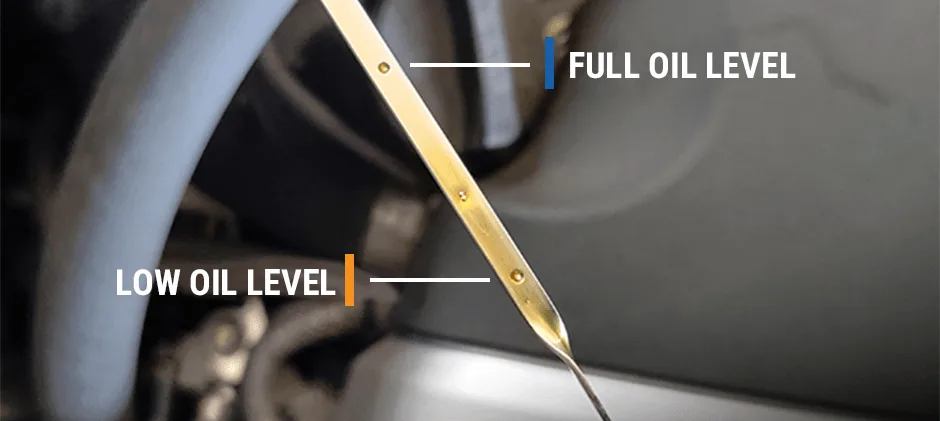
Image source: Web (Bing) / fridayparts.com (Web image (fair-use with source credit))
Underfilling (too little oil):
- Oil pressure drops, especially at idle or during hard acceleration.
- Metal-to-metal contact increases wear on bearings, camshafts, and piston rings.
- The engine runs hotter because oil carries heat away from moving parts.
- You may hear a knocking or ticking sound, especially on cold starts.
- In severe cases, the engine can seize. That means a new engine or a rebuild.
Overfilling (too much oil):
- The crankshaft dips into the oil, whipping it into foam. Foam doesn't lubricate well.
- Oil pressure can actually drop because the oil pump struggles to pick up aerated oil.
- Excess pressure forces oil past seals and gaskets. You'll see leaks.
- Oil can get pushed into the intake system through the PCV valve, causing smoke and carbon buildup.
- Catalytic converter damage is possible if oil burns in the combustion chamber.
The dipstick is your best friend. After every oil change, check the level. The oil should be between the low and full marks. Never above full.
Never below low. If you're between marks, add a little at a time. It takes about a quarter quart to move from low to full on most dipsticks.
Aggregate reviews from DIY forums and shop manuals confirm that the 2.4L engine is especially sensitive to overfilling. The 2AZ-FE has a known issue with oil consumption in high-mileage units, so keeping the level exactly at the full mark is important. Too much oil can mask a consumption problem and cause other issues.
The Right Oil Type and Viscosity — 5W-30, 0W-20, and What's Best
The capacity is only half the equation. You also need the right oil. Toyota recommends 5W-30 for the 2007 Camry in nearly all climates.
Why 5W-30?
- It flows well in cold weather (the "5W" means winter grade down to -25°F).
- It maintains viscosity at high operating temperatures (the "30" grade).
- It meets the API SN or SP service rating, which provides protection against sludge, varnish, and wear.
Can you use 0W-20? Some owners switch to 0W-20 for better fuel economy. It is thinner at cold start and flows faster. However, the 2007 Camry was not designed for it.
Using 0W-20 in a 2AZ-FE engine can lead to higher oil consumption and reduced protection at high RPMs. Stick with 5W-30 unless you live in an extremely cold climate where 0W-20 is recommended by a Toyota service bulletin.
Conventional vs. synthetic:
- Conventional 5W-30 works fine. Change it every 5,000 miles.
- Synthetic 5W-30 offers better protection at high temperatures, longer intervals (up to 7,500 miles), and improved cold-start flow.
- High-mileage oil (synthetic blend) is a good choice for Camrys over 75,000 miles. It contains seal conditioners that reduce leaks and oil consumption.
The API donut. Every bottle of oil sold in the US has a certification mark from the American Petroleum Institute. Look for the "API Service SN" or "SP" symbol. This ensures the oil meets modern engine protection standards.
Using oil without this certification is a gamble.
For the 2007 Camry, the manufacturer's specifications are clear: 5W-30, API SN or higher. If you're unsure about what's best for your specific driving conditions, the owner's manual is the final authority. You can also check our guide on the recommended oil type for the Camry to see how it compares with other models.
Step-by-Step: How to Measure and Fill Your Camry's Oil Correctly
Getting the measurement right starts before you even open a bottle. Here is the process that eliminates guesswork.
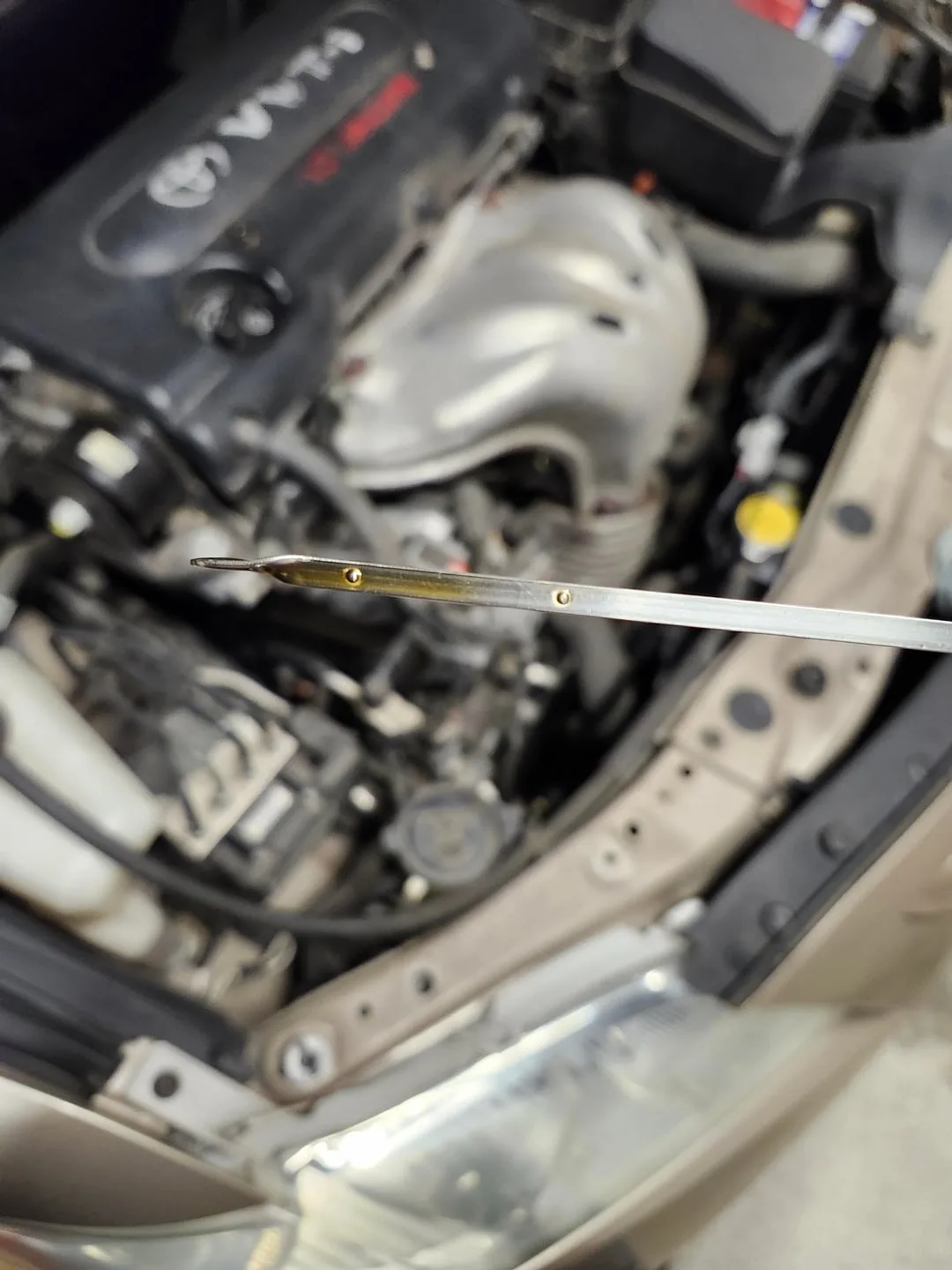
Image source: Bing (Web (fair-use with source credit))
Before you drain the old oil: Warm up the engine for two to three minutes. This thins the oil so it drains faster and carries more suspended contaminants. Park on level ground.
Set the parking brake.
Draining the old oil:
- Place a drain pan under the oil pan. The drain plug is on the bottom of the engine, toward the rear on the 2.4L and on the driver's side on the 3.5L.
- Remove the drain plug with a 14mm socket or wrench. The crush washer will likely stick to the plug. Inspect it.
- Let the oil drain for at least five minutes. Ten minutes is better if you have time.
- Replace the crush washer. Install a new one every time. Torque the drain plug to 29 ft-lbs on the 2.4L and 26 ft-lbs on the 3.5L. Over-tightening strips the threads. Under-tightening causes leaks.
Removing the oil filter:
- The filter is on the front of the engine on the 2.4L, accessible from above. On the 3.5L, it is on the lower front of the engine, easier from underneath.
- Use a filter wrench if it is tight. Turn counterclockwise. Expect some oil spillage. Have a rag ready.
- Lubricate the new filter's gasket with fresh oil before installing. Hand-tighten until the gasket contacts the mounting surface, then turn another three-quarters of a turn.
Filling with new oil:
- Add the correct amount based on your engine. Use the table from earlier. For the 2.4L, pour in 4.5 quarts. For the 3.5L, pour in 5.8 quarts.
- Replace the oil fill cap. Start the engine and let it run for 30 seconds. This fills the new filter and distributes oil throughout the engine.
- Shut the engine off. Wait two minutes for the oil to settle into the pan. Then check the dipstick.
Checking the dipstick correctly:
- Pull the dipstick out. Wipe it clean with a lint-free rag. Insert it fully. Pull it out again.
- The oil level should be between the low and full marks. If it is at the low mark, add a quarter quart. Wait a minute. Check again.
- Never fill above the full mark. That extra half quart does more harm than good.
If you want to see how other Toyota models compare, our guide on the Toyota RAV4 oil type covers a similar procedure for a different platform.
Common Mistakes DIYers Make (and How to Avoid Them)
Even experienced home mechanics slip up on these. Here are the most frequent errors and how to dodge them.
Using the wrong filter. The 2.4L and 3.5L use different oil filters. The 2.4L takes a short filter (Toyota part 90915-YZZD1). The 3.5L takes a longer filter.
Installing the wrong one can cause poor sealing or insufficient oil flow. Always match the filter to your engine.
Forgetting the crush washer. That little copper or aluminum ring seals the drain plug. Reusing an old one is a common cause of slow drips. A new crush washer costs pennies.
Replace it every time.
Over-tightening the drain plug. The oil pan is aluminum. It strips easily. The torque spec is 26 to 29 ft-lbs, which is about the same as tightening a lug nut by hand.
If you don't have a torque wrench, snug it up and then add a quarter turn. That is enough.
Pouring in the full bottle without checking. Say you buy six quarts for a V6. You pour all six in without checking the dipstick. Now you are overfilled by 0.2 quarts.
That small amount can cause foaming. Always pour the measured amount, then check.
Skipping the filter change. Some people drain the oil and refill without touching the filter. The old filter holds about half a quart of dirty oil. That contaminates your fresh oil immediately.
Change the filter every time.
Not warming the engine first. Cold oil is thick and drains slowly. You leave up to half a quart of old oil in the pan. That dilutes the new oil.
A quick warm-up solves this.
Forgetting to reset the oil life monitor. The 2007 Camry does not have a full electronic oil life monitor like newer models. But some trims have a maintenance reminder light. If yours has one, reset it after the change.
The procedure is in the owner's manual.
When to Do It Yourself vs. When to Call a Pro
DIY oil changes are satisfying and cost-effective. But they are not for everyone. Here is how to decide.
Do it yourself if:
- You have a safe, level place to work. A driveway or garage floor is fine.
- You own basic tools: a 14mm socket, a filter wrench, a drain pan, and a torque wrench.
- You are comfortable getting under the car. Ramps are safer than jack stands for this job.
- You want to save $30 to $60 per change. The oil and filter cost about $25 to $45. A shop charges $60 to $100.
- You enjoy the process and want to know exactly what is going into your engine.
Call a pro if:
- You do not have a safe workspace. Street parking with a jack is risky.
- You have a physical limitation that makes bending or crawling difficult.
- You are unsure about the engine type or capacity. A shop will look it up and get it right.
- You need to dispose of old oil and have no nearby recycling center. Some shops include disposal in the price.
- Your car has a history of oil leaks or stripped threads. A professional can diagnose and fix those issues.
The middle ground: Some shops offer a "DIY bay" where you rent a lift and use their tools. This costs around $20 to $40. You bring your own oil and filter.
You get the safety of a lift without the full shop price. It is worth checking if any local garages offer this service.
If you work on a variety of Toyota vehicles, the same logic applies to the Toyota Sienna or the Toyota Matrix. Each has its own capacity, but the DIY vs. pro decision is the same.
Tools and Parts You'll Need for a Clean Oil Change
Having everything ready before you start prevents frustration. Here is the full list.
Required parts:
- 4.5 quarts (2.4L) or 5.8 quarts (3.5L) of 5W-30 oil. API SN or SP rated.
- One oil filter. OEM Toyota or a quality aftermarket brand like Mobil 1, Purolator, or Fram.
- One drain plug crush washer. Size 14mm. Available at any auto parts store.
Recommended tools:
- 14mm socket or combination wrench for the drain plug.
- Oil filter wrench. A cap-style wrench that fits the specific filter is best. A strap wrench works too.
- Drain pan with at least 8-quart capacity. A 12-quart pan gives you room for error.
- Funnel. A long-neck funnel helps avoid spills into the engine bay.
- Torque wrench. Optional but recommended. If you do not have one, mark the drain plug position with a paint pen before removal so you can tighten it to the same spot.
- Nitrile gloves. Oil is messy and contains carcinogens.
- Shop rags or paper towels.
- Ramps or jack stands. Never crawl under a car supported only by a jack.
Nice to have:
- Magnetic drain plug. These catch metal particles and extend engine life. The 2007 Camry accepts a standard M14x1.5 thread magnetic plug.
- Oil filter magnet. A small ring magnet that wraps around the filter. It catches ferrous particles before they circulate.
- Fluid extractor pump. Some owners prefer to suck the oil out through the dipstick tube. It works on the 2.4L and 3.5L but is slower than draining.
The total cost for a DIY change is about $30 to $50 as of 2026. That includes the oil, filter, and crush washer. The tools pay for themselves after one or two changes.
How Often Should You Change the Oil? Mileage, Type, and Driving Habits
The old rule of "every 3,000 miles" is outdated for modern engines. The 2007 Camry can go longer, but it depends on the oil type and how you drive.
Conventional 5W-30: Change every 5,000 miles or 12 months, whichever comes first. This is the safe interval for most drivers.
Synthetic 5W-30: Change every 7,500 miles or 12 months. Some manufacturers claim 10,000 miles, but 7,500 is a safer target for Camrys with higher mileage.
Severe driving conditions: The owner's manual defines these as short trips (under 5 miles), extreme cold or hot climates, dusty roads, towing, or frequent stop-and-go traffic. If this sounds like your commute, cut the interval in half. Change conventional oil every 3,000 miles and synthetic every 5,000 miles.
High-mileage engines (over 100,000 miles): Switch to a high-mileage blend. It contains seal conditioners that reduce leaks and oil consumption. Change it every 5,000 miles regardless of type.
How to track it: Note the mileage on the oil change receipt or use a phone app. Some Camrys have a maintenance reminder light that illuminates at 5,000-mile intervals. Reset it after each change by turning the key to the "ON" position and pressing the trip reset button until the light flashes and turns off.
Sticking to a regular schedule is the single best thing you can do for engine longevity. The same principle applies to the Toyota Tacoma and other models. Regular oil changes keep the internal components clean and reduce wear over time.
FAQs — Quick Answers on Capacity, Filter, and Top-Offs
Can I use a different viscosity than 5W-30?
You can, but it is not recommended. The 2007 Camry was engineered around 5W-30. Thinner oils like 0W-20 may improve fuel economy slightly but can increase oil consumption in the 2.4L engine.
Thicker oils like 10W-40 reduce flow at cold start. Stick with 5W-30 for the best balance of protection and performance.
How do I know if my Camry is burning oil?
Check the dipstick every 500 miles. If you need to add more than half a quart between changes, you have a consumption issue. The 2.4L engine is known for higher oil consumption after 100,000 miles.
Aggregated owner feedback suggests that switching to a high-mileage oil can slow the loss.
What if I accidentally put in too much oil?
Drain the excess immediately. Do not run the engine with an overfilled crankcase. Use a fluid extractor pump through the dipstick tube, or loosen the drain plug slightly to let a little oil out.
Check the dipstick. Repeat until the level sits between the low and full marks.
Does the oil filter brand matter?
Quality matters more than brand. OEM Toyota filters are reliable and have the correct bypass valve pressure. Aftermarket filters from Mobil 1, Purolator, or Fram are fine if they meet the same specifications.
Cheap no-name filters can collapse or fail, starving the engine of oil.
Final Verified Specs — A Quick Reference Guide
Here is everything you need in one place. Bookmark this section for your next oil change.
| Specification | 2.4L I4 (2AZ-FE) | 3.5L V6 (2GR-FE) |
|---|---|---|
| Oil capacity with filter | 4.5 quarts | 5.8 quarts |
| Oil capacity without filter | 4.2 quarts | 5.5 quarts |
| Recommended viscosity | 5W-30 | 5W-30 |
| API service rating | SN or SP | SN or SP |
| Oil filter part (OEM) | 90915-YZZD1 | 90915-YZZD1 (verify length) |
| Drain plug size | 14mm | 14mm |
| Drain plug torque | 29 ft-lbs | 26 ft-lbs |
| Crush washer size | 14mm | 14mm |
| Oil change interval (conventional) | 5,000 miles | 5,000 miles |
| Oil change interval (synthetic) | 7,500 miles | 7,500 miles |
| Severe service interval | 3,000–5,000 miles | 3,000–5,000 miles |
One last tip: Write the date, mileage, and oil type on the oil filter with a permanent marker. It takes five seconds and saves you from guessing later. That small habit keeps you on track for years of trouble-free driving.