
If you're about to change the oil on your 2007 Toyota Corolla, the single most important number you need is the 2007 toyota corolla oil capacity. Getting it wrong by even half a quart can mean the difference between a smooth-running engine and expensive repairs.
Manufacturer specifications indicate that the 1.8L 1ZZ-FE engine requires exactly 4.5 US quarts (4.3 liters) of oil when you replace the filter. That's not a suggestion. It's the engineered requirement for proper lubrication, cooling, and hydraulic pressure inside your engine.
Let's dig into why that number matters and how to get it right every time.
Why Getting the Oil Capacity Right Matters
Engine oil capacity isn't a loose guideline. It's a carefully calculated volume that engineers determined during thousands of hours of testing. The 4.5-quart figure for the 1ZZ-FE engine accounts for the oil pan volume, the filter housing, the oil passages, and thermal expansion at operating temperature.
Running low on oil means the oil pump can suck air during hard cornering or steep hills. That leads to metal-on-metal contact inside the bearings. The result is worn rod bearings, scored cylinder walls, and eventually a knock that only gets worse.
Overfilling is just as bad. Too much oil causes the crankshaft to whip the extra oil into foam inside the crankcase. Foam doesn't lubricate. It also puts extra pressure on the rear main seal and valve cover gaskets, leading to leaks.
Overfilling is one of the most common DIY mistakes because people figure "a little extra can't hurt." It can.
The 1ZZ-FE engine is known for being reliable when maintained properly. Many have passed 250,000 miles without major work. But that reliability depends on getting the basics right, and oil capacity is the most basic of them all.
If you're maintaining other Toyota models, the oil specs for the RAV4 of the same generation show a similar approach to capacity engineering.
Quick Answer: 2007 Corolla Oil Capacity at a Glance
Here's what you need to know before you buy oil or pop the filler cap.
| Measurement | Value |
|---|---|
| Total capacity with filter change | 4.5 US quarts (4.3 liters) |
| Capacity without filter change | Roughly 4.2 quarts |
| Recommended viscosity | SAE 5W-30 |
| API service rating | SL or SM (or higher) |
| ILSAC certification | GF-4 or GF-5 |
| Drain plug torque | 29 ft-lbs |
| Oil filter torque | 18 ft-lbs (hand-tight plus 3/4 turn) |
Important note: always measure by the dipstick after filling, not just by the bottle count. Even a perfectly measured 4.5 quarts can land slightly high or low depending on how much old oil drained out and whether the filter is fully primed.
If you're maintaining multiple vehicles, the specs for the 1997 Camry's engine are a good point of comparison for how Toyota's 1.8L and 2.2L engines differed in their oil requirements.
The Engine: 1ZZ-FE and What It Needs
The 2007 Corolla uses the 1ZZ-FE engine, a 1.8-liter four-cylinder that Toyota produced from 1998 through 2010. It's an all-aluminum engine with a cast-iron cylinder liner, dual overhead cams, and VVT-i on the intake side.
Why the 1ZZ-FE matters for oil capacity. This engine has a specific oil pan design with baffles that prevent oil starvation during acceleration. The 4.5-quart capacity is tuned to work with those baffles. Less oil means the baffles don't have enough fluid to work with.
More oil means the crankshaft dips into the oil at rest, causing drag and foaming.
The 1ZZ-FE is also known for oil consumption as it ages. Toyota issued a technical service bulletin (TSB 0061-09) for certain 1ZZ-FE engines that burn oil due to piston ring design. If your 2007 Corolla has over 100,000 miles, you might notice it using a quart between changes.
That's normal for this engine. But it means you should check the dipstick more often. Every other fuel fill-up is a good habit.
The oil pump is a positive-displacement trochoid design. It moves a specific volume of oil per revolution. That volume is engineered around the 4.5-quart sump.
Drop the level significantly, and the pump can cavitate, pulling air bubbles into the oil stream. Those bubbles collapse under pressure and can pit bearing surfaces over time.
A quick note on filter compatibility. The 1ZZ-FE uses a spin-on oil filter with a 3/4-16 thread. The OEM part number is 04152-YZZA1, but many aftermarket filters fit perfectly. The key is to use a filter that meets or exceeds the OEM bypass valve pressure spec, typically around 11-14 psi.
Cheap filters with weak bypass valves can leave your engine unprotected during cold starts. The complete guide to the Tacoma's oil needs covers similar engineering logic for Toyota's other models.
Step-by-Step: How to Change the Oil on a 2007 Corolla
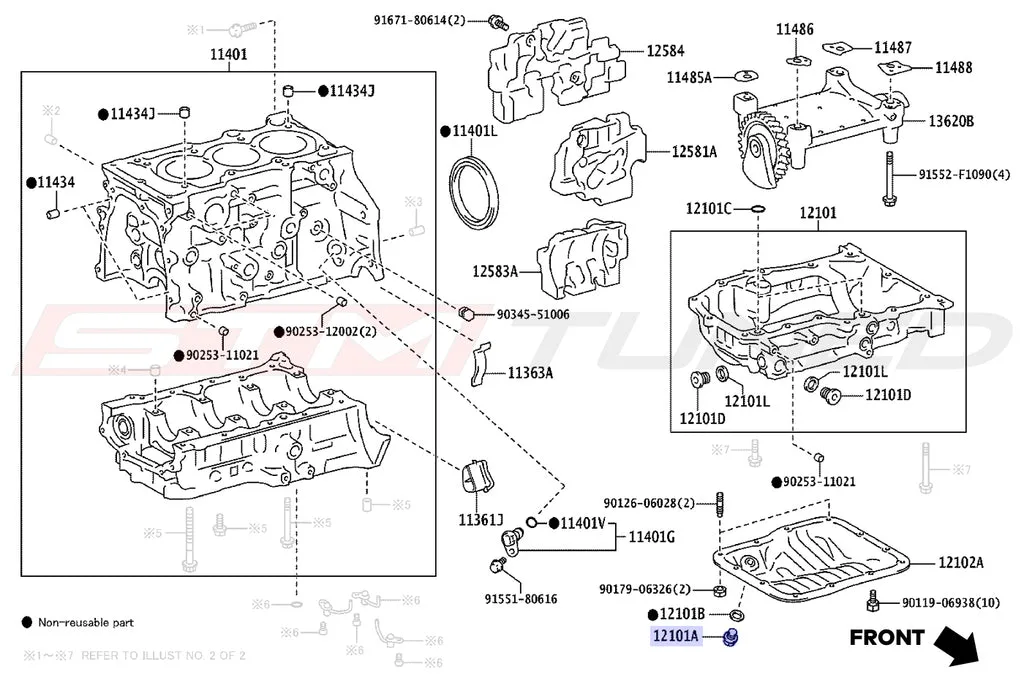
Image source: Bing (Web (fair-use with source credit))
You can do this yourself in about 30 minutes with basic tools. Here's the exact process based on the factory service manual.
Tools and supplies you'll need:
- 4.5 quarts of 5W-30 oil (API SL or higher)
- One oil filter (OEM or quality aftermarket)
- 14mm socket or wrench for the drain plug
- Oil filter wrench (if the filter is on tight)
- Drain pan (at least 6-quart capacity)
- Funnel
- New crush washer for the drain plug (14mm)
- Jack and jack stands (if needed)
Step 1: Warm up the engine. Run it for about two minutes. You want the oil warm enough to flow freely but not hot enough to burn you. Warm oil drains faster and carries more suspended contaminants out with it.
Step 2: Park on level ground. Engage the parking brake. If you need to jack up the front, use jack stands. Never work under a car supported only by a hydraulic jack.
Step 3: Locate the drain plug. It's on the driver's side of the oil pan, facing downward. Use a 14mm socket to loosen it counterclockwise. The plug is magnetic on some models.
Check for metal shavings when you pull it out. A few fine particles are normal. Chunks are not.
Step 4: Let the oil drain. Remove the plug completely and let the oil flow into your drain pan. Give it a full five to ten minutes.
Step 5: Remove the old oil filter. On the 1ZZ-FE, the filter is on the front of the engine, accessible from above or below. Turn it counterclockwise. It will spill some oil, so have a rag ready.
If it's stuck, use a filter wrench. If it's really stuck, pierce it with a screwdriver and use that as a lever. Be careful not to damage the filter mounting surface.
Step 6: Prepare the new filter. Dip your finger in fresh oil and rub it on the new filter's rubber gasket. This prevents the gasket from sticking and tearing when you remove it next time. Screw the filter on by hand until it contacts the mounting surface, then tighten another 3/4 turn.
Don't use a wrench for the final tighten.
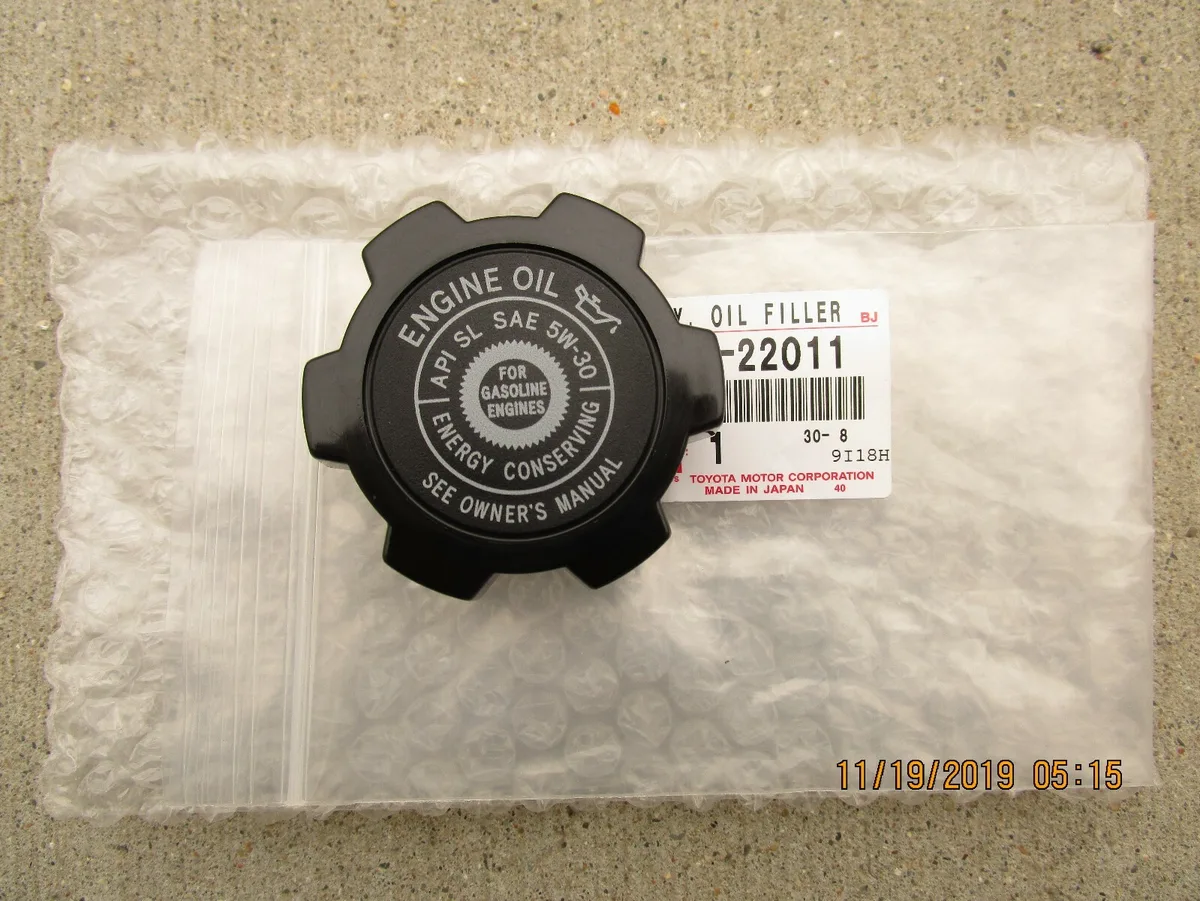
Image source: Web (Bing) / ebay.ie (Web image (fair-use with source credit))
Step 7: Install the drain plug with a new crush washer. Torque it to 29 ft-lbs. If you don't have a torque wrench, snug it up firmly, then add about a quarter turn. The crush washer deforms to create a seal.
Reuse it at your own risk. It will likely leak.
Step 8: Add the oil. Remove the oil filler cap on top of the valve cover. Insert a funnel and pour in 4.5 quarts. Replace the cap and tighten it by hand.
Step 9: Check the level. Start the engine and let it run for 30 seconds. This fills the new filter and circulates oil through the passages. Turn the engine off, wait two minutes, then pull the dipstick.
Wipe it clean, insert it fully, pull it again, and read the level. It should be between the low and full marks. If it's slightly low, add a few ounces at a time.
Step 10: Dispose of the old oil and filter. Most auto parts stores accept used oil for free. Pour the used oil into a sealed container and take it in. The filter can go in a plastic bag.
Never pour oil down a drain or on the ground. It's illegal and harmful.
Oil Type, Viscosity, and Quality Standards
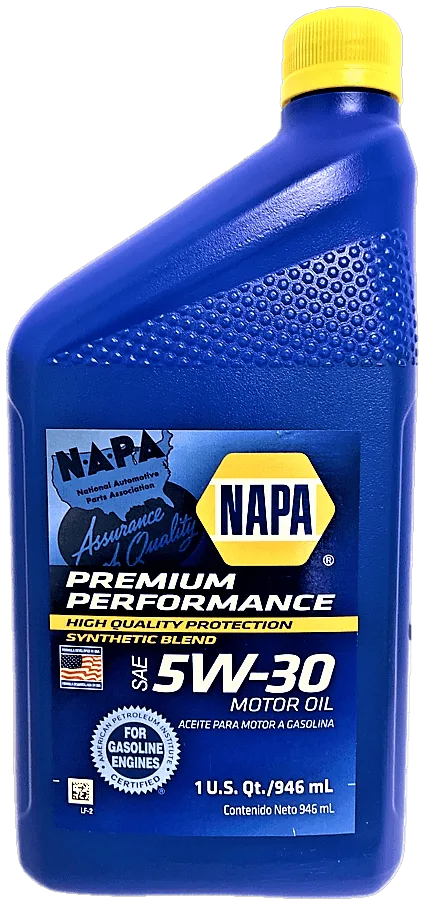
Image source: Web (Bing) / pqia.org (Web image (fair-use with source credit))
The 2007 Corolla calls for SAE 5W-30 engine oil. That's the viscosity grade recommended in the owner's manual and on the oil filler cap. But viscosity is just one part of the equation.
What the numbers mean. The "5W" indicates the oil's viscosity at cold temperatures (the W stands for winter). A 5W oil flows well at low temperatures, reaching critical engine parts quickly during a cold start. The "30" indicates the viscosity at operating temperature (212°F).
A 30-grade oil is thin enough to flow through tight bearing clearances but thick enough to maintain a protective film under load.
What about 5W-20? Some owners ask about using 5W-20 for better fuel economy. The answer is no. The 1ZZ-FE's bearing clearances and oil pump volume are designed around 5W-30.
Using a thinner oil can lead to increased wear, especially on the camshaft lobes and valve train. The American Petroleum Institute sets the standards for viscosity grades, and Toyota's testing confirms 5W-30 is the correct choice.
API and ILSAC ratings. Look for the API donut symbol on the bottle. For the 2007 Corolla, you need at least API SL or SM. As of 2026, most oils on the shelf are API SP or SN Plus, which are backward-compatible.
The ILSAC GF-4 or GF-5 certification is also acceptable.
Conventional vs. synthetic. The 1ZZ-FE runs fine on conventional 5W-30. But synthetic oil offers better high-temperature stability, improved cold-start flow, and longer change intervals. If you drive in extreme temperatures, do a lot of short trips, or plan to keep the car past 200,000 miles, synthetic is worth the extra cost.
Synthetic blends are a solid middle ground.
High-mileage oil. If your Corolla has over 100,000 miles, high-mileage formulations are a good choice. They contain seal conditioners that help reduce leaks and oil consumption. The viscosity is still 5W-30, but the additive package is tailored for older engines.
Many owners report noticeable reductions in oil consumption after switching. The oil type guide for the Toyota Sienna covers similar considerations for older engines.
Mistakes to Avoid (Common Errors That Cause Damage)

Image source: Web (Bing) / itchol.com (Web image (fair-use with source credit))
Even experienced DIYers make mistakes on oil changes. Here are the ones that cause the most damage on the 1ZZ-FE engine.
Overfilling is the most common error. People pour the whole 5-quart jug because it's easier than measuring. That extra half quart puts the oil level above the full mark. The crankshaft slaps the oil surface and whips it into foam.
Foam doesn't lubricate. It also pressurizes the crankcase, forcing oil past seals and gaskets.
Using the wrong viscosity is next. Some owners grab 10W-30 because it's what they used in their old truck. That's too thick for the 1ZZ-FE at startup, especially in cold weather. The oil pump struggles to move thick oil through tight passages, leaving the top end dry for precious seconds.
Using 5W-20 in a 5W-30 engine can lead to insufficient film strength at high temperatures.
Skipping the crush washer replacement. That little copper or aluminum washer on the drain plug costs about a dollar. Reusing it until it's flattened is a recipe for a slow drip. Over time, that drip can drop the oil level below the low mark without you noticing.
One quart low is enough to cause bearing wear on a long highway trip.
Overtightening the oil filter. The filter gasket doesn't need gorilla force. Hand-tight plus 3/4 turn is the spec. Overtightening can distort the filter housing or crack the mounting base on the engine block.
That's a repair that requires pulling the engine.
Not checking the dipstick after filling. You measured 4.5 quarts. The bottle was exactly 5 quarts. You poured in what you thought was right.
But the old oil didn't drain completely, or the car wasn't level, and now you're half a quart over. Always check. The dipstick is the final authority.
The oil advice for the Matrix covers similar dipstick reading habits.
What About Oil Consumption? (The 1ZZ-FE Burning Oil Issue)
If you own a 2007 Corolla with over 100,000 miles, you've probably noticed the oil level dropping between changes. You're not imagining it. The 1ZZ-FE engine has a known tendency to consume oil as it ages.
Why it happens. Toyota revised the piston ring design on later 1ZZ-FE engines, but early versions (including some 2007 models) have rings that can stick or wear prematurely. When the rings don't seal properly, oil slips past into the combustion chamber and burns. You'll see it as blue smoke on startup or a persistent need to top off.
How much is normal. Toyota's own technical bulletin considers consumption up to 1 quart per 1,000 miles acceptable. Most owners report around 1 quart every 2,000 to 3,000 miles on higher-mileage engines. If you're losing more than a quart every 1,000 miles, that's worth investigating.
What to do about it. Check the oil level every other time you fill up with gas. Keep a quart of 5W-30 in the trunk. Top off as needed.
Switching to a high-mileage oil formulation can help reduce consumption because the seal conditioners soften and swell the valve stem seals. Some owners also report improvement by switching to a 5W-30 synthetic blend.
When it's a real problem. If oil consumption is accompanied by a check engine light, rough idle, or loss of power, the issue might be deeper than ring wear. A compression test will tell you if the rings are the problem or if it's something else like a clogged PCV valve. The PCV valve is cheap and easy to replace on the 1ZZ-FE.
Start there before assuming the worst.
When to Call a Mechanic (Don't DIY Everything)
Changing oil on a 2007 Corolla is straightforward. But there are situations where it's smarter to let a professional handle it.
You can't get the drain plug off. If the plug is rounded off or seized, forcing it can strip the threads in the oil pan. That's a $200 repair on a part that costs $60. A mechanic has the tools to extract a stuck plug without damaging the pan.
The oil filter is welded on. Sometimes a previous owner overtightened the filter to the point where it's nearly fused to the housing. Piercing it with a screwdriver is the standard DIY trick, but if it still won't budge, it's easy to damage the filter housing threads. A shop has dedicated removal tools.
You see metal in the oil. When you drain the oil, look at it closely. If you see glitter or metallic flakes in the drained oil or on the magnetic drain plug, that's a sign of internal engine wear. A mechanic can perform an oil analysis to determine the source.
The check engine light is on. If the light comes on after your oil change, don't ignore it. Low oil pressure, a faulty oil pressure sensor, or a wiring issue could be at play. A shop with a diagnostic scanner can read the code.
You don't have a safe place to work. Working on a car with a floor jack and no stands is dangerous. If you don't have jack stands, a level driveway, and proper tools, paying a shop $40 for labor is cheaper than a hospital visit. The oil type guide for the RAV4 covers similar considerations for owners who prefer professional service.
Cost Breakdown: DIY vs. Shop
You can save money changing your own oil. But the savings aren't as dramatic as you might think in 2026.
DIY costs:
| Item | Cost |
|---|---|
| 5 quarts of 5W-30 conventional oil | $15 to $22 |
| Oil filter | $6 to $12 |
| Crush washer | $1 to $2 |
| Disposal fee (if any) | $0 to $5 |
| Total DIY | $22 to $41 |
Shop costs:
| Service | Cost |
|---|---|
| Standard oil change (conventional) | $50 to $70 |
| Synthetic blend oil change | $65 to $85 |
| Full synthetic oil change | $80 to $110 |
| Savings from DIY | $28 to $69 per change |
The real math. If you change your oil every 5,000 miles and drive 15,000 miles a year, that's three changes annually. DIY saves you roughly $100 to $200 per year. Over five years, that's $500 to $1,000.
But consider the hidden costs. You need a drain pan, funnel, jack stands, and basic tools if you don't already have them. That's a one-time expense of about $50 to $80. The oil filter wrench is another $10.
And you have to dispose of the used oil properly. Most auto parts stores take it for free.
When a shop is the better value. If you use full synthetic oil, the shop price is closer to the DIY price because synthetic oil is expensive at retail too. Some shops offer lifetime oil changes for a flat fee. And if you factor in the time and hassle of doing it yourself, the convenience of a 15-minute drive-through oil change starts to look pretty good.
The oil recommendations for the Highlander show a similar cost comparison.
FAQs
How often should I change the oil on my 2007 Corolla?
Toyota recommends every 5,000 miles with conventional oil. If you use full synthetic, you can stretch to 7,500 or 10,000 miles. But considering the 1ZZ-FE's oil consumption tendencies, 5,000 miles is a safe interval regardless of oil type.
Can I use synthetic oil in my 2007 Corolla?
Yes. Full synthetic 5W-30 is perfectly compatible with the 1ZZ-FE engine. It offers better protection at high temperatures and flows better in cold weather.
The switch from conventional to synthetic doesn't cause leaks on a healthy engine.
What happens if I put too much oil in my Corolla?
Overfilling causes foaming, which reduces oil pressure and lubrication. The engine may run rough, and you might see oil leaking from seals. In severe cases, excess pressure can damage the catalytic converter.
If you overfill, drain the excess through the drain plug until the level is correct.
Why does my 2007 Corolla burn oil?
The 1ZZ-FE engine has a known tendency to consume oil as it ages due to piston ring wear or stuck rings. Valve stem seals can also harden and leak oil into the combustion chamber. Check your oil level regularly and use high-mileage oil.
If consumption exceeds 1 quart per 1,000 miles, have a compression test done.
What type of oil filter should I use?
Use a filter that meets or exceeds the OEM bypass valve pressure spec. The OEM Toyota filter (part 04152-YZZA1) is a safe choice. Aftermarket filters from Wix, Purolator, and Mobil 1 also perform well.
Avoid the cheapest no-name filters. Their bypass valves can open too early, sending unfiltered oil through the engine.
Is 5W-30 the same as 10W-30?
No. 5W-30 flows better at cold temperatures than 10W-30. At operating temperature, both have the same viscosity (the "30" grade). For the 2007 Corolla, use 5W-30 as specified. 10W-30 is too thick for cold starts and can cause increased wear during the first minutes of operation.
The Bottom Line
The 2007 Toyota Corolla needs exactly 4.5 quarts of 5W-30 oil with a filter change. That's not negotiable. Use a quality filter and a new crush washer every time.
Check the dipstick after filling. Keep an eye on oil consumption between changes.
The 1ZZ-FE engine is tough and reliable when treated right. Getting the oil capacity right is the single most important thing you can do to keep it running. Whether you DIY or go to a shop, knowing the spec puts you in control.
You'll never overpay for the wrong oil or underfill your engine.
One quart low won't kill it immediately. But doing it change after change will shorten its life. Respect the 4.5-quart spec.
Your Corolla will reward you with another hundred thousand miles.