
If you own a 2008 Toyota RAV4, you already know it's a reliable SUV that just keeps going. But when it comes time to change the oil, the 2008 Toyota RAV4 oil capacity isn't the same for every model, and getting it wrong can cost you. Pour in too much or too little, and you are looking at rough idling, leaks, or worse, internal engine damage that runs into the thousands.
Toyota built two different engines for this generation: a 2.4L four-cylinder and a 3.5L V6. Each takes a different amount of oil, and they don't share the same filter either. Manufacturer specifications confirm the 2.4L needs 4.5 quarts with a filter change, while the V6 needs 6.4 quarts.
Mix those up and you are in trouble before the engine even fires up. Let's walk through exactly what you need, how to check it, and the common mistakes that send people to the repair shop.
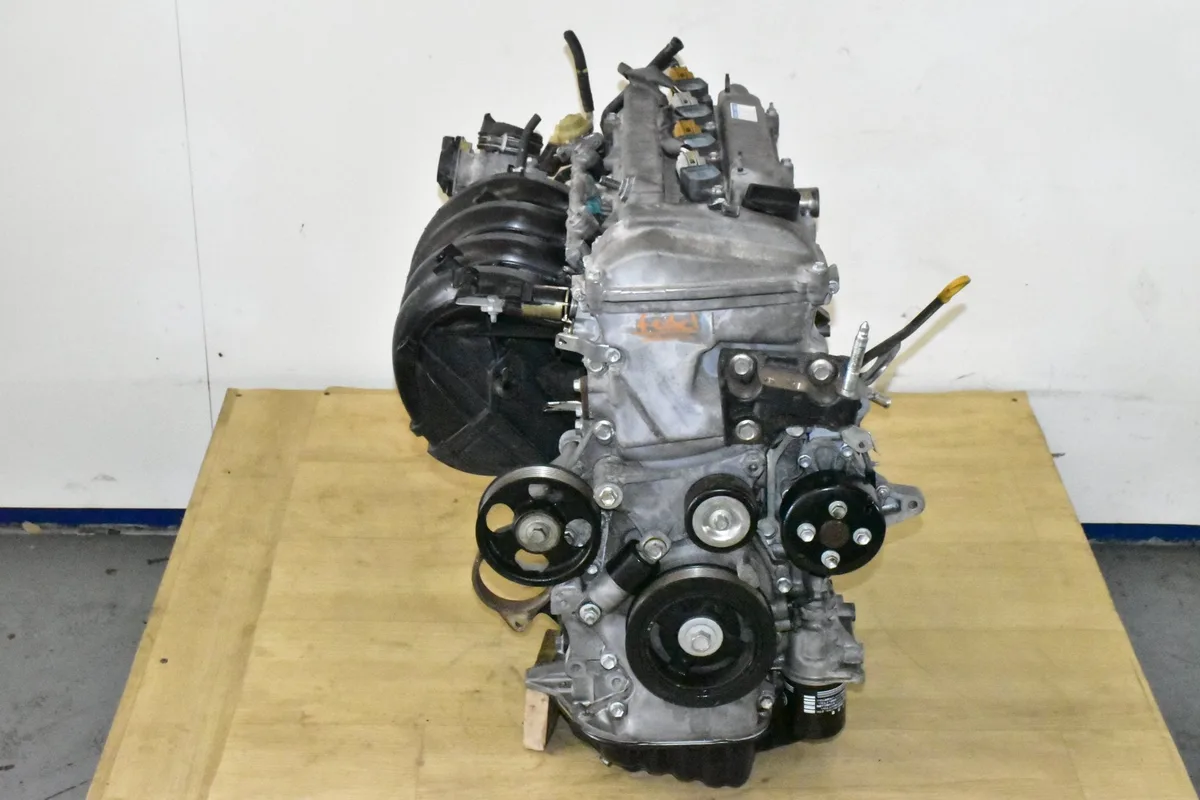
Image source: Web (Bing) / inf-inet.com (Web image (fair-use with source credit))
Quick Answer
The 2008 Toyota RAV4 oil capacity is 4.5 quarts (4.3 liters) for the 2.4L four-cylinder engine and 6.4 quarts (6.1 liters) for the 3.5L V6 engine. Both use 5W-30 oil. These amounts include a new oil filter.
Always check the dipstick after filling to confirm the level.
Why Getting the Oil Capacity Right Matters (and What Happens If You Don't)
You might think a quart over or under is no big deal. On this engine, it absolutely is. The 2AZ-FE four-cylinder (that is the engine code for the 2.4L) has a well-documented reputation for oil consumption as it ages.
That means it already runs through oil faster than most engines. Overfill it, and you create internal pressure that forces oil past seals and rings. Underfill it, and you risk oil starvation at critical moments like highway merging or climbing a grade.
The V6 engine, the 2GR-FE, is tougher overall but still sensitive to incorrect levels. It holds nearly two quarts more than the four-cylinder, so if you treat it like the smaller engine, you will be running dangerously low. The oil pump pickup tube sits at the bottom of the pan.
If the level drops below that tube, even for a few seconds, bearing damage starts immediately.
Proper oil capacity also affects how well the variable valve timing system works on both engines. Low oil pressure from incorrect levels can cause timing chain rattle, sluggish acceleration, and check engine lights. If you have been dealing with any of those issues, your oil level might be the culprit.
The Two Engines – Know Which One You Have
Before you buy oil or pick up a filter, you need to confirm which engine sits under your hood. This is the single most common point of confusion for 2008 RAV4 owners. The two engines look different, take different amounts of oil, and require different filters.
Guessing is not an option.
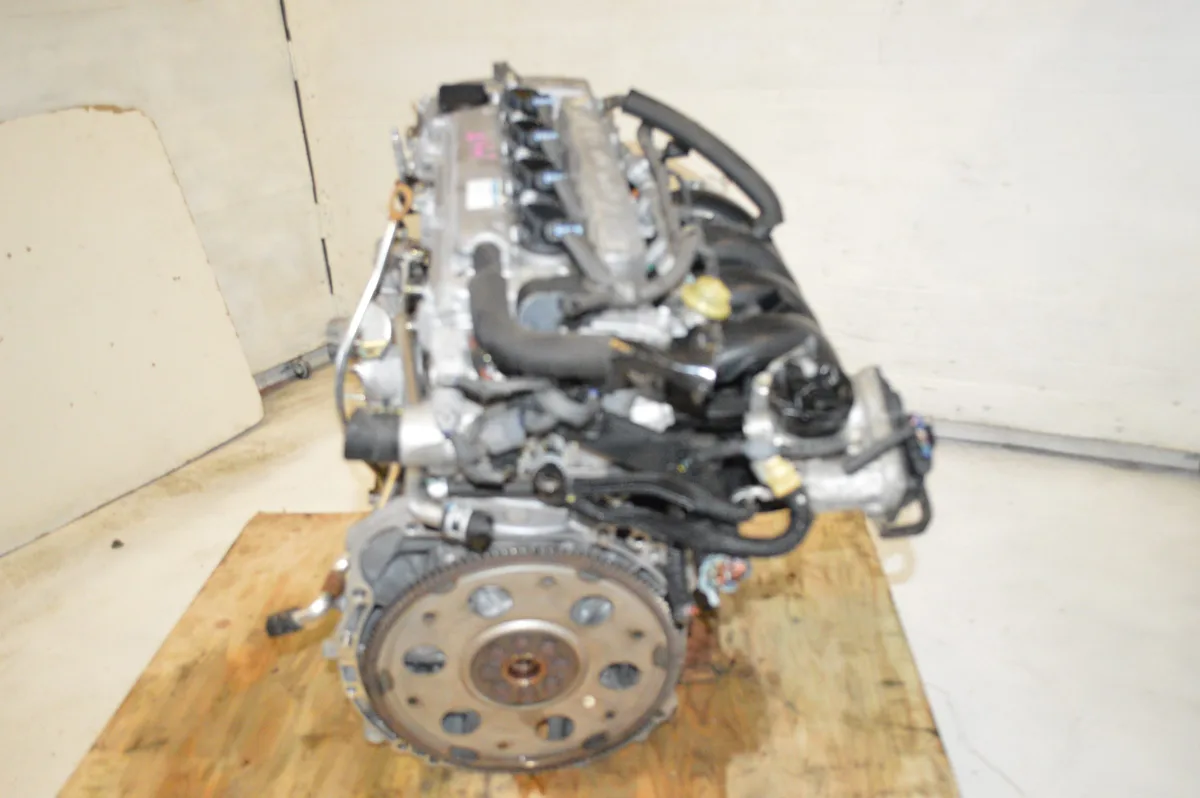
Image source: Web (Bing) / jdmpacificmotors.com (Web image (fair-use with source credit))
How to identify your engine on the 2008 RAV4:
- Open the hood and look at the engine cover. The 2.4L four-cylinder has a narrow, tall plastic cover with "VVT-i" written on it. The 3.5L V6 has a wider, flatter cover with "3.5 V6" or "VVT-i" embossed.
- Check the eighth character of your VIN. If it is "3", you have the 2.4L four-cylinder. If it is "4", you have the 3.5L V6. You can find the VIN on the driver's side dashboard near the windshield or on the driver's door jamb sticker.
- Look at the air intake housing. The 2.4L has a large black air box on the passenger side. The V6 has two intake tracts and a more complex intake manifold.
If you still aren't sure, your owner's manual lists the engine type on the first page of the specifications section. You can also call any Toyota dealership with your VIN and they can confirm it in thirty seconds.
2.4L 4-Cylinder (2AZ-FE) – Capacity and Specs
The 2AZ-FE engine was Toyota's workhorse four-cylinder during this era. It appeared in the Camry, the Matrix, and the Scion tC alongside the RAV4. It is not a high-performance engine, but it is durable when maintained correctly.
Engine specs for the 2.4L:
| Spec | Value |
|---|---|
| Engine code | 2AZ-FE |
| Displacement | 2.4 liters |
| Oil capacity (with filter) | 4.5 US quarts (4.3 liters) |
| Oil capacity (without filter) | 4.2 US quarts (4.0 liters) |
| Recommended oil viscosity | 5W-30 |
| Oil type | Conventional or synthetic |
| API certification | SL, SM, or SN |
| Oil filter type | Cartridge (replaceable canister) |
| Drain plug thread size | M14-1.5 |
| Drain plug torque | 29 ft-lbs (39 Nm) |
One thing to note on this engine: the 2AZ-FE has a known oil consumption issue in higher-mileage examples. Toyota even issued a technical service bulletin for some model years. If your 2.4L burns oil between changes (more than one quart per 1,200 miles), you are not alone.
Keep the level topped up between changes and consider switching to a high-mileage synthetic blend that helps condition the seals.
3.5L V6 (2GR-FE) – Capacity and Specs
The 2GR-FE V6 is widely regarded as one of Toyota's best engines. It is smooth, powerful, and generally bulletproof. The oil capacity is significantly larger because the engine itself is physically bigger and holds more oil in its passages and cooler circuit.
Engine specs for the 3.5L V6:
| Spec | Value |
|---|---|
| Engine code | 2GR-FE |
| Displacement | 3.5 liters |
| Oil capacity (with filter) | 6.4 US quarts (6.1 liters) |
| Oil capacity (without filter) | 6.0 US quarts (5.7 liters) |
| Recommended oil viscosity | 5W-30 |
| Oil type | Conventional or synthetic |
| API certification | SL, SM, or SN |
| Oil filter type | Spin-on canister |
| Drain plug thread size | M14-1.5 |
| Drain plug torque | 29 ft-lbs (39 Nm) |
This engine does not have the same oil consumption reputation as the four-cylinder. But it has its own quirk: the oil filter is located on the front of the engine, accessible from above on most models. That is unusual for a V6 and makes oil changes easier than you would expect.
Just be careful not to overtighten the filter housing, which can strip the plastic threads on some aftermarket caps.
What Oil to Use – Viscosity, Type, and Certification
You already know the 2008 RAV4 calls for 5W-30. But not all 5W-30 is the same, and choosing the wrong oil can shorten engine life.
Viscosity: Why 5W-30?
Toyota designed both the 2AZ-FE and 2GR-FE around 5W-30. The "5W" means the oil flows like a 5-weight when cold, which helps during winter starts. The "30" means it thickens to a 30-weight at operating temperature, providing enough film strength to protect bearings and cylinder walls.
If you live in an extremely hot climate (above 100°F consistently), 10W-30 is acceptable but not required. In very cold climates (below -10°F), 0W-30 can be used for better cold-flow protection. Either way, stick with 5W-30 as your default.
Conventional vs. Synthetic: Does It Matter?
You can use conventional oil in the 2008 RAV4 without problems. The engines were designed in an era when conventional oil was standard. But synthetic oil offers real advantages.
- Conventional oil: Cheaper per quart. Fine for 5,000-mile intervals. Breaks down faster under high heat.
- Synthetic blend: Moderate cost. Better high-temperature stability. Good for 5,000 to 7,500 miles.
- Full synthetic: More expensive upfront. Excellent cold-flow protection. Extends intervals to 7,500 or even 10,000 miles. Reduces sludge buildup significantly.
For the 2.4L engine, especially one with over 100,000 miles, we recommend a high-mileage synthetic blend. These formulations include seal conditioners that reduce the oil consumption common on this engine. For the V6, full synthetic is a great choice if you plan to keep the vehicle beyond 150,000 miles.
API certification: Look for the starburst
Every bottle of engine oil sold in the US has an API donut symbol. Look for the "Starburst" mark that says "API Service SN" or "SP" as of 2026. This certification guarantees the oil meets current protection standards for deposits, wear, and sludge control.
Do not use oil rated below SL, as it lacks the detergents modern engines need.
If you are still unsure what is best for your specific driving conditions, the detailed guide on the best oil for Toyota RAV4 covers weight and capacity across multiple model years.
Step-by-Step: How to Check Your Oil Level Correctly
Checking the oil on a 2008 RAV4 sounds simple, but plenty of people get it wrong. A cold reading, a hot reading, and a reading on an incline all give different results. Here is how to get an accurate measurement every time.
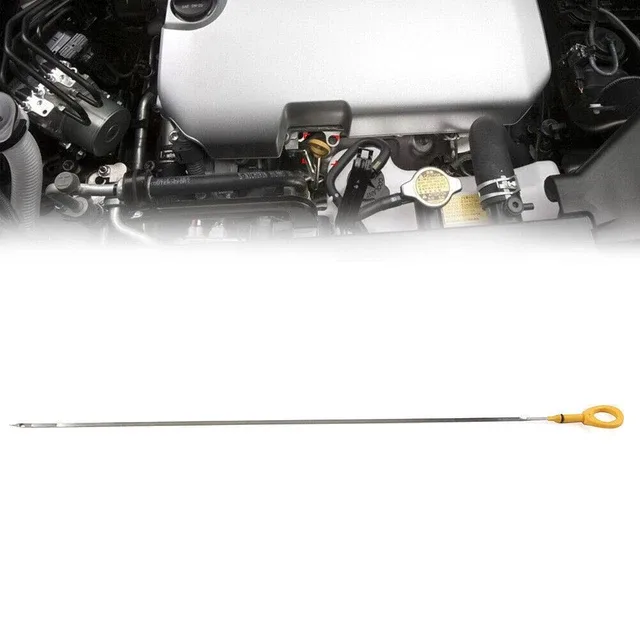
Image source: Web (Bing) / picclick.ca (Web image (fair-use with source credit))
Step 1: Warm the engine
Park the RAV4 on level ground. Start the engine and let it run for about five minutes. You want the oil warm enough to flow freely but not hot enough to burn you.
If you have just driven home, wait ten to fifteen minutes for the oil to settle back into the pan.
Step 2: Pull the dipstick
Open the hood. Locate the dipstick. On the 2.4L engine, it is a yellow loop near the front passenger side.
On the V6, it is toward the front center. Pull it out fully and wipe it clean with a lint-free rag.
Step 3: Reinsert and pull again
Push the dipstick all the way back into its tube. Wait two seconds. Pull it out again and hold it horizontally at eye level.
Do not rest it on the engine block or let it touch anything that could smear the oil film.
Step 4: Read the level
You will see two marks on the dipstick: a lower mark (L or a dot) and an upper mark (F or a line). The oil should be between these two marks. Ideally, it sits closer to the F mark.
- Between L and F: Normal operating range. Add oil only if it is near the L mark.
- At or below L: Add one quart immediately, then recheck.
- Above F: You have overfilled. Drain some oil out before driving.
- No oil on the dipstick at all: Do not start the engine. Add oil and check again.
Step 5: Interpret the condition
Look at the oil on the dipstick. Clean oil is amber and translucent. If it looks dark brown or black, it is still fine for now but getting old.
If it looks milky or frothy, water has entered the engine. That could be a head gasket problem, and you should have it checked before driving.
Step 6: Check frequently
On the 2.4L engine, check your oil every other gas fill-up. The oil consumption issue means the level can drop between scheduled changes. On the V6, checking once a month or before long trips is sufficient.
For more context on why routine checks matter across Toyota models, the guide on Toyota RAV4 oil type covers the full maintenance picture for owners.
Common dipstick mistakes to avoid:
- Checking on a slope. Even a slight incline gives a false reading.
- Checking immediately after shutting off a hot engine. The oil has not drained back yet.
- Misreading the dipstick. Oil wicks up the stick if you pull it out too fast. Always wipe and re-dip.
- Using the wrong dipstick. Some aftermarket dipsticks are not marked correctly. If in doubt, mark the correct level yourself with a file or a permanent marker after a known-good oil change.
Step-by-Step: How to Change the Oil and Filter
Changing the oil on a 2008 RAV4 is a straightforward job you can finish in about 45 minutes. But skipping one step can turn a simple task into a leaky mess. Here is the process broken down for both engines.
What you will need:
| Tool or material | Purpose |
|---|---|
| 5W-30 oil (see capacity above) | Fill the engine |
| OEM or equivalent oil filter | Trap contaminants |
| 14mm socket or wrench | Drain plug removal |
| Oil filter wrench | Remove old filter (V6) or cap (4-cyl) |
| Crush washer (M14) | Seal the drain plug |
| Funnel | Pour oil without spills |
| Drain pan | Catch old oil |
| Rags | Clean up drips |
Step 1: Prep the vehicle
Park on level ground. Run the engine for two to three minutes to warm the oil. Warm oil drains faster and carries more suspended contaminants.
Turn the engine off and engage the parking brake. If the RAV4 sits low, drive the front wheels onto ramps or jack stands.
Step 2: Drain the old oil
Slide under the vehicle. Locate the drain plug on the oil pan. Use a 14mm socket to loosen it counterclockwise.
Keep pressure on the plug as you unscrew it so oil does not spray. Let the oil drain into the pan for at least five minutes.
Replace the crush washer on the drain plug. This metal washer compresses to seal the plug. Reusing an old one is the most common cause of a slow drip.
Torque the plug to 29 ft-lbs. Overtightening strips the pan threads, and that repair costs several hundred dollars.
Step 3: Replace the oil filter
The filter location depends on your engine. On the 2.4L, the filter is a cartridge inside a plastic housing on the front of the engine. You need a filter cap wrench to remove the housing.
On the 3.5L V6, the filter is a traditional spin-on canister located at the front, accessible from above.
Lubricate the gasket on the new filter with a thin coating of fresh oil. Hand-tighten the filter until the gasket contacts the mounting surface, then turn it another three-quarters of a turn. Do not use a wrench to tighten a spin-on filter unless you are experienced with the feel.
The 2.4L cartridge housing requires 18 ft-lbs.
Step 4: Add the new oil
Lower the vehicle. Remove the oil fill cap on top of the valve cover. Insert a funnel.
Pour in the correct amount for your engine: 4.5 quarts for the 2.4L or 6.4 quarts for the 3.5L V6. Pour slowly and stop to check the level halfway through.
Step 5: Check for leaks
Replace the fill cap. Start the engine and let it idle for thirty seconds. The oil pressure light should turn off within a few seconds.
Inspect underneath for drips around the drain plug and filter. If you see any, shut the engine off and tighten the source.
Step 6: Verify the level
Turn the engine off. Wait three minutes for the oil to settle. Pull the dipstick, wipe it, reinsert it, and check the level.
Top off if needed. The level should sit between the L and F marks.
Step 7: Dispose of the old oil
Pour the used oil into a sealed container. Take it to any auto parts store or a local collection center. Most states require free disposal for household quantities.
Never pour oil down a drain or into the trash. The EPA considers used motor oil a hazardous waste, and fines apply.
If you prefer to let a professional handle the job, any shop will follow the same steps. But knowing the correct capacity yourself keeps you from overpaying or getting the wrong oil. The guide on Toyota RAV4 oil type, synthetic vs conventional explains the tradeoffs if you are deciding which oil to buy for this change.
Common Mistakes That Cost You an Engine
Most engine damage from oil changes happens not because someone used the wrong oil, but because they made one of these three errors. Each is easy to avoid once you know what to watch for.
Overfilling – Just as Bad as Underfilling
You might think a little extra oil is harmless. On the 2008 RAV4, it is not. Overfilling raises the oil level above the crankshaft.
The crankshaft whips the oil into a froth, aerating it. Aerated oil does not lubricate bearings properly. It also causes the oil to foam and expand, pushing past seals and valve cover gaskets.
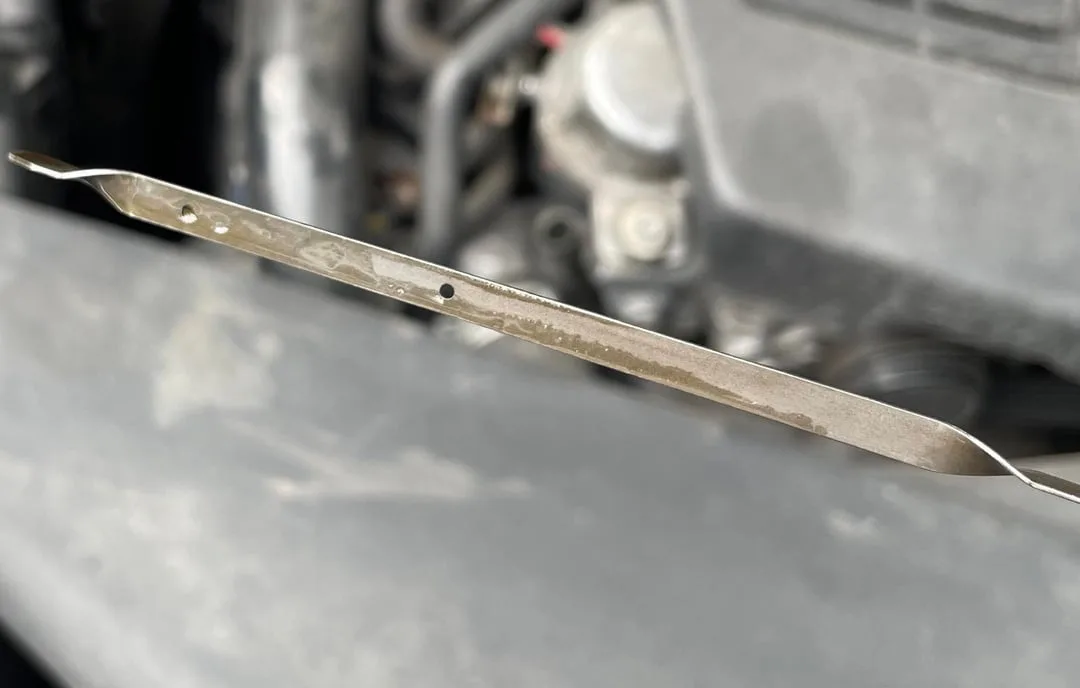
Image source: Web (Bing) / reddit.com (Web image (fair-use with source credit))
How much is too much? Anything above the F mark on the dipstick. If you overfill by a full quart, the engine may start smoking as oil burns off hot exhaust surfaces.
In severe cases, excess oil pressure can blow out the rear main seal. That repair runs $800 to $1,200 on these engines.
If you overfill, do not drive it. Drain the excess through the drain plug. Let out a stream for two seconds and recheck the dipstick.
Repeat until the level drops into the safe zone.
Using the Wrong Filter or Skipping the Crush Washer
The 2.4L and 3.5L take different oil filters. The 2.4L uses a cartridge filter with a plastic cap. The 3.5L uses a spin-on metal canister.
Installing the wrong one will not thread properly and will leak. Check the part number before you buy. The OEM filter for the 2.4L is Toyota part 04152-YZZA1.
For the V6, it is 04152-31090 or equivalent.
The crush washer on the drain plug is a small copper or aluminum ring that costs less than a dollar. Reusing an old one is the number one cause of drain plug drips. The old washer loses its ability to compress and seal.
Spend the fifty cents. Replace it every time.
Ignoring the Dipstick and Trusting the Bottle
Oil bottles list capacity on the label, but that number is the total for a dry engine. Your engine is never completely dry after a drain. Residual oil clings to internal surfaces.
If you pour in the full listed capacity without checking the dipstick, you will almost certainly overfill.
Always fill to about 80 percent of the capacity, then top off slowly while checking the dipstick. That extra minute saves you from a foamy, aerated oil charge that wears out bearings prematurely.
When to Seek Professional Help
Changing oil on a 2008 RAV4 is about as simple as it gets for DIY maintenance. But some situations call for a shop. If you strip the drain plug threads, do not try to fix it with tape or thread sealant.
You need a thread repair kit or a new oil pan. A stripped pan on these models requires removal and replacement, which means draining the oil and accessing bolts that are hard to reach without a lift.
If you find oil in the coolant or coolant in the oil, you have a gasket failure. That is not a drain-and-fill fix. It needs a mechanic who can pressure-test the cooling system and replace the affected gasket.
The 2AZ-FE engine is known for failing head gaskets after 120,000 miles, especially if it has been overheated.
If the engine makes a knocking sound after an oil change, shut it down immediately. You may have forgotten to refill the oil entirely. Yes, it happens more often than you would think.
Do not restart it. Call a tow truck.
And if you simply do not have the tools, the space, or the confidence to do the job, paying a shop $60 to $90 for an oil change is cheaper than fixing a mistake. Just provide the correct oil capacity to the technician so they use the right amount. You can find the exact specifications for other Toyotas in this era on the Toyota Camry oil type page for comparison.