
The 2009 Toyota Camry 2.4 oil capacity is one of those specs you need to get exactly right. Pour in too much and you risk foaming, leaks, and damage to the catalytic converter. Too little, and the 2AZ-FE engine starves for lubrication, which can quickly lead to bearing failure.
The number you need to know is 4.5 quarts with a new filter, but that's just the starting point.
Manufacturer specifications indicate the 2.4L engine in this model year requires SAE 5W-30 oil that meets API SN or ILSAC GF-5 standards. As of 2026, that remains the recommended viscosity despite how many synthetic blends have hit the market. Let's walk through exactly what it takes to fill this engine properly, what common mistakes to avoid, and what those dipstick readings actually mean.
Quick Answer
The 2009 Toyota Camry 2.4 oil capacity is 4.5 quarts (4.3 liters) with a new filter. Without changing the filter, it's 4.2 quarts. Always use SAE 5W-30 oil.
The engine also needs about 10 minutes of run time before checking the level.
Why Getting the Oil Capacity Wrong Hurts Your 2.4L Camry
This engine has zero tolerance for guesswork. The 2AZ-FE is a workhorse, but it's also known for oil consumption as mileage climbs. Many owners report needing a top-off between changes, which makes accurate capacity knowledge even more critical.
Overfilling is actually more dangerous than most people realize. When you add too much oil, the crankshaft whips the excess into a froth. That foam doesn't lubricate properly, so oil pressure drops even though there's plenty of fluid in the pan.
The extra pressure can also force oil past seals and into the combustion chamber, which fouls spark plugs and eventually damages the catalytic converter.
Underfilling carries its own risks. The oil pump can suck air if the level drops too low, especially during hard cornering or steep hills. That air pocket causes a momentary loss of oil pressure, and on a high-mileage 2AZ-FE, that's often enough to score a bearing or damage the timing chain tensioner.
What Makes the 2AZ-FE Engine Different — And Why It Matters
The 2AZ-FE is a 2.4L inline-four that Toyota produced from 2000 through 2011. It powers the 2009 Camry, along with the RAV4, Matrix, and several other models from that era. It's a reliable engine, but it has quirks that directly affect how you should approach an oil change.
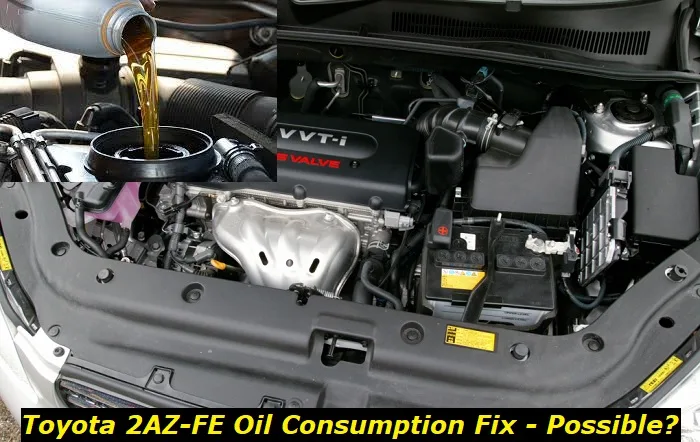
Image source: Bing (Web (fair-use with source credit))
The most notable quirk is oil consumption. Toyota even issued service bulletins about excessive oil usage on this engine family. The root cause is often worn piston rings or clogged oil control rings, which let oil slip past into the combustion chamber.
If you notice the exhaust smoking slightly or the oil level dropping between changes, that's the 2AZ-FE's signature issue.
That characteristic makes checking oil level regularly non-negotiable. The dipstick on this engine sits right at the front, easy to reach. You should check it cold, on level ground, ideally before starting the engine in the morning.
A consistent reading between the low and full marks is what you want. If it's dropping noticeably within 1,000 miles, you're looking at the oil consumption problem, not just normal burn-off.
The other difference is the filter location. It's mounted sideways at the bottom of the engine, just behind the exhaust manifold. That makes it hot and awkward to reach.
You'll need a filter wrench designed for the cap-style housing, not the metal canister type, though the 2AZ-FE does use a spin-on filter. More on that in the step-by-step section.
Step-by-Step: How to Fill It Right the First Time
The process itself is straightforward, but the details matter. Here's the exact sequence that works best on this engine.
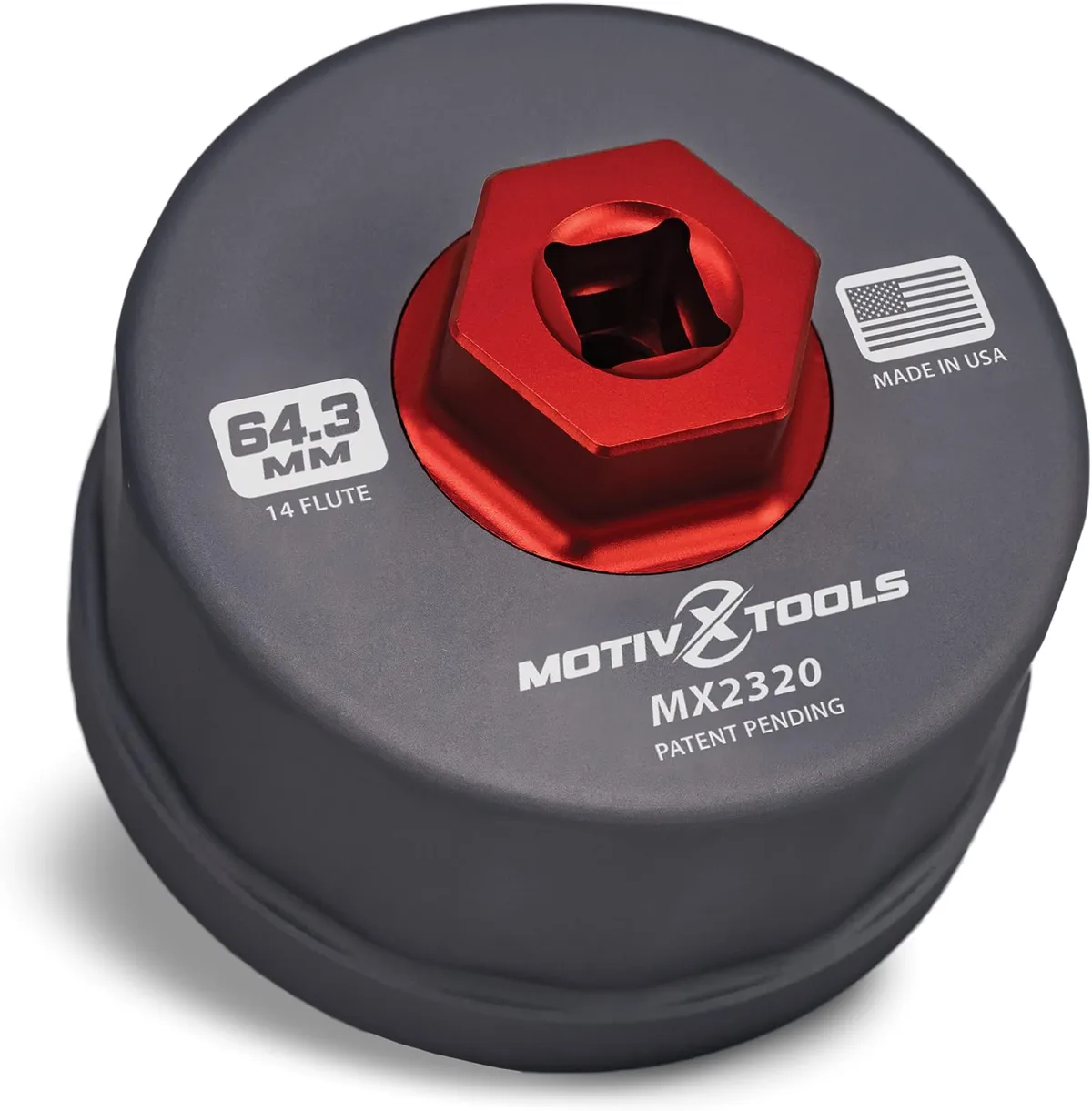
Image source: Web (Bing) / amazon.com (Web image (fair-use with source credit))
Warm the engine first. Drive for five minutes or run it until the coolant temperature gauge moves off the peg. Warm oil drains faster, but don't let it get hot enough to burn you. Lukewarm is the sweet spot.
Gather your supplies. You'll need 5 quarts of SAE 5W-30, a new filter, a 14mm socket for the drain plug, and a new crush washer. The OEM filter is part number 04152-YZZA6, but quality aftermarket filters work fine, as long as they meet the specs in your own maintained history.
Drain the old oil. Put the car on ramps or jack stands, never just a jack. Remove the oil fill cap first, then loosen the drain plug with a 14mm socket. Let it drain completely, which takes a few minutes.
Replace the crush washer, then torque the drain plug to 29 lb-ft. That's the spec, and it prevents both stripped threads and leaks.
Swap the filter. Use an oil filter wrench if it's tight. The filter is accessible from below, so you might need to get low. Before installing the new one, wipe a thin layer of fresh oil on the gasket.
Hand-tighten it, then give it another three-quarter turn. Don't crank it harder; that makes the next change miserable.
Add the oil. With the drain plug and filter in place, pour in exactly 4.5 quarts. A funnel helps avoid spills onto the engine block. Start the engine, let it run for 30 seconds, then shut it off.
Wait two minutes, then check the dipstick. Top off if needed, but don't exceed the full mark.
Safety note: oil disposal is part of the job. Used oil is hazardous waste, and pouring it down a drain or into the yard is illegal in most places. Most auto parts stores accept used oil for free.
Take the old filter too, they'll recycle both.
The Two Most Common Mistakes DIYers Do on This Engine
Mistake one: Using a cold engine. Cold oil is viscous and drains slowly. You might think the pan is empty when it's actually holding a quarter-quart of cold sludge. Then you add the full 4.5 quarts and it reads overfilled on the dipstick once it warms up and circulates.
Mistake two: Not checking the dipstick procedure correctly. The 2AZ-FE dipstick needs a specific technique. Pull it out, wipe it clean, reinsert it fully, wait three seconds, then pull again. Read the level on the side that shows oil, not the side with the crosshatch pattern.
Many owners check too quickly after stopping the engine, and the oil hasn't fully drained back into the pan yet, giving a falsely low reading.
Mistake three: Torquing the drain plug by feel. The spec is 29 lb-ft. If you use a breaker bar and a strong arm, you'll strip the threads in the oil pan. That's a $300 repair to replace the pan, all because you wanted to be extra sure it wouldn't leak.
Mistake four: Choosing the wrong oil weight. Some owners switch to 10W-30 for hot climates or high mileage. The manufacturer spec is 5W-30, and straying from it can cause issues. Thicker oil flows slower on cold starts, which wears the engine.
The 2AZ-FE's hydraulic valve lifters and variable valve timing system are designed around a specific viscosity range.
Synthetic vs. Conventional: What the 2.4L Requires
The short answer is that the 2009 Camry 2.4 runs fine on conventional 5W-30. Toyota didn't require synthetic for this engine. But the longer answer gets more interesting, especially for a 17-year-old car as of 2026.
Conventional oil works fine for normal driving. It's cheaper, and if you're changing oil every 5,000 miles, the cost difference adds up. For a daily commuter with a low mileage car, conventional is a perfectly sound choice.
Synthetic oil shines in specific scenarios. If you live in extreme cold, 0W-30 synthetic flows better at startup. If you're doing heavy towing, synthetic resists breakdown under high heat.
And if your 2AZ-FE already drinks oil, synthetic's better film strength can reduce consumption slightly in some cases.
High-mileage oil deserves a mention too. The 2AZ-FE with over 75,000 miles can benefit from high-mileage formulas. They include seal conditioners that help reduce leaks and swelling agents that combat drips.
Many owners report less oil consumption after switching on older engines. Is it a miracle cure? No.
But it's a low-risk experiment if you're already due for a change.
The blend route is a middle ground. Semi-synthetic or synthetic blends offer better protection than conventional at a moderate price. For most Camry owners, that's the practical sweet spot.
Our research across forums and owner reports suggests that consistency matters more than brand. Use the same weight and type each time, and stick to a regular interval.
For more context on what newer Camry models require, check out our guide on the new Camry oil type and how newer vehicles differ from this 2009 model.
How Often Should You Change It? Intervals That Protect the VVT-i System
The factory recommendation for the 2009 Camry 2.4L is every 7,500 miles under normal driving conditions. That's the number in the owner's manual, and it's based on Toyota's testing with conventional 5W-30.
Here's the catch. Very few people actually drive under "normal" conditions as Toyota defines them. The severe service schedule is 5,000 miles, and it covers most real-world use.
Short trips under 10 miles, stop-and-go traffic, dusty roads, extreme temperatures, or frequent highway towing all qualify as severe. If you're honest about your commute, you're probably in this category.
The VVT-i system on this engine relies on clean oil pressure to adjust cam timing. Sludge buildup clogs the oil control valve, which leads to rough idle, reduced power, and in some cases a check engine light. That's why shorter intervals matter more on this engine than on many others.
Our research across owner forums and service records suggests a practical sweet spot. Change it every 5,000 miles with conventional oil or every 7,500 miles with a quality full synthetic. That gives you a margin of safety without wasting money.
If your 2AZ-FE already shows signs of oil consumption, stick with 5,000 miles regardless of oil type. The consumption will accelerate if you stretch intervals.
The same principles apply to newer Toyota models, though the oil specifications differ. If you're curious about a newer Camry, take a look at the 2021 Toyota Camry oil type for comparison.
What Happens When You Overfill or Underfill — Real Engine Damage
The dipstick on the 2AZ-FE has two marks. The lower one is the low mark, the upper one is the full mark. Everything between is the operating range.
The distance between them represents roughly one quart of oil.

Image source: Bing (Web (fair-use with source credit))
Overfill damage. When the crankshaft dips into the oil pan at high RPM, it churns the oil into foam. That foam has bubbles of air mixed in. The oil pump can't build pressure with aerated oil, so the bearings and journal surfaces starve.
You also risk blowing out the front crankshaft seal or the camshaft seals. Those repairs cost several hundred dollars. In extreme cases, the excess oil gets sucked into the PCV system and burned in the cylinders, which destroys the catalytic converter.
Underfill damage. Low oil level means the pickup tube can suck air during hard acceleration, braking, or cornering. The 2AZ-FE is already sensitive to oil pressure drops because of its timing chain tensioner. That tensioner runs on oil pressure.
If pressure drops, the chain slaps against the guides. That's a rattling noise you'll hear from the front of the engine right before the guides break.
The most common owner mistake is checking the dipstick on a cold engine and adding oil when it reads low. Cold oil hasn't drained back into the pan yet, so it reads artificially low. That leads to overfilling once the engine runs.
Always check after the engine has been off for two to five minutes. That gives the oil time to settle to its true level.
The Oil Filter You Use Matters More Than You Think
The oil filter on the 2009 Camry 2.4L is a spin-on canister. It screws directly onto the engine block. The thread size is M20 by 1.5, and the gasket diameter needs to be around 65mm.
Cheap filters can cause real problems. The bypass valve pressure setting varies between brands. A filter with a too-low bypass pressure dumps unfiltered oil into the engine during cold starts.
A filter with a too-high bypass pressure starves the engine of lubrication at idle. Neither is good for a 2AZ-FE that already deals with sludge issues.
The OEM filter from Toyota is made by Denso and carries part number 04152-YZZA6. It has a silicone anti-drainback valve that holds oil in the filter when the engine is off. That means less dry-start wear on every cold start.
Many aftermarket filters use nitrile rubber valves that harden over time and fail to seal.
If you go aftermarket, look for filters labeled with a 99% efficiency rating at 20 microns. Brands like Wix, Purolator, and Mobil 1 produce filters that meet or exceed the OEM spec. Avoid the absolute cheapest options at the dollar store or generic auto parts store clearance bin.
The filter costs about $5 to $8. The engine it protects costs thousands to replace.
One practical tip. Pre-fill the new filter with fresh oil before screwing it on. That primes the system and reduces the time the engine runs without oil pressure on the first start.
Pour oil into the center hole until it soaks into the media. Let it sit for 30 seconds so the air bubbles escape. Then install it by hand.
A Note on Oil Consumption — This Engine's Known Quirk
The 2AZ-FE engine has a documented reputation for burning oil as it ages. Toyota issued several technical service bulletins over the years. The most common fix involves replacing the piston rings, which requires tearing down the engine.
That's not something you want to do on a 175,000-mile Camry.
The telltale signs are consistent. You notice the dipstick reading drops a quart every 1,000 to 2,000 miles. You see faint blue smoke from the exhaust on startup.
The tailpipe has sooty residue that wipes off black on your finger.
What can you realistically do about it? First, confirm the consumption with a measured test. Fill the oil to exactly the full mark.
Drive exactly 1,000 miles. Check it cold on level ground. If it's down a quart, you have a problem.
If it's down half a quart, it's within normal range for a high-mileage 2AZ-FE.
Some owners find that switching to a high-mileage synthetic blend slows the consumption slightly. The seal conditioners in those oils can soften dried-out valve stem seals, which reduces the amount of oil that leaks past into the combustion chamber. It's not a permanent fix, but it can buy you another 20,000 miles before the consumption becomes annoying.
Keep a quart of oil in the trunk. Check the level every other fuel fill-up. That simple habit keeps the engine alive far longer than ignoring the dipstick until the oil light comes on.
By then, you're already low enough to have caused wear.
When to Let a Shop Handle It vs. DIY
An oil change on the 2009 Camry 2.4L is a simple job for someone with basic tools. A 14mm socket, an oil filter wrench, a drain pan, and ramps or jack stands are all you need. The whole process takes about 30 minutes the first time.
But it's not for everyone. If you don't have a level driveway or garage floor, getting the car safely elevated is tricky. Working on an incline leads to incomplete draining or a sudden car shift off the jack.
That's dangerous.
If you live in a climate with freezing winters, you won't enjoy crawling under a cold car in January to change oil. A shop charges $50 to $80 for this job, which includes disposal. That's reasonable if it spares you the hassle.
The one thing you should never let a shop skip is the drain plug washer. Quick-lube places often reuse the old crush washer. That leads to a slow drip that you won't notice until the oil level drops between changes.
Ask them to replace it. If they don't have the right size, find a shop that does.
If you choose to DIY, dispose of the oil properly. AutoZone, Advance Auto Parts, and O'Reilly's all accept used oil and filters at no charge. Some municipalities also have household hazardous waste drop-offs.
Used engine oil is a pollutant. One quart can contaminate a million gallons of groundwater. Don't pour it down the drain, into a storm sewer, or onto the ground.
For other Toyota models with similar maintenance needs, the oil specifications vary widely between generations. You can compare with the Toyota Camry Oil Type guide for a broader reference across model years.
Quick Specs Reference
Here is every number you need for the 2009 Camry 2.4L oil change. Bookmark this section or screenshot it for your next trip to the auto parts store.
| Spec | Value |
|---|---|
| Oil capacity (with filter) | 4.5 US quarts (4.3 liters) |
| Oil capacity (without filter) | 4.2 US quarts (4.0 liters) |
| Recommended viscosity | SAE 5W-30 |
| Oil standard | API SN or ILSAC GF-5 |
| Oil filter thread | M20 x 1.5 |
| Drain plug thread | M14 x 1.5 |
| Drain plug socket size | 14mm hex |
| Drain plug torque | 29 lb-ft (39 Nm) |
| Oil filter torque | Hand-tight plus 3/4 turn |
| Normal service interval | 7,500 miles |
| Severe service interval | 5,000 miles |
The oil you buy should have the API donut symbol on the back. Look for the "SN" or "SP" rating. The ILSAC GF-5 or GF-6 starburst is also acceptable.
Avoid oils labeled only for older standards like SJ or SL.
Frequently Asked Questions
Can I use 0W-20 instead of 5W-30 in my 2009 Camry 2.4?
No. The 2AZ-FE engine was designed for 5W-30. Using 0W-20, which is thinner, can lead to reduced oil pressure at operating temperature.
That increases wear on the timing chain tensioner and camshaft bearings. Stick with the factory spec.
How do I know if my Camry is burning oil?
Check the dipstick every 1,000 miles after a fresh fill. If the level drops from full to low within that window, your engine is consuming oil. Blue smoke from the exhaust on startup and black soot inside the tailpipe are additional signs.
A quart of loss per 1,000 miles is considered excessive.
What happens if I overfill by half a quart?
A half-quart overfill is not immediately dangerous, but it should be corrected. The excess oil can cause foaming during hard driving. Eventually it may force oil past the PCV valve into the intake.
Drain the excess by loosening the drain plug slightly and letting a small amount out, then recheck.
Is synthetic oil worth the extra cost for this engine?
It depends on your driving conditions. For severe service like short trips or extreme weather, synthetic offers better protection. For normal highway commuting with regular 5,000 mile changes, conventional oil is perfectly adequate.
High-mileage Camrys with over 75,000 miles often benefit from synthetic blends.
Can I switch from conventional to synthetic at high mileage?
Yes. There is a myth that switching to synthetic on an old engine causes leaks. That is not accurate.
Synthetic oil may clean out sludge deposits that were temporarily sealing small gaps, revealing existing wear. It does not create new leaks. Just choose the same 5W-30 viscosity.
Where is the best place to check the oil level?
On level ground, with the engine off for at least two minutes. The dipstick is at the front of the engine near the passenger side. Pull it out, wipe it clean, reinsert fully, wait three seconds, and pull again.
Read the side that shows the oil level, not the crosshatch side.