
Let’s get one thing straight with your 2012 Camry: the 2012 toyota camry 2.5 oil capacity is 4.6 quarts (4.4 liters) when you change the filter, and 4.2 quarts (4.0 liters) if you skip the filter. That half-quart difference is exactly where most DIY oil changes go sideways. Put in too much and you risk foaming oil, blown seals, and a check-engine light.
Put in too little and you're starving the bearings, inviting premature engine wear.
The 2.5-liter 2AR-FE engine in this generation Camry is one of Toyota’s most reliable four-cylinders. But even reliable engines need the correct oil volume and viscosity. As of 2026, there’s plenty of conflicting information floating around forums and generic parts sites.
We’ve pulled the real specs from Toyota’s own service documentation so you get the right answer the first time. Here's what you need to know before you pop the hood.
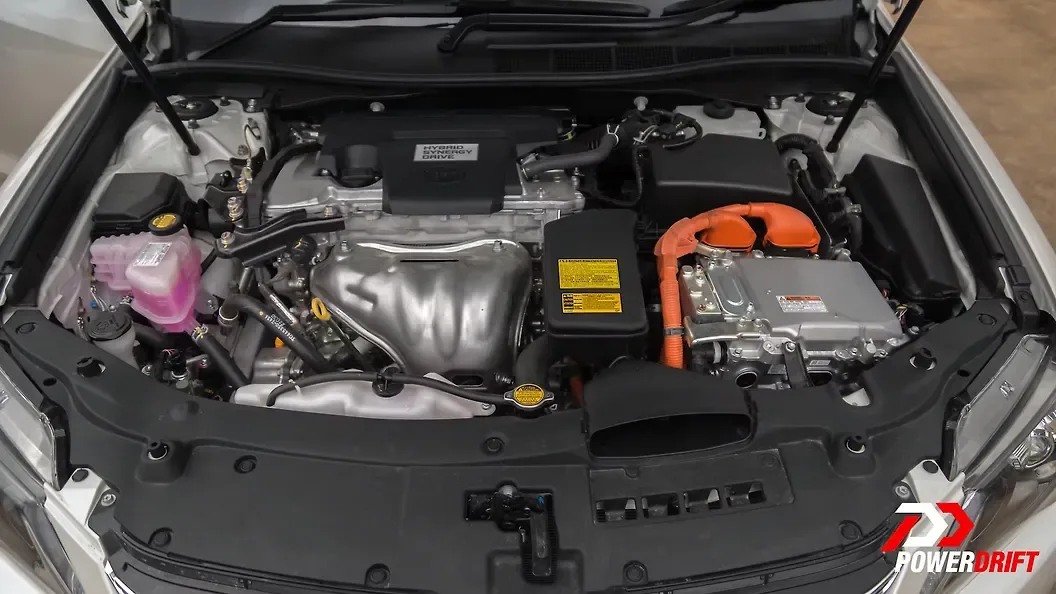
Image source: Bing (Web (fair-use with source credit))
Quick Answer
Your 2012 Toyota Camry 2.5 takes 4.6 quarts of oil. That is with a new filter. Without a new filter, you need 4.2 quarts.
Use SAE 0W-20 oil. Look for API SN or higher certification. Check the dipstick after filling.
Top off as needed. Never exceed the full mark.
Why Accurate Oil Capacity Matters for Your 2012 Camry 2.5
Engine oil does more than just lubricate. It cools internal components, cleans deposits, and helps maintain hydraulic pressure for variable valve timing. Getting the volume wrong throws all of that off.
Overfilling is the more common mistake. Add too much oil and the crankshaft whips it into a froth. Aerated oil doesn't lubricate well.
It also increases pressure inside the crankcase, which can push oil past seals and gaskets. You end up with leaks, oil consumption, and potentially a damaged catalytic converter from burned oil.
Underfilling is just as dangerous. Low oil volume means the pickup tube can suck air during hard cornering or steep inclines. That causes momentary oil starvation.
Repeated starvation accelerates bearing wear, scuffs cylinder walls, and shortens engine life significantly.
Toyota designs the 2AR-FE with a specific oil pan volume for a reason. That 4.6-quart number accounts for the oil filter's capacity, the oil passages, and the space needed for thermal expansion. Straying from it by more than a few ounces invites trouble.
The dipstick is your final check, but starting with the right amount saves time and guesswork.
If you've ever wondered whether the same guidelines apply to other Toyota engines, the general principles are similar. For example, the approach for a newer model is covered in our guide on what oil type for a 2021 Toyota Camry. Different engine, same philosophy of getting it exact.
The 2AR-FE Engine: What You're Working With
The 2AR-FE is a 2.5-liter inline-four that debuted in 2008 and powered the XV50 Camry from 2012 through 2017. It's a dual-overhead-cam, 16-valve engine with Toyota's Dual VVT-i (variable valve timing on both intake and exhaust cams). It produces 178 horsepower and 170 lb-ft of torque in the Camry.
Not a firebreather, but smooth, quiet, and known for easily exceeding 200,000 miles with basic maintenance.
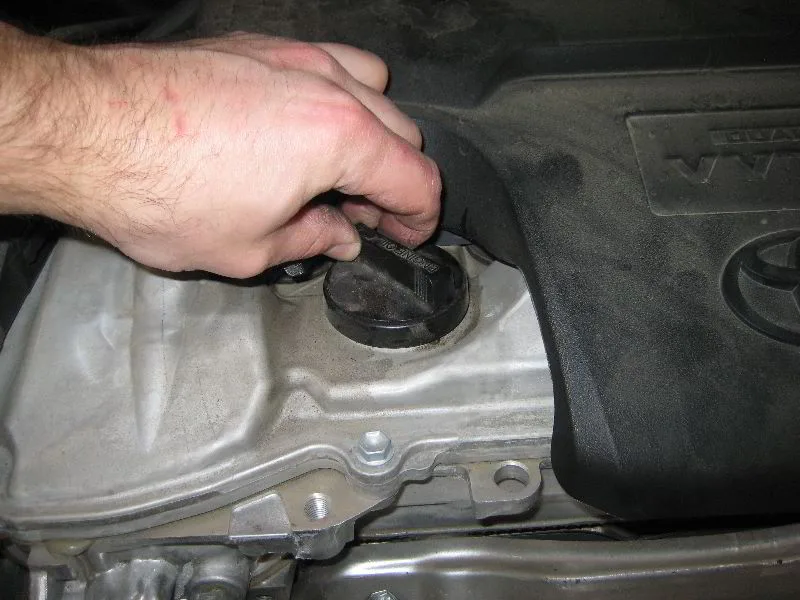
Image source: Bing (Web (fair-use with source credit))
What matters for your oil change is where everything lives. The oil fill cap is on top of the valve cover, clearly marked "0W-20". The dipstick is right next to it, with a yellow or orange loop handle.
The oil filter is mounted on the front of the engine, low down on the driver's side. It's a spin-on cartridge style, not a cartridge-in-a-housing like some newer Toyotas. That makes it straightforward to replace, but you'll need access from underneath the car.
The drain plug is on the bottom of the oil pan. It's a 14mm bolt with a crush washer that should be replaced every time. Torque spec is 29 lb-ft.
That is not a guess. Overtightening strips the aluminum oil pan threads. Undertightening lets the plug vibrate loose.
The engine holds the oil filter in a vertical or near-vertical position. That means you'll get some oil drips when you unscrew it. Have a rag or shop towel ready.
Also note that the filter gasket can stick to the mounting surface. Always wipe the surface clean before installing the new filter to prevent a double-gasket leak, which dumps your oil quickly.
This same engine family also appears in the RAV4, Scion tC, and some Lexus models with minor variations. The oil capacity is consistent across most applications, but always verify. Our guide on the correct oil specs for a Toyota RAV4 confirms the same 4.6-quart figure for that platform.
Your Oil Change Step-by-Step (The Right Way)
A proper oil change on this engine takes about 30 minutes. Rushing it is where mistakes happen. Here is the correct process from start to finish.
What You'll Need (Tools and Materials)
Gather everything before you start. Nothing worse than having a drained engine and realizing you forgot the filter.
| Item | Details |
|---|---|
| Oil | 5 quarts of SAE 0W-20, API SN or SP |
| Oil filter | Toyota 04152-YZZA1 or equivalent |
| Drain plug crush washer | 14mm, Toyota part 90430-12031 |
| Socket or wrench | 14mm for drain plug |
| Oil filter wrench | For stubborn filters, but hand-tight is ideal |
| Drain pan | At least 6-quart capacity |
| Funnel | For clean filling |
| Rags or shop towels | For drips and cleanup |
| Jack and jack stands | Or ramps for under-car access |
The Drain Process
- Warm up the engine. Run it for 3-5 minutes. Warm oil flows faster and carries more suspended contaminants. Hot oil also burns, so let it cool for a couple minutes before you get under the car.
- Park on level ground. Set the parking brake. If you're using a jack, always use jack stands. Never work under a car supported only by a hydraulic jack.
- Remove the oil fill cap. This lets the oil drain faster and prevents a vacuum lock.
- Get under the car. Locate the drain plug on the bottom of the oil pan. Position your drain pan underneath.
- Remove the drain plug. Turn it counterclockwise with a 14mm socket or wrench. The plug will be hot. Let it fall into the pan or catch it with your gloved hand.
- Let the oil drain fully. Wait at least 5 minutes. Ten is better. The stream will slow to a trickle. That is normal.
- Remove the oil filter. Position the drain pan under the filter before you unscrew it. Turn counterclockwise. Some oil will spill. Wipe the mounting surface clean.
Filling and Checking
- Install the new oil filter. Lubricate the gasket with fresh oil. Hand-tighten until the gasket contacts the mounting surface, then give it another 3/4 to 1 full turn. Do not use a wrench.
- Install the drain plug. Put a new crush washer on the plug. Torque to 29 lb-ft. If you don't have a torque wrench, snug it with a wrench and give it a firm but not aggressive final turn.
- Add oil. Pour in about 4.2 quarts initially. Replace the oil fill cap.
- Run the engine. Start it and let it idle for 30 seconds. The oil pressure light should go out within a few seconds. If it stays on, shut it off and check for leaks.
- Check the dipstick. Shut the engine off. Wait 3 minutes for oil to drain back to the pan. Pull the dipstick, wipe it clean, insert fully, pull it out again. The oil level should be between the low and full marks.
- Top off. Add oil in 0.2-quart increments until the dipstick reads at the full mark. This usually takes another 0.4 to 0.6 quarts.
- Check for leaks. Look at the drain plug and oil filter while the engine runs. A slow drip means you need to tighten one of them.
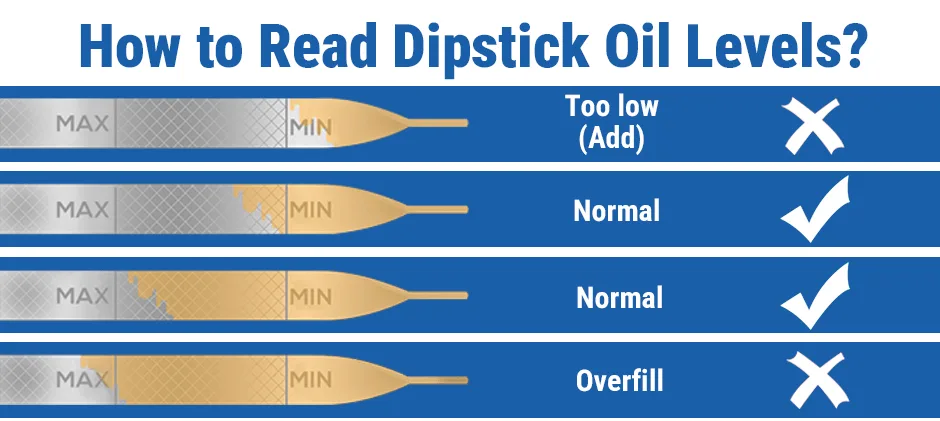
Image source: Bing (Web (fair-use with source credit))
The dipstick on the 2AR-FE is straightforward. The distance between the low and full marks represents approximately 1 quart. If you overshoot the full mark, you have only two options: drain some oil out or suck it out with a syringe.
Running an overfilled engine is not safe.
If you're new to Toyota maintenance, the process is nearly identical across their model lineup. The steps for a 2025 Toyota Corolla follow the same logic, though the capacity differs. Always verify your specific model.
The 0W-20 Question: Why That Specific Oil
Some owners wonder if they can use 5W-30 or 10W-40 in a pinch. The answer is no, not if you care about long-term reliability.
Toyota specifies SAE 0W-20 for the 2AR-FE engine. That viscosity is not a suggestion. It is engineered for the tight clearances in this engine's bearing journals and hydraulic lash adjusters.
Thicker oil takes longer to reach critical components on cold starts. That delay causes measurable wear.
Here is what the numbers mean. The "0W" part tells you the oil's viscosity at cold temperatures. A 0W oil flows readily at -40°F.
That protects the engine during winter starts in cold climates. The "20" part is the viscosity at operating temperature. A 20-weight oil at 212°F is thin enough to flow through narrow passages yet thick enough to maintain a hydrodynamic oil film.
0W-20 also improves fuel economy. Toyota's engineers chose it to help the Camry achieve its EPA ratings of 25 city and 35 highway. Using 5W-30 reduces fuel economy by about 1-2 percent and increases engine wear during warm-up.
The oil must also meet API SN or higher certification. As of 2026, API SP is current and backwards-compatible with engines requiring SN. Look for the API donut symbol on the bottle.
If it says SN, SN Plus, or SP, you are good. Do not use oil labeled only for older API classifications like SL or SM. They lack the deposit control and wear protection this engine needs.
Synthetic oil is recommended but not strictly required. The 0W-20 viscosity is almost exclusively available as a synthetic blend or full synthetic in most brands. If you are driving in extreme conditions, towing, or living in a very hot climate, full synthetic provides better thermal stability and longer change intervals.
For normal mixed driving, a quality synthetic blend from a major brand works fine.
Remember to check your owner's manual for the final word. Toyota also publishes service bulletins that confirm the 0W-20 requirement. The same applies to newer models.
For example, our guide on what oil type to use for a 2025 RAV4 shows Toyota continues to recommend 0W-20 across their four-cylinder lineup.
Five Mistakes That Wreck Your Engine
Even experienced DIYers make these errors. The stakes are high because each one can cause real engine damage. Here is what to watch for.
Overfilling
This is the most common mistake. You buy a 5-quart jug and dump the whole thing in without checking the dipstick. The 2AR-FE only needs 4.6 quarts.
That extra 0.4 quart puts you over the full mark.
What happens next is not obvious. The crankshaft dips into the excess oil and whips it into foam. Foam does not lubricate.
It also does not compress well, which can cause hydraulic lock in extreme cases. The check engine light may come on. Seals start leaking.
You may notice blue smoke from the exhaust.
Fix it by draining the excess. Loosen the drain plug and let a little oil out. Check the dipstick.
Repeat until the level is correct. Do not drive around hoping it will burn off. It will not.
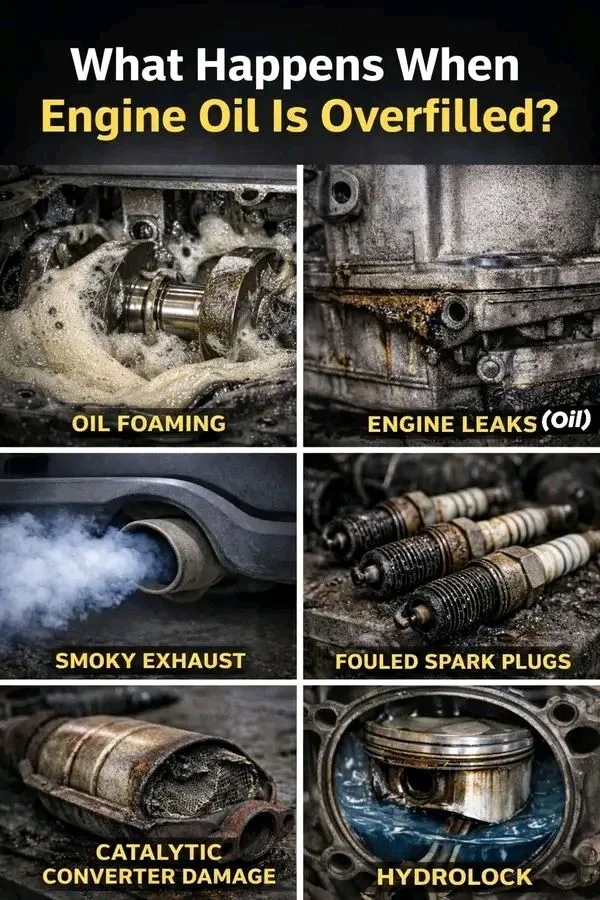
Image source: Bing (Web (fair-use with source credit))
Underfilling
Underfilling is less common but more dangerous. If you only add 4 quarts and walk away, the oil level sits below the low mark. The pickup tube can suck air during acceleration or on hills.
That causes momentary oil starvation.
Oil starvation kills bearings. The rod bearings go first. You will hear a knock.
By then, the damage is done. An engine that has been starved of oil needs a rebuild or replacement.
The dipstick check prevents this. Always verify after the first fill. Always top off to the full mark.
Wrong Viscosity
Some owners grab 5W-30 because it is cheaper or more common. Do not do this. The 2AR-FE was designed for 0W-20.
That specification is in the owner's manual and stamped on the oil fill cap.
Thicker oil does not provide better protection. It just means slower circulation on cold starts. The engine wears more during those first seconds of operation.
Fuel economy drops. Over time, sludge formation increases because thicker oil does not flow through the PCV system as effectively.
If you are in a pinch and cannot find 0W-20, use 5W-20 as a temporary substitute. Switch back at the next change. Never use 10W-30 or 10W-40.
Skipping the Filter
Some quick lube places try to save money by not changing the filter every time. Do not let them. The oil filter traps contaminants.
Over time, it becomes clogged. A clogged filter bypasses and sends unfiltered oil through the engine.
Change the filter with every oil change. The cost is about $7 for a quality aftermarket filter. That is cheap insurance against bearing wear and piston ring clogging.
Ignoring the Crush Washer
The drain plug crush washer is a one-time-use part. It compresses when you tighten the plug to create a seal. Reusing it means the seal is compromised.
A slow drip develops. You may not notice until the oil level drops a quart. By then, you have been driving with low oil pressure intervals.
Replace the crush washer every time. A pack of ten costs about $5 on Toyota parts sites.
If you want to see how other Toyota models handle similar maintenance, our guide on the 1997 Camry oil specifications shows the same attention to detail applies across generations.
Official Specs at a Glance
Here is a quick reference table for the 2012 Camry 2.5. Bookmark it or save it in your phone.
| Specification | Value |
|---|---|
| Engine | 2.5L 2AR-FE |
| Oil capacity with filter | 4.6 quarts (4.4 liters) |
| Oil capacity without filter | 4.2 quarts (4.0 liters) |
| Bone-dry capacity | 5.1 quarts |
| Recommended viscosity | SAE 0W-20 |
| API certification | SN or higher (SP is fine) |
| Oil filter part (OEM) | 04152-YZZA1 |
| Drain plug size | 14mm |
| Drain plug torque | 29 lb-ft |
| Oil change interval | 5,000-7,500 miles |
The interval depends on driving conditions. Severe service includes short trips, stop-and-go traffic, extreme temperatures, towing, or dusty roads. Under severe service, change every 5,000 miles.
Under normal highway driving, 7,500 miles is acceptable.
Toyota's official position as of 2026 is that 0W-20 synthetic or synthetic blend is required. Do not use conventional 0W-20 because it does not exist in that viscosity. Every 0W-20 on the market is at least a synthetic blend.
When to Change Your Oil (Real-World Intervals)
The owner's manual says 7,500 miles for normal service. But what counts as normal? Most Camry owners fall into severe service without realizing it.
Severe service includes:
- Trips under 10 miles in cold weather
- Frequent stop-and-go traffic
- Extensive idling
- Towing or carrying heavy loads
- Driving on dusty or unpaved roads
- Extreme hot or cold climates
If any of these describe your driving, change the oil every 5,000 miles. That is the safe interval. Oil analysis studies from independent labs show that 0W-20 in the 2AR-FE begins to shear down in viscosity around 6,000 miles in severe service.
Sheared oil does not protect as well.
For highway commuters who drive 30 miles each way on paved roads, 7,500 miles is fine. Use a full synthetic for that interval. Synthetic oil resists thermal breakdown better than a blend.
Do not go past 10,000 miles regardless of oil type. The 2AR-FE does not have a low-oil-pressure warning that catches slow degradation. By the time the light comes on, damage has already occurred.
The same interval logic applies to other Toyota engines. Our guide on the 2026 Camry oil type and capacity confirms that newer models have similar recommendations with slightly higher capacities.
High-Mileage Engines: Any Special Considerations?
If your 2012 Camry has over 100,000 miles, you might wonder if the oil needs change. The answer is yes and no.
The capacity does not change. You still need 4.6 quarts with a filter. The 2AR-FE does not develop more internal volume as it ages.
The viscosity should stay 0W-20. Do not switch to a thicker oil to reduce consumption or quiet a noisy engine. That masks symptoms instead of fixing them.
If your engine is using oil, check for leaks first. Then check the PCV valve. Then perform a compression test.
Thicker oil is a band-aid, not a solution.
High-mileage oil is a different story. These oils contain seal conditioners that can reduce minor leaks by softening dried-out gaskets. They also have higher levels of detergents to clean sludge.
Switching to a high-mileage 0W-20 at 100,000 miles is a reasonable choice. Brands like Mobil 1, Valvoline, and Pennzoil all offer high-mileage variants in 0W-20.
Do not expect miracles. If valve cover gaskets are leaking externally, high-mileage oil will not fix them. That is a mechanical repair.
But for seepage past the rear main seal or timing cover, the conditioners sometimes help.
Monitor oil consumption. The 2AR-FE is not known for excessive oil use, but some examples burn a quart every 3,000 miles at higher mileages. That is not ideal but is within Toyota's acceptable range.
Top off as needed and keep the dipstick between marks.
For a broader look at Toyota oil recommendations across their lineup, our guide on the Toyota Highlander oil type covers the same considerations for a different platform.
DIY vs. Shop: What Makes Sense for You
Changing your own oil on the 2012 Camry 2.5 is straightforward. The filter is accessible. The drain plug is easy to reach.
No special tools are required beyond a 14mm socket and an oil filter wrench for stubborn filters.
DIY pros:
- Cost: about $30 for oil and filter
- You control the quality of oil and filter
- You can verify the crush washer is replaced
- You know the job was done right
DIY cons:
- You need to dispose of used oil (most auto parts stores accept it for free)
- You need jack stands or ramps
- It takes about 30 minutes of your time
Shop pros:
- No mess, no disposal, no tools needed
- They can inspect other components while under the car
Shop cons:
- Cost: $70 to $100 for a conventional oil change, $90 to $130 for synthetic
- Some shops use cheap filters and bulk oil of unknown quality
- You cannot verify the crush washer replacement
- Upsells for unnecessary services are common
For most owners, the DIY route saves $40 to $70 per change. Over ten changes, that is $400 to $700. Enough to pay for a set of ramps, a drain pan, and a good socket set with money left over.
If you do go to a shop, ask what oil and filter they use. Specify 0W-20 synthetic blend or full synthetic. Request that they replace the crush washer.
A good shop will have no problem with these requests. A bad shop will argue. Find a different shop.
The same logic applies to other Toyota models. Our guide on the Tacoma oil type and capacity covers the DIY vs shop decision for that truck, and the process is remarkably similar despite the larger engine.
Your Quick Reference Card
Keep this at the back of your owner's manual. It covers everything you need for a perfect oil change.
The essentials:
- 4.6 quarts of 0W-20 with a new filter
- 4.2 quarts if you reuse the filter (don't)
- API SN or SP certification required
- New crush washer every time
- Torque drain plug to 29 lb-ft
- Hand-tighten the oil filter only
- Check dipstick after filling
- Top off to the full mark
Change intervals:
- Normal driving: 7,500 miles
- Severe service: 5,000 miles
- Never exceed 10,000 miles
Warning signs you messed up:
- Oil pressure light flickers: possible underfill or wrong viscosity
- Blue smoke from exhaust: possible overfill
- Oil smell inside cabin: possible leak from drain plug or filter
- Engine knock: possible oil starvation from low level
Frequently Asked Questions
Can I use 5W-30 in my 2012 Camry 2.5?
No. Toyota specifies 0W-20 for the 2AR-FE engine. Using 5W-30 reduces fuel economy, increases cold-start wear, and can cause sludge over time.
The oil fill cap says 0W-20 for a reason.
How do I check the oil level correctly?
Park on level ground. Shut the engine off. Wait 3 minutes.
Pull the dipstick, wipe it clean, insert fully, pull it out again. The oil should sit between the low and full marks. Add oil in small increments if needed.
What happens if I overfill by half a quart?
The crankshaft churns the excess oil into foam. Foam does not lubricate. You risk seal leaks, a check engine light, and engine damage.
Drain the excess immediately. Do not drive with an overfilled engine.
Do I need synthetic oil?
Yes. Every 0W-20 available is at least a synthetic blend. Full synthetic offers better protection for extended intervals and extreme conditions.
Conventional 0W-20 does not exist in production.
How often should I change the oil filter?
Every oil change. The filter traps contaminants. A clogged filter bypasses and sends unfiltered oil through the engine.
The $7 cost for a quality filter is trivial compared to engine repair.
What oil does the 2012 Camry 2.5 take?
SAE 0W-20 with API SN or SP certification. Toyota recommends synthetic blend or full synthetic. The capacity is 4.6 quarts with a new filter.
Verify with the dipstick after filling.