
If you own a 2012 Toyota Camry, the first question that comes up at oil change time is simple: how much oil does it actually take? The short answer is 4.4 quarts for the 2.5L four-cylinder and 5.7 quarts for the 3.5L V6, but there is more to it than one number. Get it wrong by even half a quart and you can trigger a rough idle, a check-engine light, or worse, long-term engine damage.
Manufacturer specifications indicate the 2012 Camry uses SAE 0W-20 synthetic oil meeting API SN or ILSAC GF-5 standards. As of 2026, these specs remain the gold standard for this generation. Whether you are a first-time DIYer or a seasoned home mechanic, knowing the exact capacity for your specific engine keeps the car running smoothly for another 100,000 miles.
Let us walk through every detail you need.
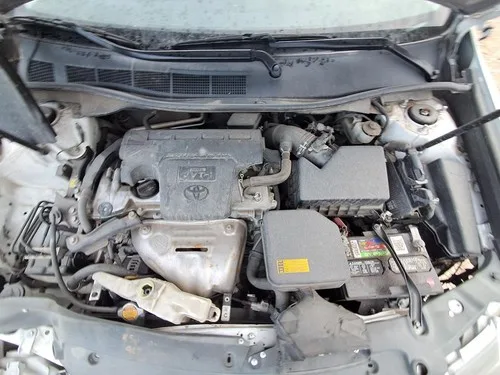
Image source: Bing (Web (fair-use with source credit))
Quick Answer
The 2012 Toyota Camry takes 4.4 quarts of oil with a filter change for the 2.5L four-cylinder engine. The 3.5L V6 takes 5.7 quarts. Use SAE 0W-20 synthetic oil.
Look for API SN or ILSAC GF-5 on the bottle. These are the final numbers. Do not guess.
Why Getting the Exact Oil Capacity Matters (More Than You Think)
Engine oil does more than lubricate. It cools internal components, cleans sludge, and maintains hydraulic pressure for variable valve timing. Every engine is designed around a specific oil volume in the oil pan.
That volume determines how much oil the pump can circulate at any given RPM.
When you underfill, the oil pickup tube can suck air during hard cornering or steep hills. Air in the oil system means metal-on-metal contact inside the bearings. That contact creates heat, wear particles, and eventually a knocking sound that signals the end is near.
Overfilling is not safer either. Extra oil sits above the crankshaft. The crankshaft then whips the oil into a froth, just like a blender.
Foam does not lubricate. It aerates the oil, which drops oil pressure, starves the valvetrain, and can trigger a check-engine light for catalyst or misfire codes.
The 2012 Camry is a reliable car. Proper oil capacity is one of the few things that keeps it that way. Skimping on measurement is the fastest way to turn a 200,000-mile engine into a 100,000-mile rebuild.
The Two Engines: 2.5L 4-Cylinder vs. 3.5L V6 – What's Different
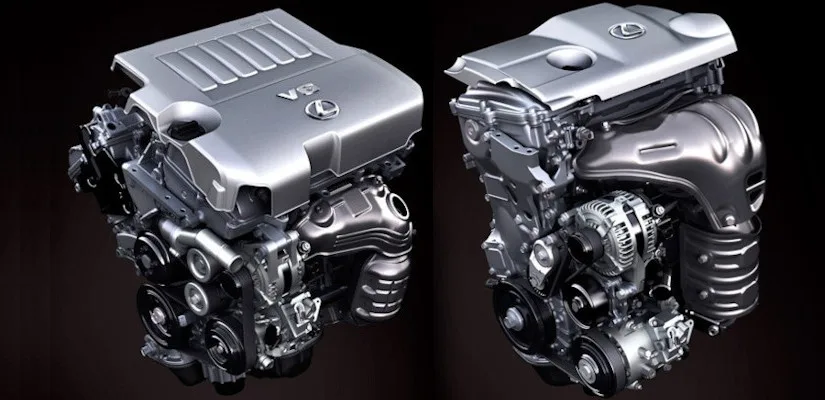
Image source: Web (Bing) / ia.lions-ottobrunn.de (Web image (fair-use with source credit))
The 2012 Camry came with two engine choices. They share the same chassis and oil change process, but the capacity and some parts are completely different.
2.5L 4-Cylinder (2AR-FE) Oil Specs
This is the base engine and the one found in most used Camrys today. It uses a spin-on cartridge oil filter mounted vertically on the side of the engine block. The filter is accessible from above, but you will still need to get under the car for the drain plug.
| Specification | Value |
|---|---|
| Oil capacity with filter | 4.4 quarts (4.2 liters) |
| Oil capacity dry fill | 4.7 quarts (4.5 liters) |
| Recommended viscosity | SAE 0W-20 |
| Oil filter part (OEM) | 04152-38020 |
| Drain plug torque | 29 ft-lbs (39 Nm) |
The 2.5L engine benefits from the thinner 0W-20 oil for fuel economy. Toyota designed the variable valve timing system around this viscosity. Thicker oil like 5W-30 will work in a pinch but can reduce fuel mileage by 2 to 3 percent.
3.5L V6 (2GR-FE) Oil Specs
The V6 is a larger, more powerful engine. It requires roughly 1.3 quarts more oil. The oil filter is a traditional spin-on canister located at the front of the engine, easy to reach from above.
| Specification | Value |
|---|---|
| Oil capacity with filter | 5.7 quarts (5.4 liters) |
| Oil capacity dry fill | 6.1 quarts (5.8 liters) |
| Recommended viscosity | SAE 0W-20 |
| Oil filter part (OEM) | 04152-38020 (same as 4-cylinder) |
| Drain plug torque | 29 ft-lbs (39 Nm) |
Both engines use the same oil filter part number, which is convenient if you own multiple Toyotas. The V6 engine bay is tighter, but the filter location is actually more accessible than the 2.5L's side-mounted cartridge.
Dry Fill vs. Oil Change Capacity – Yes, There's a Difference
This trips up a lot of people. The oil capacity printed in the owner's manual is the dry fill number, which assumes the engine has zero oil in it after a rebuild or complete disassembly. That number is always slightly higher than what you need during a routine oil change.
During a standard oil change, you drain the old oil but not every drop. Some oil stays trapped in the oil cooler lines, the turbo if equipped, the cylinder head galleries, and the pump itself. This residual oil typically measures 0.3 to 0.5 quarts.
So when you pour in the dry fill amount, you are overfilling by exactly that residual. That half-quart pushes the level above the full mark on the dipstick.
The rule is simple. Use the "with filter change" capacity from the table above. Pour in about 80 percent of that amount first.
Check the dipstick. Top off slowly until the level reaches the full mark. Never dump the full dry fill number and walk away.
What Happens When You Get the Amount Wrong
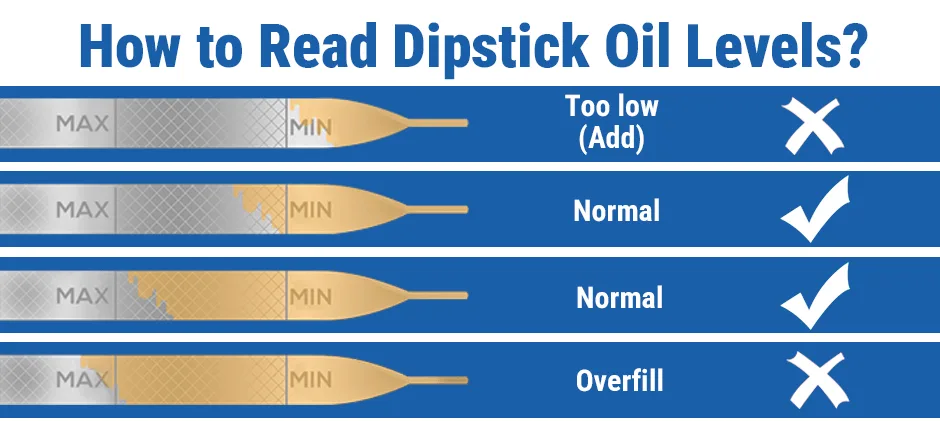
Image source: Web (Bing) / fridayparts.com (Web image (fair-use with source credit))
Your Camry will tell you if something is off. The question is whether you notice before damage happens.
Signs You've Overfilled
Overfilling by one quart or more creates noticeable symptoms within minutes of startup.
- Rough idle. The extra oil creates drag on the crankshaft. The engine hunts for a steady RPM.
- Oil smell inside the cabin. Foaming oil can push past the PCV valve and into the intake, burning off as a blueish smoke and a burning oil odor.
- Check-engine light. The oxygen sensor detects abnormal combustion from oil in the cylinders. Common codes include P0300 (random misfire) or P0420 (catalyst efficiency).
- Oil leaks. Foam increases crankcase pressure. Gaskets and seals that were fine for years start weeping.
The fix is straightforward. Drain a half-quart at a time until the dipstick reads correctly. Do not drive it miles with the light on.
Signs You've Underfilled
Underfilling is more dangerous because symptoms can appear suddenly with little warning.
- Valvetrain noise. A ticking or clicking sound from the top of the engine, especially on cold starts.
- Low oil pressure warning light. This is your last call. Pull over immediately.
- Engine knock. A deeper, rhythmic thudding means bearings are already damaged.
- Overheating. Oil carries away combustion heat. Less oil means higher operating temperatures.
If you see the oil pressure light, shut the engine off and add oil immediately. Check the dipstick first to confirm how much to add. Do not restart until the level is correct.
The Camry's oil pressure sensor is reliable. If it lights up, trust it.
The Right Oil for Your 2012 Camry
Not all engine oil is the same. Using the wrong viscosity or quality grade can hurt fuel economy, reduce engine life, or void a warranty claim. Here is what you need to know for the 2012 Camry.
Viscosity: Why 0W-20 Is the Standard
Toyota designed the 2AR-FE and 2GR-FE engines around SAE 0W-20 synthetic oil. The "0W" means the oil flows like a thin winter grade at cold temperatures. The "20" means it thickens to a moderate viscosity at operating temperature.
This combination delivers two benefits. First, it pumps quickly during cold starts, reaching critical engine parts before metal has time to expand. Second, it reduces internal friction, which directly improves fuel economy by 2 to 4 percent compared to a heavier oil like 5W-30.
Can you use 5W-30 in a pinch? Yes, but only temporarily. Toyota issued technical service bulletins allowing 5W-30 in certain conditions, specifically for high-mileage engines burning oil or for extreme hot-climate use.
For normal driving, stick with 0W-20.
Synthetic vs. Conventional – What Toyota Actually Recommends
The 2012 Camry shipped from the factory with synthetic oil. Toyota's owner manual specifies 0W-20 meeting API SN standards, and nearly all 0W-20 on the market today is synthetic or synthetic blend.
Conventional 0W-20 does not really exist. The viscosity is too thin for conventional base stocks to maintain stability at high temperatures. So when you buy 0W-20, you are buying synthetic whether the bottle says it or not.
Synthetic oil handles heat better, resists oxidation longer, and flows better in cold weather. For a 2012 Camry with over 100,000 miles, synthetic oil also helps reduce sludge buildup, which is common in older engines that saw extended oil change intervals.
API and ILSAC Standards to Look For
Look for the API donut symbol on the back of the bottle. It should say SN, SN Plus, or SP. SP is the newest standard, introduced in 2020, and is fully backward-compatible with the 2012 engine.
The ILSAC GF-5 or GF-6 starburst symbol is another good indicator. These standards add fuel economy and deposit control tests that API alone does not cover.
| Standard | What It Means for Your Camry |
|---|---|
| API SN | Original spec for 2012 model year. Fully acceptable. |
| API SN Plus | Adds protection against low-speed pre-ignition. Safe to use. |
| API SP | Newest standard. Better wear protection and deposit control. |
| ILSAC GF-5 | Energy-conserving. Often paired with API SN. |
| ILSAC GF-6 | Current standard. Backward-compatible with GF-5. |
If you see any of these on the bottle, you are good. The only thing to avoid is a bottle marked only with an older standard like API SL or SJ. Those lack the additive packages your engine needs.
Step-by-Step: How to Check and Confirm Your Oil Level Correctly
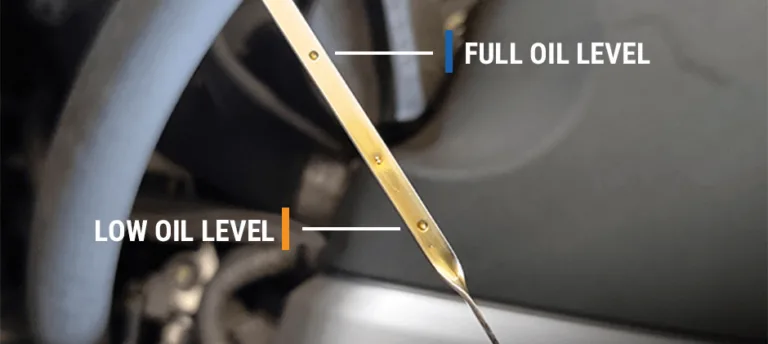
Image source: Web (Bing) / fridayparts.com (Web image (fair-use with source credit))
Checking oil sounds simple. But most people do it wrong. Here is the method that gives you an accurate reading every time.
Step 1: Park on level ground. A sloped driveway tilts the oil in the pan, giving a false reading. Pull into a flat spot. If you are on a hill, find another spot.
Step 2: Warm the engine to operating temperature. Cold oil is thick and clings to the dipstick tube. Run the engine for five minutes. Shut it off.
Wait two to three minutes for the oil to settle back into the pan.
Step 3: Pull the dipstick and wipe it clean. Use a lint-free rag. Reinsert it fully. Wait two seconds.
Pull it out again.
Step 4: Read the level. The dipstick has two marks. A lower one for the low level, an upper one for the full level. The oil should sit between them.
Ideally, it should be at or just below the upper mark.
Step 5: Interpret what you see. If the oil is at the lower mark, you need one full quart. If it is halfway between, add half a quart. If it is above the upper mark, drain some out.
A common mistake is reading the dipstick immediately after shutting off the engine. Oil drains slowly from the upper engine. Give it those two to three minutes.
Your reading will be accurate.
If the oil looks milky or foamy on the dipstick, that is a separate problem. Milky oil means coolant contamination. Foamy oil means overfilling or a failing PCV valve.
Address those before driving.
Common Mistakes DIYers Make on This Exact Model
Even experienced home mechanics hit these traps. The 2012 Camry has a few quirks worth knowing.
Mistake 1: Using the premium filter from the 2.5L on the V6. Both engines share the same filter part number. But the V6 filter is located differently and some aftermarket filters have a different thread depth. Always double-check the fit before tightening.
Mistake 2: Over-torquing the drain plug. The aluminum oil pan on the 2AR-FE is soft. A drain plug tightened with a wrench instead of a torque wrench can strip the threads. The spec is 29 ft-lbs.
That is about as tight as you can comfortably pull with a short ratchet. Any harder and you risk a repair bill.
Mistake 3: Forgetting the crush washer. The drain plug uses a replaceable aluminum crush washer. Reusing the old one creates a slow drip. A six-pack of washers costs two dollars.
Replace it every time.
Mistake 4: Pouring the full 5-quart jug into the 2.5L. A standard jug holds five quarts. The 2.5L only takes 4.4 quarts. The remaining oil sits in the jug.
If you dump all five, you are overfilling by 0.6 quarts. That is enough to cause the foam and rough idle we discussed earlier.
Mistake 5: Not pre-lubing the filter gasket. A dry rubber gasket can stick to the engine block. When you go to remove the filter next time, it may seize or tear. Dip your finger in fresh oil and run it around the gasket before installing.
Mistake 6: Checking the oil after a fresh fill without running the engine. The new filter is empty. The oil passages are empty. The dipstick will read low even after you poured the correct amount.
Run the engine for one minute, shut it off, wait, and then check.
When to Call a Shop vs. Doing It Yourself
Oil changes are one of the easiest DIY jobs on the 2012 Camry. The filter and drain plug are accessible without removing skid plates. You need basic hand tools and about 30 minutes.
But there are situations where a professional is worth the cost.
DIY when:
- You have a flat driveway or garage floor
- You own a jack and jack stands
- You can dispose of the old oil properly
- You are comfortable getting under the car
Call a shop when:
- Your drain plug is stripped or rounded off
- You see metal shavings in the drained oil
- The engine has a persistent oil leak
- You do not have a safe place to lift the car
- You need to pass an inspection that requires proof of professional service
A shop will charge 50 to 80 dollars for an oil change on a 2012 Camry as of 2026. Doing it yourself costs 25 to 40 dollars. Over four changes per year, that adds up to roughly 120 dollars saved annually.
If you choose a shop, bring your own oil. Many shops use bulk oil or house brands that may not meet Toyota's spec. Hand them a jug of 0W-20 with the API SN label visible.
They will use it.
Maintenance Intervals: How Often Should You Change It?
Toyota’s official recommendation for the 2012 Camry is every 10,000 miles or 12 months, whichever comes first. That number assumes normal driving conditions and the use of synthetic 0W-20 oil.
But let’s be realistic. Very few people drive under ideal conditions all the time. The owner’s manual also lists a “severe” driving schedule.
That schedule calls for oil changes every 5,000 miles.
Severe conditions include:
- Frequent short trips under five miles
- Stop-and-go city driving in heavy traffic
- Driving in extreme heat or cold
- Towing a trailer or carrying heavy loads
- Driving on dusty or unpaved roads
- Extended idling, like delivery drivers
If any of these sound familiar, cut the interval in half. Change the oil at 5,000 miles instead of 10,000. The cost is minimal.
The protection is significant.
A quick note on oil life monitors. The 2012 Camry has a maintenance reminder light, but it is not a true oil life monitor. It counts miles and time since the last reset.
It does not measure oil viscosity, contamination, or acidity. Use it as a backup reminder, not a replacement for judgment.
Here is a simple rule of thumb for this generation Camry:
| Driving Profile | Recommended Interval | Oil Type |
|---|---|---|
| Mostly highway, moderate climate | 7,500 to 10,000 miles | 0W-20 synthetic |
| Mixed city/highway, normal temps | 5,000 to 7,500 miles | 0W-20 synthetic |
| Severe conditions (short trips, towing, extreme weather) | 5,000 miles | 0W-20 synthetic |
| High mileage (150k+ miles, unknown history) | 4,000 to 5,000 miles | 0W-20 synthetic or high-mileage blend |
For a 2012 Camry that is now 14 years old as of 2026, shortening the interval is cheap insurance. Oil degrades over time even when the car sits. If you drive less than 5,000 miles a year, change the oil annually regardless of mileage.
Frequently Asked Questions
How many quarts of oil does a 2012 Toyota Camry 2.5L take?
The 2.5L four-cylinder takes 4.4 quarts of oil with a filter change. If you are filling a completely dry engine after a rebuild, it takes 4.7 quarts. Always check the dipstick after the first fill to confirm the correct level.
Can I use 5W-30 instead of 0W-20 in my 2012 Camry?
Yes, in a pinch. Toyota allows 5W-30 in certain conditions like high-mileage oil consumption or extreme heat. It may reduce fuel economy by 2 to 3 percent.
For normal driving, stick with 0W-20. The engine was designed around that viscosity.
Does the 2012 Camry V6 take more oil than the four-cylinder?
Yes. The 3.5L V6 takes 5.7 quarts with a filter change. That is about 1.3 quarts more than the 2.5L four-cylinder.
Both engines use the same oil filter part number, so the only difference is the volume.
How do I reset the oil maintenance light on a 2012 Camry?
Turn the ignition to the ON position without starting the engine. Press the trip odometer button until the odometer displays. Turn the ignition OFF.
Hold the trip button while turning the ignition back to ON. Continue holding until the maintenance light flashes and turns off.
What happens if I overfill my 2012 Camry with oil?
Overfilling by more than half a quart can cause foaming, rough idle, a check-engine light, and oil leaks past seals. The crankshaft whips the excess oil into foam. Foam does not lubricate properly and can starve engine components of oil.
Is synthetic oil required for the 2012 Camry?
Toyota recommends synthetic 0W-20. Conventional oil in 0W-20 is essentially unavailable because the viscosity requires synthetic base stocks. For the best protection and fuel economy, use a full synthetic that meets API SN or SP standards.
Final Verdict: What to Buy and What to Double-Check
The 2012 Toyota Camry takes 4.4 quarts of 0W-20 synthetic oil for the 2.5L four-cylinder and 5.7 quarts for the 3.5L V6. Stick with API SN or SP rated oil from any major brand. Buy a Toyota OEM oil filter or a quality aftermarket equivalent.
Replace the crush washer every time.
Before you pour, confirm your engine size. Check the VIN or look under the hood. After the first fill, run the engine and recheck the dipstick.
A five-minute check now saves you from a five-hundred-dollar repair later.
For more guidance on other Toyota models, see our breakdown on what oil type works in the 2021 Camry. The newer generation uses a similar spec but worth confirming. And if you own a different Toyota, our complete guide on what oil goes in a 2024 RAV4 covers that platform too.
Keep the oil fresh. Keep the level correct. Your Camry will return the favor for another 100,000 miles.