
If you own a 2012 Toyota RAV4, one of the first things you need to know before tackling an oil change is the exact oil capacity. The 2012 toyota rav4 oil capacity is 4.6 quarts (4.35 liters) when you also replace the oil filter. That number matters because using too little risks starvation, and too much can cause foaming and pressure damage.
Manufacturer specifications from Toyota's own service documentation confirm that number for the 2.5-liter 2AR-FE engine. That engine is found in nearly every 2012 RAV4 sold in North America. Getting the capacity right is just step one.
You also need the correct oil type, the proper filter, and a solid understanding of how to do the job without damaging anything. Let's walk through it.
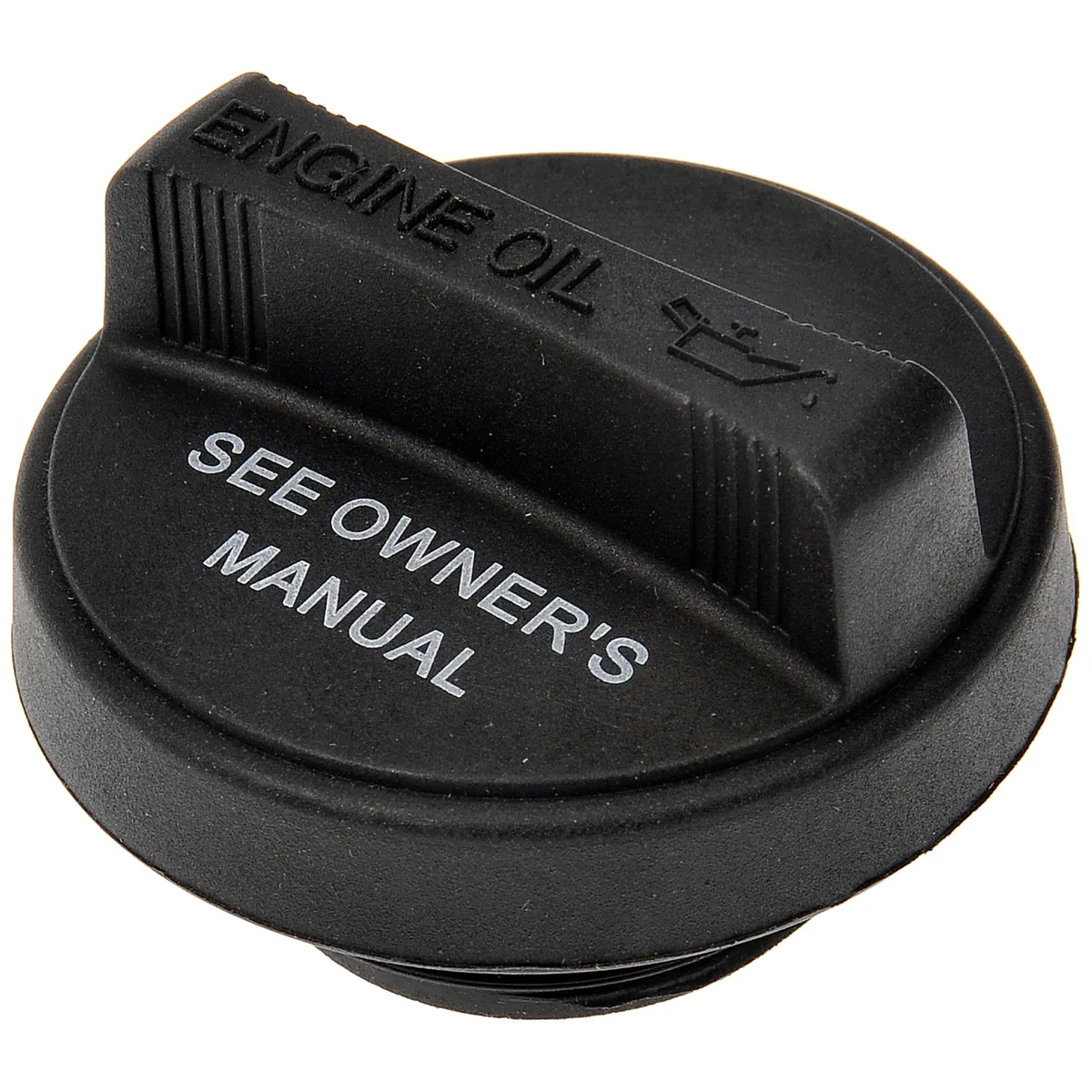
Image source: Web (Bing) / walmart.com (Web image (fair-use with source credit))
Quick Answer
The 2012 Toyota RAV4 takes 4.6 quarts of 0W-20 full synthetic oil with a filter change. Without replacing the filter, it takes roughly 4.3 quarts. Always check the dipstick after filling to confirm the level is between the low and full marks.
Use oil that meets API SN or ILSAC GF-5 standards.
Why Getting This Number Right Actually Matters
Engine oil does more than lubricate. It cools, cleans, and protects internal components. Pouring in the wrong amount creates real problems.
Overfilling is surprisingly common. When you add too much oil, the crankshaft whips it into a froth inside the crankcase. Aerated oil doesn't pump well.
It loses its ability to form a protective film between metal surfaces. Over time, that leads to premature bearing wear and reduced engine life. Toyota's engineering team designed the 2AR-FE around a specific oil volume.
Straying from it compromises that design.
Underfilling is just as bad. Low oil level means the oil pump can suck air during hard cornering or steep inclines. Even short periods of oil starvation can score cylinder walls or damage camshaft journals.
The 4.6-quart spec accounts for the oil filter's internal volume, the oil cooler lines, and the residual oil that stays in the engine after a drain.
As of 2026, original 2012 RAV4s are at least 14 years old. Many have over 100,000 miles. An engine at that age is less forgiving of maintenance mistakes.
Getting the capacity exactly right is cheap insurance against expensive repairs. The same precision applies to other Toyota models in the lineup. If you're maintaining a newer sedan, the specs differ, so it helps to check the correct fluid level before each season for a 2021 Camry or another vehicle.
The Engine That Matters (2.5L 2AR-FE)
The 2012 RAV4 came with two engine options in North America. The base engine is a 2.5-liter inline-four, codenamed 2AR-FE. The optional engine is a 3.5-liter V6, the 2GR-FE.
This article focuses on the four-cylinder because that's what the vast majority of 2012 RAV4s have under the hood.
The 2AR-FE is a dual-overhead-cam engine with variable valve timing on both the intake and exhaust sides. It produces 179 horsepower and 172 lb-ft of torque. It uses a timing chain rather than a belt, so there's no timing belt replacement interval to worry about.
But it still needs clean oil at the right level every time.
Toyota designed this engine with tight bearing clearances. That's part of why it's so smooth and quiet. But tight clearances also mean the oil viscosity matters more than on older, looser engines.
Too thick an oil won't flow into those tight spaces quickly at startup. Too thin an oil won't maintain adequate film strength at operating temperature.
The oil pan on the 2AR-FE is aluminum. That matters because aluminum threads strip more easily than steel. The drain plug is a 14mm bolt with a replaceable crush washer.
Torque it to 29 ft-lbs. Over-tightening can ruin the pan threads, and that repair means dropping the pan or replacing the whole assembly.
Oil Type: Why 0W-20 Isn't Optional
Toyota specifies SAE 0W-20 full synthetic oil for the 2012 RAV4's 2.5-liter engine. This is not a suggestion. It is the requirement written in the owner's manual and printed on the oil fill cap.
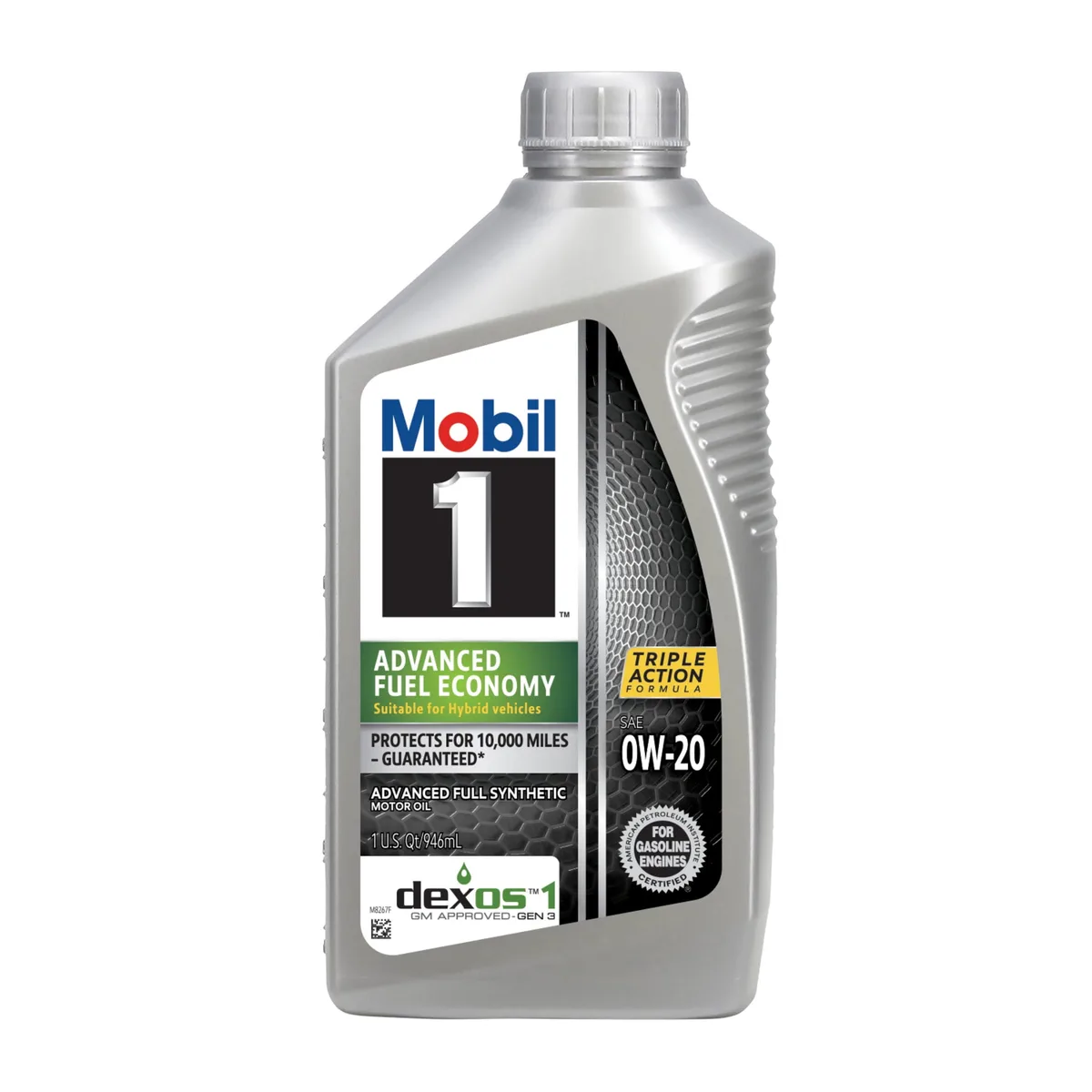
Here is why viscosity matters so much. The "0W" part means the oil stays fluid at extremely cold temperatures. At -22 degrees Fahrenheit, 0W-20 still flows well enough to reach the valvetrain within seconds of startup.
A 5W-30 oil at that temperature is noticeably thicker. On a cold winter morning, that difference translates directly into extra engine wear before the oil fully circulates.
The "20" part is the hot viscosity grade. At operating temperature (around 212 degrees Fahrenheit), 0W-20 behaves like a traditional SAE 20 weight oil. That low hot viscosity reduces internal drag inside the engine.
Less drag means better fuel economy. Toyota engineers calculated that 0W-20 gives the best balance of protection and efficiency for this engine.
Using 5W-30 instead of 0W-20 might seem harmless. Plenty of people do it. But the results show up over time.
Aggregate reviews from owner forums report lower fuel economy by 1 to 3 miles per gallon after switching to 5W-30. Some owners also report slightly noisier cold starts. In extreme cold, the difference is even more pronounced.
The engine simply does not get oil as quickly on startup.
What about high-mileage oil? Once your RAV4 passes 75,000 miles, switching to a high-mileage formulation of 0W-20 is a reasonable choice. High-mileage oils have slightly different additive packages that help condition older seals.
Just make sure the bottle still says 0W-20 and meets API SN or SP standards. The same principle applies to other models in Toyota's lineup. If you maintain a 2025 Camry Hybrid, the oil type and capacity will be different, so always verify before pouring.
The oil should also carry the ILSAC GF-5 certification mark on the bottle. That stands for International Lubricant Standardization and Approval Committee. It ensures the oil meets fuel economy and protection standards that align with Japanese engine designs, including Toyota's.
Step-by-Step: How to Do the Oil Change Correctly
An oil change on the 2012 RAV4 is a straightforward job. Most people can finish it in 30 to 45 minutes their first time. Here is the process broken into clear steps.
Tools and Parts You'll Need
| Item | Specification |
|---|---|
| Engine oil | 5 quarts of 0W-20 full synthetic (you'll use 4.6) |
| Oil filter | Toyota 90915-YZZF1 or equivalent spin-on |
| Crush washer | Toyota 90430-12031 (14mm, aluminum) |
| Socket | 14mm for drain plug |
| Torque wrench | 29 ft-lbs capacity |
| Oil filter wrench | 64mm cap with 14 flutes |
| Drain pan | At least 6-quart capacity |
| Funnel | Small, fits oil fill hole |
| Ramps or jack stands | Safety first |
Step 1: Prep the Car
Park on level ground. Warm the engine for two to three minutes. Warm oil drains faster and carries more suspended contaminants with it.
But do not let it get hot enough to burn you. Lukewarm is the sweet spot.
Turn off the engine. Open the hood and remove the oil fill cap. That vent allows the oil to drain more freely.
It also serves as a reminder that the cap is off, so you won't forget to put it back before starting the engine later.
Raise the front of the vehicle using ramps or jack stands. Never work under a car supported only by a jack. If you use ramps, drive up slowly and set the parking brake.
If you use jack stands, place them under the reinforced pinch welds behind the front wheels.
Step 2: Drain the Old Oil
Position the drain pan under the oil pan. The drain plug faces the rear of the vehicle, so slide the pan slightly behind the front crossmember.
Use a 14mm socket to loosen the drain plug. Turn it counterclockwise. Once it's loose, unscrew it by hand.
The oil will start flowing immediately, so pull your hand away quickly. Set the plug aside and let the oil drain for at least five minutes. Ten minutes is better if you have time.
While the oil drains, inspect the old crush washer on the drain plug. It should be flattened from the previous installation. Replace it with a new one.
Never reuse a crush washer more than once or twice at most. A crushed washer that has been flattened too much will not seal properly and will drip.
Step 3: Replace the Oil Filter
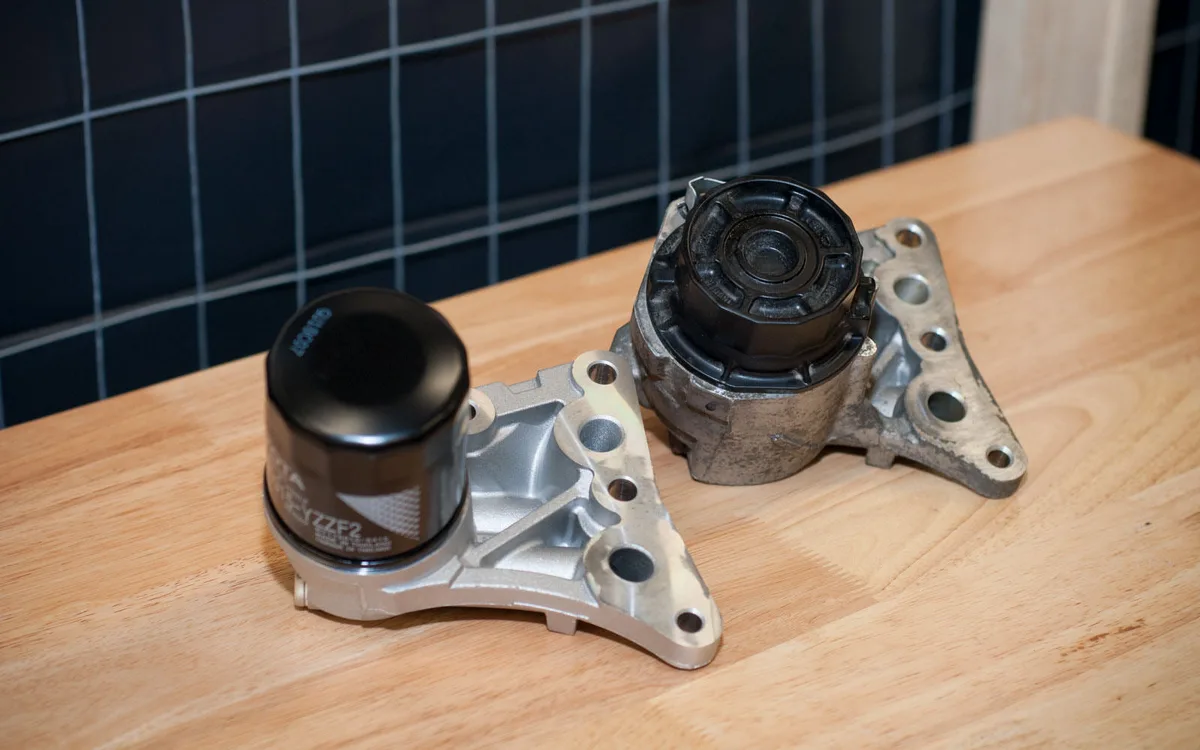
The oil filter is on the front of the engine, just below the intake manifold. You can reach it from above with a long extension, or from below with the oil filter wrench.
Use the 64mm cap wrench to loosen the filter housing. It spins off counterclockwise. Be ready for some oil to spill out when the filter comes off.
About half a quart will drain from the filter area.
Wipe the filter mounting surface on the engine block with a clean rag. Make sure the old gasket is not stuck to the block. If the old gasket stays behind and you install the new filter on top of it, the double gasket will leak and the filter can loosen over time.
That is a common mistake that causes sudden oil loss.
Apply a thin film of fresh oil to the new filter's rubber gasket. That prevents the gasket from tearing during installation and makes the next removal easier. Screw the new filter on by hand until the gasket contacts the mounting surface.
Then tighten it another three-quarters of a turn by hand. Do not use the wrench for final tightening. Hand tight is sufficient.
Step 4: Refill with Fresh Oil
Lower the vehicle back to level ground. Insert a funnel into the oil fill hole. Pour in 4.6 quarts of 0W-20 full synthetic oil.
That is exactly one full 5-quart jug minus about 12 ounces. Save the leftover for top-ups between changes.
Replace the oil fill cap. Start the engine and let it run for 30 seconds. Watch the oil pressure light on the dashboard.
It should go out within a few seconds. If it stays on, shut the engine off immediately and check for problems.
While the engine runs, look under the vehicle for drips around the drain plug and oil filter. Shut the engine off and wait three minutes for the oil to settle back into the pan.
Step 5: Check Your Work
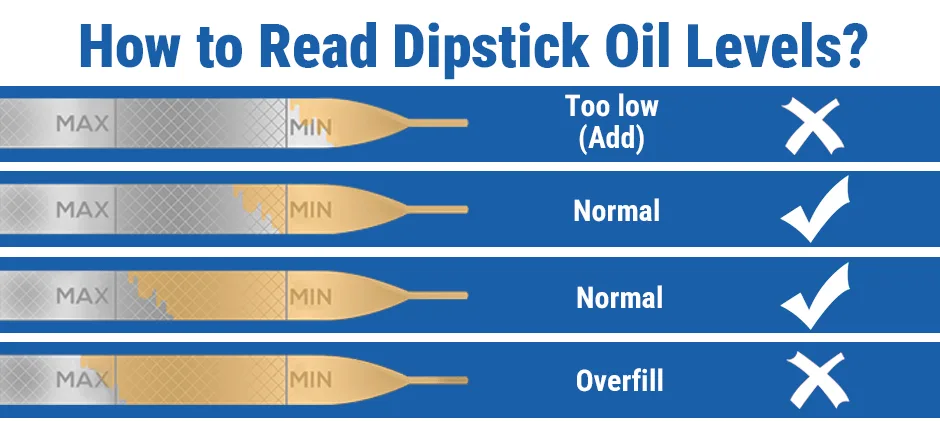
Pull the dipstick out. Wipe it clean with a rag. Insert it fully, then pull it out again.
The oil level should be between the low and full marks, closer to the full mark.
If the level is too low, add a quarter quart at a time until it reaches the full mark. If it is above the full mark, you have overfilled. In that case, drain some oil by loosening the drain plug slightly and letting a small amount run out.
Check the dipstick again after your first drive. Sometimes the oil level reads slightly differently after the filter fills completely and the system pressurizes. A final check confirms everything is correct.
The Exact Specs (Torque, Filter, Crush Washer)
Getting the numbers right is what separates a clean oil change from a messy one. Here are the critical specs for the 2012 RAV4 2.5-liter engine.
Drain plug torque: 29 ft-lbs (38 Nm). That is moderately tight. If you do not own a torque wrench, tighten the plug until it stops turning, then give it another quarter turn. But a torque wrench is cheap insurance.
The aluminum oil pan threads strip easily if you overdo it. Under-tightening causes drips.
Oil filter torque: hand tight plus three-quarters of a turn. The filter gasket compresses fully at that point. Do not use a wrench to crank it down further. You will only make the next removal harder and risk crushing the gasket.
Crush washer: Toyota 90430-12031. This is a 14mm aluminum washer. It deforms under torque to create a perfect seal. Reuse one too many times and it hardens.
A hardened washer will not seal, and you will find a slow drip on your garage floor the next morning.
Oil filter: Toyota 90915-YZZF1 or an equivalent spin-on. The thread size is M20 x 1.5. The gasket diameter is 62mm. Aftermarket brands like Mobil 1, Wix, and Fram all make direct replacements.
Stick with a name brand. Cheap no-name filters sometimes lack proper anti-drainback valves, which can cause a dry start on cold mornings.
Oil capacity: 4.6 quarts with filter, 4.3 quarts without. Always replace the filter. There is no good reason to skip it. Filters cost around five to ten dollars.
The extra few cents of oil are negligible.
Common Mistakes That Cost Engine Life
A few errors show up over and over in owner forums and repair shop logs. Avoid these and your 2AR-FE will run smoothly well past 200,000 miles.
Using the wrong viscosity. This is the most common mistake. People grab 5W-30 because it is on sale or because that is what they used in their old car. The 2012 RAV4 needs 0W-20.
Every time. The engine's variable valve timing system relies on precise oil pressure. Thicker oil delays actuation and can throw a check engine light for camshaft timing codes.
Overfilling. Pouring in the whole five-quart jug is tempting. Do not do it. Four and a half quarts is roughly the right amount.
Add the last bit slowly while checking the dipstick. Overfilled oil gets whipped into foam by the crankshaft. Foam does not lubricate well.
It also causes the engine to run hotter because oil cannot shed heat as effectively when aerated.
Skipping the crush washer replacement. That little aluminum ring costs about a dollar. Reusing an old one saves nothing if it leaks. Oil drips onto the exhaust manifold can smell bad and eventually cause smoke under the hood.
In rare cases, a bad drip can lead to a fire if the oil lands on a hot catalytic converter.
Double gasketing the oil filter. This happens when the old filter gasket sticks to the engine block. If you install the new filter on top of the old gasket, the seal fails under pressure. The filter can actually spin off while driving.
Check the mounting surface every time before you install the new filter.
Ignoring the dipstick check after the first drive. The oil level changes slightly once the filter fills completely and the engine reaches operating temperature. A quick recheck after a short drive catches any discrepancy before it becomes a problem.
When To Go to a Shop Instead
An oil change on the 2012 RAV4 is about as easy as it gets. But some situations call for professional help.
If you cannot get the drain plug loose. A previous owner or shop may have overtightened it. Using too much force risks stripping the pan threads. A shop has better tools and knows how to extract a stuck plug without damaging the pan.
If the oil pan threads are already damaged. This is a common issue on older RAV4s. Someone overtightened the plug at some point. Now the plug threads in but never feels snug.
A shop can install a thread repair insert or replace the oil pan if needed. Driving with a weeping drain plug only gets worse over time.
If you have no safe way to lift the vehicle. Ramps cost about forty dollars. Jack stands cost about the same. But if you have neither and cannot borrow them, a shop will do the job for around sixty to ninety dollars.
That includes disposal of the old oil and filter, which is another hassle if you do not have a local drop-off.
If the check engine light comes on after your oil change. That is unusual but not impossible. A low oil pressure warning or a camshaft timing code can appear if you used the wrong oil or overfilled. A shop can read the code and diagnose the real issue quickly.
For reference, the same logic applies to other Toyota models in the lineup. The correct fluid level matters whether you are working on a 2024 Tacoma or any other vehicle. Each engine has its own spec, and the best practice is to verify before pouring.
What About the V6 Model? (A Quick Note)
A small number of 2012 RAV4s came with the 3.5-liter 2GR-FE V6. If you own one, the oil capacity is different.
The V6 takes 6.4 quarts of 0W-20 with a filter change. That is nearly two quarts more than the four-cylinder. The drain plug is still 14mm.
The oil filter is a different part number. The torque spec for the plug is still 29 ft-lbs.
Do not mix up the two engines. Using 4.6 quarts in a V6 leaves it dangerously low. Using 6.4 quarts in a four-cylinder causes severe overfill.
Check your owner's manual or look at the engine cover to confirm which one you have. The V6 says "V6" on the plastic engine cover. The four-cylinder says nothing or has "2.5L" molded into the cover.
Long-Term Maintenance: Oil Change Intervals
Toyota recommends a 10,000-mile oil change interval for the 2012 RAV4 when using full synthetic 0W-20. That number comes from the owner's manual and the maintenance schedule printed in the service booklet.
But 10,000 miles works best under ideal conditions. Ideal means mostly highway driving, moderate climate, no extreme towing, and clean fuel. Real-world driving is often harder on oil.
Severe driving conditions reduce the safe interval. Short trips under five miles where the engine never fully warms up. Stop-and-go city traffic in hot weather. Dusty or sandy roads.
Towing a trailer or carrying heavy loads. Under these conditions, Toyota's own severe service schedule recommends changing oil every 5,000 miles.
Many owners split the difference. They change at 7,500 miles. That is a comfortable middle ground that catches most wear before it accumulates.
If you drive a lot of highway miles, 10,000 miles is fine. If your commute is five miles of stoplights, go shorter.
Used oil analysis from independent labs confirms this. Oil samples sent in at 7,500 miles from RAV4s driven in mixed conditions typically show plenty of additive life remaining. At 10,000 miles in mixed driving, the oil is often near the end of its useful life.
At 15,000 miles, the oil is depleted and doing little to protect the engine.
Check the oil level between changes. The 2AR-FE does not burn much oil when healthy. But as mileage climbs past 100,000, some oil consumption is normal. Check the dipstick every other fuel fill.
If you need to add more than half a quart between changes, consider switching to a high-mileage formulation of 0W-20 at the next change.
The same maintenance mindset applies to other Toyota vehicles. If you maintain a 4Runner, for example, the oil type and interval will differ based on its engine and typical use. Always check the specific recommendations for your model.
Frequently Asked Questions
Can I use 5W-30 instead of 0W-20 in my 2012 RAV4?
Technically yes, but you should not. Toyota designed the 2AR-FE engine around 0W-20 for cold flow and fuel economy. Using 5W-30 reduces fuel mileage by 1 to 3 mpg and increases cold-start wear.
In freezing weather, the difference is even more significant. Stick with 0W-20.
How much oil does a 2012 RAV4 hold without the filter?
Without replacing the oil filter, the capacity is roughly 4.3 quarts. But there is no good reason to skip the filter change. Filters cost a few dollars and take two minutes to swap.
Always replace the filter and use the full 4.6-quart spec.
How do I know if I overfilled the oil?
Check the dipstick on level ground after the engine has been off for three minutes. If the oil level is above the full mark, you have overfilled. Drain a small amount by loosening the drain plug until a trickle comes out, then recheck.
Overfilling causes foaming and can damage seals.
What happens if I put too little oil in the RAV4?
Low oil level means the oil pump can suck air during hard cornering or acceleration. That causes brief periods of oil starvation. Even short starvation events can score bearings and shorten engine life.
Always verify the level sits between the low and full marks.
When should I change the oil on a high-mileage 2012 RAV4?
Once the engine passes 100,000 miles, consider switching to a high-mileage 0W-20 formulation. Change intervals should follow the severe service schedule at 5,000 miles if you do mostly short trips. For highway driving, 7,500 miles is a safe compromise.
Final Verdict: What You Need to Know
The 2012 Toyota RAV4 with the 2.5-liter engine takes exactly 4.6 quarts of 0W-20 full synthetic oil with a filter change. That number is not a suggestion. It is the spec Toyota engineered into the engine.
Use the right viscosity. Replace the crush washer every time. Torque the drain plug to 29 ft-lbs.
Check the dipstick after your first drive. Follow those rules and the 2AR-FE will run smoothly for years to come.