
You're asking the wrong question about your 2012 RAV4's oil. The real question isn't "which oil can I get away with", it's "which oil does Toyota require to keep this engine running past 200,000 miles." And the answer is specific, non-negotiable, and backed by engineering data, not marketing hype.
The 2012 toyota rav4 oil type is 0W-20 full synthetic, API SN or SN Plus certified. That's what the owner's manual says, what the oil filler cap says, and what every Toyota master technician will tell you. As of 2026, this spec hasn't changed, and for good reason.
Toyota engineered the 2AR-FE and 2GR-FE engines around the flow characteristics of a low-viscosity synthetic. The payoff? Better cold-start protection, improved fuel economy, and fewer sludge-related repairs over the life of the vehicle.
Let's break down exactly why this matters and what happens when you ignore it.
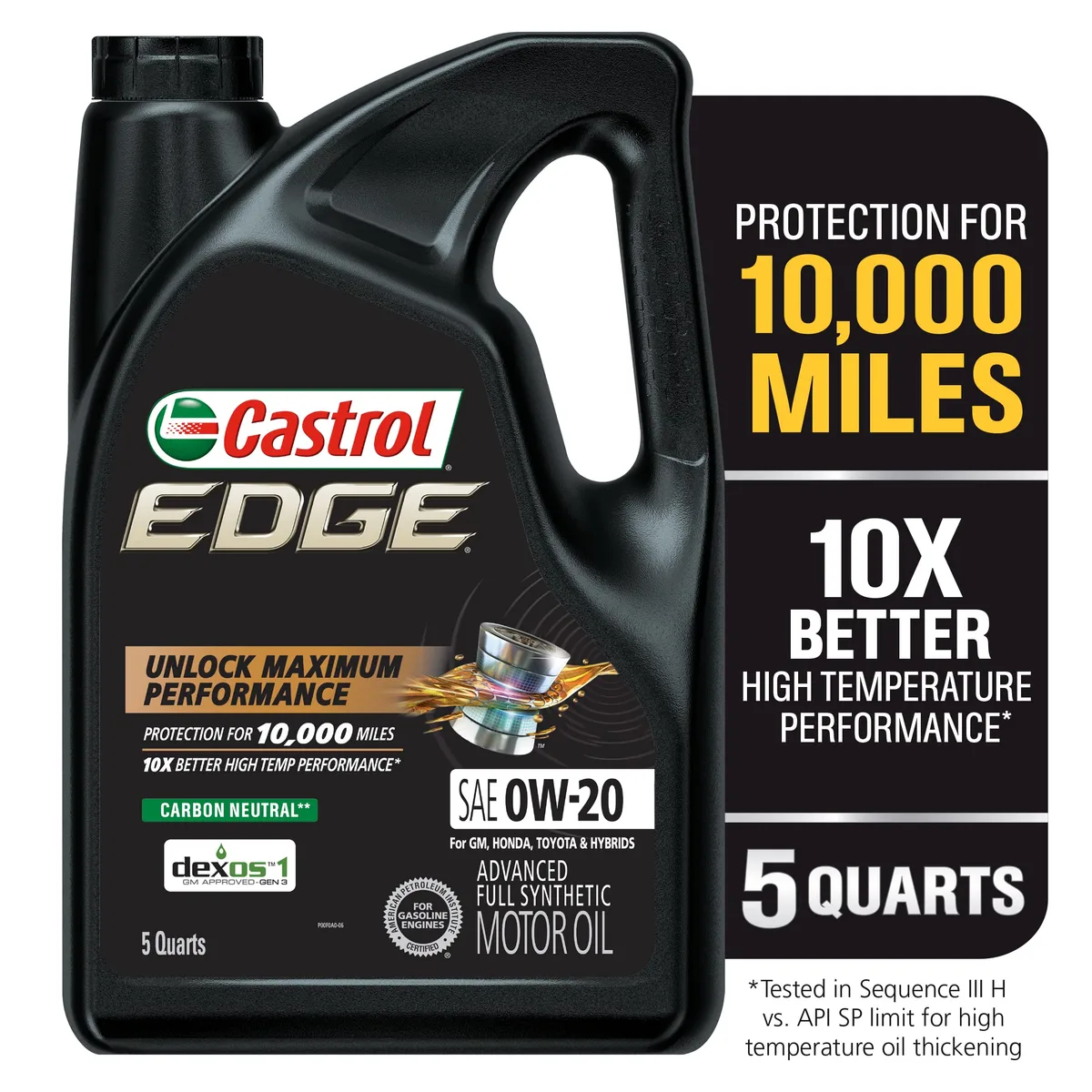
Image source: Web (Bing) / snapklik.com (Web image (fair-use with source credit))
Quick Answer
Your 2012 Toyota RAV4 requires 0W-20 full synthetic motor oil. Use API SN or SN Plus certified oil. The 2.5L four-cylinder takes 4.4 quarts with filter.
The 3.5L V6 takes 5.7 quarts with filter. Change it every 5,000 miles for severe service. Never use conventional 5W-30 as a permanent substitute.
Check the oil level monthly. These are the rules. Follow them.
Why Getting the Right Oil Matters for Your 2012 RAV4
Engines are precision machines with tight tolerances measured in thousandths of an inch. The oil you pour isn't just lubricant. It's the lifeblood of every moving part inside.
Get it wrong, and you're not saving money. You're costing yourself a rebuild.
What the oil actually does inside your engine
Engine oil does four jobs simultaneously. It lubricates metal surfaces so they don't weld together at thousands of RPM. It carries heat away from pistons, bearings, and cylinder walls.
It suspends combustion byproducts and prevents sludge. And it neutralizes acids from combustion to prevent corrosion.
The 0W-20 synthetic that Toyota specifies does all four better than a thicker oil would. That's not opinion. That's fluid dynamics.
The cold-start problem
Here's where 0W-20 really shines. When you start your engine on a 20-degree morning, the oil has to flow instantly into every bearing and journal. Thicker oil doesn't flow well when cold.
It sits in the oil pan like cold honey while the engine spins dry for those first critical seconds.
The "0W" part of 0W-20 means the oil stays thin enough to pump at minus 30 degrees Fahrenheit. The "20" means it thickens enough at operating temperature to maintain a protective film. Toyota's engineers didn't pick this spec by rolling dice.
They tested it against every other viscosity on the market.
| Oil Viscosity | Cold Flow at -20°F | Protection at 212°F | Fuel Economy Impact |
|---|---|---|---|
| 0W-20 | Excellent | Good | Best |
| 5W-20 | Good | Good | Slightly worse |
| 5W-30 | Poor | Better | 1-3% worse |
| 10W-30 | Very poor | Better | 2-4% worse |
The Two Engines: 2.5L Four-Cylinder vs. 3.5L V6 Oil Differences
Your 2012 RAV4 came with one of two engines. Both need 0W-20 synthetic, but the quantities and a few details differ.
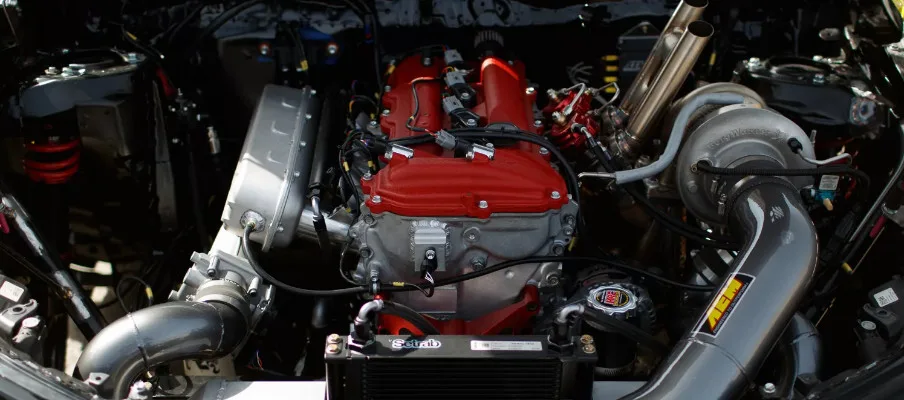
The 2.5L 2AR-FE four-cylinder
This engine is in most 2012 RAV4s. It's a 2.5-liter four-cylinder with dual variable valve timing. Toyota put this engine in millions of vehicles across the Camry, RAV4, and Highlander lineups.
It's reliable when maintained properly.
Oil capacity: 4.4 quarts with filter change.
Oil filter location: Front of the engine, driver's side, angled downward. Easy to reach from underneath.
Drain plug torque: 29 foot-pounds. Do not overtighten. The oil pan is aluminum, and stripping the threads means a new oil pan.
The 3.5L 2GR-FE V6
The V6 RAV4 is less common but still out there. It's the same 3.5-liter engine Toyota used in the Avalon, Sienna, and Highlander. It makes more power and tows more, but it also demands the same oil spec.
Oil capacity: 5.7 quarts with filter change.
Oil filter location: This is where it gets tricky. The V6's oil filter is mounted on the front of the engine block, tucked behind the intake manifold. You can reach it from above with a long extension and a filter cup socket, but it's tighter than the four-cylinder.
Drain plug torque: Same 29 foot-pounds. Both engines use the same 14mm drain plug.
What about the 2.0L engine in other markets?
If you're reading this outside North America, your 2012 RAV4 might have a 2.0-liter four-cylinder. That engine also uses 0W-20 synthetic. The oil capacity is approximately 4.2 quarts.
Check your owner's manual to confirm, but the viscosity spec is the same.
0W-20 Explained: Why Toyota Specifies Synthetic for This Engine
Let's cut through the confusion about oil grades. The numbers on the bottle aren't arbitrary. They're standardized measurements from the Society of Automotive Engineers.
Decoding the numbers
0W: The "W" stands for winter. It measures how the oil flows at cold temperatures. A 0W oil must pass a cold-cranking viscosity test at minus 30 degrees Celsius.
That's minus 22 degrees Fahrenheit. The spec means the oil flows instantly in normal winter conditions.
20: This measures viscosity at operating temperature, specifically 100 degrees Celsius. A 20-grade oil is thin compared to a 30 or 40 grade. That thinness reduces internal engine friction, which improves fuel economy and reduces heat generation.
Why synthetic, not conventional
Toyota specifies full synthetic for the 2012 RAV4, not a synthetic blend or conventional oil. Three reasons:
Oxidation resistance. Synthetic oil resists breaking down at high temperatures. Conventional oil oxidizes and thickens over time, especially in engines that run hot. Thickened oil doesn't flow properly through the variable valve timing system.
Cold flow. Conventional oil doesn't meet the 0W cold-flow requirement. You can't make a 0W conventional oil. The base stock physically can't flow that well when cold. Only synthetic base stocks can achieve the 0W rating.
Longevity. Synthetic oil lasts longer before its additives deplete. That matters for Toyota's recommended 10,000-mile oil change interval. Conventional oil would be sludge by 7,500 miles in most driving conditions.
The API certification you need to look for
Every bottle of motor oil sold in the United States carries an API certification mark. The current standard for your 2012 RAV4 is API SN or SN Plus. API SP is also acceptable and backward-compatible.
Look for the API "Starburst" symbol on the front of the bottle. That symbol means the oil has passed standardized tests for engine protection, sludge control, and piston deposit prevention. No starburst?
Don't buy it.
What Happens When You Use the Wrong Oil
This is the part where I stop being friendly and get direct. Using the wrong oil in your 2012 RAV4 is a bad idea. It's not a matter of "close enough." It's a matter of long-term engine health.
The 5W-30 problem
Some well-meaning mechanics and internet forum dwellers will tell you 5W-30 is fine. They're wrong. Here's why.
The 2AR-FE and 2GR-FE engines have variable valve timing systems that rely on oil pressure to operate. The oil passages in these systems are small. They're engineered specifically for a 20-grade oil's flow characteristics.
Switch to 5W-30, and the oil flows slower through those passages. The VVT system responds more sluggishly. Over time, sludge builds up in the small passages because the thicker oil doesn't circulate as effectively.
The result? Eventually, the VVT system stops working properly. You get check engine lights, rough idle, reduced fuel economy, and eventually timing chain issues.
That's a multi-thousand-dollar repair.
The conventional oil problem
Using conventional oil instead of synthetic is almost as bad. Conventional oil doesn't handle heat as well. It oxidizes faster.
It forms sludge more readily. And it doesn't flow as well when cold, which means more wear during startup.
Toyota had sludge problems with some of their earlier V6 engines when owners used conventional oil. They redesigned the PCV system and oil passages to fix it, but the engineering assumes synthetic oil is being used. Cheap out on oil, and you're asking for problems.
Symptoms of wrong oil
How do you know if someone put the wrong oil in your RAV4? Watch for these signs:
- Reduced fuel economy (drop of 1-3 MPG)
- Rough cold starts or extended cranking
- Engine running hotter than normal
- VVT-related check engine lights
- Tick or knock on cold startup that takes longer to quiet down
Any of these warrants checking what oil is in the crankcase. If it's the wrong grade, drain it and replace it with the correct 0W-20 synthetic. Don't wait until the next scheduled change.
Oil Change Interval: How Often Should You Really Change It?
Toyota's official recommendation for the 2012 RAV4 is every 10,000 miles or 12 months, whichever comes first. That's the "normal service" schedule. But here's the truth.
Most people drive under conditions that qualify as "severe service."
Severe service defined
Toyota defines severe service as any of the following:
- Short trips under 5 miles when the engine doesn't fully warm up
- Driving in extreme heat or extreme cold
- Frequent stop-and-go traffic
- Towing a trailer
- Driving on dusty or unpaved roads
- Extended idling
If any of these apply to you, your oil change interval drops to 5,000 miles or 6 months. Most city drivers and suburban commuters hit at least two of those criteria.
What the oil change indicator actually means
Your 2012 RAV4 has an oil change reminder light. It's not based purely on miles. It uses an algorithm that considers engine temperature, RPM, driving time, and cold starts.
That's better than a calendar. But it's still conservative.
When the light comes on, you have about 500 miles of safe driving before the oil is truly degraded. Don't push it past that.
Our recommendation
| Driving Pattern | Recommended Interval | Oil Type |
|---|---|---|
| Highway miles, moderate climate | 7,500 to 10,000 miles | 0W-20 full synthetic |
| City driving, stop-and-go | 5,000 miles | 0W-20 full synthetic |
| Short trips under 5 miles | 4,000 to 5,000 miles | 0W-20 full synthetic |
| Towing or heavy load | 3,000 to 4,000 miles | 0W-20 full synthetic |
Split the difference. Change it at 5,000 miles if you want peace of mind. That's every four to six months for the average driver.
It costs about $40 to $50 in materials. A blown engine costs thousands.
Step-by-Step: How to Change the Oil Yourself
Changing the oil on a 2012 RAV4 is straightforward. You don't need a mechanic. You need about 30 minutes, some basic tools, and the right supplies.
What you'll need
- 5 quarts of 0W-20 full synthetic oil
- OEM or equivalent oil filter (Toyota part 04152-YZZA1 or equivalent)
- 14mm drain plug socket or wrench
- Oil filter wrench (cup style or strap style)
- Drain pan with at least 6-quart capacity
- Funnel
- Nitrile gloves
- Shop towels
The process
Step 1: Warm up the engine. Run it for three to five minutes. Warm oil drains faster and carries more suspended contaminants.
Step 2: Get under the vehicle. Use jack stands or ramps. Never work under a car supported only by a jack.
Step 3: Drain the old oil. Place the drain pan under the drain plug. The plug is on the passenger side of the oil pan for the 2.5L engine. Loosen it with the 14mm socket.
Remove it by hand once it's loose. Let the oil drain completely. This takes three to five minutes.
Step 4: Remove the old filter. The filter is on the front of the engine. Use the filter wrench to loosen it. It will be full of oil, so angle it carefully as you unscrew it.
Step 5: Install the new filter. Lightly lubricate the rubber gasket with fresh oil. Screw it on by hand until the gasket contacts the mounting surface. Tighten it another three-quarters of a turn by hand.
Don't use the wrench for installation.
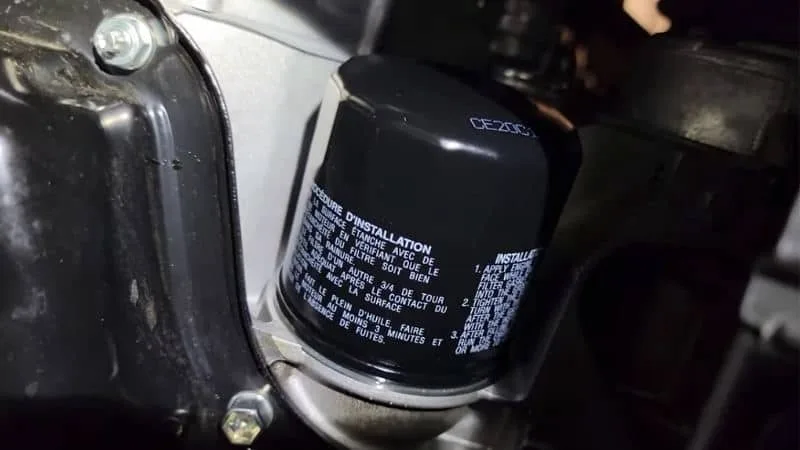
Step 6: Reinstall the drain plug. Replace the crush washer if it's deformed. Torque the plug to 29 foot-pounds. If you don't have a torque wrench, tighten it snug plus an eighth turn.
Don't overtighten.
Step 7: Add new oil. Remove the oil fill cap on top of the valve cover. Insert the funnel. Add 4 quarts for the 2.5L or 5 quarts for the 3.5L.
Check the dipstick. Add more as needed to reach the full mark.
Step 8: Check for leaks. Start the engine. Let it run for 30 seconds. Check under the vehicle for drips.
Shut it off. Wait two minutes. Check the dipstick again and top off if needed.
Disposal
Pour the old oil back into the empty jugs. Take it to any auto parts store for free recycling. Do not pour it down drains, into the ground, or into household trash.
Oil Filter Options: OEM vs. Aftermarket
The oil filter matters almost as much as the oil itself. A cheap filter can bypass unfiltered oil into your engine. A good one keeps contaminants out for the full change interval.
The OEM filter
Toyota's genuine oil filter for the 2012 RAV4 is part number 04152-YZZA1. It's made by Denso, Toyota's OEM supplier. It typically costs $6 to $10.
The OEM filter uses a silicone anti-drainback valve. That valve prevents oil from draining out of the filter when the engine is off. It means less dry startup noise and faster oil pressure at cold start.
Aftermarket filters often use cheaper nitrile rubber for this valve. Nitrile hardens over time and stops sealing properly.
Aftermarket options
Several reputable brands make filters for the 2012 RAV4:
- Purolator ONE, Synthetic media, silicone valve, excellent filtration
- Wix, High-quality cellulose media, good for standard intervals
- Mobil 1, Synthetic media, good for extended intervals
- Fram Ultra, High efficiency, but avoid their basic orange-cans
Which one to choose
Stick with OEM or one of the premium aftermarket options. The cheap $3 filters at discount stores are fine for 3,000-mile intervals. They're not fine for 5,000 or 10,000 miles.
The media collapses or the bypass valve fails.
Our recommendation: buy the OEM filter from a Toyota dealer or an online Toyota parts vendor. It costs the same as a premium aftermarket filter, and you know it's designed for your engine.
Common Mistakes People Make (And How to Avoid Them)
Here are the mistakes that cause the most damage.
Mistake 1: Overtightening the drain plug
People crank the drain plug down like they're trying to keep water out of a submarine. The oil pan is aluminum. The threads strip easily.
A stripped oil pan means a new oil pan. That's a $300 to $500 repair.
Fix: Torque the plug to 29 foot-pounds. If you don't have a torque wrench, snug it up and then add an eighth turn.
Mistake 2: Not replacing the crush washer
The crush washer seals the drain plug. After one use, it's deformed. Reusing it causes slow leaks that eventually become fast leaks.
Fix: Buy a pack of 14mm crush washers. Replace the washer every oil change. They cost about 50 cents each.
Mistake 3: Using the wrong viscosity
5W-30 is not a substitute. Neither is 10W-30 or 0W-40. Use 0W-20.
Fix: Read the label. Buy only 0W-20 full synthetic with API certification.
Mistake 4: Overfilling the engine
Adding an extra quart "just to be safe" causes problems. Overfilled oil gets whipped into foam by the crankshaft. Foam doesn't lubricate.
Foam causes bearing damage.
Fix: Add oil in measured amounts. Check the dipstick. Stop at the full mark.
Mistake 5: Forgetting to lubricate the filter gasket
Installing a dry oil filter gasket causes it to stick. The next time you change the oil, the filter won't come off.
Fix: Rub a thin film of fresh oil on the rubber gasket before installation.
Mistake 6: Ignoring the oil change reminder
The maintenance light isn't a suggestion. It's a warning. Ignoring it for thousands of miles means the oil is degraded.
Fix: Reset the maintenance light after every oil change. The procedure is in your owner's manual.
When You Can (and Can't) Use a Different Viscosity
Let's address the question every RAV4 owner eventually asks. "What if I can't find 0W-20? Will 5W-30 work in a pinch?"
The official answer
Toyota's owner's manual allows one temporary substitute. If 0W-20 is absolutely unavailable, you can use 5W-20 or 5W-30. But there are conditions.
You must switch back to 0W-20 at the next oil change. Running a different viscosity permanently voids the spirit of the specification. The manual says this for extreme conditions only.
It's not an invitation to switch permanently.
The cold weather reality
In very cold climates like northern Canada or Alaska, 0W-20 is actually better than any alternative. The 0W rating ensures flow at minus 30 degrees. No other commonly available viscosity flows that well in extreme cold.
Don't switch to 5W-30 in winter. You'll have extended cranking and increased wear.
Cost Breakdown: What a Proper Oil Change Should Cost
A DIY oil change on your 2012 RAV4 costs between $35 and $55. That includes the oil, filter, and a new crush washer. A shop will charge you $70 to $120 for the same job.
The DIY numbers
A 5-quart jug of name-brand 0W-20 full synthetic runs $25 to $40. The OEM oil filter costs $6 to $10. A pack of crush washers is $3 for five.
Total materials: roughly $35 to $50.
The shop numbers
Dealerships charge $80 to $120 for an oil change. Independent shops run $60 to $90. Quick-lube chains fall in the middle at $65 to $85.
Is DIY worth it?
You save $30 to $60 per oil change. Over five changes, that's $150 to $300. The trade-off is 30 minutes of your time.
If you value knowing exactly what went into your engine, DIY wins.
Tools and Parts You'll Need for a DIY Change
Here's the complete shopping list. Most of these tools you may already own.
Tools
- 14mm socket or combination wrench for the drain plug
- Oil filter wrench (cup style 64mm 14-flute for OEM filters)
- Torque wrench that reads foot-pounds
- Drain pan (6-quart minimum)
- Funnel
- Ramps or jack stands
- Nitrile gloves
Parts and supplies
- 5 quarts of 0W-20 full synthetic oil (API SN Plus or SP)
- Oil filter (OEM 04152-YZZA1 or equivalent)
- 14mm crush washer
- Shop towels or rags
Frequently Asked Questions
Can I use 5W-30 in my 2012 RAV4 in an emergency?
Yes, but only as a temporary substitute. Toyota allows 5W-30 if 0W-20 is unavailable. Switch back at the next oil change.
Extended use of 5W-30 can reduce fuel economy and may cause VVT system issues over time.
How much oil does a 2012 RAV4 take?
The 2.5L four-cylinder takes 4.4 quarts with filter change. The 3.5L V6 takes 5.7 quarts with filter change.
What happens if I use conventional oil instead of synthetic?
Conventional oil doesn't meet the 0W cold-flow requirement. It thickens in cold weather, oxidizes faster at high temperatures, and forms sludge more readily. Your engine was designed for synthetic.
How often should I check my oil level?
Check it at every other fuel fill-up. Pull the dipstick, wipe it, reinsert it, and check the level. The 2AR-FE engine has been known to consume small amounts of oil as it ages.
Catching it low prevents expensive damage.
Do I need to reset the maintenance light after an oil change?
Yes. Turn the ignition to ON without starting the engine. Press the odometer button until the trip meter shows.
Turn the ignition OFF. Hold the odometer button while turning the ignition back to ON. The light will flash and then turn off.
Can I mix different brands of 0W-20 oil?
Yes, as long as both meet API SN Plus or SP certification. Mixing brands doesn't cause problems. The base stock and additive packages are compatible.
Final Verdict: The Simple Rules to Keep Your Engine Happy
Use 0W-20 full synthetic oil with API certification. Change it every 5,000 miles if you drive in city traffic or short trips. Use an OEM or premium aftermarket filter.
Replace the crush washer every time. Check the level monthly.
Follow these rules and your 2012 RAV4's engine will outlast the body. Ignore them and you're gambling with a $4,000 engine replacement. The choice is yours.
The spec is clear.