
The 2016 toyota corolla problems list is longer than most buyers expect for a Toyota. The Takata airbag recall alone covers both front positions with a "do not drive" warning for unrepaired vehicles. Oil consumption affects roughly 12 percent of 2ZR-FE engines per Toyota internal data.
The K312 CVT shows failure rates climbing past eight percent by 150,000 miles. These are not minor annoyances, they are safety and wallet events.
Toyota extended coverage for the piston rings to ten years or 120,000 miles under Warranty Enhancement Program ZJB. The CVT received a ten-year 150,000-mile extension in select states under ZJC. Fuel pump recalls expanded to include 2016 models as recently as 2022.
As of 2026, roughly 13 percent of affected airbags remain unrepaired per NHTSA completion data. Here is how to separate the deal-breakers from the manageable fixes.
Quick Answer
The 2016 Corolla has five major problem areas. Takata airbags can rupture and kill. The 2ZR-FE engine burns oil past worn piston rings.
The K312 CVT fails from belt fatigue and valve body issues. The Denso fuel pump can stall the engine. The Entune head unit and BCM suffer electrical corrosion.
Verify every recall before buying.
Why the 2016 Corolla Demands Extra Scrutiny
This generation sits at a collision point. The 11th-generation platform carries the last of the Takata PSAN inflators before Toyota switched suppliers. The 2ZR-FE engine uses a piston ring design that loses tension under thermal cycling.
The K312 CVT pushes steel-belt technology to its thermal limits in a compact transaxle. Denso HP4 fuel pumps share an impeller deformation defect across multiple model years. The Entune 2.0 head unit uses BGA solder joints that fracture under vibration.
The body control module sits directly under a cowl drain path that clogs with debris.
Buyers treat this car as a commodity because it wears a Toyota badge. That assumption costs money. A clean Carfax does not prove the airbag inflators were replaced with the updated PSDI version.
A recent oil change masks consumption until the next 1,200-mile interval. A test drive under 15 minutes never triggers CVT thermal limp mode. You need a VIN-specific recall printout, a cold-start compression check, and a Techstream CVT data pull.
Anything less is gambling.
The Takata Airbag Crisis: What "Fixed" Actually Means
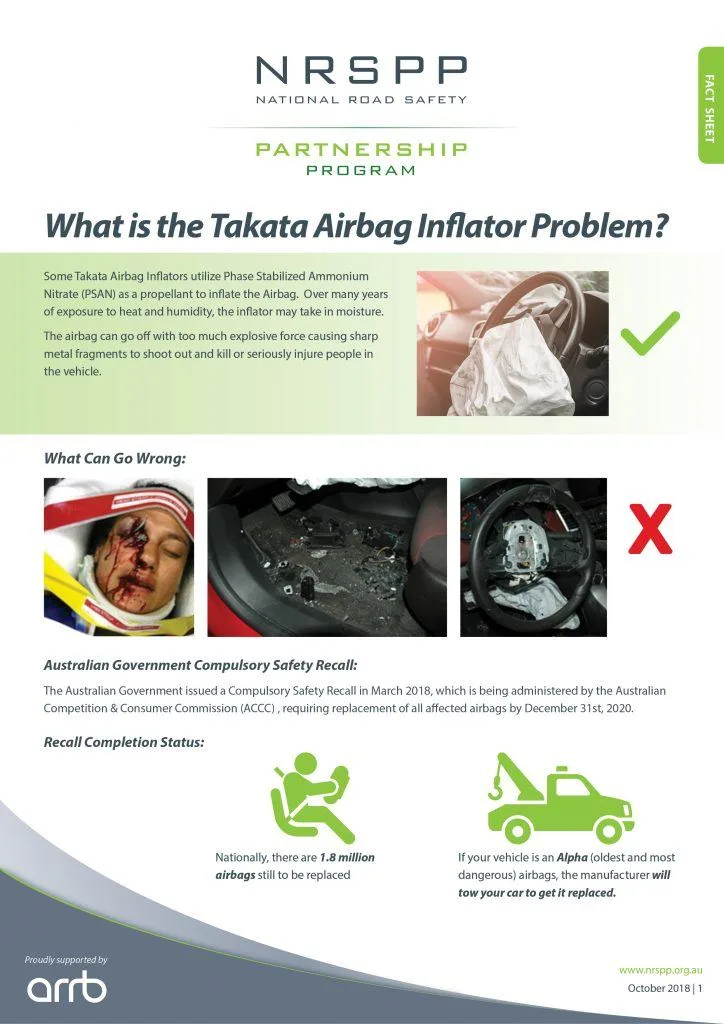
The driver-side inflator (recall 20V-287) and passenger-side inflator (20V-288) both used phase-stabilized ammonium nitrate without desiccant. Moisture degrades the propellant into a fine powder that burns too fast. The metal housing ruptures into shrapnel.
NHTSA placed the 2016 Corolla on the "do not drive" list for unrepaired driver-side units. That designation is rare and serious.
The repair replaces the inflator with a phase-stabilized diammide (PSDI) unit that includes desiccant. The part numbers are 04007-02160 for driver and 04007-02170 for passenger. Some early replacements used PSAN inflators with desiccant, those are interim fixes, not final.
Only the PSDI inflator closes the recall permanently. Verify the part number on the repair order. A dealer printout showing "recall complete" without the PSDI part number means the job is not done.
High-humidity states accelerate degradation. Florida, Texas, and Gulf Coast vehicles see propellant breakdown two to three times faster than Arizona or Nevada cars per NHTSA zone mapping. If the car lived in Zone A, the risk window is narrower.
As of 2026, completion rates sit at roughly 87 percent nationally. That leaves over 200,000 2016 Corollas with at least one dangerous inflator. Check your VIN at nhtsa.gov/recalls before any purchase.
| Inflator Type | Propellant | Desiccant | Recall Status |
|---|---|---|---|
| Original | PSAN (ammonium nitrate) | No | Do not drive |
| Interim replacement | PSAN + desiccant | Yes | Temporary fix |
| Final replacement | PSDI (diammide) | Yes | Permanent repair |
Oil Consumption: The Piston Ring Defect Toyota Acknowledged
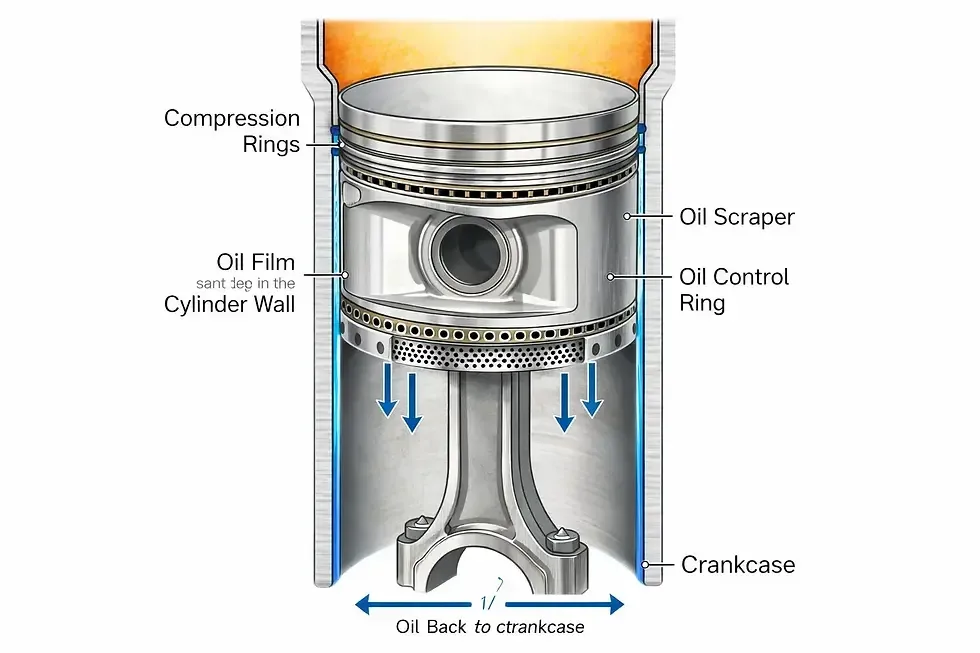
The 2ZR-FE 1.8-liter engine uses a low-tension oil ring pack that loses spring force after thermal cycles. Oil migrates past the rings into the combustion chamber. The catalytic converter burns it off, no smoke, no leaks, just a dropping dipstick.
Toyota's warranty threshold is one quart per 1,200 miles. Many owners report consumption starting between 60,000 and 90,000 miles.
Warranty Enhancement Program ZJB covers piston ring replacement for ten years or 120,000 miles from original sale date. The repair installs updated rings (part 13011-0T040) with a revised oil ring expander and an ECU flash that adjusts valve timing to reduce vacuum pull. The labor is roughly 12 hours.
Dealers perform a monitored consumption test first, 1,200 miles with documented top-offs. If consumption exceeds the threshold, the repair is free.
Not all 2ZR-FE engines are affected. The defect appears linked to a specific piston ring supplier lot. Engines built after mid-2017 received the updated rings from the factory.
A pre-purchase compression test and leak-down test can reveal ring sealing issues before you buy. Cold compression should read 170, 200 psi per cylinder with less than 10 percent variance. Leak-down above 15 percent suggests ring or valve problems.
Ask the seller for oil change records, consistent top-offs between intervals are a red flag.
CVT Reliability: Where the K312 Transmission Fails

The K312 CVT uses a steel push-belt between variable-diameter pulleys. The primary pulley receives engine torque. The secondary pulley delivers torque to the final drive.
Line pressure controls pulley clamping force. Too little pressure allows belt slip. Too much pressure spikes bearing loads.
The valve body solenoids modulate this balance in real time.
Failure modes cluster in three areas. Steel belt fatigue causes microscopic cracks that propagate until the belt fractures. Primary and secondary pulley bearings spall from pressure spikes during aggressive driving or sustained grades.
Valve body solenoids stick from contaminated fluid or thermal cycling, the TCM detects pressure errors and triggers limp mode. Fluid temperature above 230°F accelerates all three mechanisms.
Toyota specifies WS (World Standard) ATF with no published change interval. Real-world data suggests a drain-and-fill every 60,000 miles extends life significantly. The filter is non-serviceable inside the case.
A Techstream live data pull shows primary pressure, secondary pressure, belt slip ratio, and fluid temperature. Slip ratio above 2 percent under load indicates belt or pulley wear. Pressure deviation above 15 psi from commanded value points to valve body issues.
Warranty Enhancement Program ZJC extends CVT coverage to ten years or 150,000 miles in California-emissions states. The TSB TC003-17 ECU/TCM reprogram reduces line pressure spikes during tip-in. Average replacement cost runs $4,200, $5,500 at a dealer.
Remanufactured units from reputable independents land around $2,800, $3,500 installed. A test drive must include a sustained grade climb at highway speed, watch for RPM flare, shudder, or the wrench light.
Fuel Pump Failure: The Stall Risk That Expanded to 2016 Models
The Denso HP4 in-tank fuel pump uses a brushless DC motor with a polymer impeller. The impeller deforms under specific fuel temperature and pressure combinations. Deformation reduces flow until the engine starves and stalls, often at highway speed with no restart.
Recall 21V-211 originally covered 2018, 2019 models. Recall 22V-283 expanded coverage to include 2016, 2017 Corollas built between June 2015 and May 2019.
The revised pump (part 23220-0T030) uses an impeller with reinforced geometry and updated material. Replacement requires fuel tank removal, roughly 2.5 hours book time. The strainer is replaced simultaneously.
Dealers perform the repair free regardless of mileage. As of 2026, completion rates for the expanded recall lag behind the original, many 2016 owners never received the second notice.
Symptoms precede total failure. Long crank times on hot restart. Momentary power loss under heavy acceleration.
Check engine light with P0087 (fuel rail pressure too low) or P0191 (fuel pressure sensor circuit). A fuel pressure gauge at the test port should read 45, 55 psi steady. Pressure drop under load confirms the pump.
If the VIN shows open recall 22V-283, schedule the repair before any long trip. This is a stall-at-speed event, not a convenience issue.
Entune Head Unit & BCM: The Electrical Gremlins Nobody Talks About
The Entune 2.0 head unit (7-inch capacitive touch) and Entune 3.0 (on later builds) share a Fujitsu/Tenman circuit board with a BGA-mounted processor. Thermal cycling fractures the solder balls under the chip. The symptom progression is predictable: intermittent screen blackouts, boot loops, frozen touch response, then total failure.
A 30-second power button hold or battery disconnect resets it temporarily. The NAND flash also corrupts over time, losing navigation maps and Bluetooth pairing.
The body control module mounts in the driver-side kick panel. The harness grommet at the cowl drain allows water to wick down the wires into the BCM connectors. Green corrosion at pins C1 and C2 causes phantom behaviors: door locks cycling, wipers activating randomly, interior lights staying on, horn sounding uncommanded.
A water test with the cowl drain cleared confirms the path. BCM replacement requires programming, roughly $650, $900 at a dealer. Used units from a matching VIN prefix can be cloned for $200, $350.
Both issues are temperature-sensitive. Entune fails faster in hot climates. BCM fails faster in wet, salted climates.
Neither has a safety recall. Toyota issued TSBs for software updates that mitigate Entune boot loops but cannot fix hardware fractures. A pre-purchase scan with Techstream reads BCM fault history, look for B-codes related to LIN communication or moisture intrusion.
Power cycle the head unit three times during the test drive. If it glitches once, budget for replacement.
Valve Spring Fracture: The Cold-Start Rattle That Drops Valves
Recall 22V-327 covers valve spring fracture on 2016 through 2018 Corollas with the 2ZR-FE engine. The silicon-chrome steel springs can develop micro-cracks at the shot-peened surface. A fracture produces a distinct metallic rattle on cold start that lasts three to five seconds.
The rattle disappears as oil pressure builds and the valve train loads up. Ignoring it risks a dropped valve that destroys the cylinder head and piston.
The repair replaces all sixteen valve springs with updated part 13711-0T030. Labor is roughly 0.5 hours per Toyota's flat-rate guide. Coverage extends to ten years or 150,000 miles from original sale date.
The recall also includes an ECU update that adjusts cold-start valve timing to reduce stress on the springs during the highest-vacuum phase. Dealers perform the repair free regardless of mileage if the VIN shows open.
A borescope through the spark plug holes can reveal spring damage before fracture. Look for cracked or missing coil ends on the intake springs, they carry higher load. Compression test variance above 10 percent between cylinders warrants a leak-down test.
Leak-down at the intake valve confirms spring or seat issues. If you hear the cold-start rattle, do not rev the engine. Drive gently to a dealer.
A dropped valve at highway speed can lock the engine instantly.
Steering Shaft Clunk & Rear Seat Belt Lock: The Overlooked Recalls
TSB STE04-15 addresses a clunk from the steering intermediate shaft when driving over small bumps. The shaft splines wear prematurely due to insufficient grease from the factory. The noise transmits through the column to the driver's hands.
The fix replaces the intermediate shaft with an updated part that includes improved spline geometry and a grease fitting. Labor is roughly 1.2 hours.
Recall 19V-213 covers the rear seat belt retractor locking mechanism. In a crash the retractor may fail to lock, allowing excessive occupant forward motion. The repair replaces both rear outboard retractors.
The parts are specific to sedan versus hatchback body styles. Completion takes roughly one hour. Neither issue has a "do not drive" warning but both affect crash safety.
Check for open status on your VIN, many 2016s missed the seat belt recall because it was announced quietly.
The steering clunk worsens in cold weather when grease stiffens. The seat belt retractor failure is invisible until a crash. A pre-purchase inspection should include a slow-speed drive over a rough surface with the steering wheel centered.
Listen for a single knock per bump cycle. Pull each rear belt fully out and let it retract, it should lock when jerked sharply. If either test fails, factor the repair into your offer.
How to Verify Every Recall Was Actually Performed on Your VIN
Start at nhtsa.gov/recalls and enter the 17-character VIN. The results list every safety recall with status: open, closed, or incomplete. Open means the repair has not been done.
Closed means the dealer reported completion. Incomplete means the repair was attempted but not finished, common with multi-part recalls like the Takata inflators. Print the page or save a screenshot.
Next go to toyota.com/recall and enter the same VIN. Toyota's portal shows warranty enhancement programs (ZJB, ZJC) that NHTSA does not list. It also shows the exact repair order numbers, dates, and part numbers installed.
Cross-reference the Takata inflator part numbers against the PSDI final-repair numbers. If the portal shows "recall complete" but the part number is an interim PSAN unit, the job is not done.
Call the selling dealer's service department with the VIN. Ask them to pull the full service history from Toyota's TIS system. Independent shops and Carfax often miss warranty work.
Request a printout of all campaigns performed. Verify the fuel pump recall 22V-283 shows the revised impeller part 23220-0T030. Verify the CVT reprogram TSB TC003-17 appears if the car is in a ZJC-eligible state.
No printout means no proof.
| Source | Shows Safety Recalls | Shows Warranty Programs | Shows Part Numbers |
|---|---|---|---|
| NHTSA.gov | Yes | No | No |
| Toyota.com/recall | Yes | Yes | Yes |
| Dealer TIS | Yes | Yes | Yes |
| Carfax | Partial | No | No |
Pre-Purchase Inspection: The 30-Minute Checklist That Saves Thousands
Bring a cold engine. Start it and listen for the valve spring rattle, three to five seconds of metallic tap from the cylinder head. Watch the tachometer for RPM flare during the first 10 seconds.
Rev gently to 2,500 RPM and hold. Blue smoke on deceleration suggests oil consumption. Let it idle until the cooling fan cycles once.
Check CVT fluid temperature on the scanner, it should reach 140°F within 10 minutes in 70°F ambient.
With the engine running, cycle the Entune head unit power button three times. Watch for screen flicker, boot delay, or frozen touch response. Operate every door lock, window, mirror, and wiper function from the driver's master switch.
Watch for lag or double-actuation. Turn the steering lock to lock with the engine running. Listen for the intermediate shaft clunk at full lock.
Raise the car. Inspect the CVT pan for seepage at the cooler lines and axle seals. Check the BCM connector at the kick panel, pull the carpet back and look for green crust on the C1 and C2 pins.
Verify the cowl drain flows water freely by pouring a cup into the cowl screen. Check the rear trailing arm mounts for rust perforation. Examine the brake lines for scale and wetness.
Pull the spark plugs, look for oil fouling on cylinders two and three.
Test drive on a sustained grade at 60 mph for three minutes. Monitor CVT slip ratio and line pressure on the scanner. Slip above 2 percent or pressure deviation above 15 psi means internal wear.
Accelerate hard from 40 to 70 mph. Watch for RPM flare without speed gain, that is belt slip. Brake firmly from 60 mph.
Feel for pedal pulsation that suggests warped rotors from the rear drum imbalance common on this platform.
Repair Costs & Warranty Coverage: What Toyota Still Pays For
As of 2026, the Takata airbag recalls (20V-287, 20V-288), fuel pump recall (22V-283), valve spring recall (22V-327), and rear seat belt recall (19V-213) are all safety recalls with no mileage limit. The dealer performs them free. Warranty Enhancement Program ZJB covers piston ring replacement for oil consumption up to 10 years or 120,000 miles from original sale.
The car must fail the 1,200-mile consumption test at a dealer.
Warranty Enhancement Program ZJC covers CVT replacement or repair up to 10 years or 150,000 miles but only in California-emissions states (CA, NY, MA, VT, ME, PA, RI, CT, OR, WA, CO, MD, NJ). The CVT must show documented failure codes or measurable slip. The ECU/TCM reprogram TSB TC003-17 is free nationwide regardless of mileage.
Entune head unit and BCM failures have no factory coverage, they are out-of-pocket after the 3-year/36,000-mile basic warranty.
Dealer goodwill varies by region. Southeast Toyota Distributors and Gulf States Toyota operate independently from Toyota Motor Sales. A dealer in Florida may approve a CVT goodwill claim that a dealer in Ohio denies.
Document every symptom with dates, mileage, and scanner codes. Escalate to the Toyota customer experience center at 1-800-331-4331 if the dealer refuses a ZJB or ZJC claim that matches the criteria. Keep your own oil change receipts, they prove maintenance compliance for warranty disputes.
| Repair | Dealer Cost | Independent Cost | Warranty Coverage |
|---|---|---|---|
| Takata inflators | Free | N/A | Recall – no limit |
| Piston rings (oil) | $2,200–$3,000 | $1,500–$2,200 | ZJB 10yr/120k mi |
| CVT replacement | $4,200–$5,500 | $2,800–$3,500 | ZJC 10yr/150k mi (CARB states) |
| Fuel pump | Free | N/A | Recall – no limit |
| Valve springs | Free | N/A | Recall 10yr/150k mi |
| Entune head unit | $1,100–$1,400 | $300–$500 used | None after 3yr/36k |
| BCM replacement | $650–$900 | $200–$350 used | None after 3yr/36k |
| Steering shaft | $350–$500 | $200–$300 | TSB – goodwill only |
When to Walk Away: The Deal-Breakers No Amount of Discount Fixes
Walk away if the Takata recalls show open or interim repair only. The rupture risk is lethal and parts supply can delay the final fix. Walk away if the CVT shows slip codes, pressure deviation, or shudder on the test drive, replacement cost exceeds the car's value.
Walk away if the engine fails the consumption test but the seller refuses a dealer verification. Walk away if the BCM connector shows active corrosion, water intrusion spreads fast.
A clean title with open safety recalls is a red flag. Flood-damaged 2016s from Gulf hurricanes often have cleaned titles and hidden BCM damage. Check the VIN at vehiclehistory.gov for total loss records.
Mismatched paint on the cowl or dash suggests airbag deployment or flood repair. Rust on the rear trailing arm mounts compromises structural integrity. Any single deal-breaker justifies walking.
Expert Buying Strategy: How to Get a Good One in 2024
Target a 2016 Corolla LE or LE Eco with under 100,000 miles in a low-humidity, non-salt state. Verify all recalls closed with PSDI inflators. Confirm ZJB piston ring repair completed or consumption test passed.
Confirm ZJC CVT coverage applies if in a CARB state. Get a Techstream scan showing slip ratio under 1 percent and no B-codes. Budget $1,500 for immediate Entune or BCM replacement if glitches appear.
Private sellers with full dealer records offer the best transparency. Dealerships often wholesale problem cars to auction. Avoid "certified pre-owned" 2016s, the certification checklist misses CVT thermal issues and BCM corrosion.
Negotiate using the repair cost table. A car needing piston rings and CVT fluid service should sell $2,000 below clean retail. A car with all recalls done, fresh CVT fluid, and clean BCM commands a premium.
Frequently Asked Questions
Does the 2016 Corolla have a timing belt or chain?
The 2ZR-FE uses a timing chain rated for the engine's life. No replacement interval exists.
How often should I change CVT fluid?
Every 60,000 miles per real-world data. Toyota specifies no interval but WS fluid degrades.
Can I disable the start-stop system?
No factory defeat exists. Aftermarket modules void warranty and may cause BCM faults.
What oil viscosity does the 2ZR-FE require?
0W-20 synthetic. Using 5W-30 increases consumption risk on worn rings.
Are 2016 Corolla hybrids affected by the same issues?
The hybrid uses a different transaxle (P610) and Atkinson-cycle 2ZR-FXE. It avoids CVT belt issues but shares Takata, fuel pump, and BCM recalls.
Is the 2017 Corolla better than the 2016?
The 2017 facelift adds Toyota Safety Sense-P standard, Entune 3.0, and revised CVT programming. It still shares the 2ZR-FE and Takata recalls.