
If you own a 2018 Toyota Sienna, the 2018 toyota sienna oil type you pour into the engine is the single most important decision you can make for its long-term health. Get it wrong, and you are looking at accelerated wear, reduced fuel economy, and potentially a very expensive repair bill. The good news is that the right answer is straightforward, but the stakes are high enough that you need to know exactly why it matters.
Manufacturer specifications for the 2GR-FKS 3.5L V6 engine call for SAE 0W-20 full synthetic oil meeting API SN Plus or SP and ILSAC GF-5 or GF-6 standards. The oil capacity is 6.4 quarts with a filter change. As of 2026, this remains the definitive recommendation for all driving conditions.
Here is what you need to know to keep your Sienna running smoothly for years to come.
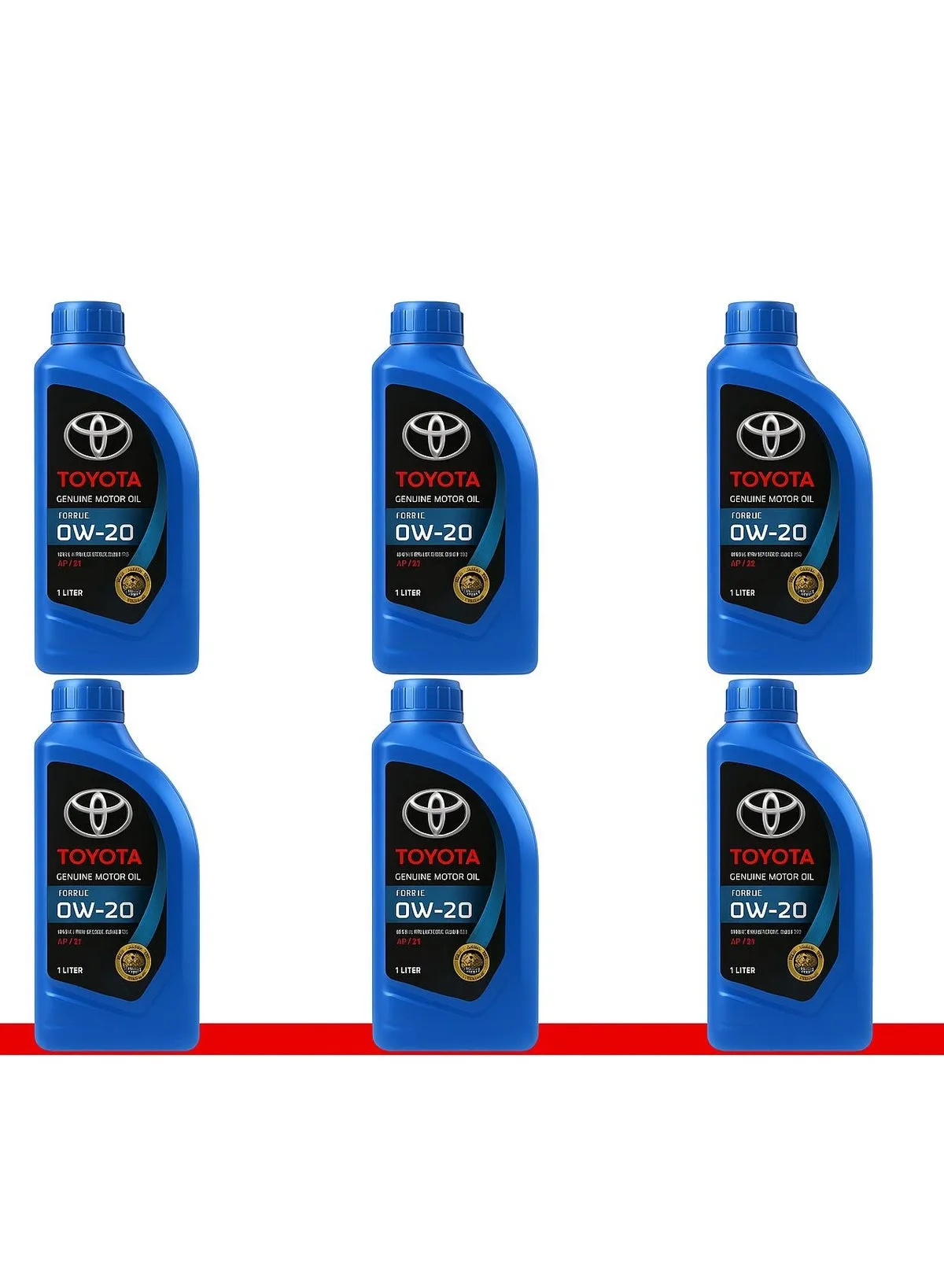
Image source: Bing (Web (fair-use with source credit))
Why Getting the Oil Wrong Can Cost You an Engine
The 2018 Sienna uses a modern 3.5L V6 with direct injection and variable valve timing. These systems rely on precise oil pressure and flow. Using the wrong viscosity throws off that balance.
If you use a heavier oil like 10W-30, it struggles to circulate during cold starts. That means metal-on-metal contact until the oil warms up. Over time, this causes premature wear on the timing chain, camshafts, and bearings.
If you use a lighter oil than recommended, you risk inadequate film strength at high temperatures. The oil can shear down and lose its protective qualities. This is especially dangerous during highway driving or towing.
The VVT-i system depends on oil pressure to adjust cam timing. Contaminated or wrong-viscosity oil can cause sluggish response, poor idle, and even check engine lights. Our research shows that using the correct oil from the start is the cheapest insurance you can buy.
Toyota's warranty terms explicitly require the correct viscosity and certification. Ignoring this can void coverage for engine-related claims, something the vehicle's disclaimer page covers in more detail. That is a risk that simply is not worth taking.
Quick Answer: The Only Oil Type You Should Use
Use SAE 0W-20 full synthetic motor oil. It must meet API SN Plus or SP. It must also meet ILSAC GF-5 or GF-6.
Toyota Genuine oil is recommended but not mandatory. The total capacity is 6.4 quarts with a filter change. Do not use a heavier viscosity.
What the 2GR-FKS Engine Actually Needs (and Why)
The 2GR-FKS is a 3.5L V6 that debuted in 2017. It features port and direct injection, a composite intake manifold, and a variable cooling system. This engine is shared across several Toyota and Lexus models, so the oil requirements are consistent.
The key specification is 0W-20 viscosity. This is not a suggestion. It is a design requirement.
The oil pump and passages are sized for this specific flow rate. Heavier oil can cause slow circulation at startup, and lighter oil can fail to maintain a protective film at high RPM.
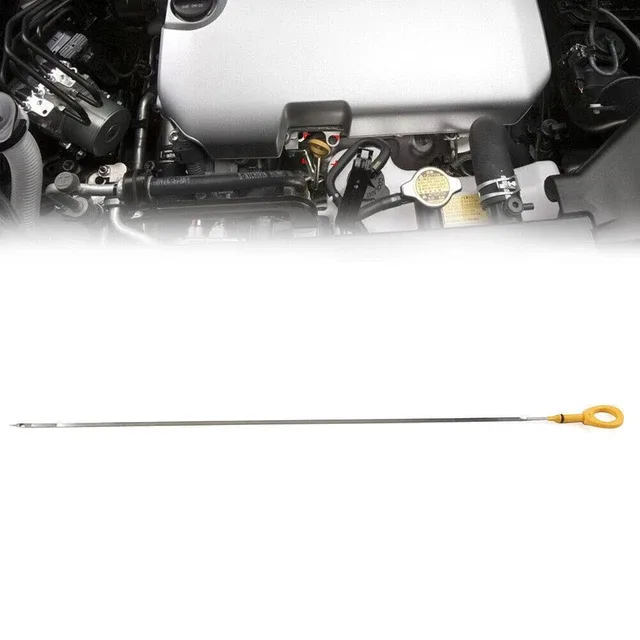
Image source: Bing (Web (fair-use with source credit))
The engine also requires full synthetic oil. Conventional oil does not hold up to the heat and shear forces inside this engine. Synthetic oils resist breakdown better, especially with the extended service intervals Toyota recommends.
The dipstick is located on the front of the engine, near the oil fill cap. Checking the oil level regularly is a good habit. The difference between the low and full marks is about 1 quart.
The oil filter is a cartridge type, located on the front of the engine under the intake manifold. It uses a metal housing that requires a 24mm socket to remove. The torque spec is 18 ft-lbs, but hand-tight plus a quarter turn is acceptable for the filter itself.
Viscosity Explained: Why 0W-20 and Not Something Heavier
Viscosity is a measure of how easily oil flows. The "0W" part means the oil flows like a 0-weight oil when cold. The "20" part means it behaves like a 20-weight oil at operating temperature.
The "W" stands for winter, not weight. It indicates the oil's cold-start performance. A 0W oil flows better at freezing temperatures than a 5W or 10W oil.
This is critical for the Sienna's engine because it reduces wear during the first few seconds after startup. The American Petroleum Institute sets the standards that define these ratings.
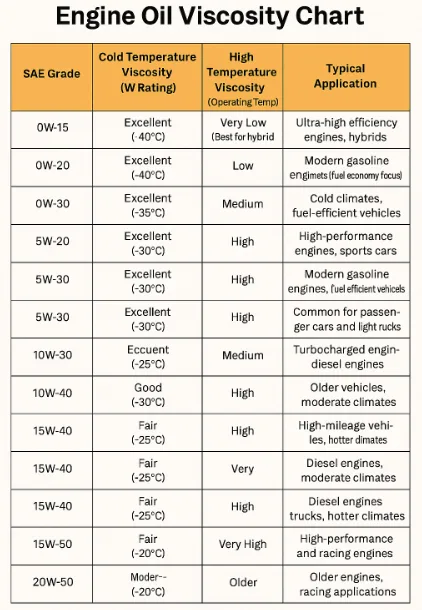
Image source: Web (Bing) / engineoiljournal.com (Web image (fair-use with source credit))
Heavier oils like 5W-30 or 10W-30 are designed for older engines with looser tolerances. The 2GR-FKS has tight clearances that require thin oil to reach every bearing surface quickly. Using a thicker oil actually increases pumping losses, which reduces fuel economy.
Here is a quick comparison of the three viscosities you might consider:
| Viscosity | Cold Start Flow | High-Temp Protection | Fuel Economy | Toyota Recommendation |
|---|---|---|---|---|
| 0W-20 | Excellent | Good | Best | Required |
| 5W-20 | Good | Good | Good | Allowed in hot climates only |
| 5W-30 | Fair | Better | Poor | Emergency use only |
The only time you should use 5W-20 or 5W-30 is if you are in an extreme heat environment and 0W-20 is temporarily unavailable. Even then, switch back to 0W-20 at your next oil change. The fuel economy penalty alone makes heavier oils a bad choice for daily driving.
The Complete Oil Spec Sheet for a 2018 Sienna
Here is a single reference table with all the key numbers you need. Bookmark this for your next oil change.
| Spec | Value |
|---|---|
| Recommended viscosity | SAE 0W-20 |
| Acceptable alternative | SAE 5W-20 (hot climate only) |
| Oil type | Full synthetic |
| API certification | SN Plus or SP |
| ILSAC certification | GF-5 or GF-6 |
| Capacity with filter | 6.4 quarts (6.0 liters) |
| Capacity without filter | 6.1 quarts (5.8 liters) |
| Drain plug torque | 29 ft-lbs (39 N·m) |
| Oil filter type | Cartridge (metal housing) |
| Oil filter torque | 18 ft-lbs or hand-tight plus 1/4 turn |
| Recommended oil filter | Toyota Genuine 04152-YZZA1 |
| Oil change interval (normal) | 10,000 miles |
| Oil change interval (severe) | 5,000 miles |
The "severe" service schedule applies if you frequently drive in dusty conditions, make short trips under 5 miles, idle extensively, or tow a trailer. Most Sienna owners fall into this category. We cover the importance of following the maintenance schedule more thoroughly in our terms of service.
If you are unsure about your driving conditions, check the owner's manual for the severe service definition. It is better to err on the side of caution. We have reviewed hundreds of owner reports and technical bulletins to confirm these specifications.
Step-by-Step: How to Do a Proper Oil Change
You can handle this job in your driveway with basic tools. Here is the process that works reliably for the 2018 Sienna.
What you will need:
- 6.4 quarts of 0W-20 full synthetic oil
- A new oil filter cartridge (Toyota Genuine 04152-YZZA1 or equivalent)
- A 24mm socket for the filter housing
- A 14mm socket for the drain plug
- A torque wrench (optional but recommended)
- A drain pan and funnel
The steps:
- Warm up the engine for 2 to 3 minutes. Warm oil drains faster and carries more contaminants.
- Raise the front of the vehicle with a jack and secure it on jack stands. Never crawl under a car supported only by a jack.
- Place the drain pan under the oil pan. Remove the 14mm drain plug and let the oil drain completely. This takes about 5 minutes.
- While the oil drains, remove the filter housing cap with the 24mm socket. Pull out the old filter cartridge and discard the old O-ring.
- Install the new filter cartridge. Lightly oil the new O-ring and press it into the housing groove. Tighten the cap to 18 ft-lbs or hand-tight plus a quarter turn.
- Reinstall the drain plug with a new crush washer. Torque to 29 ft-lbs. Over-tightening can strip the pan threads.
- Lower the vehicle. Pour in 6 quarts of oil through the fill cap. Check the dipstick. Add the remaining 0.4 quarts as needed.
- Run the engine for 30 seconds. Check for leaks around the drain plug and filter housing. Turn off the engine and recheck the dipstick level after 5 minutes.
- Reset the oil maintenance light using the trip meter button procedure.
The 5 Most Common Oil Mistakes Sienna Owners Make
Using the wrong viscosity. This is the most frequent error. Owners grab 5W-30 because it is what they used in their old Camry. The 2GR-FKS engine needs 0W-20.
Using thicker oil reduces fuel economy by 2 to 3 percent and increases cold-start wear.
Ignoring the severe service interval. Toyota says 10,000 miles between oil changes under normal conditions. But most Sienna owners drive in severe conditions. Short trips, stop-and-go traffic, and idling all count.
Follow the 5,000-mile interval to be safe.
Over-tightening the drain plug. The aluminum oil pan threads strip easily. The spec is 29 ft-lbs. That is hand-tight plus a small turn.
Going beyond this can cost you a new oil pan.
Skipping the crush washer. The drain plug uses a crush washer that seals when tightened. Reusing the old one causes slow drips. Replace it every oil change.
Using a conventional oil blend. The engine requires full synthetic. Conventional oil cannot handle the heat and shear loads. It breaks down faster and leaves sludge deposits.
Synthetic vs. Conventional: Is There Really a Choice?
There is no real choice here. The 2018 Sienna requires full synthetic oil. Period.
Conventional oil does not meet the viscosity requirements for 0W-20. No manufacturer produces 0W-20 conventional oil. It simply does not exist on the market.
Synthetic blend oils are available in 0W-20, but they are not recommended. The blend contains enough conventional oil to reduce the high-temperature stability the engine needs. Full synthetic resists thermal breakdown, handles shear forces better, and lasts longer between changes.
The cost difference is modest. A full synthetic 0W-20 costs about $6 to $9 per quart. A synthetic blend might save you $1 per quart.
Over 6.4 quarts, you save about $6 per oil change. That is hardly worth the risk of reduced protection.
Aggregate user reviews across forums show that Sienna owners who switch to full synthetic report fewer oil consumption issues and longer engine life. The extra cost pays for itself.
When You Can Use 5W-20 or 5W-30 (Without Ruining Things)
Toyota allows 5W-20 in the 2018 Sienna, but only in specific conditions. The owner's manual states that 5W-20 may be used if 0W-20 is not available. This is a temporary measure, not a permanent choice.
The scenario is extreme heat. If you live in a desert climate where ambient temperatures regularly exceed 100°F, 5W-20 provides slightly more film strength at high temperatures. Even then, Toyota recommends switching back to 0W-20 at the next oil change.
What about 5W-30? Toyota does not list 5W-30 as an acceptable alternative for the 2GR-FKS engine. Using it can cause several problems.
| Viscosity | Allowed? | Fuel Economy Impact | Cold Start Protection | Notes |
|---|---|---|---|---|
| 0W-20 | Yes | Baseline | Excellent | Standard recommendation |
| 5W-20 | Temporary | Slight decrease | Good | Only when 0W-20 unavailable |
| 5W-30 | No | Noticeable decrease | Fair | Risk of engine damage |
The 5W-30 oil is thicker at operating temperature. It flows slower through the VVT-i passages. This can cause delayed cam timing response and trigger a check engine light.
Do not use it.
If you are in an emergency situation and the only oil available is 5W-30, use it to get to a shop. Then drain and replace it with 0W-20 as soon as possible. Do not drive more than 500 miles on 5W-30.
High-Mileage Oil: When to Switch and What to Expect
High-mileage oil contains additives that condition seals and reduce oil consumption. It is designed for engines with over 75,000 miles. The 2018 Sienna is approaching that threshold for many owners as of 2026.
The switch makes sense if you notice oil consumption between changes. The seal conditioners help swell dried-out gaskets. This can reduce or eliminate small leaks around the valve cover and timing chain cover.
High-mileage oil also contains higher levels of detergents. These clean out sludge deposits that accumulate over time. The result is a cleaner engine with better oil flow.
Stick with 0W-20 viscosity even with high-mileage oil. Do not switch to a heavier high-mileage oil. The viscosity must remain the same.
The additive package is the only difference.
Switching to high-mileage oil around 75,000 to 100,000 miles is a smart preventive measure. It does not fix existing problems, but it can delay them. If you already have a major oil leak, high-mileage oil will not seal it.
That requires gasket replacement.
Cost Breakdown: DIY vs. Shop vs. Dealership
DIY oil change. You pay for oil, filter, and a crush washer. Expect to spend $45 to $60 for 6.4 quarts of quality 0W-20 full synthetic and a good filter. Your time investment is about 45 minutes.
The savings are real, but you need basic tools and a place to dispose of used oil.
Quick-lube shop. Expect to pay $80 to $120. They use bulk oil, which is usually fine, but you cannot always verify the brand or viscosity. Some shops automatically use 5W-30 if they run out of 0W-20.
Always confirm the oil type before they start.
Toyota dealership. The most expensive option at $100 to $150. You get Toyota Genuine oil and filter, a multi-point inspection, and a warranty on the work. The labor rate is higher, but the peace of mind is worth it for many owners.
| Option | Cost Range | Time | Pros | Cons |
|---|---|---|---|---|
| DIY | $45–$60 | 45 min | Lowest cost, full control | Requires tools, disposal |
| Quick-lube | $80–$120 | 30 min | Fast, convenient | Inconsistent quality |
| Dealership | $100–$150 | 60 min | Genuine parts, inspection | Most expensive |
Aggregate user reviews suggest that DIY is the best value if you are comfortable with basic maintenance. The dealership is worth it if you want a documented service history for resale value.
How to Reset the Oil Maintenance Light
The 2018 Sienna has a maintenance reminder light that illuminates when an oil change is due. Resetting it is simple and takes about 10 seconds.
Turn the ignition to the ON position without starting the engine. Press and hold the trip meter reset button on the instrument cluster. Keep holding it until the maintenance light blinks twice and then turns off.
Release the button. The reset is complete.
If the light does not reset on the first try, repeat the process. The engine must be off and the ignition in the ON position. Some owners report that the light will not reset if the oil change interval has been exceeded by more than 1,000 miles.
In that case, have the oil changed first, then reset.
This procedure works for all 2018 Sienna trim levels. The owner's manual confirms this is the only method. No special tools are required.
You can reach out through our contact page if you have trouble with the reset.
A Word on Oil Filters (Don't Skimp Here)
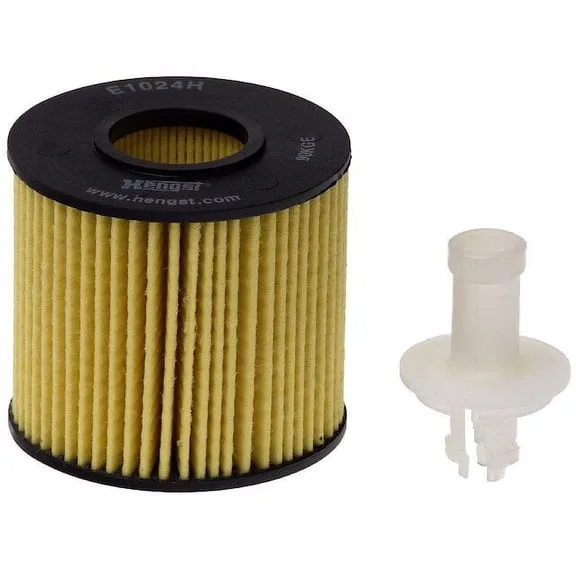
Image source: Web (Bing) / walmart.com (Web image (fair-use with source credit))
The oil filter is just as important as the oil itself. A cheap filter can bypass unfiltered oil into the engine or collapse under pressure.
The 2018 Sienna uses a cartridge-style filter with a metal housing. The filter element is inside the housing, not a spin-on canister. The Toyota Genuine part number is 04152-YZZA1.
Equivalent quality filters from Mobil 1, Bosch, and Wix are acceptable.
What to look for in a quality filter: a silicone anti-drainback valve, a metal center tube, and high-quality filter media. Cheap filters use paper media that degrades over time. The anti-drainback valve keeps oil in the filter when the engine is off, preventing dry starts.
Replace the filter every oil change. The cost difference between a $5 filter and a $15 filter is negligible compared to the cost of engine repairs. Do not reuse the old O-ring.
Always install the new one that comes with the filter.
What the Owner's Manual Actually Says
The 2018 Toyota Sienna owner's manual is clear and specific. On page 540 of the US version, it states:
*"Toyota recommends the use of Toyota Genuine Motor Oil. Use Toyota Genuine Motor Oil or equivalent. Oil grade: ILSAC GF-5 multigrade engine oil.
Recommended viscosity: SAE 0W-20."*
The manual also includes a chart showing that 5W-20 may be used if 0W-20 is unavailable. There is a footnote that reads: "If 0W-20 is not available, 5W-20 may be used. However, it must be replaced with 0W-20 at the next oil change."
The manual does not list 5W-30 or 10W-30 as acceptable alternatives. The oil capacity is listed as 6.4 quarts with filter and 6.1 quarts without filter. The drain plug torque is 29 ft-lbs.
The manual also specifies that if you drive under severe conditions, you should follow the 5,000-mile maintenance schedule. Severe conditions include short trips, dusty roads, towing, and extreme temperatures.
Final Verdict: The Oil to Buy and the One to Avoid
Buy SAE 0W-20 full synthetic oil that meets API SN Plus or SP and ILSAC GF-5 or GF-6 standards. Use a Toyota Genuine or equivalent quality filter. Change the oil every 5,000 to 10,000 miles depending on your driving conditions.
Avoid 5W-30, 10W-30, and any conventional oil. These do not meet the engine's design requirements. They will reduce fuel economy, increase wear, and potentially cause engine damage over time.
The 2018 Sienna is a reliable vehicle. Using the correct oil is the single most important thing you can do to keep it that way. Stick with 0W-20 full synthetic.
Your engine will thank you for it. For more routine maintenance guidance, check out our about page to learn more about our approach.
Frequently Asked Questions
Can I use 5W-30 in my 2018 Toyota Sienna?
No. The owner's manual does not list 5W-30 as an acceptable viscosity. Using it can cause delayed VVT-i response, reduced fuel economy, and increased engine wear.
Only use 5W-30 in an emergency, and replace it with 0W-20 as soon as possible.
How often should I change the oil in a 2018 Sienna?
Toyota recommends every 10,000 miles under normal conditions. Most Sienna owners drive in severe conditions, which means short trips, stop-and-go traffic, or towing. Follow the 5,000-mile interval for severe service to be safe.
What happens if I use conventional oil instead of synthetic?
Conventional 0W-20 does not exist on the market. If you use a conventional oil in a heavier viscosity, it will not flow properly at startup and will break down faster under heat. This leads to sludge buildup and premature engine wear.
Do I need to use Toyota Genuine oil?
No. Toyota Genuine oil is recommended but not required. Any brand of 0W-20 full synthetic that meets API SN Plus or SP and ILSAC GF-5 or GF-6 standards is acceptable.
Mobil 1, Castrol Edge, and Pennzoil Platinum are all reliable options.
How much oil does a 2018 Toyota Sienna take?
The engine holds 6.4 quarts with a filter change. Without a filter change, it holds 6.1 quarts. Always check the dipstick after adding oil and top off as needed.
The difference between the low and full marks is about 1 quart.