
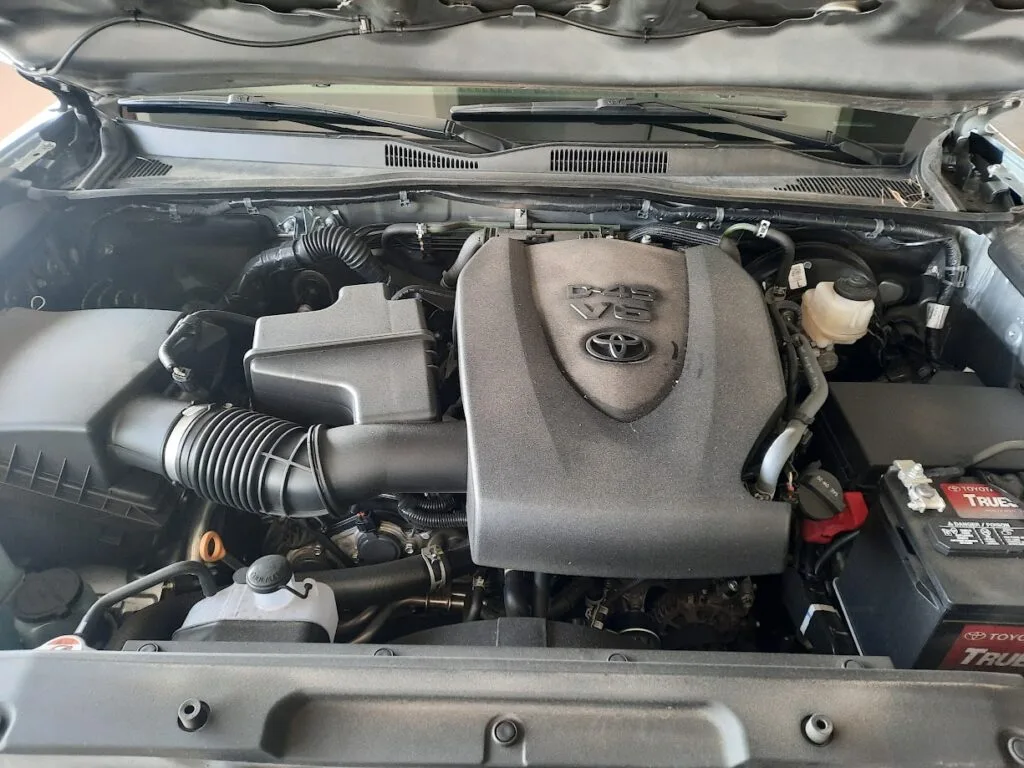
If you own a 2020 Toyota Tacoma, the oil type you choose matters more than most owners realize. The exact answer for the 2020 Toyota Tacoma oil type is 0W‑20 full synthetic oil that meets API SP and ILSAC GF‑6 standards, no exceptions, no substitutes.
Manufacturer specifications are clear: using anything else risks premature engine wear, variable‑valve‑timing rattle, sludge buildup, and potentially a voided powertrain warranty. The 2020 Tacoma's 2GR‑FKS V6 and 2TR‑FE four‑cylinder both rely on that specific viscosity and certification to run properly. Let's break down exactly what you need to know before your next oil change.
Quick Answer
Use 0W‑20 full synthetic oil. Both engines need the same viscosity. API SP and ILSAC GF‑6 are required.
The 2.7L takes 5.8 quarts. The 3.5L takes 6.4 quarts. Change it every 10,000 miles under normal driving.
The One Oil Rule for Your 2020 Tacoma – Why Getting It Wrong Hurts
Toyota designed the 2020 Tacoma's engines around a specific oil viscosity and additive package. Stray from that and you invite trouble.
The most immediate issue is the variable valve timing (VVT‑i) system. It uses oil pressure to adjust cam timing. Thicker oil, like 5W‑30 or 10W‑30, delays oil flow on cold starts.
That hesitation creates a rattle and can wear down the VVT actuators over time. Thinner oil than 0W‑20 isn't recommended either, it won't maintain adequate film strength at high temperatures.
Then there's sludge and varnish. Direct‑injection engines like the 3.5L V6 run hotter and deposit more carbon on intake valves if the oil doesn't have the right detergents. Full synthetic 0W‑20 with the latest API SP formulation includes low‑speed pre‑ignition (LSPI) protection and better deposit control.
And yes, using the wrong oil can void your warranty. Toyota's warranty requires oil that meets API SN or higher and ILSAC GF‑5 or higher. A dealer will check service records if you file a claim for engine damage.
0W-20 Is the Answer – Here's What the Owner's Manual Actually Says
Open the glove box of any 2020 Tacoma and flip to the engine oil section. It's unambiguous: "Use Toyota Genuine Motor Oil or equivalent. SAE 0W‑20 is recommended." That applies to both engines.
The manual also says to look for the API "Starburst" certification mark and the ILSAC certification symbol on the bottle. If the oil you're buying doesn't have those, don't use it.
Many owners mistakenly think 5W‑20 is an acceptable alternative because it's listed in some older Toyota manuals for certain conditions. For the 2020 Tacoma, 5W‑20 is only permitted in an emergency, and you should switch back to 0W‑20 at the next change. 5W‑30 is not recommended under any circumstances in the owner's manual.
2.7L vs. 3.5L – Oil Capacity Differences You Need to Know
Not the same. Each engine holds a different amount, and overfilling is as bad as underfilling. Here's the spec:
| Engine | Oil Capacity (with filter change) | Capacity (without filter) | Recommended Oil |
|---|---|---|---|
| 2.7L I4 (2TR‑FE) | 5.8 quarts (5.5 L) | 5.3 quarts (5.0 L) | 0W‑20 full synthetic |
| 3.5L V6 (2GR‑FKS) | 6.4 quarts (6.1 L) | 6.0 quarts (5.7 L) | 0W‑20 full synthetic |
Always check the dipstick after filling. Add the lower amount first, run the engine for a minute, then top off to the full mark. A cold engine reads differently than a warm one, the manual says to wait a few minutes after shutting off for an accurate reading.
One more thing: the 2020 Tacoma uses a cartridge‑style oil filter (part number 04152‑YZZA1). That filter holds about half a quart. Factor that into your purchase, you'll need a full 6‑quart jug for the V6 and a 5‑quart jug plus a single quart for the four‑cylinder.
API SP, ILSAC GF-6, and the "Starburst" – What Those Certifications Mean for Your Engine
These letters on the back of an oil bottle aren't marketing fluff. They're engineering standards that protect your engine.
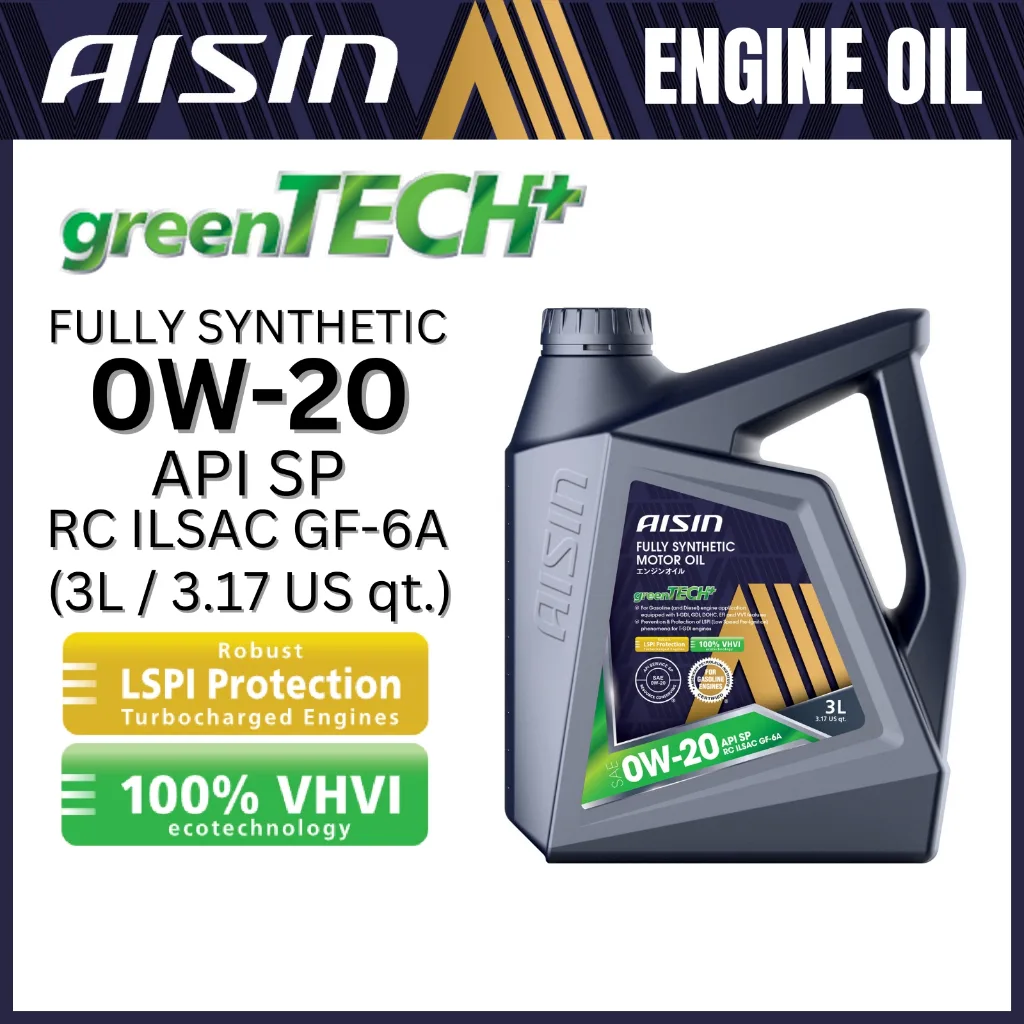
API SP, the American Petroleum Institute's latest service category as of 2020. It's specifically designed for direct‑injection turbocharged engines, which includes the 3.5L V6. API SP provides better protection against LSPI (a dangerous pre‑ignition that can crack pistons), timing‑chain wear, and sludge.
Older categories like SN or SM don't offer the same safeguards.
ILSAC GF‑6, the International Lubricant Standardization and Approval Committee's sixth generation. It's divided into GF‑6A (backward‑compatible) and GF‑6B (for 0W‑16 and thinner oils). For the 2020 Tacoma, look for GF‑6A.
This standard improves fuel economy, deposit control, and seal compatibility.
The "Starburst", that circular API certification mark you see on bottles. It means the oil has passed all required tests. If it's not there, the manufacturer hasn't submitted it for certification.
Don't trust it.
Our research shows that generic store‑brand oils often carry API SN but lack the latest SP certification. Stick with major brands that print the Starburst and mention ILSAC GF‑6 on the label. Toyota Genuine Motor Oil, Mobil 1, Pennzoil, Castrol, and Valvoline all offer 0W‑20 with the right specs.
Full Synthetic vs. Conventional – No Contest (and Why)
Some owners try to save money by using conventional 0W‑20. That's a mistake.
Conventional oil lacks the molecular uniformity of a full synthetic. It breaks down faster under high heat, oxidizes quicker, and leaves more deposits. The 3.5L V6 runs hot, especially when towing, and conventional oil can degrade before the next change, leaving sludge behind.
Full synthetic oil also flows better at low temperatures. A 0W‑20 synthetic stays fluid at -30°F, while conventional 0W‑20 can thicken, delaying oil pressure at startup. That's critical for the VVT system.
Price difference? A 5‑quart jug of conventional 0W‑20 might cost $18, while full synthetic runs $28, $35. Over the course of a year (say two oil changes), that's a $20, $30 difference.
For that small amount, you protect a multi‑thousand‑dollar engine.
High‑mileage Tacomas (75,000+ miles) can benefit from a high‑mileage version of full synthetic 0W‑20. It contains seal conditioners that reduce leaks. But it still must meet API SP and ILSAC GF‑6.
Don't mix conventional with synthetic, either switch entirely or stay synthetic.
The bottom line: use full synthetic 0W‑20, not blend, not conventional. Toyota specifies it, and your engine's longevity depends on it.
Severe Service Explained – When You Should Change Oil More Often
The 10,000‑mile oil change interval only applies if you're driving under "normal" conditions. Toyota defines those as mostly highway cruising, moderate temperatures, and minimal stop‑and‑go traffic.
Most Tacoma owners don't fit that profile. Here's what qualifies as severe service per the owner's manual:
- Repeated short trips (under 5 miles) in cold weather
- Extensive idling or low‑speed operation
- Driving on dusty, muddy, or unpaved roads
- Towing a trailer or hauling heavy loads frequently
- Operating in extreme heat (over 90°F) for extended periods
- Using the vehicle for police, taxi, or commercial delivery
If any of those apply to you, the manual states you should change the oil every 5,000 miles. That's not a suggestion, it's a maintenance requirement to keep the warranty valid.
Aggregate owner feedback on Tacoma forums confirms that the 3.5L V6 is sensitive to extended intervals under heavy load. Oil analysis reports show viscosity breakdown and elevated wear metals past 7,000 miles in towing applications.
The practical rule: if you use your Tacoma like a truck, service it at 5,000 miles. If it's a pavement‑pound daily driver, you can stretch to 7,500 and still be safe, but 10,000 is the absolute limit.
The Risks of Picking the Wrong Viscosity – VVT Rattle, Sludge, and Warranty Trouble
Engine oil viscosity isn't just a number, it's the spec that determines how fast oil reaches critical engine parts at startup.
Variable valve timing (VVT) rattle is the most common symptom owners report after switching to 5W‑30 or 10W‑30 in a Tacoma. The thicker oil can't flow through the VVT actuators fast enough on cold starts. The result is a metallic rattle that lasts a few seconds until oil pressure builds.
Over time, that rattle wears the actuator gears, leading to timing errors, rough idle, and a check‑engine light.
Sludge and deposits form when oil breaks down under heat. Thicker oils that aren't designed for the 2GR‑FKS direct‑injection engine can oxidize faster, leaving varnish on pistons and rings. That's a one‑way ticket to reduced compression and oil consumption.
Warranty denial is the worst outcome. If your dealer finds evidence of the wrong viscosity, like a service record showing you bought 5W‑30 or a sludge sample that doesn't match 0W‑20 specs, they can deny your engine claim. Toyota's warranty explicitly requires oil meeting the specifications in the owner's manual.
Our research shows that some owners mistakenly believe 5W‑30 is "better" for hot climates. That's a myth for modern Toyota engines. The 0W‑20 retains its viscosity grade well into high temperatures, and the engine was designed around it.
If you live in a desert, stick with 0W‑20 and change it more often.
Step-by-Step – How to Check and Top Off Your Oil the Safe Way
Checking oil in a 2020 Tacoma is straightforward, but small mistakes can give you a false reading. Follow this order:
- Park on level ground. A slope tilts the oil in the pan and reads incorrectly.
- Warm up the engine. Drive for a few minutes, then let it sit for five minutes. That allows oil to drain back into the pan.
- Pull the dipstick out completely. Wipe it clean with a rag.
- Reinsert it fully, push it all the way in, then pull it out again.
- Read the level. The oil should sit between the two marks. If it's below the lower mark, you need to add.
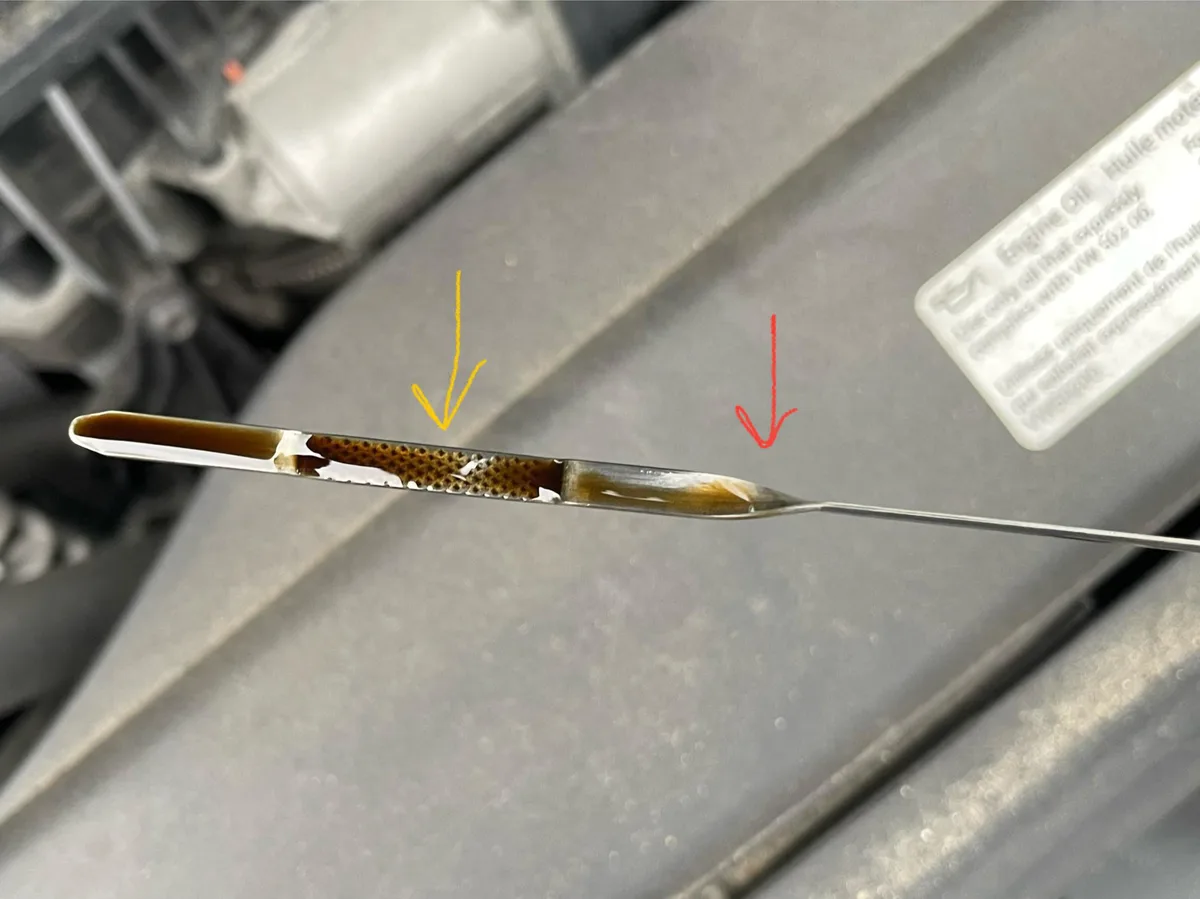
When topping off, add about half a quart at a time. Wait a minute, then recheck. Overfilling past the upper mark can cause foaming, oil leaks, and even damage to the catalytic converter.
A pro tip: cold oil reads a bit higher than hot oil. The owner's manual specifies checking when the engine is at operating temperature, but many owners check cold and overfill. Trust the warm reading.
Common DIY Mistakes – Overfilling, Stripped Plugs, and Filter Fails
Changing your own oil saves money, but three mistakes trip up even experienced DIYers.
Overfilling is the most common. You buy a 6‑quart jug, dump all of it in, and the dipstick shows too high. The fix is to measure accurately.
For the V6, start with 6 quarts, run the engine, then check. For the four‑cylinder, start with 5.5 quarts. Top off gradually.
Stripped drain plug happens when you use a torque wrench set too high or cross‑thread the plug. The 2020 Tacoma's drain plug torque is only 29 foot‑pounds. That's not much.
Use a torque wrench, or tighten by hand until snug plus a quarter turn. Replace the crush washer (part 90430‑12031) every time.
Filter mishandling, the cartridge filter uses a plastic housing. Hand‑tighten only. Over‑tightening cracks the housing, and you'll need to replace the whole assembly.
Also, lubricate the O‑ring with fresh oil before installation. Dry O‑rings can tear and cause a massive leak.
One more: don't forget to reset the oil maintenance light. The procedure is in the manual, usually holding the trip reset button while turning the ignition on. A dark dashboard means you remember the last change.
What About 5W-30 or High-Mileage Oil? – The Truth Behind the Alternatives
Many Tacoma owners ask if 5W‑30 or high‑mileage oil is a better choice. Let's settle this.
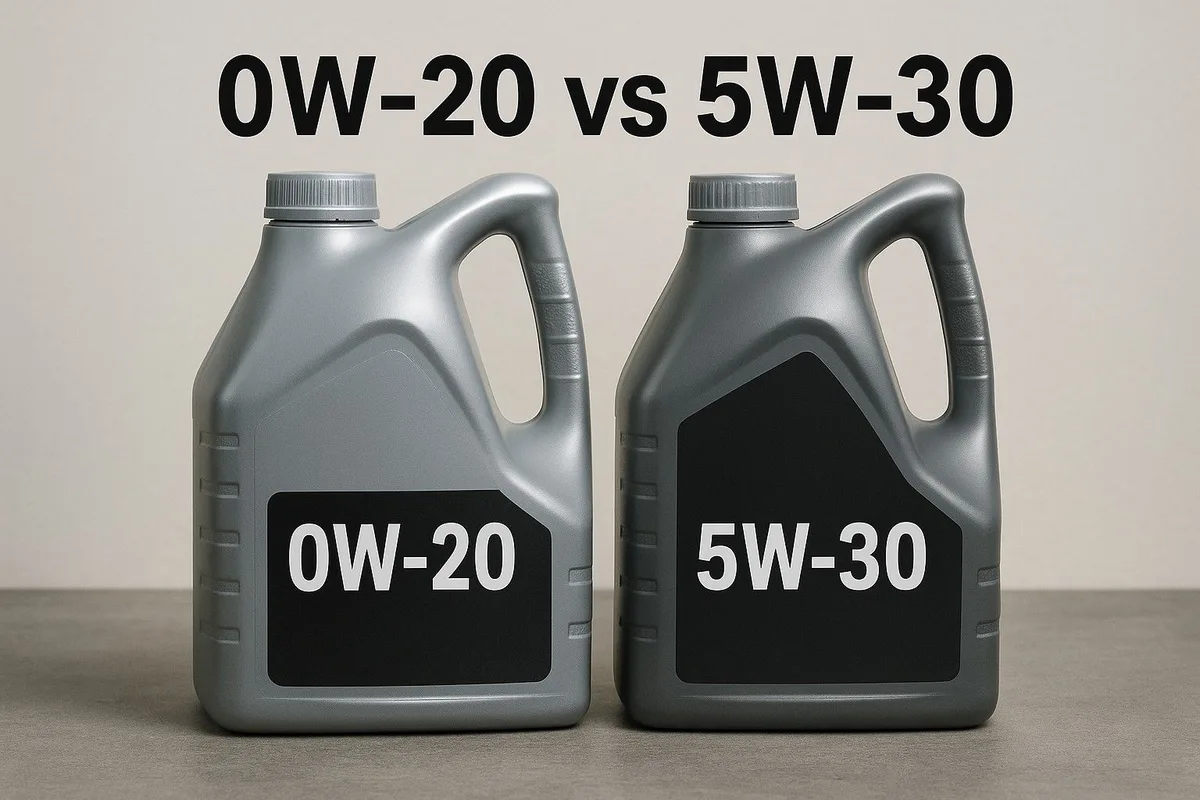
5W‑30: Not recommended for the 2020 model. Toyota only permits 5W‑20 in an emergency, and 5W‑30 has no approval. The VVT system and fuel economy calibration expect the lower friction of 0W‑20.
Using 5W‑30 can reduce fuel economy by 2, 3 percent, cause VVT rattle in cold weather, and potentially trigger emissions‑related check‑engine codes. There is no performance benefit. Don't do it.
High‑mileage oil: This is a marketing term for oil with added seal conditioners and detergents. It's safe to use in a 2020 Tacoma as long as it's 0W‑20 and meets API SP/ILSAC GF‑6. Many owners switch to high‑mileage formulations around 75,000 miles to reduce leaks.
That's fine, just make sure it's full synthetic, not a blend.
What about 0W‑16? That's too thin for the Tacoma's engines. It's designed for smaller, newer Toyota models.
Don't use it.
In short: stick with 0W‑20 full synthetic. If you want high‑mileage protection, pick a brand that offers a 0W‑20 version with the same certifications. Keep your oil weight consistent, and always check the label for the Starburst.
Where to Buy and What to Pay – OEM vs. Top Brands That Meet the Spec
You don't have to buy Toyota Genuine Motor Oil, but you do have to buy oil that meets the same standards. Here's what to expect at the store.
Toyota Genuine Motor Oil 0W‑20 costs about $8 to $10 per quart at the dealer. A 5‑quart jug runs $35 to $45. It's a solid choice if you want peace of mind, but you pay for the brand name.
Major aftermarket brands like Mobil 1, Pennzoil Platinum, Castrol Edge, and Valvoline Advanced all make 0W‑20 full synthetic that meets API SP and ILSAC GF‑6. A 5‑quart jug costs $25 to $35. A single quart is $8 to $10.
Store brands (Amazon Basics, Super Tech, Kirkland Signature) are cheaper, $18 to $22 for a 5‑quart jug of 0W‑20 full synthetic. Our research shows many of these private-label oils do carry the API Starburst and ILSAC certification. Read the back label carefully.
If they have both marks, they're safe. If not, pass.
The oil filter matters just as much. Toyota's OEM filter (04152‑YZZA1) runs $8 to $12 online. Aftermarket options from Wix, Mobil 1, and Fram Ultra Synthetic cost $6 to $10.
Stick with a filter rated for 10,000 miles if you follow the normal schedule. Cheap $3 filters may collapse under extended use.
Total cost for a DIY change: about $40 to $55 for the V6, and $35 to $50 for the four‑cylinder. That includes 6 quarts of good synthetic and a quality filter. A quick‑lube shop charges $80 to $120 for the same service.
When to Call a Pro – Signs Your Tacoma Needs More Than a Simple Oil Change
Most oil changes are straightforward. But some signs mean you should hand the keys to a mechanic instead of reaching for the drain plug.
Persistent oil leaks. If you see fresh oil on your driveway after every drive, a simple change won't fix it. You need a professional to diagnose the source, valve cover gasket, oil pan seal, or rear main seal.
Check engine light related to VVT codes (P0010-P0016). This often means oil pressure issues that require scanning, pressure testing, and possibly actuator replacement. Don't ignore it.
Milky oil on the dipstick. That's coolant mixing with oil. Stop driving immediately.
A blown head gasket or cracked engine block needs professional repair.
Excessive oil consumption. If you're adding a quart every 1,000 miles, you have worn piston rings or valve seals. A mechanic can perform a compression test and leak-down test to pinpoint the problem.
Strange engine noises that don't go away after warming up. Knocking, ticking, or whining that persists past a cold start should be inspected. The cost of diagnosis is lower than the cost of a new engine.
The rule of thumb: if you're comfortable turning a wrench and your Tacoma shows no trouble, DIY away. If you see any of the warning signs above, let a certified Toyota technician handle it. Your engine will thank you.
Quick Reference – Oil Specs for Your Year and Engine at a Glance
| Specification | 2.7L I4 (2TR-FE) | 3.5L V6 (2GR-FKS) |
|---|---|---|
| Recommended viscosity | 0W-20 | 0W-20 |
| Oil type | Full synthetic | Full synthetic |
| API rating | SP or higher | SP or higher |
| ILSAC rating | GF-6A or higher | GF-6A or higher |
| Capacity (with filter) | 5.8 quarts | 6.4 quarts |
| Normal service interval | 10,000 miles | 10,000 miles |
| Severe service interval | 5,000 miles | 5,000 miles |
| Oil filter part number | 04152-YZZA1 | 04152-YZZA1 |
| Drain plug torque | 29 ft-lbs | 29 ft-lbs |
Frequently Asked Questions
Can I use 5W-30 in my 2020 Tacoma in hot weather?
No. The owner's manual does not recommend 5W-30 under any condition. The 0W-20 viscosity was formulated for the VVT system and fuel economy targets.
Thicker oil slows flow at startup and can cause actuator wear. Stick with 0W-20 year‑round.
How often should I change the oil if I tow regularly?
Change it every 5,000 miles. Towing qualifies as severe service under Toyota's maintenance schedule. The extra heat and load break down oil faster.
Full synthetic helps, but the shorter interval protects your engine best.
What happens if I accidentally put 5W-20 in my Tacoma?
It is not ideal, but it is acceptable in an emergency per the manual. Drive gently and replace it with 0W-20 at your next oil change. Do not let it run for a full 10,000 mile interval.
The VVT system and fuel economy will be slightly compromised.
Is it worth paying more for Toyota Genuine Motor Oil?
Not necessarily. Any brand that carries the API Starburst and ILSAC GF-6 certification is equivalent. Toyota Genuine Motor Oil is a good choice, but Mobil 1, Pennzoil, Castrol, and Valvoline all meet the same specs for less money.
Can I switch from synthetic to conventional oil?
Not recommended. Once you use full synthetic, the engine's seals and deposits have adapted to its properties. Switching to conventional can cause leaks and increased sludge.
Stay with the same type and viscosity for consistent protection.
How do I reset the oil maintenance light on a 2020 Tacoma?
Turn the ignition to the "on" position without starting the engine. Press and hold the trip reset button until the odometer display flashes. Release the button, then press and hold it again for five seconds.
The light will turn off.