
Your 2011 Toyota Sienna needs the right oil to keep it running reliably. The correct specification is 0W-20 full synthetic for both the 2.7L four-cylinder and the 3.5L V6. Using anything else risks engine damage, reduced fuel economy, and shortened engine life.
Per the owner's manual, the oil must meet API SN or higher and ILSAC GF-5 certification. As of 2026, many modern oils meet the newer SP and GF-6 standards, which are backward compatible. This guide covers the exact requirements, the differences between the two engines, and the mistakes to avoid.
Quick Answer
Your 2011 Toyota Sienna requires 0W-20 full synthetic oil. Use API SN or higher. Choose ILSAC GF-5 or GF-6.
Both engines need the same viscosity. Change it every 5,000 miles for severe driving. Change it every 10,000 miles for highway driving.
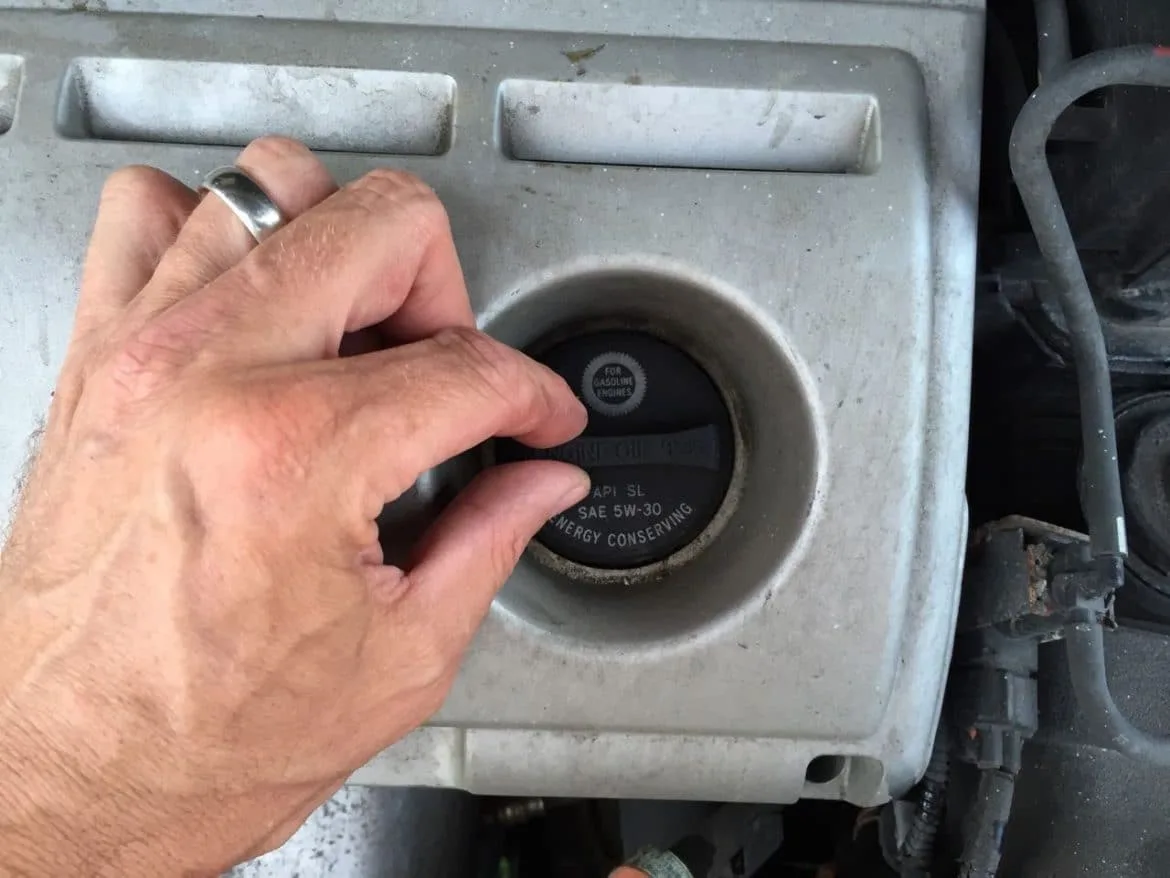
Image source: Web (Bing) / shareyourrepair.com (Web image (fair-use with source credit))
Why Getting the Wrong Oil Can Damage Your Engine
Using the wrong oil in your 2011 Sienna is not a minor oversight. It can cause real, costly damage.
The engine's variable valve timing (VVT) system relies on precise oil pressure. The wrong viscosity can cause sludge buildup, reduced lubrication, and VVT actuator failure. Over time, this leads to rough idling, poor performance, and potentially catastrophic engine wear.
Here are the most common damages from using the wrong oil:
- Sludge and deposit buildup that clogs oil passages
- VVT system malfunction leading to check engine lights
- Increased engine wear during cold starts
- Reduced fuel economy and performance
- Potential warranty denial if the wrong oil is used
The 2011 Sienna's engine is designed for low-viscosity oil. Thicker oil makes the engine work harder, reducing fuel economy. Thinner oil may not provide adequate protection at high temperatures.
Always check the oil fill cap. It usually lists the recommended viscosity. If it says 0W-20, use 0W-20.
There is no substitute. Using the wrong oil could void your warranty, as noted in our disclaimer.
2011 Sienna Oil Specs by Engine — 2.7L Four-Cylinder vs 3.5L V6
The 2011 Sienna comes with two engine options. The base model uses a 2.7L four-cylinder (engine code 1AR-FE). Most trims use the 3.5L V6 (engine code 2GR-FE).
Both engines require the same oil type: 0W-20 full synthetic.
Here is a quick comparison of the oil specs:
| Engine | Engine Code | Oil Capacity (with filter) | Recommended Viscosity | API Rating |
|---|---|---|---|---|
| 2.7L 4-cylinder | 1AR-FE | 5.5 quarts (5.2 L) | 0W-20 | SN or higher |
| 3.5L V6 | 2GR-FE | 6.4 quarts (6.0 L) | 0W-20 | SN or higher |
Both engines share the same oil filter. The part number is Toyota 04152-YZZA1 or equivalent. Always use a high-quality filter that meets Toyota specifications.
The 3.5L V6 is the more common engine. It is also the one that can be more sensitive to oil choice. The VVT system on the V6 is particularly prone to issues if the oil is not up to spec.
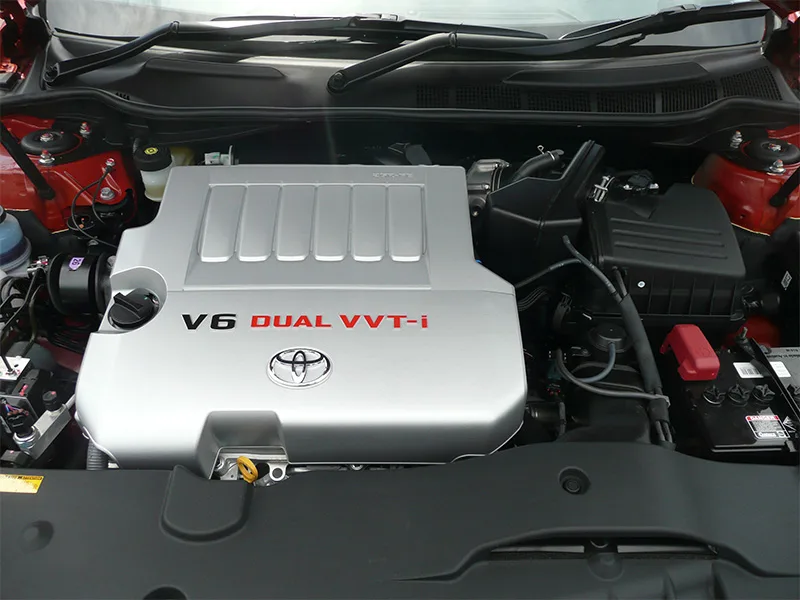
Image source: Web (Bing) / autopartswd.com (Web image (fair-use with source credit))
For more details on our research process, visit our about page.
0W-20 vs 5W-30 — What the Manual Says and What Actually Works
The owner's manual for the 2011 Toyota Sienna clearly states that 0W-20 is the preferred viscosity. It also says that 5W-30 can be used in an emergency. But there is a catch.
Using 5W-30 permanently is not recommended. Here is why:
- 0W-20 provides better fuel economy. Toyota designed the engine for this low-viscosity oil.
- 0W-20 flows better at cold temperatures. This protects the engine during start-up.
- 5W-30 is thicker. It can reduce fuel economy and increase engine wear over time.
- The VVT system is calibrated for 0W-20. Thicker oil can cause delayed timing adjustments.
If you are in a situation where 0W-20 is not available, 5W-30 is acceptable for one oil change. Switch back to 0W-20 as soon as possible.
Do not use 10W-30 or any other viscosity. The engine is not designed for it.
The oil must meet API SN or higher. As of 2026, the latest standard is API SP. It is backward compatible with SN.
Use ILSAC GF-6 for the best protection.
Many modern 0W-20 oils meet these standards. Look for the API donut logo on the bottle. This ensures the oil meets the latest certification standards.
Per the terms of your warranty, follow the manufacturer's recommendation. Sticking with 0W-20 is the safest choice.
Full Synthetic vs Conventional — What You Should Really Use
The 2011 Sienna is designed for 0W-20 oil. This viscosity is almost always available as a full synthetic. Conventional 0W-20 is rare and not recommended.
Here is the difference between synthetic and conventional oil:
- Full synthetic oil provides better protection at high temperatures. It resists breakdown longer.
- Synthetic oil flows better at cold temperatures. This reduces engine wear during start-up.
- Synthetic oil allows for longer oil change intervals. You can go up to 10,000 miles under normal driving conditions.
- Conventional oil breaks down faster. It requires more frequent changes.
For the 2011 Sienna, always use full synthetic 0W-20. Do not use a synthetic blend or conventional oil. The engine needs the protection that only full synthetic provides.
If you have a high-mileage Sienna (over 75,000 miles), consider using a high-mileage formulation. These oils contain additives that help condition seals and reduce oil consumption. Make sure it is still 0W-20 full synthetic.
The extra cost of synthetic oil is worth it. It provides better protection and longer intervals. This saves you money in the long run.
If you are unsure about which oil to choose, feel free to contact us for personalized advice. For more information on oil standards, check the ILSAC certification page.
Step-by-Step Oil Change Guide for a 2011 Sienna
Changing the oil on your 2011 Sienna is straightforward. You can do it yourself with basic tools. Here is the process from start to finish.
What you will need:
- 0W-20 full synthetic oil (5.5 quarts for 4-cylinder, 6.4 quarts for V6)
- Toyota oil filter (04152-YZZA1 or equivalent)
- Oil filter wrench
- 14mm socket for drain plug
- Drain pan
- Funnel
- Crush washer (part number 90430-12031)
- Torque wrench
Step 1: Warm up the engine. Run the engine for a few minutes. Warm oil drains faster and carries more contaminants. Do not run it long enough to get hot.
Just warm.
Step 2: Lift and secure the vehicle. Use a jack and jack stands. Never work under a vehicle supported only by a jack. Ramps are a good option for added safety.
Step 3: Drain the old oil. Place the drain pan under the oil pan. Remove the drain plug with the 14mm socket. Let the oil drain completely.
This takes about 5 minutes.
Step 4: Replace the crush washer. Always use a new crush washer. This prevents leaks. Torque the drain plug to 29 ft-lbs for the V6.
Do not overtighten.
Step 5: Remove the oil filter. Use an oil filter wrench. The filter is on the front of the engine. Be careful.
It is full of hot oil. Let it drain into the pan.
Step 6: Install the new oil filter. Lubricate the gasket with fresh oil. Hand-tighten the filter. Turn it another 3/4 turn after the gasket contacts the mounting surface.
Step 7: Add new oil. Remove the oil fill cap. Insert the funnel. Add the recommended amount.
Start with slightly less than the full capacity. Check the dipstick after a few minutes.
Step 8: Check for leaks. Start the engine. Let it run for a minute. Check under the vehicle for drips.
Turn off the engine and check the oil level again. Top off if needed.
Step 9: Reset the oil maintenance light. Turn the ignition to ON. Press the trip/reset button until the oil light flashes. Hold the button for 5 seconds.
The light should turn off.
For more details on our editorial process, visit our about page.
Oil Capacity, Filter Type, and Torque Specs at a Glance
Having the right numbers saves time and prevents mistakes. Here is a quick reference table for your 2011 Sienna.
| Spec | 2.7L 4-Cylinder | 3.5L V6 |
|---|---|---|
| Oil capacity with filter | 5.5 quarts (5.2 L) | 6.4 quarts (6.0 L) |
| Recommended viscosity | 0W-20 | 0W-20 |
| API rating | SN or higher | SN or higher |
| ILSAC rating | GF-5 or higher | GF-5 or higher |
| Oil filter part number | 04152-YZZA1 | 04152-YZZA1 |
| Drain plug torque | 29 ft-lbs | 29 ft-lbs |
| Crush washer part number | 90430-12031 | 90430-12031 |
The oil filter is the same for both engines. It is a cartridge-style filter. Always replace it with every oil change.
Do not reuse the old filter.
The drain plug torque is critical. Overtightening can strip the threads. Undertightening causes leaks.
Use a torque wrench for accuracy.
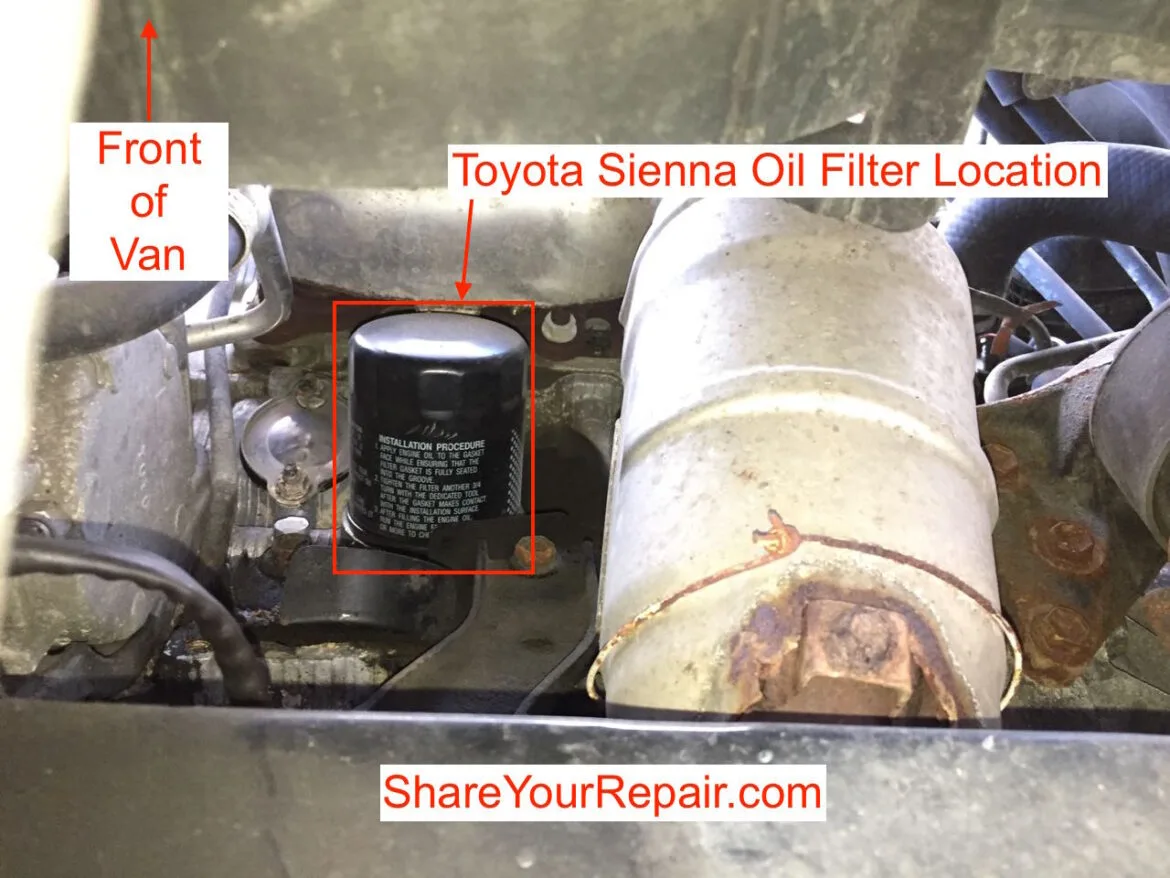
Image source: Web (Bing) / storage.googleapis.com (Web image (fair-use with source credit))
If you have a 4-cylinder model, buy a 5-quart jug and a 1-quart bottle. The V6 requires a 5-quart jug plus 1.4 quarts from a second bottle. Always check the dipstick after adding oil.
Common Oil Mistakes That Shorten Engine Life
Our research shows that many owners make the same mistakes. Here are the most common ones and how to avoid them.
Using the wrong viscosity. This is the biggest mistake. The 2011 Sienna requires 0W-20. Do not use 5W-30 long-term.
Do not use 10W-30. The engine is designed for low-viscosity oil.
Ignoring the API rating. Always use oil that meets API SN or higher. As of 2026, API SP is the latest standard. It provides better protection against low-speed pre-ignition and timing chain wear.
Overfilling the oil. Too much oil causes foaming. Foam does not lubricate properly. It can also damage seals.
Always check the dipstick and add oil slowly.
Using a cheap oil filter. A poor-quality filter can collapse or bypass. This allows unfiltered oil to circulate. Always use a high-quality filter that meets Toyota specifications.
Skipping the crush washer. The crush washer seals the drain plug. Reusing an old one causes leaks. It costs less than a dollar.
Replace it every time.
Not warming up the engine before draining. Cold oil is thick. It drains slowly and leaves contaminants behind. A warm engine drains faster and more completely.
Forgetting to reset the oil light. The maintenance light reminds you when to change the oil. Ignoring it means you lose track of your schedule. Reset it after every change.
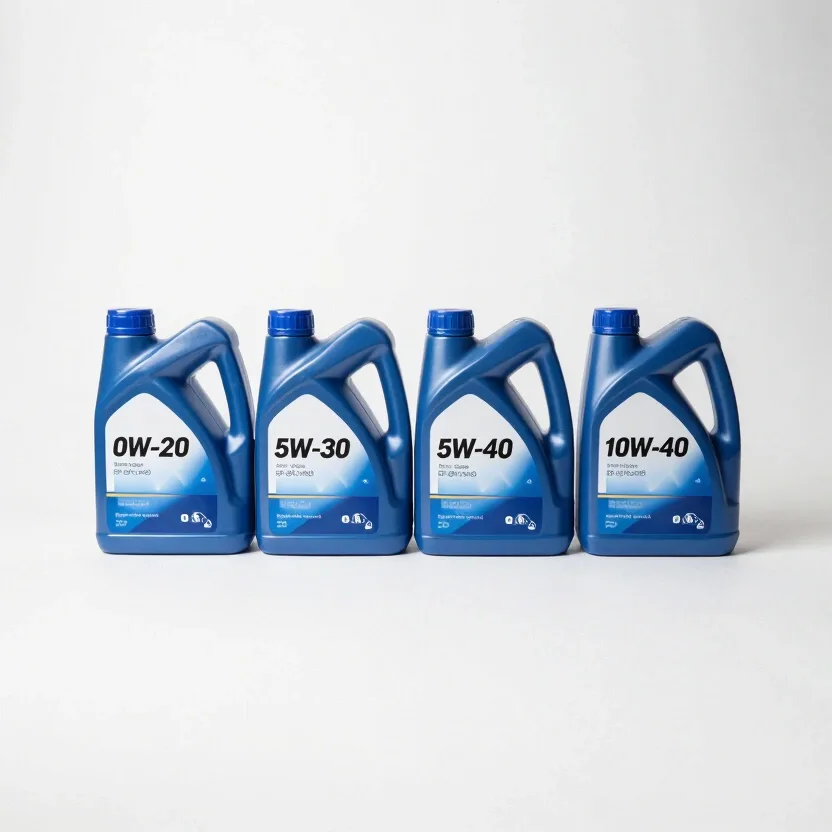
Image source: Bing (Web (fair-use with source credit))
If you have any questions about the right oil for your Sienna, feel free to contact us.
High-Mileage Oil — When It Makes Sense and When It Doesn't
High-mileage oil is specially formulated for engines with over 75,000 miles. It contains additives that help condition seals and reduce oil consumption.
When to use high-mileage oil:
- Your Sienna has over 75,000 miles
- You notice minor oil leaks or seepage
- The engine burns a small amount of oil
- You want to extend the engine's life
When not to use high-mileage oil:
- Your Sienna has less than 75,000 miles
- The engine does not leak or consume oil
- You prefer the standard formulation for peace of mind
High-mileage oil is available in 0W-20 full synthetic. Use the same viscosity as recommended. Do not switch to a thicker oil just because the engine has high mileage.
The additives in high-mileage oil can help reduce oil consumption. They can also reduce smoke from worn valve seals. But they are not a cure-all.
If your engine is burning a lot of oil, you may need repairs.
Our research shows that high-mileage oil is beneficial for most engines over 100,000 miles. It is worth the small extra cost. It can help keep your Sienna running smoothly for another 100,000 miles.
For more on our terms and conditions, see our terms page.
Severe Service vs Normal Driving — How Often to Change the Oil
Toyota defines two driving conditions. Normal service and severe service. Most drivers fall into the severe service category.
Normal service conditions:
- Highway driving at moderate speeds
- Temperatures between 32°F and 100°F
- No towing or heavy loads
- Trips longer than 10 minutes
Severe service conditions:
- Frequent short trips (less than 5 miles)
- Stop-and-go traffic
- Towing a trailer
- Driving in extreme heat or cold
- Operating on dusty or muddy roads
- Using the vehicle for commercial purposes
For the 2011 Sienna, Toyota recommends an oil change every 10,000 miles for normal service. For severe service, change the oil every 5,000 miles.
Most people should follow the severe service schedule. Short trips and traffic are common in city driving. The engine does not reach full operating temperature.
This causes moisture and fuel to accumulate in the oil.
Here is a simple rule. If you are unsure, change the oil every 5,000 miles. It is cheap insurance.
The cost of an extra oil change is much less than the cost of an engine repair.
Always use full synthetic 0W-20 oil. It provides better protection for extended intervals. Conventional oil breaks down faster and requires more frequent changes.
Check your oil level every month. Low oil levels can cause engine damage. Top off with the same oil type if needed.
If you have questions about your driving conditions, check our privacy page for how we handle your data, or contact us directly.
What to Do If You Already Used the Wrong Oil
If you accidentally put 5W-30 or conventional oil in your Sienna, do not panic. One oil change with the wrong oil will not destroy the engine.
If you just filled it and have not driven: Drain it immediately. Replace the filter. Refill with the correct 0W-20 full synthetic.
No harm done.
If you have driven less than 1,000 miles: Schedule an oil change as soon as possible. The engine will be fine. Switch back to 0W-20 full synthetic.
If you have driven over 1,000 miles: Change the oil now. Monitor for any unusual noises or performance issues. Check for oil leaks or burning smells.
If everything seems normal, you are likely safe.
If you used conventional oil instead of synthetic: Change it at 3,000 miles instead of 5,000. Conventional oil breaks down faster. Do not let it go longer.
If you mixed oil types: This is not ideal but not catastrophic. The oil still lubricates. Change it at your next scheduled interval.
Use the correct oil next time.
Watch for these warning signs after using the wrong oil: rough idle, check engine light, oil consumption increase, or unusual engine noise. If you notice any of these, have a mechanic inspect the engine.
For more serious concerns, review our disclaimer for guidance on warranty coverage.
Quick Reference Specs Table
Here is a single table with everything you need to know at a glance. Save this for your next oil change.
| Spec | Detail |
|---|---|
| Recommended oil type | 0W-20 full synthetic |
| API rating | SN or higher (SP recommended) |
| ILSAC rating | GF-5 or higher (GF-6 recommended) |
| Oil capacity (2.7L) | 5.5 quarts with filter |
| Oil capacity (3.5L) | 6.4 quarts with filter |
| Oil filter | Toyota 04152-YZZA1 or equivalent |
| Drain plug torque | 29 ft-lbs |
| Crush washer | 90430-12031 |
| Normal service interval | 10,000 miles |
| Severe service interval | 5,000 miles |
| High-mileage threshold | 75,000+ miles |
This table covers both engines. Print it out or save it on your phone. It takes the guesswork out of your next oil change.
When to See a Mechanic Instead of Doing It Yourself
Most oil changes are straightforward. But some situations call for a professional.
You should see a mechanic if:
- You cannot get the drain plug loose without stripping it
- The oil filter is stuck and will not turn
- You see metal shavings in the old oil
- The oil looks like a milkshake (coolant contamination)
- You have a persistent oil leak
- The check engine light comes on after the change
- You are unsure about the correct procedure
A mechanic can also handle oil disposal properly. Used oil must be recycled. It is illegal to dump it down the drain or on the ground.
The cost of a professional oil change for a 2011 Sienna is typically $60 to $90. This includes oil, filter, labor, and disposal. For many owners, this is worth the peace of mind.
If you decide to do it yourself, always use a proper drain pan. Take the used oil to an auto parts store for recycling. Most stores accept it for free.
Final Verdict — The One Oil Recommendation You Can Trust
Here is the bottom line for your 2011 Toyota Sienna.
Use 0W-20 full synthetic oil. Make sure it meets API SN or higher and ILSAC GF-5 or higher. Change it every 5,000 miles if you drive in stop-and-go traffic or short trips.
Change it every 10,000 miles if you drive mostly highway.
Both the 2.7L four-cylinder and the 3.5L V6 use the same oil. The same oil filter fits both engines. The drain plug torque is the same.
Do not use 5W-30 long-term. Do not use conventional oil. Do not skip the crush washer.
Do not forget to reset the maintenance light.
Stick with these specs and your Sienna will run reliably for years. The engine is well built. It just needs the right oil.
Frequently Asked Questions
Can I use 5W-30 in my 2011 Toyota Sienna?
Yes, but only in an emergency. The owner's manual permits 5W-30 if 0W-20 is unavailable. Switch back to 0W-20 at the next oil change.
Do not use 5W-30 long-term.
How much oil does a 2011 Toyota Sienna take?
The 2.7L four-cylinder takes 5.5 quarts with a filter change. The 3.5L V6 takes 6.4 quarts with a filter change. Always check the dipstick after adding oil.
What oil filter does a 2011 Toyota Sienna use?
The OEM filter part number is 04152-YZZA1. Many aftermarket brands offer equivalent filters. Use a high-quality filter that meets Toyota specifications.
How often should I change the oil in my 2011 Sienna?
Toyota recommends every 10,000 miles for normal service. For severe service (short trips, towing, extreme temperatures), change it every 5,000 miles. Most drivers should follow the severe schedule.
What happens if I put the wrong oil in my Toyota Sienna?
One oil change with the wrong oil is unlikely to cause immediate damage. Long-term use of the wrong viscosity can cause sludge buildup, VVT issues, and reduced engine life. Switch back to the correct oil as soon as possible.
Do I need synthetic oil for my 2011 Sienna?
Yes. The 0W-20 viscosity is almost exclusively available as full synthetic. Full synthetic provides better protection, longer intervals, and improved cold-start performance.
Do not use conventional oil.