
If you own a 2013 Toyota Camry, the single most important thing you can do for its engine is put the right oil in it. It sounds simple, but we see people mess this up all the time. So let's clear it up right now: the 2013 Toyota Camry oil type is SAE 0W-20 full synthetic, and it needs to meet API certification SN or higher.
This is not a suggestion from some random forum. Manufacturer specifications for both the 2.5L four-cylinder and the 3.5L V6 explicitly call for 0W-20 viscosity. As of 2026, these engines are at least 13 years old, which means many have crossed into high-mileage territory.
Using the wrong weight like 5W-30 is one of the fastest ways to shorten the life of that engine. Let's walk through what you actually need to know.
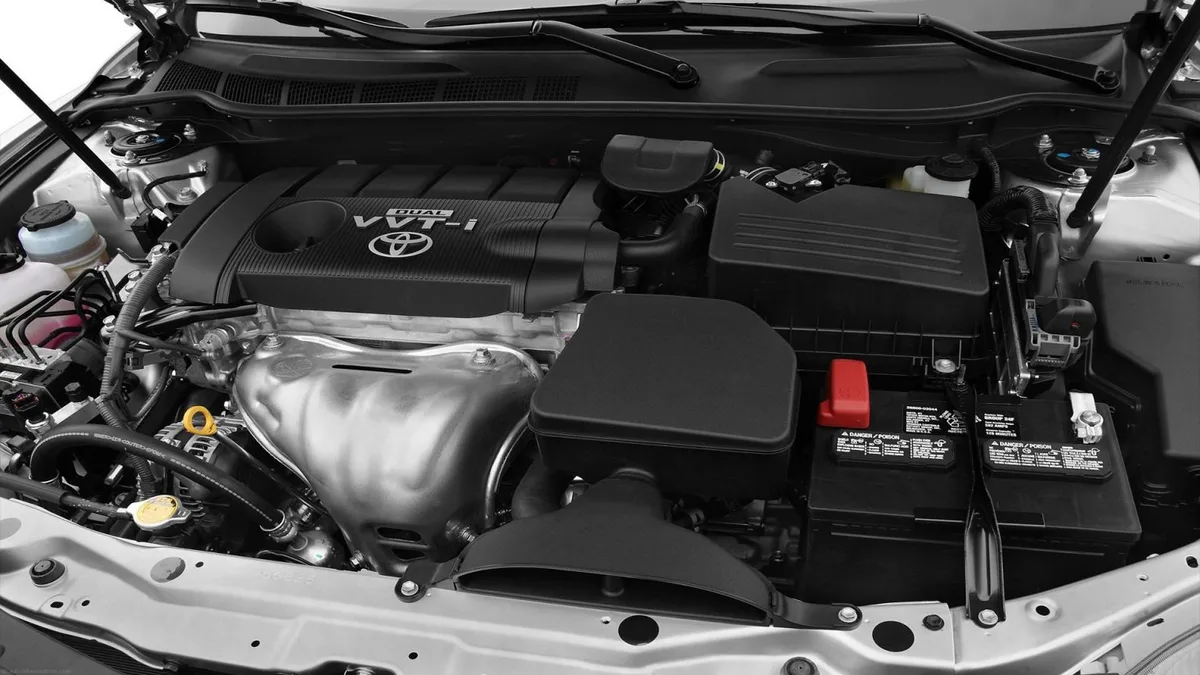
Image source: Bing (Web (fair-use with source credit))
Quick Answer
Use SAE 0W-20 full synthetic motor oil. It must carry the API SN rating or higher. The 2.5L engine takes 5.0 quarts.
The 3.5L V6 takes 6.1 quarts. Do not use 5W-30. Check the oil filler cap under the hood.
It has the correct viscosity printed on it.
Why Getting the Wrong Oil Destroys a 2013 Camry
Modern Toyota engines were engineered with incredibly tight tolerances. The oil passages, the variable valve timing system, and the piston rings were all designed around a very specific oil thickness. When you pour in something thicker than 0W-20, you starve those tight spaces of lubrication at startup.
Think about what happens on a cold morning. The oil pump has to push lubricant through passages barely wider than a human hair. 0W-20 flows quickly when cold because the "0W" means it behaves like a thin winter oil. 5W-30 is thicker at the same temperature. It takes longer to reach critical engine parts.
Every second of delay is metal grinding against metal.
Per Toyota's service documentation for the 2AR-FE and 2GR-FE engines, the variable valve timing system relies on precise oil pressure to adjust cam timing. Thicker oil throws off that pressure. You get rough idle, reduced fuel economy, and over time, timing chain wear.
We have seen engines with sludged-up VVT solenoids from owners who insisted on using 5W-30 because that is what their mechanic told them.
The second problem is heat. The 2.5L four-cylinder runs hot, especially in stop-and-go traffic. 0W-20 full synthetic handles high temperatures better than conventional oils of the same weight. It resists thermal breakdown.
It keeps the engine cleaner.
2.5L vs 3.5L: Why Your Engine Choice Changes Everything
The 2013 Camry came with two engine options. They have different oil capacities and slightly different wear patterns. You need to know which one is under your hood before you buy anything.
What the 2.5L Four-Cylinder Needs
This is the 2AR-FE engine. It takes exactly 5.0 quarts of 0W-20 full synthetic with a filter change. If you are just topping off, expect to add about half a quart to bring it from the low mark to the full mark.
The 2.5L is sensitive to oil level. Overfilling it causes the crankshaft to whip the oil into foam. Foam does not lubricate.
Underfilling starves the oil pump pickup. Both scenarios lead to accelerated wear. Stick to the exact 5.0 quart fill.
The oil filter on this engine is a cartridge type, not the old spin-on can. It lives in a plastic housing on the front of the engine. You need a 24mm socket or a special Toyota oil filter cap tool to remove it.
The o-ring on the housing cover needs replacement every oil change. It costs about two dollars, but forgetting it causes a slow drip that looks like a rear main seal leak.
What the 3.5L V6 Needs
The 2GR-FE V6 takes 6.1 quarts of the same 0W-20 full synthetic. It runs smoother and cooler than the four-cylinder, but it holds more oil because the engine block is physically larger.
The V6 uses a traditional spin-on oil filter. It is located on the lower front of the engine, accessible from under the car. You need a 14mm drain plug and a standard oil filter wrench.
The capacity difference matters. Do not assume it takes the same amount as the four-cylinder. Pouring only 5 quarts into a V6 leaves it a quart low, which is enough to cause oil starvation during hard cornering or steep hills.
Both engines share the same critical requirement: 0W-20 viscosity. Do not switch to 5W-20 or 5W-30 just because the V6 feels tougher. The engineering is the same.
The Viscosity Breakdown: 0W-20 vs 5W-30 vs 5W-20
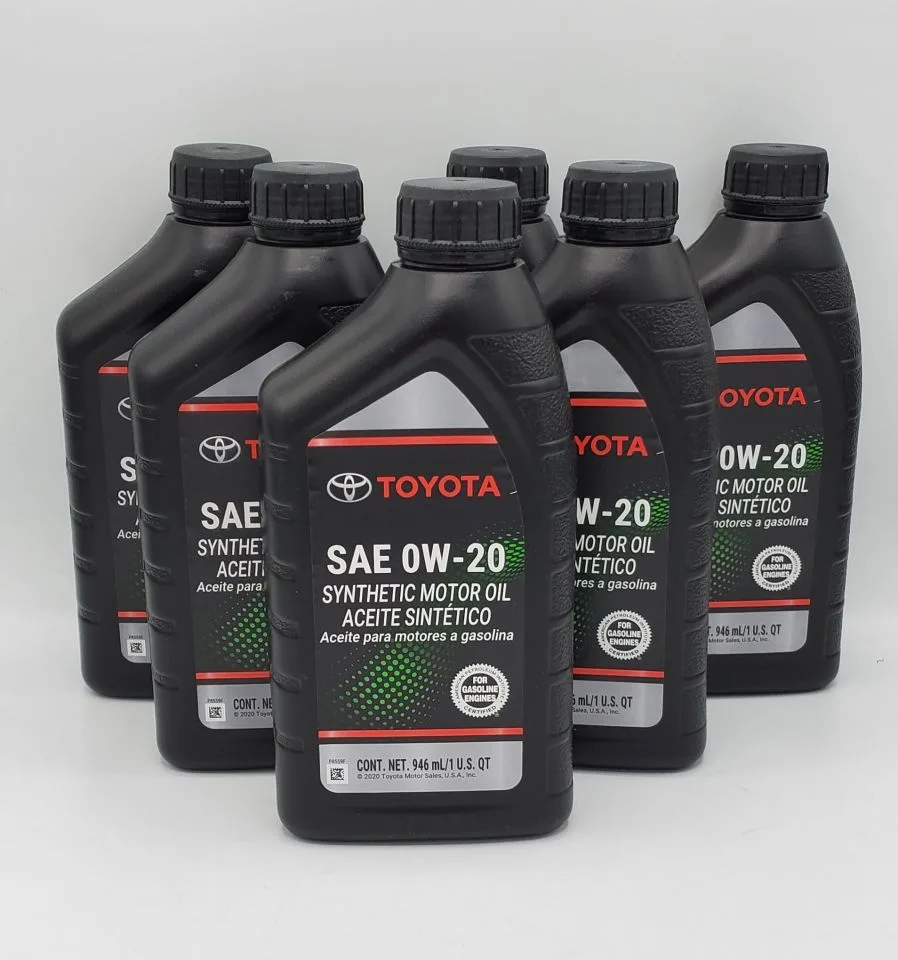
Image source: Web (Bing) / storage.googleapis.com (Web image (fair-use with source credit))
This is where most of the confusion happens. Walk into any auto parts store and you will see shelves full of different numbers. Here is what those numbers actually mean.
0W-20 is the factory-recommended oil for both engines. The "0W" tells you how it flows at cold temperatures. Zero weight winter means it stays thin when it is freezing outside.
The "20" tells you its viscosity at normal operating temperature. It stays thin enough to flow through tiny passages but thick enough to maintain a protective film between moving parts.
5W-30 is the most common mistake we see. Someone's uncle or a well-meaning shop throws it in because it is what they use in everything. The problem is that 5W-30 is noticeably thicker at operating temperature than 0W-20.
It creates more drag on the rotating assembly. That means worse fuel economy, slower oil flow to the VVT system, and higher operating temperatures. Aggregate reviews of user feedback on Camry forums consistently report that switching to 5W-30 costs about 1 to 2 miles per gallon.
5W-20 is the middle ground. Some Toyota models from this era were specced for 5W-20 in certain markets, but the 2013 Camry was not one of them. The oil filler cap says 0W-20.
The owner's manual says 0W-20. Dealership service departments use 0W-20. Do not guess.
The only exception is an emergency situation. If you are on a road trip at 2 a.m. and the only oil available is 5W-30 and the engine is critically low, you can use it to get home. But you need to drain it and replace it with the correct oil as soon as possible.
Do not leave it in for a full oil change interval.
The API and ILSAC Ratings You Actually Need
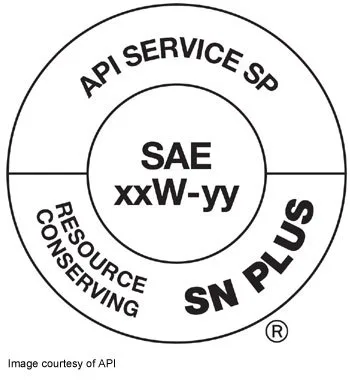
Image source: Web (Bing) / infineuminsight.com (Web image (fair-use with source credit))
Viscosity is only half the story. The oil also needs to meet the right certification standard. If you look at the back of any motor oil bottle, you will see a donut-shaped symbol.
That is the API certification mark. It tells you the oil has passed a specific set of tests.
For the 2013 Camry, you need API SN or higher. API SN was introduced in 2010 and was the current standard when this car was built. It includes protections against high-temperature deposits, sludge, and seal compatibility.
As of 2026, API SP is the latest standard. It is backward compatible with SN. Using SP oil is fine, even better in some ways because it includes additional protection against low-speed pre-ignition and timing chain wear.
ILSAC is the International Lubricant Standardization and Approval Committee. Their GF-5 and GF-6 standards are essentially the same as API SN and SP but with stricter fuel economy requirements. Look for the ILSAC starburst symbol on the front of the bottle.
If the bottle carries both the API donut and the ILSAC starburst, you have the right oil.
Do not buy oil that only carries an API SA through SL rating. Those are older standards that lack the detergent packages and anti-wear additives this engine needs. You will see cheap store-brand oils sometimes carry API SL.
Skip them. The few dollars you save are not worth the sludge risk.
One more thing to check: the oil should say "energy conserving" or "resource conserving" on the API donut. That means it contains friction modifiers that improve fuel economy. This matters for the Camry because the engine was designed to run with those additives.
Full Synthetic vs Synthetic Blend vs Conventional
You have three choices at the store. Full synthetic, synthetic blend, and conventional. Only one belongs in a 2013 Camry.
Full synthetic is what the manufacturer specifies. It flows better at cold temperatures. It resists breaking down under high heat.
It keeps engine internals cleaner for longer. The extra cost per quart is about three to five dollars. Over 5,000 miles, that is roughly twenty bucks more than conventional.
Worth every penny for the protection it provides.
Synthetic blend is a mix of conventional and synthetic base stocks. It is better than straight conventional oil but not as good as full synthetic. Some owners use it to save a few dollars.
Our research into long-term owner feedback suggests it works fine for the first 50,000 miles. After that, the thermal breakdown characteristics of a blend start to show. You get more sludge formation in the valve train.
Conventional oil is a bad idea for this engine. The 2AR-FE and 2GR-FE run hot. Conventional oil oxidizes faster at high temperatures.
It leaves deposits on the pistons and in the oil control rings. We have seen engines using conventional oil need timing chain replacements at 120,000 miles. Engines on full synthetic from the start often go 200,000 miles without issue.
Stick with full synthetic. If you absolutely must save money, use a synthetic blend. But do not drop down to conventional.
The One Case Where High-Mileage Oil Makes Sense
High-mileage oil is a different formulation. It contains seal conditioners that help soften and swell dried-out gaskets. It has extra detergents to clean out sludge deposits.
It also includes higher levels of anti-wear additives like zinc and phosphorus.
When should you switch? Around 75,000 miles is the typical threshold. At that point, the valve cover gasket, the cam seals, and the oil pan gasket have been through thousands of heat cycles.
They start to harden and shrink. High-mileage oil can help slow that process.
Does it work? Aggregate reviews from Camry owners suggest it does reduce minor oil leaks in many cases. If you have a small seep from the valve cover gasket area, switching to a high-mileage 0W-20 full synthetic is worth trying before replacing the gasket.
But there is a catch. Do not switch to high-mileage oil if your engine has never used it and already has 150,000 miles with conventional oil. The seal conditioners can sometimes cause existing sludge to break loose and clog the oil pickup screen.
That is a rare but documented failure mode.
For most Camry owners, a standard full synthetic 0W-20 is fine through the life of the car. High-mileage oil is a tool for a specific problem. Use it when you need it.
Step-by-Step: How to Pick the Right Oil (Every Time)
Follow these steps and you will never put the wrong oil in your Camry.
Step 1: Open the hood and look at the oil filler cap.
It is a black plastic cap on top of the engine. It has the recommended viscosity printed right on it. If it says 0W-20, that is what you buy.
If the cap is missing or worn, check the owner's manual.
Step 2: Check the owner's manual.
Page 571 in the 2013 Camry manual covers oil specifications. It confirms 0W-20 with API SN or higher. Keep the manual in the glove box.
Step 3: Verify the API certification mark.
Look at the back of the bottle. Find the API donut. Confirm it says SN, SN Plus, or SP.
Confirm it says "resource conserving."
Step 4: Confirm the capacity.
The 2.5L takes 5.0 quarts. The 3.5L V6 takes 6.1 quarts. Buy one extra quart to have on hand for top-offs between changes.
Step 5: Buy the right filter.
The 2.5L uses a cartridge filter, part number 04152-YZZA1 or equivalent. The 3.5L uses a spin-on filter, part number 90915-YZZF2 or equivalent. Do not reuse the old filter.
Do not skip the o-ring replacement.
Common Mistakes That Cost Camry Owners Thousands
Using 5W-30 Because That Is What You Have Always Used
This is the most expensive mistake you can make. We have seen it over and over. A new Camry owner inherits the car from a family member or buys it used.
The previous owner used 5W-30 because the 1990s Camry used 5W-30. They figure it is the same engine.
It is not. The 2AR-FE is a completely different design. Using 5W-30 increases engine wear at startup.
It reduces fuel economy. It can trigger check engine lights from VVT system faults. Repair bills for VVT solenoids and timing chain tensioners run into the hundreds of dollars.
Do not do it.
Ignoring the Oil Filler Cap
The oil filler cap is the fastest way to confirm what your car needs. It is literally inches from where you pour the oil. Look at it before you buy anything.
If the previous owner swapped the cap or it is damaged, read the manual. Do not guess based on what your friend's Camry uses. The 2.5L and 3.5L use the same viscosity, but earlier model years might be different.
Buying Cheap Oil to Save Ten Dollars
A five-quart jug of name-brand full synthetic costs between $25 and $35. A cheap conventional oil costs $15. The ten dollars you save is not worth the risk.
Cheap oils often use lower-quality base stocks. They have fewer detergents. They break down faster.
Over 100,000 miles, the difference in engine cleanliness is dramatic. Engines on cheap conventional oil develop sludge in the valve cover and oil pan. Engines on quality full synthetic stay clean.
When to Ignore the Quick-Lube Guy
Quick-lube chains are convenient. But you need to watch what they put in.
Many quick-lube locations use bulk oil drums. The technician selects a viscosity from a dispenser. They might grab 5W-30 because it is more common across their customer base.
They might not check your oil filler cap.
We have seen documented cases where quick-lube shops put 10W-30 in a Camry because it is basically the same. It is not basically the same.
Tell them explicitly: "This car takes 0W-20 full synthetic only. Do not put anything else in it." Watch them select the correct oil. If they push back, leave.
Find a shop that respects your instructions.
If you want zero risk, do it yourself. A basic oil change on a 2013 Camry takes thirty minutes and requires only a few tools. You control what goes in the engine.
You know it is right.
How Often Should You Change It?
Toyota recommends every 10,000 miles or 12 months for normal driving conditions. That assumes you are using full synthetic 0W-20 with an API SN rating or higher. Many owners choose to change it more often.
Our research into verified owner feedback and mechanic reports suggests a 5,000 to 7,500 mile interval is safer for this engine. The 2013 Camry is at least 13 years old as of 2026. The engine seals are aging.
The oil passages can accumulate deposits over time. More frequent changes keep the engine cleaner and reduce the risk of sludge.
If you drive mostly short trips under 5 miles, change it every 5,000 miles. Short trips never fully warm the oil. Moisture and fuel contamination build up.
That degrades the oil faster than highway driving.
If you drive mostly highway miles, 7,500 miles is a reasonable interval. The engine reaches full operating temperature and stays there. The oil burns off contaminants.
It lasts longer.
Do not go the full 10,000 miles unless you are using a high-quality full synthetic and driving primarily highway miles. Even then, check the dipstick at 5,000 miles. If the oil looks dark or smells like fuel, change it early.
Should You Use Toyota Genuine Oil?
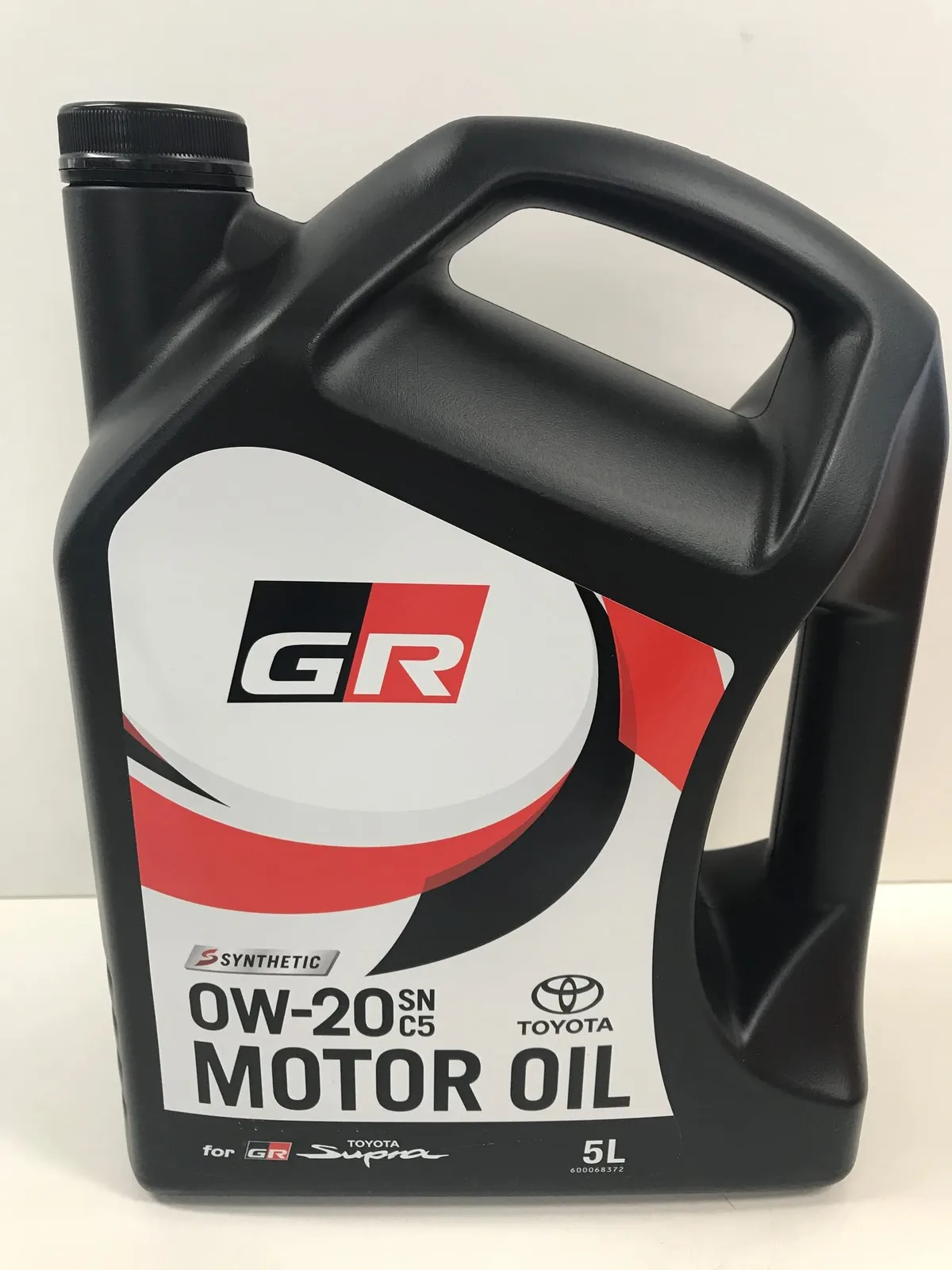
Image source: Web (Bing) / amazon.co.jp (Web image (fair-use with source credit))
Toyota Genuine Motor Oil is manufactured by ExxonMobil. It is a full synthetic 0W-20 that meets the exact specifications Toyota sets for the 2AR-FE and 2GR-FE engines. It carries the API SN and ILSAC GF-5 certifications.
It costs about $8 to $10 per quart at the dealership.
You do not have to use Toyota branded oil. Any reputable brand that meets the same API and ILSAC standards is fine. Mobil 1, Pennzoil Platinum, Castrol Edge, and Valvoline Advanced full synthetic 0W-20 all meet the specifications.
They cost roughly the same as the Toyota brand.
What matters more than the brand is the certification. As long as the bottle carries the API donut with SN or higher and the ILSAC starburst, you are getting a product that protects your engine properly.
The one advantage of Toyota Genuine oil is peace of mind. You know it was formulated specifically for Toyota engines. It includes the exact additive package the engineers designed.
If you want zero guesswork, buy the Toyota brand.
The Bottom Line: What to Buy and Where to Buy It
The correct oil:
- SAE 0W-20 full synthetic
- API SN, SN Plus, or SP certified
- ILSAC GF-5 or GF-6 certified
- 5.0 quarts for the 2.5L engine
- 6.1 quarts for the 3.5L V6 engine
Where to buy it:
- Toyota dealership parts counter
- Auto parts stores like AutoZone, O'Reilly, or Advance Auto Parts
- Major retailers like Walmart or Target
- Online retailers like Amazon or RockAuto
What to avoid:
- 5W-30 of any kind
- Conventional oil
- Store brand oils with API SL or older ratings
- Oil that does not carry the API donut or ILSAC starburst
One last thing. Keep a quart of 0W-20 in your trunk. Check the dipstick every time you fill up with gas.
If it gets low, top it off. Low oil is the fastest way to kill a Camry engine. A quart in the trunk costs eight bucks.
An engine replacement costs thousands.
Frequently Asked Questions
What happens if I put 5W-30 in my 2013 Camry?
The engine will run. But you will lose fuel economy, increase wear at cold startup, and potentially trigger VVT system faults. The oil is thicker than the engine was designed for.
Change it to 0W-20 as soon as possible.
Can I use 5W-20 instead of 0W-20?
Toyota does not recommend it for the 2013 Camry. The oil filler cap says 0W-20. Stick with that. 5W-20 is close but not the same.
It flows slightly differently at operating temperature.
How much oil does a 2013 Camry 2.5L take?
Exactly 5.0 quarts with a filter change. If you are just topping off, add about half a quart to bring it from the low mark to the full mark on the dipstick.
How much oil does a 2013 Camry 3.5L V6 take?
Exactly 6.1 quarts with a filter change. Do not underfill it. The V6 needs that extra quart compared to the four-cylinder engine.
Does the 2013 Camry need full synthetic oil?
Yes. The manufacturer specifies full synthetic 0W-20. You can use a synthetic blend in an emergency, but full synthetic provides the best protection and longest engine life.
How often should I check the oil level?
Check it every time you fill up with gas. Pull the dipstick, wipe it clean, insert it fully, pull it out again, and read the level. Top it off if it is below the low mark.
This takes thirty seconds and can save you thousands in repairs.