
You have a 2016 Toyota Camry SE and you need to know exactly what oil to put in it. No guesswork, no "this should work" nonsense. One wrong bottle and you are looking at sludge buildup, reduced fuel economy, or worse, premature engine wear.
The 2016 Toyota Camry SE oil type is not optional. It is a spec that Toyota engineers designed the engine around.
Here is the short version. The 2.5L four-cylinder engine takes SAE 0W-20 full synthetic oil that meets API SN or SN Plus certification. That is not a suggestion.
It is the requirement. The 3.5L V6 takes the same spec. Both engines hold roughly 4.4 quarts with a filter change.
Per Toyota's own service literature as of 2026, deviating from that viscosity risks cold-start wear and reduced lubrication at operating temperature. Let us walk through exactly what you need to know.
Quick Answer
The 2016 Toyota Camry SE requires SAE 0W-20 full synthetic oil. Use API SN Plus or SP certification. Capacity is 4.4 quarts with filter change.
Toyota also approves 5W-30 for high heat or towing use. Never use conventional oil in this engine.
Why Getting the Wrong Oil Can Cost You Thousands
Modern Toyota engines are built to tight tolerances. The 2AR-FE four-cylinder has precision oil passages and variable valve timing that depend on the right oil pressure at the right temperature. Put in a heavier oil like 10W-30 and you starve the timing chain tensioner during cold starts.
Put in cheap conventional oil and the detergent package falls short, leaving deposits that clog the oil control rings.
Toyota issued technical service bulletins about oil consumption on the 2AR-FE engine. The root cause in many cases was owners using the wrong viscosity or poor-quality oil that allowed ring stick. A set of piston rings and a timing chain replacement runs north of $2,500 at a dealership.
That is a lot more than the extra $8 you would have spent on the correct full synthetic.
The engine also has a variable displacement oil pump. It adjusts pressure based on load and temperature. That system was calibrated for 0W-20.
Thicker oil confuses the pump logic and can trigger a check engine light or reduce fuel economy by 3 to 5 percent.
The Two Engines Under the Hood: 2.5L vs. 3.5L
The 2016 Camry SE came with two engine options. Both take the same oil, but there are differences worth knowing.
The base engine is the 2.5L four-cylinder known as the 2AR-FE. It makes 178 horsepower and is the engine in the vast majority of Camry SE models. It is a non-interference engine, which means a timing chain failure does not destroy the valves.
The optional engine is the 3.5L V6 called the 2GR-FE. It makes 268 horsepower and comes with a six-speed automatic. The V6 takes the same 0W-20 oil but holds more.
The 2.5L needs 4.4 quarts with filter change. The 3.5L needs 5.7 quarts. Both engines use the same oil filter part number from Toyota: 04152-YZZA1.
You can tell which engine you have by looking at the engine cover. The four-cylinder says "2.5L VVT-i" and the V6 says "3.5L VVT-i." Or just pop the hood and count the spark plug wires. Four wires means four cylinders.
Six wires means you have the V6.
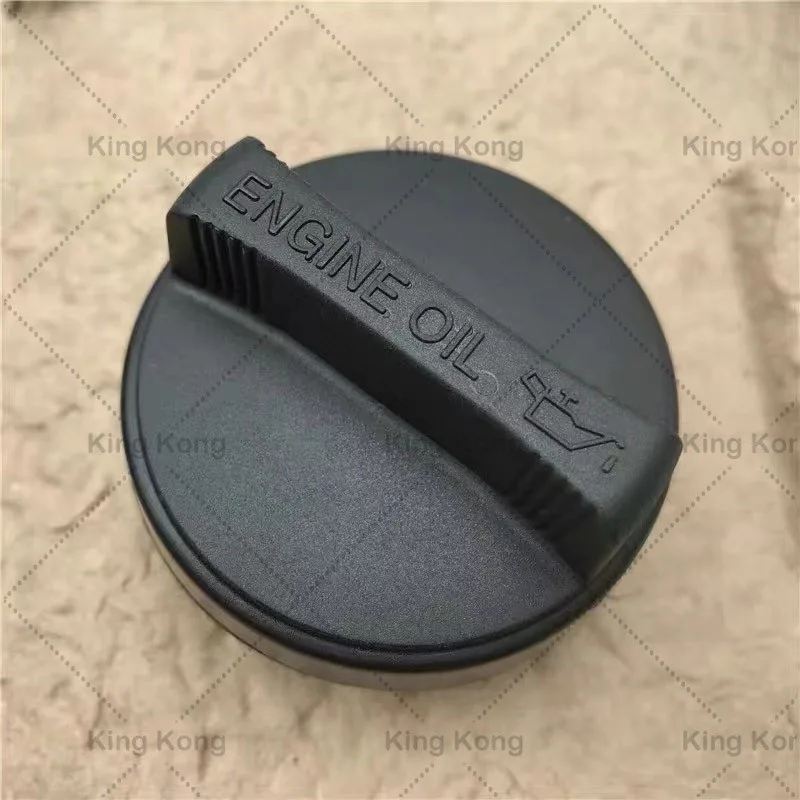
Image source: Web (Bing) / shopee.com.my (Web image (fair-use with source credit))
What All Those Oil Bottle Labels Actually Mean (API, ILSAC, Viscosity)
Oil bottles are covered in acronyms and logos. Here is what matters and what you can ignore.
The API donut is the round certification mark on the back of every oil bottle. It tells you the oil meets the American Petroleum Institute's standards. For your Camry, you need SN, SN Plus, or SP.
SP is the newest standard and offers better protection against low-speed pre-ignition and timing chain wear. SN Plus is fine. Older SM or SL are not acceptable.
The ILSAC starburst is another certification. ILSAC GF-5 or GF-6 is what you want. It guarantees the oil meets fuel economy and emissions compatibility requirements for Japanese and American engines.
The viscosity number is the most visible thing on the bottle. 0W-20 means the oil flows like a 0-weight when cold and behaves like a 20-weight at operating temperature. The W stands for winter, not weight. The 0W rating is critical for cold starts.
At 0 degrees Fahrenheit, 0W-20 flows significantly faster than 5W-30. That means oil reaches the timing chain tensioner and cam phasers in seconds instead of minutes.
Toyota also approved 5W-30 for the 2016 Camry SE in specific conditions. If you live in a consistently hot climate like Phoenix or Las Vegas, or if you regularly tow a trailer, 5W-30 is acceptable. But do not switch back and forth.
Pick one viscosity and stick with it for the life of the oil change interval.
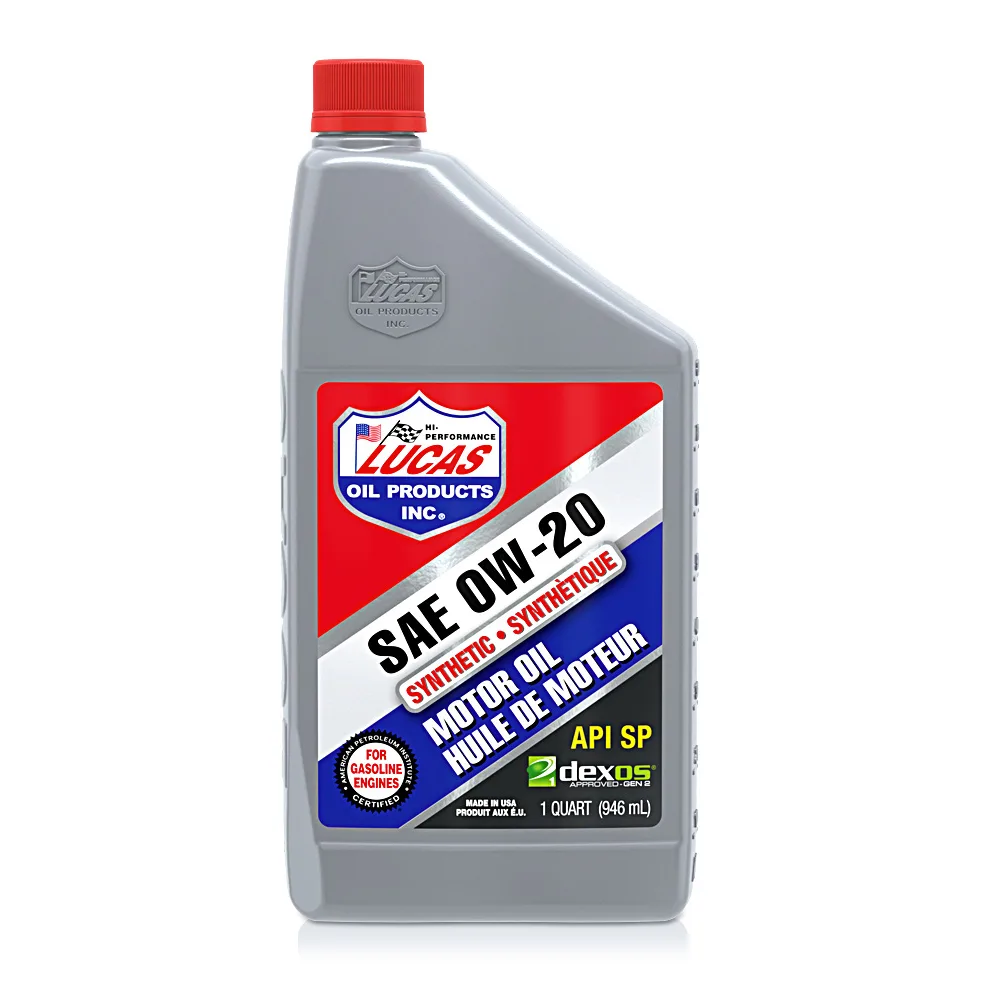
Image source: Web (Bing) / oilsource.ca (Web image (fair-use with source credit))
0W-20 vs. 5W-30: When to Use Each One
This is the most common point of confusion for Camry owners. The oil fill cap says 0W-20. The manual also lists 5W-30 as an alternative.
When do you use which?
Use 0W-20 for normal driving in most climates. That includes daily commuting, highway driving, stop-and-go traffic, and moderate temperatures. It is what the engine was designed for, and it delivers the best fuel economy.
The EPA mileage ratings for the 2.5L engine (25 city and 35 highway) were achieved using 0W-20.
Use 5W-30 only if you meet specific conditions. The owner's manual states that 5W-30 may be used if 0W-20 is unavailable or if you drive in extremely hot conditions above 100 degrees Fahrenheit regularly. It also applies if you tow a trailer or carry heavy loads.
Do not use 5W-30 just because it is cheaper or more common. It reduces fuel economy by roughly 1 to 2 percent because the engine has to work harder to pump the thicker oil. Never use 10W-30 or 10W-40 in this engine.
Those viscosities are far too thick for the oil pump and variable valve timing system.
Full Synthetic vs. Synthetic Blend vs. Conventional: What's Worth It?
The 2016 Camry SE left the factory with Toyota Genuine Motor Oil, which is a full synthetic. That is what you should keep using.
Full synthetic oil flows better at low temperatures, resists thermal breakdown at high temperatures, and holds its viscosity longer than conventional oil. For your Camry, it is the only type that meets the 0W-20 viscosity requirement. There is no conventional 0W-20 on the market because conventional base stocks cannot achieve that viscosity grade.
Synthetic blend oil is a mix of conventional and synthetic base stocks. It is better than straight conventional, but it does not meet the performance requirements for the 2AR-FE engine. The additive package is usually weaker, and the viscosity hold is less consistent over the change interval.
Avoid it.
Conventional oil should never go in a 2016 Camry SE. The engine has variable valve timing, a variable displacement oil pump, and tight piston ring clearances. Conventional oil lacks the detergent package to keep the timing chain tensioner passages clean.
It also breaks down faster under the heat generated by the 2.5L engine.
The cost difference is minimal. Full synthetic 0W-20 costs about $28 to $35 for a five-quart jug. A synthetic blend in 5W-30 might cost $22.
You save maybe $10 per oil change. For that, you get reduced engine life and potential oil consumption issues. Not worth it.
Stick with full synthetic from reputable brands. Mobil 1, Pennzoil Platinum, Valvoline Advanced, and Castrol Edge all meet the API SN Plus or SP certification. Toyota Genuine Motor Oil is also excellent and often priced competitively at dealer parts counters.
The Real Oil Change Interval for Your Driving Habits
Toyota says you can go 10,000 miles between oil changes on the 2016 Camry SE. That is true for normal driving conditions. But what counts as normal is narrower than most people think.
Normal driving means steady highway speeds, moderate temperatures, and short trips that let the engine reach full operating temperature. If your commute looks like that, 7,500 to 10,000 miles on full synthetic 0W-20 is reasonable.
Severe driving requires a 5,000-mile interval. Toyota defines severe service as frequent short trips under five miles, stop-and-go traffic in hot weather, dusty or salty roads, extended idling, or towing. If you do rideshare driving, delivery work, or live in a city with heavy traffic, you are in the severe category.
The 2AR-FE engine is known for fuel dilution in short-trip driving because the engine runs rich until it warms up.
Ignore oil change stickers from quick-lube shops that say 3,000 miles. That interval was designed for conventional oil in older engines. At the same time, do not stretch to 15,000 miles just because the bottle says "extended performance." Toyota did not design the oil filter or crankcase capacity for that length.
Check your oil level every 1,000 miles regardless of your interval. Some 2016 models with the 2AR-FE engine consume oil at a higher rate than expected. Toyota issued a warranty enhancement program for certain VINs addressing this issue.
If you find yourself adding a quart between changes, document it and check with your dealer.
| Driving Condition | Recommended Interval | Oil Type |
|---|---|---|
| Normal highway commute | 7,500 – 10,000 miles | 0W-20 full synthetic |
| Severe service (short trips, towing, city) | 5,000 miles | 0W-20 full synthetic |
| Extreme heat or heavy load | 5,000 miles | 5W-30 full synthetic |
Step-by-Step: How to Change the Oil Yourself the Right Way
Changing the oil on a 2016 Camry SE is straightforward. The oil filter is accessible from underneath without removing any covers. The drain plug is on the passenger side of the oil pan.
You can do this in about 30 minutes with basic tools.
You need a 14mm socket for the drain plug, a 64mm or 65mm oil filter cap wrench, a drain pan, a funnel, 4.4 quarts of 0W-20 full synthetic oil for the 2.5L (5.7 for the 3.5L), a new Toyota oil filter (04152-YZZA1), and a new drain plug gasket (90430-12031).
Warm the engine for a couple of minutes before draining. Warm oil flows faster and carries more suspended contaminants out with it. Get under the car safely using ramps or jack stands.
Never work under a car supported only by a hydraulic jack. Locate the drain plug on the passenger side of the oil pan. Let the oil drain completely for about five minutes.
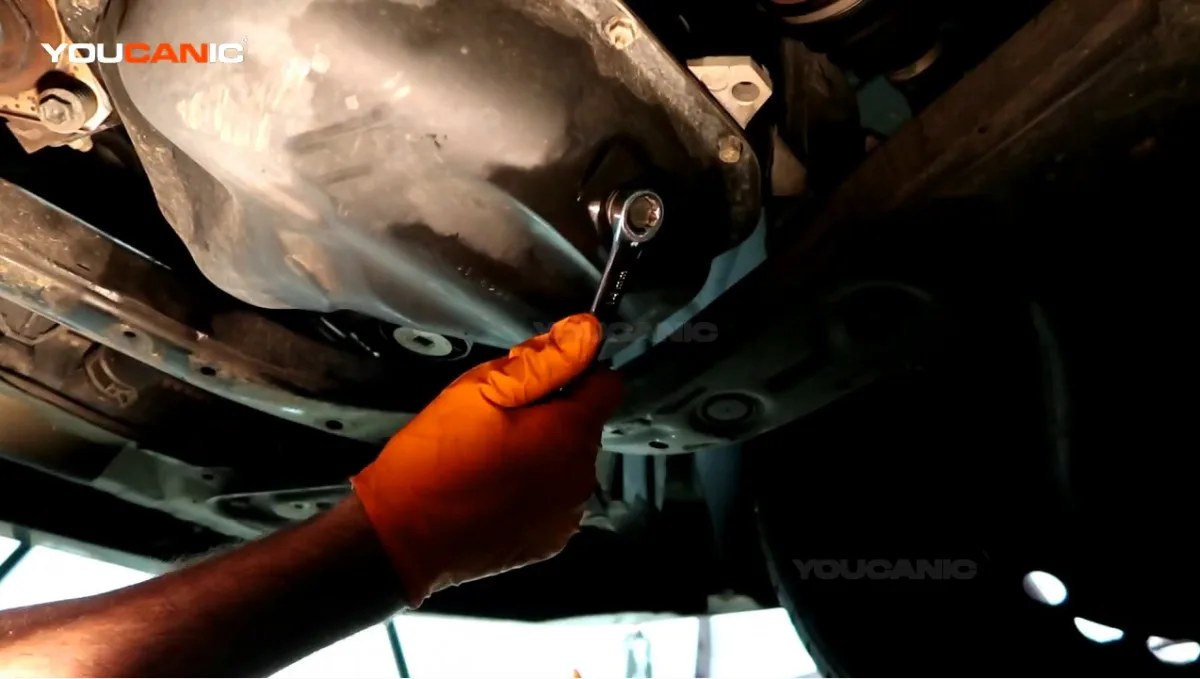
Image source: Bing (Web (fair-use with source credit))
While the oil drains, remove the oil filter. It is on the front of the engine, low on the driver side. Use the filter cap wrench to unscrew the black plastic housing.
Be careful. The housing contains hot oil and the filter element itself. Let it drain before pulling it out completely.
Replace the filter element and the O-rings on the housing. Lubricate the new O-rings with a bit of fresh oil so they seat properly. Torque the housing to 18 ft-lbs.
Do not overtighten it. Cracked filter housings are a common leak source.
Install the new drain plug with the new gasket. Torque it to 29 ft-lbs. Fill the engine with oil through the fill cap.
Pour in about 4 quarts for the 2.5L, then check the dipstick. Add the remaining quarter quart slowly until the level reads between the low and full marks.
Start the engine and let it run for 30 seconds. Check under the car for leaks at the drain plug and filter housing. Turn the engine off, wait two minutes, and recheck the dipstick.
Top off if needed. Reset the oil maintenance light by turning the ignition to ON, pressing the trip button until oil life displays, then holding the button for five seconds.
Common Mistakes That Wreck Camry Engines
The most expensive mistake is using the wrong viscosity oil. The 2AR-FE engine has small oil passages that feed the timing chain tensioner and cam phasers. Thicker oil like 10W-30 reduces flow at cold start and can cause timing chain rattle.
That rattle is the sound of metal stretching the chain guide. Eventually the chain jumps time and the engine needs a full timing set replacement.
Another common error is skipping the drain plug gasket. The gasket is a crush washer that deforms slightly when torqued to seal the plug. Reusing the old gasket causes slow drips.
A drop per minute turns into a quart low over a month. A pack of five genuine Toyota gaskets costs about $6.
Overtightening the oil filter housing is another problem. The plastic housing cracks if you crank it too hard. A cracked housing leaks oil onto the exhaust manifold.
That smells terrible and can start a fire. Use a torque wrench set to 18 ft-lbs, or tighten by hand until the housing seats then give it a quarter turn.
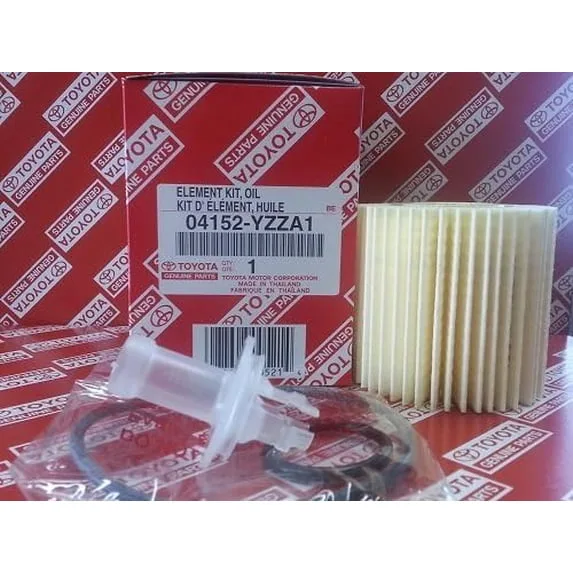
Image source: Bing (Web (fair-use with source credit))
Forgetting to reset the oil maintenance light is harmless but annoying. More importantly, do not ignore the light when it comes on at 5,000 or 10,000 miles. The light is a convenience reminder based on mileage and time, not actual oil condition.
High-Mileage Oil: Does Your 2016 Camry SE Need It Yet?
High-mileage oil contains additional seal conditioners and detergents designed for engines with over 75,000 miles. If your Camry SE is at that mileage or higher, high-mileage 0W-20 is a smart choice. It helps rehydrate dried valve stem seals and reduces oil consumption from seal shrinkage.
The 2AR-FE engine is prone to rear main seal leaks as it ages. High-mileage oil with seal conditioners can slow or prevent that leak from developing. It is not a repair for an existing leak, but it helps delay the onset.
High-mileage oil also has a higher detergent load. That helps clean sludge deposits from the timing chain tensioner passages. Switching to high-mileage synthetic at 80,000 miles can restore oil flow to the tensioner.
Do not use high-mileage oil in a low-mileage engine. The seal conditioners can cause seals to swell unnecessarily, and the extra detergents are wasted on a clean engine. Stick with standard full synthetic until you cross the 75,000-mile mark.
The viscosity stays the same. High-mileage 0W-20 is available from Mobil 1, Valvoline, and Castrol. Use the same API certification requirements.
What the Oil Change Light Really Tells You
The oil maintenance light on the 2016 Camry SE is not an oil pressure warning. It is a mileage counter. The light illuminates when the odometer reaches a preset distance since the last reset.
It does not measure oil life, viscosity breakdown, or contamination.
The factory setting triggers the light at 5,000 miles for severe service or 10,000 miles for normal service. You can check the current interval by pressing the trip button until "OIL LIFE" appears on the display. It shows a percentage.
When the light comes on, you do not need to stop driving immediately. You have a buffer of several hundred miles. But ignoring it for thousands of miles is a bad idea.
The oil is not necessarily degraded at 5,000 miles if you use full synthetic, but the filter may be getting full and the additive package may be depleted.
The oil pressure warning light is entirely different. It is a red oil can symbol. If that light comes on while driving, pull over and shut the engine off immediately.
That means the oil pump is not producing enough pressure to lubricate the bearings. Running the engine for even 30 seconds with low oil pressure can cause catastrophic bearing failure.
Check your oil level at every fuel fill if you have a high-mileage Camry or one that burns oil. Keep a quart of 0W-20 in the trunk. Topping off between changes is normal for this engine and prevents low-oil-pressure events that the warning light cannot predict.
Cost Breakdown: DIY vs. Dealer vs. Quick-Lube
A DIY oil change on the 2016 Camry SE runs about $35 to $45. You need a five-quart jug of 0W-20 full synthetic at $28 to $35 and a Toyota oil filter at $8. The drain plug gasket is under a dollar.
A dealership oil change costs $70 to $100. You pay for the same oil and filter plus labor. The advantage is that the dealer uses Toyota Genuine Motor Oil and genuine filters.
They also inspect other fluids and tire pressure as part of the service.
A quick-lube chain runs $55 to $80. The risk is that they may use a cheaper oil filter or a synthetic blend instead of full synthetic. Always confirm the oil type before they start.
| Option | Cost | Filter Quality | Convenience |
|---|---|---|---|
| DIY | $35 – $45 | OEM Toyota | Requires tools and 30 minutes |
| Dealership | $70 – $100 | OEM Toyota | Drive in, wait, drive out |
| Quick-lube | $55 – $80 | Aftermarket | Fast but inconsistent quality |
Expert Tips for Getting the Most Life Out of Your Engine
Let the engine warm up before driving hard. Cold oil does not lubricate well regardless of viscosity. Give it 30 seconds of idle before pulling out of the driveway, then drive gently until the temperature gauge reaches normal.
Keep the oil level at the full mark, not between low and full. The 2AR-FE engine runs the oil level close to the crankshaft. Running a quart low reduces oil capacity by over 20 percent.
That means less cooling and faster degradation.
Replace your air filter every 30,000 miles. A dirty air filter changes the air-fuel mixture and can cause fuel dilution in the oil. A clogged filter starves the engine of air, makes it run richer, and thins the oil over time.
Use the same brand of oil consistently. Different additive packages can interact unpredictably. Pick Mobil 1, Pennzoil, Castrol, or Valvoline and stay with it.
Switching brands is fine at the next change, but do not mix them mid-cycle.
Final Verdict: The One Oil Type to Buy Today
Buy SAE 0W-20 full synthetic oil with API SN Plus or SP certification. That is the only choice that fully protects the 2.5L or 3.5L engine in your 2016 Camry SE. Toyota Genuine Motor Oil is the safe bet.
Mobil 1 and Pennzoil Platinum are excellent alternatives.
If you live in extreme heat, tow frequently, or drive in stop-and-go desert conditions, 5W-30 full synthetic is acceptable. For everyone else, 0W-20 is the correct viscosity. Change it every 5,000 miles for severe driving or 7,500 to 10,000 miles for normal highway use.
Use a genuine Toyota oil filter and replace the drain plug gasket every time.
Your Camry SE is a reliable car that will easily pass 200,000 miles with proper maintenance. Getting the oil right is the single most important thing you can do for that engine. It costs an extra few dollars per change and saves thousands in repairs.
Do not cut corners.
Frequently Asked Questions
Can I use synthetic blend oil in my 2016 Camry SE?
You can, but you should not. The 2.5L and 3.5L engines were designed for full synthetic 0W-20. Synthetic blend does not offer the same thermal stability or detergent package.
Stick with full synthetic for the best protection and longest engine life.
What happens if I put 5W-30 in my Camry SE instead of 0W-20?
Nothing catastrophic in the short term. Toyota approves 5W-30 for hot climates and towing. But you will lose 1 to 2 percent fuel economy.
The engine runs slightly harder to pump the thicker oil. If you live in a moderate climate, stay with 0W-20.
How often should I check my oil level on a 2016 Camry SE?
Check it every 1,000 miles or at every fuel fill. Some 2AR-FE engines consume oil between changes. Catching it early prevents low-oil-pressure events that can damage bearings and the timing chain tensioner.
Do I need to use Toyota brand oil and filters?
No, but it is the safest choice. Toyota Genuine Motor Oil is manufactured by ExxonMobil to Toyota's specifications. The oil filters are made by Denso.
Third-party oils that meet API SN Plus or SP are fine as long as they are 0W-20 full synthetic.
What does the oil change light mean on a 2016 Camry SE?
It is a mileage-based reminder, not a sensor reading. The light comes on at a preset interval (5,000 or 10,000 miles) since the last reset. It does not measure oil condition.
The red oil can warning light is the one you need to take seriously.