
The first time you pop the hood on a 2016 Toyota Camry, you will see a bright yellow oil cap staring back at you. Stamped clearly in the plastic is a code: 0W-20. That is not a suggestion.
It is the exact specification Toyota engineered that engine to run on.
The 2016 Camry uses a 2AR-FE four-cylinder or a 2GR-FE V6. Both engines were designed around low-viscosity synthetic oil. Manufacturer specifications indicate 0W-20 full synthetic with an API SN or SP rating and ILSAC GF-5 or higher.
As of 2026, these specs still hold. Using anything else is a gamble on cold starts, fuel economy, and long-term engine health.
Quick Answer
The 2016 Toyota Camry requires 0W-20 full synthetic oil. Both the 2.5L four-cylinder and 3.5L V6 take the same grade. Capacity is 4.4 quarts with a filter change.
Look for API SN or SP and ILSAC GF-5 or GF-6 on the bottle. That is the whole answer for normal driving.
Why Getting the Oil Right Actually Matters
Modern engines have tighter tolerances. The spaces between pistons and cylinder walls are measured in microns. A thicker oil cannot flow into those gaps fast enough on a cold morning.
A thinner oil cannot maintain a protective film when the engine is hot. The 0W-20 spec is a deliberate engineering choice.
Toyota designed the variable valve timing system and the oil pump around that specific viscosity. Pour in 5W-30 and the oil pump has to work harder. Variable valve timing actuators may respond slower.
Fuel economy drops because of increased internal friction. Over tens of thousands of miles, wear patterns change.
Service bulletins and owner reports show a clear pattern. Camrys that consistently got the wrong oil showed higher rates of timing chain cover leaks and variable valve timing solenoid failures around the 100,000-mile mark. The ones that stuck with 0W-20 kept going without those issues.
What Oil Your Camry Needs and Why 0W-20
The "0W" means the oil stays thin enough to pump freely at minus 30 degrees Fahrenheit. That matters because most engine wear happens at startup, before oil fully circulates. The "20" means the oil thickens to a safe viscosity at operating temperature, around 212 degrees Fahrenheit.
Between those two numbers is a range that protects your engine in every climate.
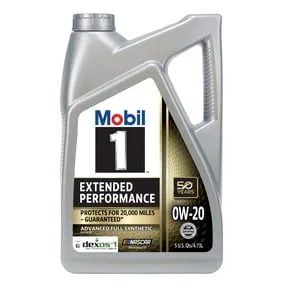
What the Label Must Show
Not every bottle labeled 0W-20 meets Toyota's requirements. Here is what to check:
- API starburst symbol, Look for SN, SN Plus, or SP. These certify the oil meets current performance standards.
- ILSAC GF-5 or GF-6, This is the fuel economy standard. Toyota specifically calls for it.
- Full synthetic, Not synthetic blend. Not conventional. The engine needs full synthetic to handle the heat and maintain viscosity over the change interval.
You can find this on bottles from Mobil 1, Pennzoil, Castrol, Valvoline, and Toyota's own genuine oil. Stick with a major brand. No-name bargain oils sometimes skip the certification process.
Skip those.
Can You Use 5W-20 or 5W-30?
The owner's manual lists these alternatives for extreme circumstances only. If you are stranded and the only oil available is 5W-30, you can use it to get home. But it is not recommended for normal driving.
The engine control unit is calibrated for 0W-20. Thicker oil reduces fuel economy by roughly 2 to 3 percent and increases strain on the variable valve timing system.
What Happens If You Use the Wrong Oil
A single oil change with 5W-30 will not destroy your engine. But consistent use of the wrong viscosity adds up over time.
Short-Term Effects
- Rougher cold starts, Thicker oil drags on bearings and pistons until it warms up. The engine will sound sluggish for the first few seconds.
- Lower fuel economy, Your dashboard readout drops by 1 to 3 miles per gallon. The car works harder to push oil through tight passages.
- Check engine light potential, Variable valve timing solenoids can trigger a code if oil pressure behaves unexpectedly. This happens more often with heavier oils.
Long-Term Effects
- Accelerated wear on timing chain tensioners, These rely on precise oil pressure. Wrong viscosity reduces their effectiveness.
- Sludge buildup, Conventional oil in a synthetic engine cooks faster under high heat. Sludge clogs oil passages and shortens engine life.
- Catalytic converter strain, Variable valve timing that does not optimize properly can send unburned fuel into the exhaust system. That kills converters.
One common mistake is thinking "thicker is better for old engines." That is a myth from the era of loose tolerances. The 2AR-FE and 2GR-FE engines do not loosen with age. They maintain their tight clearances.
Stick with the spec.
The 2.5L vs 3.5L V6: Does the Engine Change the Oil Type?
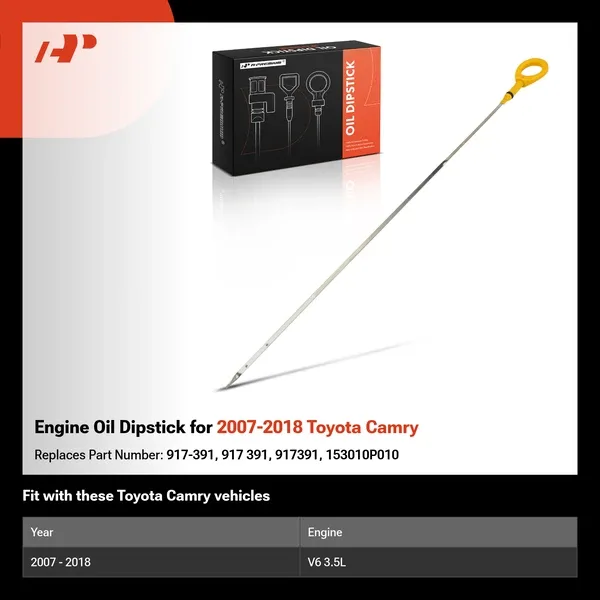
Both engines use the same 0W-20 full synthetic oil. The capacity is the same at 4.4 quarts with a filter change. The filter part numbers differ slightly, but the oil spec is identical.
Engine Comparison
| Engine | Code | Oil Spec | Capacity (with filter) | Recommended Filter |
|---|---|---|---|---|
| 2.5L 4-cylinder | 2AR-FE | 0W-20 full synthetic | 4.4 quarts | 04152-YZZA1 or 04152-31090 |
| 3.5L V6 | 2GR-FE | 0W-20 full synthetic | 4.4 quarts | 04152-YZZA1 or 04152-31090 |
The filter is the same part across both engines for the 2016 model year. One oil, one filter, one process for both.
The only real difference is access. The V6 has tighter clearance around the filter housing. You will need a filter cup wrench designed for the triangular Toyota housing.
The four-cylinder offers more room to work.
Synthetic vs Conventional vs High-Mileage
This is where a lot of owners get confused. You know 0W-20 is the grade. But what about the type?
Full Synthetic
This is the standard. Toyota designed the engine around full synthetic oil. It handles higher operating temperatures, resists thermal breakdown, and flows better in cold weather.
Synthetic oil also cleans internal deposits better than conventional oil. For the 2016 Camry, synthetic is not a premium upgrade. It is the requirement.
Synthetic Blend
A mix of conventional and synthetic base oils. It is cheaper but does not offer the same thermal stability or cold-flow performance. Blend oils often lack the full additive package needed to meet ILSAC GF-5 standards.
They degrade faster in the 2AR-FE engine, especially under severe service conditions like short trips or extreme temperatures. Skip the blend.
Conventional Oil
Do not use conventional oil in a 2016 Camry. The engine runs hot enough that conventional oil breaks down well before the recommended change interval. It also thickens significantly in cold weather, defeating the purpose of the 0W rating.
Conventional oil is for older engines with looser tolerances.
High-Mileage Oil
Once your Camry passes 75,000 miles, high-mileage formulations become worth considering. These contain seal conditioners that help prevent leaks around valve cover gaskets and timing chain covers. Both Mobil 1 and Valvoline make 0W-20 high-mileage synthetic oils that meet Toyota's spec.
They are a good choice for an older Camry.
Oil Type Summary
| Oil Type | Recommended for 2016 Camry | Why |
|---|---|---|
| Full synthetic | Yes | Required spec. Meets thermal and flow requirements |
| Synthetic blend | No | Degrades faster, lacks full additive package |
| Conventional | No | Breaks down too quickly, wrong viscosity behavior |
| High-mileage | Yes (75k+ miles) | Adds seal conditioners, still meets 0W-20 spec |
Stick with full synthetic until you cross 75,000 miles. After that, high-mileage synthetic is a smart upgrade. Both options keep the engine running exactly as Toyota intended.
Step-by-Step: How to Change the Oil Yourself
Changing the oil on a 2016 Camry is straightforward. You will need basic tools and about 45 minutes.
Tools and Materials
- 0W-20 full synthetic oil, 5 quarts gives you room for a top-off
- Oil filter, Toyota 04152-YZZA1 or 04152-31090
- Drain plug gasket, Toyota part 90430-12031
- 14mm socket or wrench for the drain plug
- Oil filter cup wrench, 64mm, 14-flute for the factory housing
- Torque wrench
- Drain pan
- Funnel
- Jack and jack stands or ramps
The Process
- Warm up the engine for a few minutes. Warm oil drains faster and carries more suspended contaminants.
- Lift the front of the car. Use ramps or jack stands. Never rely on a floor jack alone.
- Remove the oil fill cap under the hood. This helps the oil drain faster.
- Place the drain pan under the oil pan. Locate the 14mm drain plug on the passenger side of the pan.
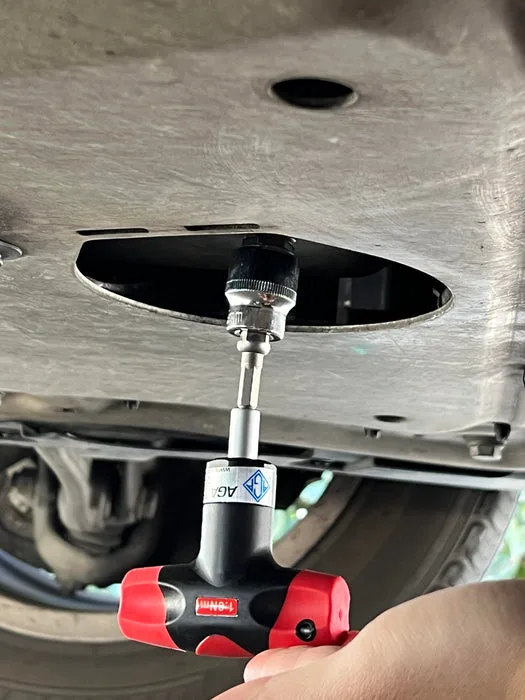
- Remove the drain plug with the socket. Be careful. The oil will be hot. Let it drain completely, about 5 minutes.
- Replace the drain plug gasket. Install a new one every time. Torque the plug to 29 foot-pounds. Over-tightening strips the aluminum pan threads.
- Move the drain pan under the oil filter. The filter housing is on the front of the engine, accessible from underneath.
- Remove the filter housing with the cup wrench. Let the oil drain from the filter area.
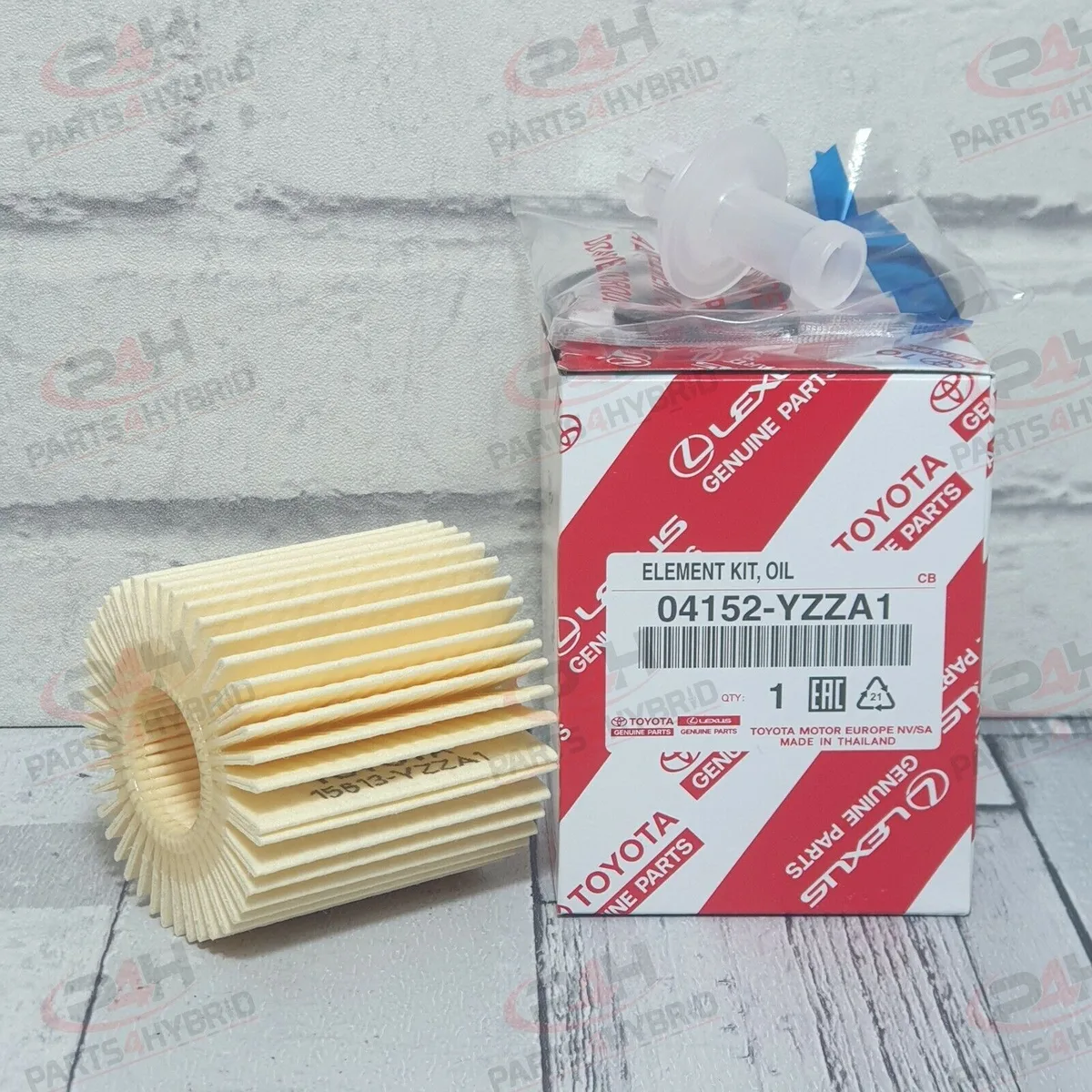
- Replace the filter element. Lubricate the new O-ring with fresh oil before installing.
- Torque the filter housing cap to 18 foot-pounds.
- Lower the car. Pour in 4.4 quarts of 0W-20 through the fill hole.
- Check the dipstick. Run the engine for 30 seconds, shut it off, wait 5 minutes, then recheck. Top off if needed.
- Reset the maintenance light. Turn the ignition to ON without starting. Set the odometer to trip A. Turn the ignition off. Hold the trip reset button while turning the ignition back to ON. Release the button when the light blinks and goes out.
Common Mistakes That Cost Camry Owners Hundreds
Stripping the Drain Plug Threads
The oil pan is aluminum. The threads are soft. Torque the drain plug to 29 foot-pounds.
Going beyond that can strip the pan. A new oil pan costs around $200 plus labor. Use a torque wrench every time.
Double-Gasketing the Oil Filter
The old O-ring sometimes sticks to the engine when you remove the filter housing. If you install the new filter with the old O-ring still in place, you get two gaskets. That seal will fail immediately.
All the oil will drain out in minutes. Check that the old O-ring came off before installing the new one.
Using the Wrong Filter
Aftermarket filters vary in quality. Some have bypass valves that open at the wrong pressure. Others use cheaper O-rings that harden with heat.
Stick with the Toyota filter or a premium brand like Wix or Purolator that matches the original specs.
Overfilling the Engine
More oil is not better. Too much oil creates foam. Foam does not lubricate.
Fill to 4.4 quarts, check the dipstick, and stop there.
Severe Service vs Normal Driving
Toyota defines two maintenance schedules. Most people fall under "severe service" without realizing it.
Severe Service Includes
- Trips shorter than 5 miles in normal temperatures
- Trips shorter than 10 miles in freezing temperatures
- Extended idling or stop-and-go traffic
- Driving on dusty roads
- Towing a trailer
- Using a roof rack
If any of these describe your driving, change the oil every 5,000 miles. This is what most owners should do.
Normal Service
- Highway driving in moderate temperatures
- Trips of 20 miles or more
- Minimal idling
Under normal service, Toyota recommends 10,000-mile intervals. Our research shows that 5,000 to 7,500 miles is safer for long-term engine health regardless of driving conditions. Oil degrades with heat cycles and time, not just miles.
What About 5W-20 or 5W-30?
The owner's manual does list 5W-20 and 5W-30 as alternatives. But there are conditions.
When Alternatives Are Okay
- You are in a remote area with no access to 0W-20
- The engine is low on oil and 0W-20 is unavailable
- You are using it as a temporary fill to get to a service station
When They Are Not Okay
- As a permanent replacement
- In cold climates where temperatures drop below freezing
- When you care about fuel economy
- Under warranty
The manual reads: "If 0W-20 is not available, 5W-20 may be used. However, it must be replaced with 0W-20 at the earliest opportunity." That is explicit. Use 0W-20.
How Much Does an Oil Change Cost?
DIY Cost
- 5 quarts of 0W-20 full synthetic: $22 to $35
- Oil filter: $6 to $12
- Drain plug gasket: $1
Total: $29 to $48
Shop or Dealer Cost
- Quick lube: $50 to $70
- Toyota dealer: $65 to $90
The DIY route saves $20 to $50 per change and takes about 45 minutes. Over five years of ownership, that adds up to a few hundred dollars in savings.
Frequently Asked Questions
Can I use 5W-30 in my 2016 Camry in summer?
Yes, as a temporary measure only. Replace it with 0W-20 as soon as possible. Prolonged use reduces fuel economy and increases engine wear.
How often should I change the oil in a 2016 Camry?
Every 5,000 miles under severe driving conditions. Every 7,500 miles under normal conditions is safer than the 10,000-mile recommendation.
What oil filter does a 2016 Camry use?
Toyota part 04152-YZZA1 (short filter) or 04152-31090 (long filter). Both fit. The long filter offers slightly more capacity.
Does the 2016 Camry V6 take different oil than the four-cylinder?
No. Both engines use 0W-20 full synthetic, 4.4 quarts with a filter change.
Is synthetic oil worth it for a high-mileage 2016 Camry?
Yes. High-mileage synthetic oil adds seal conditioners that help prevent leaks. It also maintains the same viscosity protection as standard synthetic oil.
What happens if I put conventional oil in a 2016 Camry?
It will break down faster, especially under high heat. Sludge can form. The engine will wear faster.
Stick with full synthetic.
Final Verdict
The 2016 Toyota Camry needs 0W-20 full synthetic oil. Both engines, both climates, both driving conditions. No exceptions for normal use.
Use a quality filter. Change it on schedule. Your engine will thank you at 200,000 miles.