
Getting the wrong oil type for your 2017 Toyota Tacoma isn't a minor oversight. It can create engine noise, reduce fuel economy, and lead to costly repairs. The 2017 toyota tacoma oil type is specifically engineered for its VVT-i system, and treating it like a suggestion risks real damage.
Manufacturer specifications call for SAE 0W-20 full synthetic oil with an API SN Plus or SP certification. That's not a recommendation. It's the requirement for keeping the variable valve timing components and timing chain working as designed.
Aggregate reviews from Tacoma forums confirm that the small upfront choice makes a big difference long-term. Let's walk through exactly what you need and why it matters.
Why Getting the Oil Right Matters for a 2017 Tacoma
The 2017 model year was the second year of the third-generation Tacoma. Toyota made some important changes under the hood. The 3.5L 2GR-FKS V6 engine uses a complex VVT-iW system that relies heavily on proper oil pressure and flow.
Here's what happens when you use the wrong oil:
- VVT-i actuator rattle. The cam phasers need the right viscosity to operate quietly. Thicker oil slows their response. The result is a rattling noise on cold starts.
- Reduced fuel economy. 0W-20 is chosen partly for its low drag. Switch to a heavier grade and you lose 1 to 3 MPG on average.
- Timing chain wear. The wrong oil can leave deposits that accelerate chain stretch over time. That's a thousand-dollar repair.
The 2.7L 2TR-FE four-cylinder engine is a bit more forgiving. Toyota still specs 0W-20 for it. Both engines benefit from the same approach.
The Quick Answer: What Oil Your 2017 Tacoma Actually Needs
Use SAE 0W-20 full synthetic motor oil. It must carry the API Starburst certification mark. Look for the ILSAC GF-5 or GF-6 rating on the bottle.
Toyota Genuine Motor Oil 0W-20 is the safest bet. Mobil 1, Pennzoil Platinum, and Castrol Edge all meet the spec.
| Specification | Requirement |
|---|---|
| Viscosity | SAE 0W-20 |
| Type | Full synthetic |
| API rating | SN Plus or SP |
| ILSAC rating | GF-5 or GF-6 |
| Capacity (V6) | 6.4 quarts with filter |
| Capacity (4-cyl) | 5.0 quarts with filter |
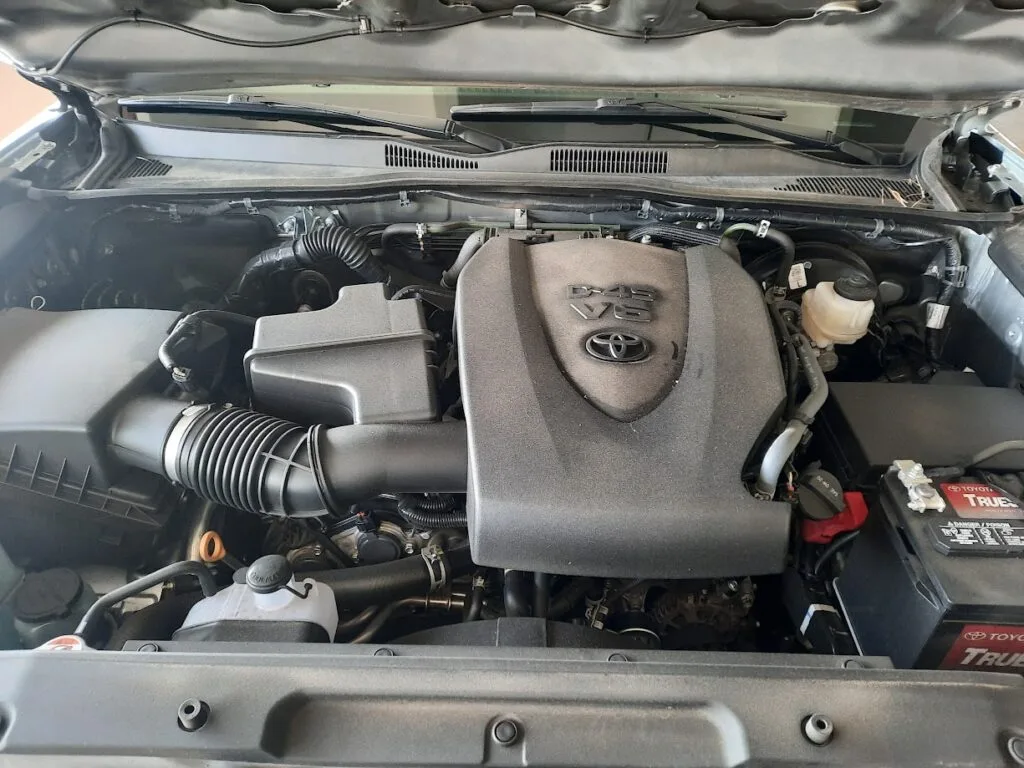
Image source: Web (Bing) / tacomaexplorer.com (Web image (fair-use with source credit))
Do not use 5W-30 unless you have no other option. Even then, switch back to 0W-20 at the next change. Your engine was designed around that thin oil.
Understanding the Two Engines: 3.5L V6 vs. 2.7L Four-Cylinder
The 2017 Tacoma comes with two engine choices. Both take 0W-20. There are differences worth knowing.
3.5L 2GR-FKS V6
This is the more common engine. It uses Toyota's D-4S fuel injection system with both port and direct injection. That dual system means the oil has to handle fuel dilution better than older engines.
The API SP rating addresses low-speed pre-ignition and timing chain protection.
Oil capacity is 6.4 quarts with a filter change. The OEM oil filter part number is 04152-YZZA6.
2.7L 2TR-FE Four-Cylinder
This engine is simpler. It uses port injection only. Fuel dilution is less of a concern.
Still, 0W-20 is the factory spec. Oil capacity is 5.0 quarts with a filter change.
The filter location differs between engines. The V6 has the filter on the passenger side near the firewall. The four-cylinder has it on the driver's side.
The 0W-20 vs. 5W-30 Confusion: What's Really at Stake
This is the most common question from Tacoma owners. Why does Toyota specify such thin oil? And can you use 5W-30 instead?
The answer is no. Not without consequences.
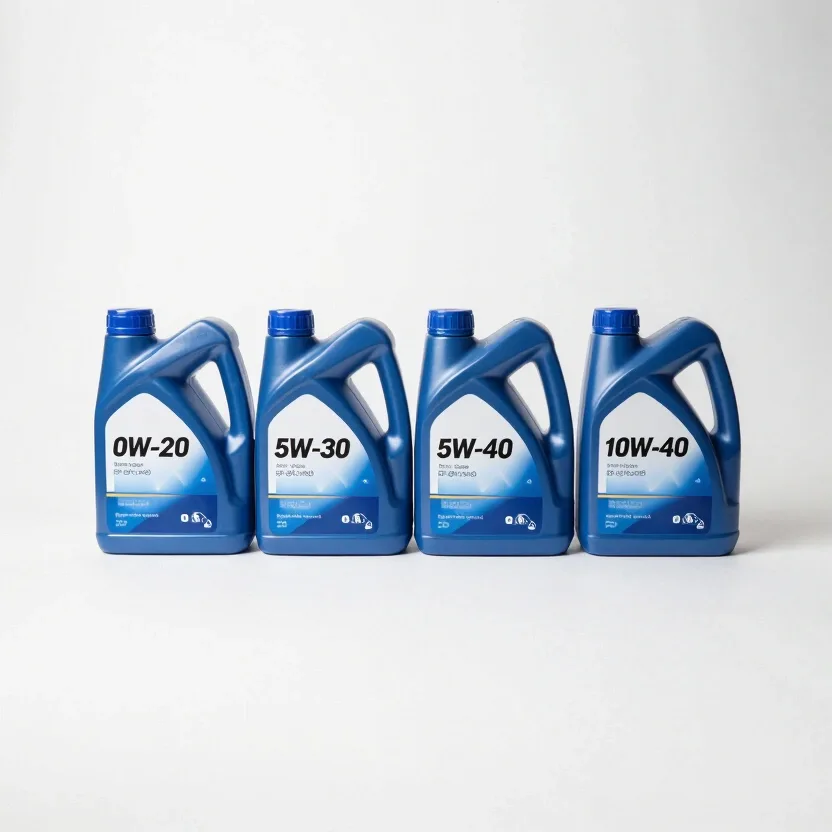
Image source: Web (Bing) / motoroilguide.com (Web image (fair-use with source credit))
Why 0W-20 Is the Factory Spec
The 0W-20 oil flows more easily at cold temperatures. That matters for the VVT-iW system. It needs oil pressure to adjust cam timing quickly.
Thicker oil delays that response.
0W-20 also reduces internal engine drag. That directly improves fuel economy. Toyota engineers chose this viscosity to balance protection with efficiency.
What Happens If You Use the Wrong Viscosity
Putting 5W-30 in a 2017 Tacoma that calls for 0W-20 creates problems:
- Cold-start rattle. The most common symptom. Thicker oil takes longer to reach the cam phasers.
- Reduced fuel mileage. Expect a drop of 1 to 3 MPG.
- Potential VVT fault codes. The engine computer monitors cam timing. Slow phaser response can trigger a check engine light.
- Long-term wear. The timing chain and tensioners rely on consistent oil pressure. Thicker oil alters that pressure curve.
Some owners in hot climates think they need 5W-30. That's a myth. Modern 0W-20 works fine at high temperatures.
API and ILSAC Certifications: What Those Marks on the Bottle Mean
Not all 0W-20 oil is the same. The certification marks on the bottle tell you whether it meets Toyota's requirements.
Image source: Web (Bing) / motoroilguide.com (Web image (fair-use with source credit))
The API Starburst Mark
The American Petroleum Institute certifies oils that meet their standards. For the 2017 Tacoma, you need at least API SN Plus. API SP is newer and better.
| Certification | What It Means | Required for 2017 Tacoma? |
|---|---|---|
| API SN | Older standard, still acceptable | Yes, but SN Plus or SP preferred |
| API SN Plus | Added timing chain protection | Yes |
| API SP | Current standard, LSPI protection | Yes, best choice |
| API CK-4 | Diesel oil, wrong for Tacoma | No |
Look for the circular Starburst symbol on the front of the bottle. That means the oil meets current API standards.
ILSAC GF-5 and GF-6
The International Lubricant Standardization and Approval Committee sets fuel economy standards. GF-5 was the standard when the 2017 Tacoma was built. GF-6 is the current version.
Both are acceptable. You will usually see the API and ILSAC marks on the same bottle. If you see them, the oil is appropriate for your Tacoma.
Full Synthetic vs. Synthetic Blend: Do You Need the Premium Stuff?
Full synthetic is the right choice for the 2017 Tacoma. A synthetic blend or conventional oil does not meet the performance requirements for the VVT-i system.
Here is why the difference matters:
- Full synthetic flows better at cold temperatures. That means faster oil pressure to the cam phasers.
- Full synthetic resists thermal breakdown. The 3.5L V6 runs hot, especially under load.
- Full synthetic handles fuel dilution better. The D-4S injection system can allow fuel to mix with the oil over time.
Synthetic blends mix conventional oil with a small percentage of synthetic base stock. They are better than plain conventional oil but still fall short. Owners who used a blend reported higher oil consumption between changes.
Cost difference: Full synthetic costs about $7 to $12 per quart. A blend runs $4 to $7. For a 6.4-quart change, you are looking at an extra $20 to $30.
Spread over 10,000 miles, that is negligible.
Bottom line: Use full synthetic. The VVT system will thank you at 100,000 miles.
Oil Capacity and Fill Procedures: Getting the Amount Right
Getting the quantity wrong is almost as bad as getting the viscosity wrong. Overfilling causes foaming and pressure loss. Underfilling starves the oil pump.
Here are the exact capacities:
| Engine | Capacity with Filter |
|---|---|
| 3.5L V6 | 6.4 quarts |
| 2.7L 4-cylinder | 5.0 quarts |
How to Fill Correctly
- Add the full capacity minus one quart.
- Start the engine and let it run for 30 seconds. This fills the new filter.
- Shut the engine off and wait 2 minutes.
- Check the dipstick. Add the remaining oil in small increments until the level reaches the full mark.
Pro tip: The dipstick on the 3.5L V6 can be tricky to read. Pull it out, wipe it clean, insert it fully, then pull it again. Read the oil level on the side with the crosshatch pattern.
Crush washer: Replace the drain plug crush washer every change. The part is a 14mm M14 size. Reusing the old one can cause a slow drip.
Step-by-Step: How to Change the Oil Yourself
A DIY oil change on the 2017 Tacoma is straightforward. You need basic tools and about 45 minutes.
Tools and Parts You Will Need
- 6.4 quarts of 0W-20 full synthetic oil
- OEM oil filter (04152-YZZA6) or equivalent
- 14mm crush washer
- 15mm socket for the drain plug
- Oil filter wrench
- Drain pan
- Funnel
- Jack and jack stands
Draining and Filter Removal
- Warm the engine for 2 minutes. Warm oil drains faster.
- Raise the vehicle and secure it on jack stands.
- Place the drain pan under the drain plug. Remove the plug with the 15mm socket.
- Let the oil drain for 5 to 10 minutes.
- Locate the oil filter. On the V6, it is on the passenger side near the firewall.
- Loosen the filter with the filter wrench. Unscrew it by hand.
- Wipe the filter mounting surface clean.
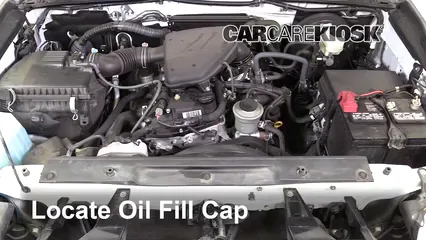
Image source: Bing (Web (fair-use with source credit))
Filling and Checking
- Install the new filter. Apply a thin coat of fresh oil to the gasket. Tighten hand-tight plus three-quarters of a turn.
- Install the new crush washer on the drain plug. Torque to 18 ft-lbs.
- Add oil through the fill cap. Start with 5.5 quarts for the V6.
- Run the engine for 30 seconds. Check for leaks.
- Shut the engine off. Wait 2 minutes. Check the dipstick and add oil until it reads full.
Resetting the Maintenance Light
- Turn the ignition to ON. Do not start the engine.
- Press the odometer button until the trip odometer displays.
- Turn the ignition OFF.
- Press and hold the odometer button. Turn the ignition to ON while holding it.
- Hold for about 10 seconds. The light will flash and then turn off.
The $50 vs. $130 Oil Change: What You Are Paying For
A DIY oil change runs about $50 to $60. A dealership charges $100 to $130. An independent shop lands in the middle at $80 to $100.
Here is what the extra cost buys you:
- Dealership: Toyota Genuine oil and filter. Proper disposal. A multipoint inspection. A record in Toyota's system.
- Independent shop: Lower labor rate. Often uses major brand oil. Inspection is usually less thorough.
- DIY: Cheapest option. You control the oil brand. You handle disposal and cleanup.
If you are comfortable doing it yourself, DIY is the best value. You get exactly the oil you want and save $60 to $80 per change.
Common Mistakes Tacoma Owners Make
Even experienced DIYers slip up. Here are the most common errors:
- Using 5W-30. The most frequent mistake. Owners assume thicker oil is better for a truck. It is not for this engine.
- Reusing the crush washer. A worn crush washer causes a slow drip.
- Overfilling. Adding the full 6.4 quarts without accounting for the filter. Fill in stages.
- Using a cheap filter. Budget filters can collapse under pressure. Stick with OEM or a premium brand.
- Mixing oil types. Topping off with conventional oil when the engine has full synthetic dilutes the properties.
When to Follow Severe Service Intervals
Toyota's standard oil change interval is 10,000 miles. That applies to normal driving. The owner's manual also defines severe service.
That changes the math.
Severe service includes:
- Frequent short trips under 5 miles
- Extended idling in traffic
- Towing or hauling heavy loads
- Off-road driving in dust or mud
- Extreme hot or cold weather
If any of these apply, Toyota recommends changing the oil every 5,000 miles. That is the most overlooked maintenance factor for Tacoma owners. Owners who follow the 10,000-mile schedule under severe conditions often end up with sludge buildup by 80,000 miles.
How to decide: If you drive mostly highway miles, stick with 10,000. If you tow or drive off-road, switch to 5,000.
Final Recommendation
Use SAE 0W-20 full synthetic oil with API SP certification and ILSAC GF-6 rating. Toyota Genuine Motor Oil is the safest choice. Mobil 1 Advanced Fuel Economy and Pennzoil Platinum are excellent alternatives.
Change it every 10,000 miles for normal driving. Drop to 5,000 miles for severe conditions. Use an OEM or premium filter.
Replace the crush washer every time.
That combination gives you the best protection for the VVT-iW system and the long-term health of the engine.
Frequently Asked Questions
Can I use 5W-30 in my 2017 Tacoma in a pinch?
Yes, in an emergency where 0W-20 is unavailable. Switch back to 0W-20 at the next change. Prolonged use of 5W-30 can cause VVT actuator rattle and reduced fuel economy.
How often should I check the oil level?
Check it every other fuel fill-up. The 3.5L V6 can consume oil between changes. Catching a low level early prevents damage.
What happens if I overfill the oil?
Overfilling causes the crankshaft to whip the oil into foam. Foam does not lubricate properly. It can trigger a check engine light related to variable valve timing performance.
Does the 2017 Tacoma burn oil?
Some owners report oil consumption of about half a quart between 5,000-mile intervals. That is within normal range. If you burn more than a quart between changes, have the engine inspected.
Can I switch between synthetic and conventional oil?
You can, but it is not recommended. Switching dilutes the synthetic properties. Stick with full synthetic for consistent performance.
Do I need to use Toyota brand oil?
Any brand that meets API SP and ILSAC GF-6 specifications works fine. Toyota Genuine is a safe bet. Mobil 1, Pennzoil, and Castrol all produce compliant 0W-20 full synthetic oils.