
If you're driving a 2019 Toyota RAV4, the oil you pour into that engine matters more than most owners realize. Pick the wrong viscosity or ignore the certification label, and you're looking at reduced fuel economy, accelerated wear, or worse a pricey repair bill. The exact 2019 toyota rav4 oil type depends on whether you have the gas model or the hybrid, and getting it right starts with understanding two key specifications.
Manufacturer specifications indicate the gas engine requires SAE 0W-16 full synthetic oil meeting API SN or higher and ILSAC GF-5 or GF-6 standards. The hybrid variant uses SAE 0W-20 with the same certifications. As of 2026, Toyota still recommends these viscosities for optimal performance and longevity.
Let's walk through what that means, why it matters, and how to avoid the common mistakes that send RAV4 owners to the repair shop.
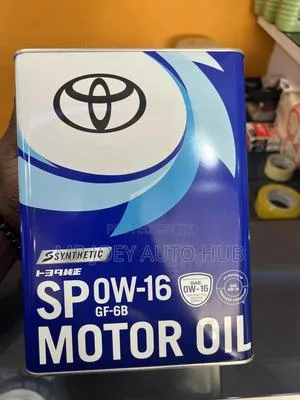
Image source: Web (Bing) / jiji.com.gh (Web image (fair-use with source credit))
Quick Answer
The 2019 Toyota RAV4 gas model takes SAE 0W-16 full synthetic oil. The hybrid takes SAE 0W-20. Both require API SN or SP certification and ILSAC GF-5 or GF-6.
Oil capacity is 4.4 quarts with filter for the gas engine and 4.4 quarts for the hybrid. Always check the oil filler cap and owner's manual before buying.
Why Getting the Wrong Oil Can Cost You Thousands
Engine oil does more than lubricate. It cools, cleans, and protects internal components under extreme heat and pressure. Toyota engineered the 2019 RAV4's engines around very specific oil viscosities.
Deviating from those specs creates a chain reaction of problems.
Thicker oil than recommended, say 5W-30 instead of 0W-16, doesn't flow fast enough during cold starts. The Variable Valve Timing system relies on precise oil pressure to adjust cam timing. Sluggish flow means delayed response, reduced power, and over time, sludge buildup in the VVT actuators.
Toyota has issued technical service bulletins addressing VVT issues tied directly to incorrect oil viscosity.
Thinner oil than recommended risks insufficient film strength at operating temperature. The bearings and piston rings in these engines run tight clearances. Without the right oil film, metal-to-metal contact accelerates wear.
A rod knock or spun bearing is a $4,000 to $6,000 engine replacement job on a RAV4.
Aggregate reviews from owner forums and service records confirm that most engine problems in the 2019 RAV4 trace back to one of two causes: missed oil changes or the wrong oil type. Neither is worth the risk when a five-quart jug of the correct oil costs $25 to $35.
Two Engines, Two Different Oil Needs: Gas vs. Hybrid
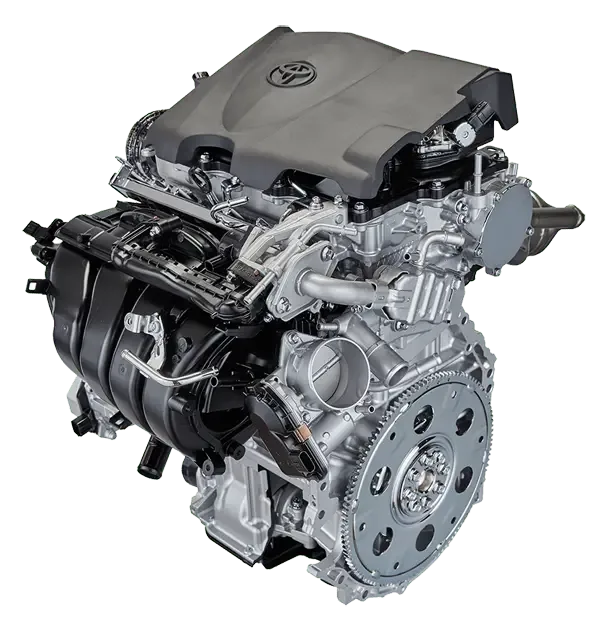
The 2019 RAV4 came in two powertrain configurations. Each demands different oil because the engines themselves are different.
The M20A-FKS Engine (Gas Model)
This is a 2.5-liter four-cylinder with Toyota's Dynamic Force architecture. It uses high-pressure direct injection plus port injection, a high compression ratio of 13:1, and a thermal management system that rapidly warms the engine. All of that engineering pushes the oil requirements in a specific direction.
SAE 0W-16 is the factory fill. Toyota switched to this ultra-low viscosity for the M20A-FKS to reduce internal friction and improve fuel economy. The engine's oil pump and bearing clearances were designed around 0W-16's flow characteristics.
Using 0W-20 is permitted in a pinch, but the owner's manual warns that 0W-20 may reduce fuel economy slightly.
The oil filler cap on the gas engine clearly says "0W-16." If yours doesn't say that, someone may have swapped the cap. Double-check.
The A25A-FKS Engine (Hybrid)
The hybrid RAV4 uses a different version of the 2.5-liter engine, designated A25A-FKS. It operates on the Atkinson cycle rather than the Otto cycle used in the gas model. The Atkinson cycle runs a longer expansion stroke, which improves thermal efficiency but also changes the load characteristics on the oil.
Toyota recommends SAE 0W-20 for the hybrid. The reasoning involves the hybrid's start-stop behavior. The engine cycles on and off frequently, and oil needs to maintain a robust film on bearing surfaces during those restarts.
The slightly higher viscosity of 0W-20 compared to 0W-16 provides an extra margin of protection during the hundreds of thousands of start cycles a hybrid sees over its lifetime.
Do not put 0W-16 in the hybrid unless the owner's manual explicitly allows it. Some late-2019 hybrids shipped with 0W-20 as the only recommendation. Check your specific manual or the oil filler cap.
Image source: Web (Bing) / en.1xmatch.com (Web image (fair-use with source credit))
0W-16 vs. 0W-20: What's the Real Difference?
These two viscosities look nearly identical in a bottle. Both are thin fluids that pour like water at room temperature. The difference shows up at operating temperature.
The "0W" part means both oils behave the same way in freezing cold. They stay fluid down to about minus 40 degrees Fahrenheit. That's critical for cold starts in northern climates.
A 0W oil flows instantly to the valvetrain and bearings the moment you turn the key.
The second number, 16 or 20, describes the oil's viscosity at 212 degrees Fahrenheit. A 0W-16 oil is thinner at operating temperature than a 0W-20 oil. That reduced thickness creates less drag on rotating parts, which is why Toyota spec'd 0W-16 for the gas engine.
Every bit of friction reduction helps hit the EPA fuel economy targets.
Why Toyota Switched to 0W-16
Toyota didn't invent 0W-16 for fun. The 2018 Camry was the first Toyota model in the US to require it, and the 2019 RAV4 followed. The driving factor was Corporate Average Fuel Economy (CAFE) standards.
Every tenth of a mile per gallon counts when automakers face fines for missing fleet efficiency targets.
The switch also reflected advances in base oil technology. Modern synthetic base stocks and additive packages can protect an engine with thinner films than older oils could manage. Fifteen years ago, 5W-30 was the typical recommendation for a four-cylinder Toyota.
Today, 0W-16 is common across the lineup.
When 0W-20 Is Actually Fine to Use
If you own the gas RAV4 and 0W-16 is unavailable, 0W-20 is an acceptable substitute according to the owner's manual. You might see a slight drop in fuel economy, maybe 1 to 2 miles per gallon. The engine will run fine otherwise.
Do not use 0W-20 as a permanent replacement. The manual lists it as an alternative for situations where 0W-16 cannot be sourced. The next oil change should go back to 0W-16.
Do not use 5W-20 or 5W-30. Those viscosities are too thick for the M20A-FKS engine at cold start and will cause long-term issues with the VVT system and fuel economy.
The Oil Spec That Matters More Than Viscosity
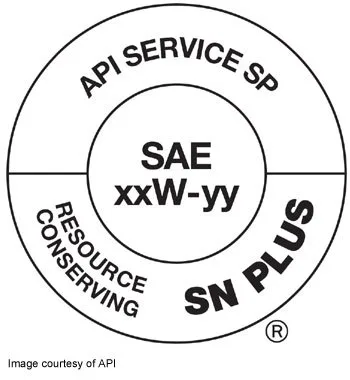
Viscosity gets all the attention, but the certification mark on the back of the bottle is equally important. Pouring the right viscosity with the wrong certification into your RAV4 is still pouring the wrong oil.
The API (American Petroleum Institute) certification mark looks like a donut. Inside the donut, you'll see a service category such as SN, SN Plus, or SP. The ILSAC (International Lubricant Standardization and Advisory Committee) starburst appears nearby for oils that meet the latest fuel economy and protection standards.
For the 2019 RAV4, the minimum requirement is API SN and ILSAC GF-5. As of 2026, most synthetic oils on store shelves carry API SP and ILSAC GF-6, which supersede the older standards. That's fine.
API SP includes additional protections against low-speed pre-ignition (LSPI) and timing chain wear, both relevant to modern turbo and high-compression engines.
What you want to avoid is an oil that says "API SN" but lacks the ILSAC starburst, or an oil that lists "API CF" or "API CJ-4." Those are diesel engine certifications. They don't meet the emissions control and fuel economy requirements of a gasoline RAV4.
What to Look For on the Label
Flip the bottle over and find these three things before you buy:
- The API donut with SN or SP printed in the top half
- The ILSAC starburst symbol (looks like a four-pointed star with "GF-6" or "GF-5" in the center)
- The words "full synthetic" somewhere on the front label
If any of those are missing, put the bottle back. A generic "synthetic blend" or "high mileage" conventional oil might save you five bucks now but costs you in engine protection down the road.
Image source: Web (Bing) / infineuminsight.com (Web image (fair-use with source credit))
2019 RAV4 Oil Capacity and Filter Specs
Knowing the capacity prevents the two most common oil change errors: underfilling and overfilling. Both cause problems.
How Much Oil You Actually Need
Here are the exact capacities from the Toyota factory service manual:
| Engine | With Filter Change | Without Filter |
|---|---|---|
| 2.5L Gas (M20A-FKS) | 4.8 US quarts | 4.4 US quarts |
| 2.5L Hybrid (A25A-FKS) | 4.4 US quarts | 4.0 US quarts |
Buy a five-quart jug of the correct oil. You'll use most of it. The leftover roughly half quart is useful for topping off between changes.
Always check the dipstick after filling. Run the engine for 30 seconds, shut it off, wait two minutes, then check. The level should sit between the low and high marks.
Add small amounts if needed. Overfilling causes the crankshaft to whip air into the oil, leading to foaming and pressure loss.
Choosing the Right Oil Filter
Toyota specifies a cartridge-style oil filter for the 2019 RAV4. It sits in a plastic housing on the front of the engine. You need a 24-millimeter or 27-millimeter socket to remove the housing cap, depending on your build date.
The OEM Toyota filter part number is 04152-YZZA5 for the gas engine and 04152-YZZA6 for the hybrid. Both are interchangeable in a pinch. Aftermarket options from Wix, Purolator, and Bosch work fine as long as they meet the same specifications: a bypass valve setting around 8 to 11 psi and a threaded port that matches the housing.
Avoid cheap no-name filters from discount stores. A filter that collapses internally or bypasses continuously sends unfiltered oil through the engine. The five dollars you save isn't worth the risk of circulating debris through the bearings.
Step-by-Step: How to Change Your Oil Yourself
A DIY oil change on the 2019 RAV4 takes about 30 minutes and requires basic tools. The job is straightforward once you know the steps.
Tools and Supplies You'll Need
- 5 quarts of SAE 0W-16 or 0W-20 full synthetic oil (API SN/SP, ILSAC GF-5/GF-6)
- Oil filter (OEM or quality aftermarket)
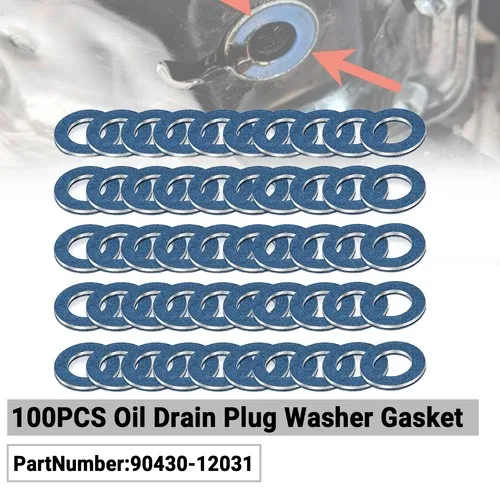
- Drain plug crush washer (Toyota part 90430-12031 or equivalent)
- 14mm socket or wrench for the drain plug
- 24mm or 27mm socket for the filter housing cap
- Torque wrench (optional but recommended)
- Oil drain pan
- Funnel
- Nitrile gloves and rags
Drain, Filter, Fill, and Check
Warm up the engine for a few minutes. Hot oil drains faster and carries more suspended contaminants. Park on level ground and engage the parking brake.
Slide under the front of the vehicle. The drain plug faces the rear of the engine, just behind the oil pan. Place the drain pan underneath.
Loosen the drain plug with the 14mm socket, then unscrew it by hand. Let the oil drain completely, roughly five minutes.
While the oil drains, remove the filter housing cap. Position the drain pan underneath the housing. Unscrew the cap and pull out the old filter element.
Discard the old o-ring on the cap. Install the new o-ring, lubricate it with fresh oil, and insert the new filter element. Tighten the cap to 18 foot-pounds or hand-tight plus a quarter turn.
Install a new crush washer on the drain plug. Tighten the plug to 30 foot-pounds. Do not overtighten.
Stripping the oil pan threads turns a simple oil change into a helicoil repair job.
Pour in 4.4 quarts of oil through the filler neck on the valve cover. Replace the cap. Start the engine and let it idle for 30 seconds.
Shut it off. Check the dipstick level and add oil as needed to reach the full mark.
Resetting the Maintenance Light
The 2019 RAV4 displays a maintenance reminder light when an oil change is due. After the change, reset it with this sequence:
- Turn the ignition to ON (do not start the engine)
- Ensure the odometer shows total mileage, not trip A or trip B
- Press and hold the TRIP button on the instrument panel
- While holding the button, turn the ignition to OFF
- Continue holding the button for about 10 seconds until the maintenance light flashes and goes out
If the light doesn't reset, repeat the sequence. Some models require the button to be held while cycling the ignition twice.
Common Mistakes That Wreck RAV4 Engines
Even experienced DIYers make errors on the RAV4. The engine's design creates a few traps that aren't obvious at first glance.
Using the Wrong Viscosity
The most common mistake is assuming any synthetic oil works. It doesn't. The 0W-16 requirement is not a suggestion.
Toyota's engineers validated the M20A-FKS engine with that specific viscosity. Thicker oil reduces flow to the variable valve timing phasers, which rely on rapid oil pressure changes to adjust cam timing. Over time, the phasers clog and fail.
If you're in a remote area where 0W-16 is unavailable, 0W-20 is the only acceptable substitute. Do not use 5W-30 even temporarily.
Ignoring the Hybrid-Specific Needs
Hybrid owners sometimes assume thinner oil is better because the engine runs less. That logic is backward. The hybrid engine experiences more thermal cycles and more start events than a conventional engine.
The oil needs to maintain film strength during those repeated restarts. Stick with 0W-20 as specified.
Overfilling or Underfilling
The difference between the low and full marks on the dipstick is roughly one quart. Overfilling by even half a quart can cause the crankshaft to dip into the oil, aerating it and reducing oil pressure. Underfilling by the same amount can starve the oil pump pickup during hard cornering or steep inclines.
Always add oil in half-quart increments and check the dipstick between additions.
Reusing the Old Drain Plug Gasket
The crush washer on the drain plug is a one-time-use component. It deforms when tightened to create a seal. Reusing it increases the risk of a slow drip.
A new crush washer costs about 50 cents at a dealership parts counter. Skip it and you might find an oil stain on your driveway and a low oil level between changes.
Image source: Bing (Web (fair-use with source credit))
Severe Driving Conditions: When to Change Oil More Often
Toyota's standard oil change interval for the 2019 RAV4 is 10,000 miles or 12 months, whichever comes first. That interval assumes normal driving conditions. Severe driving conditions require more frequent changes.
The owner's manual defines severe conditions as:
- Repeated short trips of less than 5 miles in normal temperatures or less than 10 miles in freezing temperatures
- Extensive idling or stop-and-go traffic
- Driving on dusty, muddy, or salt-covered roads
- Towing a trailer or carrying heavy cargo
- Using the vehicle for delivery, taxi, or police service
If any of those describe your daily commute, change the oil every 5,000 miles or 6 months. Synthetic oil handles heat well, but it still accumulates combustion byproducts and loses its additive package over time. More frequent changes are cheap insurance.
What About the Dealership vs. DIY vs. Quick Lube?
Each option has trade-offs. Here's how they compare for the 2019 RAV4.
| Option | Cost Range | Oil Quality | Convenience | Risk |
|---|---|---|---|---|
| Toyota Dealership | $70-$100 | OEM 0W-16 or 0W-20, OEM filter | Drop off, pick up | Higher cost, upselling pressure |
| DIY | $30-$45 | You choose the brand and spec | Requires tools and time | Low if done correctly |
| Quick Lube Chain | $50-$80 | Varies by location | Fast, no appointment | Inconsistent oil type, stripped drain plugs |
Quick lube chains are the riskiest option for the RAV4. The 0W-16 requirement is still uncommon enough that some locations don't stock it. They might fill with 5W-20 or 5W-30 without asking.
Always confirm the oil type before they start.
DIY gives you full control over oil type, filter quality, and torque specs. The tools pay for themselves after two changes. If you're not comfortable working under the car, the dealership is the safest bet for warranty compliance, especially if your RAV4 is still within the powertrain warranty period.
When to Call a Mechanic (and When Not To)
Some oil-related issues need professional attention. Some don't.
Call a mechanic if:
- The oil pressure warning light stays on after an oil change
- You see metal flakes in the drained oil
- The engine makes knocking or tapping sounds that weren't there before
- The drain plug hole is stripped or cross-threaded
- The oil filter housing cap is cracked or won't seal
Don't call a mechanic for:
- A slow oil drip from the drain plug (tighten it or replace the crush washer)
- A small oil stain under the filter housing (check the o-ring seal)
- The maintenance light not resetting (retry the reset procedure)
- Low oil level between changes (top off and monitor)
A flickering oil pressure light after an oil change usually means the filter isn't seated correctly or the housing cap isn't tight. Shut the engine off immediately. Check the filter installation.
If everything looks correct, top off the oil and restart. If the light stays on, tow it to a shop.
Frequently Asked Questions
Can I use 5W-30 in my 2019 RAV4 in an emergency?
No. 5W-30 is significantly thicker than the recommended 0W-16 or 0W-20. Using it even for a few hundred miles can cause sludge buildup in the VVT system and reduce fuel economy. If 0W-16 is unavailable, use 0W-20.
If neither is available, have the vehicle towed rather than risk engine damage.
Does the 2019 RAV4 Hybrid require different oil than the gas model?
Yes. The hybrid uses SAE 0W-20 full synthetic. The gas model uses SAE 0W-16.
Both require API SN or SP certification and ILSAC GF-5 or GF-6. Do not interchange them. Check the oil filler cap or owner's manual for your specific vehicle.
How often should I change the oil in my 2019 RAV4?
Toyota recommends every 10,000 miles or 12 months for normal driving. For severe driving conditions such as frequent short trips, towing, or extreme temperatures, change the oil every 5,000 miles or 6 months. Severe conditions are more common than most drivers realize.
What happens if I put conventional oil in a 2019 RAV4?
Conventional oil lacks the high-temperature stability and low-temperature flow of full synthetic oil. The engine may run fine initially, but long-term wear accelerates. The VVT system can clog, and sludge deposits may form.
Always use full synthetic oil that meets the API and ILSAC specifications.
Can I switch from 0W-16 to 0W-20 permanently?
The owner's manual lists 0W-20 as an acceptable alternative when 0W-16 is unavailable. It is not intended for permanent use. You may notice a slight decrease in fuel economy.
The next oil change should return to 0W-16 for optimal performance and efficiency.
Is the oil filter the same for gas and hybrid models?
The OEM filter part numbers differ slightly, but they are interchangeable. The gas engine uses 04152-YZZA5. The hybrid uses 04152-YZZA6.
Aftermarket filters that fit one typically fit both. The important specs are the bypass valve setting and the thread compatibility with the housing cap.