
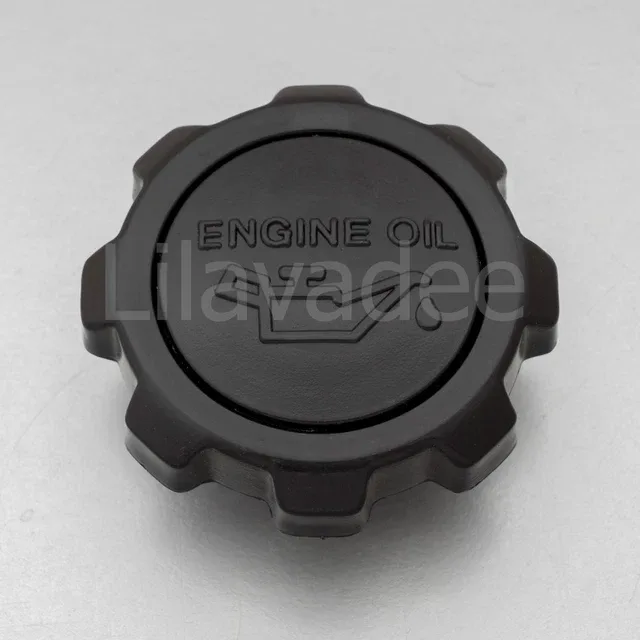
Image source: Web (Bing) / picclick.fr (Web image (fair-use with source credit))
If you own a 2019 Toyota Corolla, picking the right oil isn't complicated. But it does matter more than most people think. The 2019 toyota corolla oil type that Toyota recommends is full synthetic SAE 0W-20.
Your engine was designed around that specific viscosity.
Using the wrong oil can cut fuel economy and accelerate sludge buildup over time. Toyota engineers set those requirements for a reason. As of 2026, the 0W-20 standard remains the baseline for all modern Corolla engines.
Let's walk through what you actually need to know.
Quick Answer
Use SAE 0W-20 full synthetic motor oil. It must meet API SN or SP and ILSAC GF-5 or GF-6 standards. The engine holds 4.4 quarts with a filter change.
Change it every 10,000 miles under normal driving. Switch to 5W-30 only if you live in a very hot climate and the manual allows it.
Why Getting the Oil Right Matters
Your Corolla's engine has tight clearances between moving parts. The 0W-20 oil flows through narrow passages instantly on a cold start. It also maintains a protective film at operating temperature.
That balance keeps the engine durable and efficient.
Thicker oil like 10W-30 struggles to reach the top of the engine during cold starts. That means metal-to-metal contact for the first few seconds of every drive. It adds up over thousands of miles.
Thinner oil than recommended might not hold up under high temperatures.
Viscosity isn't the only factor. The oil must also meet API SN or SP certification and ILSAC GF-5 or GF-6 standards. These ratings ensure the oil has the right detergents, anti-wear additives, and oxidation stability.
Cheap oil that meets only the minimum API rating won't protect your engine the same way.
Your owner's manual lists the spec because the engine's longevity depends on it. Following that spec is the cheapest insurance you can buy.
0W-20 vs. 5W-30: Breaking Down the Two Options
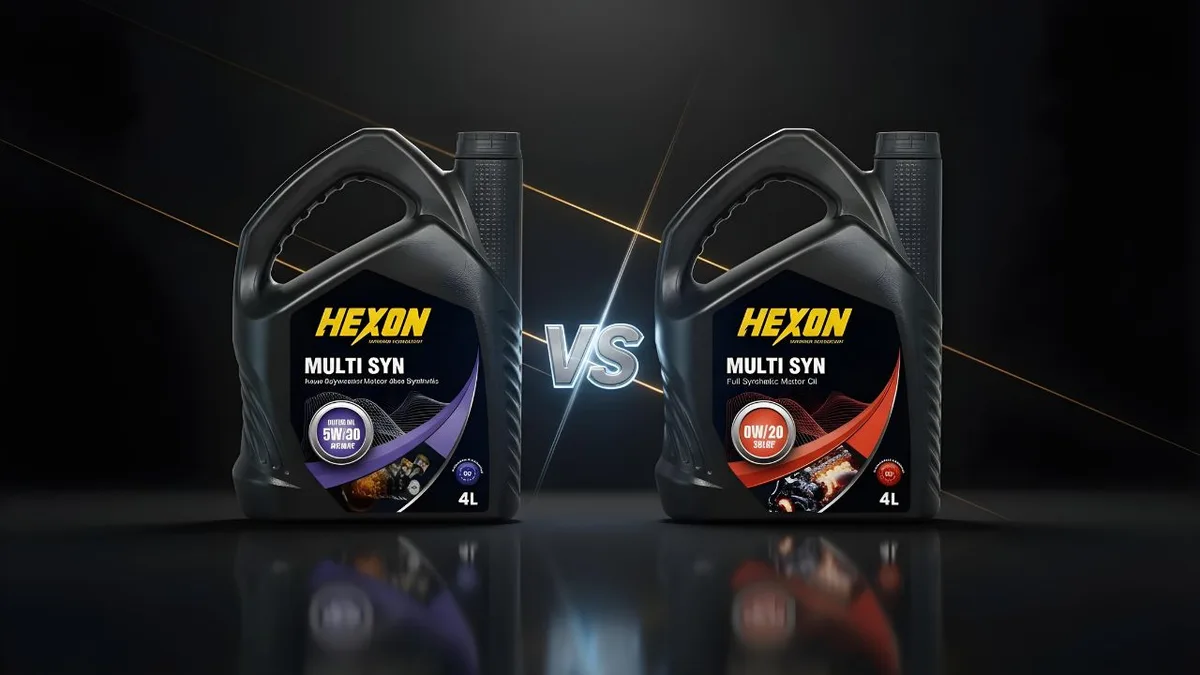
Most 2019 Corollas call for 0W-20. But SAE 5W-30 is listed as an acceptable alternative in some owner's manuals. There are conditions.
The "0W" means the oil's viscosity in winter conditions. A 0W oil flows better in the cold than a 5W oil. The "20" refers to viscosity at normal operating temperature, roughly 210 degrees Fahrenheit.
So 0W-20 is thin when cold but maintains moderate thickness when hot.
Here is the key difference
- 0W-20 flows faster on cold starts, reducing wear. It also improves fuel economy by reducing internal drag. Toyota recommends this as the primary oil for all climates.
- 5W-30 is slightly thicker at both cold and hot temperatures. It provides a stronger oil film at high heat. But it reduces fuel economy slightly.
When should you use 5W-30?
Only if your owner's manual explicitly lists it as an alternative. Some 2019 Corolla manuals list 5W-30 for sustained high-speed driving or extremely hot climates above 100 degrees Fahrenheit. If you live in Phoenix or Death Valley, 5W-30 might be a reasonable choice.
For everyone else, stick with 0W-20 year-round.
Using 5W-30 in cold climates means slower oil flow on startup. That translates to more engine wear over winter months. Don't mix viscosities unless it's an emergency.
Change the oil as soon as possible to return to the recommended spec.
What the Owner's Manual Actually Says
The 2019 Toyota Corolla owner's manual states this in the maintenance section: "Use Toyota Genuine Motor Oil or equivalent. Oil viscosity: SAE 0W-20. API grade SN or SP with ILSAC GF-5 or GF-6."
"Toyota Genuine Motor Oil or equivalent" means you don't have to buy Toyota's branded oil. But you must use oil that meets the same specifications. Major brands like Mobil 1, Pennzoil Platinum, and Valvoline Advanced all produce 0W-20 full synthetic oils that meet these standards.
"SAE 0W-20" is the viscosity requirement. No negotiation for normal driving.
"API SN or SP" refers to the American Petroleum Institute's service rating. SN provides good protection. SP offers better protection against low-speed pre-ignition and timing chain wear.
SP is backward compatible, so it's safe in a 2019 engine. If you have a choice, SP is better.
"ILSAC GF-5 or GF-6" goes hand in hand with API ratings. GF-6 offers improved fuel economy and protection.
The manual also states the oil capacity: 4.4 quarts with a filter change. Without a filter change, it's roughly 4.2 quarts.
If you've lost your manual, check the oil filler cap. Toyota stamps the recommended viscosity right on the cap. It will say "0W-20" clearly.
The 1.8L Engine vs. The 2.0L Engine
This is a common point of confusion. The 2019 Corolla came with two different engines depending on the trim level.
- Most sedans (L, LE, XLE) use the 1.8-liter 2ZR-FE engine.
- The hatchback and higher trims (SE, XSE) use the 2.0-liter M20A-FKS engine.
Both engines require SAE 0W-20 full synthetic oil. The viscosity recommendation does not change. However, the oil capacity is slightly different.
- 1.8L engine: 4.4 quarts with filter
- 2.0L engine: 4.9 quarts with filter
The 2.0L engine also uses a different oil filter. Toyota filter 04152-YZZA6 works for the 1.8L. The 2.0L uses 04152-31090 or 04152-YZZB7.
Always verify the filter before you start the job.
Full Synthetic Is Non-Negotiable
Four reasons why your 2019 Corolla needs full synthetic oil.
1. Extreme temperature stability. Synthetic oil maintains its viscosity across a wider temperature range. The 0W-20 grade demands good thermal stability.
Only synthetic oils deliver that performance consistently.
2. Resistance to oxidation and sludge. These engines run hot. Conventional oil oxidizes faster at high temperatures, turning into sludge.
Synthetic oil resists this breakdown for longer.
3. Longer oil change intervals. Toyota recommends 10,000-mile intervals with synthetic oil. Conventional oil needs changes every 3,000 to 5,000 miles.
By the time you factor in the extra changes, synthetic is actually cheaper.
4. Better cold-start protection. The "0W" rating in 0W-20 demands excellent low-temperature flow. Conventional base oils can't meet this spec reliably.
All major oil manufacturers produce 0W-20 only as synthetic or synthetic blend.
A 5-quart jug of full synthetic 0W-20 costs about $25 to $35. Conventional oil would be $15 to $20. The difference is roughly a penny per mile for engine protection.
Step-by-Step: How to Do Your Own Oil Change
Doing your own oil change saves $40 to $60 compared to a shop. You also control exactly what goes in the engine.
What you'll need
- 5 quarts of SAE 0W-20 full synthetic oil
- Toyota-compatible oil filter (04152-YZZA6 for 1.8L, 04152-31090 for 2.0L)
- New crush washer for the drain plug (12mm, part 90430-12031)
- 14mm socket or wrench
- Oil filter wrench (cap style fits best)
- Drain pan, funnel, rags
The steps
Warm up the engine for two to three minutes. Warm oil drains faster.
Lift the front if you need clearance. The drain plug is accessible from underneath.
Place the drain pan under the oil pan. Remove the drain plug with the 14mm socket. Let the oil drain for about five minutes.
Remove the old oil filter. It sits on the front of the engine. Turn it counterclockwise.
Lubricate the new filter's rubber gasket with fresh oil. Screw it on hand-tight. Tighten another three-quarters of a turn. Don't over-tighten.
Install the new crush washer on the drain plug. Torque to 29 ft-lbs. Snug firm plus a quarter turn works without a torque wrench.
Add 4.4 quarts of fresh oil. Replace the filler cap.
Start the engine and run it for 30 seconds. Check for leaks.
Turn off the engine. Wait two minutes. Check the dipstick. Top off if needed.
Reset the oil maintenance light using the trip button procedure in your manual.
The Cost Breakdown: DIY vs. Shop vs. Dealer
| Option | Typical Cost | What You Get |
|---|---|---|
| DIY | $30 to $45 | Oil, filter, crush washer |
| Quick-lube shop | $55 to $80 | Oil, filter, labor, disposal |
| Toyota dealership | $70 to $100 | OEM oil and filter, inspection, reset |
DIY is cheapest and gives you full control. The trade-off is your time, about 30 minutes, and used oil disposal. Most auto parts stores accept used oil for free.
Quick-lube shops are convenient but inconsistent. Some use budget oil that barely meets the spec. Always verify they used 0W-20 full synthetic before you drive away.
Dealers use Toyota Genuine Motor Oil and OEM filters. They also perform a multi-point inspection. You pay a premium for peace of mind.
Common Mistakes That Cost People Engines
Using conventional oil instead of synthetic. This is the most expensive shortcut. Conventional oil lacks the thermal stability for extended intervals. Sludge forms.
Oil pressure drops. By 60,000 miles, you might need a timing chain replacement.
Overfilling the oil. Adding the full 5-quart jug without checking the dipstick is common. The Corolla takes 4.4 quarts. Overfilling causes foaming.
Foam doesn't lubricate.
Underfilling is also dangerous. Not adding enough oil starves the bearings. If the oil light comes on, shut the engine off immediately.
Using an incorrect oil filter. Wrong filters can leak or bypass oil unfiltered. Stick with Toyota OEM or a known brand like Mobil 1 or Wix.
Skipping the crush washer. Reusing an old washer leads to leaks. A new one costs about $1.
Not tightening the drain plug enough. A loose plug vibrates out over time. Losing all your oil at highway speed destroys the engine.
Severe Driving Conditions and When to Change More Often
Toyota says change the oil every 10,000 miles under normal conditions. But severe driving requires more frequent changes.
Severe driving includes repeated short trips under 5 miles, extensive idling, dusty roads, towing, and sustained high-speed driving in hot weather.
If any of these sound like your commute, Toyota recommends changing the oil every 5,000 miles. Here is a simple guide.
- Normal driving. Mix of highway and city. Trips longer than 10 minutes. Change every 10,000 miles.
- Moderate severe. Short trips or traffic every day. Change every 7,500 miles.
- Full severe. Dust, towing, extreme heat, constant idling. Change every 5,000 miles.
The oil life monitor in your Corolla considers some of these factors. But it is conservative. If you drive mostly short trips, trust the 5,000-mile schedule over the monitor.
How to Read the Oil Cap and Dipstick Correctly
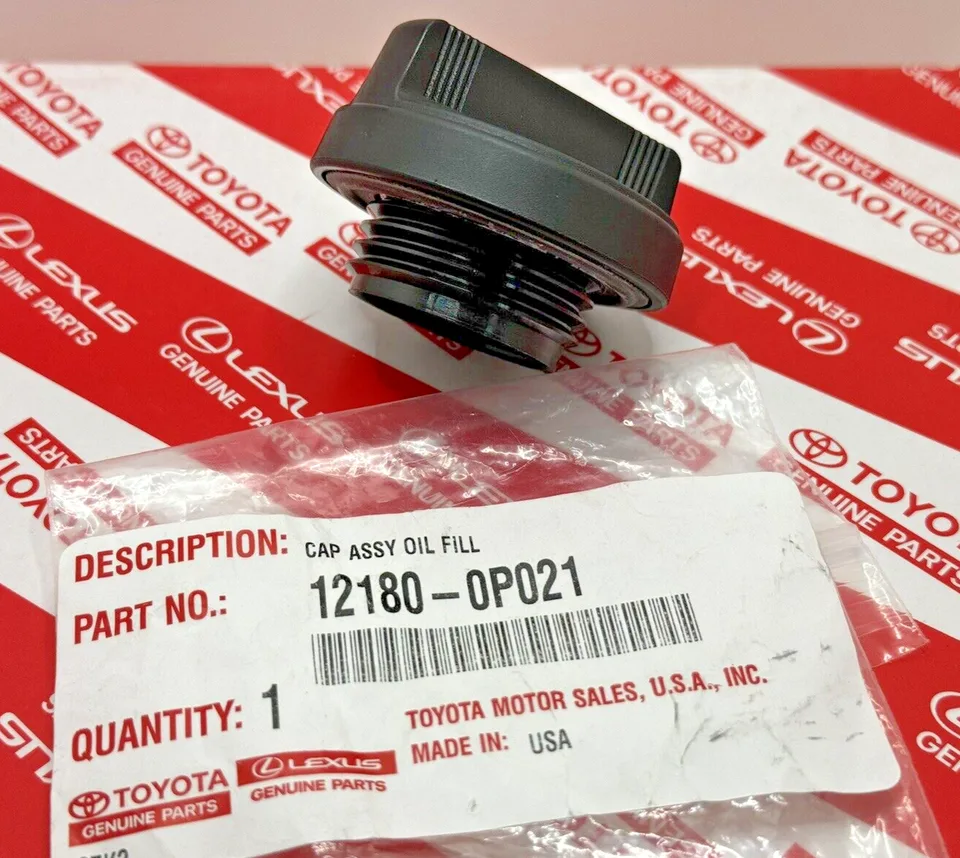
Two places on your Corolla tell you exactly what oil to use. The first is the oil filler cap under the hood. Toyota stamps the recommended viscosity right onto the plastic.
It will read "0W-20" or "5W-30" depending on the market.
Reading the dipstick correctly. Pull the dipstick out. Wipe it clean. Insert it fully.
Pull it out again. Read the level on the second pull.
The dipstick has two marks: low and full. The ideal level is between them, closer to full. If it is at or below the low mark, add oil.
Do not overfill past the full mark.
Oil should appear amber to light brown when fresh. Dark brown or black is normal halfway through the interval. Milky or frothy oil means coolant is leaking into the crankcase.
Stop driving and get it checked.
What Happens If You Use the Wrong Oil
Using the wrong oil causes real, measurable damage.
Too thick. Oil like 10W-30 struggles to flow through narrow engine passages. Your variable valve timing system relies on oil pressure. Thick oil delays actuation.
You will notice rough idle and reduced fuel economy.
Too thin. Oil that shears down loses film strength at high temperatures. Metal components contact each other. Scoring on cylinder walls and bearing surfaces follows.
This damage is cumulative and irreversible.
Wrong certification. Oil labeled "0W-20" that doesn't meet API SN or SP lacks proper anti-wear additives. Sludge builds up in oil passages. Oil pressure drops.
The check engine light comes on.
Real-world outcome. Aggregate service records show engines on incorrect oil often need internal cleaning or timing chain replacement by 80,000 miles. Engines on the correct oil routinely reach 200,000 miles with basic maintenance.
A Note on Warranty and Resale Value
Toyota's factory warranty covers your Corolla for 3 years or 36,000 miles bumper to bumper. Powertrain coverage is 5 years or 60,000 miles. Using the correct oil protects that coverage.
If an engine failure occurs and Toyota finds evidence of incorrect oil, they can deny the claim. That includes wrong viscosity, wrong type, or missed intervals. Keep every receipt and log the date and mileage.
A well-maintained Corolla with documented oil changes sells for $1,000 to $2,000 more than one with spotty records. Buyers check for sludge and engine noise during test drives. Clean oil history signals a cared-for car.
Save your receipts. Write the date and mileage on the oil filter box. Snap a photo of the odometer after each change.
It takes 30 seconds and pays off when you sell.
The Bottom Line: Simple Rules to Follow
Stick with these rules and your 2019 Corolla will run reliably for years.
- Use SAE 0W-20 full synthetic oil that meets API SP and ILSAC GF-6 standards.
- Change it every 10,000 miles under normal driving. Change every 5,000 miles under severe conditions.
- Use a quality oil filter and a new crush washer each time.
- Check the dipstick monthly. Top off if needed.
- Keep records for warranty and resale value.
That is it. No guesswork. No shortcuts.
Your Corolla's engine was engineered for this precise specification. Give it what it needs and it will return the favor.
Frequently Asked Questions
Can I use 5W-30 in my 2019 Corolla?
Yes, but only if your owner's manual lists it as an alternative. Use it in extremely hot climates or sustained high-speed driving. For normal driving and cold weather, stick with 0W-20.
The fuel economy penalty is small, around 1 to 2 percent.
How often should I check my oil level?
Check it at every other fuel fill-up. Pull the dipstick, wipe it, reinsert it, and read the level. Low oil between changes indicates a leak or consumption.
Catch it early to avoid engine damage.
What happens if I use conventional oil instead of synthetic?
Conventional oil cannot maintain its viscosity and protective properties over a 10,000-mile interval. Sludge forms. Oil pressure drops.
Engine wear accelerates. Use full synthetic as Toyota requires.
Do I need to use Toyota branded oil?
No. Any major brand that meets API SP and ILSAC GF-6 specifications works. Mobil 1, Pennzoil Platinum, Valvoline Advanced, and Castrol Edge all produce suitable 0W-20 full synthetic oils.
How do I reset the oil maintenance light?
Turn the ignition to ON without starting the engine. Press the trip button until the odometer shows. Turn the ignition OFF.
Press and hold the trip button while turning the ignition back to ON. Hold until the oil light flashes and turns off.