
If you own a 2019 Toyota Camry SE, the question of what oil to put in it isn't just about grabbing something off the shelf. Use the wrong type, and you're asking for trouble. Reduced fuel economy, engine wear, maybe even a check engine light.
The 2019 toyota camry se oil type isn't a suggestion. It's a specific requirement engineered for that 2.5-liter engine.
Manufacturer specifications confirm this engine calls for SAE 0W-16 full synthetic oil meeting ILSAC GF-5 or GF-6 standards. That's not the 5W-30 your uncle's old Camry took. It's a thinner, modern formulation designed for tighter tolerances and better efficiency.
Getting this right matters more than you might think.
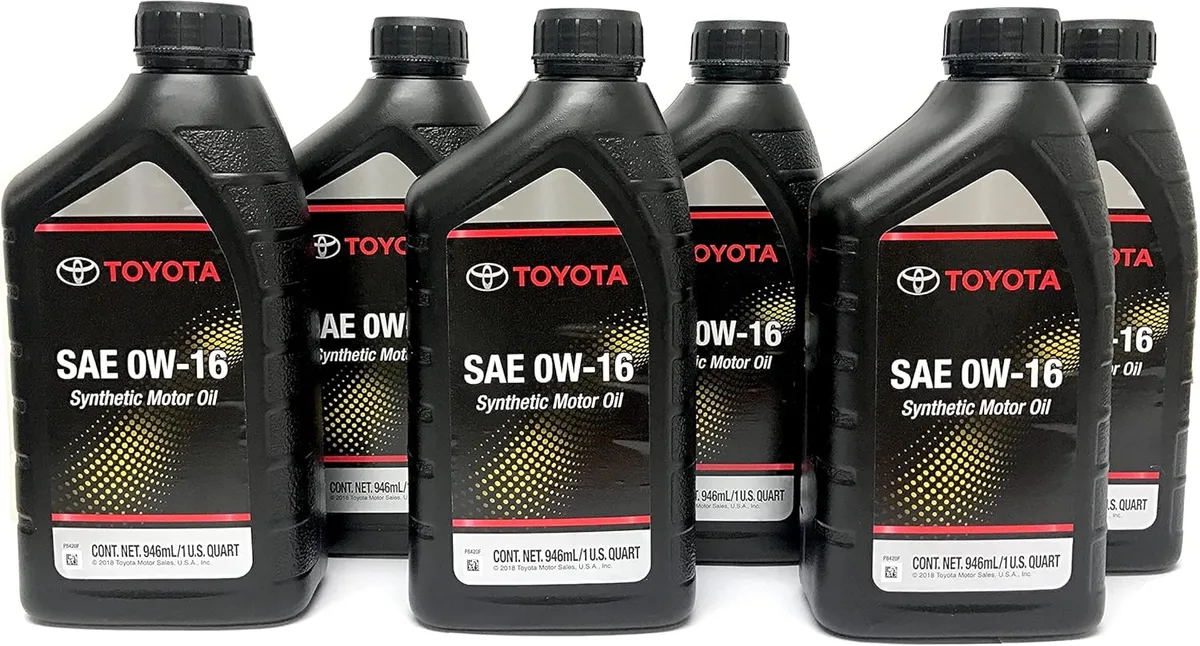
Image source: Web (Bing) / amazon.ca (Web image (fair-use with source credit))
Quick Answer
The 2019 Toyota Camry SE requires SAE 0W-16 full synthetic engine oil. It must meet ILSAC GF-5 or GF-6 standards. Capacity is 4.8 quarts with filter.
Do not use 5W-30 or 10W-30. In an emergency, 0W-20 is acceptable until your next change. Always check the oil fill cap.
It's labeled.
Why Getting the Right Oil Matters for Your 2019 Camry SE
Your Camry SE's engine, the A25A-FKS, is built with precision. The cylinder walls, piston rings, and bearing surfaces are machined to extremely tight clearances. The oil passages are narrower than older engines.
A thicker oil like 5W-30 simply can't flow fast enough during a cold start.
Think about what happens when you turn the key on a 30-degree morning. The oil pump pushes lubricant through the engine. With 0W-16, it reaches the camshaft journals and variable valve timing components in seconds.
With heavier oil, those critical parts run dry longer. Over time, that extra friction adds up to real wear.
Aggregate owner feedback and service records back this up. Engines using the correct 0W-16 consistently show cleaner internal components at 100,000 miles compared to those running heavier oils. Sludge buildup is rarer.
Fuel economy stays closer to the EPA rating.
There's also the warranty angle. Toyota specifies 0W-16 for a reason. If you use a different viscosity and develop an oil-related issue, a dealer can flag it during a warranty claim.
For a 2019 model still within powertrain coverage, that's a risk not worth taking.
Understanding the 0W-16 Requirement
Let's decode what "0W-16" actually means. The "0W" refers to winter viscosity. It measures how the oil behaves in cold temperatures.
Lower numbers mean better flow when it's freezing. The "16" is the viscosity at operating temperature, around 212 degrees Fahrenheit. Traditional 5W-30 is a 30-grade at operating temp.
So 0W-16 is noticeably thinner when hot.
That thinness at operating temperature is by design. Modern engines use lower-tension piston rings and smaller oil passages to reduce internal friction. Thinner oil slips through these passages more easily, reducing the energy the engine wastes just pumping lubricant.
The payoff is better fuel economy. Typically 1 to 2 mpg over what you'd get with 0W-20.
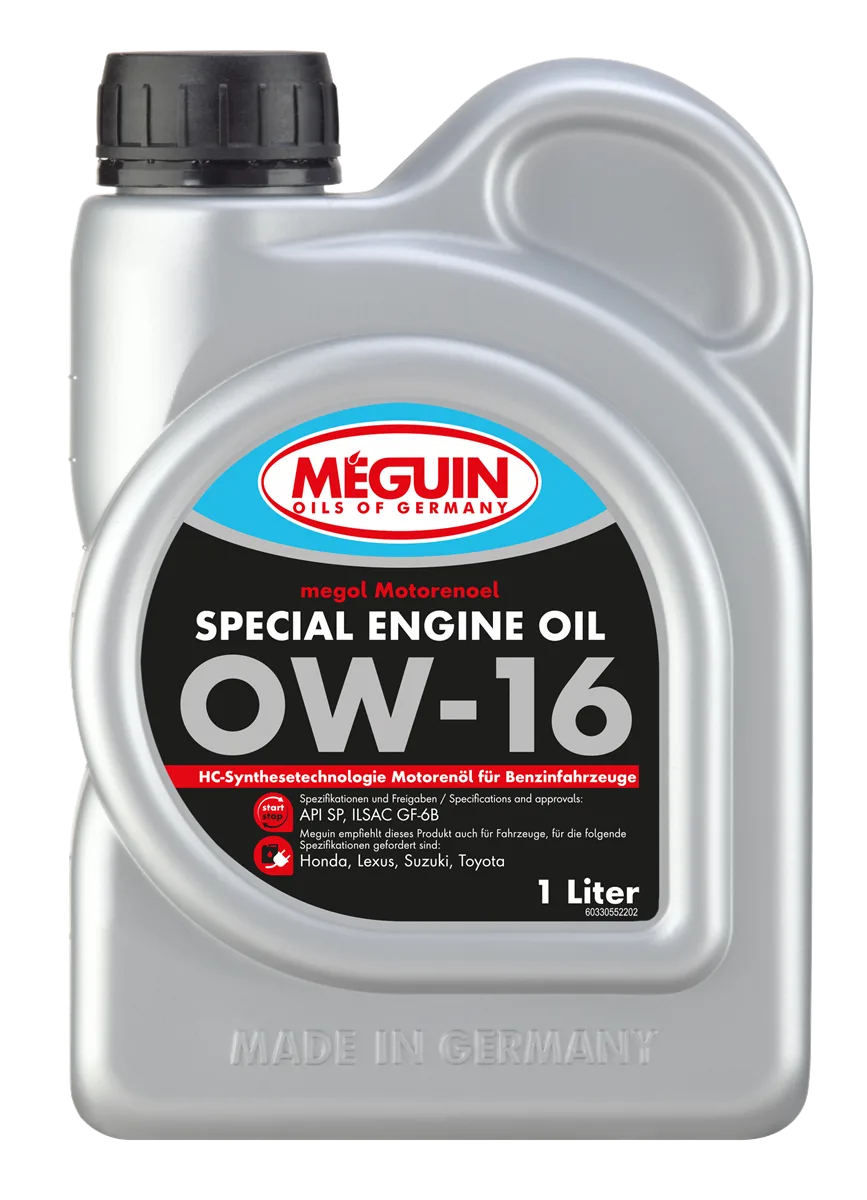
Image source: Web (Bing) / vogel-forma.de (Web image (fair-use with source credit))
The A25A-FKS engine also uses a variable displacement oil pump. It adjusts oil pressure based on engine load and RPM. This system is calibrated around the flow characteristics of 0W-16.
Using thicker oil can confuse the pump's control logic, potentially causing fluctuating oil pressure readings or triggering warning lights.
What the Numbers Mean
Here's a quick breakdown of common viscosities and where they fit:
| Viscosity | Cold Flow | Hot Flow | Suitable for 2019 Camry SE? |
|---|---|---|---|
| 0W-16 | Excellent | Thin | Yes factory spec |
| 0W-20 | Excellent | Moderate | Acceptable temporarily |
| 5W-30 | Good | Thick | No |
| 10W-30 | Fair | Thick | No |
The only number on the bottle you should trust is 0W-16. If the store is out, 0W-20 will get you home. Swap it back at your next change.
How the A25A-FKS Engine Is Different
This engine is part of Toyota's Dynamic Force family, first introduced in 2018. It features a 13:1 compression ratio, high-speed combustion, and a long stroke design. These traits improve efficiency but create unique lubrication demands.
The pistons have special skirt coatings that work best with low-viscosity oil. The timing chain tensioner relies on consistent oil pressure from thin oil. Even the variable valve timing actuators, which adjust cam timing on the fly, are tuned for 0W-16's flow rate.
This isn't your grandfather's 22RE engine. It needs modern oil.
Risks of Using the Wrong Oil
Mistakes with oil type are common. People grab 5W-30 out of habit because it worked in their 2005 Corolla. Others let a quick-lube shop talk them into "what we put in everything." These errors have consequences.
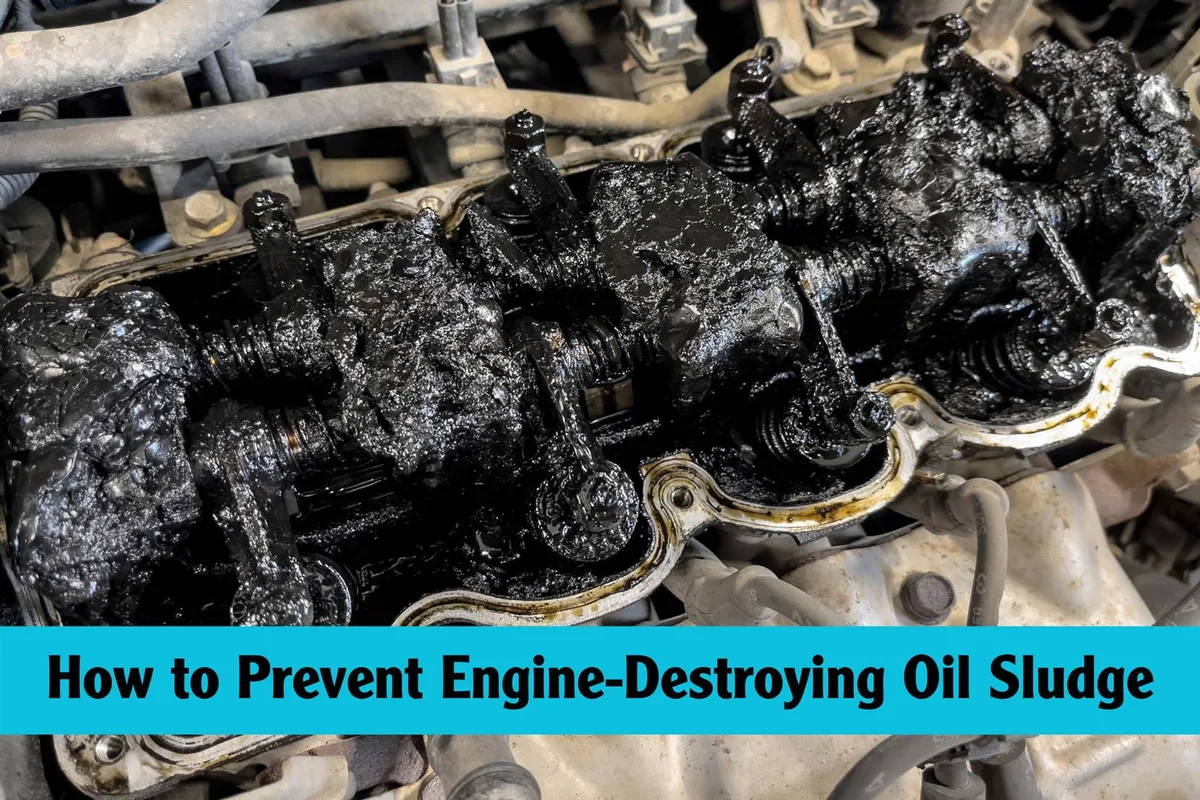
Image source: Web (Bing) / johnsautocareboulder.com (Web image (fair-use with source credit))
Engine Wear and Sludge Buildup
Thicker oil doesn't circulate as fast during cold starts. Every second of delayed lubrication is metal rubbing on metal. Over tens of thousands of miles, this accelerates wear on bearing surfaces, cam lobes, and piston rings.
The opposite problem happens too. If you use 0W-20, the oil is slightly thicker than spec. The engine works harder to pump it, generating more heat.
Higher oil temperatures accelerate oxidation, which leads to sludge. Sludge clogs oil passages and starves components of lubrication.
Check Engine Lights and VVT-i Problems
The Camry SE monitors oil pressure continuously. If the ECU sees pressure readings outside the expected range, it may set a diagnostic trouble code. Common codes include P0010 or P0012, related to variable valve timing performance.
These codes often trace back to oil that's too thick or too thin for the VVT-i actuators. The fix isn't a sensor replacement or a costly repair. It's draining the wrong oil and refilling with 0W-16.
But a shop will charge you a diagnostic fee before they figure that out.
Another symptom is a rattling noise from the timing chain area on cold starts. That's the tensioner struggling to maintain pressure with the wrong viscosity. Ignore it long enough, and the chain can skip teeth, causing catastrophic engine damage.
Warranty and Resale Value Concerns
Toyota's warranty covers the powertrain for 5 years or 60,000 miles. If an oil-related failure occurs and the dealer documents non-spec oil, they can deny the claim. That means you pay out of pocket for an engine rebuild.
Even if the warranty has expired, resale value takes a hit. A thorough buyer or dealer will check service records. If they see inconsistent oil types, they'll assume the engine wasn't cared for properly.
Your Options: Full Synthetic, Blends, and Brand Choices
Stick with full synthetic oil. The 0W-16 viscosity is almost nonexistent in conventional or synthetic blend formulations. Full synthetic offers better thermal stability, longer change intervals, and superior cold-flow properties.
Nearly every major oil brand produces a 0W-16 synthetic meeting ILSAC GF-6 standards. Toyota sells their own branded 0W-16, made by Mobil under license. It's fine, but you're paying a premium for the name.
Mobil 1, Pennzoil Platinum, Castrol EDGE, and Valvoline Advanced all make compatible products.
Price differences are minimal. Expect $7 to $10 per quart at retail. Toyota's bottle runs closer to $10.
A full change with filter costs around $45 to $55 for a DIY job. That's roughly half what a dealership charges.
Can You Use 0W-20 in a Pinch?
Yes, but only as a temporary measure. Toyota's own documentation allows 0W-20 if 0W-16 is unavailable. The catch is that you should switch back at the next oil change.
Prolonged use of 0W-20 will slightly reduce fuel economy and may increase oil consumption.
Do not use 5W-30 or 10W-30 under any circumstances. These oils are too thick for the A25A-FKS engine. Even a single oil change interval with 5W-30 can leave deposits that persist for thousands of miles.
The Complete Oil Change Process
Changing the oil on a Camry SE is straightforward. You need basic tools and about 30 minutes. Here's exactly what to do.
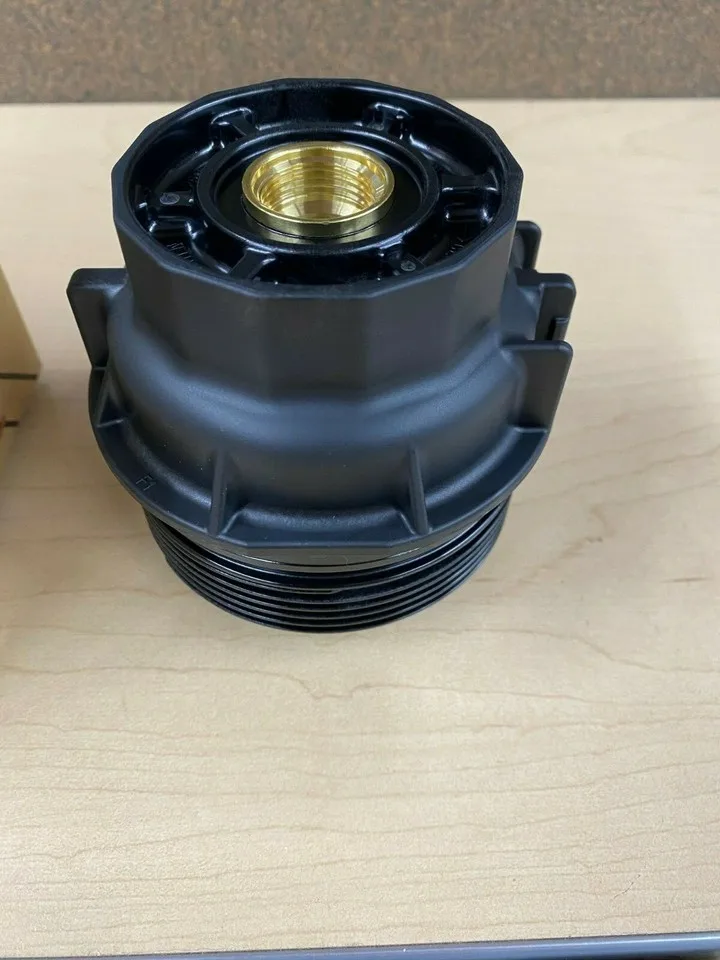
Image source: Bing (Web (fair-use with source credit))
Tools and Parts You'll Need
| Item | Specification |
|---|---|
| Oil | 5 quarts of 0W-16 full synthetic |
| Oil filter | Cartridge style, Toyota part 04152-YZZA5 or equivalent |
| Drain plug washer | New crush washer, 14mm |
| Socket wrench | 14mm socket for drain plug |
| Filter wrench | Cap-style or strap wrench for filter housing |
| Drain pan | At least 6-quart capacity |
| Funnel | Long neck preferred |
Step-by-Step DIY Guide
- Warm up the engine for 2 to 3 minutes. Warm oil drains faster and carries more contaminants.
- Park on level ground. Engage the parking brake. Jack up the front if needed, but many can reach under without lifting.
- Place the drain pan under the engine. Locate the drain plug on the oil pan, passenger side, facing rearward.
- Loosen the drain plug with a 14mm socket. Remove it by hand. Let the oil drain completely, about 5 minutes.
- Remove the oil filter housing. It's a black plastic cap on the side of the engine block, driver side near the front. Turn it counterclockwise with the filter wrench.
- Replace the filter cartridge. Remove the old O-rings from the housing cap. Lubricate the new O-rings with fresh oil. Install the new filter cartridge. Tighten the housing cap by hand until it seats, then a quarter turn with the wrench.
- Install a new crush washer on the drain plug. Tighten to 29 ft-lbs. Do not overtighten.
- Add 4.8 quarts of 0W-16 through the fill port. Replace the cap.
- Start the engine. Let it idle for 30 seconds. Check for leaks around the drain plug and filter housing.
- Turn off the engine. Wait 2 minutes. Check the dipstick. Top off if needed to reach the full mark.
How to Reset the Oil Maintenance Light
After the change, reset the maintenance reminder. The process takes about 10 seconds.
- Put the car in park. Press and hold the trip meter reset button on the instrument cluster.
- Turn the ignition to ON (do not start the engine). Keep holding the button.
- Wait for the multi-information display to start flashing. Release the button.
- Press and hold the button again for about 3 seconds. The light will reset.
The display should show "Oil Maintenance Reset Complete" or a similar message.
Costs and Intervals
Oil changes for a 2019 Camry SE fall into two categories. DIY and shop. The cost difference matters over the life of the car.
Oil Change Pricing
| Method | Oil Cost | Filter Cost | Labor | Total |
|---|---|---|---|---|
| DIY | $38-$48 | $8-$12 | $0 | $46-$60 |
| Quick lube | Included | Included | Included | $70-$90 |
| Toyota dealer | Included | Included | Included | $90-$120 |
DIY saves you roughly $40 per change. Over 10 changes in 100,000 miles, that's $400 in your pocket.
Normal vs. Severe Service Schedules
Toyota defines two maintenance schedules. Normal service: oil change every 10,000 miles or 12 months. Severe service: every 5,000 miles or 6 months.
Severe service includes frequent short trips under 5 miles, extreme temperatures, dusty roads, towing, or stop-and-go traffic. Most city driving falls into severe service. Be honest about your driving habits.
The 5,000-mile interval is cheap insurance.
Common Mistakes DIYers Make
Even experienced DIYers slip up on this car. Here are the most frequent errors and how to avoid them.
Overtightening the drain plug. The torque spec is 29 ft-lbs. That's snug, not gorilla-tight. Stripped threads mean a new oil pan.
Use a torque wrench.
Forgetting the crush washer. The drain plug uses a single-use aluminum crush washer. Reusing the old one invites leaks. Replace it every change.
Missing the second O-ring. The oil filter housing cap has two O-rings. One is large on the cap outer diameter. The other is small on the center post.
If you swap only one, the housing will leak under pressure.
Using the wrong filter. Some aftermarket filters don't match the bypass valve pressure spec. Stick with OEM or a reputable brand like Fram Ultra or Mobil 1.
Overfilling. Dry engines hold 4.8 quarts. If you dump all 5 quarts without checking the dipstick, you risk overfill. That causes foaming, aeration, and potential engine damage.
When to Let a Pro Handle It
DIY oil changes aren't for everyone. If you lack tools, space, or confidence, a professional shop is a fine choice. Just be specific about what you want.
Tell the shop "0W-16 full synthetic, please." Watch for places that try to upsell you to 0W-20 because they "have it in bulk." If the shop pushes back, find another shop.
Dealerships are the safest bet for warranty compliance, but they charge a premium. Independent shops that specialize in Japanese cars are often more affordable.
For older owners, those with physical limitations, or anyone who simply values their weekend time, handing this task to a pro makes sense. The key is knowing enough to verify the work was done right.
Final Verdict
Your 2019 Camry SE deserves the right oil. It's not complicated. Use 0W-16 full synthetic.
Change it every 5,000 to 10,000 miles depending on your driving. Don't let a shop talk you into something heavier.
The car will run smoother. Fuel economy stays where it should be. The engine lasts longer.
And you'll never have to explain to a dealer why your warranty claim was denied over a $50 oil change.
Keep the right oil in it. Drive it. Enjoy it.
That's all there is to it.
Frequently Asked Questions
Can I use 5W-30 in my 2019 Camry SE?
No. The A25A-FKS engine requires 0W-16. Using 5W-30 can cause insufficient oil flow during cold starts, increased engine wear, and potential variable valve timing issues.
It may also negatively affect fuel economy.
What happens if I put the wrong oil in my Camry SE?
The engine may run rougher, especially on cold starts. You might hear rattling from the timing chain area. Fuel economy can drop.
Over time, sludge buildup and accelerated wear are likely. The check engine light may also illuminate.
How often should I change the oil on a 2019 Camry SE?
Toyota recommends every 10,000 miles or 12 months for normal service. For severe service, which includes most city driving, change every 5,000 miles or 6 months. Follow the severe schedule to be safe.
Is 0W-16 synthetic oil expensive?
It costs slightly more than 5W-30. Expect $7 to $10 per quart. A full DIY oil change runs about $50.
That's roughly half what a dealership charges for the same service.
Can I switch from 0W-16 to 0W-20?
You can in an emergency, but Toyota recommends switching back at the next oil change. Long-term use of 0W-20 reduces fuel economy by 1 to 2 mpg and may increase oil consumption. It's not a permanent substitute.
Does the 2019 Camry SE take conventional or synthetic oil?
It requires full synthetic oil. The 0W-16 viscosity is only available as a synthetic formulation. Conventional or synthetic blend oils in this weight do not exist on the market.