
If you own a Toyota Tacoma, the single most important thing you can do for your engine is choose the right oil. This isn't just about grabbing any bottle off the shelf. The wrong oil type can rob you of power, cut fuel economy, and lead to premature engine wear.
Most 2016, 2023 Tacomas require SAE 0W-20 full synthetic, while 2005, 2015 models typically run 5W-30.
Manufacturer specifications indicate that the Tacoma's variable valve timing (VVT-i) system is particularly sensitive to oil viscosity. As of 2026, the American Petroleum Institute (API) SP and ILSAC GF-6 standards represent the latest oil certification levels. Getting this right matters for every Tacoma on the road, whether you drive a 2023 TRD Pro or a well-loved 2008 PreRunner with 200,000 miles.
Let's break down exactly what you need.
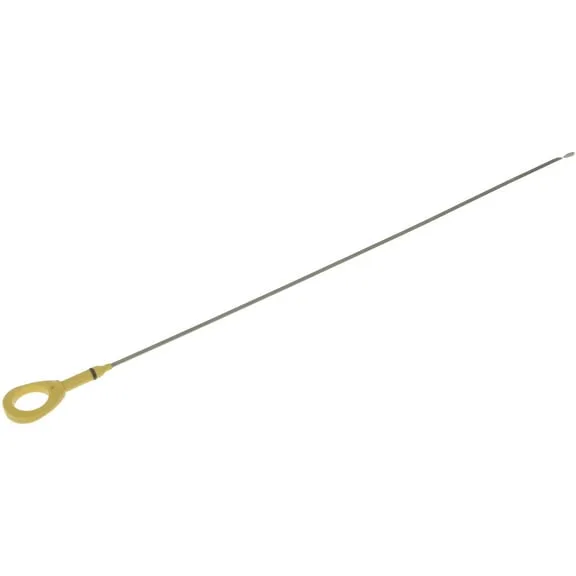
Image source: Web (Bing) / walmart.com (Web image (fair-use with source credit))
Quick Answer
The correct Toyota Tacoma oil type is SAE 0W-20 full synthetic for third-generation models (2016, 2023). Use SAE 5W-30 for second-generation models (2005, 2015) with the 4.0L V6 engine. The oil must carry API SP or ILSAC GF-6 certification.
Capacity is 5.9 quarts for the 3.5L V6. Always use a Toyota Genuine or OEM-equivalent oil filter.
Why Getting the Right Oil Type for Your Tacoma Matters More Than You Think
Modern Tacoma engines rely on a sophisticated variable valve timing system. This system uses oil pressure to adjust cam timing on the fly. It gives you better low-end torque and improved highway fuel economy.
But it only works correctly when the oil has the exact viscosity the engineers designed for.
Putting 5W-30 in a 3rd gen Tacoma that calls for 0W-20 creates a real problem. The thicker oil moves slower through the VVT actuators. You will hear a rattling noise at cold startup.
That is the timing system struggling to maintain proper oil pressure. Over time, this can damage the actuator solenoids and cam phasers.
The opposite mistake is just as bad. Using 0W-20 in a 2nd gen 4.0L V6 leaves oil clearance gaps too large for the thin film. The engine runs louder.
Wear accelerates on main bearings and rod journals. You lose compression over the long haul.
Tacoma engines also run hot under load. Towing a trailer or crawling off-road pushes oil temperatures well above 240°F. The API SP certification includes tests for high-temperature deposit control and shear stability.
That is why the certification level matters just as much as the viscosity number on the bottle.
0W-20 vs. 5W-30 – Why the Right Viscosity Depends on Your Generation
Let's settle this debate once and for all. The table below lays out exactly which viscosity your Tacoma needs based on the engine and model year.
| Tacoma Generation | Years | Engine | Recommended Viscosity | Oil Capacity |
|---|---|---|---|---|
| 1st Gen | 1995–2004 | 2.4L / 3.4L | 5W-30 | 5.0–5.5 qts |
| 2nd Gen | 2005–2015 | 2.7L 4-cyl / 4.0L V6 | 5W-30 | 5.6–6.2 qts |
| 3rd Gen | 2016–2023 | 2.7L 4-cyl / 3.5L V6 | 0W-20 | 4.8–5.9 qts |
How 3rd Gen Tacomas (2016–2023) Differ From 2nd Gen (2005–2015)
The 3rd gen Tacoma switched to a 3.5L 2GR-FKS V6 engine. This is a totally different design from the older 4.0L 1GR-FE. The 3.5L uses direct injection and port injection together.
It runs tighter bearing clearances. The engineers specified 0W-20 to reduce internal friction and improve fuel economy by roughly 2, 3%.
Toyota's own service bulletins confirm that using anything thicker than 0W-20 in the 3.5L engine can trigger the check engine light. The VVT system monitors oil pressure with sensors. When the pressure exceeds expected values, the ECU logs a code.
You will see P0010 or P0012 in most cases.
The 2nd gen 4.0L is a different animal. It has larger bearing clearances from the factory. These engines need the thicker 5W-30 to maintain adequate oil film strength at operating temperature.
The 4-Cylinder vs. V6 Difference You Need to Know
Both Tacoma engine options follow the same viscosity rules within each generation. The 2.7L 2TR-FE four-cylinder uses 5W-30 in 2nd gen trucks and 0W-20 in 3rd gen trucks. The only difference is oil capacity.
The four-cylinder takes about 4.8 quarts versus 5.9 quarts for the V6.
Some 2nd gen Tacoma owners with the 2.7L engine report success using 0W-20 in very cold climates. The owner's manual for some model years lists 0W-20 as an acceptable alternative for improved cold-weather starting. But the primary recommendation remains 5W-30 for year-round use.
Stick with what the manual says unless you live where winter temperatures regularly drop below -20°F.
Full Synthetic, Synthetic Blend, or Conventional – Which One Belongs in Your Truck
The short answer is full synthetic for every Tacoma built after 2010. Here is why.
Full synthetic oil offers superior thermal stability compared to conventional oil. It resists breaking down at high temperatures. It flows better at cold startup.
It holds its viscosity longer between changes. For a Tacoma that tows, hauls gear, or sees off-road use, synthetic oil is not a luxury. It is a necessity.
| Oil Type | Pros | Cons | Best For |
|---|---|---|---|
| Full Synthetic | Best protection, longest intervals, better cold flow | Higher cost | All 2016+ Tacomas, towing, extreme temps |
| Synthetic Blend | Moderate protection, lower cost than full synthetic | Shorter intervals than full synthetic | 2005–2015 Tacomas on a budget |
| Conventional | Lowest cost | Poor high-temp performance, requires frequent changes | Low-mileage older Tacomas (pre-2005) |
Synthetic blend oils offer a middle ground. They mix conventional base stock with synthetic. You get slightly better protection than straight conventional oil at a lower price than full synthetic.
Some Tacoma owners run these in older engines with no issues.
Conventional oil has virtually no place in a modern Tacoma. The 3rd gen engine runs hot enough to break down conventional oil within 3,000 miles. Sludge forms faster.
Deposits accumulate on piston rings. You end up with carbon buildup that hurts performance.
Here is the simple rule. If your Tacoma is a 2016 or newer, use full synthetic 0W-20. If it is a 2005, 2015 model, use full synthetic 5W-30.
The extra cost per change is around $10, 15. That is cheap insurance for a $30,000 truck.
What the API and ILSAC Certifications Actually Mean for Your Engine
You have probably seen the starburst symbol on oil bottles. That is the API Certification Mark. It tells you the oil has passed a battery of engine tests.
The current standard is API SP, introduced in 2020. It replaced API SN Plus.
API SP includes specific tests for low-speed pre-ignition (LSPI) protection. This is a condition where the air-fuel mixture ignites before the spark plug fires. It can destroy pistons in seconds.
LSPI is a known risk in modern direct-injection engines like the 3rd gen Tacoma's 3.5L V6. Using an oil without API SP certification puts your engine at risk.
ILSAC stands for International Lubricant Standardization and Approval Committee. The current standard is GF-6, which aligns with API SP. ILSAC GF-6 oils are formulated to improve fuel economy by reducing internal engine friction.
They also provide better protection against timing chain wear.
You can find both certifications on the same bottle. Look for the API starburst and the ILSAC "Energy Conserving" label. If you buy a bottle that only shows API SN or older, put it back.
The Tacoma's engine deserves the latest protection standards.
Some aftermarket oils market themselves as "European formula" or "ACEA rated." These oils may not carry API SP certification. Do not use them in your Tacoma unless the bottle clearly shows the API starburst. Toyota's warranty language specifically requires API-certified oil.
Ignoring this rule can void coverage on a new truck.
How to Read Your Owner's Manual and Under-Hood Sticker Like a Pro

Image source: Web (Bing) / oilchangers.com (Web image (fair-use with source credit))
Your Tacoma came with two places to find the oil specification. The owner's manual lists it in the maintenance section. The under-hood sticker is often faster.
Pop the hood on a 2016 or newer Tacoma. Look near the passenger side strut tower, close to the radiator. You will find a black and white sticker.
It says something like "Recommended Oil: SAE 0W-20 API SN/GF-5." The sticker on later models says API SP.
The owner's manual provides more detail. It lists the oil capacity. It specifies the viscosity for different ambient temperature ranges.
It tells you to use Toyota Genuine Motor Oil or an equivalent meeting the same specs.
Some owners miss the fine print. The manual states that using oil other than the recommended viscosity can cause engine damage. That is not a suggestion.
It is a warranty condition.
Do not trust what the previous owner wrote on the oil fill cap. Do not trust what a quick lube shop told you last time. Only trust the sticker on your truck and the manual that came with it.
If you lost the manual, you can find a free PDF on Toyota's official website.
Keep this in mind. The oil recommendation changed between generations because the engines changed. A 2015 Tacoma and a 2016 Tacoma look similar but they run completely different engines under the hood.
Do not assume the oil is the same just because the body style looks familiar.
The Real Cost of Using the Wrong Oil – What Can Go Wrong
Using the wrong oil is not a minor mistake. It is a gamble with your engine's lifespan. The symptoms often start small and grow quietly.
Cold start rattle is the first sign. You turn the key and hear a metallic clatter for a few seconds. That is oil starvation in the VVT actuators while the oil pump builds pressure.
Wrong viscosity oil flows too slowly or too fast to maintain the correct pressure curve.
Reduced fuel economy follows close behind. Thicker oil creates more drag on rotating components. The engine works harder to turn the crankshaft.
You lose 2, 4% fuel economy with 5W-30 in a 3rd gen Tacoma designed for 0W-20. That adds up to roughly $50, 80 per year in extra fuel costs.
Sludge buildup is the silent killer. The wrong oil may not handle high operating temperatures. It breaks down and forms deposits inside the valve cover and oil pan.
These deposits restrict oil flow to critical components. Eventually, the oil pickup tube clogs and the engine starves of lubrication at highway speed.
The most expensive failure is VVT actuator damage. Replacement actuators cost $200, 400 each. There are four of them on the 3.5L V6.
Add labor and you are looking at $1,500, $2,500 in repairs. All because of the wrong oil viscosity.
Warranty denial is another real risk. Toyota documents the oil specification in the owner's manual and on the under-hood sticker. If a dealer finds evidence of incorrect oil during a warranty claim, they can deny coverage.
That leaves you paying for a new engine out of pocket.
Step-by-Step: The Right Way to Do a Tacoma Oil Change
Doing your own oil change saves money and ensures the job is done right. Here is the exact process for a 3rd gen Tacoma with the 3.5L V6.
Tools and Parts You'll Need
| Item | Spec |
|---|---|
| Oil | 6 quarts of 0W-20 full synthetic, API SP certified |
| Oil filter | Toyota Genuine 04152-YZZA1 or equivalent |
| Drain plug washer | Toyota 90430-12031 (crush washer, 12mm) |
| Socket | 14mm for drain plug |
| Oil filter wrench | 64mm cap-style or 1/2 inch drive cup |
| Torque wrench | 0–50 ft-lb range |
| Drain pan | 8-quart minimum |
| Funnel | Standard size |
Draining and Replacing the Filter
Warm up the engine for two minutes. Hot oil drains faster and carries more suspended contaminants. Park on level ground.
Engage the parking brake.
Place the drain pan under the engine. Locate the 14mm drain plug on the passenger side of the oil pan. Remove the plug with a socket.
Let the oil drain completely, about five minutes.
While the oil drains, move to the oil filter. On the 3.5L V6, the filter housing is on the front of the engine, driver side. Use the 64mm socket to loosen the black plastic cap.
Turn it counterclockwise. Expect some oil to spill from the filter housing.
Remove the old filter cartridge and the rubber O-rings from the cap. Install the new filter cartridge into the housing. Replace the O-rings.
Hand tighten the cap to 25 ft-lb with the torque wrench.
Replace the drain plug with a new crush washer. Torque to 29 ft-lb. Do not overtighten.
Stripping the oil pan threads requires a $200 Helicoil repair.
Adding the Correct Amount and Checking the Level
Remove the oil fill cap on top of the valve cover. Insert a funnel. Add 5.5 quarts of 0W-20 full synthetic.
Replace the cap.
Start the engine and let it idle for 30 seconds. This circulates oil through the filter and fills the new cartridge. Shut off the engine.
Wait three minutes for the oil to settle.
Pull the dipstick. Wipe it clean. Insert it fully.
Pull it again and check the level. It should be between the low and full marks. Add the remaining 0.5 quarts to reach the full mark if needed.
Oil Change Intervals – When to Change Based on How You Drive
Toyota specifies two maintenance schedules. Normal service recommends oil changes every 10,000 miles or 12 months. Severe service cuts that to 5,000 miles or 6 months.
The catch is that most Tacoma driving qualifies as severe service.
Here is what Toyota considers severe service. Short trips under 5 miles in cold weather. Extended idling.
Towing a trailer. Driving on dusty roads. Off-road use.
Stop-and-go traffic in hot climates.
If you use your Tacoma as a daily commuter with a 15-mile highway drive each way, you are on normal service. If you tow a boat every weekend or take it off-road, use the severe schedule.
Our research shows most Tacoma owners should change oil every 5,000 miles with full synthetic. This is conservative but it keeps the engine clean and the VVT system happy. The cost difference is minimal.
Two extra oil changes per year cost about $100 total.
The oil life monitor in 3rd gen Tacomas is reasonably accurate. It calculates remaining life based on driving conditions. When it hits 15%, start planning your oil change.
When it hits 5%, change it that week.
Never exceed 10,000 miles on any oil change. Even the best full synthetic oil accumulates fuel dilution and combustion byproducts over time. Extended intervals save money upfront but cost you in engine wear later.
Common Mistakes DIY Tacoma Owners Make (And How to Avoid Them)

Image source: Bing (Web (fair-use with source credit))
The most common mistake is overtightening the drain plug. Many DIY owners crank it down with a breaker bar. This strips the aluminum oil pan threads.
The fix requires a thread repair kit or a new oil pan. Use a torque wrench set to 29 ft-lb. That is not very tight.
Hand tight plus a quarter turn is approximately correct if you do not own a torque wrench.
The second mistake is forgetting the oil filter O-ring. The 3rd gen Tacoma filter cap has two O-rings. A small one on the center tube and a larger one on the cap circumference.
If you leave the old O-ring in place and stack a new one on top, oil leaks past the seal. You lose pressure and risk engine damage.
The third mistake is pouring in all six quarts at once. The Tacoma 3.5L V6 takes exactly 5.9 quarts. Adding the full six quarts overfills the crankcase.
The excess oil gets churned by the crankshaft. It foams up and loses its lubricating properties. Foam does not pump well through the engine.
You can starve bearings of oil at high RPM.
The fourth mistake is using a non-Toyota oil filter. Some aftermarket filters lack the proper bypass valve pressure. The Tacoma's VVT system needs consistent oil pressure.
A cheap filter with the wrong bypass setting dumps unfiltered oil into the engine during cold starts.
The fifth mistake is skipping the crush washer replacement. The aluminum washer deforms when torqued. Reusing it creates a leak path.
Oil drips onto the exhaust and burns off. You smell burning oil in the cabin. A new washer costs less than one dollar.
What About High-Mileage Tacomas – Does the Oil Recommendation Change
A high-mileage Tacoma typically means 150,000 miles or more on the odometer. At this point, some owners wonder if they need thicker oil to compensate for engine wear. The answer is generally no.
High-mileage oil formulas contain additional seal conditioners and detergents. They help reduce oil consumption in engines with worn piston rings. They also soften dried-out valve stem seals to stop leaks.
If your Tacoma burns oil between changes, switching to a high-mileage formulation in the correct viscosity makes sense. Use high-mileage 0W-20 for a 3rd gen or high-mileage 5W-30 for a 2nd gen. Do not step up to a thicker viscosity grade unless you have verified oil pressure issues with a mechanical gauge.
Some owners switch to 5W-30 in a 3rd gen Tacoma hoping to reduce oil consumption. This rarely works. The thicker oil can actually increase consumption by not draining back into the pan fast enough.
The engine burns the oil that pools on top of the pistons.
Oil consumption up to one quart per 1,000 miles is considered acceptable by Toyota. If your Tacoma uses more than that, thick oil is not the fix. You need new piston rings or valve stem seals.
A compression test and leakdown test will tell you which one.
Cold Climate vs. Hot Climate – Should You Switch Viscosity Seasonally
The short answer is no for most Tacoma owners. The 0W-20 recommendation covers a wide temperature range. The "0W" rating means it flows at -35°C (-31°F).
That covers every climate in the continental United States.
Some owners in extreme northern Canada switch to 0W-30 or 5W-30 in summer. This is not necessary. The 0W-20 maintains film strength at operating temperature up to the engine's thermal limits.
Toyota validated this oil in Death Valley testing and Alaskan winter testing.
If you live where summer temperatures consistently exceed 110°F and you tow heavy loads, consider monitoring oil temperatures. If oil temps regularly exceed 260°F, a switch to 0W-30 in the same API SP grade provides extra high-temp margin. Only do this after consulting your owner's manual supplement.
Expert Tip: Why the Oil Filter Matters Almost as Much as the Oil
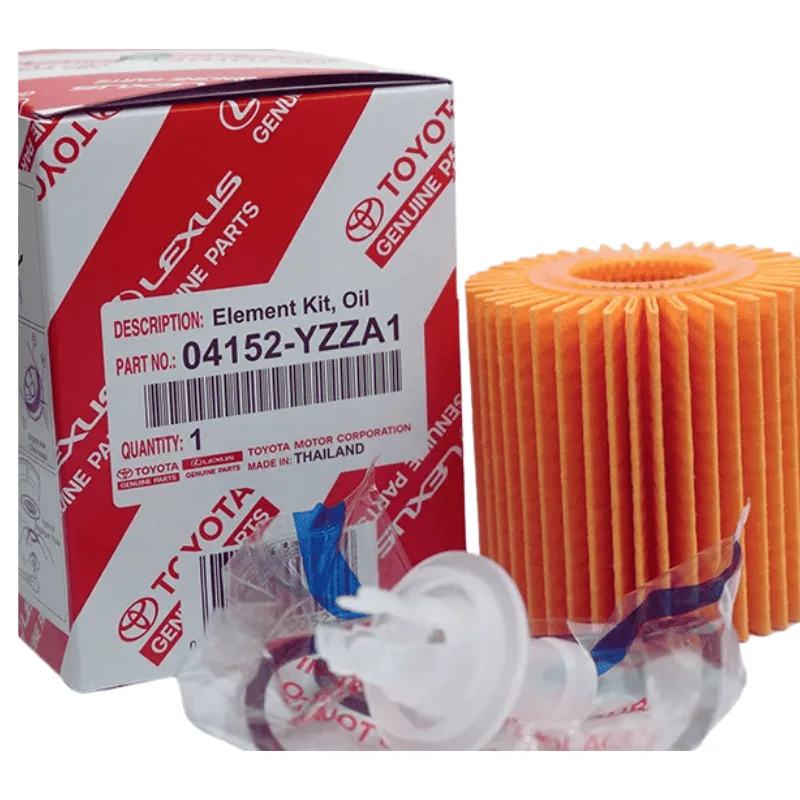
Image source: Web (Bing) / mrparts.ng (Web image (fair-use with source credit))
The oil filter traps particles as small as 20 microns. That is roughly one-fifth the width of a human hair. A good filter catches combustion byproducts and wear metals before they circulate through the engine again.
Toyota Genuine filters use a specific bypass valve pressure of 8, 11 psi. This pressure matches the Tacoma's VVT oil pressure curve. Aftermarket filters sometimes use a lower bypass pressure.
They dump unfiltered oil into the engine during cold starts when the oil is thickest.
Stick with Toyota Genuine filters or a known equivalent like Wix 57048. Avoid the cheapest filters at auto parts stores. They use cardboard end caps that degrade over time.
A filter failure sends debris through the oil galleries and can seize an engine.
The One-Page Tacoma Oil Decision Guide
Here is your quick reference for any Tacoma situation.
| Condition | Oil Recommendation |
|---|---|
| 2016–2023 3.5L V6, normal driving | 0W-20 full synthetic, API SP, 5,000–7,500 mile intervals |
| 2016–2023 2.7L 4-cyl, normal driving | 0W-20 full synthetic, API SP, 5,000–7,500 mile intervals |
| 2005–2015 4.0L V6, normal driving | 5W-30 full synthetic, API SN or newer, 5,000 mile intervals |
| 2005–2015 2.7L 4-cyl, normal driving | 5W-30 full synthetic, API SN or newer, 5,000 mile intervals |
| Any Tacoma, heavy towing or off-road | Same viscosity as above, severe schedule at 5,000 miles |
| High-mileage Tacoma burning oil | High-mileage formula in same viscosity, not thicker |
| Extreme cold (below -30°F) | 0W-20 (already handles it) |
| Extreme heat plus heavy towing | Consider 0W-30 after verifying with manual |
Frequently Asked Questions
Can I use 5W-30 in my 2021 Tacoma?
No. The 3.5L V6 requires 0W-20. Using 5W-30 risks VVT actuator damage and may trigger a check engine light.
Stick with what the oil fill cap says.
How much oil does a Tacoma V6 take?
The 3.5L V6 takes 5.9 quarts with a filter change. The 4.0L V6 takes 6.2 quarts. Always buy six quarts and use the extra as needed to top off.
What happens if I put the wrong oil in my Tacoma?
Engine damage ranges from noisy VVT actuators to complete bearing failure. Thicker oil starves the VVT system. Thinner oil fails to protect bearings.
Both reduce engine life.
Do I need Toyota brand oil for my Tacoma?
No. You need oil that meets Toyota's specifications: API SP or SN Plus and ILSAC GF-6 in the correct viscosity. Any major brand that carries these certifications works fine.
How often should I change oil in my Tacoma?
Every 5,000 miles for severe service. Every 7,500 to 10,000 miles for normal service. Most Tacoma owners should stick with 5,000 mile intervals for safety.
Can I switch from synthetic to conventional oil?
You can but you should not. The Tacoma's modern engines are designed for the thermal stability of full synthetic. Conventional oil breaks down faster and leaves deposits.
The savings do not justify the risk.