
If you've searched for the toyota tundra oil capacity for your truck, you probably found a bunch of different numbers. That's because Toyota built this full-size pickup with several different engines over the years. Each one takes a different amount of oil.
Use the wrong amount and you risk poor lubrication or worse, damaged seals.
Manufacturer specifications show that the most common Tundra engine, the 5.7L V8, needs 6.9 quarts with a filter change. But the 4.6L V8 takes 6.4 quarts, and the newer 3.5L twin-turbo hybrid requires 7.5 quarts. Getting it right starts with knowing exactly which engine sits under your hood.
That's exactly what we'll walk through here.

Image source: Bing (Web (fair-use with source credit))
Why Your Tundra's Oil Capacity Isn't a One-Size-Fits-All Number
The Tundra has been around since 2000. Over that time, Toyota has used six different engines across three generations. Each engine has its own oil capacity, and putting the wrong amount in can cause real problems.
Underfilling starves the engine of proper lubrication. That leads to increased wear, higher operating temperatures, and potential engine damage. Overfilling is just as bad.
It can cause the crankshaft to whip the oil into foam, which means the oil pump can't circulate it properly.
The real confusion kicks in with the 2007 to 2021 models. During that period, Toyota offered both a 4.6L and a 5.7L V8. They look similar under the hood.
But one takes 6.4 quarts and the other takes 6.9 quarts. That half-quart difference matters.
As of 2026, the third-generation Tundra uses a 3.5L twin-turbo V6, either with or without the hybrid system. That engine takes 7.5 quarts. If you're coming from an older Tundra, that's a jump you need to know about.
For reference, the correct oil type information for the newer Tundra engines is covered in our dedicated guide.
Quick Answer: Oil Capacity by Engine (Reference Table)
Here is the direct answer for every common Tundra engine. Use this table as a quick reference when you're buying oil or planning your next change.
| Engine | Years | Oil Capacity (with filter) | Recommended Oil |
|---|---|---|---|
| 3.4L V6 (5VZ-FE) | 2000-2004 | 5.5 quarts (5.2 L) | 5W-30 |
| 4.0L V6 (1GR-FE) | 2000-2006 | 6.0 quarts (5.7 L) | 5W-30 |
| 4.7L V8 (2UZ-FE) | 2000-2009 | 6.5 quarts (6.1 L) | 5W-20 |
| 4.6L V8 (1UR-FE) | 2010-2021 | 6.4 quarts (6.1 L) | 0W-20 |
| 5.7L V8 (3UR-FE / 3UR-FBE) | 2007-2021 | 6.9 quarts (6.5 L) | 0W-20 |
| 3.5L V6 twin-turbo (V35A-FTS) | 2022-present | 7.5 quarts (7.1 L) | 0W-20 |
| 3.5L V6 hybrid i-Force Max | 2022-present | 7.5 quarts (7.1 L) | 0W-20 |
Which Engine Does Your Tundra Have? (The Decision Tree)
If you don't know your engine, don't guess. Use this simple decision tree to find out. It takes about two minutes.
Check the VIN (8th Digit)
The fastest way is your VIN. The 8th character tells you the engine. Find your VIN on the driver's door jamb sticker, the dashboard near the windshield, or your registration.
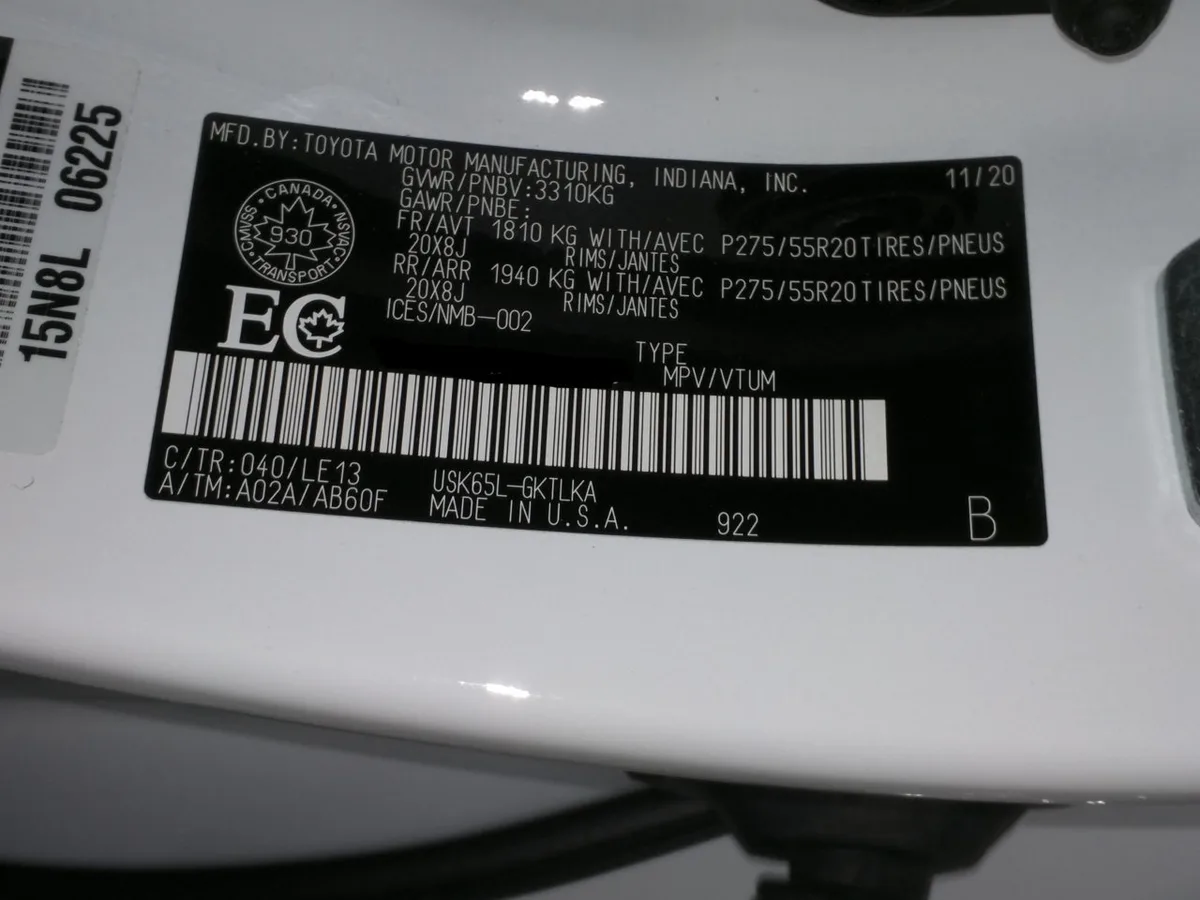
Image source: Bing (Web (fair-use with source credit))
Here is what the 8th digit means for the most common models:
- C, 4.0L V6 (1GR-FE)
- E, 4.7L V8 (2UZ-FE)
- W, 4.6L V8 (1UR-FE)
- F, 5.7L V8 (3UR-FE)
- H, 5.7L V8 (3UR-FBE, flex-fuel)
- V, 3.5L V6 twin-turbo (V35A-FTS)
- U, 3.5L V6 hybrid i-Force Max
Look Under the Hood
No VIN handy? Pop the hood. The engine cover often has a label or embossed lettering.
On the 5.7L, you will see a large plastic cover with "5.7L V8" stamped on it. The 4.6L cover says "4.6L V8". The new twin-turbo engines have a cover that says "i-Force Max" or "V6 Twin-Turbo".
You can also check the emissions sticker under the hood. It lists the engine displacement and family.
Check Your Owner's Manual
The owner's manual is the most reliable source. It will list the exact oil capacity, viscosity, and API rating for your specific model year. If you lost the physical copy, Toyota offers free PDF downloads on their official owner's website using your VIN.
Exact Oil Capacities by Engine
Here is a deeper look at each engine. Knowing the exact numbers helps you avoid mistakes when you buy oil and when you fill.
5.7L V8 (3UR-FE / 3UR-FBE) – 2007-2021
This is the most common Tundra engine. It needs 6.9 quarts (6.5 liters) of 0W-20 synthetic oil with a filter change. Without a filter change, it takes about 6.5 quarts.
Always use a filter change. The 5.7L is known for being reliable, but it does consume a small amount of oil between changes on higher-mileage trucks. Check the level monthly.
4.6L V8 (1UR-FE) – 2010-2021
The 4.6L is the smaller V8 option. It takes 6.4 quarts (6.1 liters) of 0W-20 synthetic oil with a filter. This engine is slightly more fuel efficient than the 5.7L but shares the same oil change procedure.
Many owners accidentally overfill this engine because they assume it takes the same amount as the 5.7L.
3.5L V6 Twin-Turbo Hybrid (V35A-FTS / i-Force Max) – 2022-Present
The new generation Tundra uses a 3.5L twin-turbo V6. Both the standard and hybrid versions take 7.5 quarts (7.1 liters) of 0W-20 synthetic oil. The hybrid system does not change the oil capacity.
This engine has a higher capacity than the older V8s, so plan for an extra quart.
4.7L V8 (2UZ-FE) – 2000-2009
The first-generation Tundra V8 takes 6.5 quarts (6.1 liters) of 5W-20 conventional or synthetic blend oil. This engine is legendary for durability. Many examples have gone well over 300,000 miles with regular maintenance.
It does not require full synthetic, but using it can extend oil change intervals.
4.0L V6 (1GR-FE) – 2000-2006
The base engine in early Tundras takes 6.0 quarts (5.7 liters) of 5W-30 oil. This is a simple, reliable engine. It uses conventional oil from the factory, but synthetic is fine if you switch.
3.4L V6 (5VZ-FE) – 2000-2004
The earliest Tundra engines take 5.5 quarts (5.2 liters) of 5W-30 oil. This is a bulletproof engine from the 90s. It is not very common in the Tundra, but if you have one, keep it simple with conventional 5W-30.
Step-by-Step Oil Change Workflow
Once you know your engine and have the right oil, the actual change is straightforward. The process is nearly identical for all Tundra models. Here is how to do it right.
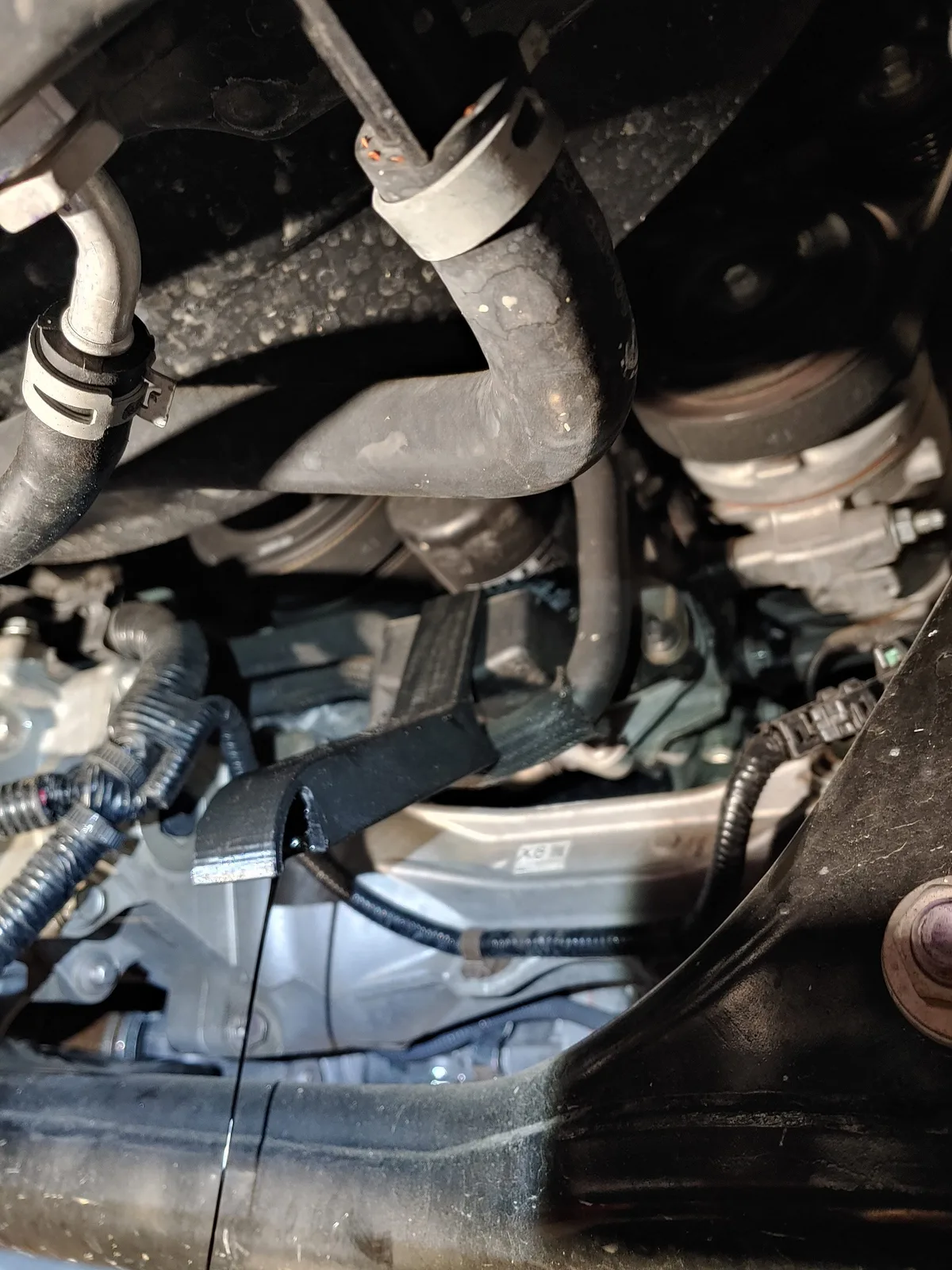
Image source: Bing (Web (fair-use with source credit))
Tools and Parts You'll Need
- Correct amount of oil (see table above)
- Oil filter (Toyota part number varies by engine)
- Crush washer for the drain plug
- Socket wrench with the correct drain plug socket (usually 14mm or 15mm)
- Oil filter wrench
- Drain pan (at least 8 quarts capacity)
- Funnel
- Jack stands or ramps (if clearance is tight)
- Shop rags or paper towels
Preparation: Warm Up the Engine
Run the engine for a couple of minutes. Warm oil drains faster and carries more contaminants. Do not run it long enough to get hot.
You want it warm, not scalding.
Park on level ground. If you need more clearance, use ramps or jack stands. Never crawl under a truck supported only by a jack.
Draining the Old Oil
Position the drain pan under the oil pan. Loosen the drain plug with a socket wrench. Once it is loose, unscrew it by hand.
Be ready for the oil to flow out quickly. Let it drain completely. This takes about five minutes.
While the oil drains, clean the drain plug and inspect the old crush washer. Replace it with a new one. Torque the drain plug to about 30 ft-lbs.
Do not overtighten. You can strip the threads in the oil pan.
Replacing the Oil Filter
The oil filter location varies by engine. On the 5.7L and 4.6L, it is on the driver's side of the engine block, accessible from below. On the 3.5L twin-turbo, it is on top of the engine.
Use an oil filter wrench to loosen the old filter. Turn it counterclockwise. It will be full of oil, so have a rag ready.
Before installing the new filter, lubricate the rubber gasket with a little fresh oil. Screw it on by hand until the gasket contacts the mounting surface. Then tighten it another three-quarters of a turn.
Do not use a wrench to tighten it further.
Adding the Correct Amount of Oil
Remove the oil fill cap on top of the engine. Insert a funnel. Add the specified amount of oil from the table above.
For the 5.7L, that is 6.9 quarts. For the 4.6L, it is 6.4 quarts. For the 3.5L twin-turbo, it is 7.5 quarts.
Replace the oil fill cap. Start the engine and let it run for about 30 seconds. This circulates the oil and fills the new filter.
Check for leaks around the drain plug and filter.
Checking the Level and Resetting the Monitor
Turn the engine off. Wait two to three minutes for the oil to settle. Pull the dipstick, wipe it clean, insert it fully, and pull it again.
The oil level should be between the two marks. If it is low, add a little more. If it is high, you have overfilled.
On newer Tundras, reset the oil maintenance monitor. In the instrument cluster, navigate to the maintenance screen and follow the prompts to reset it. This ensures your next reminder is accurate.
Common Mistakes to Avoid
Even experienced DIYers mess up oil changes now and then. Here are the most common errors Tundra owners make and how to sidestep each one.
Overfilling vs. Underfilling
This is the number one mistake. You pour in a full six-quart jug and assume it is right. But the 5.7L needs 6.9 quarts.
That extra 0.9 quarts matters.
Overfilling causes the crankshaft to whip oil into foam. Foam does not lubricate well. It can lead to oil starvation and costly damage.
Underfilling is just as bad. It leaves the oil pump sucking air during hard cornering or towing.
Always measure. Use the dipstick to verify the level after the first fill. Add oil in small increments once you are close to the full mark.

Image source: Bing (Web (fair-use with source credit))
Using the Wrong Viscosity
The 5.7L and 4.6L engines call for 0W-20. The older 4.7L calls for 5W-20. These are not interchangeable.
Thicker oil does not mean better protection. It means slower flow during cold starts, which increases wear.
Stick to what the manufacturer says. Toyota engineers designed the engine around a specific viscosity. Using the wrong one can affect fuel economy, cold-start protection, and long-term reliability.
Any oil that meets the API SP or ILSAC GF-6 standard is fine for your Tundra.
Forgetting the Crush Washer
The drain plug uses a crush washer that seals the connection. Reusing the old one is a gamble. It can leak or fail to seal properly.
A new crush washer costs about a dollar. Replace it every time you change the oil.
Cross-Threading the Filter Housing
On the 3.5L twin-turbo engines, the oil filter is on top. It is easy to cross-thread the plastic housing if you are not careful. Hand-tighten until you feel the threads engage smoothly.
If it resists, back it off and try again. Forcing it can ruin the housing and cost you a dealership visit.
Cost and Parts Breakdown
An oil change on a Tundra is not expensive if you do it yourself. Here is what you can expect to spend as of 2026.
| Item | Estimated Cost |
|---|---|
| 6-7 quarts of 0W-20 synthetic oil | $35 to $50 |
| Oil filter (OEM or quality aftermarket) | $8 to $15 |
| Crush washer | $1 to $3 |
| Total DIY cost | $44 to $70 |
| Dealership or shop cost | $80 to $130 |
The biggest variable is the oil. Brand name synthetics cost more. But you do not need the most expensive bottle.
Any oil that meets the API SP standard is fine.
You can save money by buying oil in bulk. A 5-quart jug plus a separate quart is usually cheaper than buying individual quarts. For the 5.7L, you need two 5-quart jugs and you will have about 3 quarts left over for the next change.
Expert Tips for Getting It Right
A few pro-level habits separate a clean oil change from a messy one. These tips come from aggregate feedback from experienced Tundra owners and shop technicians.
Always warm the engine before draining. Cold oil is thick and clings to the pan. Warm oil flows fast and carries more contaminants out with it.
Two minutes of idling is enough.
Use a torque wrench on the drain plug. The spec is around 30 ft-lbs for most Tundra engines. Guessing leads to stripped threads or leaks.
A simple beam-style torque wrench costs about $20 and pays for itself the first time you use it.
Pre-fill the oil filter if you can. On top-mounted filters, pour a little fresh oil into the new filter before installing it. This reduces the time the engine runs without oil pressure during the first startup.
On bottom-mounted filters, this is messy. Just lubricate the gasket.
Check the oil level after the first start and again after a short drive. The filter absorbs some oil, so the level can drop slightly after the first run. Top it off if needed.
Write the date and mileage on the oil filter with a permanent marker. This makes it easy to track when the next change is due. It also helps if you sell the truck.
The next owner will appreciate the record.
If you own other Toyota models, the same principles apply. Our guides cover keeping other Toyota models maintained including the proper oil for the Tacoma and the complete oil guide for the 4Runner. Toyota's smaller engines like the Corolla have different requirements altogether.
Frequently Asked Questions
How much oil does a 2024 Toyota Tundra take?
The 2024 Tundra uses the 3.5L twin-turbo V6 engine. It takes 7.5 quarts of 0W-20 synthetic oil with a filter change. This applies to both the standard and hybrid i-Force Max versions.
What happens if I put 5W-30 in a Tundra that calls for 0W-20?
The engine will run, but cold-start protection will be worse. Thicker oil flows slower in cold weather. You may also see reduced fuel economy.
In warm climates, the difference is minor. But stick to the recommended viscosity for best results.
Can I switch from synthetic to conventional oil?
Yes, but it is not recommended. Synthetic oil provides better protection and longer intervals. If you switch to conventional, you will need to change it more often.
The engine will not be damaged as long as the viscosity is correct.
How often should I change the oil in my Tundra?
Toyota recommends every 10,000 miles or 12 months for normal driving. For severe service (towing, off-road, extreme temperatures, frequent short trips), drop that to 5,000 miles. Many owners split the difference at 7,500 miles for peace of mind.
Do I need to use a Toyota brand oil filter?
No. Toyota Genuine filters are good, but quality aftermarket filters work just fine. Look for brands like Wix, Mobil 1, or Bosch.
Avoid no-name filters. A cheap filter can collapse or bypass unfiltered oil.
What does the oil life monitor actually measure?
The monitor tracks driving conditions, not just mileage. It counts engine revolutions, temperature, and load. It adjusts the reminder based on how you drive.
If you tow a lot, the monitor will call for a change sooner than 10,000 miles.
Quick Reference Chart (Decision Guide by Year and Engine)
Use this final table to confirm your Tundra's oil capacity at a glance. It combines the year range, engine, and capacity into one decision guide.
| Model Year | Engine | Capacity (with filter) | Oil Type |
|---|---|---|---|
| 2000-2004 | 3.4L V6 (5VZ-FE) | 5.5 qt (5.2 L) | 5W-30 |
| 2000-2006 | 4.0L V6 (1GR-FE) | 6.0 qt (5.7 L) | 5W-30 |
| 2000-2009 | 4.7L V8 (2UZ-FE) | 6.5 qt (6.1 L) | 5W-20 |
| 2007-2021 | 5.7L V8 (3UR-FE) | 6.9 qt (6.5 L) | 0W-20 |
| 2010-2021 | 4.6L V8 (1UR-FE) | 6.4 qt (6.1 L) | 0W-20 |
| 2022-present | 3.5L V6 twin-turbo (V35A-FTS) | 7.5 qt (7.1 L) | 0W-20 |
| 2022-present | 3.5L V6 hybrid (i-Force Max) | 7.5 qt (7.1 L) | 0W-20 |
If you need to confirm your engine, check the VIN 8th digit using the guide earlier in this article. Getting the oil capacity right on your Tundra is straightforward once you know the engine. Match the numbers from the table, use the right viscosity, and follow the step-by-step process.
Your truck will reward you with hundreds of thousands of miles of reliable service.