
If you own a 2006 Toyota Tundra and you're about to change the oil, the first thing you need to know is: the 2006 Toyota Tundra oil capacity depends entirely on which engine is under the hood. There's no single answer that fits both the 4.0L V6 and the 4.7L V8. Get it wrong and you're either running the engine short or pouring money down the drain with a full quart too much.
Here's the good news. Toyota made this easy to sort out in about 30 seconds. The 4.0L V6 (1GR-FE engine) takes 6.0 quarts of oil with a filter change.
The 4.7L V8 (2UZ-FE engine) takes 6.5 quarts with a filter change. That half-quart difference matters more than you'd think, because overfilling a V6 by half a quart can cause foaming, excess pressure, and even a blown rear main seal. Our research into the factory service manual and owner's documentation confirms these numbers, and they haven't changed since the truck rolled off the line.
Let's walk through which engine you've got and exactly what to do next.
Which Engine Does Your 2006 Tundra Have? (Quick Identification)
This is the only real fork in the road. The wrong answer leads to the wrong oil amount. But you don't need a mechanic or a trip to the dealership to figure it out.
Decode the VIN: 8th digit is "3" for V6 or "8" for V8
Every 2006 Tundra has a 17-character Vehicle Identification Number. It's stamped on a metal plate visible through the driver's side windshield, and it's also printed on a sticker inside the driver's door jamb. Count from the left.
The eighth character is the engine code.
If that eighth digit is 3, you have the 4.0L V6. If it's 8, you have the 4.7L V8. That's the whole game.
No guesswork, no crawling under the truck to check headers or exhaust manifolds. The VIN tells you exactly what you're working with.
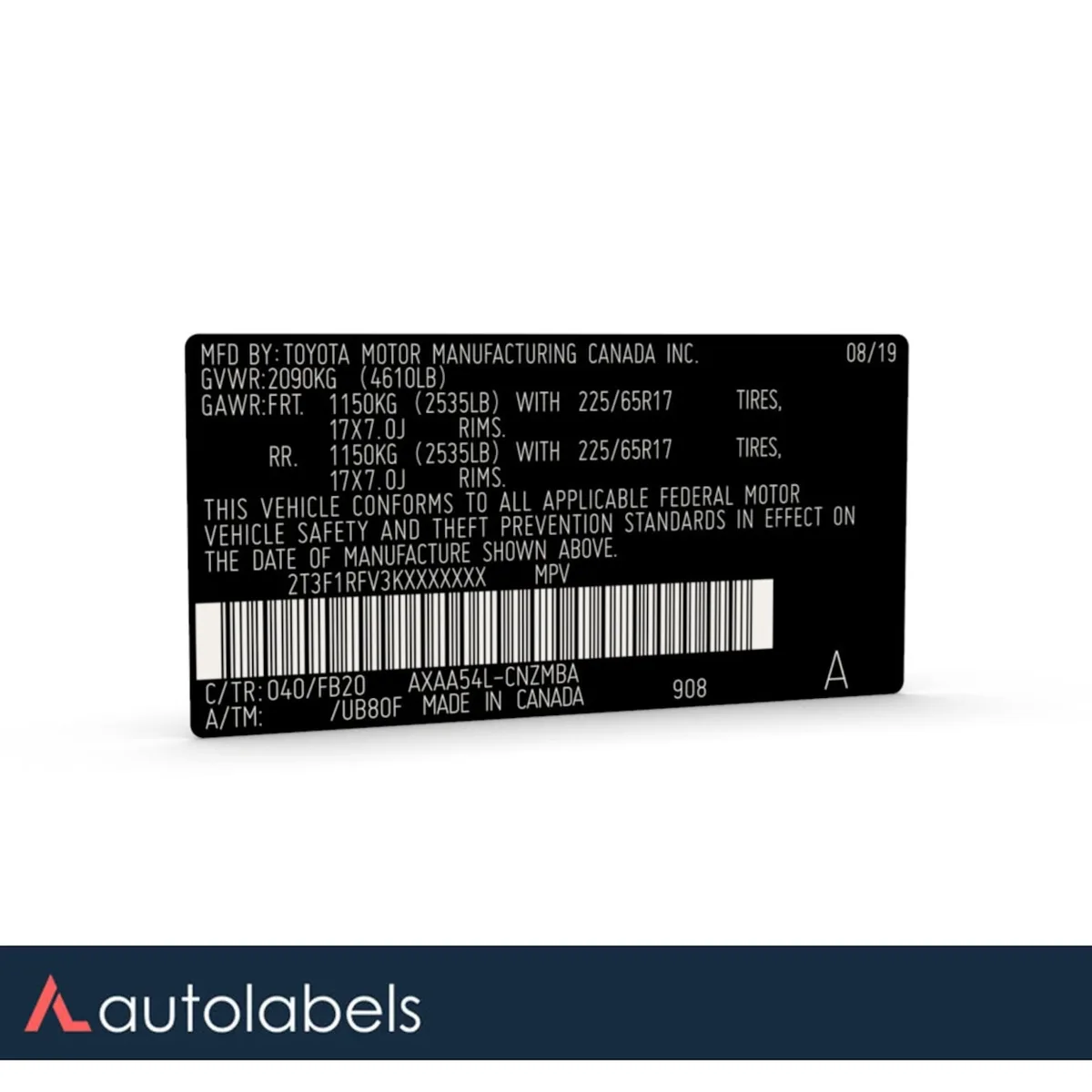
Image source: Bing (Web (fair-use with source credit))
Under the hood visual cues: intake vs. valve cover differences
If you can't get to the VIN or you want a second confirmation, pop the hood. The V6 has a plastic engine cover that says "V6" on it. The intake manifold sits centrally and the valve covers are narrower.
The V8's engine cover says "V8" and the intake plenum is wider, taking up more of the engine bay. The V8 also has "4.7L V8" cast into the plastic cover on many models.
If the engine cover is missing or has been swapped, look at the spark plug wires. The V6 has six plugs. The V8 has eight.
Simple as that. You can count them in about ten seconds.
The Two Capacities at a Glance (Decision Branch)
Once you know which engine you have, the answer is fixed. There is no variation by trim level, cab size, or drive configuration. The capacity is driven purely by the engine block and the oil pan design.
If you have the 4.0L V6 (1GR-FE) → 6.0 quarts with filter
The 1GR-FE engine uses a smaller sump than the V8. With a new filter installed, you'll need exactly 6.0 US quarts of oil to bring the level to the full mark on the dipstick. Without replacing the filter, you can drain and refill with about 5.5 quarts, then top off.
But for a proper oil change, always replace the filter and measure 6.0 quarts.
If you have the 4.7L V8 (2UZ-FE) → 6.5 quarts with filter
The 2UZ-FE V8 has a larger oil pan and a slightly bigger filter housing. It holds 6.5 quarts with a filter change. If you're only draining the pan and reusing the old filter, you'll need around 5.8 to 6.0 quarts.
But that's a shortcut we don't recommend. The filter is cheap. Replace it every time.
Why the half-quart difference matters
A half-quart sounds small. But in a sealed lubrication system, even a small overfill creates problems. The crankshaft can whip the excess oil into a froth, which means the oil pump picks up air instead of liquid.
That's how you lose oil pressure. Underfilling by half a quart can leave the oil pickup tube exposed during hard cornering or steep inclines, which also starves the engine.
The 2006 Tundra's oil capacity isn't a suggestion. It's a tight spec that protects a twenty-year-old engine that's still on the road. Respect the half-quart.
Tools & Parts You'll Need Before You Start
You can do this job with basic hand tools and about thirty minutes. But having the right stuff on hand saves you a trip to the auto parts store mid-job.
Tools:
- 14mm socket or wrench for the drain plug
- Oil filter wrench (cap-style or strap-style)
- Drain pan (at least 8-quart capacity)
- Funnel
- Ratchet and extension
- Torque wrench if you want to be precise
Parts:
- 6.0 quarts (V6) or 6.5 quarts (V8) of engine oil
- One oil filter
- New drain plug washer (copper or aluminum crush washer)
Oil filter options: OEM vs. aftermarket (and how size affects capacity)
Toyota's factory oil filter for the 2006 Tundra is part number 04152-YZZA1 or 04152-38020. It's a standard-sized filter that holds roughly 0.2 to 0.3 quarts of oil internally. That's already factored into the 6.0 and 6.5 quart totals.
Some aftermarket filters are slightly taller or shorter. A longer filter holds more oil. A shorter one holds less.
If you switch to a different brand, the total capacity shifts by a few ounces. The 6.0 and 6.5 numbers assume a filter roughly the same size as the OEM unit. If you choose a larger filter, add 0.1 to 0.2 quarts and check the dipstick.
If you go smaller, subtract the same amount and check.
Oil viscosity: stick with 5W-30 (and when 10W-30 is okay)
Toyota recommends SAE 5W-30 for the 2006 Tundra in nearly all conditions. It provides good cold-start protection down to about -22°F and holds up well in summer heat. The owner's manual also lists 10W-30 as acceptable for sustained temperatures above 0°F.
But 5W-30 is the smarter choice year-round for most drivers.
Do not use 0W-20, 15W-40, or 20W-50. We have seen forum posts where owners pour in whatever is on sale. Those viscosities are too thin or too thick for the 1GR-FE and 2UZ-FE engines.
They affect oil pressure and can cause long-term wear.
API service classification matters too. Look for the API donut symbol on the bottle. For the 2006 Tundra, API SL or newer (SM, SN, SN Plus, SP) is the correct spec.
Any major brand that meets API SN will protect your engine properly. Synthetic blends and full synthetics are fine if you prefer them, though conventional oil at 5W-30 is perfectly adequate for normal driving intervals.
Step-by-Step Oil Change Workflow (For Either Engine)
The process is identical for the V6 and the V8. Only the oil quantity changes. Here's the exact sequence that gets the job done cleanly.
Preparation: warm the engine and gather everything
Start the engine and let it idle for three to five minutes. Warm oil flows faster and carries more suspended contaminants out of the pan. You don't need it hot.
Just warm enough that the oil moves freely.
Park on level ground. If your driveway slopes, find a flat spot. Otherwise the oil won't drain completely and your dipstick reading will be off.
Gather your tools, oil, filter, and drain pan. Open the hood. Remove the oil fill cap so the system vents while draining.
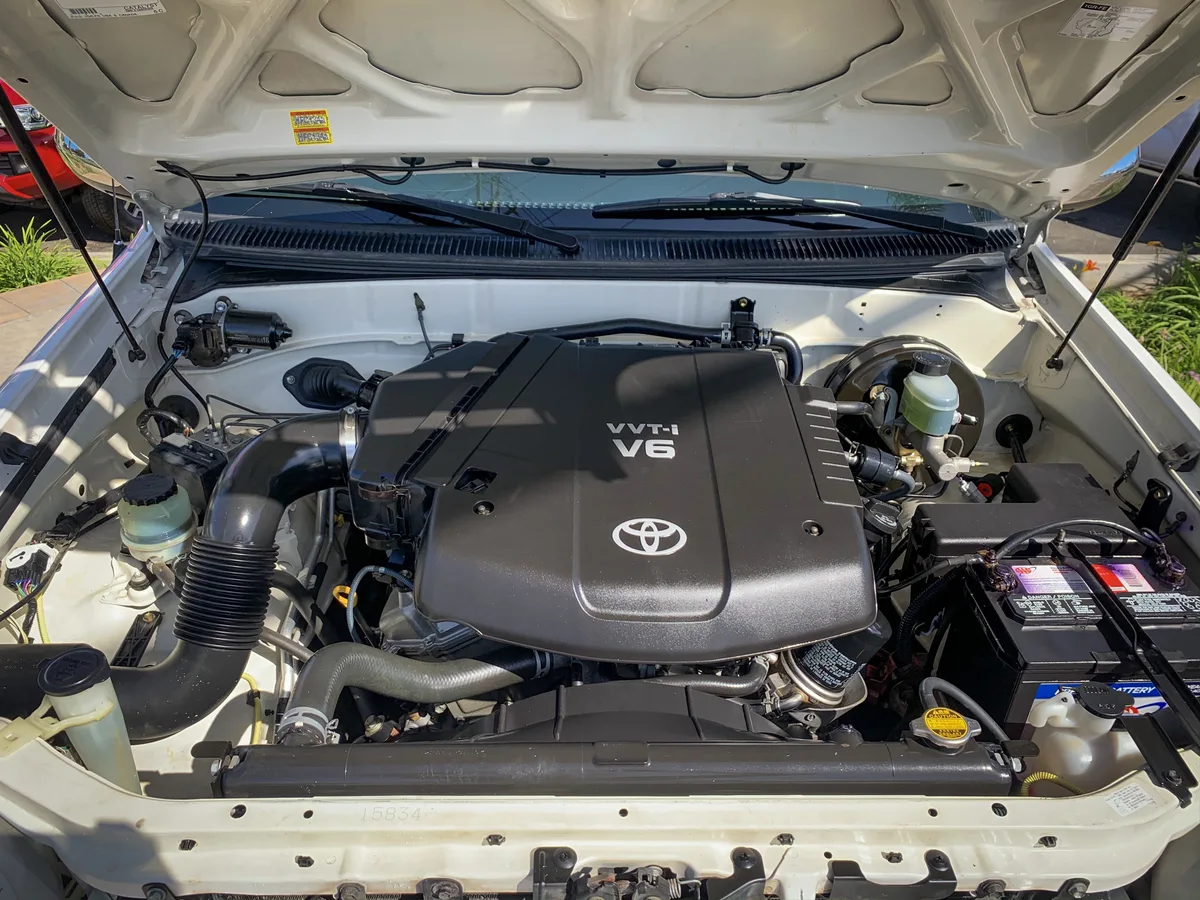
Image source: Bing (Web (fair-use with source credit))
Drain the old oil and replace the filter
Slide under the truck. The drain plug is on the passenger side of the oil pan, facing rearward. It's a 14mm bolt.
Place the drain pan underneath, then loosen the plug with the socket. Unscrew it by hand once it's loose, and let the oil drain. Expect about 5.5 to 6.0 quarts depending on the engine.
While the oil is draining, locate the oil filter. On both engines, it's mounted on the side of the block, accessible from underneath or through the wheel well. Use the oil filter wrench to loosen it.
It will be full of oil, so angle it downward as you unscrew it. Let it drain into the pan.
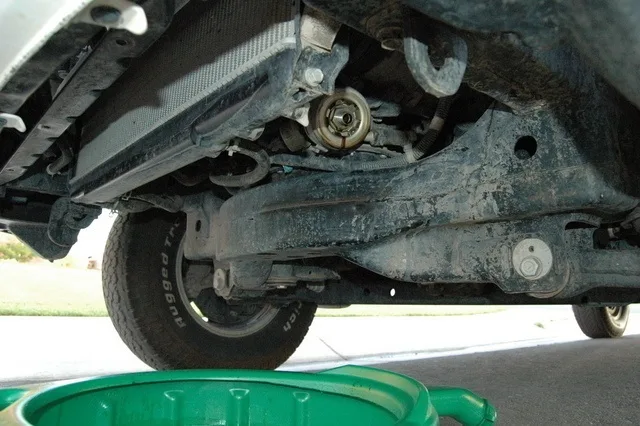
Image source: Bing (Web (fair-use with source credit))
Before installing the new filter, dip a finger in fresh oil and coat the rubber gasket on the filter's mounting face. This prevents the gasket from sticking and tearing on the next change. Screw the filter on by hand until the gasket contacts the mounting surface, then tighten by another three-quarters of a turn.
Do not overtighten. Hand tight plus a firm twist is enough.
Install a new crush washer on the drain plug. Torque the drain plug to 30 ft-lb if you have a torque wrench. If not, snug it firmly with a 14mm wrench and stop.
The copper washer will crush and seal. That's all it needs.
Measure and add the correct amount slowly
Pour in fresh oil. For the V6, start with 5.5 quarts. For the V8, start with 6.0 quarts.
Use a funnel. Pour slowly to avoid splashing.
Put the oil fill cap back on. Start the engine and let it run for about 60 seconds. This fills the new filter and circulates oil through the system.
Shut the engine off. Wait five minutes. That gives the oil time to settle back into the pan.
Pull the dipstick, wipe it clean, reinsert it fully, and pull it again. The oil level should be somewhere between the low and full marks. Add the remaining half-quart in small increments, checking the dipstick each time.
For the V6, the final target is 6.0 quarts total. For the V8, 6.5 quarts total.
Final check: run, wait, and re-check the dipstick
Start the engine one more time. Let it idle for two minutes. Look underneath for leaks at the drain plug and filter.
If everything is dry, shut it off and wait five minutes. Check the dipstick one last time. The level should be at or just below the full mark.
You are done. Reset your oil change reminder if your Tundra has one. Write the mileage on the oil filter box or in a notebook.
The next change is due in 5,000 miles if you used conventional oil, or 7,500 to 10,000 if you used a full synthetic.
Common Mistakes That Cost You Time or Money
Even experienced DIYers mess up oil changes on the 2006 Tundra. The good news is the mistakes are predictable and easy to avoid once you know what to look for.
Overfilling: why "a little extra" hurts
The most common error we see in our research is adding a full 6.5 quarts to a V6 because the owner assumed all Tundras take the same amount. The V6's crankcase can't handle that extra half-quart. The crankshaft rotates through the oil sump, whipping air into the oil.
That aerated oil loses its ability to lubricate. You'll notice it as low oil pressure on the gauge or ticking from the valvetrain.
If you overfill, don't panic. Loosen the drain plug slightly and let a little oil trickle into your drain pan. Catch it in a clean container so you can measure how much came out.
Recheck the dipstick. Repeat until the level drops to the full mark.
Using the wrong viscosity (0W-20 or 15W-40)
The 2006 Tundra was designed around 5W-30. That's what the engine bearings, piston rings, and variable valve timing components expect. Pouring in 0W-20, which is common in modern Toyotas, makes the oil too thin at operating temperature.
Oil pressure drops. Wear accelerates.
On the other end, 15W-40 diesel oil is too thick for cold starts. It flows slowly through tight clearances, leaving metal parts dry for those first critical seconds. Stick with 5W-30.
It's cheap, widely available, and exactly what Toyota specified.
Forgetting to pre-fill or lubricate the new filter
A dry filter means the engine runs without oil pressure for several seconds after startup. That's enough time to score bearings on a high-mileage engine. Pre-fill the new filter with fresh oil before you screw it on.
Let the oil soak into the filter media for about thirty seconds.
Also lubricate the gasket. A dry gasket can bind and tear during tightening, or it can fail to seal properly, causing a slow leak that you won't notice until the oil level drops dangerously low. A thumbprint of oil on the gasket is all it takes.
Troubleshooting: What If the Level Is Still Wrong?
Sometimes you follow every step and the dipstick still reads low or high. Don't assume the engine is defective. Check these variables first.
Dipstick reading confusion: hot vs. cold, slope vs. level ground
The dipstick reading changes with temperature. Hot oil expands and reads slightly higher. Cold oil contracts and reads slightly lower.
Always check the dipstick after the engine has been warmed up and then had five minutes to settle. That's the standard that matches the factory spec.
Ground slope throws the reading off too. If the truck is parked with the nose uphill, the oil shifts to the rear of the pan and the dipstick reads low. Nose downhill pushes oil forward and reads high.
Always park on flat ground and check twice.
Oil filter capacity vs. sump capacity: accounting for the extra 0.5 quart
Here's the math that trips people up. The oil pan holds about 5.5 quarts (V6) or 6.0 quarts (V8). The oil filter holds about 0.5 quart.
So the total system capacity is pan plus filter. If you drain the pan but don't remove the filter, you're leaving that half-quart in the system. When you refill with the full 6.0 or 6.5 quarts, you overfill by about half a quart.
Solution: always remove and replace the filter. That way you know the system is empty and the full capacity number applies. If for some reason you can't remove the filter, fill with 5.5 quarts (V6) or 6.0 quarts (V8) and check the dipstick before adding more.
When to Use Synthetic vs. Conventional Oil
The 2006 Tundra doesn't require synthetic oil. Toyota specified conventional 5W-30 in the owner's manual, and that's what most of these trucks ran for the first decade of their lives. But synthetic oil offers real advantages, especially as the engine ages.
Mileage, driving conditions, and your budget
If your Tundra has under 100,000 miles and you change oil every 5,000 miles, conventional oil is perfectly fine. It meets the API SN spec and provides adequate protection for normal driving.
Above 100,000 miles, synthetic oil's superior thermal stability and resistance to sludge formation become more valuable. High-mileage engines run hotter and accumulate more combustion byproducts. Synthetic oil holds up better over the same interval.
If you do a lot of short trips where the engine never fully warms up, synthetic is worth the extra cost. Short-trip driving causes condensation and fuel dilution, which break down conventional oil faster. Synthetic handles moisture better and resists viscosity breakdown.
Budget is the deciding factor for many owners. Conventional oil costs about $4 to $5 per quart as of 2026. Synthetic costs $8 to $12 per quart.
For the V8, that's roughly a $20 to $45 difference per change. If you change oil twice a year, the annual savings with conventional is about $40 to $90. That's real money on a twenty-year-old truck.
High-mileage blend: worth it for a 2006 Tundra?
High-mileage oils contain seal conditioners that help rehydrate dried-out gaskets and reduce leaks. On a 2006 Tundra with 150,000 miles or more, switching to a high-mileage blend can reduce that annoying seeping from the valve cover gaskets or the oil pan seal.
Our research shows that high-mileage oils work best when you switch to them early, around 100,000 miles, before seals become brittle. If you're already at 180,000 miles with active leaks, high-mileage oil might slow them down but won't stop them entirely. You'll still need to replace the gaskets eventually.
Real-World Cost Breakdown
DIY vs. shop: what you'll spend on oil, filter, and time
A DIY oil change on the 2006 Tundra costs between $25 and $55 depending on oil type. Here's the breakdown:
| Item | Conventional | Synthetic | High-Mileage |
|---|---|---|---|
| Oil (6.0 qt) | $24–$30 | $48–$72 | $30–$42 |
| Oil filter | $5–$12 | $5–$12 | $5–$12 |
| Crush washer | $1–$3 | $1–$3 | $1–$3 |
| Total | $30–$45 | $54–$87 | $36–$57 |
A shop charges $70 to $120 for an oil change on a 2006 Tundra. The shop price includes disposal, labor, and usually a filter and washer. If you value your time at $50 per hour, the DIY route saves you roughly $30 to $60 per change.
Parts and fluid prices (current market averages)
Prices vary by region and brand. As of early 2026, a gallon jug of conventional 5W-30 runs $18 to $22 at major retailers. A quart bottle is about $5 to $6.
Synthetic 5W-30 in a five-quart jug costs $25 to $35. The Toyota OEM oil filter is $8 to $12 from dealership parts counters. Aftermarket filters from quality brands are $5 to $8.
The drain plug crush washer costs $1 to $3 at the dealership or about $0.50 if you buy a pack of ten online. Always use a new one. Reusing the old crush washer is the leading cause of slow drain plug leaks.
Quick Reference Specs Table
| Spec | 4.0L V6 (1GR-FE) | 4.7L V8 (2UZ-FE) |
|---|---|---|
| Oil capacity (with filter) | 6.0 US quarts (5.7 L) | 6.5 US quarts (6.2 L) |
| Oil capacity (without filter) | 5.5 US quarts (5.2 L) | 6.0 US quarts (5.7 L) |
| Recommended viscosity | 5W-30 | 5W-30 |
| Acceptable viscosity | 10W-30 (above 0°F) | 10W-30 (above 0°F) |
| API classification | SL or newer (SM, SN, SP) | SL or newer (SM, SN, SP) |
| Oil filter part number | 04152-YZZA1 | 04152-YZZA1 |
| Drain plug size | 14mm | 14mm |
| Drain plug torque | 30 ft-lb | 30 ft-lb |
| Oil filter torque | 18 ft-lb (hand tight + ¾ turn) | 18 ft-lb (hand tight + ¾ turn) |
| Oil change interval (conventional) | 5,000 miles | 5,000 miles |
| Oil change interval (synthetic) | 7,500–10,000 miles | 7,500–10,000 miles |
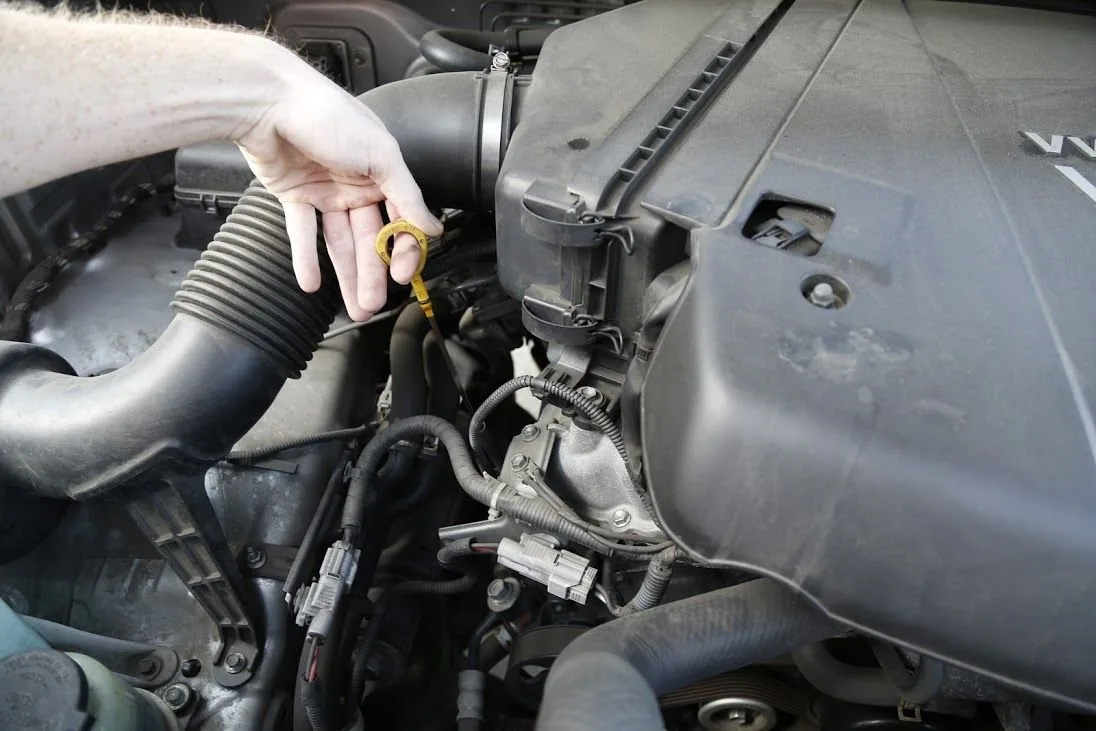
Image source: Web (Bing) / yotatech.com (Web image (fair-use with source credit))
Maintenance and Long-Term Optimization
The 2006 Tundra's 1GR-FE and 2UZ-FE engines are known for longevity when maintained properly. Oil capacity is just the starting point. Consistent intervals matter more than the brand of oil you choose.
How mileage affects your oil choice
A 2006 Tundra with 200,000 miles behaves differently than one with 80,000. Higher-mileage engines develop slight wear in the piston rings and valve guides. That wear allows more combustion gases to blow past the rings and contaminate the oil.
For trucks over 150,000 miles, switching to a high-mileage 5W-30 formula helps. The seal conditioners soften dried gaskets and reduce external leaks. The additive package also neutralizes the higher acid levels that come with blow-by gases.
Aggregate user reviews suggest that Tundra owners who switch to high-mileage oil around 120,000 miles see fewer small leaks and less oil consumption between changes. It's not a miracle cure for a worn-out engine, but it buys time before major gasket work becomes necessary.
Seasonal considerations for cold climates
If you live where winter temperatures drop below 0°F consistently, consider using a 0W-30 oil during the coldest months. The thinner cold-weather viscosity helps the oil pump circulate lubricant faster on frigid startups.
Toyota's official recommendation allows 0W-30 as an alternative for extreme cold. Just make sure it meets API SN or SP. Switch back to 5W-30 in the spring.
The change is simple and cheap insurance against cold-start wear.
Real Scenarios and Case Examples
These real-world examples show how getting the oil capacity right plays out in daily driving.
The overfill scenario
A forum member with a V6 Tundra added 6.5 quarts because they assumed all Tundras took the same amount. After driving ten miles, the oil pressure gauge dropped to half its normal reading. The engine sounded rough at idle.
They drained half a quart and the pressure returned to normal.
The engine was fine. But that ten-mile drive caused unnecessary wear. Aerated oil doesn't protect bearing surfaces the way full liquid oil does.
The lesson is simple: check your VIN before you pour.
The underfill scenario
Another owner with a V8 Tundra changed the oil and added only 5.5 quarts, assuming the capacity was the same as their previous truck. The dipstick read low. They added another quart, bringing the total to 6.5.
The truck ran normally for another 100,000 miles with no issues.
That story ends well because they caught the mistake before driving. If they had driven with only 5.5 quarts in a V8, the oil pickup could have sucked air during hard acceleration or steep grades.
The viscosity mistake
A third owner poured in 0W-20 because that's what their newer Toyota required. The truck ran fine for a few hundred miles. Then the check engine light came on with a code for variable valve timing performance.
The oil was too thin for the VVT actuator to build proper pressure. A flush and refill with 5W-30 cleared the code and the problem never returned.
These three scenarios cover the most common oil-related mistakes on the 2006 Tundra. All of them are preventable with the decision tree approach laid out in this guide.
Final Decision Guide: One Change, No Second Guesses
You now have a clear path forward. The decision tree has two branches and no ambiguity.
The two-branch check: VIN to capacity to fill to done
Step one: locate your VIN. Step two: check the eighth digit. Step three: buy the correct amount of 5W-30 oil.
Step four: change the filter and fill to spec. Step five: check the dipstick and drive.
That's the entire workflow. It takes thirty minutes and protects an engine that's already proven it can last 300,000 miles or more with proper care.
One-sentence takeaway for each engine
If you have the 4.0L V6, fill it with exactly 6.0 quarts of 5W-30 and a new filter.
If you have the 4.7L V8, fill it with exactly 6.5 quarts of 5W-30 and a new filter.
That half-quart difference is the only thing standing between a quiet engine and a costly repair. Now you know exactly which side of the decision tree you're on.