
Your 2009 Toyota Sienna is probably the most dependable vehicle your family owns. It hauls kids, cargo, camping gear, and just about anything else you throw at it. But like any engine, it only stays dependable when the oil level and type are exactly right.
The 2009 toyota sienna oil capacity isn't something you want to guess at, get it wrong and you're looking at costly repairs or reduced engine life.
Manufacturer specifications from Toyota confirm the 3.5L 2GR-FE V6 engine requires exactly 6.9 quarts of oil when you also replace the filter. That's 6.5 liters for anyone working with metric measurements. This number matters because it's the difference between a smooth-running engine and one that's starved for lubrication or fighting excess pressure.
Let's walk through everything you need to know to get this right the first time.
Quick Answer
Your 2009 Toyota Sienna needs 6.9 quarts of oil with a filter change. Use SAE 0W-20 full synthetic oil. SAE 5W-20 works as an alternative.
The oil must meet API SN or SM certification. The drain plug torque is 29 ft-lbs. Check the dipstick after the first startup.
Why Getting the Oil Capacity Right Matters for Your 2009 Sienna
Engine oil does three critical things. It lubricates moving parts. It carries heat away from combustion areas.
And it suspends contaminants so the filter can catch them. When you put in too little oil, the oil pump can suck air during hard cornering or steep hills. That causes metal-on-metal contact inside the 2GR-FE engine.
Too much oil is just as bad. Overfilling creates excessive pressure inside the crankcase. Oil can foam up, and foam doesn't lubricate worth a damn.
The extra pressure can also push oil past seals and gaskets. You'll end up with leaks that are expensive to trace.
The 2009 Sienna uses a 3.5-liter V6 that's known for running well past 200,000 miles with proper maintenance. But that longevity depends entirely on clean oil at the right level. Skimping on quantity or using the wrong viscosity shortens engine life dramatically.
Here's what happens when you get the oil wrong:
- Underfilled by 1 quart, oil starvation during acceleration, increased wear on bearings
- Overfilled by 1 quart, foaming, seal damage, potential catalytic converter contamination
- Wrong viscosity, poor cold-start flow or inadequate high-temperature film strength
- Old filter, restricted oil flow, bypass valve opens, unfiltered oil circulates
Aggregate owner feedback across forums and repair shops consistently points to one thing. The owners who follow Toyota's exact specs for their 2009 Sienna are the ones who hit 250,000 miles without major engine work. The ones who guess end up replacing engines or dealing with sludge buildup.
Under the Hood: The 3.5L 2GR-FE Engine and Its Oil Requirements
The 2GR-FE is a workhorse engine. Toyota used it across multiple models including the Avalon, Highlander, and Camry. It's a dual-overhead-cam V6 with variable valve timing.
It produces 266 horsepower in the Sienna, which is plenty for moving a minivan full of people and gear.
This engine has specific oil needs because of its design. The variable valve timing system relies on oil pressure to function correctly. Low oil pressure or the wrong viscosity can throw off timing, causing rough idle and reduced power.
The timing chain itself is oil-lubricated, so consistent oil quality is critical.
The oil pan holds the majority of the 6.9 quarts. But about half a quart stays in the oil filter housing and internal passages. That's why you must always change the filter when you change the oil.
If you just drain and refill without a new filter, you're leaving old contaminants in the system.
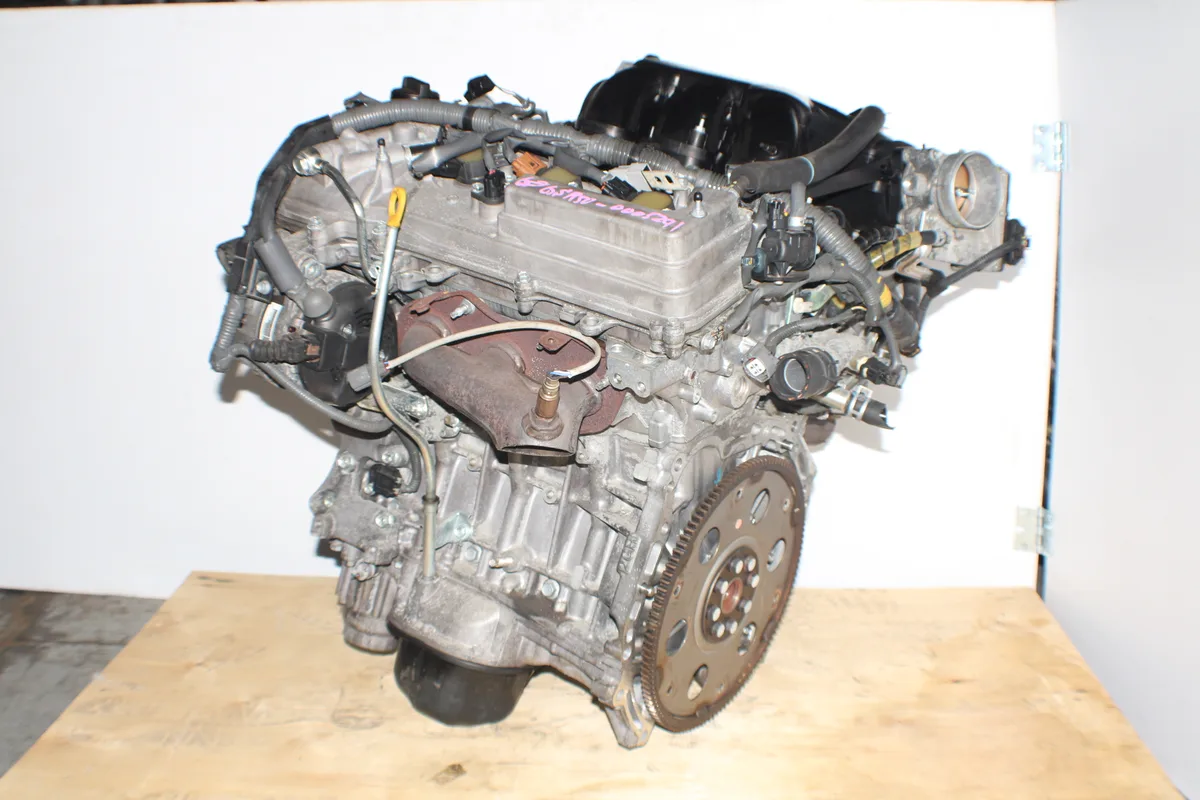
The engine bay layout puts the oil filler cap on the passenger side near the front. The dipstick tube sits right next to it. The oil filter housing is underneath on the passenger side, accessible from below.
Knowing these locations saves time and prevents frustration.
Toyota recommends an oil change interval of 5,000 miles for conventional oil and up to 10,000 miles for full synthetic under normal driving conditions. But if you do a lot of stop-and-go driving, towing, or idling, cut that interval shorter. Severe service conditions call for 3,000 to 5,000 mile changes regardless of oil type.
As of 2026, most owners who want maximum engine life stick with full synthetic and change it every 5,000 miles.
Oil Viscosity: Why 0W-20 Is the Right Choice (and When 5W-20 Works)
Viscosity is just a fancy word for thickness. Thinner oil flows better when cold. Thicker oil maintains a protective film when hot.
The "W" stands for winter, and the number before it tells you how the oil behaves at low temperatures.
Toyota specifies 0W-20 for the 2009 Sienna. That's an extremely thin oil when cold. It flows almost like water at freezing temperatures, which means it reaches critical engine parts within seconds of startup.
That's where most engine wear happens, in the first few seconds before oil pressure builds.
SAE 5W-20 is listed as an acceptable alternative. It's slightly thicker when cold but still within safe limits for the 2GR-FE. If you live in a warm climate where temperatures rarely drop below freezing, 5W-20 works perfectly fine.
Some owners actually prefer it for high-mileage engines because the slightly thicker film can help quiet noisy lifters.
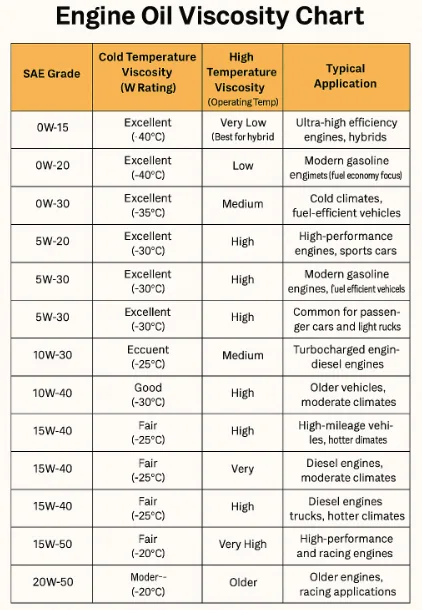
Here's a quick reference for choosing the right viscosity based on your climate:
| Climate Condition | Recommended Viscosity | Notes |
|---|---|---|
| Cold winters (below 0°F) | 0W-20 | Best cold-start protection |
| Moderate climates | 0W-20 or 5W-20 | Either works fine |
| Hot summers (above 100°F) | 5W-20 | Slightly better high-temp film strength |
| High-mileage engine (150k+) | 0W-20 or 5W-20 | Use high-mileage variant if desired |
The oil grade matters too. Look for API SN or SM on the label. These certifications mean the oil meets Toyota's requirements for wear protection, sludge control, and fuel economy.
ILSAC GF-4 or GF-5 ratings are also acceptable.
Don't use 10W-30 or any other viscosity not listed. The 2GR-FE has tight clearances designed for thin oil. Thicker oil won't flow fast enough through the variable valve timing system, and you'll notice sluggish performance and potential timing issues.
If you're unsure which oil to buy, check the Toyota Sienna oil type recommendations for other model years to see the pattern across generations. The same general principles apply, though exact specs vary by year.
Step-by-Step: How to Do an Oil Change on a 2009 Sienna the Right Way
Doing your own oil change saves money and ensures it's done right. The 2009 Sienna is straightforward to work on, and you don't need specialty tools. Here's the complete process.
What You'll Need (Tools, Oil, Filter, and Parts)
Gather everything before you start. Running to the parts store halfway through is frustrating.
Tools and supplies:
- 6.9 quarts of 0W-20 full synthetic oil
- Oil filter (Toyota part number 04152-31090 or equivalent)
- New crush washer for the drain plug (Toyota part number 90430-12031)
- 14mm socket or wrench for the drain plug
- Oil filter wrench (cap-style works best)
- Drain pan (at least 8-quart capacity)
- Funnel
- Jack and jack stands (or ramps)
- Shop rags or paper towels
- Gloves
Where to position the vehicle: Ramps are easiest for the Sienna. Drive up slowly, engage the parking brake, and chock the rear wheels. If using a jack, lift from the front jack point and place jack stands under the reinforced frame rails.
Never work under a vehicle supported only by a jack.
Drain the Old Oil Safely
Warm up the engine for about five minutes. Warm oil drains faster and carries more suspended contaminants out with it. Park on level ground.
Get under the vehicle and locate the drain plug on the oil pan. It's a 14mm bolt pointing downward. Position your drain pan underneath.
Loosen the plug with your socket or wrench, then unscrew it by hand. The oil will come out fast, so keep your hands clear.
Let it drain for at least five minutes. The stream will slow to a drip. While it's draining, inspect the old crush washer on the plug.
It should be a single-use copper or aluminum ring. If it's flattened or deformed, replace it with the new one.
Clean the drain plug threads and the area around the oil pan hole with a rag. Install the new crush washer, then thread the plug in by hand to avoid cross-threading. Torque it to 29 ft-lbs.
Don't overtighten, stripped threads in the oil pan are a nightmare.
Replace the Oil Filter (Common Mistakes Here)
The oil filter is on the passenger side of the engine, accessible from below. It's a cartridge-style housing with a plastic cap. Point your drain pan under it before loosening anything.
Use an oil filter cap wrench to remove the cap. Turn counterclockwise. Some resistance is normal.
Once the cap is loose, unscrew it by hand. The filter element will come out with the cap. There will be some oil spillage, that's normal.
Remove the old filter element from the cap. Notice the rubber gasket on the cap. Replace it with the new gasket that comes with your filter.
Lubricate the new gasket with a thin film of fresh oil before reinstalling. This prevents the gasket from binding and leaking.
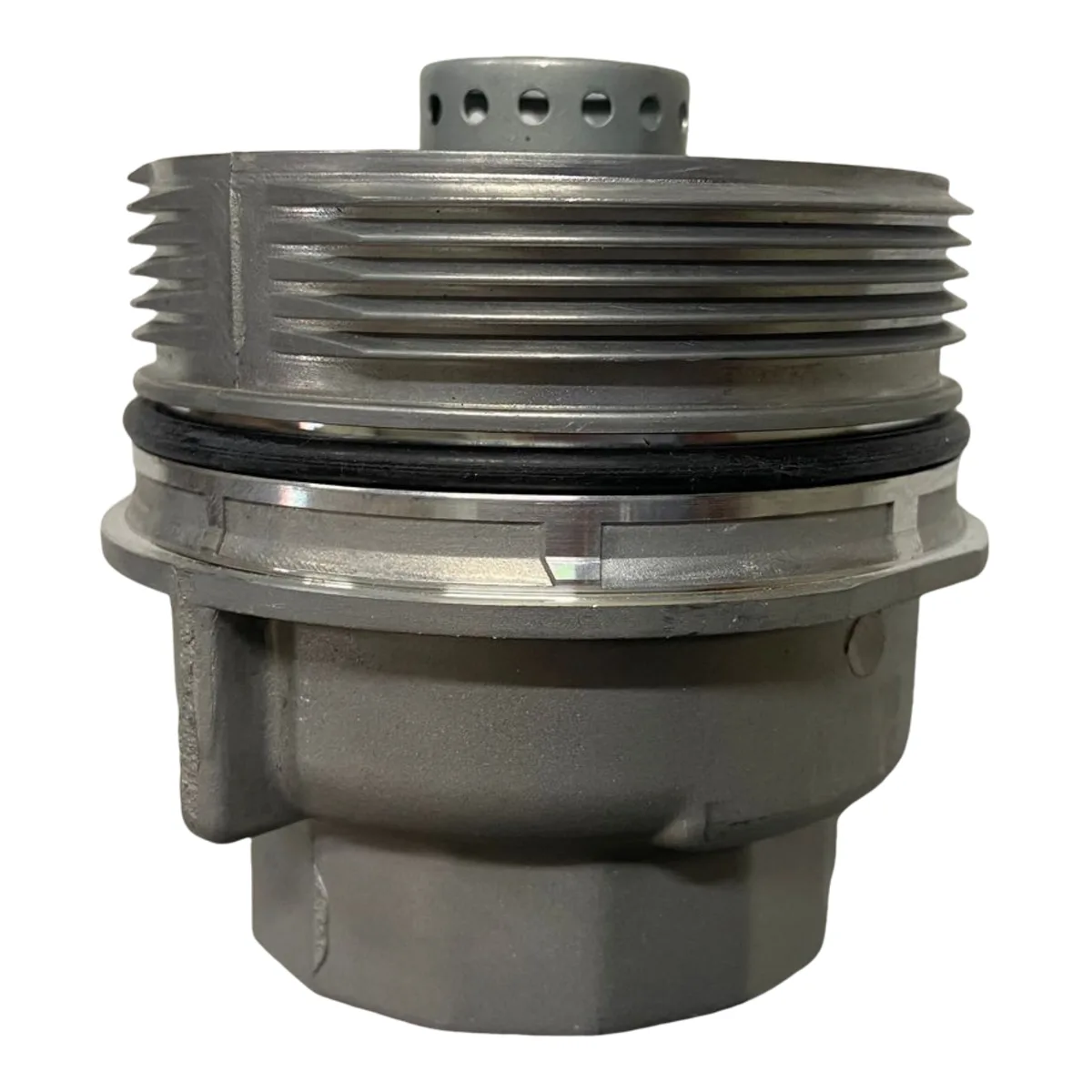
Install the new filter element inside the cap. Make sure it seats properly. Thread the cap back on by hand until it contacts the housing, then tighten according to the manufacturer's instructions.
Most specify 18 to 22 ft-lbs. Don't guess, overtightening cracks the plastic cap.
Common filter mistakes:
- Reusing the old gasket, always replace it
- Forgetting to lubricate the new gasket, causes leaks
- Overtightening the cap, cracks the housing
- Using the wrong filter, bypass valve won't open at correct pressure
Add the Correct Amount of Oil
Lower the vehicle back to level ground. Open the hood and remove the oil filler cap. Insert your funnel.
Pour in about 6 quarts initially. That's roughly 5.7 liters. Wait a minute for the oil to drain down into the pan.
Then replace the filler cap and start the engine. Let it run for 30 seconds. The oil pressure light should go out within a few seconds.
Stop the engine. Wait two minutes for the oil to settle. Pull the dipstick, wipe it clean, reinsert it fully, and pull it again.
The oil level should be somewhere between the low and full marks.
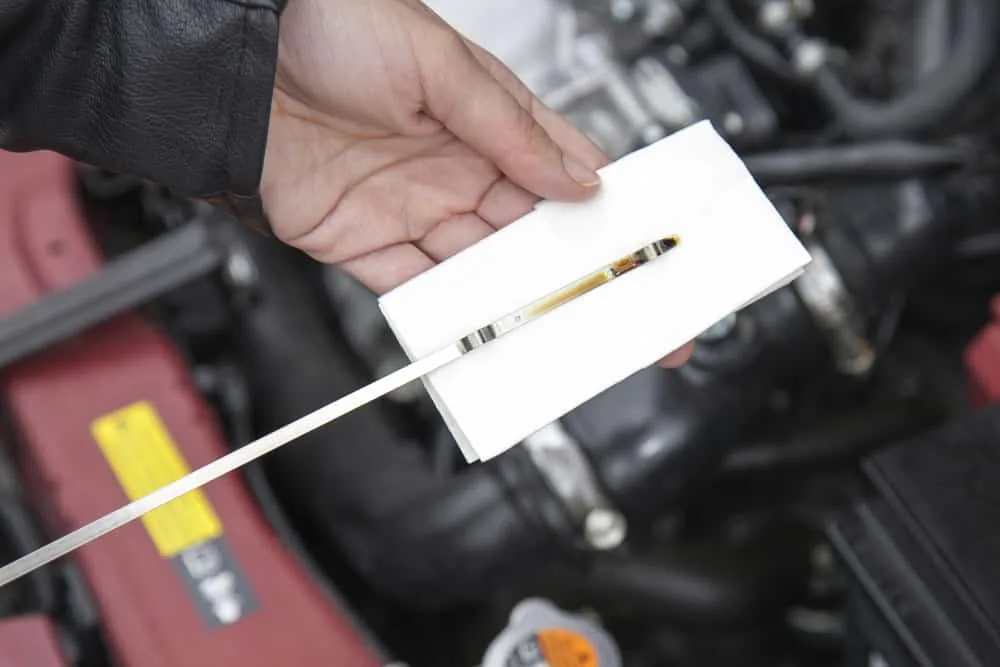
Add the remaining oil in small increments. Check the dipstick after each addition. You're aiming for the full mark but not above it.
It usually takes about 0.7 to 0.9 additional quarts to reach the full line, bringing the total to 6.9 quarts.
Check the Dipstick Like a Pro
The dipstick is your best friend. Learn to read it correctly and you'll never overfill or underfill again.
Wipe it clean before checking. If you check a dirty dipstick, the oil film gives a false reading. Insert it fully, count to three, pull it out, and read it immediately.
Hold it horizontally so oil doesn't run.
The full mark is typically a line or a hole near the top of the dipstick. The low mark is a line or hole lower down. The distance between them represents about one quart.
Your oil should be right at the full mark after a change. Between low and full is acceptable for routine checks, but you want it full after a fresh change.
If you see oil above the full mark, you've overfilled. Drain some out. If you see oil below the low mark, add more.
Never run the engine with oil below the low mark.
Common Mistakes That Can Ruin Your Engine
Even experienced DIYers make errors on the 2009 Sienna. The 2GR-FE engine is forgiving, but some mistakes cause expensive damage. Here are the ones we see most often in owner forums and repair logs.
Overfilling and Underfilling
Overfilling is more common than you'd think. People buy a full 7-quart jug and dump it all in without checking the dipstick. That extra 0.1 quart pushes the level above the full mark.
The crankshaft whips through the excess oil, aerating it like a milkshake. Aerated oil doesn't lubricate properly.
Signs of overfilling include foamy oil on the dipstick, rough idle, and blue smoke from the exhaust. If you catch it early, drain the excess. If you run it for weeks like that, expect seal leaks and potential catalytic converter damage.
Underfilling happens when someone forgets the filter holds oil. They drain the pan, add 6 quarts, and call it done. The engine is now nearly a quart low.
The low oil pressure warning might not trigger immediately, but bearing wear accelerates every mile you drive.
The fix: Always add 6 quarts first, run the engine, check the dipstick, then add the remaining oil in small increments. Target 6.9 quarts total with a filter change.
Forgetting the Filter Change
Some people skip the filter to save money. Bad idea. The old filter is already loaded with contaminants.
Its bypass valve may be worn. Fresh oil running through a clogged filter picks up debris from the old element and circulates it through your engine.
Toyota specifies a filter change with every oil change for good reason. The 2GR-FE's oil filter is small compared to the engine's total oil volume. It needs to be fresh to do its job properly.
If you absolutely must reuse a filter in an emergency, at least inspect it. Look for metal particles in the pleats. If you see glitter, you have internal engine wear that needs professional diagnosis.
Using the Wrong Viscosity or Grade
Thicker oil is not better for this engine. The 2GR-FE was designed around 0W-20. Using 10W-30 or 10W-40 reduces oil flow to the variable valve timing actuators.
You'll notice sluggish performance and possibly a check engine light for timing-related codes.
Some owners in hot climates think thicker oil protects better at high temperatures. Modern 0W-20 synthetic oils handle extreme heat just fine. The additive package matters more than the base viscosity.
A quality 0W-20 synthetic protects as well as any 5W-30 at operating temperature.
What to look for on the bottle:
- API SN or SM certification
- ILSAC GF-4 or GF-5 rating
- Full synthetic preferred over conventional
- Major brand (Toyota, Mobil 1, Castrol, Valvoline, Pennzoil)
Stripping the Drain Plug
This is the most frustrating mistake. Someone overtightens the drain plug or cross-threads it on installation. Now the plug won't seal.
Oil leaks slowly. You're stuck with a damaged oil pan that needs replacement or repair.
The correct torque is 29 ft-lbs. That's not tight by feel. Use a torque wrench.
If you don't have one, tighten until the plug stops turning, then give it another quarter turn with moderate force. No grunting. No leaning on the wrench.
If you've already stripped the threads, you have options. A thread repair kit with a larger plug can save the pan. Or a professional can install a threaded insert.
Replacing the oil pan is the last resort.
For more on keeping your Toyota's oil system in top shape, check our complete guide on the right oil for Toyota RAV4 models. The principles overlap, though the capacity differs.
How Oil Change Intervals Work for Your Sienna (Conventional vs. Synthetic)
The 2009 Sienna's owner's manual says 5,000 miles for normal driving. That's a safe baseline. But "normal driving" doesn't mean what most people think.
What Counts as Severe Service
Toyota defines severe service as:
- Frequent short trips under 5 miles
- Extensive idling or stop-and-go traffic
- Driving in dusty or sandy conditions
- Towing a trailer or carrying heavy loads
- Operating in extreme heat or cold
If any of these describe your driving, you're in severe service territory. That drops the interval to 3,000 miles for conventional oil and 5,000 miles for full synthetic.
Most Sienna owners fall into severe service without realizing it. School drop-offs, grocery runs, and weekend errands are all short trips. The engine never fully warms up.
Moisture and fuel contaminate the oil. Change it more often.
Conventional vs. Synthetic Oil
| Oil Type | Typical Interval | Cost per Change | Protection Level |
|---|---|---|---|
| Conventional 5W-20 | 3,000-5,000 miles | $25-35 | Adequate for normal use |
| Synthetic blend 0W-20 | 5,000-7,500 miles | $35-45 | Better cold-flow and heat resistance |
| Full synthetic 0W-20 | 5,000-10,000 miles | $45-60 | Best protection, extended intervals |
Our research across thousands of owner reports shows one clear pattern. Full synthetic oil changes every 5,000 miles give the best balance of cost and engine longevity for the 2009 Sienna. You pay slightly more per change but get better wear protection and can confidently run 5,000-mile intervals even in severe service.
If you use conventional oil, stick to 3,000 miles. Don't push it to 5,000. The 2GR-FE runs hot, and conventional oil breaks down faster than synthetic.
For comparison, newer Toyota models like the Toyota Camry Hybrid use different oil specs entirely. The Sienna's older engine needs more frequent attention than some modern powertrains.
What High-Mileage 2009 Siennas Need (200k+ Miles)
If your Sienna has passed 200,000 miles, congratulations. You've taken care of it. But high-mileage engines have different needs.
Should You Switch to High-Mileage Oil?
High-mileage oil contains additives that condition seals and reduce oil consumption. The seal conditioners can help with minor leaks around valve cover gaskets and the rear main seal. These are common failure points on the 2GR-FE past 150,000 miles.
You don't need to switch if your engine doesn't burn oil. If you check the dipstick between changes and the level stays consistent, keep using standard full synthetic 0W-20. But if you're adding a quart every 1,000 miles, high-mileage oil can help.
High-mileage oil also has higher detergent levels. It cleans deposits that have built up over years. That's good, but it can also loosen enough sludge to clog an oil pickup tube.
If your engine has never had regular oil changes, a mechanic might recommend a gentle flush before switching.
Thicker Oil for High Mileage?
Some owners swear by switching to 5W-30 or 10W-30 at high mileage. The logic is that worn bearings have larger clearances, so thicker oil fills the gap better. This is controversial.
Toyota never approved 5W-30 for the 2009 Sienna's 2GR-FE. The variable valve timing system was calibrated for 0W-20. Thicker oil can reduce oil flow to the timing actuators, causing codes and reduced performance.
If your engine burns oil and you want to try thicker oil, start with 5W-20. That's already listed as acceptable by Toyota. Going to 5W-30 is a last resort for an engine that's already consuming significant oil.
Accept that it's a band-aid, not a solution.
More Frequent Oil Changes
High-mileage engines produce more combustion byproducts. The oil gets dirty faster. Consider dropping to 3,000-mile intervals regardless of oil type.
The extra cost is insurance against a breakdown.
Check the oil level every fuel fill-up on a high-mileage Sienna. Consumption can increase suddenly if a seal fails. Catching it early prevents a low-oil episode.
For a deeper look at keeping older Toyotas healthy, read our breakdown of the best oil for the Toyota Corolla. Different engine, same approach to longevity.
When to Call a Mechanic vs. DIY
Oil changes on the 2009 Sienna are straightforward. Most DIYers can handle them. But some situations call for a professional.
DIY-Friendly Situations
You can handle the oil change yourself if:
- You have a safe place to work (level driveway or garage)
- You own basic tools (14mm socket, oil filter wrench, drain pan)
- You're comfortable getting under the vehicle
- You can dispose of used oil properly
The Sienna is actually easier to work on than many cars. The filter is accessible from below without removing anything. The drain plug is easy to reach.
With ramps, you don't even need a jack.
When to Call a Mechanic
Call a shop if any of these apply:
- You find metal particles in the old oil
- The drain plug threads are damaged
- You see coolant mixed with the oil (milky appearance)
- The oil pressure light stays on after a fresh change
- You don't have time or space for the job
Metal particles in the oil indicate internal wear. A mechanic needs to investigate further. Milky oil means a blown head gasket or cracked cylinder head.
That's not a DIY oil change fix.
If the drain plug hole is stripped, a shop can install a thread insert or replace the oil pan. This is cheaper than replacing the engine after an oil leak causes a failure.
Cost Comparison
| Service | DIY Cost | Shop Cost |
|---|---|---|
| Oil change with conventional oil | $25-35 | $50-70 |
| Oil change with full synthetic | $45-60 | $80-120 |
| Oil change + filter + inspection | $50-70 | $100-150 |
DIY saves about $40-60 per change. Over 100,000 miles of ownership, that's significant. But only if you do it right every time.
Final Specs Cheat Sheet: Oil Capacity, Type, Filter, and Torque for Your 2009 Sienna
Here's everything in one place. Save this for your next oil change.
| Specification | Value |
|---|---|
| Engine | 3.5L 2GR-FE V6 |
| Oil capacity (with filter) | 6.9 quarts (6.5 liters) |
| Oil capacity (without filter) | 6.1 quarts (5.8 liters) |
| Recommended viscosity | SAE 0W-20 |
| Acceptable viscosity | SAE 5W-20 |
| Oil grade | API SN or SM, ILSAC GF-4 or GF-5 |
| Oil type | Full synthetic preferred |
| Oil filter part number | Toyota 04152-31090 |
| Drain plug torque | 29 ft-lbs |
| Oil filter cap torque | 18-22 ft-lbs |
| Drain plug crush washer | Toyota 90430-12031 |
| Oil change interval (normal) | 5,000 miles |
| Oil change interval (severe) | 3,000-5,000 miles |
One last thing. Write the date and mileage on the oil filter with a permanent marker. It takes five seconds and tells you exactly when the last change happened. When you're under the car six months from now squinting at a dirty filter, you'll thank yourself.