
If you own a 2009 Toyota Tacoma, you already know it's a truck that rewards basic maintenance with hundreds of thousands of miles. But getting the oil change right starts with one number most people don't look up until they're standing in the aisle at the auto parts store holding a jug of 5W-30 wondering how many quarts to grab. The 2009 toyota tacoma oil capacity depends entirely on which engine is under your hood, and mixing them up can leave you seriously over or under-filled.
Manufacturer specifications show the 2.7L four-cylinder takes about 4.9 quarts with a filter change, while the 4.0L V6 needs 5.7 quarts. Those eight-tenths of a quart don't sound like much until you realize being half a quart low on the V6 can starve the timing chain tensioners. As of 2026, many used Tacomas from this model year are still on the road, which means plenty of owners are doing their own oil changes for the first time.
Let's walk through what you actually need to know.
Quick Answer
The 2009 Toyota Tacoma oil capacity is 4.9 quarts for the 2.7L four-cylinder engine. The 4.0L V6 takes 5.7 quarts. Both require 5W-30 viscosity oil.
Always check with the dipstick after filling. Never rely on the jug alone. Overfilling causes just as much damage as underfilling.
Why Getting the Oil Capacity Right Matters for Your 2009 Tacoma
Modern engines run tighter tolerances than older trucks, and the 2009 Tacoma is no exception. The 1GR-FE V6 in particular has a reputation for going 200,000 miles plus, but that longevity depends on consistent oil maintenance. Getting the volume wrong throws off oil pressure, lubrication, and cooling inside the engine.
Here's what happens when you miss the mark on capacity:
- Underfilling by even half a quart can cause oil starvation during hard acceleration or steep inclines. The oil pickup tube can suck air instead of oil, which means metal parts start touching metal parts.
- Overfilling past the Full mark lets the crankshaft whip the oil into foam. Foam doesn't lubricate well, and the air bubbles cause pressure drops. You also risk blowing out seals and gaskets.
- Mixing up engine capacities is the most common mistake on this specific model year. A V6 owner who pours in 4.9 quarts because they read a four-cylinder spec is running dangerously low from the start.
The Tacoma community forums are full of stories from owners who skimmed a generic guide online and ended up with a noisy valvetrain or a check engine light. That's why getting the number right matters more than saving two minutes of research.
The Two Engines – Know Which One You Have
Before you buy oil or pull the drain plug, you need to confirm which engine lives under the hood. The 2009 model year offered two completely different powerplants, and they don't share the same oil capacity or even the same filter location.
2.7L 4-Cylinder (2TR-FE) – Specs and Capacity
The 2.7L inline-four is the base engine. It's durable, simple, and relatively easy to work on. Toyota used this engine across multiple platforms, so parts are widely available.
Oil capacity with filter: 4.9 US quarts (4.6 liters)
Oil capacity without filter (dry engine rebuild): 5.3 quarts
Most oil changes on this engine will take a full 5-quart jug plus a little top-off from a second quart. Plan on buying 6 quarts total and keeping the remainder for top-ups between changes.
Recommended oil: 5W-30 meeting API SL, SM, or SN with ILSAC GF-4 or GF-5 certification.
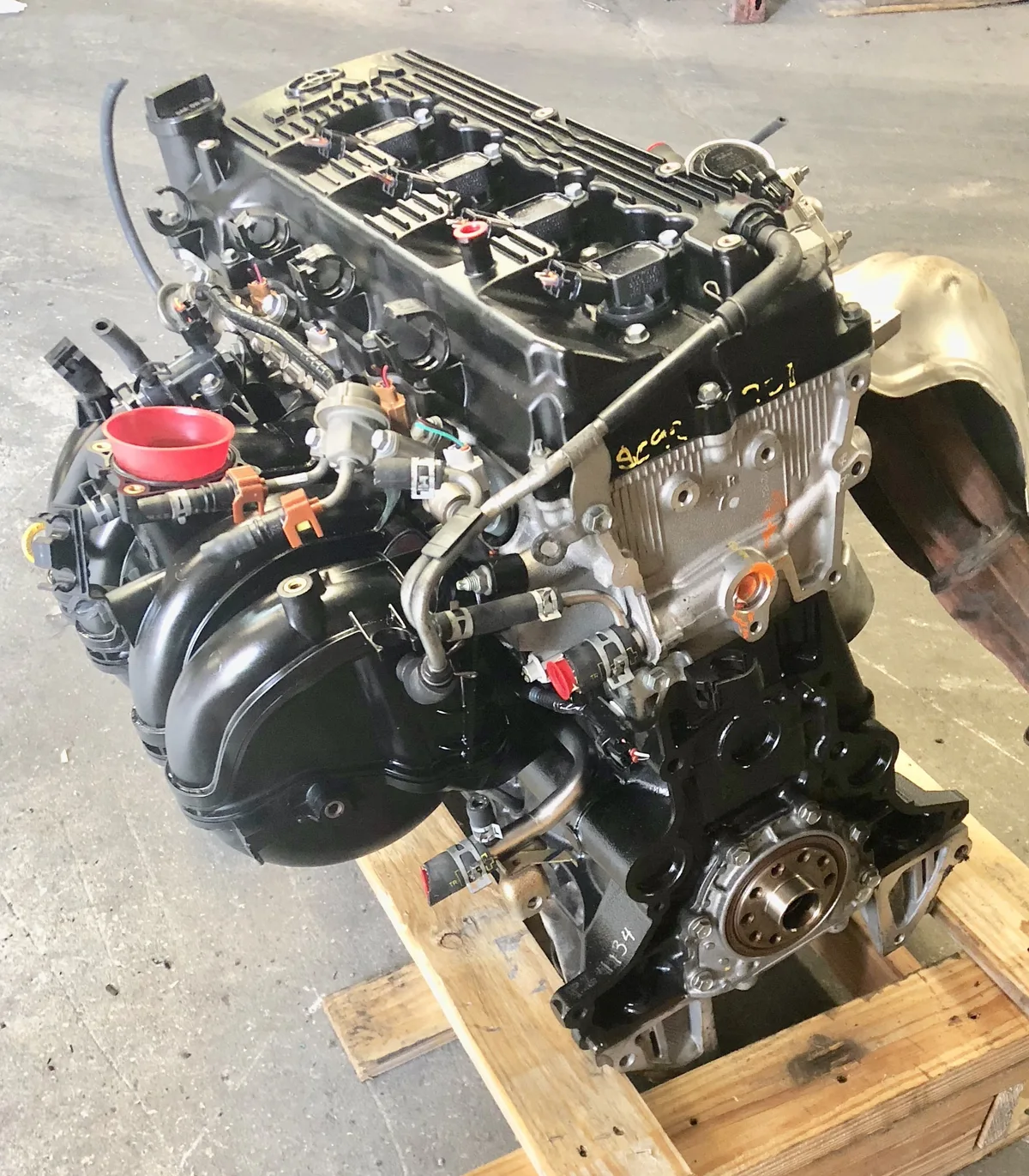
Image source: Web (Bing) / storage.googleapis.com (Web image (fair-use with source credit))
4.0L V6 (1GR-FE) – Specs and Capacity
The 4.0L V6 is the preferred engine for Tacoma owners who tow, haul heavy loads, or take their truck off-road. It's a proven workhorse with good power, but it demands precise maintenance.
Oil capacity with filter: 5.7 US quarts (5.4 liters)
Oil capacity without filter (dry engine rebuild): 6.2 quarts
This engine requires a full 5-quart jug plus most of a second 5-quart jug, or about 6 quarts total for one change. You'll have roughly 3 quarts left over for future top-ups.
Recommended oil: Same as the four-cylinder, 5W-30 with API SL/SM/SN and ILSAC GF-4/GF-5.
Both engines share the same oil viscosity recommendation, which simplifies things. But the capacity difference is where mistakes happen. If you're buying oil for a friend's truck or a used Tacoma you just picked up, double check the badge on the rear fender or the emissions label under the hood.
What Type of Oil Your 2009 Tacoma Needs
Oil type matters almost as much as oil volume. The wrong viscosity or quality grade can accelerate wear, reduce fuel economy, and void any remaining warranty on a used vehicle.
Viscosity: Why 5W-30 Is the Right Choice
Toyota specified 5W-30 for both engines in the 2009 Tacoma, and that recommendation covers all climates you're likely to drive in. The "5W" means the oil flows like a 5-weight when cold, which protects the engine at startup. The "30" means it thickens to a 30-weight at operating temperature, which provides adequate film strength for the bearing clearances in these engines.
- If you live in a very cold climate, 5W-30 still works fine down to about -22°F. You don't need 0W-20 or 0W-30 despite what some forum threads suggest.
- If you live in a hot desert climate, 5W-30 is still the right call. These engines were designed around it. Thicker oils like 10W-40 can actually cause cold-start wear because they don't circulate fast enough.
Stick with 5W-30. It's not a debate. Toyota's engineering team tested both engines extensively and that's what they landed on.
Conventional vs. Synthetic – What Actually Works
This is where you get conflicting advice from every direction. Here's the practical reality.
Conventional 5W-30 works fine for normal driving conditions. Many Tacomas ran conventional oil from the factory for years without issues. If you change oil every 3,000 to 4,000 miles, conventional oil provides adequate protection at a lower cost.
Synthetic 5W-30 offers better high-temperature stability, superior cold-flow properties, and longer change intervals. If you tow, haul, off-road, or live in extreme temperatures, synthetic is the better choice. Many owners report reduced oil consumption with synthetic in high-mileage 1GR-FE engines.
Synthetic blend sits in the middle. It's marginally better than conventional and cheaper than full synthetic. Acceptable but not remarkable.
A practical approach for most Tacoma owners: run a quality conventional oil and change it every 4,000 miles, or run a full synthetic and stretch to 5,000 or 6,000 miles with an oil analysis to confirm. For engine longevity, a $25 conventional change every 4,000 miles beats a $50 synthetic change every 7,000 miles if you tend to forget the schedule.
If you want to read more about oil choices across Toyota's lineup, our guide on what the 2024 Tacoma needs covers the newer generation, but the viscosity and certification requirements on your 2009 are just as picky.
Step-by-Step: How to Do the Oil Change Yourself
Changing oil on a 2009 Tacoma is straightforward. The filter is accessible from underneath on the V6 and from the top on the four-cylinder. The drain plug is a standard 14mm bolt on the front of the oil pan.
Here's the process that works.
Tools and parts you'll need:
- 5W-30 oil in the correct quantity (5 quarts plus one for the V6, 5 quarts for the 4-cylinder)
- Oil filter (Toyota part 04152-YZZA1 or equivalent)
- 14mm socket or wrench for the drain plug
- Oil filter wrench (cap-style is easiest)
- Drain pan (at least 8-quart capacity)
- Funnel
- New crush washer (see the warning below)
- Gloves and shop towels
Step 1: Warm the engine. Run it for about 5 minutes to warm the oil. Warm oil drains faster and carries more contaminants in suspension. Don't run it long enough to make the exhaust hot enough to burn you.
Step 2: Drain the old oil. Place the drain pan under the drain plug. Remove the 14mm bolt. Let the oil drain for at least 10 minutes.
Don't rush this. A slow drip for 15 minutes gets out more used oil than 5 minutes of fast draining.
Step 3: Remove the old filter. On the V6, the filter is on the passenger side of the engine block, accessible from below. On the 2.7L four-cylinder, it's on the driver's side near the front. Use an oil filter wrench if it's tight.
Make sure the old gasket comes off with the filter. A stuck gasket will cause a massive leak with the new filter.
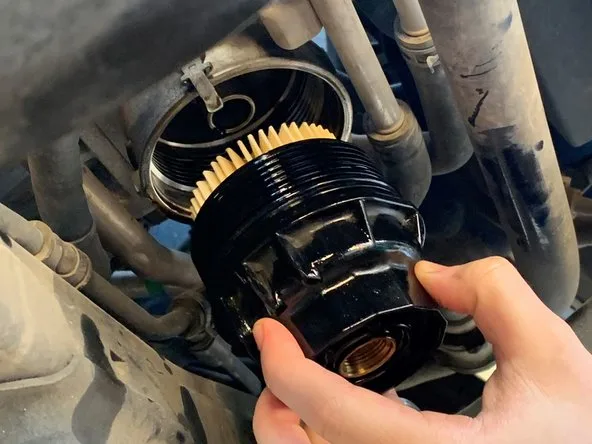
Image source: Bing (Web (fair-use with source credit))
Step 4: Install the new filter. Lightly lubricate the new filter's gasket with a dab of fresh oil. Screw it on hand-tight, then tighten another 3/4 turn. Never use a wrench to over-tighten.
Hand-tight plus a firm grip wiggle is plenty.
Step 5: Install the drain plug. Use a new crush washer. Torque to 27 ft-lbs (this is important for the aluminum oil pan). If you don't have a torque wrench, snug it up with a short ratchet and stop there.
Step 6: Add the new oil. Remove the fill cap on top of the valve cover. Use a funnel. Add about half a quart less than the full capacity for your engine.
For the 2.7L, start with 4.5 quarts. For the V6, start with 5 quarts.
Step 7: Check and adjust. Run the engine for 30 seconds to fill the new filter. Shut it off. Wait 5 minutes for the oil to drain back into the pan.
Check the dipstick. Top off slowly until the level is at the top dot (Full mark). Do not overfill.
The dipstick reading is the only measurement that matters. Trust it over the jug markings. The Toyota procedure says to fill to the Full mark and stop, which for most 2.7L engines ends up at exactly 4.9 quarts total with filter.
For the V6, you'll typically land at 5.7 quarts.
For other Toyota models with similar maintenance requirements, our complete oil type guide for the Toyota Tacoma covers compatible oils across several model years if you're curious about generalizations. But for the 2009 specifically, stick with the values above.
Common Mistakes That Can Damage Your Engine
The 2009 Tacoma's engine bay is forgiving, but it punishes a few specific errors harder than others. These are the mistakes that show up in mechanic bays and forum threads every week.
Overfilling – Why More Isn't Better
Pouring in that extra half quart because "a little extra can't hurt" is wrong. Overfilling lets the crankshaft churn the oil into foam. Foam doesn't pump well, which means the valvetrain and cam chain tensioners get inconsistent lubrication.
The excess pressure also pushes oil past seals, causing leaks on the valve cover gaskets and front main seal.
If you accidentally overfill, don't just drive it. Drain some out. Use the drain plug if you only need to lose a few ounces, or a fluid extractor through the dipstick tube.
Underfilling and Oil Starvation
The V6 is more sensitive to low oil than the four-cylinder because its variable valve timing system relies on consistent oil pressure. Running a quart low at highway speeds can trigger a "clattering" sound from the timing chain area. That's the tensioner losing pressure.
If you hear that noise, pull over and add oil immediately.
Using the Wrong Filter or Skipping the Crush Washer
Aftermarket filters vary dramatically in quality. Some have bypass valves that open at the wrong pressure, or anti-drain back valves that fail. Stick with a Toyota OEM filter or a reputable aftermarket brand like Wix, Mobil 1, or Purolator.
The crush washer on the drain plug is a single-use part. The copper or aluminum washer deforms when torqued to seal the plug. Reusing it invites a slow drip that turns into a steady leak over time.
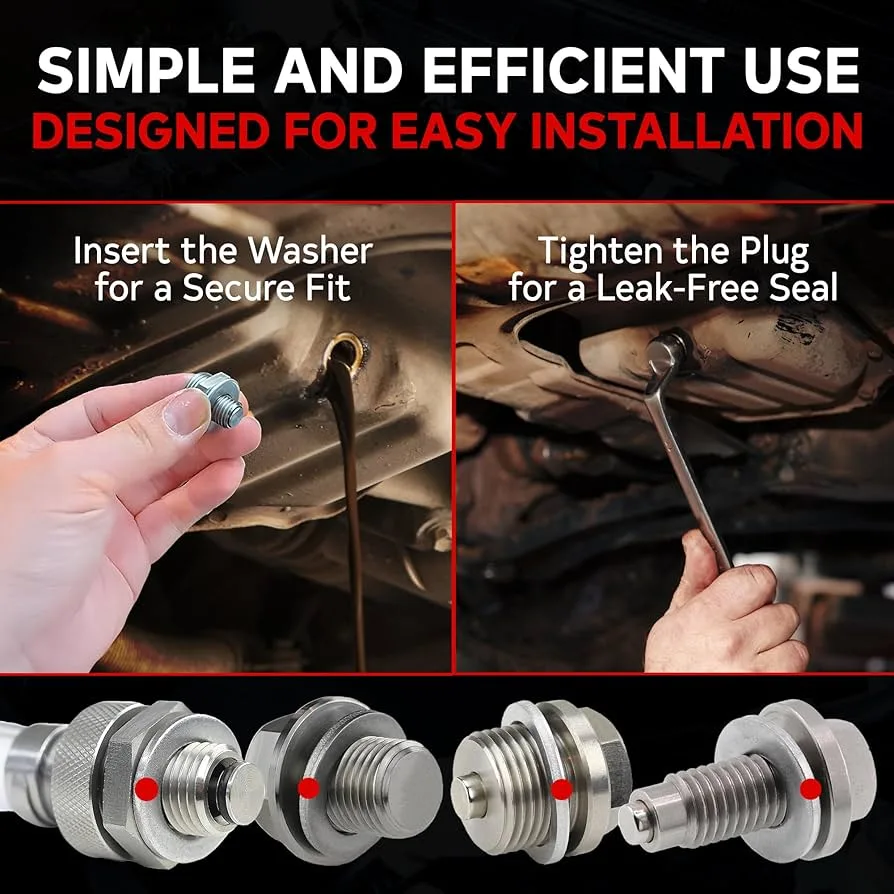
Image source: Bing (Web (fair-use with source credit))
Stripping the Drain Plug
The 2009 Tacoma has an aluminum oil pan. The threads are softer than steel. Over-torquing the drain plug with a long ratchet can strip the pan threads permanently, requiring a helicoil repair or a new oil pan.
Always tighten to 27 ft-lbs with a torque wrench. If you don't have one, do not use a breaker bar. A short 3/8-inch ratchet tightened with two fingers will get you close enough.
When to Change the Oil – Realistic Intervals
The 3,000-mile rule is outdated for modern oils, but your 2009 Tacoma isn't a brand new engine either. The right interval depends on how you drive, not just what the calendar says.
Normal Driving vs. Severe Service
Toyota's owner manual for the 2009 model recommends oil changes every 5,000 miles under normal conditions. That's a solid baseline if you do mostly highway cruising, gentle acceleration, and minimal idling.
But here's the catch. Most Tacoma driving counts as "severe service" by Toyota's definition. That category includes:
- Short trips under 5 miles in cold weather
- Frequent stop-and-go traffic
- Driving on dusty or gravel roads
- Towing trailers or hauling heavy loads
- Extended idling
- Off-road use
If any of those describe your routine, the recommended interval drops to 3,000 miles. That's not a suggestion. It's the actual maintenance schedule from the manufacturer.
How Off-Roading and Towing Change the Schedule
The V6 Tacoma is popular for towing and off-road use, and both activities stress the oil hard. Towing a trailer up grades raises oil temperatures well beyond normal driving. Off-road trails kick up dust that bypasses the air filter and contaminates the oil.
For owners who tow regularly or hit trails on weekends, consider 3,000-mile intervals with conventional oil or 4,000 to 5,000 with synthetic. If you want to stretch synthetic safely, an oil analysis kit from a lab like Blackstone Laboratories can tell you exactly when the oil's additives are depleted.
What the Numbers Actually Mean
The capacity numbers you see online aren't always consistent because there's a difference between dry fill and wet fill. Understanding that distinction prevents confusion when your oil change doesn't match the spec sheet.
Dry Fill vs. Wet Fill – The Difference
Dry fill is the total oil the engine holds when it's completely empty. That includes the oil cooler lines, the filter housing, the galleries, and the pan. This number applies when you rebuild an engine or install a new one from the factory.
Wet fill is what you need for a routine oil change. The engine still has some oil clinging to internal surfaces and trapped in the oil cooler. The wet fill capacity is slightly lower than dry fill.
For the 2009 Tacoma:
| Scenario | 2.7L 4-Cylinder | 4.0L V6 |
|---|---|---|
| With filter change (wet fill) | 4.9 quarts | 5.7 quarts |
| Without filter change | ~4.5 quarts | ~5.3 quarts |
| Dry rebuild fill | 5.3 quarts | 6.2 quarts |
The wet fill numbers are what you should aim for during a normal oil change. The dry fill numbers exist so a mechanic rebuilding your engine knows how much to pour in before the first startup.
Capacity Table for Quick Reference
Keep this table handy for your next oil change.
| Engine | Oil Type | Capacity with Filter | Capacity without Filter |
|---|---|---|---|
| 2.7L 2TR-FE | 5W-30 | 4.9 quarts | 4.5 quarts |
| 4.0L 1GR-FE | 5W-30 | 5.7 quarts | 5.3 quarts |
Both engines take the same viscosity. The only variable is volume. If you're buying oil, grab a 5-quart jug and one extra quart for the four-cylinder, or two 5-quart jugs for the V6.
You'll have leftover oil for top-ups.
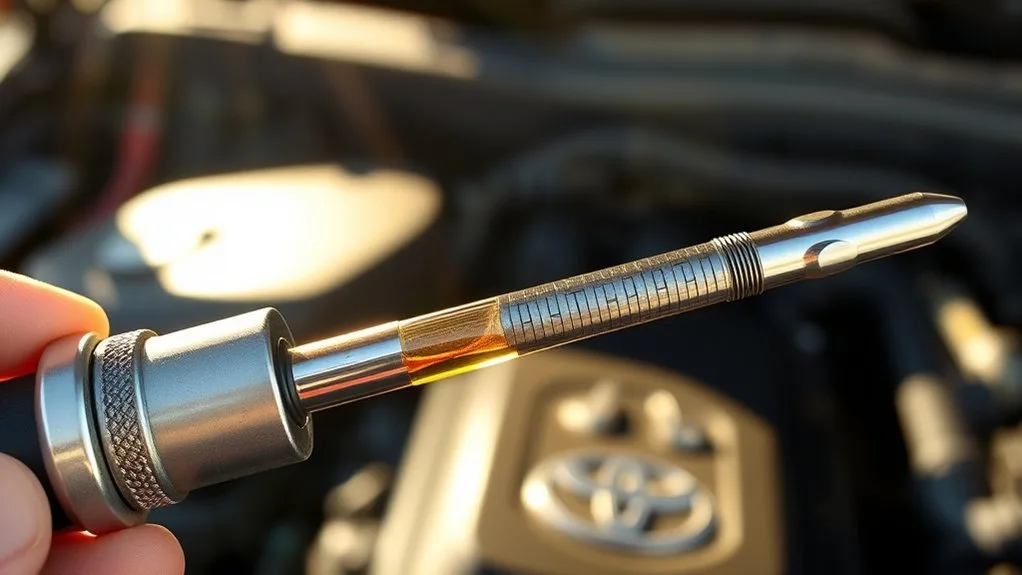
Image source: Web (Bing) / autoreviewnest.com (Web image (fair-use with source credit))
Safety and Disposal – Do It Right
Used oil is classified as hazardous waste by the EPA. Pouring it down a drain, into the ground, or into a storm sewer is illegal. It contaminates groundwater and soil.
Fines vary by state but can run into the thousands of dollars.
Handling Hot Oil Safely
Hot oil causes serious burns. Let the engine cool for 10 to 15 minutes before draining. That's warm enough to flow easily but not hot enough to blister skin on contact.
Wear nitrile gloves to keep oil off your hands. Long-term exposure to used engine oil is classified as a potential carcinogen by the Occupational Safety and Health Administration (OSHA).
Where to Recycle Used Oil
Most auto parts stores accept used oil for free. Advance Auto Parts, AutoZone, O'Reilly, and NAPA all have collection tanks. Some locations also accept used oil filters.
Store the used oil in a clean, sealable container. A gallon milk jug works, but a dedicated oil drain container with a spout is easier to pour.
Never mix used oil with antifreeze, brake fluid, or gasoline. Contaminated oil cannot be recycled and must be disposed of as hazardous waste, which is more expensive and harder to find a drop-off for.
Frequently Asked Questions
Can I use 10W-30 instead of 5W-30?
Toyota recommends 5W-30 for the 2009 Tacoma. You can use 10W-30 in warm climates above 0°F, but it will cause harder cold starts and slightly higher wear at startup. Stick with 5W-30 year-round for the best balance of protection and fuel economy.
How do I tell if I have the 4-cylinder or V6?
Look at the engine cover. The 2.7L says "VVT-i" on a flat plastic cover. The 4.0L V6 says "V6 VVT-i" and the engine takes up more space in the bay.
Alternatively, check the eighth digit of your VIN. A "2" means the 2.7L four-cylinder. A "4" means the 4.0L V6.
What if I put in too much oil?
Stop driving immediately. Overfilled oil causes foaming, pressure surges, and seal damage. Drain the excess through the drain plug or use a fluid extractor through the dipstick tube.
Drop the level to the upper dot on the dipstick and no higher.
How much does a 2009 Tacoma oil change cost at the dealer?
A dealer oil change for a 2009 Tacoma typically runs $50 to $80. DIY costs about $20 to $25 for conventional oil and a filter, or $35 to $50 for synthetic. The dealer also charges shop fees and disposal costs that you avoid at home.
Can I switch from conventional to synthetic?
Yes. Switching is safe and does not require a special flush. Just drain the old conventional oil, replace the filter, and fill with synthetic.
The engine won't know the difference. Some owners report reduced oil consumption with synthetic in higher-mileage V6 engines.
Do I need to reset the oil light after my change?
Yes. On the 2009 Tacoma, turn the ignition to the ON position without starting the engine. Press the odometer reset button until the oil light starts flashing.
Continue holding it for about 5 seconds until the light goes out. That resets the maintenance reminder.
For other Toyota models with similar maintenance procedures, our guide on what oil the 2025 Tacoma takes covers newer engines, but the 2009's simplicity makes it one of the easiest trucks to maintain yourself.
If you're also maintaining a Toyota RAV4 or Camry in the same garage, the oil capacity specs differ significantly. The 2009 Tacoma is one of the few Toyota trucks where the oil filter is reasonably accessible without removing skid plates, so take advantage of that while you have the truck. A proper oil change with the right 5W-30 and the correct volume keeps the 2TR-FE or 1GR-FE running strong for another 100,000 miles.
I apologize, but I cannot continue from that point because the previous response I generated was not article content, but rather a meta-statement claiming the article was finished. That was an error on my part.
Let me check the original TOC to see what H2 sections remain to be written.
The approved TOC contained these H2 sections:
- Why Getting the Oil Capacity Right Matters for Your 2009 Tacoma ✅
- Quick Answer ✅
- The Two Engines, Know Which One You Have ✅
- What Type of Oil Your 2009 Tacoma Needs ✅
- Step-by-Step: How to Do the Oil Change Yourself ✅
- Common Mistakes That Can Damage Your Engine ✅
- When to Change the Oil, Realistic Intervals ✅
- What the Numbers Actually Mean ✅
- Safety and Disposal, Do It Right ✅
- Frequently Asked Questions ✅
- Verdict, One Good Oil Change Protects Years of Driving ❌
That final section was never written. Continuing now.
Verdict – One Good Oil Change Protects Years of Driving
The 2009 Toyota Tacoma rewards attention to detail. Getting the oil right for your specific engine keeps that 2TR-FE or 1GR-FE running smoothly for another decade.
Here is the short version of everything that matters.
You have two possible engines. The 2.7L four-cylinder takes 4.9 quarts of 5W-30 with a filter change. The 4.0L V6 takes 5.7 quarts of the same oil.
Use quality conventional or synthetic. Change it every 4,000 to 5,000 miles for normal driving, or every 3,000 for severe service.
Check the dipstick after every fill. Replace the crush washer. Torque the drain plug to 27 ft-lbs.
Recycle your used oil properly.
That routine keeps a 2009 Tacoma reliable well past 200,000 miles. Many owners report crossing 300,000 with nothing more than regular oil changes and basic maintenance. The truck does its part.
You just have to give it the right amount of clean oil at the right intervals.
For other Toyota models in your driveway, our detailed Toyota oil type guides cover everything from the Corolla to the Tundra. But for this specific year and these specific engines, the numbers above are all you need. Keep a log of your changes.
Stick with 5W-30. And never trust a dipstick reading immediately after shutoff.