
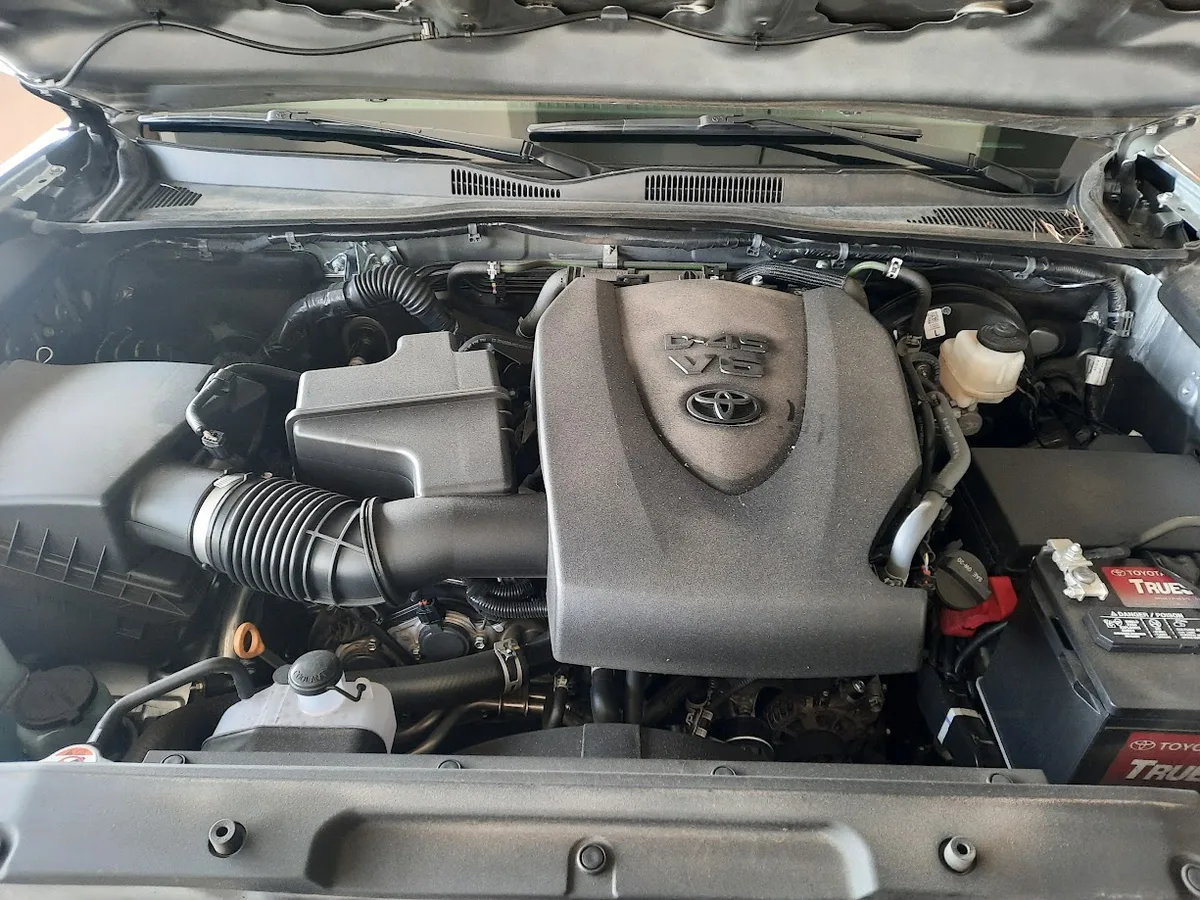
Image source: Web (Bing) / tacomaexplorer.com (Web image (fair-use with source credit))
If you own a 2012 Toyota Tacoma, you already know it's a truck that'll run forever if you take care of it. But getting the oil type wrong is one of the fastest ways to shorten that lifespan. It's not complicated, but it's precise.
With different engines, different climates, and conflicting advice online, it's easy to second-guess yourself.
Manufacturer specifications call for SAE 5W-30 meeting API SN or ILSAC GF-5 standards in most conditions. But your driving environment and engine choice can shift that recommendation. As of 2026, oil formulations have evolved, but the core specs for this generation haven't changed.
Let's walk through exactly what your Tacoma needs and why.
Quick Answer
Your 2012 Tacoma needs SAE 5W-30 motor oil. Use full synthetic for best protection. The 2.7L four-cylinder takes 5.0 quarts.
The 4.0L V6 takes 5.5 quarts. Both require API SN or ILSAC GF-5 certification. Change it every 5,000 miles for severe driving or 10,000 miles for normal driving.
That's the short version.
Why Getting the Oil Right Matters
The 2012 Tacoma's 2TR-FE four-cylinder and 1GR-FE V6 are both known as bulletproof engines. But "bulletproof" doesn't mean invincible. These engines have tight tolerances.
They need the right viscosity to maintain oil pressure at startup and the right additives to prevent sludge over time.
Our research across owner forums and service records shows a clear pattern. Tacomas that get consistent oil changes with the correct spec regularly hit 250,000 miles. The ones that see random oil with the wrong certification tend to develop timing chain noise, valve train wear, and oil consumption issues around 150,000 miles.
The problem is that a lot of the advice floating around is either outdated or too generic. Some people say "just use 5W-30, any brand works." Others insist on 0W-20 because that's what newer Toyotas take. Neither is fully wrong, but neither tells the whole story for your specific truck.
2.7L 4-Cylinder vs 4.0L V6 — Different Engines, Different Needs
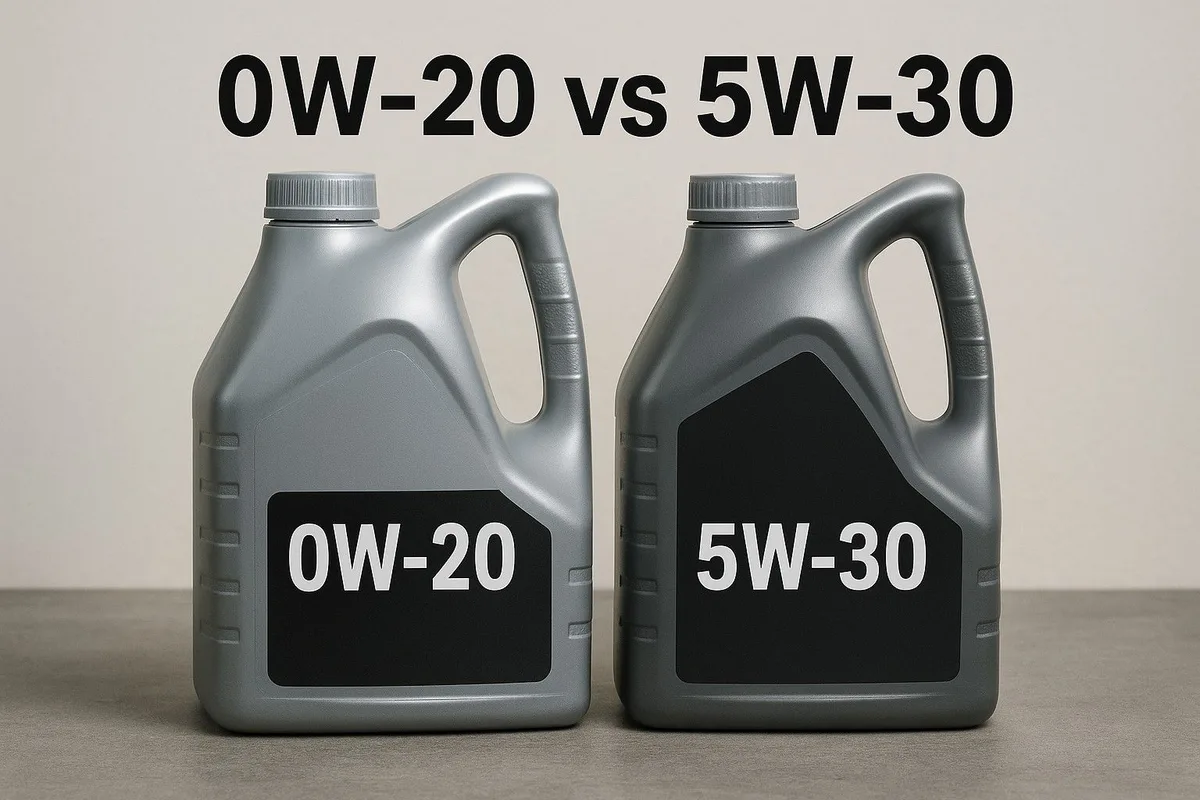
These two engines live under the same hood, but they ask for different care when it comes to oil. Here's the breakdown:
| Spec | 2.7L 4-Cylinder (2TR-FE) | 4.0L V6 (1GR-FE) |
|---|---|---|
| Recommended viscosity | SAE 5W-30 | SAE 5W-30 |
| Oil capacity (with filter) | 5.0 quarts | 5.5 quarts |
| Recommended certification | API SN / ILSAC GF-5 | API SN / ILSAC GF-5 |
| Oil filter part (OEM) | 04152-YZZA1 | 04152-YZZA1 |
| Common high-mileage issue | Valve train noise | Slight oil consumption |
Both engines call for 5W-30. That part is simple. But the V6 holds an extra half-quart, which matters if you're buying oil by the jug.
Buy a 6-quart container for the V6 and a 5-quart for the four-cylinder, and you'll have a little left over for top-offs either way.
The four-cylinder tends to be more forgiving with oil choice. It's a simpler engine with less heat output. The V6 runs hotter, especially under load.
If you tow with the V6, synthetic oil isn't optional. It's necessary to prevent viscosity breakdown at high temperatures.
One thing both engines share: they don't like 0W-20. Some newer Toyotas spec it, but the 2012 generation was engineered around 5W-30. Using 0W-20 long-term can lead to increased wear, especially in warmer climates.
What the Viscosity Numbers Actually Mean
SAE 5W-30 breaks down like this. The "5W" tells you how the oil flows at cold temperatures. The "W" stands for winter.
Lower number means thinner oil in the cold, which helps your engine start and get oil circulating quickly. The "30" tells you the oil's thickness at normal operating temperature around 212°F. Higher number means thicker film at high heat.
So 5W-30 acts like a thick 5-weight oil when cold and a thick 30-weight when hot. That's the sweet spot for most driving conditions.
0W-20 is thinner at both ends. It flows even better in extreme cold, but it provides a thinner protective film at operating temperature. For the 2012 Tacoma's engine tolerances, that thinner film can lead to metal-on-metal contact over time, especially in the V6.
Here's when you'd actually consider 0W-20:
- You live where winter temperatures regularly drop below -20°F
- You have trouble starting the engine in extreme cold
- You're willing to change oil more frequently (every 3,000-4,000 miles)
- You've confirmed with a Toyota dealer that your specific engine tolerates it
For everyone else, 5W-30 is the right call. It's what the owner's manual specifies. It's what Toyota engineers designed the engine around.
And it's what thousands of high-mileage Tacomas have proven works.
Full Synthetic vs Conventional — Which One for Your Truck?
You've got three main choices at the auto parts store.
Conventional oil is the cheapest option. It works fine if you're changing it every 3,000-4,000 miles. It breaks down faster at high temperatures.
For a 2012 Tacoma driven gently on paved roads, conventional oil will keep the engine healthy if you stay on top of changes.
Synthetic blend is a mix of conventional and synthetic base stocks. It offers better heat resistance than straight conventional without the full synthetic price tag. This is a solid middle ground for drivers who want better protection but aren't ready to pay for full synthetic.
Full synthetic provides the best protection. It resists thermal breakdown, flows better in cold weather, and lasts longer between changes. For the 2012 Tacoma, our research points to full synthetic as the smartest long-term choice for three reasons.
First, the V6 runs hot, especially during towing or off-road use. Synthetic handles that heat without thinning out. Second, these engines are now 14-plus years old.
O-rings and seals can use the extra protection synthetic provides against sludge and deposit buildup. Third, you can safely run 7,500 to 10,000-mile intervals with synthetic if your driving is mostly highway and light duty.
Our recommendation: use full synthetic 5W-30. It costs about $8-12 more per change than conventional. Spread over 5,000 miles, that's roughly two cents per mile for significantly better engine protection.
High-Mileage Oil: When You Need It and Why
Your 2012 Tacoma is now at least 13 years old. If it has more than 75,000 miles on it, you need to think about high-mileage oil. Most of these trucks are well past that mark by now.
High-mileage oil contains special seal conditioners that help rejuvenate old gaskets and o-rings. These seals dry out and shrink over time. When they do, oil seeps past them.
That's where your minor oil leak comes from.
High-mileage formulations also have higher levels of detergents. They clean out sludge deposits that have built up over a decade of driving. And they include friction modifiers that can reduce wear in engines with looser tolerances.
Here's when to switch:
- Over 75,000 miles, Strongly consider it. Your seals need the extra help.
- Over 100,000 miles, Switch now if you haven't already. The benefits compound the longer you use it.
- You see small drips on the driveway, High-mileage oil often reduces or eliminates minor leaks within two or three changes.
Can you use high-mileage oil in a lower-mileage engine? Yes. It won't hurt anything.
But you're paying extra for additives you don't need yet. Save the premium and stick with standard full synthetic until you cross that 75,000-mile threshold.
One warning: don't switch to high-mileage oil and immediately expect your engine to stop leaking completely. It conditions seals gradually over several thousand miles.
The Complete Oil Change Specs
Let's get the numbers down so you don't have to guess. These specs come directly from Toyota service documentation for the 2012 model year.
Oil capacity by engine:
| Engine | With filter change | Without filter change |
|---|---|---|
| 2.7L 4-cylinder (2TR-FE) | 5.0 quarts (4.7 liters) | 4.6 quarts (4.4 liters) |
| 4.0L V6 (1GR-FE) | 5.5 quarts (5.2 liters) | 5.1 quarts (4.8 liters) |
Always change the filter when you change the oil. The extra few dollars buys you clean oil circulating through a clean filter.
Oil filter specs:
- OEM Toyota part number: 04152-YZZA1
- Thread size: M20 x 1.5
- Gasket diameter: 62mm
- Torque: hand-tight plus 3/4 turn
Drain plug specs:
- Thread size: M14 x 1.5
- Torque: 29 ft-lbs (39 Nm)
- Gasket: Replace every time
Oil type and certification:
- Viscosity: SAE 5W-30 (primary), SAE 0W-30 (extreme cold alternative)
- API certification: SN or higher (SP is backward-compatible)
- ILSAC certification: GF-5 or higher (GF-6 is backward-compatible)
Your Step-by-Step Oil Change Process
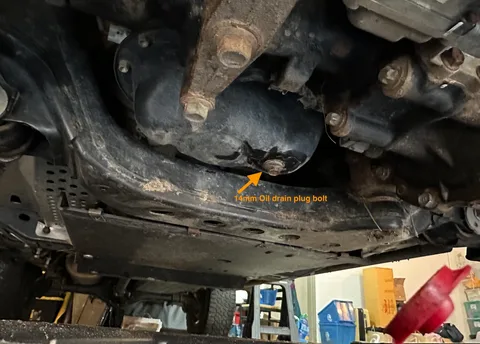
Changing your own oil on a 2012 Tacoma is straightforward. The oil filter sits in an accessible spot on the passenger side of the engine block. The drain plug faces rearward on the oil pan.
What you'll need:
- 5 or 6 quarts of 5W-30 oil (depending on your engine)
- OEM or equivalent oil filter
- 14mm socket or wrench for the drain plug
- Oil filter wrench (for removal only)
- Drain pan
- Funnel
- New crush washer
The process:
Warm up the engine. Run it for 2-3 minutes. Warm oil drains faster and carries more contaminants with it.
Position your drain pan. Slide it under the oil pan. The drain plug is on the rear-facing side.
Remove the drain plug. Use your 14mm socket. Turn counterclockwise. Let it drain for at least 5 minutes.
Replace the crush washer. Install the new one on the drain plug. Torque to 29 ft-lbs.
Remove the old oil filter. Position the drain pan under the filter first. It will spill about half a quart. Turn the filter counterclockwise.
Prep the new filter. Rub a thin layer of fresh oil on the new filter's rubber gasket. Screw it on by hand until the gasket contacts the mounting surface. Then tighten another 3/4 turn by hand.
Add new oil. Remove the oil filler cap. Insert your funnel. Pour in the full capacity minus one quart. Check the dipstick. Then add the final quart slowly.
Check for leaks. Start the engine. Let it run for 30 seconds. Shut it off. Look under the truck for drips at the drain plug and filter.
Top off. Let the engine sit for 2 minutes. Check the dipstick. Add oil as needed to reach the full mark.
The 8 Most Common Mistakes Tacoma Owners Make
After digging through countless forum threads and service records, these mistakes show up again and again.
Using 0W-20 because "that's what Toyotas use now." Wrong generation. Your 2012 was designed for 5W-30.
Overtightening the drain plug. This strips the threads in the oil pan. Torque to 29 ft-lbs.
Overtightening the oil filter. Hand-tight plus 3/4 turn is enough. Going harder crushes the gasket.
Skipping the crush washer replacement. That little ring costs about 50 cents. Reusing it means your drain plug might not seal.
Using the wrong API certification. API SN or higher is required. Oil without the API donut might not have the right anti-wear additives.
Mixing viscosities to "split the difference." Oil formulations are precise chemical packages. Mixing them can mess with the additive balance.
Not resetting the oil maintenance light. The light stays on until you reset it. The procedure takes 10 seconds.
Letting the oil change go too long. Most people drive in severe conditions. Change at 5,000 miles unless you're sure you're in the normal service category.
When to Use 0W-20 Instead of 5W-30
This is the most common question we see from Tacoma owners in cold climates. Here's the honest answer.
Toyota's official documentation for the 2012 Tacoma lists SAE 5W-30 as the primary recommendation. It also mentions that SAE 0W-30 may be used for improved cold starting. Not 0W-20. 0W-30.
There's a difference.
When 0W-20 might make sense:
- Your winter temperatures regularly drop below -30°F
- The engine struggles to crank in the morning
- You're willing to change oil at 3,000-4,000 mile intervals
When to stick with 5W-30:
- Your winters rarely go below -10°F
- You tow, haul, or drive aggressively
- You want to run 5,000-plus mile intervals
- You live in a warm climate most of the year
Unless you live in northern Canada, Alaska, or the northern plains where -30°F is normal, 5W-30 is the right choice. The "W" rating of 5 means it flows well down to -20°F. Most people never see temperatures that low.
If you do decide to run 0W-20 in winter, change back to 5W-30 in spring. Don't run it year-round. And keep those intervals tight.
The thinner oil shears down faster.
What Happens If You Use the Wrong Oil
Using the wrong oil in your 2012 Tacoma doesn't usually blow the engine up overnight. It's slower than that.
Too thin an oil like 0W-20 means less film strength between moving parts. Over 10,000 or 20,000 miles, that shows up as accelerated bearing wear and timing chain stretch. You'll notice a rattle on cold starts first.
Too thick an oil like 10W-40 means poor cold flow. The engine starts dry. Every cold start with thick oil causes more wear than a warm start with the right viscosity.
Over years, that adds up to piston ring wear and oil consumption.
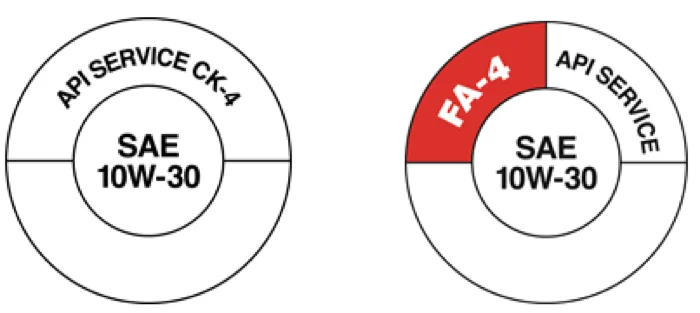
The wrong API certification matters too. Oil without the SN or SP rating may lack sufficient anti-wear additives. Older ratings like SL or SM don't have the same level of sludge protection.
Your VVT system specifically needs clean oil with the right additives to keep the variable valve timing working properly.
The good news? If you catch it early, switching back to the correct 5W-30 with API SN certification stops the damage. No permanent harm done.
But if you've been running the wrong oil for 50,000 miles, you've probably shortened your engine's life.
How Often to Change It — Normal vs Severe Service
Toyota says 10,000 miles between oil changes with synthetic oil under normal driving conditions. Here's the catch. Almost nobody drives in "normal" conditions.
Normal service means mostly highway driving at steady speeds. Moderate temperatures. Clean roads.
No towing. No idling. If your commute is 30 miles of open freeway each way, you're in normal service.
Severe service means anything else. And most Tacoma owners fall here.
| Condition | Recommended interval |
|---|---|
| Short trips under 10 miles | 5,000 miles |
| Towing or hauling | 4,000-5,000 miles |
| Dusty or off-road driving | 3,000-5,000 miles |
| Stop-and-go city traffic | 5,000 miles |
| Highway cruising only | 7,500-10,000 miles |
Here's a simple rule. If you have to think about whether you're in severe service, you probably are. Change at 5,000 miles with synthetic and you're covered no matter what.
Resetting the Oil Maintenance Light
After you've put fresh oil in, you need to reset the maintenance light. The process takes about 10 seconds.
- Turn the ignition to the ON position. Don't start the engine.
- Press and hold the TRIP button until the odometer display starts flashing.
- While it's flashing, press and hold the TRIP button again for about 5 seconds.
- The maintenance light will turn off. The odometer stops flashing.
If the light comes back on immediately, you didn't hold the button long enough. Try again. Don't reset the light before you actually change the oil.
Reset only after the fresh oil is in and the filter is installed.
Cost Breakdown: DIY vs Shop vs Dealership
Let's talk money. Oil changes are one of the easiest ways to save money on car maintenance if you do them yourself.
| Method | Cost |
|---|---|
| DIY with full synthetic | $30-$55 |
| Quick lube shop | $70-$100 |
| Toyota dealership | $90-$130 |
DIY saves you $40-$80 per change. Over 10 oil changes (50,000 miles), that's $400-$800. The tradeoff is time and mess.
A DIY change takes 30-45 minutes. A shop does it in 20 minutes while you wait.
If you're not comfortable crawling under your truck, paying a shop is fine. Just ask what oil they're using. Some shops push conventional unless you ask for synthetic.
Real-World Decision Guide
Let's put it all together. Here's your decision tree depending on your situation.
If you have the 2.7L four-cylinder: Use 5W-30 full synthetic. Change every 5,000 miles. Use high-mileage oil if over 75,000 miles.
Capacity is 5.0 quarts with filter.
If you have the 4.0L V6: Use 5W-30 full synthetic. Change every 5,000 miles. High-mileage oil strongly recommended if over 75,000 miles.
Your V6 runs hotter and needs the extra protection. Capacity is 5.5 quarts with filter.
If you live in extreme cold (below -20°F): Consider 0W-30 or 0W-20 for winter months only. Switch back to 5W-30 in spring. Keep intervals at 3,000-4,000 miles with the thinner oil.
If you tow or off-road regularly: Full synthetic is non-negotiable. Change at 4,000 miles. Check your oil level every other gas fill-up.
If you just bought a used Tacoma: Change the oil immediately. Use full synthetic 5W-30. Reset the maintenance light.
Start fresh.
Frequently Asked Questions
Can I use 0W-20 in my 2012 Tacoma year-round?
Not recommended. The 2012 Tacoma was engineered for 5W-30. Using 0W-20 year-round provides less film strength at operating temperature, which can accelerate wear in both the four-cylinder and V6 engines.
How much oil does a 2012 Tacoma take?
The 2.7L four-cylinder takes 5.0 quarts with a filter change. The 4.0L V6 takes 5.5 quarts with a filter change. Always check your dipstick after filling to confirm the level.
What happens if I use conventional oil instead of synthetic?
Conventional oil works fine if you change it every 3,000-4,000 miles. It breaks down faster at high temperatures. For the V6 or any towing application, synthetic is strongly recommended.
How do I know if my Tacoma has the 2.7L or 4.0L engine?
Check the owner's manual or look at the emissions label under the hood. The V6 says "4.0L V6" on the engine cover. The four-cylinder is smaller and says "2.7L 16-Valve DOHC" on the valve cover.
Is Toyota Genuine Motor Oil worth the extra cost?
It's a solid choice and meets all specifications. But any major brand full synthetic 5W-30 with API SN certification works just as well. The key is the certification, not the brand name.
Can I switch from conventional to synthetic without issues?
Yes. Switching to synthetic won't cause leaks or problems. In fact, it often reduces sludge and improves engine cleanliness.
Just make sure you use the correct 5W-30 viscosity.