
If you own a 2012 Toyota Tundra, the first question that comes up at oil change time is simple: what exactly goes in it? The answer matters more than you might think. The 2012 toyota tundra oil type isn't one-size-fits-all, because Toyota put three different engines in that generation of truck.
Drop the wrong stuff in and you're not just wasting money. You're risking sludged-up rings, noisy lifters, and a shorter engine life.
Here's the short version from the factory documentation. The 5.7L V8 calls for SAE 0W-20 full synthetic. The 4.6L V8 and the 4.0L V6 are officially specced for 5W-30, though Toyota has since updated some recommendations.
All three should meet API SN or newer, and ILSAC GF-5 or GF-6. As of 2026, that's still the gold standard for this engine family. Now let's walk through what each engine needs and why it matters.
Quick Answer
The 2012 Toyota Tundra with the 5.7L V8 uses 0W-20 full synthetic oil. The 4.6L V8 and 4.0L V6 use 5W-30. All engines require API SN or newer certification.
Oil capacity ranges from 6.0 to 7.5 quarts depending on the engine. Toyota recommends changes every 5,000 miles under severe service. That covers most real-world driving.
Why Getting This Wrong Costs Real Money
The 5.7L V8 in particular was designed around 0W-20. Its variable valve timing system relies on precise oil pressure and flow. Thicker oil delays actuation, which can throw timing codes and reduce performance.
In cold weather, 5W-30 in a 5.7L engine thickens up enough to starve the timing chain tensioners on startup. That wear is permanent. Worse, running the wrong viscosity can void a warranty claim if a major failure happens.
Toyota's technical service bulletins are clear about what goes where.
The good news is that getting it right is cheap and easy. A 5-quart jug of quality 0W-20 runs about $25 to $30 at any auto parts store. Compare that to a $4,000 short block replacement.
The Three Engines and What Each Needs
4.0L V6 (1GR-FE)
This is the base engine. Toyota used it for years in the 4Runner, FJ Cruiser, and Tacoma. Factory spec is 5W-30 conventional or synthetic blend.
As these trucks age, many owners switch to a full synthetic 5W-30. That's a solid move. Full synthetic handles heat better, resists breakdown longer, and keeps the internals cleaner.
Oil capacity is 6.5 quarts with a filter change. The filter is a standard spin-on cartridge located on the passenger side of the block.
4.6L V8 (1UR-FE)
Toyota introduced this engine in 2010 as the mid-range V8. Factory spec is 5W-30. That hasn't changed.
The 4.6L holds exactly 6.0 quarts. It uses the same filter as the 4.0L, part #04152-YZZA1. If you're towing regularly or living in extreme heat, a full synthetic 5W-30 gives you better high-temperature shear stability.
Stick to 5,000-mile intervals if you tow. You can stretch to 7,500 if you don't.
5.7L V8 (3UR-FE)
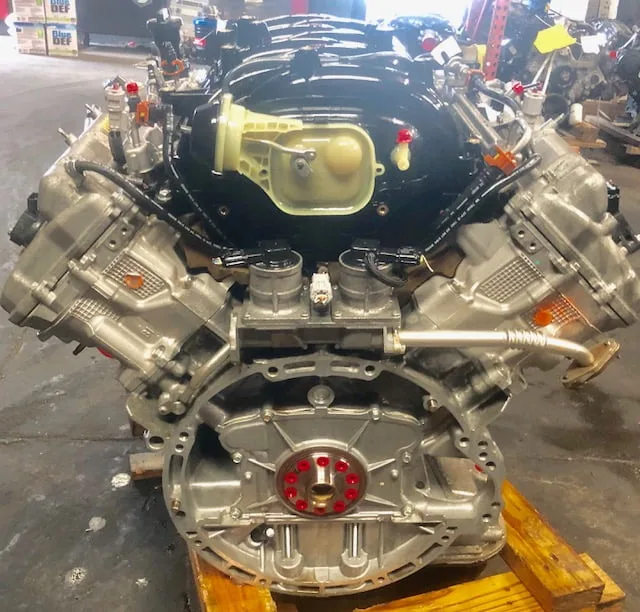
Image source: Web (Bing) / autopartsorlando.com (Web image (fair-use with source credit))
This is the engine people buy the Tundra for. It has the most specific oil requirement: 0W-20 full synthetic. No conventional, no blending.
Full synthetic only.
The 5.7L uses dual independent variable valve timing. Those cam phasers are oil-pressure-actuated. Toyota designed the oil circuit passages for the flow characteristics of 0W-20.
Using 5W-30 makes the phasers sluggish. You'll feel it as a slight hesitation off idle. Over time, the timing chain tensioners wear faster.
Capacity is 7.5 quarts.
0W-20 vs 5W-30: Which One Actually Goes In Your Truck
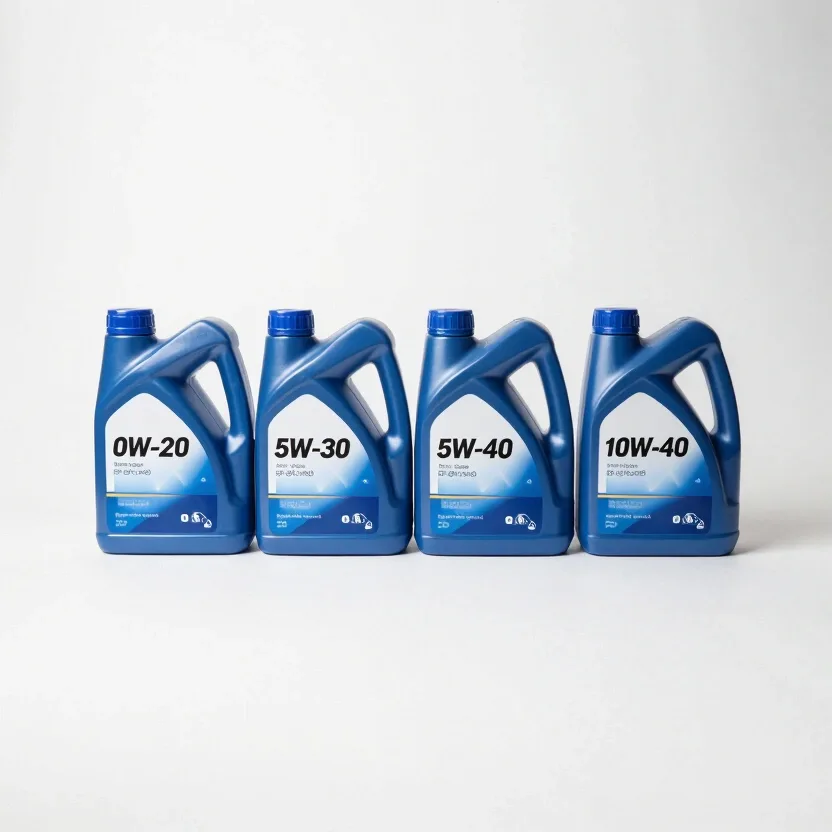
Image source: Bing (Web (fair-use with source credit))
Here's the decision tree:
- If you have a 5.7L V8: Use 0W-20. Period. No exceptions.
- If you have a 4.6L V8: Use 5W-30. You can use 0W-20 in extreme cold below -20°F as an alternative per Toyota's TSB.
- If you have a 4.0L V6: Use 5W-30. Full synthetic preferred but not required.
- If you live in a very hot climate and tow heavy: 5W-30 in the 4.6L or 4.0L is fine. Some 5.7L owners in Arizona or Texas run 5W-30 in summer. That's a personal choice, not a Toyota recommendation.
Check your engine size first. The sticker under the hood tells you exactly what the factory recommends.
Synthetic vs Conventional – What a 12-Year-Old Engine Needs
If the truck has been well-maintained its whole life, full synthetic is the better move. Conventional oil breaks down faster under heat. It leaves more deposits.
Synthetic oil resists that. It also flows better at low temperatures, which reduces startup wear on bearings and chains.
If the engine has over 150,000 miles and has only ever seen conventional oil, you can still switch to synthetic. The old myth about synthetic causing leaks in older engines is outdated. Modern synthetic formulations include seal conditioners.
If you see a small leak after switching, that's old gunk dissolving. Replace the gaskets and move on.
For the 5.7L, synthetic isn't optional. It's the spec. For the 4.6L and 4.0L, synthetic is a smart upgrade if your budget allows.
The extra cost is maybe $10 to $15 per change.
The Oil Filter That Won't Let You Down
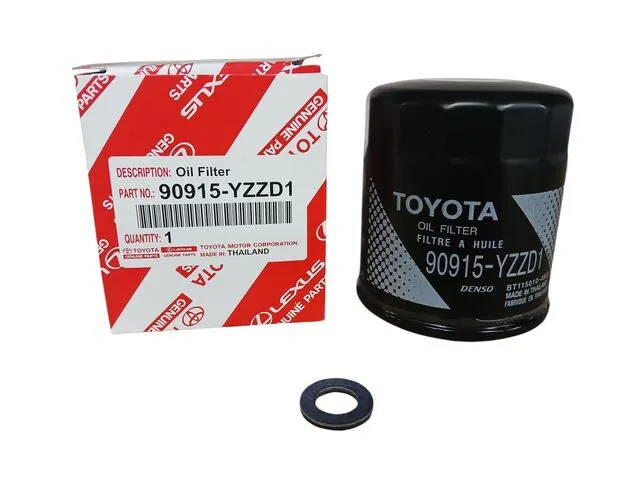
Image source: Bing (Web (fair-use with source credit))
You can put the best oil in the world in your Tundra, but a cheap filter ruins it. The filter holds a check valve that keeps oil in the galleries when the engine is off. That check valve matters for the VVT system.
Toyota's genuine filter, part #04152-YZZA1, is the safest bet. It costs about $6 to $8. It has the correct bypass valve pressure and fits every engine in the 2012 Tundra lineup.
Aftermarket options from Wix, Purolator, and Mobil 1 are also good. Look for filters with a silicone anti-drainback valve. Avoid the ultra-cheap no-name filters.
They often lack the check valve entirely.
Always replace the drain plug gasket. It's part #90430-12031 and costs about a dollar. The factory gasket is a crush washer.
It deforms slightly when torqued to spec. Replace it every oil change.
Oil Capacity and What You'll Pay (DIY vs Shop)
| Engine | Oil Capacity | Oil Cost (Full Synthetic) | Filter + Gasket | Total DIY |
|---|---|---|---|---|
| 4.0L V6 | 6.5 quarts | $28-$35 | $8-$12 | $36-$47 |
| 4.6L V8 | 6.0 quarts | $26-$32 | $8-$12 | $34-$44 |
| 5.7L V8 | 7.5 quarts | $32-$40 | $8-$12 | $40-$52 |
A quick-lube place charges $70 to $90 for a full synthetic change on a Tundra. A dealership runs $90 to $120. DIY saves you $30 to $70 per change.
Over 10 changes that's $300 to $700.
The tools you need are basic. A 14mm socket for the drain plug. An oil filter wrench.
A drain pan. A funnel. Total tool investment is about $25 if you don't own any of it.
Step-by-Step: How to Change It Right
Step 1: Warm the engine slightly. Run it for three to five minutes. Warm oil flows faster and carries more contaminants out.
Step 2: Park on level ground. Chock the rear wheels. Engage the parking brake.
Step 3: Drain the old oil. Put the drain pan under the oil pan. Remove the fill cap on top. Loosen the drain plug with a 14mm socket.
Pull it out by hand once it's loose.
Step 4: Replace the drain plug gasket. Slide the old crush washer off. Slide the new one on. Torque the plug to 30 ft-lbs.
That's snug plus a quarter turn.
Step 5: Remove the old filter. Use the filter wrench to break it loose. Spin it off by hand.
Step 6: Prep the new filter. Wipe the mounting surface clean. Put a thin film of fresh oil on the new filter's rubber gasket. Fill the filter halfway with fresh oil if you can.
Step 7: Install the new filter. Spin it on by hand until the gasket contacts the mounting surface. Tighten it another three-quarter turn by hand.
Step 8: Add new oil. Pour in the correct amount from the capacity table. Replace the fill cap.
Step 9: Check for leaks. Start the engine. Let it idle for 30 seconds. Check under the truck for drips.
Step 10: Check the level. Shut the engine off. Wait five minutes. Pull the dipstick.
Wipe it. Reinsert it. The level should be between the low and full marks.
Step 11: Reset the maintenance light. With the key in the OFF position, hold the trip reset button. Turn the key to ON. Keep holding until the light flashes and goes out.
Mistakes Even Experienced Owners Make
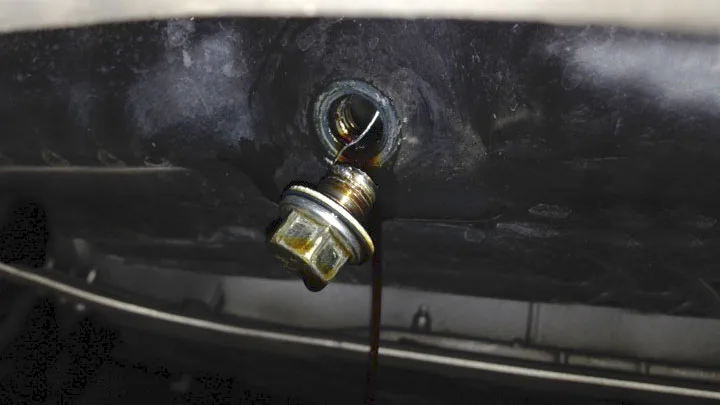
Image source: Web (Bing) / cartreatments.com (Web image (fair-use with source credit))
The Tundra's oil pan is aluminum. Aluminum threads are softer than steel threads. Over-tightening the drain plug strips them.
The torque spec is 30 ft-lbs. That's not a suggestion. Use a torque wrench.
If you don't own one, tighten the plug until it stops, then give it a quarter turn.
Another common mistake is forgetting the old filter gasket. Sometimes the rubber gasket sticks to the engine block. If you install the new filter on top, you get a double gasket.
That causes a massive oil leak within minutes. Always wipe the mounting surface and verify no gasket is stuck there.
Third mistake: overfilling. Too much oil causes foaming. Foaming means air bubbles in the oil.
Air doesn't lubricate. Rod bearings hate that.
Fourth: cross-threading the drain plug. Start it by hand. Never use a ratchet to start the plug.
If it doesn't turn smoothly by hand, back it out and try again.
Extreme Climate, Towing, and High Mileage – When to Adjust
Toyota's owner manual has two schedules: normal and severe. Most of us are in the severe category.
Severe service means any of these:
- Short trips under 10 miles in cold weather
- Towing a trailer or hauling heavy loads
- Driving on dusty or sandy roads
- Extended idling
- Frequent stop-and-go traffic
If any of that sounds like your week, use the 5,000-mile interval. Full synthetic handles severe service better than conventional.
Towing specific advice. The 5.7L engine runs hot under load. Oil temperatures can climb above 240 degrees Fahrenheit. Synthetic oil holds up much longer.
If you tow regularly, change it at 5,000 miles. Don't stretch it.
Cold climate advice. Below freezing, 0W-20 is the clear winner. It flows at -40 degrees Fahrenheit. If you live where winter lasts four months, stick with 0W-20 even in the 4.0L and 4.6L engines.
Toyota's TSB allows this substitution for extreme cold.
High mileage advice. Over 100,000 miles, high-mileage formulations include extra seal conditioners and detergents. They can help reduce minor leaks and keep piston rings clean. Mobil 1 High Mileage and Pennzoil High Mileage both meet the API SN spec.
Signs Your Oil Choice Is Hurting the Engine
Noisy lifters on cold start. If you hear a clicking or tapping sound for the first few seconds after starting, the oil is too thick at startup or the anti-drainback valve in your filter failed.
Timing chain rattle. A brief rattle on startup from the front of the engine indicates the timing chain tensioners aren't getting oil pressure fast enough. Switch to 0W-20 immediately if you're running anything else in the 5.7L.
Oil pressure light flickering at idle. This means the oil is too thin when hot, or the level is low. Check the dipstick first. If it's full, the oil may have broken down.
Change it.
Blue smoke from the exhaust on startup. Blue smoke means oil is getting past the valve seals or piston rings. Switch to a high-mileage formulation and plan for a repair.
Fuel smell in the oil. Change the oil immediately. Gas in oil destroys viscosity and bearing protection.
Quick Reference Specs Card
| Engine | Oil Type | Viscosity | Capacity (quarts) | Filter Part | Plug Torque |
|---|---|---|---|---|---|
| 4.0L V6 (1GR-FE) | Synthetic or blend | 5W-30 | 6.5 | 04152-YZZA1 | 30 ft-lbs |
| 4.6L V8 (1UR-FE) | Synthetic or blend | 5W-30 | 6.0 | 04152-YZZA1 | 30 ft-lbs |
| 5.7L V8 (3UR-FE) | Full synthetic only | 0W-20 | 7.5 | 04152-YZZA1 | 30 ft-lbs |
All three use the same oil filter and drain plug gasket. That makes buying supplies easy.
Final Take: The One Oil I'd Put in My Own Tundra
For the 5.7L V8, use 0W-20 full synthetic. Every time. Mobil 1, Pennzoil Platinum, Valvoline Advanced, or Toyota Genuine.
They all meet the API SN spec and the ILSAC GF-5 standard.
For the 4.6L and 4.0L engines, 5W-30 full synthetic is the best choice. You can use a blend or conventional if you're on a tight budget. But synthetic gives you better cold flow, longer life, and cleaner internals.
Change it every 5,000 miles if you tow, idle, or drive short trips. Use a quality filter. Replace the drain plug gasket.
Check the level between changes.
That's it. No mystery. No magic oil.
Just the right stuff in the right engine at the right interval.
Frequently Asked Questions
Can I use 5W-30 in my 2012 Tundra 5.7L?
No. Toyota specifically requires 0W-20 full synthetic for the 5.7L V8. The variable valve timing system depends on the flow characteristics of 0W-20.
Using 5W-30 can cause sluggish phaser response and increased timing chain wear.
How often should I change the oil in my 2012 Tundra?
Under normal driving conditions, every 7,500 miles. Under severe service, every 5,000 miles. Towing, short trips, extended idling, and dusty roads all count as severe service.
What happens if I put the wrong oil in my Tundra?
With the wrong viscosity, you risk reduced fuel economy, noisier operation, and faster wear on timing components. In the 5.7L engine, thicker oil delays VVT actuation. In extreme cases, wrong oil can contribute to sludge buildup.
Does my 2012 Tundra need synthetic oil?
Only the 5.7L V8 requires full synthetic. The 4.0L V6 and 4.6L V8 are specced for conventional 5W-30. Switching to synthetic in any engine provides better cold-start protection and cleaner internals.
How much oil does a 2012 Tundra 5.7L take?
Exactly 7.5 quarts with a filter change. That means two 5-quart jugs. You'll have about 2.5 quarts left over for top-offs between changes.
Can I switch from conventional to synthetic in my high-mileage Tundra?
Yes. Modern synthetic oils include seal conditioners that won't cause leaks. If your engine already has worn seals, any oil will leak.
Switch to synthetic and replace the gaskets if needed.