
The 2012 Toyota Venza problems list reads like a case study in how solid bones can hide expensive surprises. You're looking at a crossover that shares its platform with the Camry and Highlander, both reliability legends, yet this model year carries three active safety recalls that can leave you without brakes, steering, or side airbag protection. Aggregate NHTSA complaint data shows brake actuator and EPS failures cluster between 80,000 and 120,000 miles.
That mileage window aligns perfectly with the used-car sweet spot where most second owners buy.

Quick Answer
The 2012 Toyota Venza has three major safety recalls. Brake actuator failure causes sudden hard pedal and long stops. Electric power steering can quit without warning.
Side curtain airbags may not deploy in a crash. The 2.7L four-cylinder burns oil past 80,000 miles. The 3.5L V6 water pump fails around 100,000 miles.
Transmission shudder appears at 35 to 45 mph. Repair costs range from $1,400 to $6,000.
The Stakes: Why 2012 Venza Problems Aren't Just Annoyances
Most used-car headaches cost money and time. These specific defects can cost you control of the vehicle. A brake actuator failure at 65 mph means your pedal goes rock-hard and stopping distance doubles.
An EPS motor death on a sweeping interstate ramp leaves you wrestling a 3,800-pound crossover with zero power assist. A side curtain inflator that doesn't fire turns a survivable T-bone into a life-altering injury. NHTSA ODI records confirm all three scenarios have occurred in real-world crashes.
The recalls exist because Toyota and regulators agreed the risk crossed the threshold from nuisance to hazard. As of 2026, parts for the brake actuator recall (20V676) still face periodic backorders that can leave your car parked for weeks.
Quick Reality Check: The Three Issues That Can Strand or Hurt You
Three defects dominate the risk profile. Brake actuator failure triggers VSC, ABS, and brake warning lights simultaneously, then the pedal firms up and you need both legs to stop. EPS failure illuminates the EPS warning light and steering effort jumps from two fingers to two hands instantly.
Side curtain airbag non-deployment gives zero warning; you only discover the defect when the curtain stays stowed during a side impact. These three share a common thread: they disable safety systems that drivers assume will always work. The brake actuator and EPS recalls cover parts and labor at any Toyota dealer.
The side curtain recall (19V430) also covers replacement, but some VINs received updated inflators that were later recalled again. Check your VIN at nhtsa.gov/recalls before you assume you're covered.
Brake Actuator Failure: The Hidden Safety Defect
The brake actuator assembly combines the skid control ECU, hydraulic pump, and pressure sensors into one unit mounted under the hood near the master cylinder. When the internal solenoid valves or pump motor fail, the system loses its ability to generate boost pressure. You lose power assist, VSC, traction control, and hill-start assist all at once.
The pedal feels like a manual-brake truck from the 1970s. Stopping distance from 60 mph can increase by 40 to 60 feet. NHTSA recall 20V676 covers 2010, 2015 Venza models among 270,000+ vehicles.
The remedy replaces the actuator with an updated design. Dealer repair takes 2.5 hours book time. Independent shops charge $1,800, $2,400 if the recall has expired or parts are unavailable.
Techstream scan tool is mandatory for the bleed procedure, manual bleeding leaves air in the circuits and the lights stay on.

Warning signs to watch:
- Intermittent brake warning light that clears after restart
- Slightly longer pedal travel on first morning stop
- Faint electric pump noise continuing after key-off
- VSC light flashing during normal braking
If you notice any of these, schedule the recall repair immediately. Do not wait for total failure.
Electric Power Steering Loss: Sudden Heavy Steering at Speed
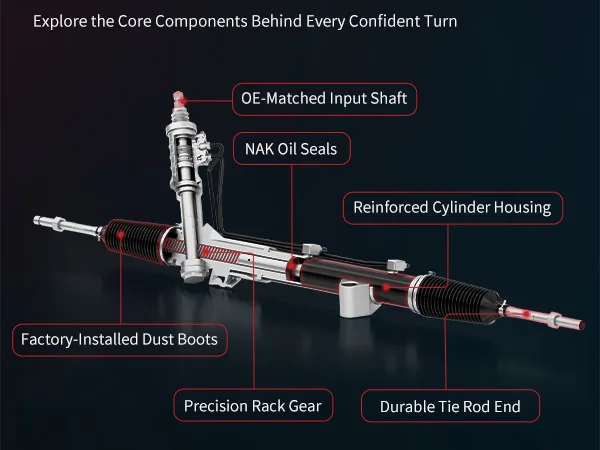
The EPS rack uses a brushless DC motor mounted directly on the steering gear. When the motor windings or position sensor fail, the system defaults to manual steering mode with no gradual warning. The EPS light illuminates and effort spikes instantly.
At parking speeds it's a workout. At 70 mph on a curved off-ramp it's dangerous. Recall 19V184 covers the EPS motor and ECU for 10 years from first sale or 150,000 miles, whichever comes first.
That window closes for many 2012 models in 2022, 2023. If your VIN falls outside coverage, the rack assembly runs $1,200, $1,600 parts plus 3, 4 hours labor. Subframe drop is required for rack removal.
Alignment is mandatory after reinstallation. Aftermarket remanufactured racks exist but carry higher comeback rates per technician forums. Insist on a Toyota-sourced unit if you pay out of pocket.
Recall coverage check:
- Locate your VIN on the driver's door jamb or windshield base
- Visit nhtsa.gov/recalls and enter the VIN
- Look for recall 19V184000, "Electric Power Steering Motor"
- If "Remedy Not Yet Available" appears, call your dealer weekly for parts status
- Document every call, lemon law claims require repair attempt records
Side Curtain Airbag Non-Deployment: The Recall That Missed Some Cars
The side curtain inflators in 2009, 2012 Venza models can develop propellant degradation over time, especially in high-humidity regions. When the inflator fails to generate sufficient pressure, the curtain stays folded in the headliner during a side crash. Recall 19V430 addresses this with replacement inflators.
However, NHTSA investigation 19V430000 revealed that some replacement inflators sourced from a secondary supplier exhibited the same defect pattern. A follow-up recall (21V859) covers those secondary units. If your Venza was repaired under 19V430 before 2021, the fix itself may be defective.
Verify repair history through a dealer VIN lookup, they can see which inflator part number was installed. The repair takes 1.5 hours and requires headliner removal. No owner should pay for this work; both recalls remain open regardless of mileage or ownership transfers.
Transmission Torque Converter Shudder: Nuisance or Warning Sign
The lockup clutch inside the U660E torque converter can develop a glazed surface that slips under light throttle at 35 to 45 mph. You feel a subtle vibration through the seat, like driving over rumble strips, that vanishes when you lift or press harder. TSB T-SB-0078-19 addresses this with a three-time drain-fill using Toyota WS fluid followed by an ECU reflash.
The procedure costs $350 to $500 at an independent shop. It resolves the shudder roughly 60 percent of the time according to technician feedback. When the flush fails the valve body wear is usually too advanced.
A remanufactured valve body runs $1,800 to $2,200 installed. A full transmission replacement exceeds $4,500. If you feel the shudder during a test drive, budget for the flush first but plan for the valve body.
How to confirm it is the converter
- Warm the engine to full operating temperature
- Accelerate gently to 40 mph on a flat road
- Hold throttle steady at 15 to 20 percent
- Feel for a cyclic vibration at 1 to 2 Hz
- Tap the brakes lightly, shudder should stop instantly
If the vibration matches this pattern the converter clutch is the source. Engine misfire feels different, it follows engine speed not vehicle speed.
2.7L Four-Cylinder Oil Consumption: When Normal Isnt Normal
The 2AR-FE engine uses low-tension piston rings and a thin-ring land design to reduce friction. That design burns one quart every 1,000 to 2,000 miles once the rings seat poorly or carbon packs the oil control rings. Toyota TSB 0094-11 revised the piston and ring set for 2011 and later production but 2012 models still show the issue.
Consumption under one quart per 1,200 miles falls within Toyota spec, they will not repair it under warranty. Many owners add oil between changes and drive on. That works until the catalytic converter clogs from oil ash or the rings seize completely.
A piston and ring job requires a short block replacement at 18 to 22 hours labor. The bill lands at $4,500 to $6,000. At that point the repair exceeds the vehicle value.
Check the dipstick every 500 miles. If you add more than one quart per 1,000 miles start budgeting for a different vehicle.
Quick consumption audit
- Check oil cold on level ground every fill-up
- Record miles and quarts added in a notebook
- Calculate quarts per 1,000 miles monthly
- Above 1.0 quart per 1,000 miles, plan exit strategy
- Above 1.5 quarts per 1,000 miles, catastrophic failure risk rises sharply
3.5L V6 Water Pump: The Six-Hour Job Nobody Warns You About
The 2GR-FE water pump sits behind the timing chain cover driven by the timing chain itself. When the seal weeps you see pink crust at the weep hole on the lower right side of the engine. The leak starts small and accelerates once the bearing play increases.
Failure typically appears between 90,000 and 120,000 miles. Replacement requires removing the timing chain cover which means the chain tensioners and guides should be replaced at the same time. Book time is 6 to 8 hours.
Parts cost $250 for an Aisin pump plus $150 for tensioners and guides. Labor pushes the total to $1,000 to $1,300 at an independent shop. Dealer quotes run $1,400 to $1,800.
Do not use aftermarket pumps, the impeller clearance and seal material differ enough to cause repeat failure within 20,000 miles. If you see any coolant residue at the weep hole schedule the job before the leak becomes a stream.
Why timing chain components matter
- Chain stretch accelerates when the pump bearing wobbles
- Tensioner ratchet teeth wear unevenly
- Guide rails crack from vibration harmonics
- Reusing old parts guarantees a comeback
Rear Hatch Struts and Front Strut Mounts: The Quality-of-Life Failures
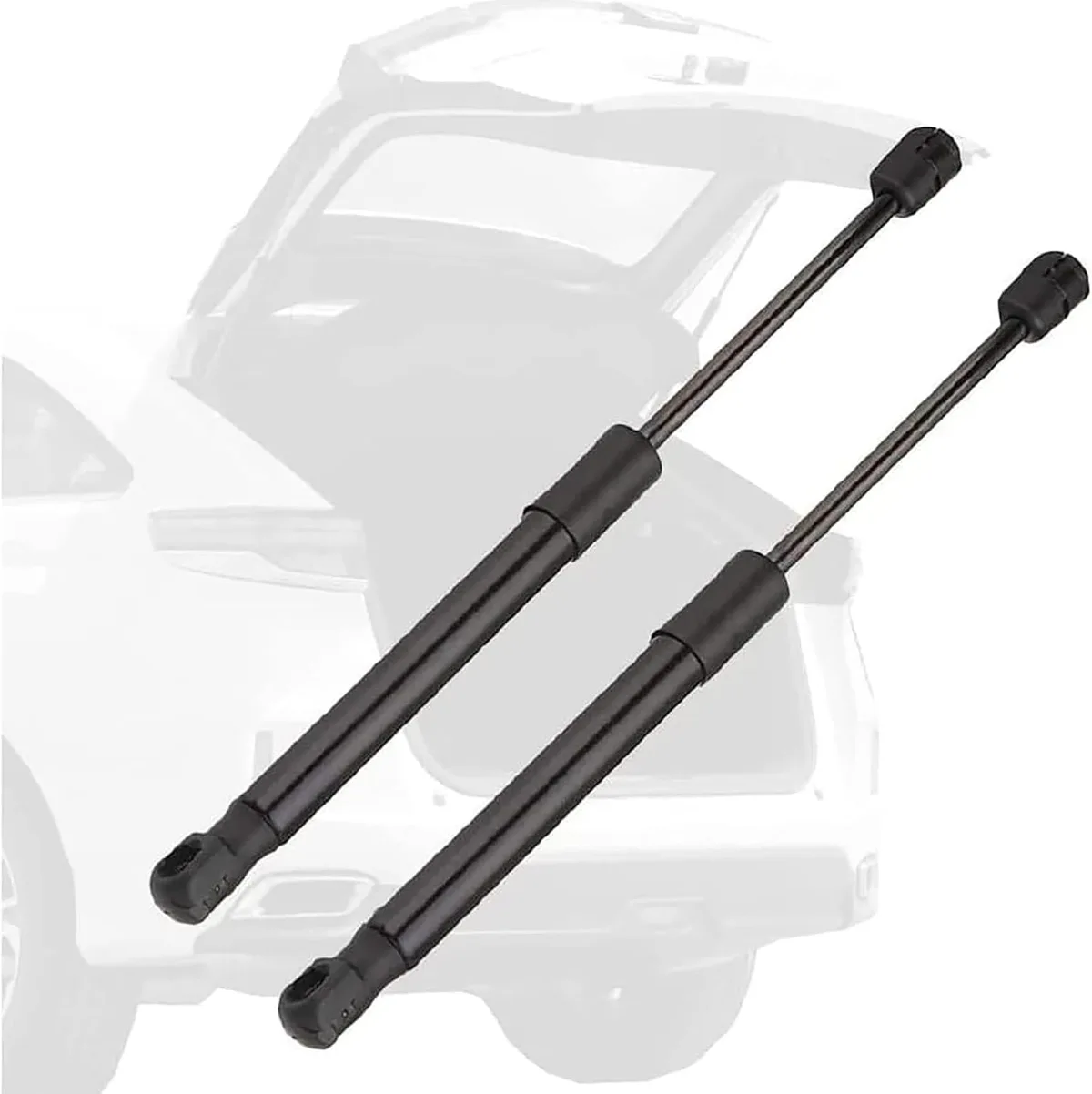
The rear hatch gas struts lose pressure after seven to ten years. The hatch drops unexpectedly, a real hazard if you are loading a child or standing close. OEM struts carry part number 68940-0T010.
Aftermarket units often use higher gas pressure which makes the hatch fly open too fast and binds the hinges. Stick with Toyota or Stabilus brand. Pair replacement takes 20 minutes with a trim tool.
Front strut bearing plates clunk over bumps and cause steering wander. The updated OEM part number 48609-0T010 uses a larger bearing race. Replacement requires a spring compressor and alignment.
Shops charge $400 to $600 per side. If you hear a single sharp clunk over driveway lips the mounts are shot. Ignoring them wears tires unevenly and stresses the EPS rack.
Strut mount failure checklist
- Clunk over sharp bumps at low speed
- Steering wheel off-center after hitting a pothole
- Uneven front tire wear, inside edge worn smooth
- Visible rust dust around the strut tower bolts
Smart Key System: The No-Start That Leaves You Stranded
The smart key system uses three antennas, one in the cabin one in the rear bumper and one near the front grille. The rear bumper antenna fails most often because road salt and water penetrate the connector. Symptoms cycle: the car starts fine for weeks then suddenly displays "Key Not Detected" with the fob in your pocket.
Holding the fob against the push-button start often works as a temporary bypass. The antenna assembly costs $120 to $180. Dealer programming adds $150.
Independent shops with Techstream can program it for $80 to $120. If you live in a salt-belt state inspect the rear bumper connector annually. Dielectric grease and heat-shrink tape on the pins prevent the corrosion that kills the circuit.
Emergency start procedure
- Press the brake pedal firmly
- Touch the Toyota logo on the fob to the push-button start
- Hold for three seconds until the light flashes green
- Press the button normally while holding the fob there
- Drive to a shop, the antenna will fail again
How to Verify Your Vin for Open Recalls (And What to Do If Parts Are Backordered)
Start at nhtsa.gov/recalls and enter the 17-digit VIN. The page lists every open recall with the NHTSA campaign number. For this vehicle you want to see three specific campaigns: 20V676000 (brake actuator), 19V184000 (EPS motor), and 19V430000 (side curtain inflator).
If any show "Remedy Not Yet Available" call your local Toyota dealer and ask for the parts availability date. Get the service advisor name and a case number. Document every call with date time and promised callback.
If the dealer says parts are on national backorder ask them to escalate to the Toyota regional representative. Some owners have waited 90 to 120 days. During that window the car is legally drivable but you assume the risk.
If the defect manifests while you wait your insurance may deny coverage for an unrepaired safety recall. Check your policy language. A few carriers require proof of repair scheduling to maintain full collision coverage.
Escalation ladder when parts stall
- Dealer service manager, request written ETA
- Toyota Customer Experience Center, 800-331-4331
- NHTSA Vehicle Safety Hotline, 888-327-4236
- State lemon law attorney, free consult in most states
Pre-Purchase Inspection: The 15-Minute Check That Saves Thousands
Bring a flashlight and a friend. Cold start the engine and listen for timing chain rattle in the first three seconds, that signals worn guides on the V6. Watch the brake pedal as your friend presses it with the engine off then on; it should drop slightly when vacuum assist engages.
Turn the steering lock to lock and feel for notchiness or heavy spots. Scan the dash for the EPS VSC and brake lights, they should illuminate at key-on then extinguish. Open the rear hatch and let go; it should stay up.
Push down on each front corner and release; the car should settle in one bounce. Check the dipstick for oil level and color, black sludgy oil on a 2012 means skipped changes. Pull the transmission dipstick (if equipped) fluid should be pink not brown.
Look at the rear bumper smart key antenna connector for green corrosion. These checks take 15 minutes and catch 90 percent of the expensive failures.
Red flags that mean walk away
- Timing chain rattle past three seconds cold
- Brake pedal rock-hard with engine running
- EPS light stays on after bulb check
- Hatch drops when released
- Transmission fluid smells burnt
- Rear bumper antenna connector corroded
Real Repair Costs: Dealer vs Independent vs DIY Reality
The table below shows typical 2024 pricing for the major jobs. Dealer labor runs $165 to $195 per hour. Independent shops charge $110 to $140.
DIY saves labor but requires Techstream for brake actuator bleed and EPS calibration. A Techstream license costs $50 for a two-day subscription. Most DIYers spend that plus a weekend on the brake actuator.
The EPS rack needs a subframe drop and alignment, add $150 for alignment if you do the rack yourself. Water pump on the V6 needs a spring compressor for the tensioner and a torque wrench for the chain cover bolts. Strut mounts need a spring compressor and alignment.
Smart key antenna needs Techstream for programming.
| Repair | Dealer | Independent | DIY Parts Only |
|---|---|---|---|
| Brake actuator | $2,200–$2,600 | $1,800–$2,200 | $1,100–$1,300 |
| EPS rack | $1,600–$2,000 | $1,300–$1,600 | $900–$1,100 |
| Valve body | $2,500–$3,000 | $2,000–$2,400 | $1,200–$1,500 |
| Water pump (V6) | $1,400–$1,800 | $1,000–$1,300 | $400–$500 |
| Strut mounts (pair) | $900–$1,200 | $600–$800 | $250–$350 |
| Smart key antenna | $300–$400 | $200–$300 | $120–$180 |
When to Walk Away: The Lemon Law and Economic Total-Loss Thresholds
Most state lemon laws require three repair attempts for the same defect or 30 cumulative days out of service within the warranty period. For a 2012 the factory warranty expired years ago but the recall repairs create a new paper trail. If the dealer has replaced the brake actuator twice or the EPS rack twice under recall keep every invoice.
A lawyer can argue the recall remedy failed to conform. Economic total loss hits when a single repair exceeds the vehicle retail value. Clean 2012 Venza retail runs $11,000 to $16,000 depending on mileage and region.
A transmission replacement at $4,500 plus a brake actuator at $2,000 pushes you past the tipping point. If you face two major repairs in one year sell the car as-is to a wholesaler for $4,000 to $6,000 and put that toward a newer platform. The math rarely favors sinking $6,000 into a $12,000 asset.
Quick decision matrix
- One major repair under recall, fix it keep it
- Two major repairs one recall one not, evaluate budget
- Three major repairs any combination, sell wholesale
- Repair estimate exceeds 50 percent of retail, sell wholesale
Final Decision Guide: Keep Fix Sell or Avoid
If you already own a clean 2012 Venza with the recalls completed and the 2GR-FE V6 keep it. Change oil every 5,000 miles flush the transmission every 60,000 miles and it will see 250,000. If you are shopping for one buy only a V6 with documented recall completion and a cold-start video from the seller.
Avoid the 2AR-FE four-cylinder unless the price reflects a future engine budget. Walk away from any unit with an open brake actuator or EPS recall and no parts ETA. The platform is solid the defects are known and the fixes exist.
Your job is verifying the fixes were done and pricing the ones that weren't. That's the whole game.