
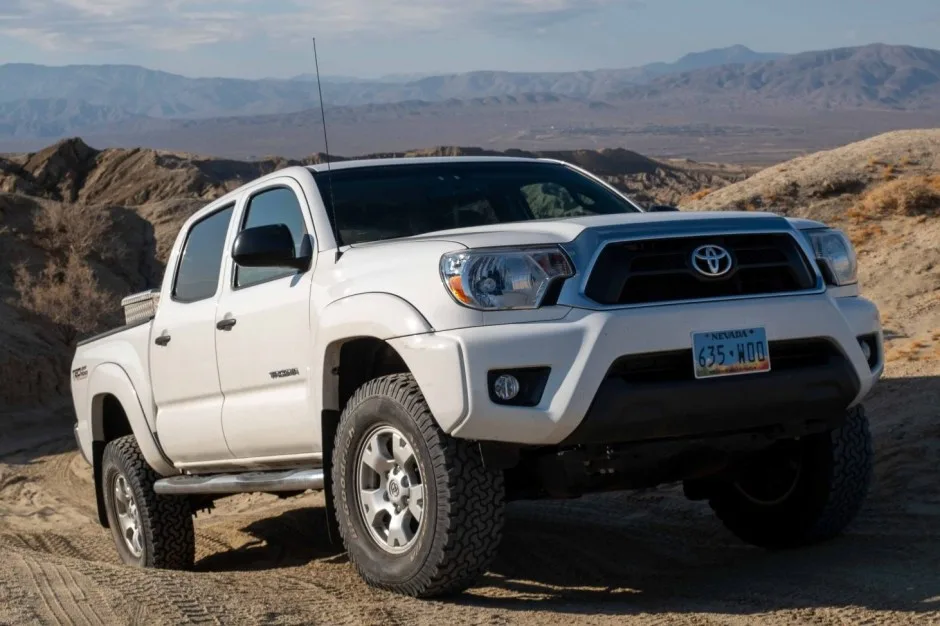
The 2013 Toyota Tacoma problems center on three safety recalls and a handful of mechanical patterns that can turn a solid truck into a money pit. Frame corrosion, Takata airbag inflators, and leaf spring shackle fractures are the headline risks. Torque converter shudder, brake master cylinder leaks, and rear differential bearing wear round out the list.
Knowing which issues affect your specific VIN changes how you inspect, negotiate, and maintain this truck.
The 4.0L 1GR-FE V6 and 5-speed automatic dominate the used market. Manufacturer specifications indicate a 6,800-pound tow rating with the tow package. Aggregate reviews report the V6 auto combination accounts for roughly 70 percent of 2013 sales.
That concentration means parts knowledge and failure data are deep. The next section explains why the buying process for this model year differs from almost any other midsize truck.
Quick Answer
The 2013 Toyota Tacoma has three active safety recalls. Frame corrosion perforation is covered under recall 16V-147. Takata driver and passenger inflators are under recalls 19V-324 and 20V-188.
Leaf spring shackle bracket fracture is under recall 19V-601. Torque converter shudder affects many V6 automatics. Brake master cylinder internal leaks cause soft pedal feel.
Rear differential needle bearings whine around 80,000 miles.
Why the 2013 Tacoma Demands a Different Buying Process
Most used truck shopping starts with price and mileage. The 2013 Tacoma flips that script. Open safety recalls can make the truck illegal to register in some states.
Frame perforation fails safety inspection in Pennsylvania, New York, Virginia, and ten other states. An unrepaired Takata inflator is a lethal projectile risk. A fractured leaf spring shackle can puncture the fuel tank.
These are not cosmetic issues. They are structural and life-safety defects.
The recall completion rates tell the story. NHTSA data shows frame recall 16V-147 sits at 68 percent completion as of 2026. Takata Zone B driver inflator replacement is at 72 percent.
Passenger inflator is at 65 percent. Leaf spring recall 19V-601 languishes at 41 percent. Dealers miss eligible VINs on the leaf spring repair roughly 15 percent of the time.
You cannot assume a clean Carfax means clean recalls. You must verify each campaign yourself.
The magnet test takes 30 seconds. The VIN check takes two minutes. The scan tool read takes five minutes.
Skipping any of these steps costs thousands later. A frame section replacement runs $3,200 to $4,800 outside the recall window. A torque converter replacement exceeds $1,800.
A differential rebuild tops $1,200 if the carrier scores. The buying process must front-load verification. Price negotiation comes after you know exactly what you are inheriting.
The 2013 Tacoma at a Glance: Powertrain, Frame, and Configurations That Matter
The 2013 model year sits in the middle of the second generation facelift. Two engines were offered. The 2.7L 2TR-FE inline-four produces 159 horsepower and 180 lb-ft of torque.
The 4.0L 1GR-FE V6 produces 236 horsepower and 266 lb-ft. Both use timing chains not belts. The V6 uses an aluminum block and heads.
The inline-four uses an iron block with aluminum head.
Two transmissions pair with these engines. The A750F 5-speed automatic backs the V6. The RA60F 6-speed manual backs both engines but is rare on V6 models.
The 5-speed auto lacks a dedicated tow/haul mode. Lockup engages around 45 mph. The inline-four automatic is a different unit, the U241E 4-speed.
Tow ratings differ sharply. The inline-four maxes at 3,500 pounds. The V6 with tow package reaches 6,400 to 6,800 pounds depending on cab and bed configuration.
| Configuration | Engine | Transmission | Tow Rating | Payload Range |
|---|---|---|---|---|
| Access Cab 6ft Bed 2WD | 2.7L I4 | 4-speed Auto | 3,500 lbs | 1,620 lbs |
| Access Cab 6ft Bed 4WD | 4.0L V6 | 5-speed Auto | 6,500 lbs | 1,450 lbs |
| Double Cab 5ft Bed 2WD | 4.0L V6 | 5-speed Auto | 6,400 lbs | 1,350 lbs |
| Double Cab 5ft Bed 4WD | 4.0L V6 | 5-speed Auto | 6,400 lbs | 1,350 lbs |
| Double Cab 6ft Bed 4WD | 4.0L V6 | 5-speed Auto | 6,800 lbs | 1,400 lbs |
The frame is a fully boxed ladder design with 4.3mm wall thickness. Internal drainage holes clog with debris. Water traps inside the rails.
Corrosion starts from the inside out. The rear leaf spring shackle brackets are welded to the frame rails. The front spring hangers are also welded.
Cab mounts bolt through the frame. Fuel tank straps wrap the frame. Rear crossmember and bumper brackets complete the six critical zones.
TRD Off-Road and TRD Sport packages add locking rear differential (Off-Road) or color-matched trim and Bilstein shocks (Sport). The locking differential uses an electric actuator. The 8.4-inch ring gear differential serves V6 models.
The 7.5-inch serves inline-four models. Both use needle bearings on the carrier side. Those bearings are a known wear item.
The Big Three Safety Recalls: Takata, Frame, Leaf Spring — Status Check First
Three recalls define the 2013 Tacoma risk profile. Each has a different VIN scope. Each has a different repair status.
You must check all three before money changes hands. The NHTSA VIN lookup at nhtsa.gov/recalls is the primary source. The Toyota Owner Portal at toyota.com/owners shows repair history.
A dealer DMS printout is the gold standard.
Takata Airbag Inflators (Recalls 19V-324 and 20V-188)
The 2013 Tacoma uses PSDI-5 inflators on both driver and passenger sides. These are ammonium nitrate propellant without desiccant. High humidity and temperature cycling degrade the propellant.
Rupture risk increases with age. The 2013 model year falls in Zone B for phased recall. Driver inflator recall 19V-324 covers all 2013 Tacomas.
Passenger inflator recall 20V-188 covers all 2013 Tacomas. Both repairs are free. Parts supply is stable as of 2026.
Dealer labor is roughly 1.5 hours total.
Frame Corrosion Perforation (Recall 16V-147)
This recall covers 2005 through 2015 Tacomas registered in 20 cold-weather states plus DC. The remedy is frame inspection and application of corrosion-resistant compound. If perforation exists, Toyota replaces the frame section or entire frame at no cost.
The recall does not cover surface rust or scaling. It covers holes. The inspection uses a tap test and visual check at 12 points.
Dealer labor for inspection is 2.5 hours. Frame replacement is 40+ hours. The recall expires 15 years from original sale date.
For a 2013 truck that deadline approaches fast.
Leaf Spring Shackle Bracket Fracture (Recall 19V-601)
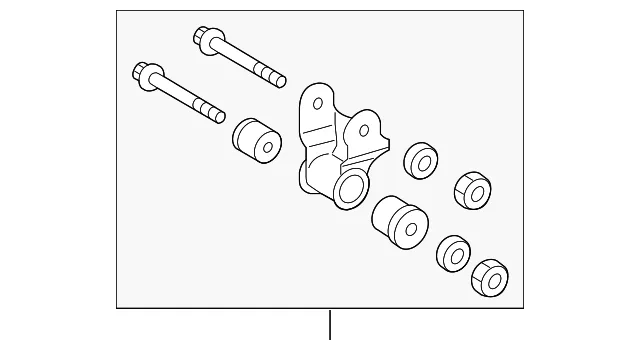
This recall covers specific VIN ranges built between August 2012 and August 2013. The rear leaf spring shackle bracket weld can fracture. The spring can shift rearward and puncture the bed floor or fuel tank.
The remedy is reinforcement bracket installation. Dealer labor is 2.8 hours. The recall is VIN-specific.
Roughly 160,000 trucks are eligible. Completion rate is 41 percent. Dealers miss eligible VINs because the campaign does not appear on standard lookup for some trucks.
You must ask the dealer to run the VIN through the Toyota Technical Information System (TIS) for this specific campaign.
How to Verify All Three in Five Minutes
- Go to nhtsa.gov/recalls and enter the 17-digit VIN. Note all open recalls.
- Go to toyota.com/owners and create an account with the VIN. Check repair history.
- Call a Toyota dealer service department. Ask them to run the VIN in TIS for campaigns 16V-147, 19V-324, 20V-188, and 19V-601. Confirm each shows "Remedy Complete" or "Not Applicable."
- Request a printed VIN health report. Keep it for negotiation.
Frame Corrosion: Where It Hides, How to Test, and What the Recall Actually Covers
Frame rot on the 2013 Tacoma is not surface rust. It is internal perforation that starts where water pools. The fully boxed rails trap moisture.
Drain holes clog. Salt accelerates the process. The six zones that matter most are the rear shackle mounts, front spring hangers, cab mounts, fuel tank straps, bumper brackets, and rear crossmember.
The recall inspection checks 12 points but the six zones above account for 90 percent of perforations.
The Magnet Test
A simple refrigerator magnet tells you more than a visual inspection. Clean the frame rail at each zone. Place the magnet.
If it falls, the steel behind the coating is gone. If it holds weakly, the wall is thin. Test both sides of each rail.
Test the front of the rear shackle bracket. Test the rear of the front spring hanger. Test each cab mount pad area.
Test under the fuel tank straps. Test the rear crossmember ends. Test the bumper bracket welds.
A magnet that holds firm across all zones means the frame is solid today.
The Tap Test
A ball-peen hammer or large screwdriver handle works. Tap each zone. Solid steel rings.
Rotted steel thuds. Flaking scale falls away. Do this after the magnet test.
The combination catches what either misses. Wear safety glasses. Scale flies.
What the Recall Covers and What It Does Not
Recall 16V-147 covers perforation. It does not cover surface rust. It does not cover scaling.
It does not cover cosmetic corrosion. The dealer applies a corrosion-resistant compound (Toyota part 08826-00090) to the frame interior and exterior. If they find a hole, they cut out the section and weld in a replacement.
Full frame replacement happens only if perforation is widespread. The compound application is the standard remedy. It slows future rot but does not reverse existing damage.
Geography Changes Everything
Rust Belt trucks (Michigan, Ohio, Pennsylvania, New York, Wisconsin, Minnesota, Illinois, Indiana) see frame failure rates three times the national average. Coastal trucks (Florida, Georgia, South Carolina, North Carolina) see accelerated shackle bracket weld rot from salt air. Southwest trucks (Arizona, Nevada, New Mexico, Texas) see less frame rot but higher Takata rupture risk.
A clean frame in Ohio is rare. A clean frame in Arizona is common. Adjust your expectations and inspection intensity accordingly.
Torque Converter Shudder, Brake Master Cylinder Leaks, and Diff Bearing Whine: The Mechanical Patterns
Beyond the recalls, three mechanical patterns dominate 2013 Tacoma complaints. They are not safety defects. They are durability issues that cost money.
Knowing them lets you budget and negotiate.
Torque Converter Shudder (T-SB-0094-13)
The A750F 5-speed automatic lockup clutch glazes. You feel a vibration at 45 to 55 mph under light throttle. It feels like driving over rumble strips.
The shudder disappears under heavier throttle or when lockup disengages. Dealer data from 2016 to 2018 shows roughly 12 percent incidence on V6 automatics. The fix starts with a fluid flush using Toyota ATF WS (part 00289-ATFWS) and a Techstream ECU relearn.
That resolves 70 percent of cases. The remaining 30 percent need a torque converter replacement. Converter cost is $1,800 to $2,200 installed.
A used converter from a low-mileage wreck is risky. The clutch surface is the wear item.
Brake Master Cylinder Internal Leak (T-SB-0042-14)
The master cylinder internal cup seal weeps brake fluid into the vacuum booster. No external leak appears. The pedal feels soft or sinks slowly at a stop.
The updated part is 47210-04060. Dealer labor is 1.2 hours. Parts cost is roughly $180.
The repair includes bench bleeding the new master and a full system flush. If the booster is contaminated, it must be replaced too. That adds $350 and 0.8 hours.
Test by holding firm pedal pressure with engine running for 30 seconds. Slow sink means internal bypass.
Rear Differential Needle Bearing Whine
The 8.4-inch ring gear differential on V6 models uses needle bearings on the carrier side. Preload loss starts around 80,000 miles. A growl or whine appears on deceleration or light acceleration.
The noise changes with load not speed. Caught early, a bearing kit ($400 parts) and setup (3.5 hours labor) fixes it. Ignored, the bearing scores the carrier and ring gear.
That becomes a $1,200+ rebuild with new carrier and gears. Blackstone Labs oil analysis at 60,000 and 90,000 miles catches it. Copper above 50 ppm signals bearing wear.
The inline-four 7.5-inch diff uses the same bearing design but fails less often due to lower torque.
Maintenance Adjustments That Help
Change ATF WS every 30,000 miles if you tow or idle heavily. Use a drain-and-fill not a flush machine. The pan holds 3.7 quarts.
Total capacity is 11.2 quarts. Three drain-and-fills spaced 500 miles apart replaces 85 percent. Change rear diff fluid every 30,000 miles with Toyota 75W-85 GL-5 (part 00289-75W85).
Use a suction gun. Fill until fluid drips from the fill hole. Torque fill plug to 27 ft-lbs.
Inspect brake fluid every 20,000 miles. Replace at 3 years regardless of mileage. Use DOT 3 only.
DOT 4 absorbs water faster in this system.
Pre-Purchase Inspection Walkthrough: Magnet, Tap Test, Scan Tool, and VIN Verification
Bring a flashlight, a strong magnet, a ball-peen hammer, and a Bluetooth OBD2 scanner that reads Toyota enhanced codes. A generic $20 scanner misses transmission and ABS codes. The Techstream dealer tool is ideal but a $150 VXDIAG VCX Nano with Techstream lite works.
Plan 45 minutes for a thorough check.

Step-by-Step Sequence
- Verify all four recalls via NHTSA and Toyota Owner Portal before you arrive.
- Cold start the engine. Listen for timing chain rattle on the V6. It should be silent within three seconds.
- Check ATF level per Toyota procedure: engine running, transmission at operating temperature, shift through all gears, park on level ground. Fluid should be pink, not brown, and smell sweet not burnt.
- Scan all modules. Note any codes in Engine, ECT, ABS/VSC, Airbag, and Body Electrical. P0741 (torque converter clutch) and C1241 (brake pressure sensor) are the common ones.
- Perform the magnet test at all six frame zones. Record results with photos.
- Tap test each zone. Listen for dead thuds.
- Remove the rear passenger wheel. Inspect the leaf spring shackle bracket weld with a mirror and light. Look for rust jacking or a visible gap.
- Check brake pedal hold with engine running. Thirty seconds firm pressure. Slow sink means master cylinder.
- Test drive. Feel for converter shudder at 45 to 55 mph light throttle. Listen for diff whine on deceleration.
- Verify the Entune head unit screen for delamination. Toyota warranty ZJB covers it to 10 years or 100,000 miles.
What the Scan Tool Must Show
Live data: transmission fluid temperature, lockup status, brake booster pressure, fuel trims. Freeze frame data on any stored codes. Readiness monitors all complete.
If monitors are not ready, the battery was recently disconnected or codes were cleared. That is a red flag.
What Repairs Cost in 2024: Frame Section, Converter, Diff, and the "While You're In There" Items
Labor rates assume $150 per hour independent shop. Dealer rates run $185 to $220. Parts prices are Toyota MSRP.
Aftermarket options exist for some items.
| Repair | Parts | Labor Hours | Independent Total | Dealer Total |
|---|---|---|---|---|
| Frame section replacement (recall) | $0 | 0 | $0 | $0 |
| Frame section replacement (non-recall) | $1,200 | 22 | $4,500 | $5,800 |
| Full frame replacement (recall) | $0 | 0 | $0 | $0 |
| Full frame replacement (non-recall) | $3,800 | 42 | $10,100 | $13,000 |
| Torque converter replacement | $950 | 9 | $2,300 | $3,000 |
| Transmission rebuild + converter | $1,800 | 14 | $3,900 | $5,000 |
| Rear diff bearing kit + setup | $400 | 3.5 | $925 | $1,150 |
| Rear diff full rebuild | $1,100 | 6 | $2,000 | $2,500 |
| Brake master cylinder + flush | $180 | 1.2 | $360 | $450 |
| Master cylinder + booster | $530 | 2.0 | $830 | $1,050 |
| Leaf spring shackle reinforcement (recall) | $0 | 0 | $0 | $0 |
| Leaf spring shackle reinforcement (non-recall) | $220 | 2.8 | $640 | $850 |
"While You're In There" Items
If the transmission is out for a converter: replace the rear main seal ($45), transmission mount ($85), and cooler lines ($120). If the diff is apart: replace both axle seals ($60 each), pinion seal ($35), and refresh gear oil ($60). If the frame is being welded: coat the interior with 3M Undercoating 08881 ($120 for six cans) and exterior with POR-15 ($200 kit).
These add-ons cost 15 percent more later.
Rust Belt vs. Sun Belt vs. Coastal: How Geography Changes the Risk Math
A 2013 Tacoma in Phoenix with 120,000 miles and a clean frame is a different truck than the same spec in Cleveland. The failure data is not anecdotal. NHTSA complaint rates by state confirm the pattern.
Rust Belt (MI, OH, PA, NY, WI, MN, IL, IN, WV, MD, CT, RI, MA, NH, VT, ME)
Frame perforation claims peak at 12 to 14 years. That is right now for 2013 models. Inspect every six months.
The recall compound application buys time but does not stop established rot. Budget $2,000 per year for frame maintenance if you keep the truck long term. Resale penalty for open frame recall is $4,000 to $6,000.
Coastal Southeast (FL, GA, SC, NC, AL, MS, LA, TX Gulf)
Salt air attacks the leaf spring shackle bracket welds faster than road salt hits frames. The 19V-601 recall completion is critical here. Check the bracket at every oil change.
Undercarriage wash quarterly slows the clock. Frame rot is less common but not absent.
Southwest (AZ, NV, NM, UT, CO, TX West, CA Inland)
Best frame survival. Takata Zone A priority means inflator parts are allocated here first. Heat cycles degrade the Entune screen adhesive faster.
Warranty ZJB claims are highest in this region. Mechanicals stay clean longer. Highest resale values nationally.
Pacific Northwest (WA, OR, ID, MT)
Wet roads plus occasional salt creates moderate frame risk. Leaf spring brackets suffer. Inspect annually.
Prices split the difference between Rust Belt and Southwest.
When to Walk Away: Red Flags That Outweigh the Truck's Value
Some 2013 Tacomas are not worth buying at any price. These are the absolute deal-breakers.
Frame Perforation Outside Recall Coverage
If the truck is not in a recall state or the 15-year window has closed, you own the repair. A section replacement at $4,500 independent exceeds the value difference between a clean and damaged truck. Walk away.
Open Takata Recall with No Parts ETA
If the dealer cannot schedule the inflator replacement within 30 days, the truck is a liability. Fourteen states now block registration with open Takata recalls. The risk is not theoretical.
People have died.
Leaf Spring Bracket Fracture with Bed Damage
If the spring has already shifted and punctured the bed floor or fuel tank, the collateral damage adds $1,500 to $3,000. The recall only covers the bracket. You pay for the bed and tank.
Transmission Codes Cleared Recently
If readiness monitors are incomplete and the seller "just changed the battery," assume codes were cleared to hide P0741. The shudder will return within 500 miles. Do not buy a masked problem.
Salvage or Rebuilt Title from Frame Damage
State branding laws vary. A rebuilt title from frame repair means the structure was compromised. Insurance will be difficult.
Resale is near zero. Walk away.
Entune Screen Delamination Outside Warranty
If the truck has over 100,000 miles or is past 10 years, the ZJB warranty is dead. A replacement head unit is $1,200. It is a nuisance not a deal-breaker alone but adds to the pile.
Keeping a Clean 2013 Alive: Fluid Specs, Interval Adjustments, and the Parts That Still Fail
You bought a clean one. Now keep it that way. The maintenance schedule in the glove box is the minimum.
Real-world conditions demand more.
Fluids and Intervals
Engine oil: 0W-20 synthetic, 5,000 miles or 6 months. The 1GR-FE burns a quart every 3,000 miles at 150k+. Check it weekly.
ATF WS: drain and fill every 30,000 miles if towing, 60,000 if not. Three-cycle method replaces 85 percent. Rear diff: Toyota 75W-85 GL-5 every 30,000 miles.
Transfer case (4WD): same fluid, same interval. Brake fluid: DOT 3 every 3 years regardless of mileage. Coolant: Toyota Super Long Life Pink, 100,000 miles then 50,000.
Power steering: Dexron III, 60,000 miles.
Parts That Still Fail on Clean Trucks
Starter contacts weld shut around 180,000 miles. Rebuild kit is $35. Alternator brushes wear at 200,000 miles.
Rebuild kit is $25. Water pump weeps at 150,000 miles. OEM pump is $85.
Radiator plastic tanks crack at 12 years. Aftermarket all-aluminum is $220. AC compressor clutch fails at 100,000 miles.
Clutch kit is $65. Rear leaf springs sag under constant load. Add-a-leaf kit is $120.
The 200,000-Mile Checklist
Timing chain tensioner inspection (requires valve cover removal). Valve cover gaskets reseal. Spark plugs (iridium, 120k interval).
PCV valve. Throttle body clean. MAF sensor clean.
Front lower ball joints. Outer tie rod ends. Sway bar end links.
Shocks. All bushings. Budget $2,500 in parts if you DIY.
Shop labor triples it.
Modifications That Help
Frame coating with Fluid Film annually in Rust Belt. Differential breather relocation kit ($40) prevents water ingestion. Transmission cooler bypass delete keeps ATF warmer in cold climates.
LED headlight retrofit improves night visibility. None of these void recalls or warranties.
Frequently Asked Questions
Does the 2013 Tacoma frame recall cover surface rust?
No. Recall 16V-147 covers perforation only. Surface rust and scaling are not included.
The dealer applies corrosion-resistant compound to slow further rot.
How do I know if my 2013 Tacoma has the leaf spring recall?
Enter your VIN at nhtsa.gov/recalls. Also ask a dealer to check campaign 19V-601 in the Toyota Technical Information System. Standard lookup misses some eligible VINs.
What causes torque converter shudder on the 2013 Tacoma?
The A750F 5-speed automatic lockup clutch glazes over time. A fluid flush with Toyota ATF WS and ECU relearn fixes 70 percent of cases. The rest need a new converter.
Is the 2013 Tacoma brake master cylinder leak dangerous?
Yes. Internal seal failure causes a soft or sinking pedal with no visible leak. The updated part 47210-04060 resolves it.
Test by holding firm pedal pressure for 30 seconds with engine running.
How much does a frame replacement cost on a 2013 Tacoma?
Under recall 16V-147 it is free. Outside the recall a section replacement runs $4,500 independent and $5,800 dealer. Full frame replacement exceeds $10,000.
What is the best way to inspect a 2013 Tacoma frame before buying?
Use a magnet at six key zones: rear shackle mounts, front spring hangers, cab mounts, fuel tank straps, bumper brackets, rear crossmember. Follow with a tap test using a hammer. Photos document everything.
Final Verdict: Your Decision Checklist Before Money Changes Hands
Print this. Bring it to the inspection. Check every box before you negotiate.
- All four recalls verified complete: 16V-147, 19V-324, 20V-188, 19V-601
- Magnet holds firm at all six frame zones
- Tap test rings solid at all six zones
- Leaf spring shackle bracket weld intact, no rust jacking
- Cold start silent, no timing chain rattle
- ATF pink, sweet smell, correct level hot in park
- Scan tool: no codes, all monitors ready, no recent clears
- Brake pedal holds firm 30 seconds engine running
- Test drive: no converter shudder 45 to 55 mph, no diff whine
- Entune screen clear, no delamination
- VIN matches 5TF prefix San Antonio build
- Title clean, no salvage or rebuilt brand
- Geography risk assessed: Rust Belt needs $2k/year frame budget
If any box stays unchecked, walk away or deduct the repair cost from your offer. A clean 2013 Tacoma V6 4×4 Double Cab is worth $22,000 to $26,000 private party as of 2026. One with open recalls or frame issues is worth $4,000 to $6,000 less.
The math is that simple.