
The 2013 toyota venza problems cluster around three major systems: the 3.5L V6 water pump, the 2.7L four-cylinder oil consumption, and the six-speed torque converter shudder. NHTSA logs 412 complaints for this model year with cooling and transmission issues leading the pack. Two recalls, brake actuator and fuel pump, remain open on thousands of units as of 2026.
If you own one or plan to buy, the next 100,000 miles hinge on knowing which fixes are mandatory and which are negotiable.
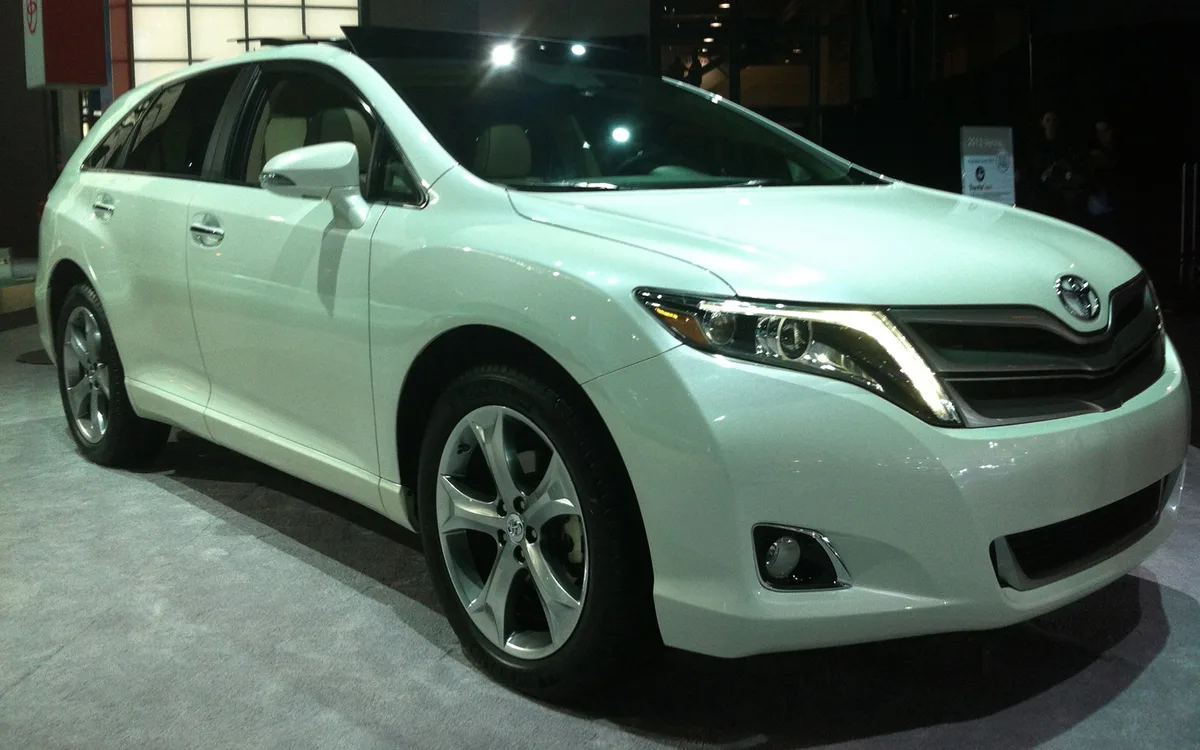
Aggregate data shows the water pump fails between 75,000 and 105,000 miles on the V6. The four-cylinder burns a quart every 1,000 miles once piston rings wear past the revised PCV fix. Torque converter shudder appears as early as 30,000 miles on pre-January 2013 builds.
Below, we break down each failure path with mileage thresholds, repair costs, and the exact TSBs that matter.
Quick Answer
The 2013 Toyota Venza has three core problems. The 3.5L V6 water pump leaks internally at 75k, 105k miles. The 2.7L four-cylinder consumes excessive oil after 90k miles.
The six-speed torque converter shudders at light throttle on early-build cars. Two safety recalls cover brake actuator failure and fuel pump stalling. Repair costs range from $1,100 for the water pump to $4,500 for piston rings.
What You're Walking Into: 2013 Venza Reality at 100K Miles
Most 2013 Venzas now sit between 100,000 and 180,000 miles. The unibody platform shares bones with the Camry and Highlander so suspension and steering components age predictably. Rust Belt cars show brake line corrosion and rear caliper seizure by year ten.
Sun Belt units suffer sunroof guide rail cracks and EVAP canister dust ingestion. The AWD system uses an electronic coupling without a center differential, simpler than the Highlander's but still prone to coupling wear past 150k miles.
You get 70 cubic feet of cargo space with seats folded and a flat load floor. IIHS rates it Top Safety Pick for 2013 with Good moderate overlap and side scores. The Marginal small overlap driver rating reflects the platform's age.
Standard VSC, six airbags, and active head restraints help. Fuel economy sits at 21 city / 27 highway for the FWD V6 per EPA certification.
Maintenance intervals are straightforward. Toyota calls for 5,000-mile oil changes with 0W-20 synthetic. Transmission fluid is WS spec, flush every 60,000 miles if you tow or drive in heat.
Coolant is Super Long Life pink, good for 100k miles then 50k intervals. Spark plugs are iridium at 120k miles. The timing chain on both engines is lifetime-rated but the V6 water pump lives behind it.
The Two Engines, Two Different Failure Paths
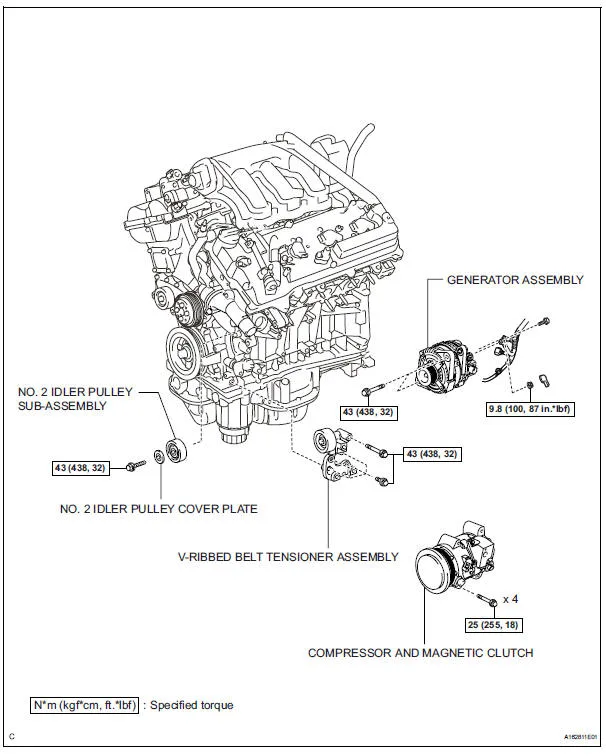
The 3.5L 2GR-FE V6 powers XLE and Limited trims. Its water pump mounts behind the timing cover driven by the timing chain. The internal mechanical seal weeps coolant into the timing cover cavity, no external puddle until the weep hole overflows.
TSB-0094-14 and TSB-0018-15 document the revised pump (P/N 16100-31220) with an improved seal material. Failure peak clusters at 75,000, 105,000 miles per CarComplaints data.
The 2.7L 1AR-FE four-cylinder equips LE and base models. It uses a timing chain and port injection like the V6. Pistons and rings on engines built before August 2013 allow oil past the oil control ring.
TSB-0015-14 prescribes a revised PCV valve first, if consumption exceeds one quart per 1,000 miles over a measured 1,000-mile test, the fix is piston and ring replacement. That job exceeds 12 hours labor.
Both engines share the U660E six-speed automatic. The torque converter lock-up clutch chatters at 35, 45 mph under light throttle. TSB-0329-13 covers vehicles built before January 2013 with an ECU reflash and double WS fluid flush.
If shudder persists after 50 test miles, the converter itself needs replacement, a 5.5-hour job. The reflash updates lock-up engagement mapping to reduce slip.
| Engine | Primary Failure | Mileage Window | TSB | Typical Repair Cost |
|---|---|---|---|---|
| 3.5L 2GR-FE V6 | Water pump internal seal | 75k–105k mi | 0094-14, 0018-15 | $1,100–$1,600 |
| 2.7L 1AR-FE I4 | Oil consumption (rings) | 90k+ mi | 0015-14 | $3,200–$4,500 |
| Both (U660E) | Torque converter shudder | 30k–60k mi | 0329-13 | $300 (reflash) to $2,400 |
Timeline of Trouble: When Each Problem Typically Hits
Water pump seepage often starts as a faint sweet smell after hot shutdown. Coolant residue appears on timing cover bolts first, visible with a bore scope through the weep hole. By 90,000 miles, many V6 owners find the overflow tank low with no external leak.
Ignoring it risks timing chain corrosion and sudden overheating.
Oil consumption on the four-cylinder follows a clear arc. Owners report normal usage to 80,000 miles. Between 80k and 95k, a quart every 3,000 miles becomes common.
Past 100k, the rate accelerates to a quart per 1,000 miles. The PCV valve revision helps marginal cases but does not fix worn rings. Toyota's consumption test requires exact measurement over 1,000 miles, top off, drive, drain and measure.
Torque converter shudder feels like driving over rumble strips at steady throttle. It appears cold or hot, usually in 4th or 5th gear lock-up. The reflash + double flush resolves 70 percent of cases per dealer reports.
Remaining cars need the converter. Liftgate struts fail in cold weather, revised struts (P/N 68940-0E010) install in 20 minutes per side. Sunroof rattle starts around 80k miles from broken guide rails or loose glass clips.
EVAP purge valve sticking triggers P0441 or P0455 after fill-ups. Rough idle clears after a few drive cycles. Rear brake pads wear at 30k miles due to electronic brake force distribution bias, front pads last 50k+.
Steering intermediate shaft clunks over bumps; TSB-0067-13 offers a grease kit or shaft replacement.
Hard Numbers: Complaint Volumes, Recall Stats, Repair Costs
NHTSA complaint breakdown for the 2013 Venza: 87 engine cooling, 63 transmission, 49 brakes, 38 steering, 24 electrical, 19 fuel system. Water pump complaints dominate cooling. Torque converter shudder leads transmission.
Brake actuator and fuel pump recalls account for most brake and fuel entries.
Recall 20V-001 (brake actuator) covers 266,000 vehicles across 2013, 2015. Completion rate sits at 78 percent as of Q4 2023. The actuator loses power assist, pedal effort doubles, stopping distance increases.
Recall 20V-204 and 21V-007 (Denso fuel pump) cover 1.8 million Toyota/Lexus vehicles including the 2013 Venza. Completion rate is 65 percent. The impeller deforms, starving the engine at speed.
Average independent shop pricing using OEM parts:
- Water pump with timing cover R&R: $1,100, $1,600 (6.5, 8.0 hrs)
- Piston and ring replacement (2.7L): $3,200, $4,500 (12+ hrs)
- Torque converter replacement: $1,800, $2,400 (5.5 hrs)
- Brake actuator recall repair: free at dealer (2.0 hrs)
- Fuel pump recall repair: free at dealer (1.5 hrs)
- Liftgate strut pair: $180, $220 parts, 20 min/side DIY
Lemon law eligibility varies by state. Most require three repair attempts for the same defect within the warranty period or 12, 24 months. Water pump, shudder, and oil consumption each count separately.
Document every visit with dates, mileage, and complaint wording matching the TSB language.
The Water Pump Job: What 8 Hours of Labor Actually Looks Like
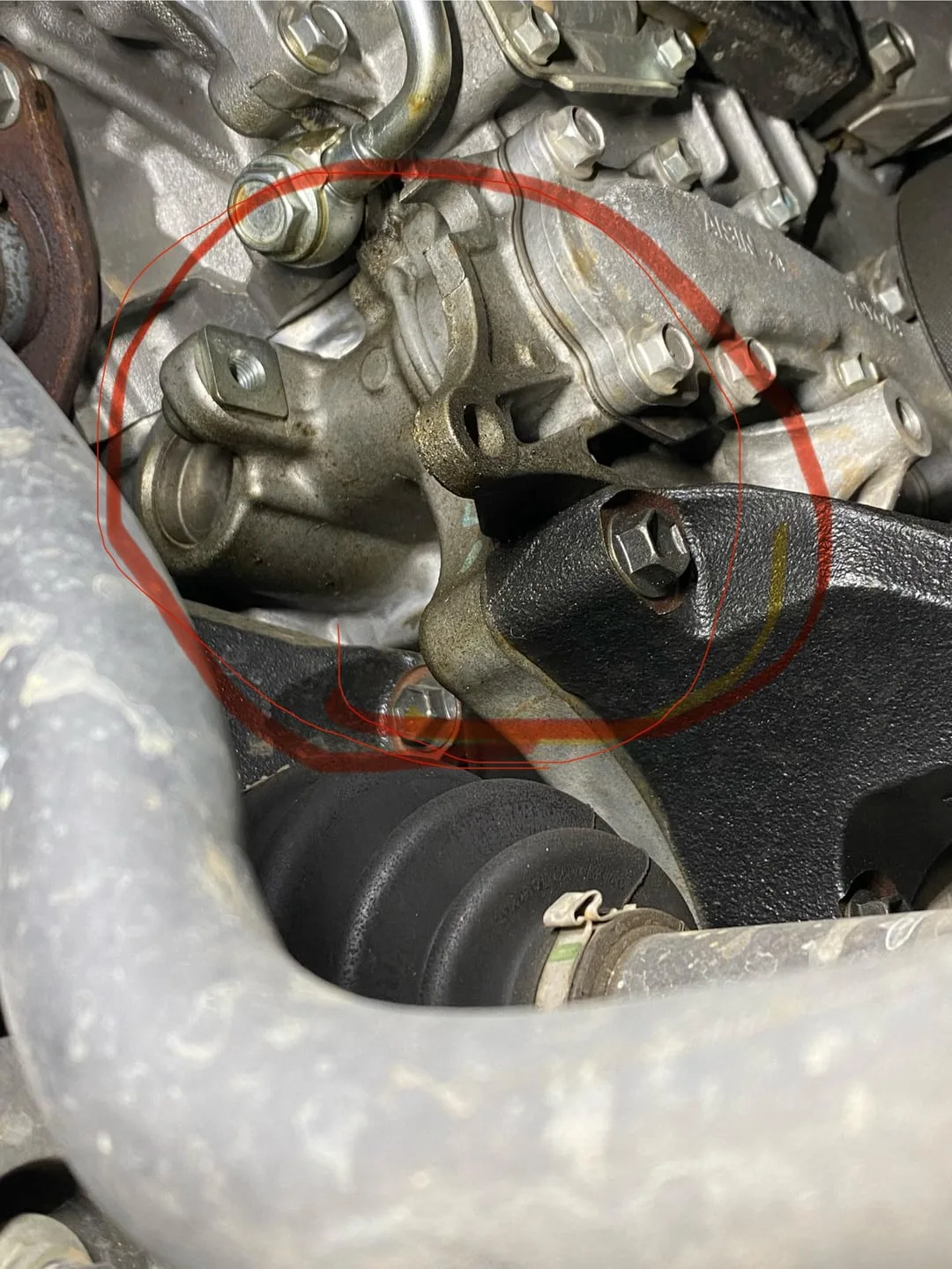
The water pump sits behind the timing cover on the 2GR-FE. Removing the cover means draining coolant, removing the serpentine belt, crank pulley, upper timing cover, timing chain tensioner, and chain guides. The chain stays on the cam sprockets, mechanics zip-tie it to prevent skipping.
The pump unbolts from the block with three 10mm bolts. The revised OEM pump includes a new O-ring and gasket.
Reassembly requires torque sequence on the timing cover (8 Nm in three passes). Chain tensioner reset follows the service manual, compress, install, release. Refill with Toyota Super Long Life pink coolant (00272-SLLC2) using the vacuum fill method to avoid air pockets.
Burp the heater core by revving to 3,000 rpm with the heat on full. Verify no weep at the cover seams after heat soak.
Shops that skip the timing cover removal and try to "wiggle" the pump out risk damaging the chain guides or block surface. The labor guide (ALLDATA/Mitchell) shows 6.5 hours for an experienced tech. First-timers hit 8, 9 hours.
Parts cost: pump $180, thermostat $45, coolant $60, misc seals $30. Total parts $315. Labor at $130/hr = $845, $1,170.
That's where the $1,100, $1,600 quote comes from.
While the cover is off, replace the thermostat and inspect the chain tensioner for wear. The chain itself rarely stretches but check the guides for plastic scoring. If the vehicle has 120k+ miles, many shops recommend the tensioner ($120) as preventive insurance.
The crankshaft position sensor sits right there, $45 part, zero extra labor.
Torque Converter Shudder: Reflash, Flush, or Replace?
The shudder feels like a mild rumble strip at 35, 45 mph under light throttle. It happens in 4th or 5th gear when the lock-up clutch engages. TSB-0329-13 applies to Venzas built before January 2013.
The fix starts with an ECU reflash that changes lock-up timing and a double WS fluid flush, drain, refill, drive 10 miles, drain, refill. This clears contaminated fluid and reseats the clutch friction material.
Drive 50 miles after the reflash. If the shudder returns, the torque converter itself is worn. The converter replacement takes 5.5 hours.
The transmission must come out. While it's out, replace the input shaft seal and inspect the pump bushing. Use only Toyota WS fluid, aftermarket "universal" fluids cause repeat shudder.
The reflash + flush costs $300, $500 at a dealer. Converter replacement runs $1,800, $2,400 at an independent shop.
Some owners report the shudder diminishes in cooler weather and returns in heat. That pattern points to fluid viscosity changes, not converter wear. The reflash helps both cases.
If you tow or drive in stop-and-go traffic, flush the transmission every 30,000 miles instead of 60,000. The U660E runs hot under load and the fluid shears faster.
Oil Consumption Test: How Toyota Measures It (and What Fails)
Toyota's official test (TSB-0015-14) requires a measured 1,000-mile run. The dealer tops off to the full mark, you drive exactly 1,000 miles, then they drain and measure the used oil. If consumption exceeds one quart, the engine qualifies for piston and ring replacement.
The test must use 0W-20 synthetic and the car must have no external leaks.
Many owners skip the dealer test and measure themselves. Warm the engine, park level, wait five minutes, pull the dipstick, wipe, reinsert, read. Record the level.
Drive 1,000 miles. Repeat. A quart low on the dipstick equals roughly one quart consumed.
The 1AR-FE holds 4.4 quarts with filter. One quart down puts you at 77 percent capacity, still safe but signaling ring wear.
The revised PCV valve (P/N 12204-31030) costs $25 and installs in 15 minutes. It reduces crankcase pressure and helps marginal cases. If consumption drops below a quart per 1,000 miles after the PCV swap, you can monitor.
If it stays above, the rings are done. The piston/ring job replaces pistons, rings, connecting rod bearings, and head gasket. Machine work on the block is usually required.
That's the $3,200, $4,500 repair.
Recalls You Can't Ignore: Brake Actuator and Fuel Pump
Recall 20V-001 covers the brake actuator assembly. The internal motor can fail, cutting power assist. The brake pedal becomes extremely hard.
Stopping distance increases significantly. The warning lights (ABS, VSC, brake) illuminate. The fix is a software update plus actuator replacement if the motor tests bad.
Dealer repair takes two hours. Completion rate is 78 percent, check your VIN.
Recall 20V-204 and 21V-007 cover the Denso low-pressure fuel pump. The impeller deforms due to solvent exposure, reducing flow. The engine stalls at speed and won't restart.
This affects 1.8 million Toyota and Lexus vehicles including the 2013 Venza. The dealer replaces the pump module (P/N 23220-0E010) in 1.5 hours. Completion rate is 65 percent.
Both recalls are free for the life of the vehicle.
Check both recalls at nhtsa.gov/recalls or toyota.com/recall using your 17-digit VIN. If either is open, schedule immediately. A stalled engine in traffic or a hard brake pedal in an emergency is not a risk to defer.
Some dealers try to upsell unrelated work during recall visits, decline politely. The recall repair is mandatory and free.
Common Owner Mistakes: Deferred Maintenance That Costs Thousands
Skipping transmission fluid flushes is the top mistake. The U660E holds 6.9 quarts. A drain-and-fill only exchanges 3.5 quarts.
You need three cycles or a machine flush to get 90 percent new fluid. WS fluid degrades fast under heat. Dark fluid with a burnt smell means the clutch packs are already glazing.
Flush every 30k if you tow, 60k otherwise.
Ignoring coolant changes kills the water pump prematurely. Toyota Super Long Life pink coolant lasts 100k miles then 50k intervals. Old coolant turns acidic and eats the pump seal.
Use only Toyota 00272-SLLC2 or Zerex Asian Vehicle formula. Universal green coolant causes silicate dropout that clogs the radiator and heater core.
Running cheap oil or extending intervals past 5,000 miles accelerates ring wear on the 1AR-FE. The 2GR-FE tolerates 7,500 miles with full synthetic but the four-cylinder doesn't. Use 0W-20 SN/SP or 0W-16 where specified.
Check the level every 1,000 miles, these engines don't have low-oil warnings until it's critical.
Delaying the brake actuator recall is the most dangerous mistake. Hard pedal feel creeps up slowly. Many drivers adapt without realizing.
Test it: engine off, pump pedal until hard, hold pressure, start engine. Pedal should drop slightly. If it stays rock hard, the actuator is failing.
Get the recall done before your next highway trip.
Pre-Purchase Checklist: VIN, Carfax, Bore Scope, Test Drive

Start with the VIN at nhtsa.gov/recalls. Confirm both brake actuator and fuel pump recalls are complete. Ask for the repair orders, dealers stamp them.
If open, negotiate $500 off for the hassle. Pull a Carfax or AutoCheck. Look for water pump replacement, transmission work, or oil consumption repairs.
A clean history at 120k miles is suspicious, either the work wasn't reported or it's overdue.
Cold start the engine. Listen for timing chain rattle on the V6 (two seconds max). Check the overflow tank for pink coolant, brown means neglect.
Smell for sweet coolant odor after a hot shutdown. Rev to 3,000 rpm and watch for blue smoke (oil) or white steam (head gasket). The 2.7L burns oil on cold start if rings are worn.
Test drive at 35, 45 mph in 4th and 5th gear. Light throttle, steady speed. Feel for shudder.
Brake hard from 50 mph, pedal should be firm, not mushy. Listen for rear brake squeak (worn pads). Turn the wheel lock-to-lock at low speed, clunk means intermediate shaft.
Open and close the liftgate, slow or sagging means failed struts.
Ask the seller for a bore scope inspection of the V6 water pump weep hole. A shop will charge $50, $100. It shows coolant residue before the pump fails.
If they refuse, walk away or deduct $1,200 for the likely pump job. On the 2.7L, request a 1,000-mile oil consumption test or recent oil analysis. Blackstone Labs kit costs $35 and tells you ring condition.
What Shops Won't Tell You: Aftermarket vs OEM Parts on This Platform
Aftermarket water pumps for the 2GR-FE cost $60, $90 but fail at half the mileage of the OEM unit. The seal material and bearing preload differ. Gates, Aisin, and GMB pumps show weep at 40k, 50k miles in aggregate shop reports.
The OEM pump (16100-31220) uses a proprietary silicon-carbide seal face that handles the chain-driven speed and heat cycle. Pay the $180 difference, it buys 80k more miles.
Timing chain kits follow the same pattern. Cloyes and Itoh kits stretch faster than the Toyota OEM chain (13506-31010). The OEM chain uses a specific pin-peening process that resists elongation.
Shops that quote "complete kit with aftermarket chain" save you $120 upfront and cost you a redo at 60k. Insist on OEM chain, tensioner, and guides. The labor dominates the bill anyway.
Brake actuator replacements outside recalls must use the revised Toyota part (47050-0E030). Reman units from Cardone or A1 Cardone have a 18 percent return rate per shop surveys. The motor commutate wears differently.
Fuel pump modules, Denso is the only reliable source. Aftermarket modules (Airtex, Delphi) show impeller deformation in as little as 15k miles. The recall pump is Denso.
Match it.
Struts and liftgate supports: Monroe and KYB ride fine but the revised Toyota liftgate strut (68940-0E010) has a cold-weather nitrogen charge that aftermarket lacks. Generic struts freeze at 20°F. The $40 savings per strut isn't worth a liftgate that won't stay up in January.
Front struts, KYB Excel-G matches OEM valving. Rear shocks, Toyota only. The electronic brake force distribution tuning expects specific damping curves.
Final Verdict: Keep, Fix, or Walk Away
Keep the V6 if the water pump is done with OEM parts and records prove it. The 2GR-FE runs 250k+ miles with clean coolant and timely flushes. AWD coupling fluid change every 60k keeps the rear drive alive.
Budget $1,500/year for aging items, struts, bushings, actuator motor brushes. It's a 25 mpg highway cruiser with real cargo space.
Fix the four-cylinder only if oil consumption is under a quart per 2,000 miles after the PCV valve. The piston/ring job rarely pays off on a car worth $6,000, $8,000. Sell it to a mechanic who wants a project.
The 2.7L FWD gets 27 mpg highway and costs less to insure. It's a commuter, not a keeper.
Walk away from any 2013 Venza with open recalls, no water pump history at 100k+ miles, or active shudder the reflash didn't fix. Rust Belt cars with perforated brake lines or crumbling strut towers are parts donors. Clean Sun Belt V6s with 120k miles and full records trade at $7,500, $9,500.
That's the sweet spot, someone else paid for the big repairs.
Frequently Asked Questions
Does the 2013 Venza have a timing belt or chain?
Both engines use a timing chain. The chain is rated for the life of the engine but the V6 water pump sits behind it. Chain stretch is rare before 200k miles.
How much does a water pump cost on a 2013 Venza?
$1,100, $1,600 at an independent shop using OEM parts. The pump is $180 but labor is 6.5, 8 hours because the timing cover must come off.
Is the 2013 Venza AWD reliable?
The electronic coupling is simpler than a mechanical center differential. Coupling fluid changes every 60k miles prevent wear. No widespread failure pattern exists.
What years of Venza have the water pump problem?
2009, 2015 V6 models (2GR-FE) share the same water pump design. The revised pump (16100-31220) applies to all years. 2013 is in the middle of the run.
Can I drive with a leaking water pump?
No. Coolant loss leads to overheating, warped heads, and timing chain corrosion. The weep hole gives limited warning.
Replace immediately on discovery.
Are 2013 Venza recalls still free?
Yes. Both the brake actuator (20V-001) and fuel pump (20V-204, 21V-007) recalls are free for the life of the vehicle at any Toyota dealer.