
If you own a 2014 Toyota Corolla, you have probably stared at the oil aisle wondering which bottle to grab. The answer matters more than you might think. The 2014 toyota corolla oil type is 0W-20 full synthetic, and using anything else is a gamble you do not need to take.
Manufacturer specifications indicate this engine was designed around the thinner oil for a reason. Toyota's own testing shows that 0W-20 improves fuel economy by roughly 1.5 to 2 percent compared to a heavier 5W-30, and it protects the variable valve timing system better at cold starts. Let us walk through exactly what you need to know so you never second-guess yourself at the auto parts store again.
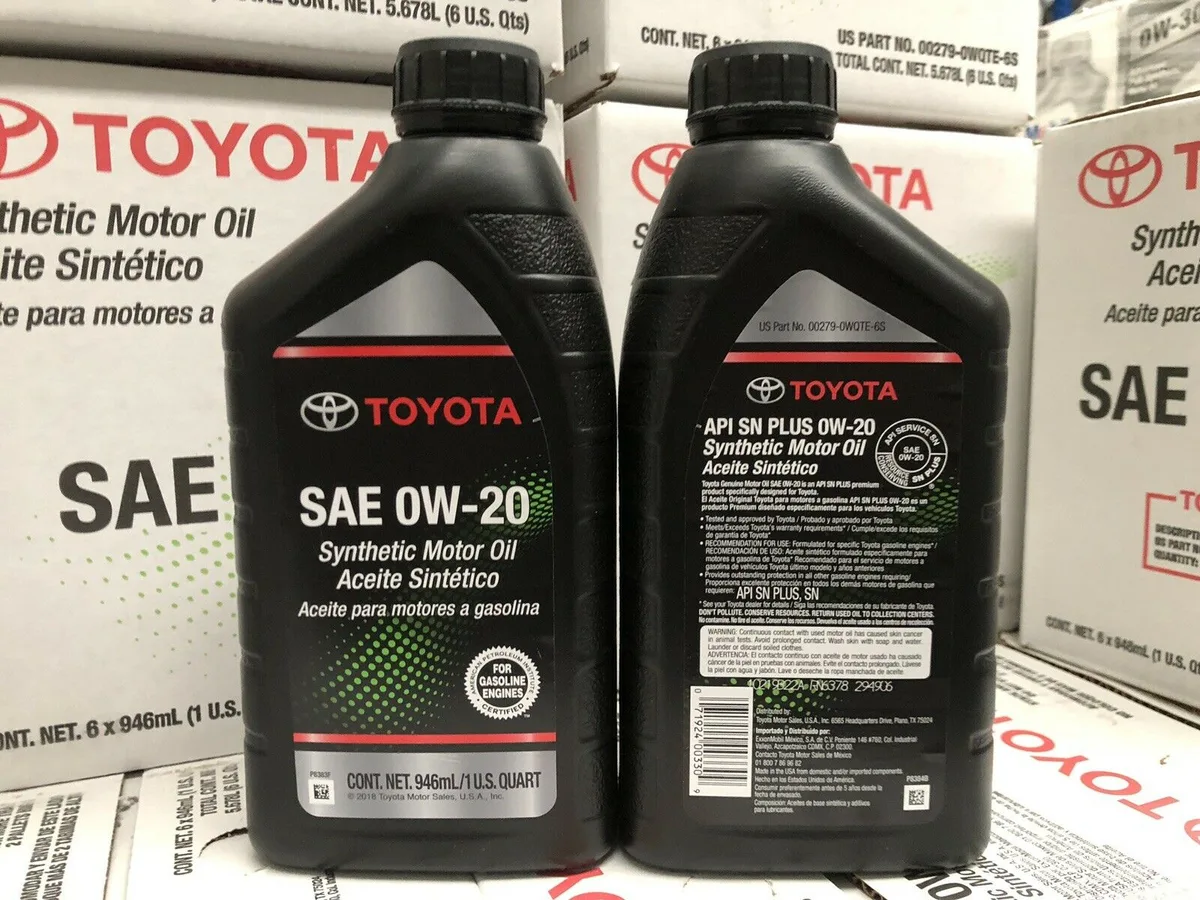
Image source: Web (Bing) / alibaba.com (Web image (fair-use with source credit))
Quick Answer
Your 2014 Toyota Corolla needs 0W-20 full synthetic engine oil. The oil must carry the API SN or SP certification. It also needs the ILSAC GF-5 or GF-6A starburst mark.
The total capacity with a filter change is 4.4 US quarts. Stick with a trusted brand like Mobil 1, Pennzoil, or Valvoline.
Why Getting the Right Oil Matters for Your 2014 Corolla
Your Corolla's 1.8-liter 2ZR-FE engine uses variable valve timing on both camshafts. That system relies on oil pressure to adjust timing continuously. The engine control unit monitors that pressure and adjusts accordingly.
Putting in the wrong oil does not just make the engine run a little rougher. It can cause real damage over time. Thicker oil does not flow fast enough through the narrow oil passages during a cold startup.
Metal parts rub together without proper lubrication for those first few seconds. Do that for a few winters and you see premature wear on the timing chain guides and camshaft journals.
There is also the fuel economy angle. The EPA rated the 2014 Corolla at 30 city and 40 highway miles per gallon. Those numbers assume 0W-20 oil is in the crankcase.
Thicker oil creates more internal drag, which drops your gas mileage by about one to two miles per gallon in real-world driving.
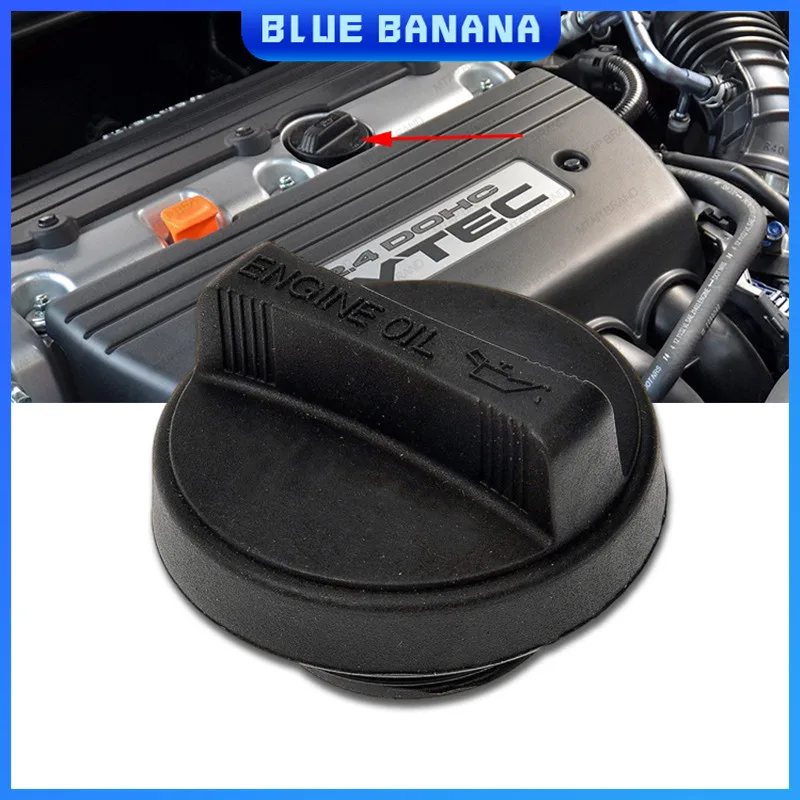
Image source: Web (Bing) / shopee.ph (Web image (fair-use with source credit))
The oil fill cap on your engine says 0W-20 right on it. That is not a suggestion. Toyota stamped that cap at the factory with the exact specification the engineers validated during thousands of hours of testing.
Trust the cap.
What happens if you use 5W-30 instead
You might hear someone say 5W-30 is fine because the older Corolla models used it. They are not entirely wrong, but they are missing context. Toyota officially allows 5W-30 in the 2014 Corolla only if 0W-20 is unavailable.
The owner's manual says to switch back to 0W-20 at the next oil change.
Our research shows that using 5W-30 in cold climates is where the trouble shows up. Below freezing, 5W-30 is noticeably thicker than 0W-20. It takes longer to reach critical engine parts.
In warmer southern climates the difference shrinks, but 0W-20 still delivers better fuel economy and faster cold-start protection.
The 2014 Corolla's Engine: What Makes It Picky About Oil
The 2ZR-FE engine is a dual-overhead-cam four-cylinder with Toyota's Dual VVT-i system. That system relies on oil pressure to adjust camshaft timing continuously. The oil has to be thin enough to move through tiny passages inside the cam phasers but thick enough to maintain pressure when the engine is hot.
Toyota designed this engine with tighter bearing clearances than older generations. Tight clearances mean thinner oil flows properly between moving parts. Thicker oil gets squeezed out and leaves metal surfaces dry.
The 2ZR-FE also uses a chain-driven timing system. The timing chain tensioner is hydraulic, meaning oil pressure keeps the chain tight. Wrong oil viscosity can cause the tensioner to slacken, which leads to chain slap and eventual failure.
That is an expensive repair you want to avoid.
Synthetic oil matters more than you think
Full synthetic 0W-20 maintains its viscosity across a wider temperature range than conventional oil. At zero degrees Fahrenheit, synthetic oil still flows like it should. Conventional oil turns into something closer to honey.
The additive package in synthetic oil handles the heat better. Your Corolla's engine runs hot enough to break down conventional oil over time. Sludge buildup is the direct result of conventional oil degrading and leaving deposits behind.
Synthetic oil resists that breakdown much longer.
Aggregate reviews from Corolla owners suggest that switching from conventional to synthetic 0W-20 noticeably quiets the engine at idle. The valvetrain sounds smoother. Cold starts feel less harsh.
That matches what the engineers expected when they specified this oil.
0W-20 vs. 5W-30: What's the Real Difference (and Which One Wins?)
The difference between 0W-20 and 5W-30 comes down to two numbers. The first number with the W tells you how the oil flows in winter. The second number tells you the viscosity at normal operating temperature.
0W-20 flows better in the cold than 5W-30. The 0 in 0W-20 means it pumps easily at minus 40 degrees Fahrenheit. The 5 in 5W-30 means it only pumps easily down to minus 30 degrees.
That ten-degree difference matters if you live somewhere that sees real winter.
At operating temperature, 0W-20 is thinner than 5W-30. That reduces drag on the rotating assembly. Less drag means better fuel economy and slightly lower engine temperatures.
The trade-off is that 0W-20 cannot hold up to extreme heat as well as 5W-30, but your Corolla's engine does not generate that kind of heat under normal driving.
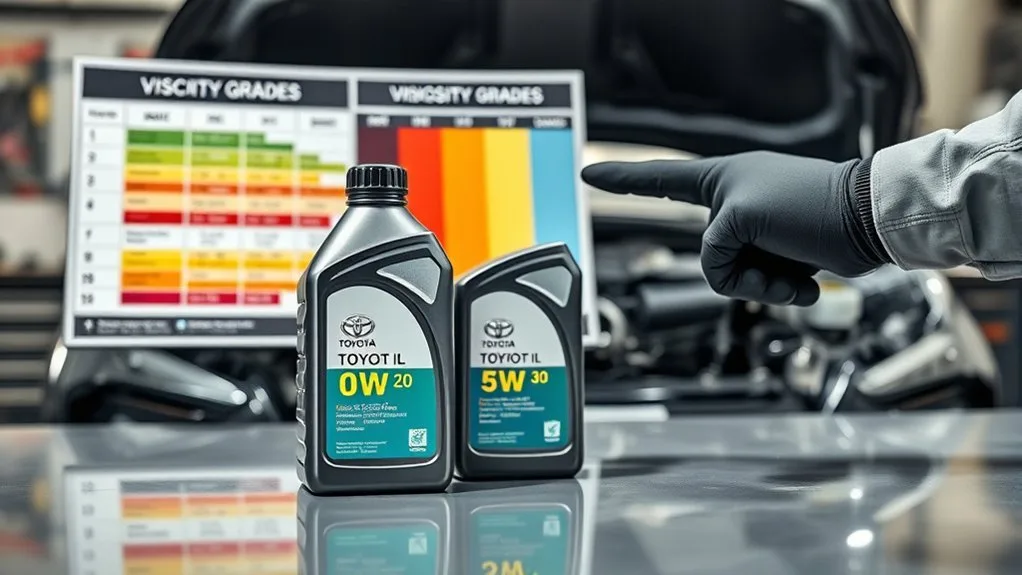
Image source: Web (Bing) / gomyreview.com (Web image (fair-use with source credit))
The viscosity chart explained
Think of viscosity as resistance to flow. Lower numbers mean thinner oil. Water has very low viscosity.
Molasses has very high viscosity. Engine oil sits somewhere in between.
The chart in the image above shows how different oils behave across a temperature range. You can see that 0W-20 stays consistently thinner than 5W-30 from cold start all the way to full operating temperature. That consistent behavior is exactly what the 2ZR-FE engine needs for its variable valve timing and hydraulic chain tensioner.
Which one you should actually use
Stick with 0W-20. Full stop. Use 5W-30 only if you are in a pinch and the store is completely out of 0W-20.
Even then, treat it as a temporary measure and switch back at your next oil change. The fuel economy difference alone pays for the oil over a year of driving.
If you do the math, losing one mile per gallon over 15,000 miles of driving means burning about 50 extra gallons of gas. At current fuel prices, that is easily over $200 a year. The extra cost of 0W-20 synthetic versus 5W-30 conventional is maybe $15 per oil change.
The savings outweigh the upfront cost.
Synthetic vs. Conventional: Do You Really Need Full Synthetic?
This is the question that trips people up the most. Conventional oil costs less than half what synthetic costs. Your Corolla has 150,000 miles on it.
Why pay for expensive oil?
Here is the short answer. Yes, you need full synthetic 0W-20. Conventional 0W-20 does not exist in a meaningful way.
The viscosity is too thin for conventional base stocks to hold up. Every major oil manufacturer only produces 0W-20 as a synthetic blend or full synthetic.
The API certification for 0W-20 requires synthetic base stocks to meet the viscosity and volatility standards. Conventional oil evaporates too quickly at 0W-20 weights. Your engine would burn through it and leave deposits behind.
Cost comparison over time
| Oil Type | Cost per 5-Quart Jug | Change Interval | Cost per Year (15k miles) |
|---|---|---|---|
| 0W-20 Full Synthetic | $28-$38 | 7,500-10,000 miles | $56-$76 |
| 5W-30 Conventional | $18-$25 | 3,000-5,000 miles | $72-$100 |
| 0W-20 Synthetic Blend | $22-$30 | 5,000-7,500 miles | $60-$80 |
The numbers make it clear. Full synthetic 0W-20 costs less per year because you change it less often. You also get better engine protection and fuel economy.
There is no good reason to use anything else.
What about high-mileage oil
If your Corolla has over 75,000 miles on the odometer, consider switching to a high-mileage formulation of 0W-20. Brands like Mobil 1 and Valvoline make high-mileage synthetic oils with seal conditioners. Those additives help rehydrate dried-out rubber seals and reduce oil leaks.
High-mileage oil also has a slightly different detergent package. It cleans existing sludge more gently than standard synthetic oil. That matters for an older engine because aggressive detergents can dislodge big chunks of sludge and clog oil pickup tubes.
Our research indicates that high-mileage 0W-20 is a smart choice for Corollas with over 100,000 miles. Just make sure it still carries the API SN or SP certification. Some cheap high-mileage oils cut corners on the additive package to save money.
The Exact Oil Specs You Need (API, ILSAC, Viscosity, and Capacity)
You cannot just grab any bottle labeled 0W-20. The bottle must carry the right certifications. Those certifications tell you the oil has been tested and meets industry standards.
The API starburst symbol means the oil passes the American Petroleum Institute's latest tests. For the 2014 Corolla, you need API SN or SP. As of 2026, SP is the current standard and includes better protection against low-speed pre-ignition and timing chain wear.
SN is the previous generation and still acceptable.
The ILSAC GF-6A starburst mark is the international standard. It includes stricter fuel economy requirements and better protection for modern engines. If the bottle has the ILSAC starburst along with API SP, you are looking at the best oil money can buy.
Capacity and fill details
Your 2014 Corolla takes exactly 4.4 quarts of oil with a filter change. Do not dump in a full five-quart jug. Fill with four quarts, check the dipstick, and add the remaining oil slowly until the level hits the full mark.
The oil pan holds slightly less without a filter change. If you are just topping off between changes, expect to add about half a quart to bring the level from the low mark to the full mark on the dipstick. Do not overfill.
Too much oil creates foam and reduces lubrication effectiveness.
The oil filter matters too
A high-quality oil filter is just as important as the oil itself. The genuine Toyota filter is part number 04152-YZZA1. It has the correct bypass valve pressure and anti-drainback valve design for the 2ZR-FE engine.
Aftermarket filters work fine as long as they meet those same specifications.
Cheap filters often use inferior paper media that collapses under pressure. That bypasses the filter entirely and sends unfiltered oil straight through your engine. Spend the extra three dollars for a good filter.
Your engine will thank you at 200,000 miles.
What Happens If You Use the Wrong Oil
The consequences range from annoying to catastrophic depending on how wrong the oil is and how long you use it. Let us break it down by scenario.
Using 10W-30 or thicker
This is the worst mistake you can make. 10W-30 is far too thick for cold starts. The oil pump struggles to push it through the cam phaser passages. Your variable valve timing system runs slow or stops working entirely.
That triggers a check engine light and reduces power.
The timing chain tensioner also suffers. Without proper oil pressure, the chain loosens and slaps against the timing cover. You will hear a rattling noise on cold starts.
That noise means the chain guide is wearing out fast. Replacing the timing chain assembly costs over $1,000 at a shop.
Using conventional 5W-30
This is less dangerous but still not ideal. The oil works fine when the engine is warm. The problems show up in cold weather.
Below 20 degrees Fahrenheit, 5W-30 thickens enough to delay oil flow by a few seconds. Those seconds accumulate over thousands of cold starts.
You also lose fuel economy. The EPA estimates drop by one to two miles per gallon. Over a year of driving, that adds up to hundreds of dollars in extra gas.
The oil also breaks down faster because the conventional base stock cannot handle the engine's operating temperature as well as synthetic.
Using the wrong certification
Some bargain brand oils carry old certifications like API SL or SM. Those do not provide adequate protection for modern engines. They lack the anti-wear additives and sludge control that API SN and SP require.
Using old-spec oil voids the spirit of Toyota's recommendation, even if the viscosity is correct.
Stick with oils that display the API starburst and ILSAC certification on the bottle. If a bottle looks generic and does not have those marks, leave it on the shelf. Your engine is worth the extra few dollars for quality oil.
Step-by-Step: How to Change Your Oil the Right Way
Changing the oil on a 2014 Corolla is straightforward. You need basic hand tools and about 30 minutes. Here is exactly how to do it without making a mess or damaging anything.
Tools and materials you need
| Item | Specification |
|---|---|
| Oil | 4.4 quarts 0W-20 full synthetic, API SN or SP |
| Oil filter | Toyota 04152-YZZA1 or equivalent |
| Drain plug gasket | Toyota 90430-12031 or equivalent |
| Socket | 14mm for the drain plug |
| Oil filter cup wrench | 64mm, 14-flute |
| Torque wrench | 29 ft-lbs for drain plug, 18 ft-lbs for filter cap |
| Drain pan | At least 6-quart capacity |
| Funnel | Long neck for reaching the fill hole |
The actual process
Start with the engine warm. Run it for about five minutes to warm the oil. Warm oil drains faster and carries more suspended contaminants.
Do not do this on a cold engine or a scalding hot one. Warm is the sweet spot.
Raise the front of the car with a jack and place it on jack stands. Never crawl under a car supported only by a jack. Safety comes first.
If you do not have jack stands, drive the front wheels up onto ramps.
Place the drain pan under the engine. The drain plug is on the passenger side of the oil pan, facing the rear of the car. Loosen it with the 14mm socket.
Remove it by hand and let the oil drain. Be careful. The oil is warm, not boiling hot, but it still burns.
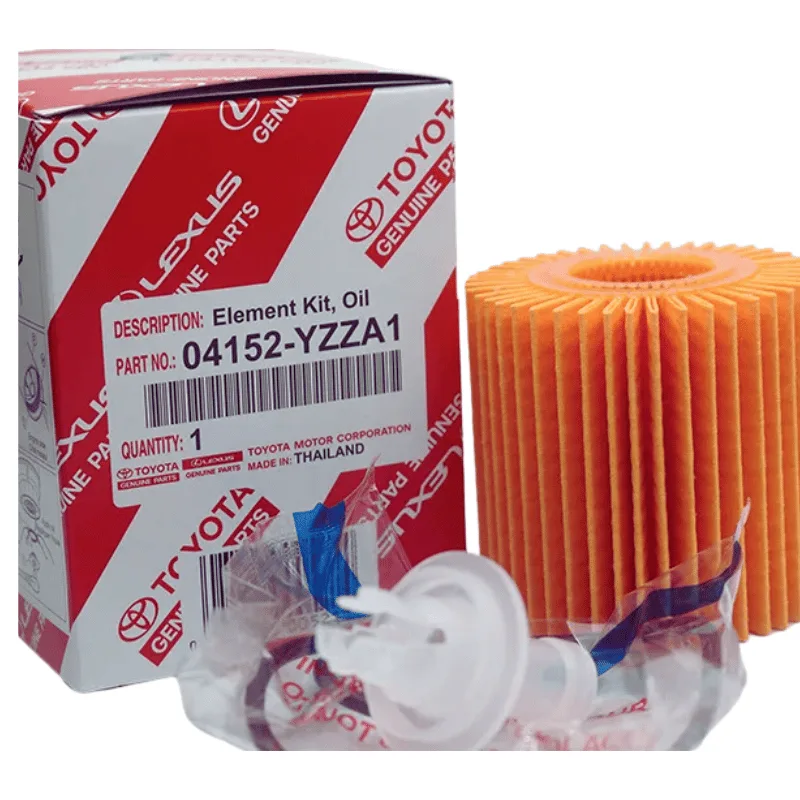
Image source: Web (Bing) / mrparts.ng (Web image (fair-use with source credit))
While the oil drains, remove the oil filter cap. It is on the front of the engine, driver's side, right above the oil pan. The cap uses a 64mm cup wrench.
Turn it counterclockwise until it loosens, then finish by hand. Pull the old filter element out and remove the rubber O-ring from the cap.
Install the new O-ring on the filter cap. Lubricate it with a thin layer of fresh oil. Insert the new filter element into the housing.
Screw the cap back on by hand until it seats, then torque it to 18 ft-lbs. Do not overtighten. The cap is plastic and cracks easily.
Once the oil stops dripping, install a new gasket on the drain plug. Torque the plug to 29 ft-lbs. That is snug plus about a quarter turn.
Use a torque wrench if you have one. Overtightening strips the aluminum oil pan threads.
Pour in about 3.5 quarts of fresh 0W-20 through the fill hole. Replace the fill cap. Start the engine and let it run for 30 seconds.
Check for leaks around the drain plug and filter. Turn the engine off and wait three minutes for the oil to settle.
Check the dipstick. Wipe it clean, insert it fully, pull it out, and read the level. Add oil in quarter-quart increments until the level reads between the low and full marks.
A full drain and filter change takes exactly 4.4 quarts.
Resetting the oil maintenance light
Your Corolla has a maintenance reminder light that comes on based on mileage. To reset it, turn the ignition to the ON position without starting the engine. Press the trip meter reset button until the odometer displays trip A.
Turn the ignition off. Press and hold the trip reset button while turning the ignition back to ON. Keep holding until the maintenance light blinks and turns off.
Release the button. Done.
Common Mistakes DIYers Make (and How to Avoid Them)
The most common mistake is stripping the drain plug. The aluminum oil pan is soft. Over-torquing the plug rounds the threads and forces a costly repair.
Use a torque wrench set to 29 ft-lbs. If you do not have one, snug the plug with a ratchet and give it one small extra turn. That is enough.
Another common mistake is forgetting to lubricate the filter O-ring. A dry O-ring does not seal properly. It either leaks immediately or lets the cap loosen over time.
A thin coat of oil on the O-ring ensures it slides into place and creates a proper seal.
The overfilling trap
Adding too much oil is surprisingly easy. The dipstick reads differently on a warm engine versus a cold one. Always check the oil level with the engine off and the car on level ground.
Wait three minutes after shutdown for the oil to drain back into the pan.
If you overfill, the crankshaft whips the oil into foam. Foam does not lubricate well. Air bubbles collapse under pressure and leave metal surfaces dry.
Overfilling also increases pressure inside the crankcase, which pushes oil past seals and creates leaks.
Ignoring the gasket
The drain plug gasket is a copper or aluminum crush washer. It deforms when you torque it and creates a seal. Reusing an old gasket means the seal is compromised.
A gallon of oil lost over a month is a dry engine on a long road trip.
Replace the gasket every oil change. They cost about a dollar each. Buy a pack of ten and keep them in your glove box.
You will never forget again.
How Often Should You Change It? The Real Answer
Toyota says every 10,000 miles for normal driving conditions. That is the official recommendation in the owner's manual. But normal driving does not mean what most people think it means.
Severe service schedule
Toyota defines severe service as driving that involves any of the following: frequent short trips under five miles, stop-and-go traffic, dusty roads, extreme cold, extreme heat, or towing. If you drive in any of those conditions, the severe service schedule applies. That means oil changes every 5,000 miles.
Most people fall into the severe service category. Your daily commute with 20 minutes of stop-and-go traffic counts. Short trips to the grocery store count.
Cold winter mornings where the engine barely warms up count. Be honest about how you drive.
The compromise schedule
Our research across Corolla owner forums suggests a reasonable middle ground. Change the oil every 7,500 miles with full synthetic 0W-20. That gives you twice the protection of the 10,000-mile schedule while still saving money compared to the 5,000-mile interval.
If your driving is mostly highway miles at steady speeds, the 10,000-mile schedule is fine. Highway driving is easy on oil because the engine stays at operating temperature and the oil burns off contaminants. City driving is much harder on oil because of the constant cold starts and hot shutdowns.
High-Mileage Oil: When Should You Switch?
High-mileage oil is designed for engines that have accumulated wear over time. The seal conditioners help prevent leaks. The higher detergent levels keep sludge from forming.
The additive package is gentler on old seals.
Switch to high-mileage 0W-20 when your Corolla passes 75,000 miles. That is the point where internal seals start to dry out and shrink. The seal conditioners in high-mileage oil rehydrate those seals and reduce oil consumption.
Will it fix an existing leak
High-mileage oil can reduce small leaks, but it is not a miracle cure. If your Corolla is leaving puddles on the driveway, you have a mechanical issue that needs repair. High-mileage oil might slow the leak, but it will not stop it entirely.
Do not use high-mileage oil as a substitute for fixing a leaking valve cover gasket or oil pan seal. Those are straightforward repairs on the 2ZR-FE engine and cost less than a hundred dollars in parts. Fix the leak, then use high-mileage oil for ongoing protection.
Does it work for very high mileage
On Corollas with over 200,000 miles, high-mileage oil is the right choice. The seal conditioners help maintain oil pressure. The higher viscosity index keeps the oil stable even as the engine wears.
Stick with full synthetic high-mileage 0W-20 for the best results.
Some owners report that switching to high-mileage oil at very high mileage reduces oil consumption by half a quart per change interval. That means less frequent topping off and better overall protection.
What the Owner's Manual Actually Says (and What It Doesn't Tell You)
The owner's manual for the 2014 Toyota Corolla states that 0W-20 oil with API certification SN or higher is required. It notes that 5W-30 can be used temporarily if 0W-20 is unavailable. Switch back at the next oil change.
What the manual does not tell you is how many Corolla owners have successfully used 0W-20 for hundreds of thousands of miles with no issues. It does not explain why the oil matters so much for the variable valve timing system. It assumes you will follow the specification without question.
The manual's blind spots
The manual also does not address the difference between cheap synthetic and quality synthetic. It says any oil meeting the specifications is fine. That is technically true, but our research suggests that premium brands like Mobil 1, Pennzoil, and Valvoline perform better in long-term testing.
Cheap synthetic oils sometimes cut corners on the additive package. They meet the API certification requirements by the bare minimum margin. That works for the required 10,000-mile change interval, but it does not provide the same margin of safety.
The manual's recommended filters
The owner's manual recommends using a genuine Toyota oil filter. Part number 04152-YZZA1 is the current production filter for the 2ZR-FE engine. It has the correct bypass valve pressure of 11 psi and an anti-drainback valve that prevents dry starts.
Aftermarket filters from reputable brands like Wix, Purolator, and Mobil 1 also work well. Avoid the cheapest filters on the shelf at the auto parts store. Some of them do not have proper anti-drainback valves, which means your engine runs dry for the first few seconds after startup.
Quick Decision Guide: Picking the Right Oil for Your Situation
Use this quick guide to decide based on your specific situation.
Your Corolla is under 75,000 miles
Use 0W-20 full synthetic from any major brand. Stick with a 7,500-mile change interval. Use the genuine Toyota oil filter or a premium aftermarket equivalent.
Your Corolla is over 75,000 miles
Switch to high-mileage 0W-20 full synthetic. The seal conditioners help maintain oil pressure and reduce leaks. Keep the 7,500-mile change interval.
Consider checking the oil level monthly.
You live in a very cold climate
0W-20 full synthetic is mandatory. Do not even consider 5W-30. The cold-flow properties of 0W-20 are necessary for safe cold starts below freezing.
Consider using a block heater if temperatures drop below minus 20 degrees Fahrenheit.
You live in a very hot climate
0W-20 full synthetic is still the right choice. The operating temperature of your engine does not change based on outside air temperature. The thermostat keeps the engine at the same temperature whether it is 90 degrees or 20 degrees outside.
You are in a pinch and 0W-20 is unavailable
Use 5W-30 conventional or synthetic blend for one oil change. Switch back to 0W-20 at the next change. Do not make this a habit.
The fuel economy difference and cold-start protection loss are real, but one change will not destroy your engine.
Final Word: One Simple Rule to Keep Your Corolla Running
Here is the single rule that covers everything. Use 0W-20 full synthetic with API SP certification and a good oil filter. Change it every 5,000 miles if you drive in stop-and-go traffic or every 7,500 miles for mixed driving.
Never go past 10,000 miles.
Your 2014 Corolla is a reliable car that will easily reach 200,000 miles with proper maintenance. The oil is the single most important thing you can get right. Everything else follows from that.
If you ever have questions about other maintenance items for your vehicle, our contact page is open for you. We are happy to help with clear, practical advice.
Frequently Asked Questions
Can I use 5W-30 in my 2014 Toyota Corolla?
Yes, but only as a temporary measure. Toyota allows 5W-30 when 0W-20 is not available. Switch back to 0W-20 at your next oil change.
Using 5W-30 long term reduces fuel economy and provides less cold-start protection in winter.
How much oil does a 2014 Toyota Corolla take?
The 2014 Corolla takes 4.4 US quarts of oil with a filter change. Fill with 4 quarts, check the dipstick, and add the remaining oil slowly. Do not dump in a full five-quart jug without checking the level first.
Do I need synthetic oil in my 2014 Corolla?
Yes. The 0W-20 viscosity required by Toyota is only available as synthetic or synthetic blend. Conventional 0W-20 does not exist because the base stock cannot hold up at that thin viscosity.
Full synthetic provides the best protection and longest change intervals.
What happens if I put the wrong oil in my Corolla?
Thicker oil like 10W-30 causes poor cold-start lubrication, reduced fuel economy, and potential damage to the variable valve timing system and timing chain tensioner. Thin oil without proper certification lacks the additive package needed to prevent sludge and wear. Use the correct spec.
How often should I change the oil in my 2014 Corolla?
Toyota recommends every 10,000 miles for normal driving and every 5,000 miles for severe service. Most people drive in severe service conditions due to stop-and-go traffic, short trips, or extreme temperatures. A practical compromise is every 7,500 miles with full synthetic oil.