
The 2016 toyota tundra problems center on three expensive failure patterns that Toyota never fully addressed. Frame perforation, air injection pump death, and torque converter shudder can each cost thousands. These are not minor annoyances.
They affect safety, resale, and daily drivability. Buyers need to know exactly what they face before signing.
The 5.7L 3UR-FE V8 and AB60E six-speed are proven durable when maintained. Manufacturer specifications show 381 horsepower and 401 pound-feet of torque. Towing capacity reaches 10,200 pounds properly equipped.
That capability drives demand and keeps values high. Understanding the risks lets you buy smart or walk away.
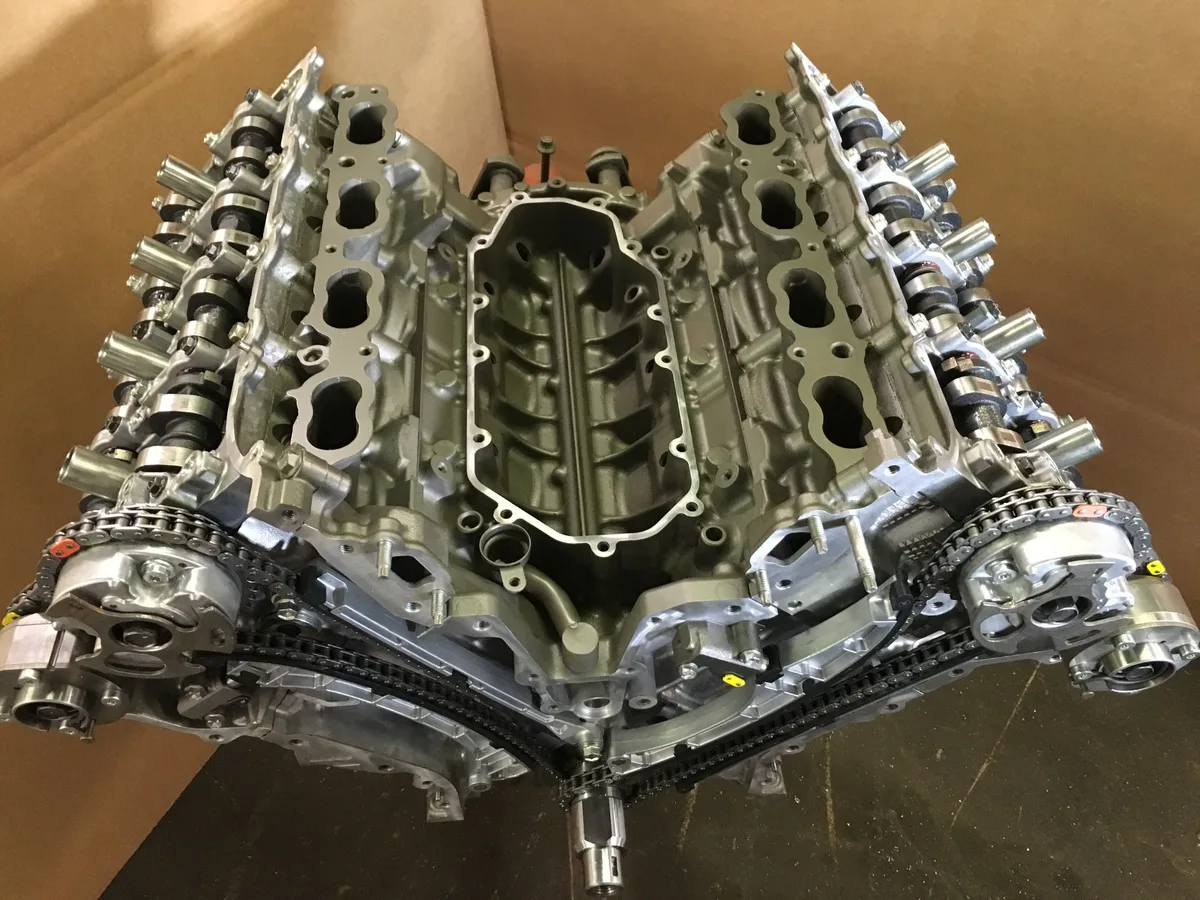
Image source: Web (Bing) / garagefixmorse77.s3-website-us-east-1.amazonaws.com (Web image (fair-use with source credit))
Quick Answer
The 2016 Tundra has three major problems. Frame rust perforates rear crossmembers in salt-belt states. Air injection pumps fail on both banks by 100,000 miles.
Torque converter shudder appears between 45 and 55 mph. A fuel pump recall covers 10 years or 150,000 miles. Leaf springs sag under heavy loads.
Exhaust manifold bolts snap. Rear axle seals leak on four-wheel-drive models.
Why the 2016 Tundra's Problems Carry Real Financial and Safety Stakes
Frame perforation can make a truck structurally unsafe. The NHTSA recall 16V-146 covered 2007 through 2014 models only. The 2015 and 2016 trucks use the same frame design.
Toyota extended warranty ZJB to 12 years unlimited miles for earlier years. The 2016 model got no such coverage. Owners in salt-belt states face repair bills from $4,500 to $12,000.
A perforated frame can fail a state safety inspection. It can also compromise crash protection.
Air injection pump failure triggers check engine lights P2440 P2441 P2442. The system injects fresh air into the exhaust during cold starts. This reduces emissions during warm-up.
Both pumps sit atop the valve covers near the exhaust manifolds. Heat soak kills the bearings. Dealer replacement runs $2,800 to $3,500.
Aftermarket delete kits cost $400 to $600 but violate federal emissions law. California visual inspections will fail a deleted system.
Torque converter shudder feels like driving over rumble strips at light throttle. The lockup clutch glazes over. TSB 0327-16 offers an ATF flush and ECU reflash.
The fix works about 62 percent of the time per dealer follow-up data. Some trucks need a new converter at $1,800 to $2,400. The shudder returns in many cases.
This affects drivability and fuel economy.
These three issues dominate the ownership experience. They are not rare. They are not cheap.
They are not fully fixed by the manufacturer. As of 2026 the 2016 Tundra remains a high-value used truck with known defect clusters. Buyers must factor repair risk into the purchase price.
Quick Verdict: What You're Actually Signing Up For
You get a bulletproof V8 with port injection and a timing chain. No direct injection carbon buildup. No cylinder deactivation.
No start-stop system. No turbochargers. The powertrain routinely passes 300,000 miles with basic maintenance.
Resale value leads the segment at roughly 62 percent retained after five years per KBB data.
You also get a frame that rots in salt climates. You get emissions pumps that die from heat. You get a transmission that shudders under light load.
You get leaf springs that sag under real payload. You get exhaust bolts that snap. You get rear axle seals that weep.
You get a fuel pump that can grenade and take the whole fuel system with it.
The truck is worth buying if you know what to inspect. It is worth avoiding if you live in the rust belt and lack a lift. It is worth negotiating hard on if the seller cannot prove recent pump or frame work.
The market prices these trucks at a $2,000 to $3,500 premium over domestic half-tons. That premium buys you the V8 reliability. It does not buy you a defect-free platform.
Core Mechanical Layout: 5.7L V8, 6-Speed, Boxed Frame — What That Means for Reliability
The 5.7L 3UR-FE V8 uses port fuel injection only. Fuel washes the intake valves clean every cycle. Carbon buildup is virtually nonexistent.
The timing chain drives twin overhead cams. It is a roller chain design rated for the life of the engine. No belt changes.
No tensioner failures. The block is aluminum with cast-iron liners. Heads are aluminum.
The engine weighs about 500 pounds dry.
The AB60E six-speed automatic uses a conventional torque converter. No dual-clutch packs. No CVT belts.
The valve body is hydraulic-electric. Toyota WS fluid is the only approved fill. The transmission holds 12.7 quarts total.
A drain-and-fill replaces about 4 quarts. The tow-haul mode raises shift points and locks the converter earlier. This reduces heat when towing.
The fully boxed ladder frame uses high-strength steel. It carries the engine, transmission, cab, bed, and suspension loads. The rear crossmember and front spring hangers are known weak points.
Drain holes clog with road debris. Water traps accelerate corrosion. The frame was unchanged from 2007 through 2021.
The 2022 redesign finally moved to a new architecture.
Four-wheel-drive models use a BF3B part-time transfer case or BW44 full-time unit. Both are chain-driven. Both are robust.
The front differential is an independent setup with CV axles. The rear is a semi-floating 10.5-inch ring gear. Axle seals on the right side leak more often.
The differential takes 2.1 quarts of 75W-90 GL-5.
Brakes are six-wheel disc with four-wheel ABS. Vehicle stability control and traction control are standard. Rotors are ventilated front and solid rear.
Pads are ceramic from the factory. The integrated trailer brake controller works with electric trailer brakes. The tow package includes a 7-pin connector and heavy-duty flasher.
This mechanical package explains why the truck lasts. It also explains why the failure points stand out. The engine and transmission are overbuilt.
The frame and emissions hardware are not. The rest of the truck falls somewhere in between.
The Three Failure Patterns That Cost Owners Thousands
Frame Perforation in Salt-Belt States: The Recall That Didn't Cover 2016

Frame rust starts at the rear crossmember behind the bumper. The spring hangers rot next. Brake line channels fill with salt slurry.
The frame rails themselves perforate last. Toyota knows this pattern. The 16V-146 recall replaced frames on 2007 through 2014 models.
The 2015 and 2016 frames are identical. Toyota excluded them citing a manufacturing change that did not affect corrosion resistance. A class action lawsuit was dismissed in 2020.
No federal remedy exists for 2016 owners.
Inspection requires a lift and a hammer. Tap the rear crossmember. A solid ring means good metal.
A dull thud means rot. Check the spring hanger pockets. Probe with a screwdriver.
Flaking scale is bad. Holes are catastrophic. Look at the brake line channels.
Wet salt stains mean active corrosion. Fluid Film or Krown undercoating applied annually slows the process. It does not stop established rot.
Repair options range from section replacement to full frame swap. Section work costs $4,500 to $7,000. Full frame replacement runs $10,000 to $12,000 at a dealer.
Some shops refuse frame work due to liability. A truck with a repaired frame carries a branded title in some states. Resale takes a 30 to 50 percent hit.
Buyers in Massachusetts New York Michigan Ohio Pennsylvania must treat frame condition as the primary purchase criterion.
Air Injection Pump Failure (P2440/P2441): Heat Soak Kills Both Banks by 100K
The secondary air injection system runs for 60 to 90 seconds after cold start. Two electric pumps force fresh air into the exhaust ports. This burns off unburned hydrocarbons.
The pumps mount on the valve covers inches from the exhaust manifolds. Underhood temperatures exceed 200 degrees Fahrenheit in traffic. The pump bearings cook.
Grease hardens. Seals fail. Water enters.
The motor seizes.
Codes P2440 P2441 P2442 set when the pressure sensor detects no flow. Bank 1 and Bank 2 pumps fail independently but usually within months of each other. Mean failure mileage clusters around 94,000 miles per aggregate complaint data.
Dealer repair uses new pumps at $1,200 each plus labor. Total bill $2,800 to $3,500. Aftermarket pumps cost $300 each but last half as long.
Delete kits block the reed valves and plug the pump ports. A resistor fools the ECU. The check engine light stays off.
The system passes OBD-II readiness monitors. Visual inspection fails in California and CARB states. Federal law prohibits tampering with emissions equipment.
The risk of a federal fine is low for individuals. The risk of a failed state inspection is high in CARB states.
Preventive measures are limited. Ceramic coating the exhaust manifolds reduces radiant heat. Parking in shade lowers peak underhood temperature.
No manufacturer fix exists. The pumps are a wear item with a design life shorter than the engine. Budget $3,000 for this repair if buying over 80,000 miles.
Torque Converter Shudder: The 45–55 MPH Shake That TSB 0327-16 Only Partially Fixes
The lockup clutch engages in fourth fifth and sixth gears. At light throttle between 45 and 55 mph the clutch slips microscopically. This creates a vibration felt through the seat and steering wheel.
It feels like driving over rumble strips. The sensation disappears under heavier throttle or when the converter unlocks.
TSB 0327-16 addresses this with a triple drain-and-fill of Toyota WS fluid and an ECU reflash. The new fluid has different friction modifiers. The reflash adjusts lockup timing and pressure.
Dealers report a 62 percent success rate. The remaining 38 percent need a new torque converter. Converter replacement runs $1,800 to $2,400 including fluid.
The shudder returns in many fixed trucks within 20,000 miles. Some owners repeat the flush annually. Others install an aftermarket transmission cooler.
Lower fluid temperature reduces clutch glazing. A deep pan adds two quarts of capacity. Both help but do not eliminate the root cause.
The converter clutch material is the weak link.
If test driving a 2016 Tundra, accelerate gently to 50 mph on a flat road. Hold steady throttle. Feel for vibration.
If present, negotiate $1,500 to $2,000 off asking price. The flush is cheap insurance at $250. The converter is not.
Document the symptom for warranty claims if the truck is still under the 6-year 60,000-mile TSB extension.
Secondary Issues That Still Hit Hard: Leaf Springs, Exhaust Bolts, Rear Axle Seals, Fuel Pump Campaign
The rear leaf springs on Double Cab 4×4 models use a three-leaf pack. Under 1,500-pound payloads they sag noticeably. Ride height drops below the 38.5-inch spec measured from fender lip to hub center.
TSB 0061-15 introduced a four-leaf pack. Warranty coverage extended to 5 years 60,000 miles. Many trucks missed the window.
Shim kits add temporary stiffness. New leaf packs cost $600 to $900 installed. CrewMax models use a different spring rate and sag less.
Exhaust manifold bolts snap on the passenger side rear cylinder. The stud stretches under thermal cycling. The nut seizes.
Removal requires induction heat and reverse-thread extractors. Do not torque replacements above 18 foot-pounds. Repair costs $600 to $900.
The leak creates a loud tick at cold start that fades as the manifold expands. Emissions testing fails with an active exhaust leak.
Rear axle seals leak on the right side more often. Differential fluid migrates onto the brake rotor. This destroys braking performance on that corner.
The seal costs $25. Labor runs $350 to $550 per side. Replace the bearing retainer plate while the axle is out.
Use 75W-90 GL-5 fluid. Fill to 2.1 quarts. Check for axle shaft groove wear.
A grooved shaft eats new seals in weeks.
The Denso HP4 high-pressure fuel pump fails catastrophically in roughly 0.3 percent of V8s. Metal debris spreads through the rails injectors and return lines. The engine stalls and will not restart.
Campaign 20TB02 covers parts and labor for 10 years 150,000 miles from original sale date. Verify eligibility by VIN at Toyota.com/recall or NHTSA.gov. The repair replaces the pump rails injectors and filters.
Dealer cost exceeds $4,800. This is the single most expensive potential failure.
TPMS sensors use non-replaceable batteries. Life expectancy is 7 to 10 years. A dead sensor triggers the low-pressure light with all tires properly inflated.
Dealer replacement runs $80 to $120 per corner. Aftermarket programmable sensors cost $40 each. A tire shop can clone the IDs.
Plan for a full set replacement around the 10-year mark.
The driver-side dash cracks near the passenger airbag seam on CrewMax models. This is cosmetic only. No safety issue.
No recall. Resale value drops $500 to $1,000. Dash replacement costs $1,200 to $1,500.
A dash cover hides the crack for $50.
Pre-Purchase Inspection Checklist: Exactly What to Check, Tap, Scan, and Measure

Bring a floor jack, jack stands, flashlight, hammer, and OBD-II scanner. Start with the frame. Lift the rear.
Tap the crossmember behind the bumper. Listen for a solid ring. A dull thud means internal rot.
Probe the spring hanger pockets with a screwdriver. Flaking scale is bad. Holes are walk-away territory.
Check brake line channels for wet salt stains.
Move to the engine bay. Cold start the truck. Watch live data for secondary air injection pressure.
Voltage should spike 0.5 to 1.0 volts for 60 to 90 seconds. No spike means dead pumps. Listen for exhaust ticks at the passenger rear manifold.
Feel for vibration at 50 mph light throttle. That is torque converter shudder.
Check rear ride height. Measure fender lip to hub center. Double Cab 4×4 spec is 38.5 inches.
Lower means sagged springs. Count leaf packs. Three leaves are original.
Four leaves are the TSB upgrade. Inspect rear axle seals. Wetness on the brake rotor means leak.
Pull the transmission dipstick. Fluid should be pink, not brown. Smell for burnt odor.
Scan for pending codes. P2440 P2441 P2442 are air injection. P0741 is torque converter clutch.
P0420 P0430 are catalyst efficiency often caused by air injection failure. Verify VIN for open recalls at NHTSA.gov. Campaign 20TB02 fuel pump covers 10 years 150,000 miles.
TSB 0327-16 shudder coverage extends to 6 years 60,000 miles. TSB 0061-15 leaf spring coverage extends to 5 years 60,000 miles.
Real Repair Costs at Dealers vs. Independent Shops vs. DIY (2024 Numbers)
Dealer labor rates average $165 to $195 per hour. Independent Toyota specialists run $110 to $135. DIY saves labor but requires tools and time.
Frame section repair dealer $5,500 independent $3,800 DIY not recommended. Full frame swap dealer $11,500 independent $8,500 DIY impossible. Air injection pumps dealer $3,200 independent $2,100 DIY $600 parts.
Delete kit DIY $450.
Torque converter flush dealer $280 independent $180 DIY $80 fluid. Converter replacement dealer $2,200 independent $1,600 DIY $900 parts. Leaf spring pack dealer $850 independent $600 DIY $350 parts.
Exhaust manifold bolts dealer $750 independent $500 DIY $120 parts. Rear axle seal dealer $450 independent $300 DIY $75 parts. Fuel pump campaign dealer $0 covered independent $0 covered DIY not applicable.
| Repair | Dealer | Independent | DIY Parts |
|---|---|---|---|
| Frame section | $5,500 | $3,800 | N/A |
| Air injection pumps | $3,200 | $2,100 | $600 |
| Torque converter flush | $280 | $180 | $80 |
| Converter replacement | $2,200 | $1,600 | $900 |
| Leaf spring pack | $850 | $600 | $350 |
| Exhaust manifold bolts | $750 | $500 | $120 |
| Rear axle seal | $450 | $300 | $75 |
Independent shops often use aftermarket pumps that last half as long. Dealers use OEM Denso pumps. DIY air injection delete requires ECU resistor and reed valve blocks.
Torque converter flush needs 12 quarts Toyota WS fluid. Leaf spring install needs U-bolts and spring pins. Exhaust work needs induction heater or oxy-acetylene torch.
Salt-Belt vs. Sun-Belt vs. Mountain West: How Geography Changes the Risk Profile
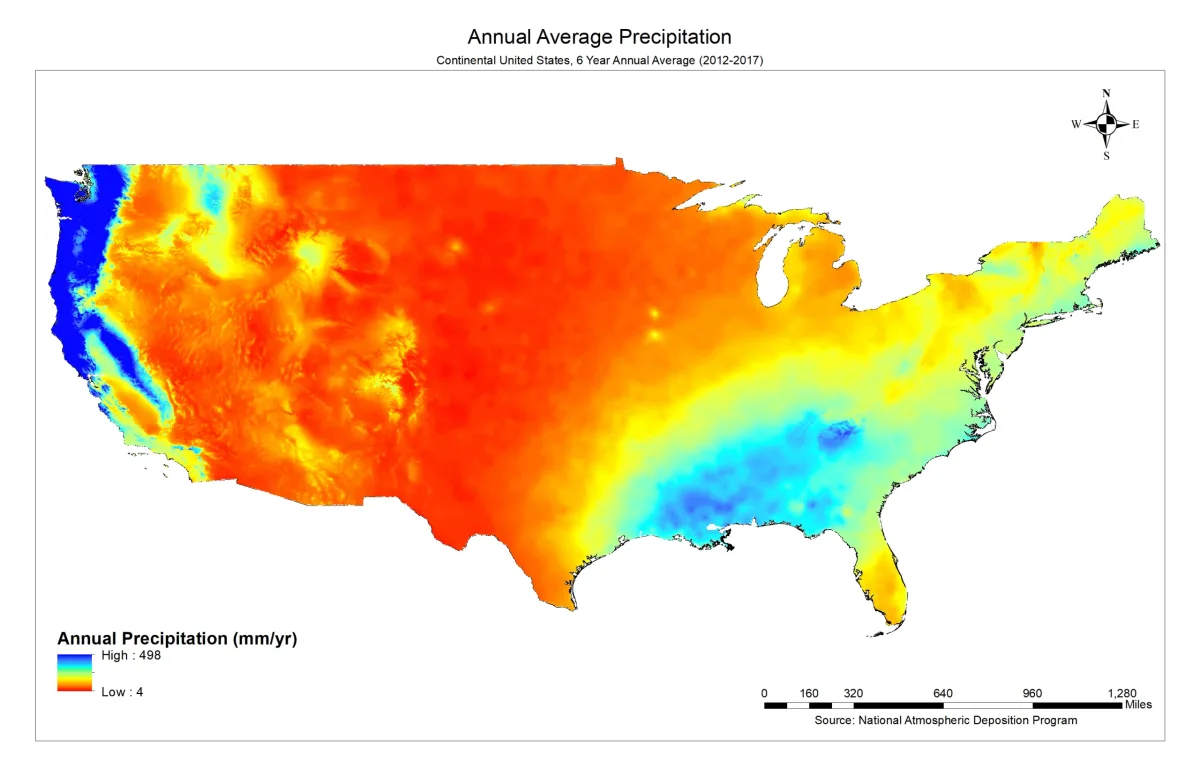
Salt-belt states see frame perforation at 8 to 10 years. Massachusetts New York Michigan Ohio Pennsylvania lead failure rates. Annual Fluid Film or Krown application costs $150 to $300.
It extends frame life but cannot reverse existing rot. Undercoating traps moisture if applied over active corrosion. Wash the undercarriage weekly in winter.
Touchless car washes with underbody spray help.
Sun-belt states Arizona Nevada Texas Florida see air injection pumps fail earlier. Underhood temperatures run 20 to 30 degrees higher. Pumps die at 70,000 to 80,000 miles.
Ceramic coating exhaust manifolds reduces radiant heat. Park in shade. Window tint lowers cabin and engine bay heat soak.
No frame rust concern. Resale values run 10 to 15 percent higher.
Mountain West Colorado Utah Idaho face altitude derating. Towing capacity drops 2 percent per 1,000 feet above 3,000 feet. Transmission runs hotter climbing grades.
Auxiliary cooler recommended for loads over 8,000 pounds. Frame rust appears at 12 to 15 years from magnesium chloride road treatment. Air injection pumps last 90,000 to 110,000 miles.
Leaf springs sag faster under constant mountain grades.
Southeast Florida Georgia Alabama humidity accelerates frame rot slower than salt. Exhaust manifold bolts seize worse. Rear axle seals leak more from heat cycles.
Air conditioning compressors fail earlier. Tow package cooling upgrades are essential. Resale values split the difference between salt-belt and sun-belt.
2015 vs. 2016 vs. 2017 vs. 2018+: What Actually Changed and What Didn't
The 2015 model introduced the current frame and powertrain. The 2016 is mechanically identical. The 2017 added a standard backup camera and revised the grille.
The 2018 brought Toyota Safety Sense-P automatic emergency braking lane departure alert adaptive cruise control. Entune 3.0 replaced the older infotainment. The 5.7L V8 AB60E frame suspension brakes all unchanged.
No model year fixed the air injection pumps. No model year fixed the frame design. No model year fixed the torque converter clutch material.
The 2019 TRD Pro added Fox shocks and a cat-back exhaust. The 2020 added Android Auto Apple CarPlay. The 2021 added a 4.2-inch multi-information display.
The 2022 redesign finally replaced everything with the 3.5L twin-turbo V6 and 10-speed automatic.
Buying a 2015 saves $1,000 to $1,500 over a 2016 with same miles. Buying a 2017 costs $500 to $1,000 more for the camera. Buying a 2018+ costs $3,000 to $5,000 more for safety tech.
The mechanical risk is identical across all years. The only reason to pay more for newer is the safety suite. The only reason to buy older is price.
Cross-Shopping Reality Check: 2016 F-150 EcoBoost, Ram 1500 Hemi, GM 5.3L/6.2L
The 2016 F-150 3.5L EcoBoost tows 12,200 pounds and returns 18 combined MPG. Turbochargers intercoolers phasers add failure modes. Aluminum body panels dent easily and cost more to repair.
The 10-speed automatic arrived in 2017. The 2016 uses the 6R80 six-speed which is reliable. EcoBoost trucks command a $3,000 premium over Tundra.
The 2016 Ram 1500 5.7L Hemi with eTorque mild hybrid adds complexity. Air suspension on rear coils fails at 80,000 miles. The ZF 8-speed is strong but the thermal bypass valve sticks.
Frame rust equals or exceeds Tundra. Interior quality leads the class. Resale trails Tundra by 8 to 10 percent.
The 2016 GM 1500 5.3L or 6.2L with 6L80 or 8L90 transmissions. Active Fuel Management lifters collapse. The 8-speed shudder is widespread.
Frame rust matches Tundra. The 6.2L with 8-speed is the strongest tow rig of the group. Interior ergonomics lag.
Resale trails Tundra by 12 to 15 percent.
The Tundra loses on paper tow rating fuel economy interior tech. It wins on V8 simplicity resale value long-term durability. If you tow 10,000 pounds weekly the F-150 or GM 6.2L are better tools.
If you tow 8,000 pounds occasionally and keep trucks 200,000 miles the Tundra costs less to own. The Ram splits the difference with better ride quality.
Recalls, Extended Warranties, and Emissions Legalities You Can't Ignore
NHTSA recall 20V-754 covers the Denso HP4 fuel pump for 10 years or 150,000 miles. Verify eligibility by VIN at NHTSA.gov. TSB 0327-16 extends torque converter shudder coverage to 6 years 60,000 miles.
TSB 0061-15 extends leaf spring coverage to 5 years 60,000 miles. Air injection delete kits violate federal law and fail California visual inspections. Frame recall 16V-146 explicitly excludes 2015‑2016 models.
Maintenance Schedule That Actually Prevents the Expensive Stuff
Change engine oil every 5,000 miles with 0W‑20 synthetic. Replace transmission fluid every 30,000 miles using 12 quarts Toyota WS via triple drain‑fill. Inspect frame annually in salt‑belt states; apply Fluid Film each fall.
Check air injection pump operation at every oil change after 80,000 miles. Replace rear differential fluid every 60,000 miles with 75W‑90 GL‑5. Flush brake fluid every 3 years.
Rotate tires every 5,000 miles to catch axle seal leaks early.
Decision Framework: Buy, Walk Away, or Negotiate Hard — Based on Your Location and Use Case
Salt‑belt buyers: walk away unless frame is pristine and undercoated annually. Sun‑belt buyers: budget $3,000 for air injection pumps by 100,000 miles. Mountain West towers: add auxiliary transmission cooler and negotiate $1,500 off for potential converter shudder.
Occasional towers under 8,000 pounds: buy confidently, maintain rigorously. Daily heavy towers: consider 2016 F‑150 EcoBoost or GM 6.2L instead. Always verify open recalls at Toyota.com/recall before purchase.