
Most owners searching for 2016 toyota camry problems are staring at a repair estimate or a recall notice they don't fully trust. The 2015 mid-cycle refresh brought meaningful updates but also carried forward several safety-critical defects that still surface today. Three active recalls and two customer support programs cover the worst offenders, yet completion rates remain below 80 percent for some campaigns.
Knowing which issues demand a tow truck versus a scheduled appointment changes the cost and risk entirely.
Per NHTSA data, the 2AR-FE four-cylinder shows oil consumption rates exceeding one quart per 1,200 miles in roughly 8 percent of units, while the electric brake booster pump fails in 3 to 5 percent of vehicles by 100,000 miles. Takata inflator rupture risk rises sharply in high-humidity Zone A states. The Denso HP4 fuel pump recall affects 1.8 million Toyota and Lexus vehicles across model years.
Let's walk through each problem in order of safety consequence.
Quick Answer
The 2016 Camry has five major safety recalls and coverage programs. Takata airbag inflators can rupture and kill occupants. Brake booster pump failure creates a hard pedal and longer stops. 2AR-FE engines burn oil due to low-tension piston rings.
Denso fuel pumps cause sudden stalls at speed. Torque converter shudder feels like rumble strips at light throttle. Check your VIN at NHTSA.gov and Toyota.com/recall.
All repairs are free.
Why Getting This Right Matters: Safety-Critical Defects on the 2016 Camry
The 2016 Camry sits in a unique risk window. It is old enough for age-related failures to peak but new enough that manufacturer coverage programs still apply. Missing a free repair costs thousands later.
Driving a defective unit risks crashes or injury. Three recalls address sudden loss of safety systems: airbags, brakes, and engine power. Two customer support programs extend warranty coverage to 10 years or 150,000 miles for oil consumption and brake booster issues.
No other midsize sedan from this vintage carries this concentration of active safety campaigns.
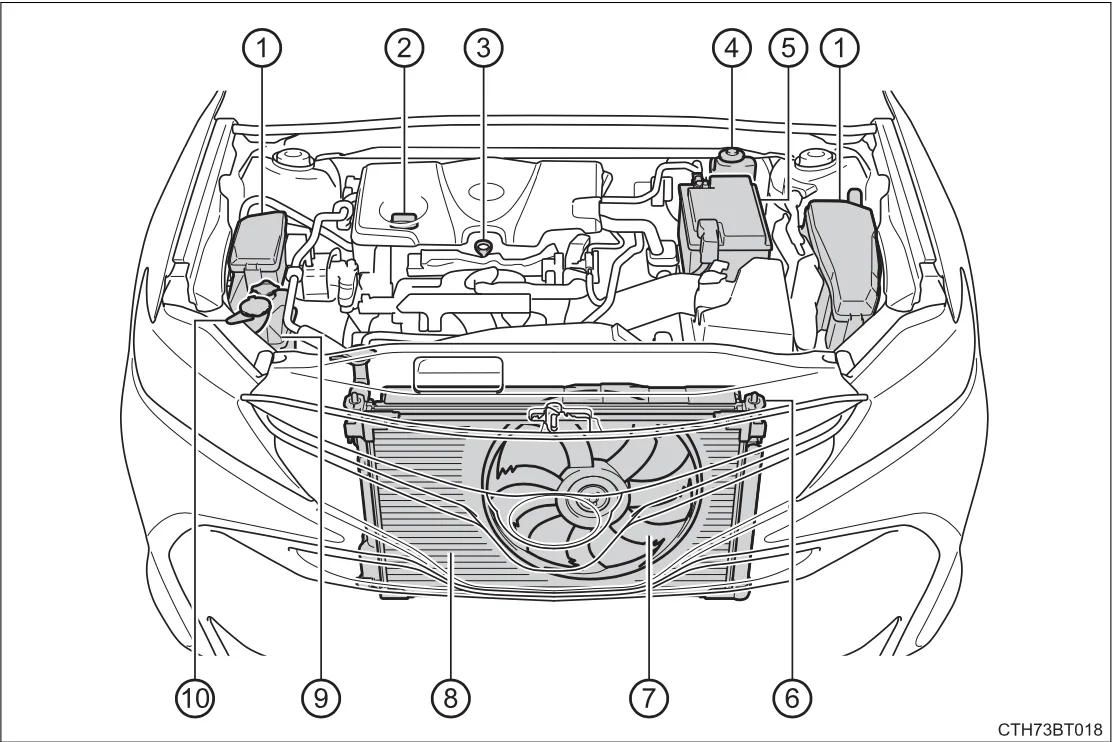
Owners often confuse technical service bulletins with recalls. Bulletins guide dealer diagnosis; recalls mandate free repair regardless of ownership or mileage. The distinction determines who pays.
Dealers must honor both but only recalls appear in the federal database. Checking both sources prevents gaps.
The Five Recalls & Coverage Programs You Must Check First
Start with your 17-digit VIN. Enter it at NHTSA.gov/recalls and Toyota.com/recall. Cross-reference results.
The table below maps each campaign to its coverage scope and urgency.
| Campaign | Component | Hazard | Coverage Limit | Priority |
|---|---|---|---|---|
| 22V-018 / 20V-277 / 21V-177 | Denso HP4 fuel pump | Engine stall, no restart | Unlimited time/mileage | Immediate |
| 19V-699 / 20V-017 / 21V-007 | Takata PSDI-5 inflators | Airbag rupture, metal fragments | Unlimited time/mileage | Immediate |
| 22V-018 (brake) | Bosch Gen 9 brake booster pump | Hard pedal, extended stopping | Unlimited time/mileage | Immediate |
| CSP ZJB / ZJC | Brake booster vacuum pump | Same as recall 22V-018 | 10 yr / unlimited miles | High |
| CSP T-SB-0094-19 | 2AR-FE piston & ring set | Oil consumption > 1 qt/1,200 mi | 10 yr / 150k mi | High |
Recall 22V-018 covers both fuel pump and brake booster for certain VIN ranges. CSP ZJB/ZJC duplicates the brake booster repair for vehicles outside the recall scope. CSP T-SB-0094-19 requires a dealer oil consumption test before authorization.
All work is free at any Toyota dealer. Independent shops cannot perform recall repairs but can diagnose.
Takata Airbag Inflators: The Highest-Risk Recall — Zone A Urgency
The 2016 Camry uses Takata PSDI-5 driver inflators, PSDI-5D passenger inflators, plus side curtain and knee airbag inflators from the same propellant family. Phase-stabilized ammonium nitrate degrades when exposed to heat and humidity cycles. Degraded propellant burns too fast, overpressurizing the inflator housing until it ruptures.
Metal fragments shoot toward occupants. Twenty-seven confirmed U.S. deaths link to this defect.
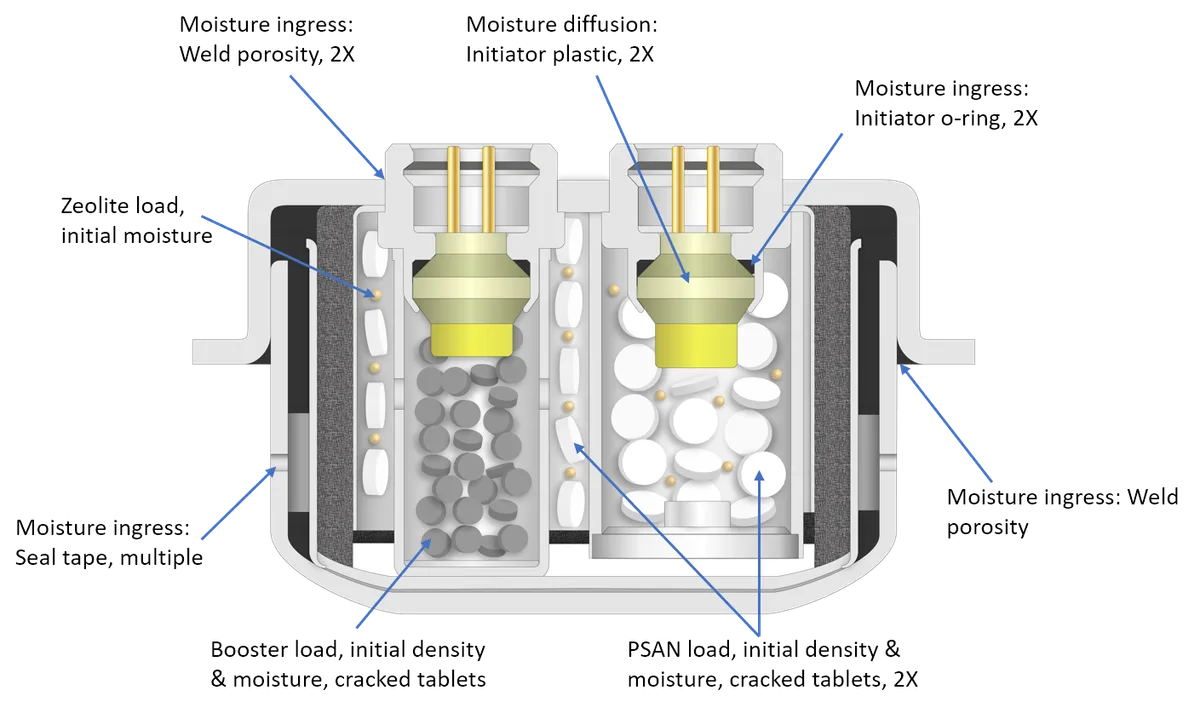
Zone A states (Florida, Hawaii, Texas, Louisiana, Mississippi, Alabama, Georgia, South Carolina, Puerto Rico, U.S. Virgin Islands) see rupture rates three to five times the national average. NHTSA ordered accelerated replacement in these regions.
If you live in Zone A or the car ever resided there, schedule replacement today. Dealers prioritize Zone A appointments. The repair takes two to four hours.
Loaner vehicles are standard.
Passenger-side inflators carry a separate recall. Do not allow anyone to sit in the front passenger seat until replaced. Some dealers disable the passenger airbag as an interim measure.
This reduces protection in a crash but eliminates rupture risk. Ask your service advisor about the interim disable option if parts are delayed.
Brake Booster Vacuum Pump Failure: Hard Pedal, Longer Stops, CSP Coverage
The 2016 Camry uses an electric vacuum pump to supply brake assist instead of engine vacuum. The Bosch Gen 9 unit mounts on the driver-side firewall. Internal bearings and commutator brushes wear prematurely.
Moisture intrusion accelerates corrosion. When the pump fails, the brake pedal becomes extremely hard. Stopping distance increases 30 to 50 percent.
The brake warning light illuminates. A stored code C1241 or C1256 appears in the ABS module.
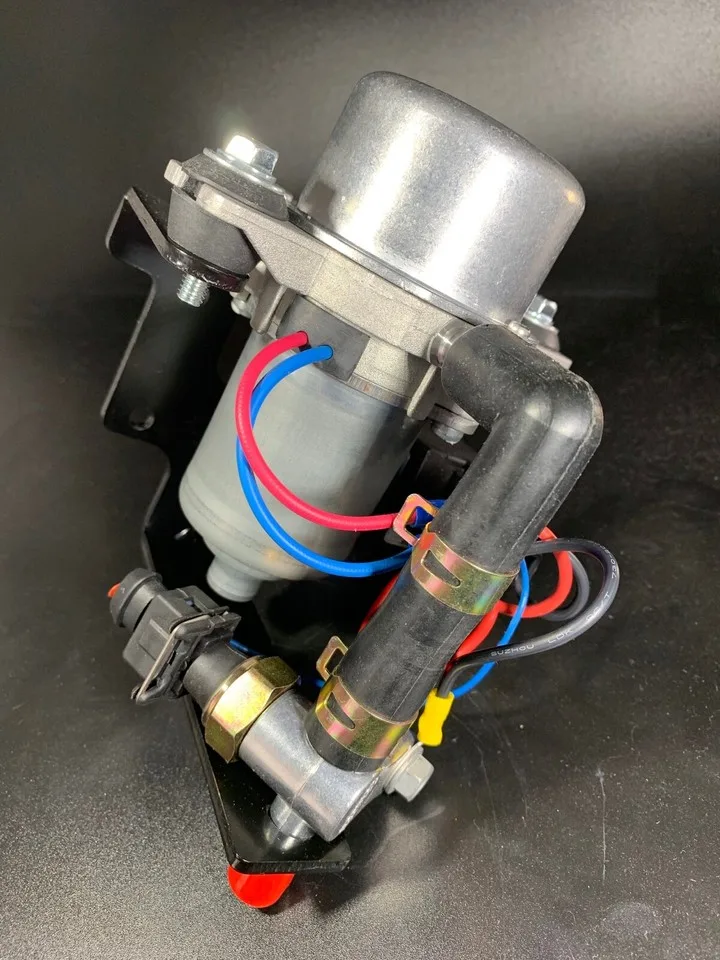
Recall 22V-018 and CSP ZJB/ZJC both cover pump replacement. The recall applies to specific VIN ranges. The CSP covers all 2013, 2019 Camry models with the electric booster for 10 years from original sale date with no mileage limit.
If your VIN falls outside the recall, cite CSP ZJB/ZJC. Dealers verify coverage through the Toyota Technical Information System. The repair replaces the pump assembly and updates the brake booster control software.
Labor runs 1.5 hours.
Symptoms appear intermittently at first. Pump noise changes from a quiet whir to a loud buzz or groan. Pedal feel firms up after cold starts or in damp weather.
Do not wait for complete failure. A hard pedal at highway speed is an emergency.
2AR-FE Oil Consumption: Piston Ring Design, Consumption Test, 150k-Mile Coverage
The 2.5-liter 2AR-FE four-cylinder uses low-tension oil control rings measuring 0.8 millimeters. Standard rings run 1.2 to 1.5 millimeters. Reduced tension cuts friction for fuel economy but allows oil to slip past into the combustion chamber.
Carbon buildup on ring lands worsens the leak path. Consumption exceeds one quart per 1,200 miles in affected units. Blue smoke on startup and low-oil warnings between changes are common.
Customer Support Program T-SB-0094-19 covers piston and ring replacement for 10 years or 150,000 miles from original sale date. The dealer must perform a measured oil consumption test: change oil, drive 1,200 miles, return for measurement. If consumption exceeds the threshold, Toyota authorizes the repair.
The fix installs revised pistons with standard-tension rings and updated cylinder bore finish. Labor runs 12 to 15 hours. Parts and labor are free under the program.
V6 models with the 2GR-FE engine do not share this defect. Their direct-injection system and different ring package show negligible consumption. If you own the four-cylinder, check oil every 1,000 miles until the test is complete.
Running low on oil spins rod bearings, turning a covered repair into a $4,000 engine replacement.
Denso HP4 Fuel Pump: Sudden Stall at Speed, No Restart, Unlimited Recall
The Denso HP4 high-pressure fuel pump uses a brushless DC motor and internal impeller. A manufacturing defect in the impeller material causes cracking when exposed to fuel solvents. Cracks grow until the impeller separates from the shaft.
Fuel pressure drops to zero. The engine stalls without warning at any speed. Restart attempts fail because the pump cannot build pressure.
No check engine light precedes the event.
Recalls 20V-277 and 21V-177 cover all 2013, 2020 Camry models with the 2AR-FE or 2GR-FE engine. Coverage is unlimited by time or mileage. The repair replaces the pump assembly with an updated design and flashes the fuel pump control module software.
Dealers complete the work in roughly two hours. Loaner vehicles are provided if parts are not in stock.
Failure patterns show no early warning signs. Some owners report occasional long crank times or rough idle weeks before total failure. Most experience sudden stall with no prior symptoms.
The stall can occur at highway speed, in intersections, or during acceleration. Power steering and power brakes remain functional but require significantly more effort. Hazard lights operate normally.
If your Camry stalls and will not restart, do not keep cranking. The starter can overheat. Call for a tow to the nearest Toyota dealer.
The recall covers towing when the failure is confirmed as fuel pump related. Keep the receipt if you use an independent tow service. Toyota reimburses reasonable towing costs with documentation.
Torque Converter Shudder: TCC Damper Fatigue — Annoyance or Failure Precursor
The U660E six-speed automatic uses a lock-up torque converter clutch in second through sixth gear. The clutch damper springs absorb driveline vibration during engagement. After 60,000 to 100,000 miles the springs fatigue and lose preload.
The clutch chatters during light-throttle lock-up between 40 and 55 mph. The sensation feels like driving over rumble strips. It disappears when you lift off the throttle or press harder.
This shudder does not damage the transmission immediately. It is a comfort issue that worsens gradually. Continued chatter generates heat and accelerates clutch plate wear.
Eventually the converter may fail to lock up at all, triggering a P0741 code and check engine light. Fuel economy drops 2 to 3 mpg when lock-up is disabled.
Toyota issued Technical Service Bulletin T-SB-0017-19 recommending a transmission fluid drain and fill with genuine WS fluid as a first step. Fresh fluid with proper friction modifiers can reduce or eliminate shudder in early cases. The procedure drains 3.7 quarts.
Do not use flush machines. Do not use aftermarket fluids labeled "WS compatible." Only Toyota WS fluid meets the spec.
If fluid change does not resolve the shudder, the torque converter requires replacement. Labor runs 6 to 8 hours. Parts cost $400 to $600.
Total repair at an independent shop typically falls between $1,200 and $1,800. Dealers charge more. There is no recall or CSP coverage for this issue.
Some owners choose to live with mild shudder. Others disable lock-up by driving in manual mode or using the OD off button. This sacrifices fuel economy but prevents further wear.
Water Pump Weep-Hole Leaks, Entune Freezes & Suspension Clunks: The Tier-2 Issues
The 2AR-FE water pump uses a mechanical seal with a weep hole. Coolant seepage at the weep hole indicates seal failure. The leak starts as a white crusty deposit.
It progresses to steady dripping. Overheating follows if ignored. Typical service life is 80,000 to 120,000 miles.
Replacement costs $350 to $550 at independent shops. The 2GR-FE water pump is driven by the timing chain and rarely leaks externally.
The Entune 2.5 and 3.0 head units suffer from software memory leaks. Symptoms include frozen screens, black display, lost navigation, and backup camera failure. A battery disconnect for ten minutes often restores function temporarily.
Toyota released software updates via USB and over-the-air. Dealers apply updates under warranty or for a diagnostic fee after warranty. Some units require hardware replacement.
Rear sway bar links and front strut mounts develop clunking noises over bumps. The sway bar link ball joints wear oval. Strut mount bearings bind.
Both are wear items not covered by warranty. Link replacement costs $120 to $180 per side. Strut mount replacement runs $250 to $350 per side including alignment.
Power window regulator cables fray and bind. The window drops into the door or moves unevenly. Regulator assembly replacement costs $200 to $300 per door.
These issues are annoying but not safety-critical. They appear across the Toyota lineup of this era. Budget $500 to $1,000 for cumulative Tier-2 repairs by 120,000 miles.
Regular inspection during oil changes catches them early.
Rodent Wiring Damage: The Uncovered Hazard Eating 2012–2017 Harnesses
Toyota switched to soy-based wire insulation in 2012. Rodents find it palatable. They chew through engine harnesses, injector connectors, and sensor leads.
Damage often occurs near the firewall and under the intake manifold. Symptoms include random check engine lights, misfire codes, and no-start conditions. Repair requires harness section replacement or full harness swap.
Insurance comprehensive coverage typically pays for rodent damage minus your deductible. Some policies exclude it. Check your declaration page.
Prevention works better than repair. Park in a sealed garage when possible. Use rodent-deterrent tape (Toyota part number 00289-00101) on vulnerable harness sections.
Install ultrasonic repellent devices under the hood. Remove food sources from the vehicle interior.
Dealers see multiple rodent claims per week in certain regions. The Southeast and Gulf Coast report the highest incidence. Cold climates see spikes in fall as rodents seek warmth.
Damage can exceed $3,000 if the main engine harness requires replacement. No manufacturer warranty or recall covers this. Class-action lawsuits have been dismissed.
Prevention is the only reliable strategy.
How to Verify Every Open Campaign on Your VIN in 5 Minutes
Grab your VIN from the driver-side dashboard or registration. Open NHTSA.gov/recalls in one tab. Open Toyota.com/recall in another.
Enter the VIN in both. Compare results. NHTSA shows federal safety recalls only.
Toyota shows recalls plus customer support programs. Write down every campaign number.
Call your local dealer service department. Provide the VIN and campaign numbers. Ask three questions: Is this VIN eligible?
Are parts in stock? What is the earliest appointment? Dealers access the Toyota Technical Information System which shows CSP eligibility that websites may miss.
Confirm whether loaner vehicles are available.
If the dealer says a CSP does not apply, ask them to check T-SB-0094-19 for oil consumption and CSP ZJB/ZJC for brake booster. These programs have specific VIN and date-range criteria. Some dealers are unaware of older CSPs.
Escalate to the service manager or call Toyota Customer Experience at 1-800-331-4331. Reference the bulletin numbers. They can authorize coverage remotely.
Check for open campaigns every six months. New recalls are issued as defect patterns emerge. The fuel pump recall expanded twice.
The brake booster recall expanded once. Set a calendar reminder. The five-minute check protects your safety and your wallet.
Dealer vs. Independent: Who Can Do What, What's Free, What's Not
Dealers must perform all recall repairs at no charge. They also handle CSP claims for oil consumption and brake booster pump. Independent shops cannot bill Toyota for recall or CSP work.
You pay full rate if you take recall repairs to an independent. Dealers may charge diagnostic fees if they find no defect. CSP oil consumption test requires dealer measurement.
No workaround exists.
Independent shops excel at Tier-2 repairs: water pump, sway bar links, strut mounts, window regulators, Entune updates. Labor rates run 30 to 50 percent lower. They can diagnose torque converter shudder and recommend fluid change or converter replacement.
They cannot access Toyota TIS for CSP eligibility. Always verify coverage at a dealer first.
Maintenance Schedule Adjustments If You Keep This Car Past 150k Miles
Change transmission fluid every 30,000 miles using only Toyota WS. Inspect brake booster pump vacuum hose for cracking at every oil change. Check coolant level monthly; water pump weep hole leaks start small.
Replace spark plugs at 120,000 miles (iridium, 120k rating). Clean throttle body every 60,000 miles to prevent idle issues. Inspect rodent tape integrity each fall.
When to Tow It, When to Drive It: Symptom Triage for the 2016 Camry
Tow immediately: Sudden stall with no restart (fuel pump). Hard brake pedal with warning light (booster pump). Airbag light on with recall incomplete.
Burning oil smoke with low oil pressure light. Drive to dealer: Torque converter shudder. Entune frozen screen. Suspension clunk.
Window regulator noise. Rodent damage with drivable car. Monitor: Oil consumption under 1 qt/1,200 mi. Minor coolant seep at weep hole.
Occasional long crank.
Quick-Reference Decision Guide: Your VIN, Your Mileage, Your Next Step
| Mileage | Open Recalls? | Oil Consumption | Brake Pedal Feel | Action |
|---|---|---|---|---|
| Any | Yes | Any | Any | Schedule all recalls today |
| <150k | No | >1 qt/1,200 mi | Normal | Request CSP oil test |
| Any | No | Normal | Hard/firm | Request CSP brake check |
| >150k | No | Any | Any | Budget Tier-2 repairs |
Frequently Asked Questions
Does the 2016 Camry have transmission problems?
The U660E transmission is reliable. Torque converter shudder is the main complaint. Fluid changes with genuine WS fluid often resolve it.
No widespread internal failures exist.
Is the 2016 Camry V6 more reliable than the four-cylinder?
The 2GR-FE V6 avoids the 2AR-FE oil consumption defect. It shares the same recalls for fuel pump, brake booster, and Takata airbags. Overall slightly lower risk.
How long does the brake booster pump repair take?
Dealers complete the pump replacement in 1.5 to 2 hours. Software update adds 30 minutes. Loaner provided if same-day completion isn't possible.
Can I do the oil consumption test myself?
No. CSP T-SB-0094-19 requires dealer-measured consumption over 1,200 miles. Self-reported data is not accepted for authorization.
What if my dealer says the CSP expired?
CSP ZJB/ZJC runs 10 years from original sale date. CSP T-SB-0094-19 runs 10 years or 150,000 miles. Call Toyota Customer Experience at 1-800-331-4331 with the bulletin numbers.
They override dealer denials.
Are aftermarket fuel pumps safe for the 2016 Camry?
Use only the Denso updated pump installed under recall. Aftermarket pumps lack the revised impeller material. They risk repeat failure.
The recall repair is free.